


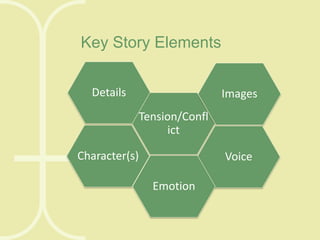
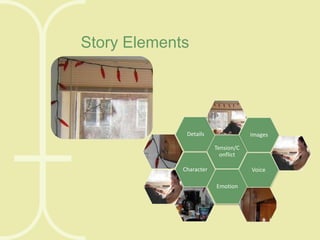
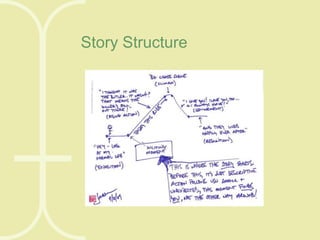


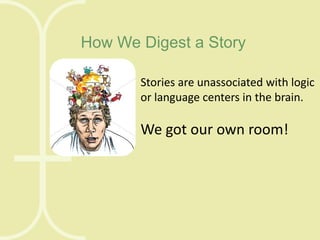
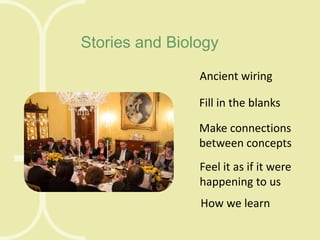


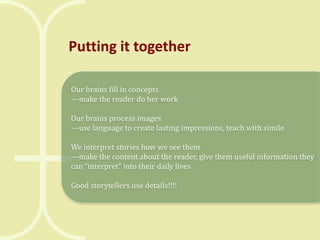
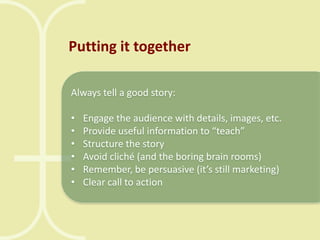
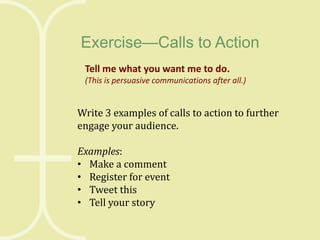


This document discusses how to engage audiences through storytelling. It explains that stories are processed differently in the brain than facts or logic. The brain fills in blanks, forms images, and interprets stories based on our own experiences. To engage audiences, the document recommends using details, imagery, tension, characters, voice, and emotion. It also suggests structuring stories, respecting different attention spans, and providing a clear call to action. The goal is to teach or persuade audiences by making them feel as if they are experiencing the story themselves.


![A whole new_min_dpp_org-1[1]](https://cdn.slidesharecdn.com/ss_thumbnails/awholenewmindpporg-11-100504202859-phpapp02-thumbnail.jpg?width=640&height=640&fit=bounds)


