Market Segmentation
A retail market segment is a group of customers whose needs are satisfied by the same retail mix because they have similar needs.
Criteria for Evaluating Market Segments Actionable The defined segment clearly indicates what the retailer should do to satisfy its needs Identifiable The retailer is able to determine which customers are in the segment Substantial A segment must be large enough or have significant buying potential Reachable The retailer can target promotions and other marketing information to consumers in the segment
Approaches for Segmenting Markets No approach is best for all retailers so they must examine various factors and determine which are most important.
Geographic Segmentation This is when customers are group according to where they live. A segment can be a country or a  segment within a country, such as states, cities, and neighborhoods.
Demographic Segmentation This is where consumers are grouped by easily measured, objective characteristics such as age, gender, income, and education
Geodemographic Segmentation This is where both geographic and demographic characteristics are used to group consumers into market segments
 
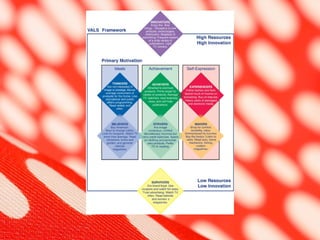
Lifestyle Segmentation This type of segmentation uses how people live, spend their time and money, as well as their activities and opinions for dividing the market
 
Buying Situation Segmentation Retailers may use buying situations as a way to segment the market
Benefit Segmentation This is where retailers group customers seeking similar benefits into a segment.
Composite Segmentation  Because no approach meets all the criteria for useful customer segmentation retailers often use multiple variables to identify customers . This is known as composite segmentation  and is based on benefits sought, lifestyles, and demographics.

Consumer Buying Behavior 3

  • 1.
  • 2.
    A retail marketsegment is a group of customers whose needs are satisfied by the same retail mix because they have similar needs.
  • 3.
    Criteria for EvaluatingMarket Segments Actionable The defined segment clearly indicates what the retailer should do to satisfy its needs Identifiable The retailer is able to determine which customers are in the segment Substantial A segment must be large enough or have significant buying potential Reachable The retailer can target promotions and other marketing information to consumers in the segment
  • 4.
    Approaches for SegmentingMarkets No approach is best for all retailers so they must examine various factors and determine which are most important.
  • 5.
    Geographic Segmentation Thisis when customers are group according to where they live. A segment can be a country or a segment within a country, such as states, cities, and neighborhoods.
  • 6.
    Demographic Segmentation Thisis where consumers are grouped by easily measured, objective characteristics such as age, gender, income, and education
  • 7.
    Geodemographic Segmentation Thisis where both geographic and demographic characteristics are used to group consumers into market segments
  • 8.
  • 9.
    Lifestyle Segmentation Thistype of segmentation uses how people live, spend their time and money, as well as their activities and opinions for dividing the market
  • 10.
  • 11.
    Buying Situation SegmentationRetailers may use buying situations as a way to segment the market
  • 12.
    Benefit Segmentation Thisis where retailers group customers seeking similar benefits into a segment.
  • 13.
    Composite Segmentation Because no approach meets all the criteria for useful customer segmentation retailers often use multiple variables to identify customers . This is known as composite segmentation and is based on benefits sought, lifestyles, and demographics.