Consumer Behaviour towards purchase of flameproof equipments
1.
CONSUMER BEHAVIOR TOWARDS
PURCHASINGFLAMEPROOF
EQUIPMENT IN THE INDIAN MARKET
Project done by
Name : J SASITHAR
Reg No : PA225200102006
Under the Guidance of
Dr.Arulmozhi
HOD / MBA
2.
OBJECTIVES OF THESTUDY
Primary Objectives
To analyze consumer behaviour towards purchasing flameproof equipment in the Indian market
Secondary Objectives
To analyze consumer behaviour
To determine the key decision-making factors,
To assess market preferences.
To evaluate the impact of regulatory compliance Secondary Objectives
Identify emerging trends
Analyze the competitive landscape
Suggest improvements in supply chain management
3.
LITERATURE REVIEW
2.1 AStudy on Consumer Buying behaviour in India
Health and wellness have become key priorities, with consumers spending more on fitness, organic food, and wellness
services, often motivated by the desire to look fit rather than just feel healthy. The demand for customization has also
surged, with over half of consumers willing to pay extra for personalized products, particularly in categories like apparel
and vehicles. Women are now playing a stronger role in decision-making, having the final say in more than half of
household purchases, including traditionally male-dominated sectors like travel and vehicles.
Another noticeable trend is the growing preference for Indian brands over international ones, particularly in food and
personal care, due to a perception of better quality and suitability. Consumers are also shifting their spending focus from
material possessions to experiences, prioritizing travel and entertainment over traditional purchases. Many even trade
down on certain product categories to afford these experiences. The appeal of exclusivity is another emerging factor, with
consumers placing high value on unique and limited-edition products as a sign of status. Additionally, renting is becoming
a preferred alternative to ownership, especially for furniture, appliances, and gadgets, driven by affordability and
flexibility.
These trends are reshaping India's consumer landscape, presenting both opportunities and challenges for businesses.
Companies must adapt by understanding these evolving behaviors and offering solutions that align with consumers'
changing preferences.
4.
LITERATURE REVIEW
2.2 TenTrends Altering Consumer Behaviour in India
The Boston Consulting Group (BCG) report highlights significant shifts in Indian consumer behavior driven by rising
incomes, digital influence, and changing priorities. Consumers are now highly information-driven, extensively
researching products before making purchases, often comparing multiple data points such as reviews and features.
Shopping habits have also evolved, with over 60% of consumers making purchases to stay trendy rather than out of
necessity. Additionally, time-saving services have gained popularity, as urban Indians seek convenience through online
shopping and end-to-end service providers.
Health and wellness have become key priorities, with consumers spending more on fitness, organic food, and wellness
services, often motivated by the desire to look fit rather than just feel healthy. The demand for customization has also
surged, with over half of consumers willing to pay extra for personalized products, particularly in categories like apparel
and vehicles. Women are now playing a stronger role in decision-making, having the final say in more than half of
household purchases, including traditionally male-dominated sectors like travel and vehicles.
Another noticeable trend is the growing preference for Indian brands over international ones, particularly in food and
personal care, due to a perception of better quality and suitability. Consumers are also shifting their spending focus from
material possessions to experiences, prioritizing travel and entertainment over traditional purchases. Many even trade
down on certain product categories to afford these experiences. The appeal of exclusivity is another emerging factor, with
consumers placing high value on unique and limited-edition products as a sign of status. Additionally, renting is becoming
a preferred alternative to ownership, especially for furniture, appliances, and gadgets, driven by affordability and
flexibility.
5.
LITERATURE REVIEW
2.3 ConsumerAwareness & Buying Behaviour Towards FMCGs in India
The Fast-Moving Consumer Goods (FMCG) sector plays a crucial role in the Indian economy, characterized by high
turnover rates and extensive distribution networks. The market, valued at USD 110 billion in 2020, is expected to reach
USD 220 billion by 2025 with a CAGR of 14%. Consumer preferences are shifting towards premium and branded
products, with health-conscious choices gaining traction. More than 50% of FMCG revenue comes from products priced
at 10 or less, highlighting price sensitivity among Indian consumers.
₹
The study analyzes factors influencing consumer buying behavior, revealing that product quality (40%) is the top driver,
followed by brand loyalty (19.7%) and price (13%). While 55% of consumers prefer in-store purchases, 35% discover
new products through social media and online ads. Sustainability is a growing concern, with 56% considering it important
in purchasing decisions. Consumers also exhibit moderate brand loyalty, with 47% switching brands occasionally.
The research emphasizes the importance of digital marketing, influencer partnerships, and omni channel strategies.
Companies are advised to leverage data analytics, enhance consumer engagement, and focus on sustainability initiatives.
Promotional offers and loyalty programs remain key to driving brand retention in India's highly competitive FMCG
market.
6.
LITERATURE REVIEW
2.4 Studyon Consumer Buying Behaviour at D-Mart, Nagpur
The study on consumer buying behaviour at D-Mart in Nagpur examines the key factors influencing customer preferences
and shopping patterns. It highlights that a majority of consumers prefer D-Mart over other stores due to its affordability,
product variety, and attractive discounts. Most shoppers visit the store on a monthly basis, primarily purchasing grocery
items, household goods, and food products. Discounts and promotional offers are the strongest motivators for customers,
followed by product quality and store experience. However, the study also reveals challenges such as a lack of awareness
about D-Mart’s online services, inefficiencies in the billing process, and customer service issues. Additionally, the study
finds that middle-income groups form the majority of D-Mart’s customer base, as they seek value-for-money products.
The convenience of finding all essential products under one roof further enhances customer preference for the store.
While consumers appreciate D-Mart’s competitive pricing, there is a growing demand for a wider variety of clothing and
household items. The study also indicates that most customers are satisfied with the store’s return policy and consider D-
Mart more affordable than other retailers. To enhance customer satisfaction, the study suggests improving product quality
to attract high-income customers, increasing awareness of online services, and streamlining the billing process.
Additionally, better staff training is recommended to improve customer interactions. Overall, the study concludes that
while D-Mart effectively caters to middle-income shoppers with its competitive pricing, further improvements in service
quality, product variety, and digital engagement could strengthen its market position and customer loyalty.
7.
LITERATURE REVIEW
2.5 ConsumerBehaviour Towards Online and Offline Shopping
The study explores consumer behaviour towards online and offline shopping, highlighting key factors influencing
preferences. While online shopping has gained traction due to convenience, discounts, and accessibility, many consumers
still prefer physical stores for trust, product feel, and payment security. The research finds that males shop online more
frequently than females, and lower-income groups ( 10,000- 20,000) are more inclined towards online purchases.
₹ ₹
Among the respondents, 59% use both shopping modes, with Flipkart emerging as a major online retailer. Security
concerns remain a significant barrier to online shopping, leading many to favor malls and physical stores for safer
transactions. Factors such as product variety, brand preference, and delivery times also impact shopping decisions.
Consumers shopping online value the ease of comparing products and accessing better deals, while offline shoppers rely
on the sensory experience and immediate product availability. The study also reveals that online shopping has gained
popularity recently, with most users having adopted it in the past year. Despite concerns over fraud and delayed deliveries,
e-commerce platforms continue to expand, offering better return policies and improved customer service to build trust.
The integration of online and offline shopping, such as click-and-collect models, is becoming increasingly popular. Retail
giants are leveraging technology to bridge the gap between the two shopping modes, enhancing customer experience. In
conclusion, while traditional shopping remains dominant due to familiarity and trust, the shift towards online shopping is
evident and is expected to grow further with technological advancements and improved digital security.
8.
LITERATURE REVIEW
2.6 AnalyzingIndustrial consumer buying behaviour
The paper further explores the impact of advertising, promotional offers, and brand perception on consumer choices,
emphasizing how repeated exposure and strong branding influence habitual buying behavior. It discusses how emotional
and psychological triggers, such as fear of missing out (FOMO) and social proof, shape purchase decisions.
For industrial buyers, factors like supplier reliability, product quality, after-sales service, and long-term contracts play a
crucial role in decision-making. The study highlights the significance of Quality by Design (QbD) in pharmaceutical
procurement, ensuring consistent product performance.
Technological advancements, such as e-commerce and data analytics, have transformed both consumer and industrial
buying patterns, enabling businesses to predict demand and optimize inventory. The paper concludes by stressing the
importance of continuously adapting to evolving market trends, consumer expectations, and competitive dynamics to
maintain business growth and customer loyalty.
9.
LITERATURE REVIEW
2.7 Studyof Consumer Behaviour Towards Purchasing Electronic Products
The paper "Study of Consumer Behaviour Towards Purchasing Electronic Products" explores the factors influencing
consumer decisions when buying mobile phones and laptops in India. The study analyzes cultural, social, personal,
psychological, and marketing mix factors to understand their impact on consumer preferences. Data was collected through
a questionnaire with 130 respondents from Mumbai, and statistical tools like SPSS and Microsoft Excel were used for
analysis. The findings reveal that while independent variables weakly influence overall consumer behavior, social factors,
physical product aspects, and marketing strategies significantly shape purchasing decisions.
Key insights indicate that younger consumers (below 35 years) prefer online shopping, while older consumers prefer
offline stores. Mobile phones are primarily purchased online from Amazon (57.7%) and Flipkart (17.7%), whereas laptops
are more frequently bought from offline stores (46.92%) due to the need for physical inspection and quality assurance.
The study also finds that as the price of a product increases, consumers shift from online to offline purchases, showing
greater quality consciousness in higher-value items. Additionally, brand preference plays a role, with some consumers
prioritizing social image by opting for premium brands like Apple and Samsung, while others seek affordability with
brands like Xiaomi and Symphony.
The research highlights how income levels, age groups, and shopping platforms affect purchasing behavior, providing
valuable insights for retailers and e-commerce platforms. It suggests that offline retailers should focus on high-priced
product segments, while online sellers like Amazon and Flipkart should strategize to improve consumer confidence in
high-value online purchases. The study concludes that understanding these behavioral patterns can help businesses tailor
their marketing strategies, enhance consumer satisfaction, and drive sales in the electronic products market.
10.
LITERATURE REVIEW
2.8 Studyof Consumer Behaviour: Building Marketing Strategy
Consumer behavior is at the core of successful marketing strategy, and understanding it requires a blend of psychology,
sociology, anthropology, and economics. This comprehensive work delves into how individuals make consumption
decisions and how these decisions are influenced by a web of internal and external factors. The authors emphasize that
consumer behavior is not only the study of what people buy, but also why, when, where, and how they buy it—and how
they eventually dispose of the product. The book starts by asserting the importance of consumer behavior for marketers,
policymakers, and consumers themselves. In today’s dynamic environment where globalization, technological
advancement, cultural shifts, and regulatory changes occur rapidly, businesses must grasp the complexity of consumer
behavior to remain relevant and competitive. By aligning marketing strategies with evolving consumer preferences,
organizations can deliver superior value, enhance customer satisfaction, and build brand loyalty.
The book introduces a conceptual model that integrates external and internal influences, the decision-making process, and
outcomes at individual, firm, and societal levels. External influences such as culture, subculture, demographics, social
class, reference groups, family, and marketing activities shape consumer perceptions and preferences. Internal influences,
including motivation, personality, emotion, perception, learning, memory, and attitudes, drive individual behavior and
response to stimuli. These factors interact dynamically as consumers progress through a decision process that includes
problem recognition, information search, evaluation of alternatives, purchase, and postpurchase behavior. The decision
process is further affected by the situation in which it occurs, such as physical surroundings, social setting, time, task, and
the consumer’s momentary condition. These situational variables often tip the scale in favor of or against a product,
brand, or outlet.
11.
RESEARCH METHODOLOGY
RESEARCH DESIGN
Thisstudy follows a Descriptive research design, which aims to systematically describe the factors influencing
consumer purchasing decisions for flameproof equipment. The research evaluates price sensitivity, regulatory compliance,
brand preferences, and technological adoption in decision-making processes.
12.
DATA COLELCTION METHODS
PrimaryData Collection
Primary data refers to first-hand information gathered directly from respondents. This data was crucial in capturing real-
time, contextual insights into purchasing behavior and preferences.
Methods Used:
Structured Questionnaires
Personal Interviews
Field Observations
Secondary Data Collection
Secondary data refers to data that has already been collected and documented by other researchers or institutions. It
played a significant role in validating and contextualizing the findings of the primary research.
Sources Used:
Industry Reports
Academic Journals
Government and Regulatory Bodies
Company Websites and Catalogs
Books and Literature
13.
SAMPLING
SAMPLING TECHNIQUE
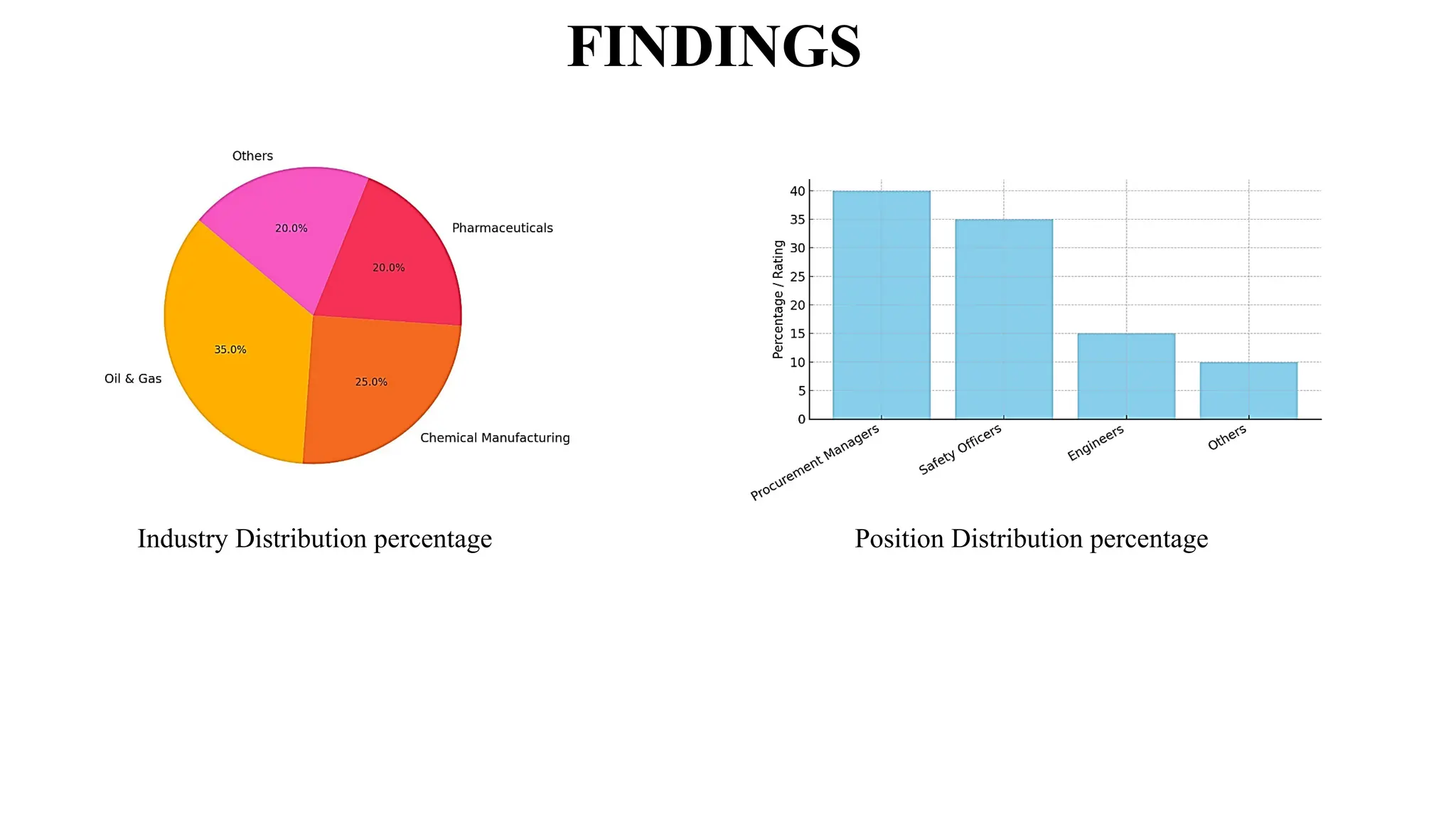
A non-probabilityconvenience sampling method is employed, targeting professionals and stakeholders involved in the
procurement of flameproof equipment.
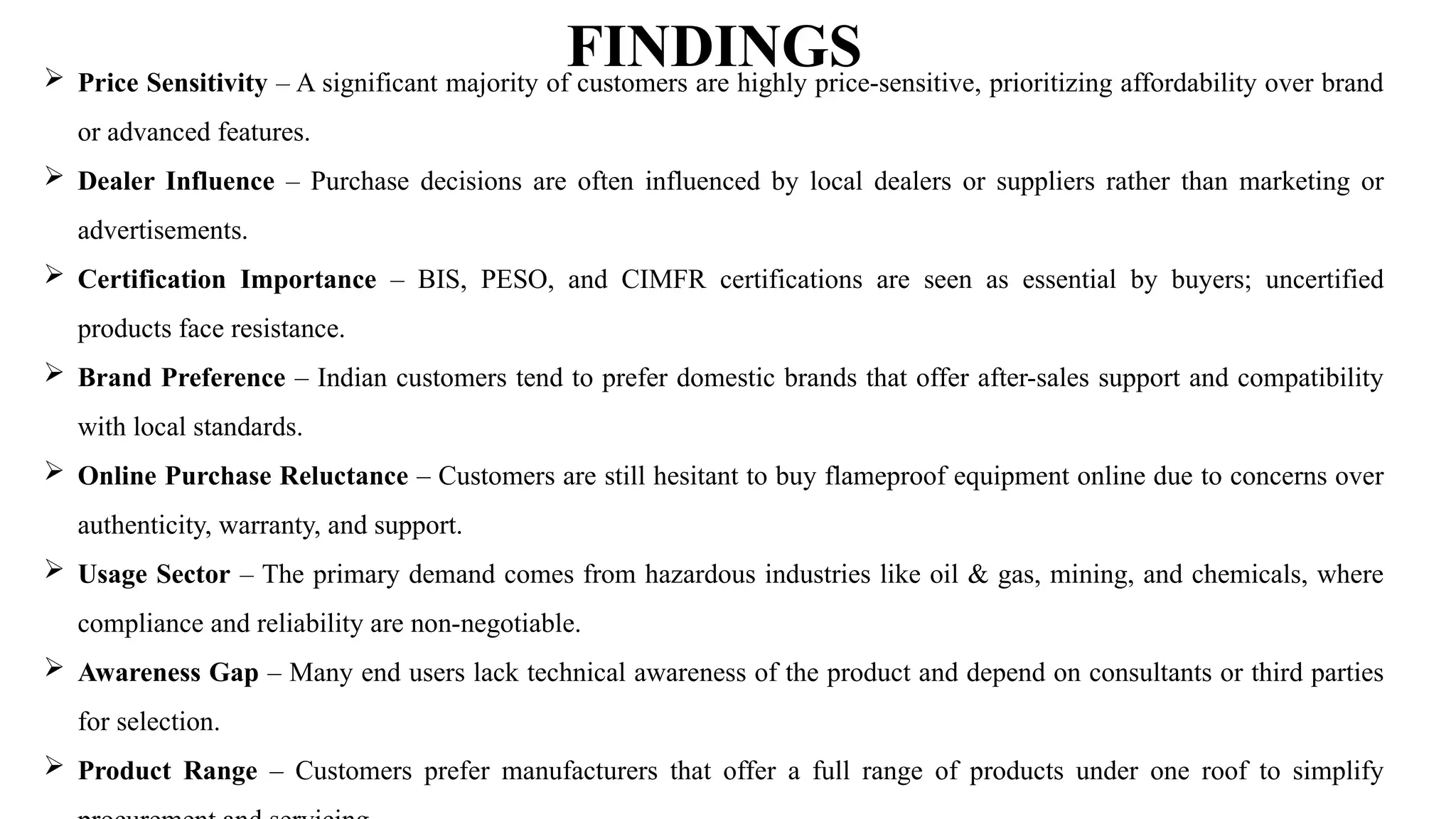
Sample Size: 50 respondents, including procurement officers, safety engineers, and financial decision-makers.
Target Group: Buyers and decision-makers from industries such as oil & gas, chemicals, pharmaceuticals, and
manufacturing.
RESEARCH INSTRUMENT
The primary tool for data collection is a structured questionnaire, which includes:
Multiple-choice questions assessing factors influencing purchasing decisions.
Likert scale questions to measure attitudes towards pricing, certification, and brand reputation.
Open-ended questions to capture qualitative insights from industry experts.
FINDINGS
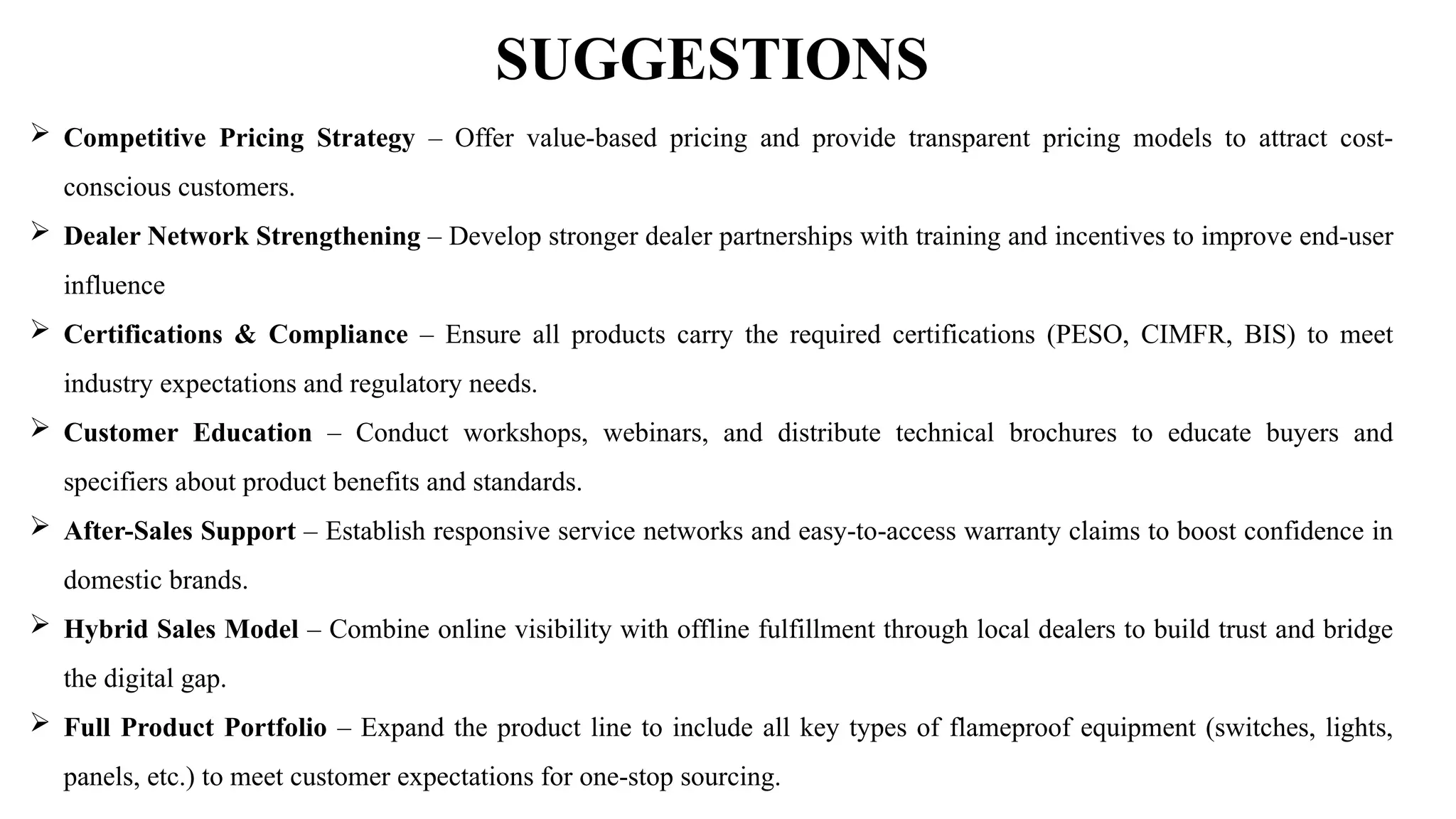
Price Sensitivity– A significant majority of customers are highly price-sensitive, prioritizing affordability over brand
or advanced features.
Dealer Influence – Purchase decisions are often influenced by local dealers or suppliers rather than marketing or
advertisements.
Certification Importance – BIS, PESO, and CIMFR certifications are seen as essential by buyers; uncertified
products face resistance.
Brand Preference – Indian customers tend to prefer domestic brands that offer after-sales support and compatibility
with local standards.
Online Purchase Reluctance – Customers are still hesitant to buy flameproof equipment online due to concerns over
authenticity, warranty, and support.
Usage Sector – The primary demand comes from hazardous industries like oil & gas, mining, and chemicals, where
compliance and reliability are non-negotiable.
Awareness Gap – Many end users lack technical awareness of the product and depend on consultants or third parties
for selection.
Product Range – Customers prefer manufacturers that offer a full range of products under one roof to simplify
16.
SUGGESTIONS
Competitive PricingStrategy – Offer value-based pricing and provide transparent pricing models to attract cost-
conscious customers.
Dealer Network Strengthening – Develop stronger dealer partnerships with training and incentives to improve end-user
influence
Certifications & Compliance – Ensure all products carry the required certifications (PESO, CIMFR, BIS) to meet
industry expectations and regulatory needs.
Customer Education – Conduct workshops, webinars, and distribute technical brochures to educate buyers and
specifiers about product benefits and standards.
After-Sales Support – Establish responsive service networks and easy-to-access warranty claims to boost confidence in
domestic brands.
Hybrid Sales Model – Combine online visibility with offline fulfillment through local dealers to build trust and bridge
the digital gap.
Full Product Portfolio – Expand the product line to include all key types of flameproof equipment (switches, lights,
panels, etc.) to meet customer expectations for one-stop sourcing.