Construction Self-
Inspection Guide
Inspection Guide
Most frequently
cited violations
which cause a
majority of fatalities
& injuries in
construction
Most Commonly Cited
• Written programs
– Accident prevention
– Fall protection work plan
– HazCom
– Respirators
– Lockout/tagout
Most Commonly Cited
• Direct hazards
– Fall protection
– PPE
– Excavation & shoring
– Eye/body wash
– Live electrical parts
– Noise exposure
– Machine guarding
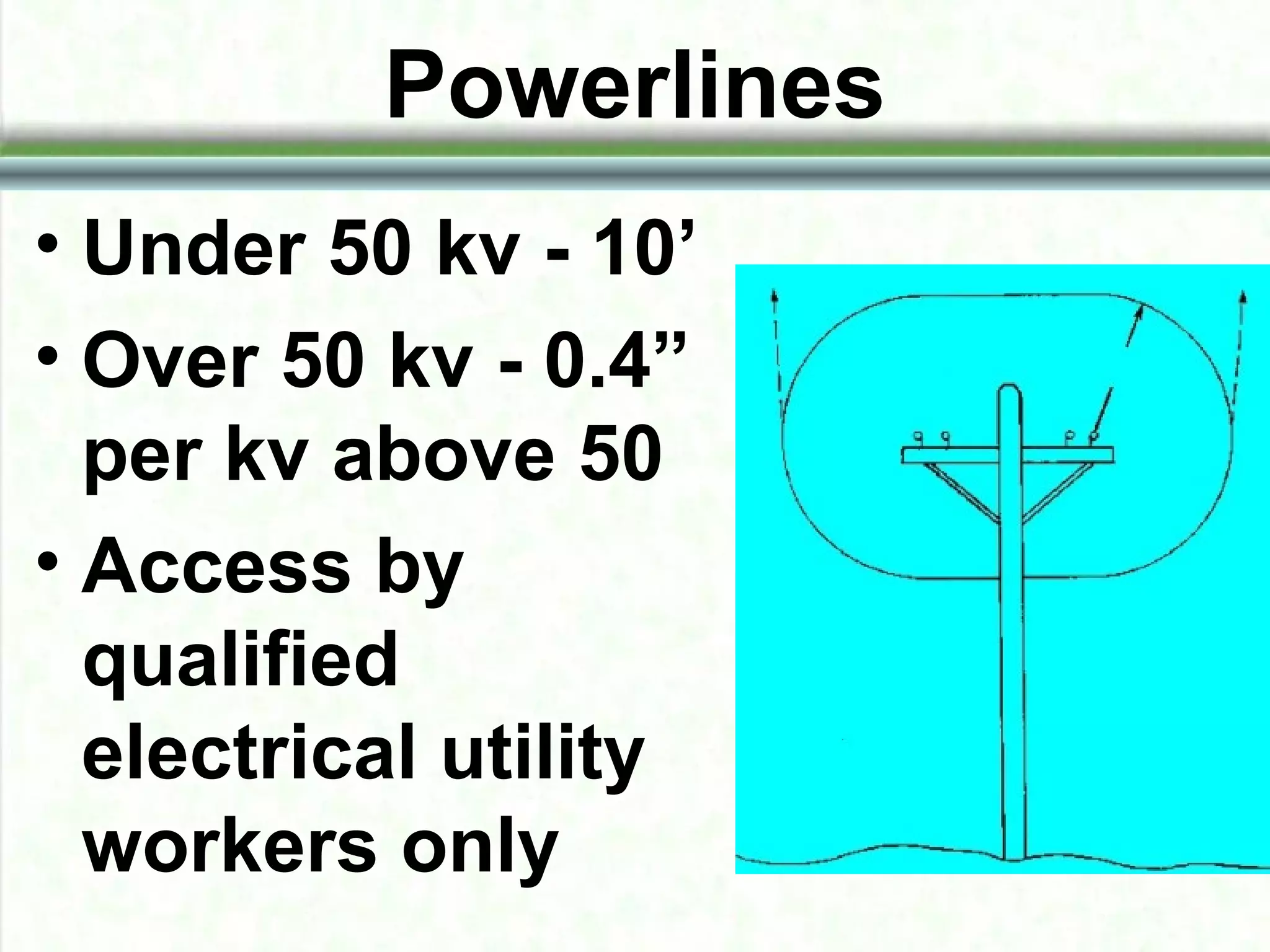
Powerlines
Minimum 10’ clearance
Powerlines
• Under 50 kv - 10’
• Over 50 kv - 0.4”
per kv above 50
• Access by
qualified
electrical utility
workers only
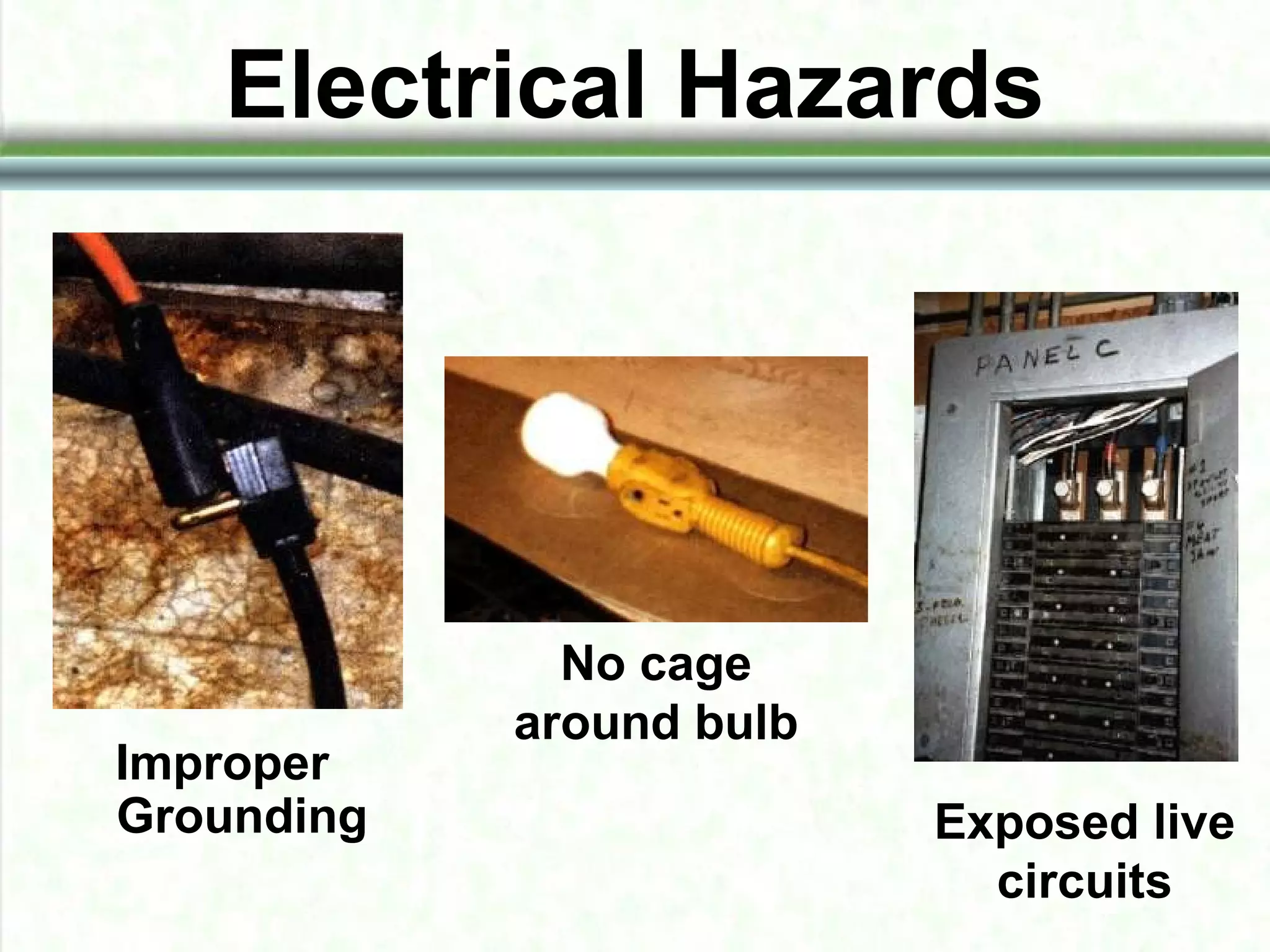
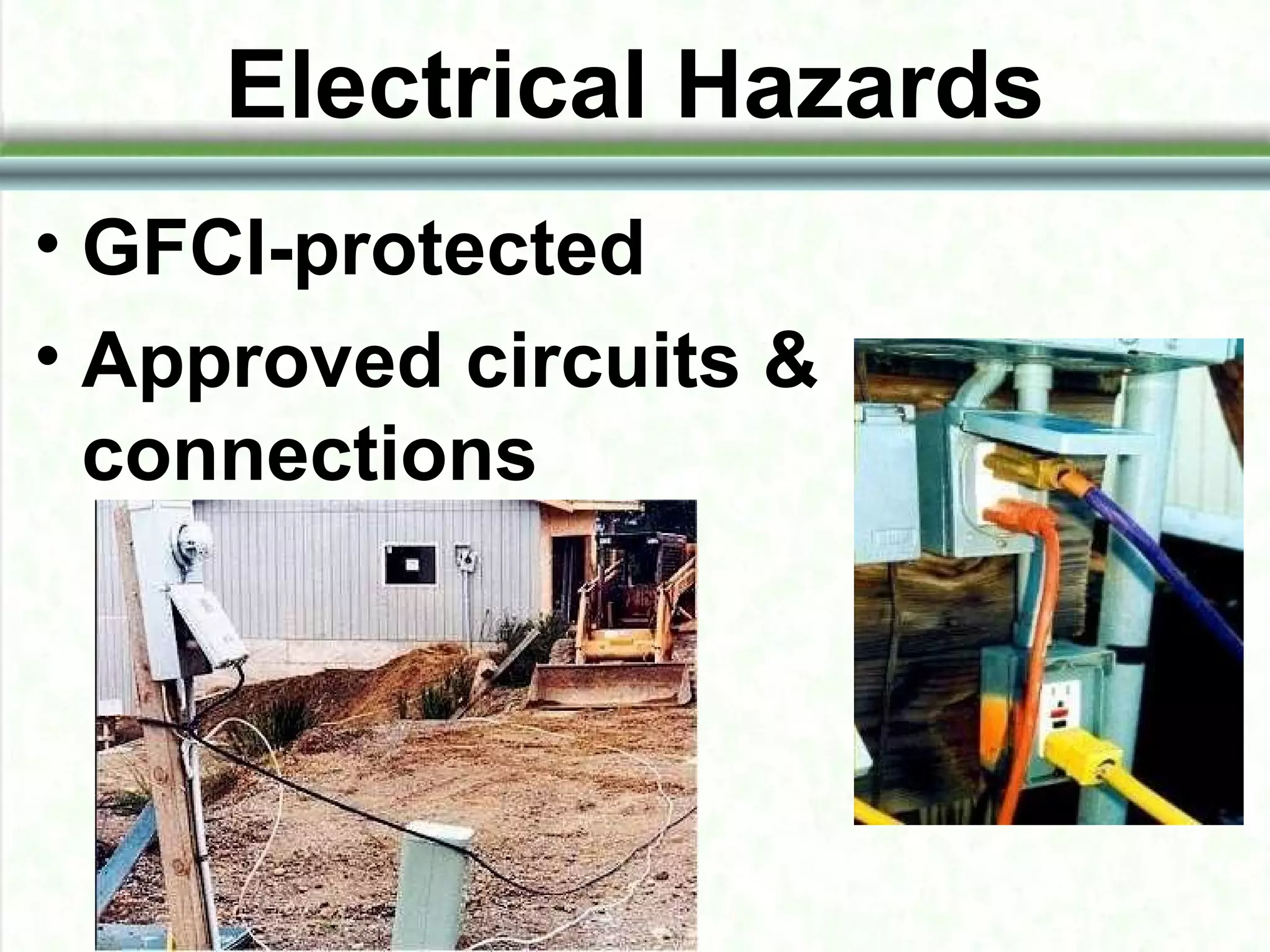
Electrical Hazards
Improper
Grounding
No cage
around bulb
Exposed live
circuits
Electrical Hazards
• GFCI-protected
• Approved circuits &
connections
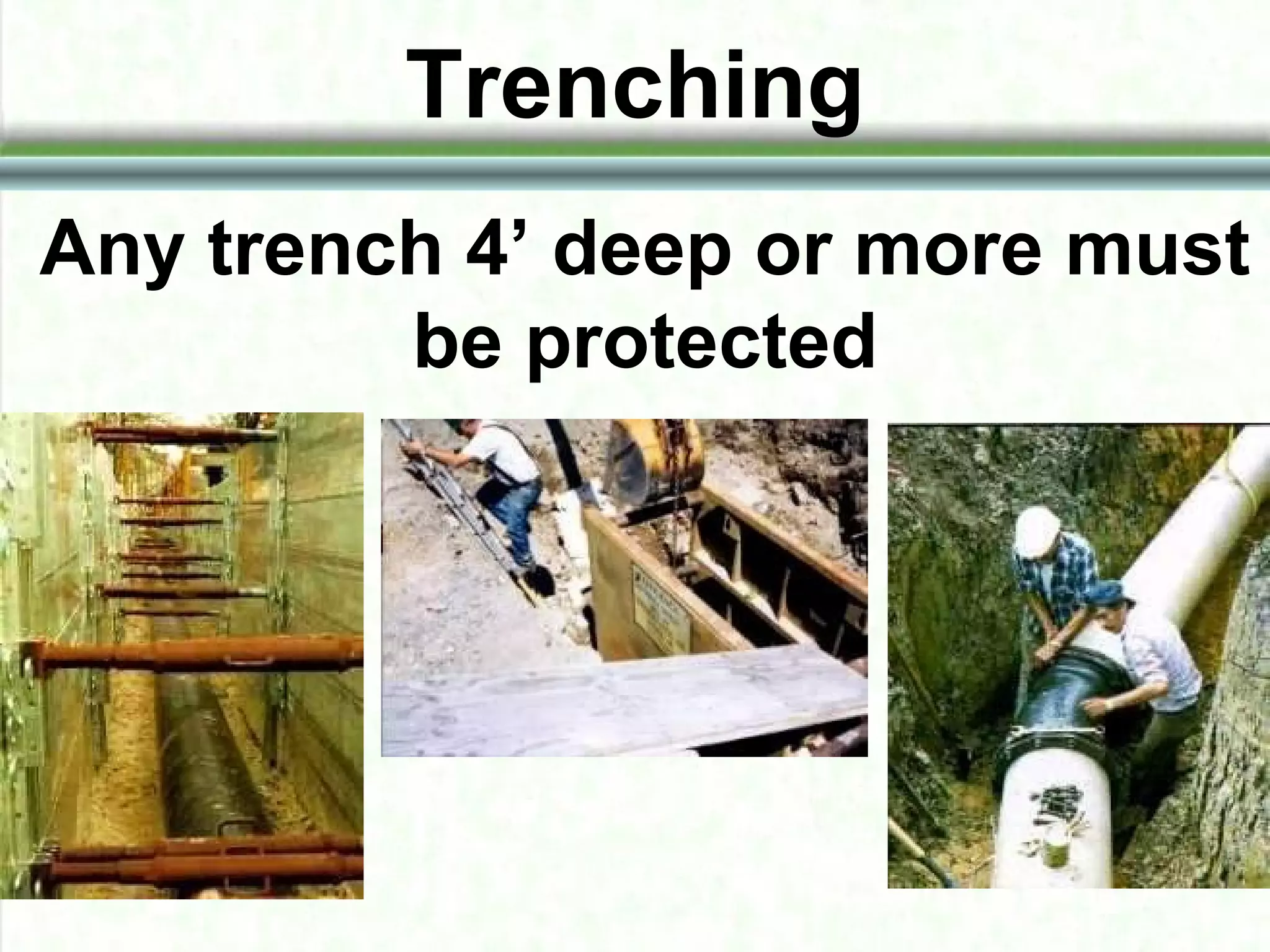
Trenching
Any trench 4’ deep or more must
be protected
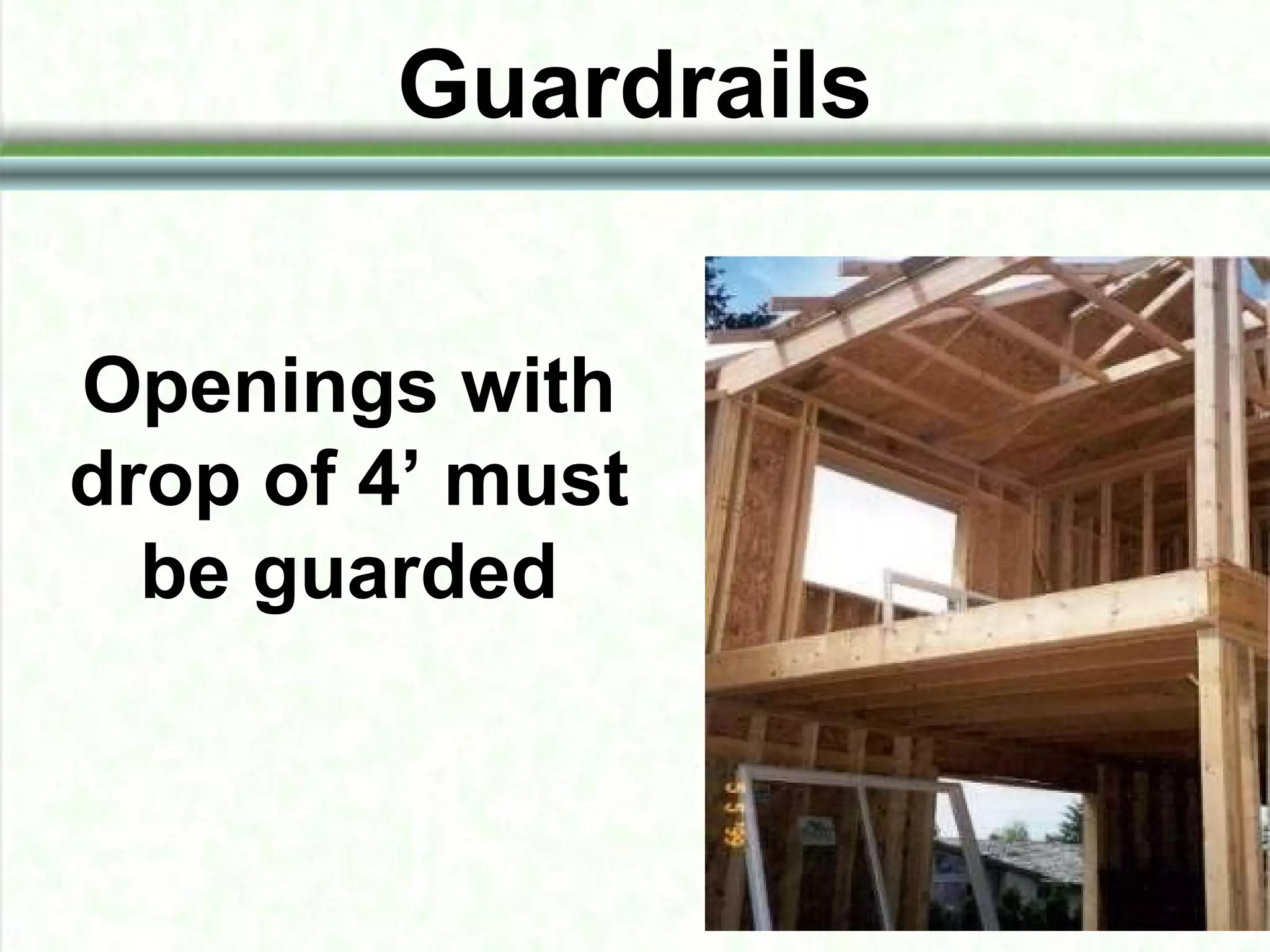
Guardrails
Openings with
drop of 4’ must
be guarded
Guardrail Specification
• Top rail 39–45” with mid-rail
• 200 pound load requirement
Scaffolding
Fully planked & with guardrails
Stairways
Four or more
risers must
have handrails
Fall Protection
Provided at elevations of 10’ or
greater
Fall Restraint
• Prevents you from leaving roof
• Includes either a belt, harness
or guardrails
• Belt or harness anchor point
rated for 4 times intended load
Fall Arrest
• Catches you in a fall
• Full body harness
• Maximum 6’ fall allowed
• 5000 lb lanyard, lifeline &
anchor strength
• 3000 lb strength when
deceleration devices used &
fall distance is limited to 2’
Fall Protection Work Plan
A complete
work plan This work plan
is too sketchy
Guarding
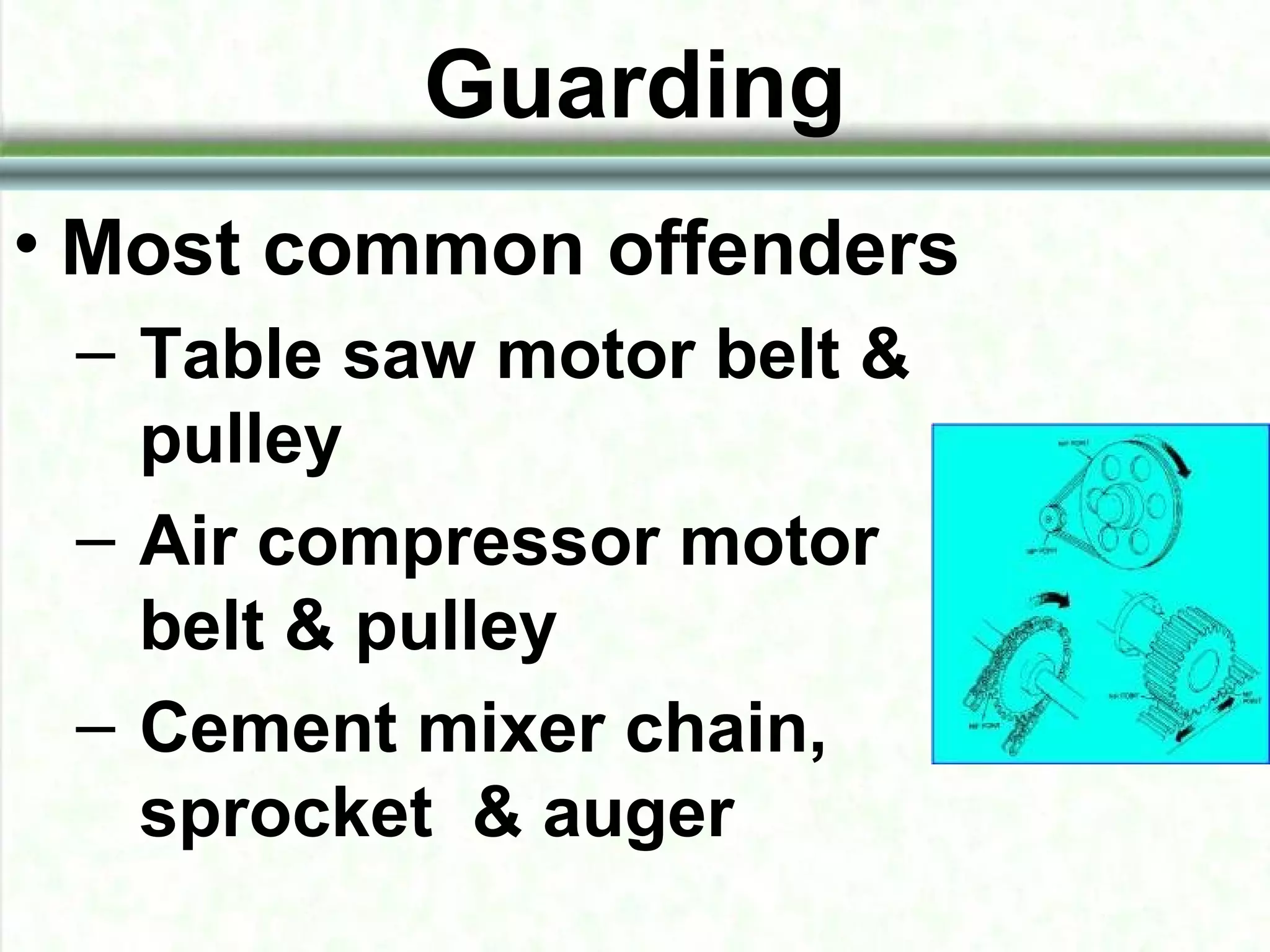
• Most common offenders
– Table saw motor belt &
pulley
– Air compressor motor
belt & pulley
– Cement mixer chain,
sprocket & auger
Guarding
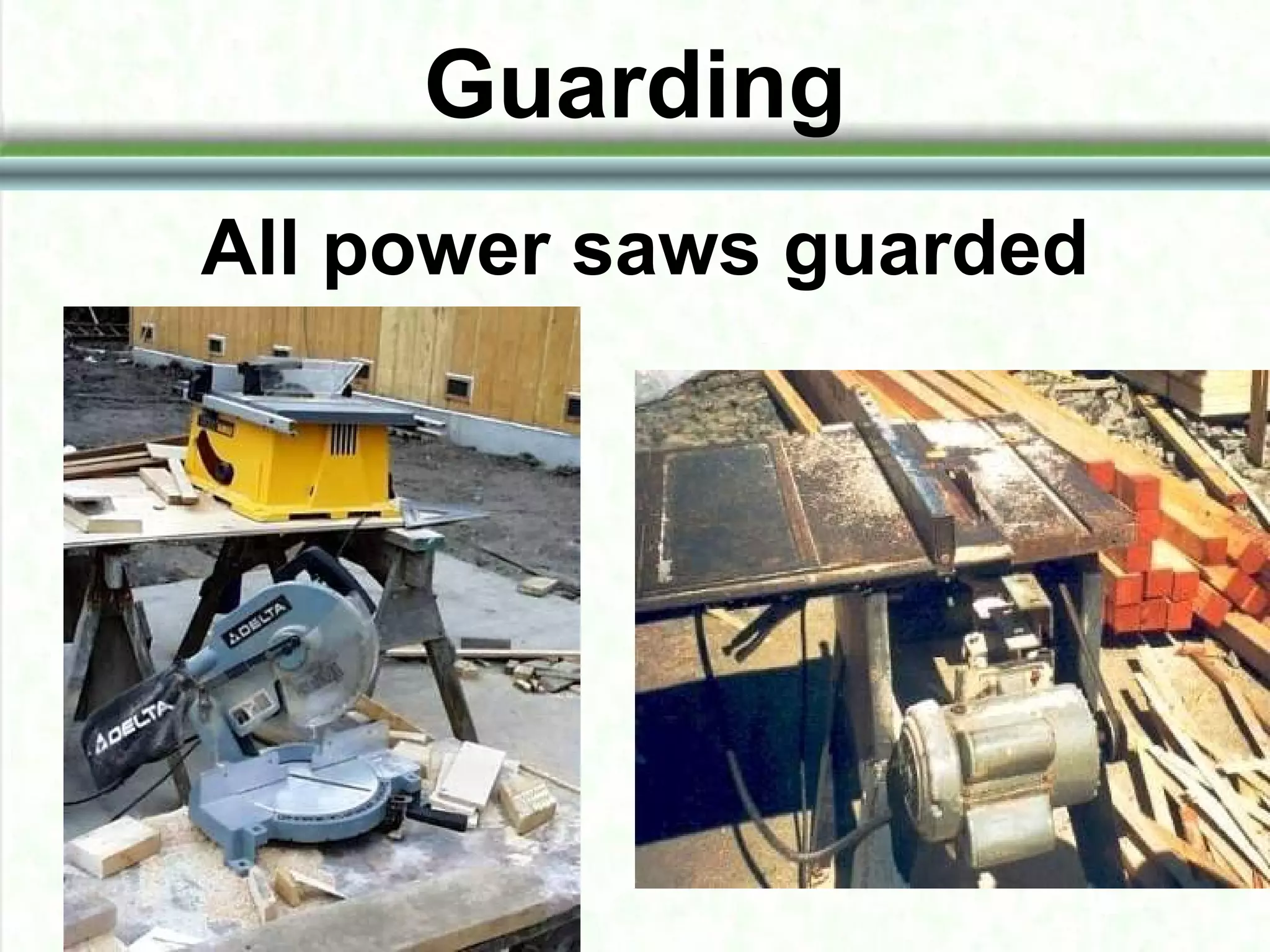
All power saws guarded
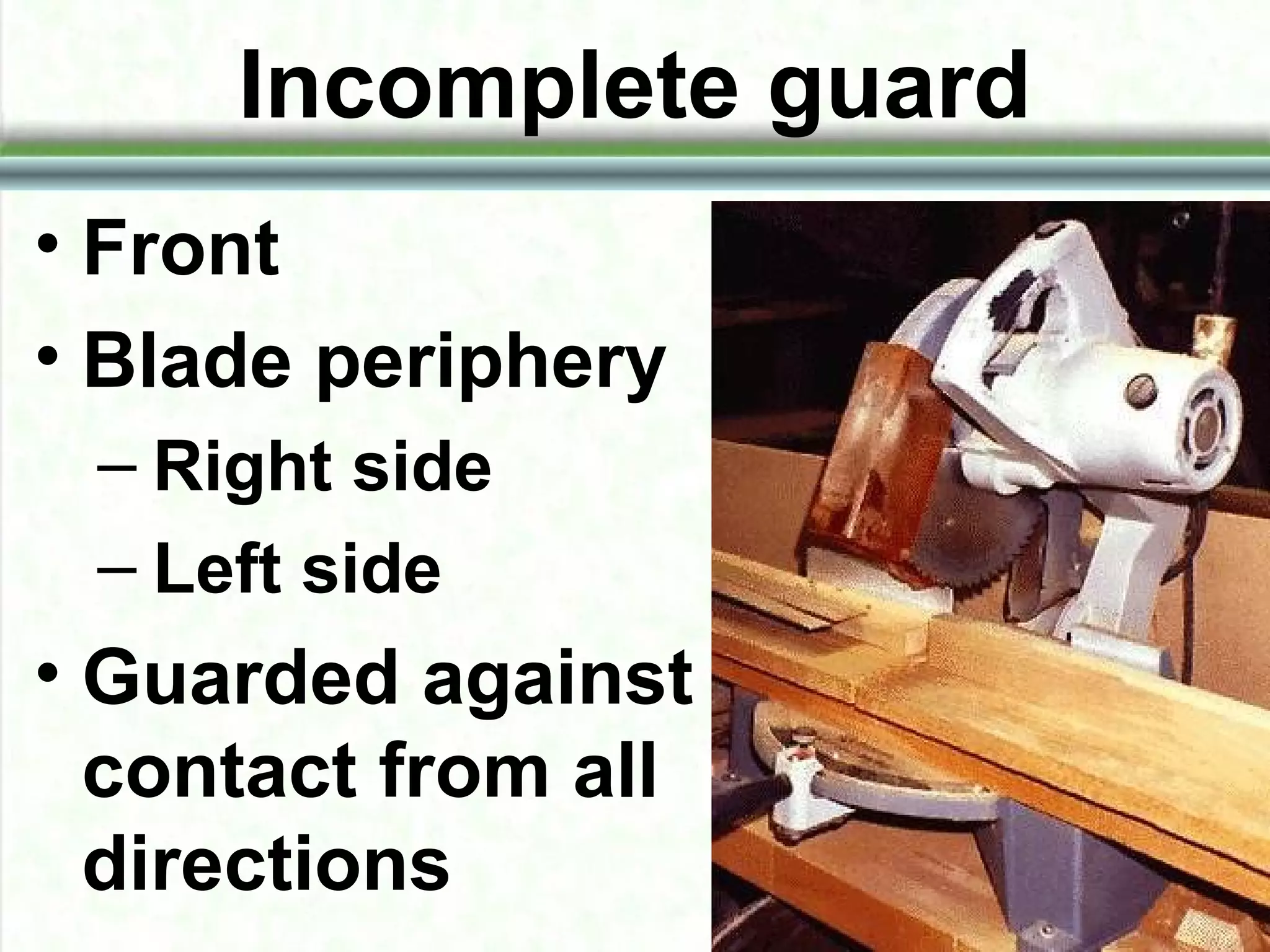
Incomplete guard
• Front
• Blade periphery
– Right side
– Left side
• Guarded against
contact from all
directions
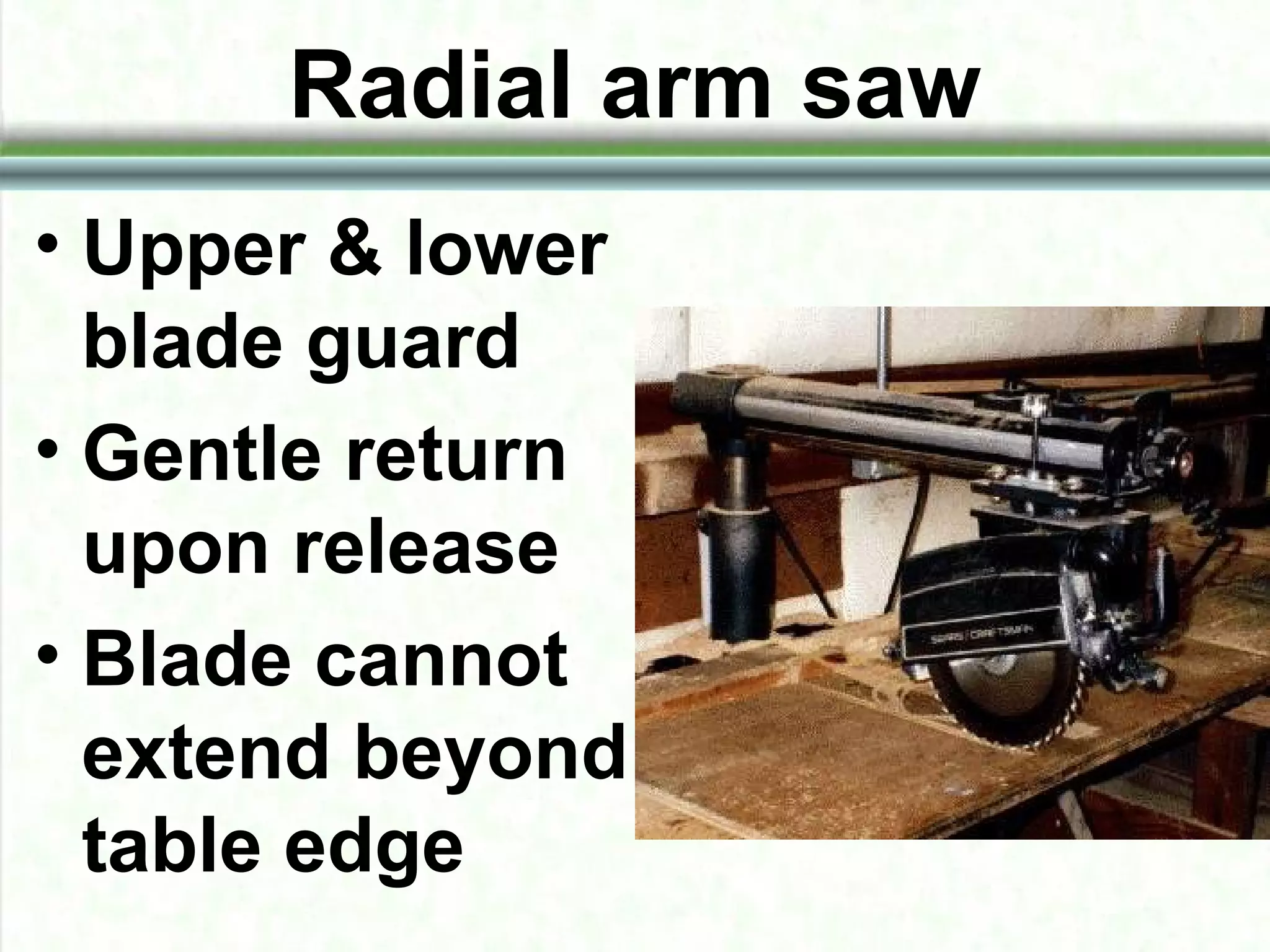
Radial arm saw
• Upper & lower
blade guard
• Gentle return
upon release
• Blade cannot
extend beyond
table edge
Angle Grinders
180° Guard Required
Ladders
• Extend 36” above landing
• Secured
Yes No
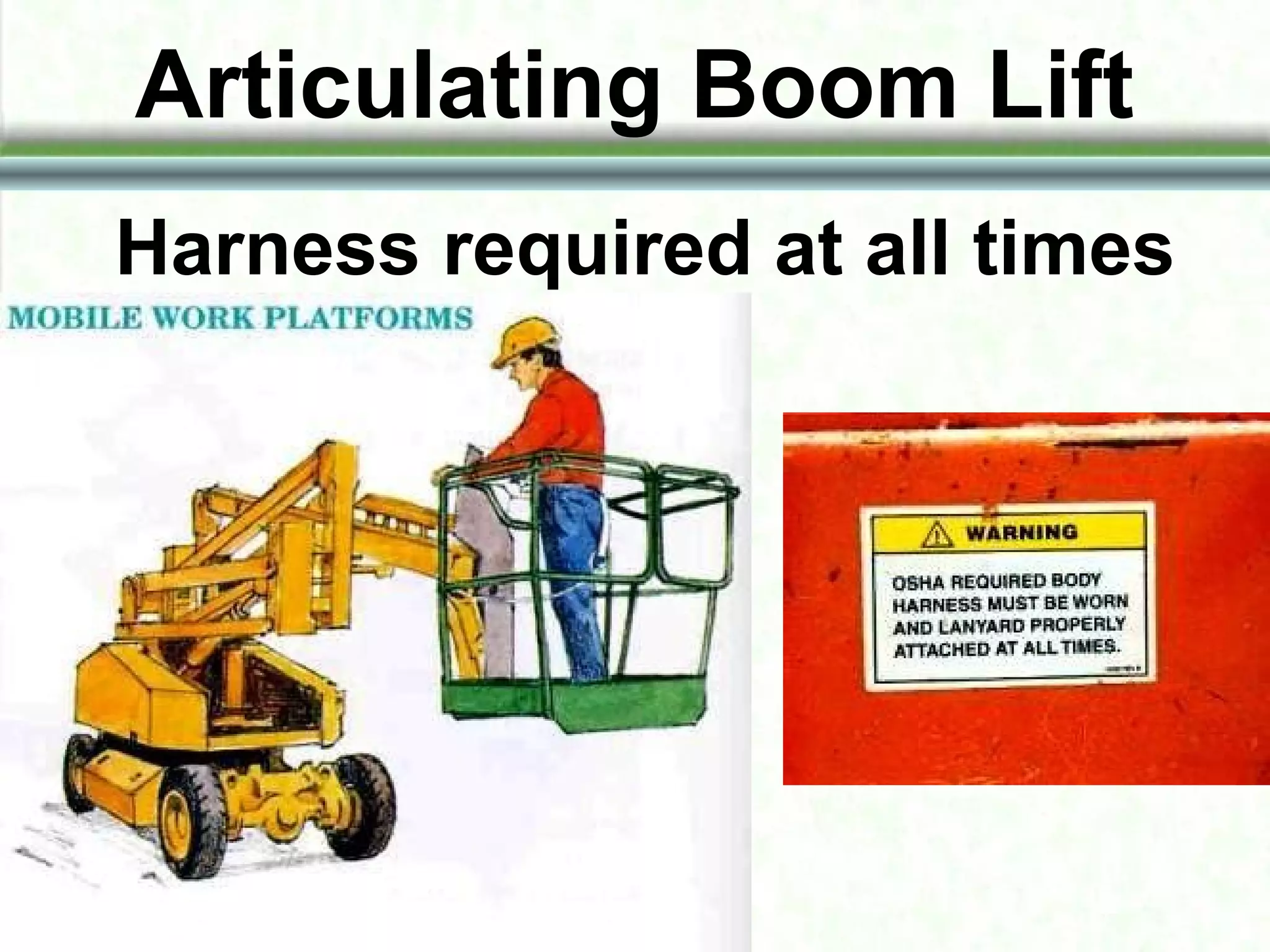
Articulating Boom Lift
Harness required at all times
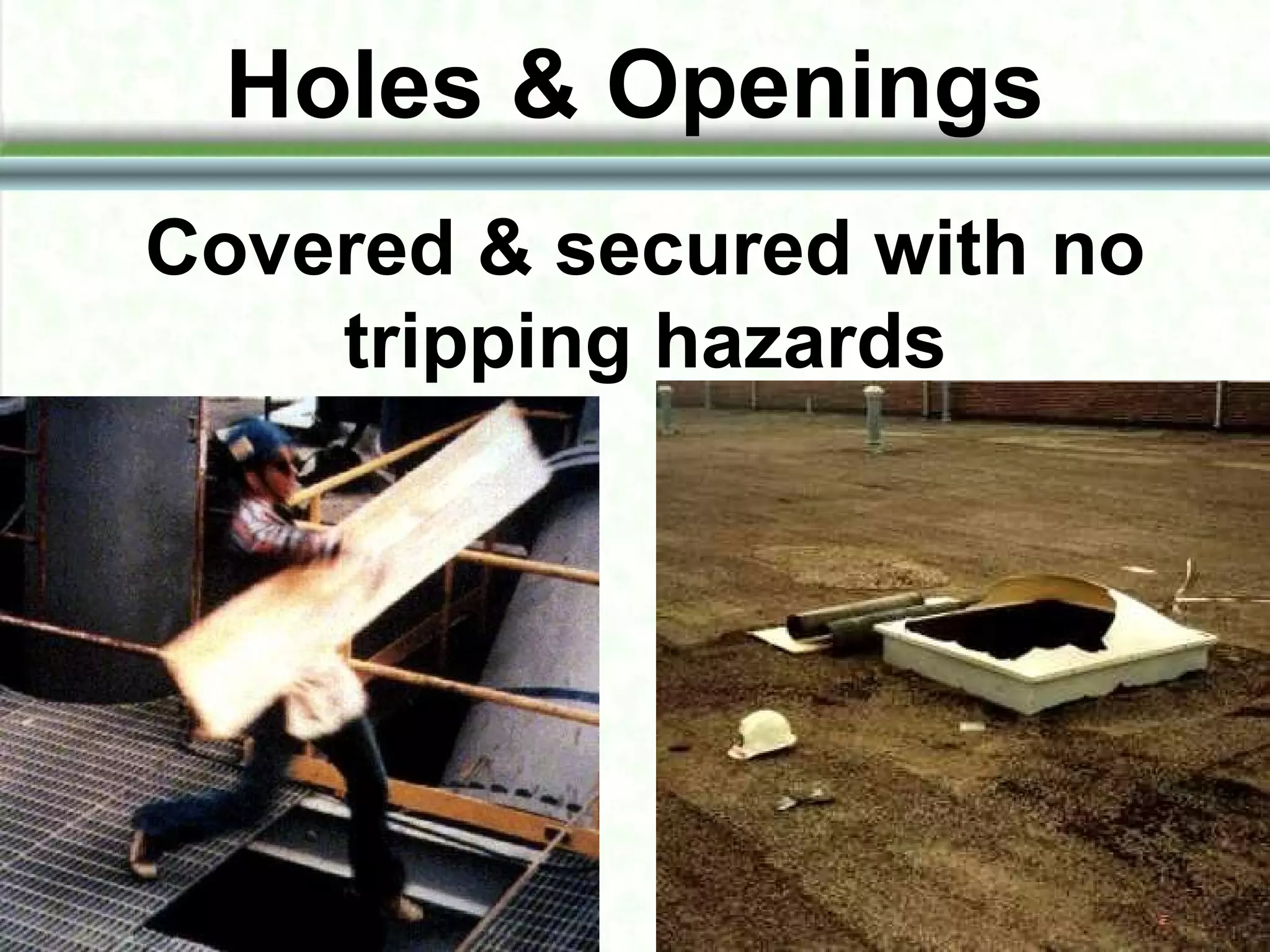
Holes & Openings
Covered & secured with no
tripping hazards
Minimum Clothing
At least a short-sleeve shirt, long
pants & substantial footwear
Yes No
Hard Hats
• Readily accessible
• When overhead hazards exist
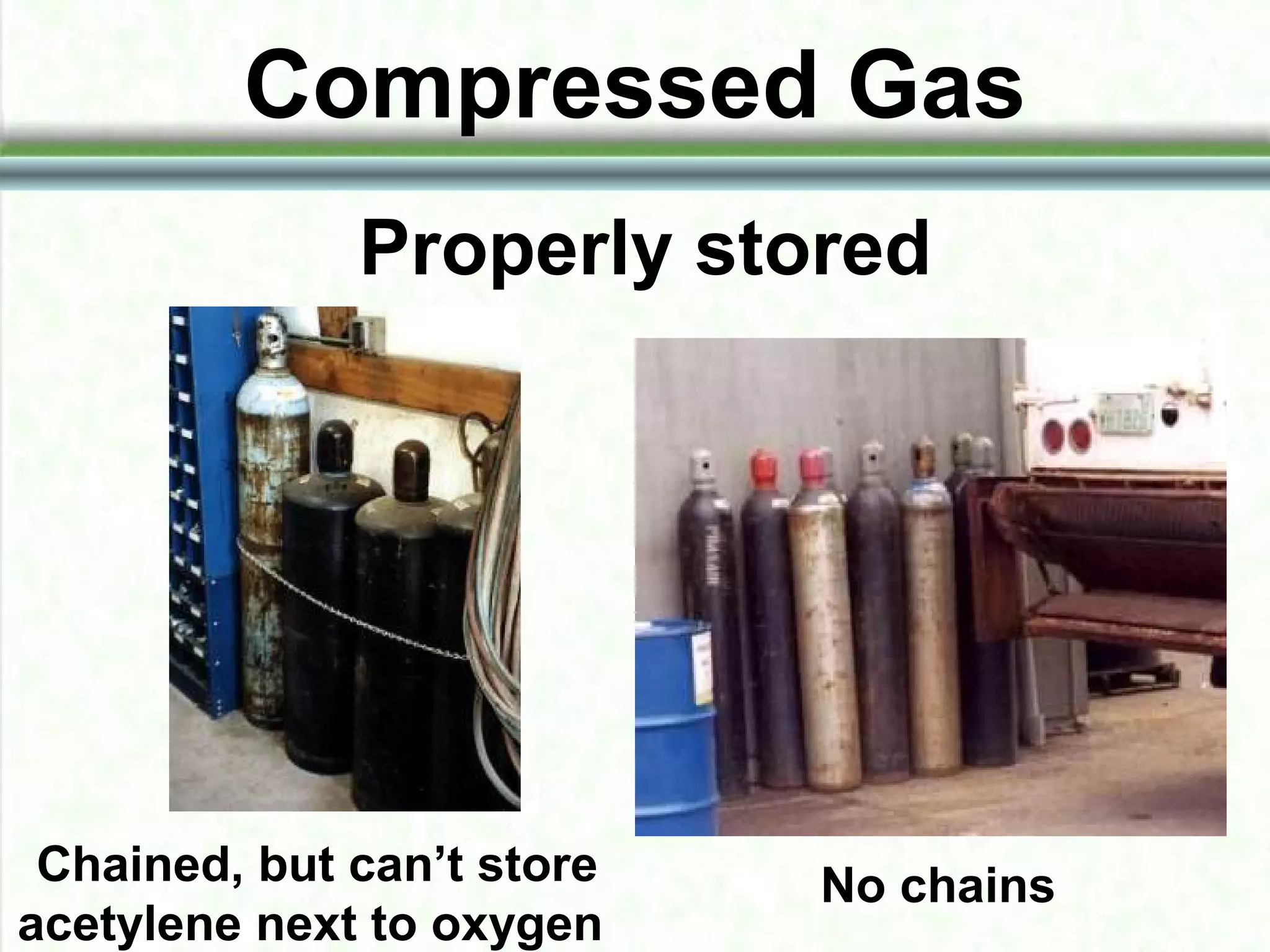
Compressed Gas
Properly stored
No chainsChained, but can’t store
acetylene next to oxygen
Vehicular Traffic Hazards
High-visibility apparel on road
projects
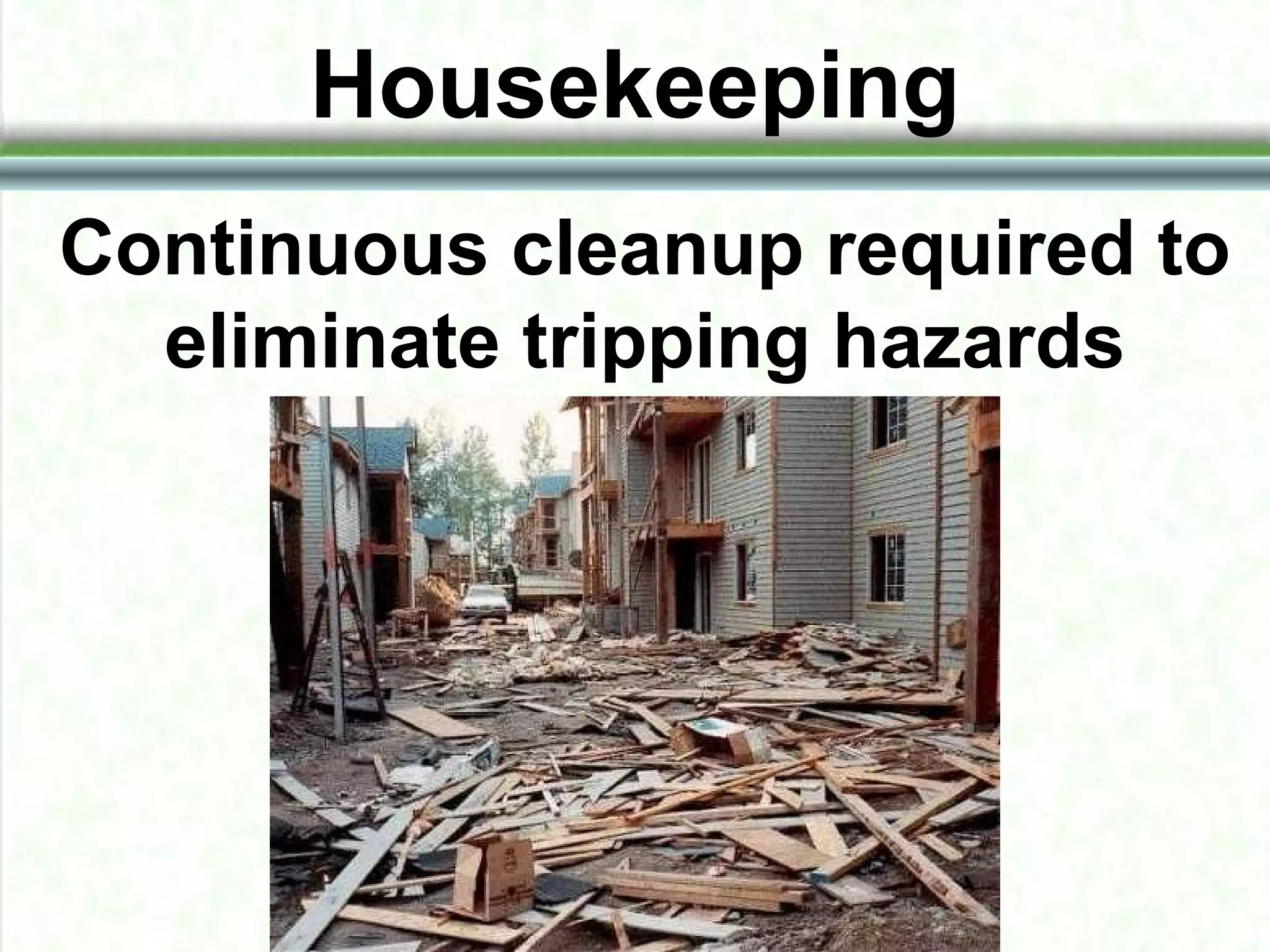
Housekeeping
Continuous cleanup required to
eliminate tripping hazards
First Aid
First aid supplies readily
available
Accident Prevention
• Written in outline format
• Tailored to particular operation
• Weekly safety meetings
• Walk-around safety inspections
Crew-Leader Meetings
Document meetings &
attendance
PPE
• Deficiencies in PPE include:
– Failure to use
– Improper use
– Lack of maintenance
– Not replaced when worn out
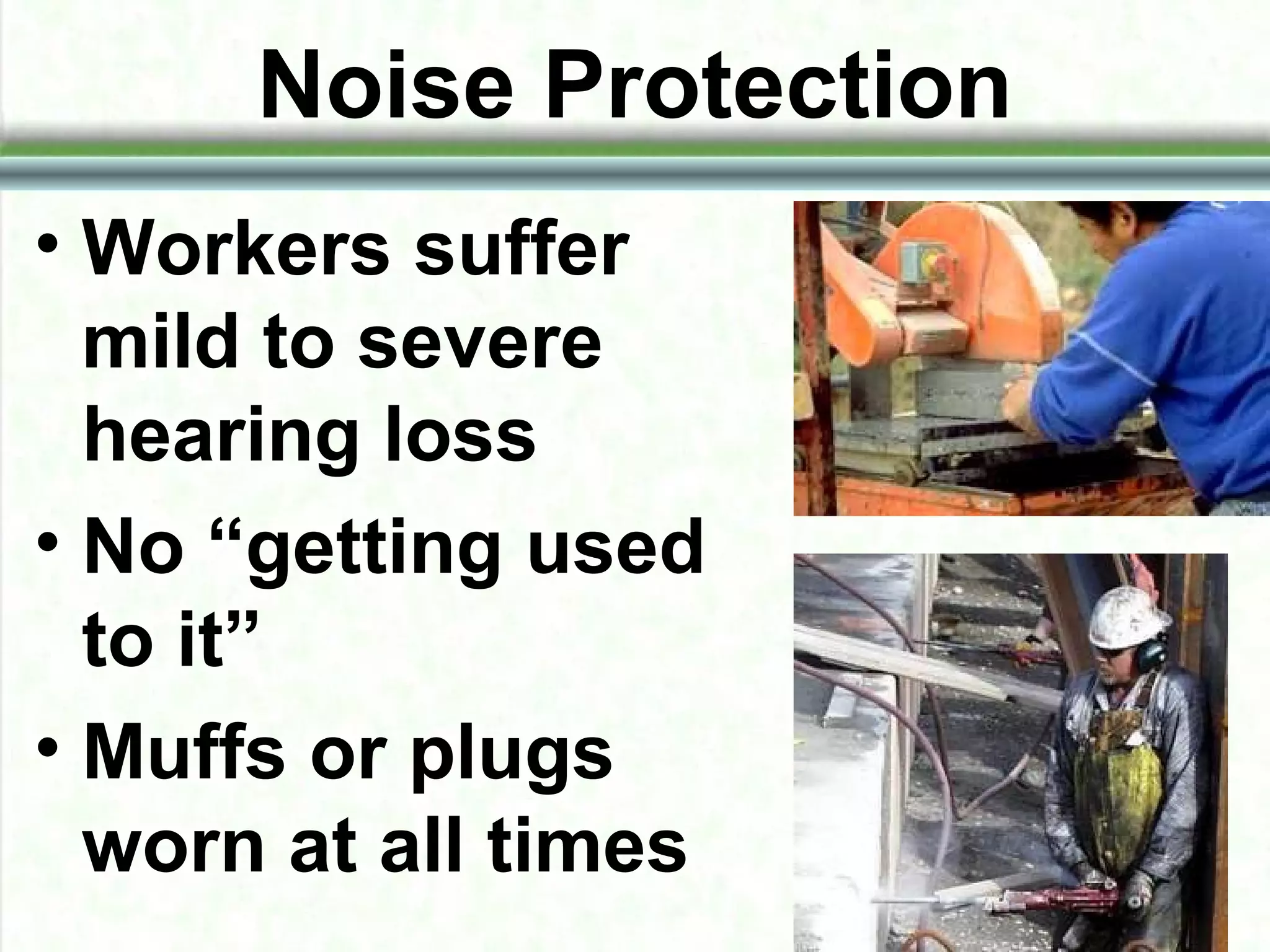
Noise Protection
• Workers suffer
mild to severe
hearing loss
• No “getting used
to it”
• Muffs or plugs
worn at all times
HazCom
• Labels
• MSDS
• Training
Emergency Wash
• Corrosives
–Destroy tissue & eyes
–Acids & caustics
–Ph < 2.5 or > 11
• Strong irritants -
–Inflammatory effect
–At point of contact
• Toxic chemicals -
–

Construction self inspection guide

Editor's Notes

  • #4 This short list of “Direct Hazards” are items that should be found on you Safety Inspection Checklist. This is not a complete list, ONLY a start.
  • #5 This short list of “Direct Hazards” are items that should be found on you Safety Inspection Checklist. This is not a complete list, ONLY a start.
  • #7 This is one of the items on the Construction Attitudes Checklist.
  • #8 Normally, the ground pin doesn’t carry current. When a fault develops in the tool such that a power lead touches the body of the tool, then current can flow through an employee who touches the tool. A ground wire attached to the body of the tool will cause a short circuit and trip the breaker shutting off power when 15-20 amps are passing through the circuit. GFCI is better. It senses the current flow through the hot and neutral. If it detects a 5 ma difference between the two, it will shut off the power. On construction sites, where moisture is frequently present and cords are easily subjected to damage, employers are required to implement an assured grounding program that tests the ground on cords and tools periodically and color codes the cords. Alternatively, GFCIs can be used on the construction site. Some tools are “double insulated” so that there is no possibility of touching energized metal parts in a malfunctioning tool. These tools specifically state that they are double insulated or have a double insulated symbol:
  • #21 The standard requires the the point of operation be guarded against contact from all directions. This guard has a missing component. Some manufacturers do make inadequate guards.
  • #22 Remember that BOTH side of the blade MUST be guarded. Blade guards bust be checked regularly to ensure that they are operating as designed and NOT pinned up. Radial saw doesn’t have lower guard on blade Standard guard is not always convenient for production use. Clear Lexan guard extends 8” from blade in all directions. Adjusted to ride above stock. Fabricated guard. Gentle return upon release Saw must not travel beyond the end of the table.
  • #37 Of the special programs we’ve talked about, the hazard chemical communication program is the most commonly needed. If you use a coded system of labeling such as shown in the slide, your program must contain an explanation of the system or include explanatory material from the manufacturer of a commercial system.