Connecting the Dots Growing an Ecologically Mindful Living Learning Environment
Copresenters Patti Kenney,   Academic Learning Coordinator, Liberty Hyde Bailey Scholars Program, Michigan State University Katie Clark,  Student,   Residential Initiative for the Study of the Environment, College of Social Science, Michigan State University
Additional Collaborators Frank A. Fear,   Community, Agriculture, Recreation and Resource Studies and Bailey Scholar, Michigan State University. Terry P. Link,   Director, Office for Campus Sustainability and Bailey Scholar, Michigan State University.  Laurie Thorp,  Director, RISE (Residential Initiative for the Study of the Environment) and Bailey Scholar, Michigan State University.
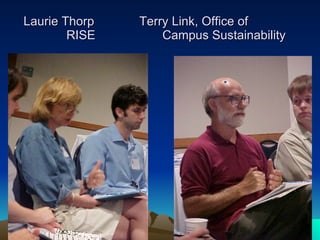
Laurie Thorp  Terry Link, Office of  RISE Campus Sustainability
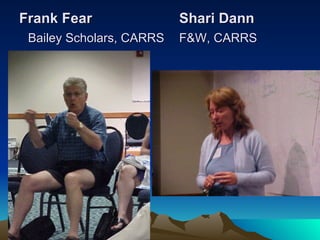
Frank Fear Shari Dann     Bailey Scholars, CARRS F&W, CARRS
An ecologically mindful living learning community Connecting students’ commitments to  Make the world a better place Integrate content areas Develop skills  Engage wider community
Context Student dissatisfaction with living choices Land-grant university Provost’s Vision for Liberal Arts includes extending living learning options Diminishing financial resources Programs with common goals & values Commitment to collaborative process
Key players *RISE *Bailey Scholars  *ECO *Community Agriculture, *Office for Recreation &    Campus  Resource Studies Sustainability  *Environmental  *MSU Student Journalism  Organic Farm
Key commitments Ecologically mindful residence hall  (control over food choices,  waste reduction, building operations) Deliberative, democratic self-governance Integrative curriculum
The Importance of Dialog “ Dialog is shared exploration toward greater understanding, connection, or possibility.”  Tom Atlee, Co-Intelligence Institute “ Dialog is about discovering what our true values are, about expanding our capacity for attention, awareness and learning with and from each other, exploring the frontiers of what it means to be human, in relationship to each other and our world.” Glenna Gerard, The Dialog Group
Integrative Curriculum Connected learning Criticality Holistic (personal, professional, academic, emotional, spiritual intelligence) Self-generated learning goals and evaluation
Community of Scholarly Practice Community becomes its own practice Theory and practice are interrelated Actions and reflections are interdependent Self-governance Engagement beyond the community
Modified Open Space 1) Whoever comes is the right people   2)  Whatever happens is the only thing that could have   3) Whenever it starts is the right time   4)  Whenever it’s over, it’s over
The law of two feet if at any time you find yourself in any situation where you are neither learning nor contributing – use you two feet and move to some place more to you liking
What makes Open Space work? Self-organization Safe environment High levels of diversity and complexity Chaos, or the drive toward change Inner drive toward improvement Stuart Kaufmann
Colloquy Learning Goals Develop programmatic framework Connect with relevant community programs & opportunities Identify linkages with existing campus programs Engage a supportive network of people to move the proposal forward
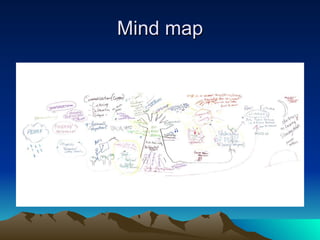
Mind mapping Will people really color on the board? Will any sense emerge out of the chaos?
Mind map
Emerging Groups Pedagogy of Place/Building & Landscape as Teacher     Engagement and Governance Food Curriculum
Pedagogy of Place Location in a small, community oriented residence hall (food, beauty) Eventual location in a LEED certified residence hall Creation of a commons A building that teaches
Engagement and governance Who leads?  What leadership styles for what contexts? How are community decisions made? Accountability How to balance shared decision making? How much autonomy?
Food Students have option to actively participate in food purchasing, preparation and disposal Student organic farm, local farmers Food that teaches: integrating food system, health and wholeness, budget Opportunity to grow own food
Curriculum 21 credits (specialization) 9 core, 12 elective Understand self in relation to place Systems thinking Synthesize knowledge across disciplines Think and act critically Deliberative dialog Leadership skills—thought and action
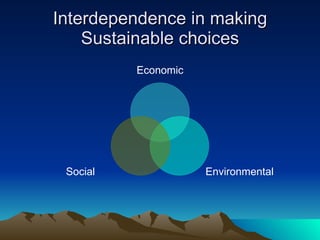
Interdependence in making Sustainable choices Economic Environmental Social
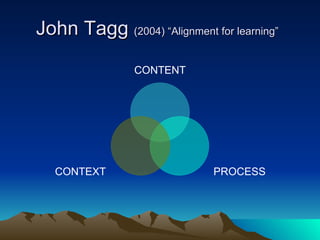
John Tagg  (2004) “Alignment for learning”   CONTENT PROCESS CONTEXT
For more information Colloquy:  www.re-news.net/colloquy Bailey Scholars Program:  www.bsp.msu.edu Proposal copies— e-mail Patti Kenney  [email_address]   or Katie Clark  [email_address]

Connecting The Dots3

  • 1.
    Connecting the DotsGrowing an Ecologically Mindful Living Learning Environment
  • 2.
    Copresenters Patti Kenney, Academic Learning Coordinator, Liberty Hyde Bailey Scholars Program, Michigan State University Katie Clark, Student, Residential Initiative for the Study of the Environment, College of Social Science, Michigan State University
  • 3.
    Additional Collaborators FrankA. Fear, Community, Agriculture, Recreation and Resource Studies and Bailey Scholar, Michigan State University. Terry P. Link, Director, Office for Campus Sustainability and Bailey Scholar, Michigan State University. Laurie Thorp, Director, RISE (Residential Initiative for the Study of the Environment) and Bailey Scholar, Michigan State University.
  • 4.
    Laurie Thorp Terry Link, Office of RISE Campus Sustainability
  • 5.
    Frank Fear ShariDann Bailey Scholars, CARRS F&W, CARRS
  • 6.
    An ecologically mindfulliving learning community Connecting students’ commitments to Make the world a better place Integrate content areas Develop skills Engage wider community
  • 7.
    Context Student dissatisfactionwith living choices Land-grant university Provost’s Vision for Liberal Arts includes extending living learning options Diminishing financial resources Programs with common goals & values Commitment to collaborative process
  • 8.
    Key players *RISE*Bailey Scholars *ECO *Community Agriculture, *Office for Recreation & Campus Resource Studies Sustainability *Environmental *MSU Student Journalism Organic Farm
  • 9.
    Key commitments Ecologicallymindful residence hall (control over food choices, waste reduction, building operations) Deliberative, democratic self-governance Integrative curriculum
  • 10.
    The Importance ofDialog “ Dialog is shared exploration toward greater understanding, connection, or possibility.” Tom Atlee, Co-Intelligence Institute “ Dialog is about discovering what our true values are, about expanding our capacity for attention, awareness and learning with and from each other, exploring the frontiers of what it means to be human, in relationship to each other and our world.” Glenna Gerard, The Dialog Group
  • 11.
    Integrative Curriculum Connectedlearning Criticality Holistic (personal, professional, academic, emotional, spiritual intelligence) Self-generated learning goals and evaluation
  • 12.
    Community of ScholarlyPractice Community becomes its own practice Theory and practice are interrelated Actions and reflections are interdependent Self-governance Engagement beyond the community
  • 13.
    Modified Open Space1) Whoever comes is the right people 2) Whatever happens is the only thing that could have 3) Whenever it starts is the right time 4) Whenever it’s over, it’s over
  • 14.
    The law oftwo feet if at any time you find yourself in any situation where you are neither learning nor contributing – use you two feet and move to some place more to you liking
  • 15.
    What makes OpenSpace work? Self-organization Safe environment High levels of diversity and complexity Chaos, or the drive toward change Inner drive toward improvement Stuart Kaufmann
  • 16.
    Colloquy Learning GoalsDevelop programmatic framework Connect with relevant community programs & opportunities Identify linkages with existing campus programs Engage a supportive network of people to move the proposal forward
  • 17.
    Mind mapping Willpeople really color on the board? Will any sense emerge out of the chaos?
  • 18.
  • 19.
    Emerging Groups Pedagogyof Place/Building & Landscape as Teacher   Engagement and Governance Food Curriculum
  • 20.
    Pedagogy of PlaceLocation in a small, community oriented residence hall (food, beauty) Eventual location in a LEED certified residence hall Creation of a commons A building that teaches
  • 21.
    Engagement and governanceWho leads? What leadership styles for what contexts? How are community decisions made? Accountability How to balance shared decision making? How much autonomy?
  • 22.
    Food Students haveoption to actively participate in food purchasing, preparation and disposal Student organic farm, local farmers Food that teaches: integrating food system, health and wholeness, budget Opportunity to grow own food
  • 23.
    Curriculum 21 credits(specialization) 9 core, 12 elective Understand self in relation to place Systems thinking Synthesize knowledge across disciplines Think and act critically Deliberative dialog Leadership skills—thought and action
  • 24.
    Interdependence in makingSustainable choices Economic Environmental Social
  • 25.
    John Tagg (2004) “Alignment for learning” CONTENT PROCESS CONTEXT
  • 26.
    For more informationColloquy: www.re-news.net/colloquy Bailey Scholars Program: www.bsp.msu.edu Proposal copies— e-mail Patti Kenney [email_address] or Katie Clark [email_address]