

Conference Calls
Participation
1The views expressed are based on personal
experience and information collected from the net.
2
Objectives for Conference Calls
 Possible objectives for conference calls
 Requirements gathering
 Design discussions
 Testing strategy related discussions
 Technology selection related discussions
 Status updates / reporting
 Project plan / schedules / delivery related
 …
3
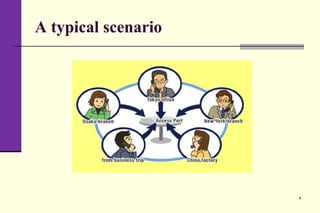
A typical scenario
4
Important Point: No Body Language
Visible
5
Introduction
 Introduce yourself to the customer
 Clear voice
 Precise and concise introduction
 Useful information only
 What to include?
 Name: First name, Last name; nickname, if any
 Education: Degree, discipline, university (college name not required)
 Project details: Name, purpose, your contribution
 Platform expertise
 Hobbies
 Understand responses
 “Would you like me to go into details?”
 “Did I make myself clear?”
 “I can talk about my hobbies, if you like.”
 “Do you have any questions?”
6
Call Purpose
 Purpose
 Discuss (requirements, design, test strategy, …)
 Inform (current status, leave plans, team structure
changes, …)
 Request (additional information, postponement of
deadlines, adding / removing tasks, changes in features,
…)
 Convey bad news 
 Convey good news 
7
Call at a Glance
 Pre-call actions
 During the call
 Post-call actions
8
Pre-call actions
Prepare a clear agenda
Send invitation request to all participants well in time
Communicate the agenda with relevant members
Share relevant documents / reports / links with
relevant members
Be prepared with all data
Go to the call with note book , pen / lap top
9
During the call
 Start the call with:
 Small talk
 List of attendees
 Introductions
 Summary (agenda/status)
 Set the context with proper introduction(s)
 Follow the agenda
 Be precise; use correct terminology
 Take notes and make a list of action items with owners
 Iterate over the action items before completing the call
 Speak clearly, well into the microphone
10
During the Call - Basic Rules
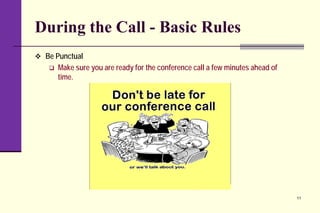
 Be Punctual
 Make sure you are ready for the conference call a few minutes ahead of
time.
11
During the Call - Basic Rules
 Use Your Mute Button
 Any type of background noise can be disruptive and can inhibit the
clarity of the transmission.
 WHO is speaking
 Every time a participant needs to speak they should always begin by
introducing themselves.
 Always Be Prepared
 Unless your conference call is an emergency meeting, there is no excuse for a
lack of preparation from each and every participant.
12
During the Call (contd.)
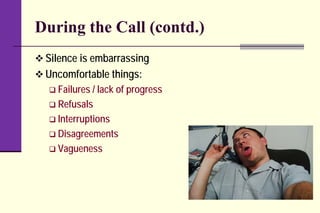
 Silence is embarrassing
 Uncomfortable things:
 Failures / lack of progress
 Refusals
 Interruptions
 Disagreements
 Vagueness
13
During the Call (contd.)
 Successful probing of customer requirements
 Establish rapport with customer
 Get customer talking
 Aim at winning confidence of customer
 Understand customer requirements carefully
 Ask questions skillfully, listen actively
 Seek clarification, minimize scope of ambiguity
 Double–check main considerations and parameters of customer requirement
 Re-confirm nature and full scope of customer requirements
 Probe underlying requirements if any
 Focus on what the customer wants, not on what you want to give him/her.
14
Post-call actions
Send out the meeting notes containing
 Issues discussed
 Action items, closure date, owners
 Open issues
Periodic follow-ups for action items
15
Successful Objection Handling
 Understand customer psyche behind objections
 Determine exact nature and scope of objections
 Probe hard to identify specific objections
 Handle objections with confidence, competence and common sense. Re-assure
the customer.
 Consciously remove fear of losing customer from your mind
 Take rejection in your stride
 Be well informed and professional.
16
Successful Negotiation with Customer
1. Be flexible while talking with customers
2. Acknowledge flexibility shown by customer
3. Follow the principle of give and take
4. Be tactful with customer
5. Show a lot of patience and persistence
6. Seek help from colleagues if necessary
7. Don’t get emotionally involved or agitated during customer interaction
8. Never give up your effort to delight the customer
9. Try and achieve win – win position for both sides
10. Never be desperate or defensive
11. Don’t reject customer’s demands outright
12. Present your arguments in a non aggressive manner
17
Phrases Not to Use on Conference
Calls
 Pass the bottle
 It's your round
 Can they hear us
 Don't worry, they can't see us
 Does he/she ever stop talking
 I'm glad this is not being recorded
 Let's agree not to make a decision, then we can have
another meeting!
18
Phrases used in nearly every
teleconference
 Are we all on?
 Can everybody hear me?
 Did everybody get the agenda?
 Let’s keep this short
 We’ll just wait a few minutes
 Let’s do a quick roll call
 Sorry I’m / we’re late
19
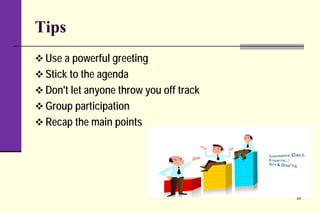
Tips
 Use a powerful greeting
 Stick to the agenda
 Don't let anyone throw you off track
 Group participation
 Recap the main points
20
Always Remember…
1. Distribute a clear agenda in advance of the call and stick to it
2. Send the dial-in number, pass code, and instructions multiple
times
3. Always identify yourself when you’re speaking
4. Limit or eliminate background noise
5. Speak loudly and clearly
6. If you don’t have anything to add, don’t add anything
7. End the call on time
8. Close with clear next steps
21
THANK YOU
22

Conference Calls Participation

  • 1.
    Conference Calls Participation 1The viewsexpressed are based on personal experience and information collected from the net.
  • 2.
  • 3.
    Objectives for ConferenceCalls  Possible objectives for conference calls  Requirements gathering  Design discussions  Testing strategy related discussions  Technology selection related discussions  Status updates / reporting  Project plan / schedules / delivery related  … 3
  • 4.
  • 5.
    Important Point: NoBody Language Visible 5
  • 6.
    Introduction  Introduce yourselfto the customer  Clear voice  Precise and concise introduction  Useful information only  What to include?  Name: First name, Last name; nickname, if any  Education: Degree, discipline, university (college name not required)  Project details: Name, purpose, your contribution  Platform expertise  Hobbies  Understand responses  “Would you like me to go into details?”  “Did I make myself clear?”  “I can talk about my hobbies, if you like.”  “Do you have any questions?” 6
  • 7.
    Call Purpose  Purpose Discuss (requirements, design, test strategy, …)  Inform (current status, leave plans, team structure changes, …)  Request (additional information, postponement of deadlines, adding / removing tasks, changes in features, …)  Convey bad news   Convey good news  7
  • 8.
    Call at aGlance  Pre-call actions  During the call  Post-call actions 8
  • 9.
    Pre-call actions Prepare aclear agenda Send invitation request to all participants well in time Communicate the agenda with relevant members Share relevant documents / reports / links with relevant members Be prepared with all data Go to the call with note book , pen / lap top 9
  • 10.
    During the call Start the call with:  Small talk  List of attendees  Introductions  Summary (agenda/status)  Set the context with proper introduction(s)  Follow the agenda  Be precise; use correct terminology  Take notes and make a list of action items with owners  Iterate over the action items before completing the call  Speak clearly, well into the microphone 10
  • 11.
    During the Call- Basic Rules  Be Punctual  Make sure you are ready for the conference call a few minutes ahead of time. 11
  • 12.
    During the Call- Basic Rules  Use Your Mute Button  Any type of background noise can be disruptive and can inhibit the clarity of the transmission.  WHO is speaking  Every time a participant needs to speak they should always begin by introducing themselves.  Always Be Prepared  Unless your conference call is an emergency meeting, there is no excuse for a lack of preparation from each and every participant. 12
  • 13.
    During the Call(contd.)  Silence is embarrassing  Uncomfortable things:  Failures / lack of progress  Refusals  Interruptions  Disagreements  Vagueness 13
  • 14.
    During the Call(contd.)  Successful probing of customer requirements  Establish rapport with customer  Get customer talking  Aim at winning confidence of customer  Understand customer requirements carefully  Ask questions skillfully, listen actively  Seek clarification, minimize scope of ambiguity  Double–check main considerations and parameters of customer requirement  Re-confirm nature and full scope of customer requirements  Probe underlying requirements if any  Focus on what the customer wants, not on what you want to give him/her. 14
  • 15.
    Post-call actions Send outthe meeting notes containing  Issues discussed  Action items, closure date, owners  Open issues Periodic follow-ups for action items 15
  • 16.
    Successful Objection Handling Understand customer psyche behind objections  Determine exact nature and scope of objections  Probe hard to identify specific objections  Handle objections with confidence, competence and common sense. Re-assure the customer.  Consciously remove fear of losing customer from your mind  Take rejection in your stride  Be well informed and professional. 16
  • 17.
    Successful Negotiation withCustomer 1. Be flexible while talking with customers 2. Acknowledge flexibility shown by customer 3. Follow the principle of give and take 4. Be tactful with customer 5. Show a lot of patience and persistence 6. Seek help from colleagues if necessary 7. Don’t get emotionally involved or agitated during customer interaction 8. Never give up your effort to delight the customer 9. Try and achieve win – win position for both sides 10. Never be desperate or defensive 11. Don’t reject customer’s demands outright 12. Present your arguments in a non aggressive manner 17
  • 18.
    Phrases Not toUse on Conference Calls  Pass the bottle  It's your round  Can they hear us  Don't worry, they can't see us  Does he/she ever stop talking  I'm glad this is not being recorded  Let's agree not to make a decision, then we can have another meeting! 18
  • 19.
    Phrases used innearly every teleconference  Are we all on?  Can everybody hear me?  Did everybody get the agenda?  Let’s keep this short  We’ll just wait a few minutes  Let’s do a quick roll call  Sorry I’m / we’re late 19
  • 20.
    Tips  Use apowerful greeting  Stick to the agenda  Don't let anyone throw you off track  Group participation  Recap the main points 20
  • 21.
    Always Remember… 1. Distributea clear agenda in advance of the call and stick to it 2. Send the dial-in number, pass code, and instructions multiple times 3. Always identify yourself when you’re speaking 4. Limit or eliminate background noise 5. Speak loudly and clearly 6. If you don’t have anything to add, don’t add anything 7. End the call on time 8. Close with clear next steps 21
  • 22.