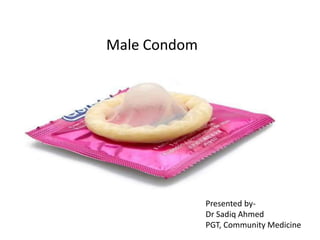

Male Condom
Presented by-
Dr Sadiq Ahmed
PGT, Community Medicine
Introduction
• A condom is a
– sheath-shaped
– barrier type contraceptive device
– used during sexual intercourse
– to reduce the probability of pregnancy or sexually
transmitted infections (STIs)
Introduction contd.
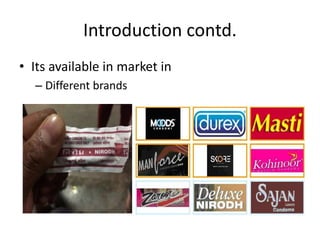
• Its available in market in
– Different brands
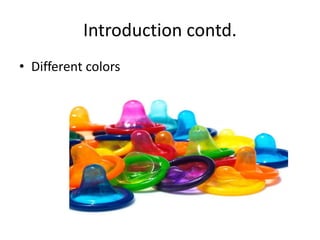
Introduction contd.
• Different colors
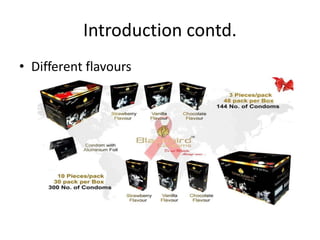
Introduction contd.
• Different flavours
History
• Ancient Egyptians, used linen sheaths
• In 1500s - syphilis epidemic in Europe, used
linen soaked in a solution of salt and herbs
• In 1700s, condoms made from animal intestines
• The Chinese used oiled silk paper
• Japanese used leather and tortoise shell sheaths
History contd.
• In 1839, Charles Goodyear discovered a way of
processing natural rubber
• The first rubber condom was produced in
1855
• Japan- the highest rate of condom usage in
the world (80% of contraception)
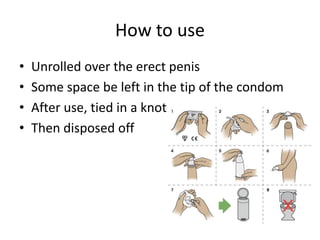
How to use
• Unrolled over the erect penis
• Some space be left in the tip of the condom
• After use, tied in a knot
• Then disposed off
Uses
• Birth control tool
• Prevention of Sexually transmitted infections
• Adult film industry (law passed in LA 2012)
• Sex education programs
• Special collection condom (silicone or
polyurethane) to collect semen
• To cover endovaginal ultrasound probes
Advantages
• Low price
• Easily available
• Easy to use
• Safe
• No side effects
• Protects against STDs
Disadvantages
• Decrease sexual pleasure
• Latex allergy
• Tear off
• Uncooperative partner
• Failure rate
– 2% (correct and consistent) 12%(typical)
Causes of failure
• Not put on correctly.
• Torn by fingernails
• Not enough lubrication during intercourse.
• Wrong lubricant
• Prolonged/vigorous sexual intercourse.
• Condom slips off during withdrawal.
Condom

Condom

  • 1.
    Male Condom Presented by- DrSadiq Ahmed PGT, Community Medicine
  • 2.
    Introduction • A condomis a – sheath-shaped – barrier type contraceptive device – used during sexual intercourse – to reduce the probability of pregnancy or sexually transmitted infections (STIs)
  • 3.
    Introduction contd. • Itsavailable in market in – Different brands
  • 4.
  • 5.
  • 6.
    History • Ancient Egyptians,used linen sheaths • In 1500s - syphilis epidemic in Europe, used linen soaked in a solution of salt and herbs • In 1700s, condoms made from animal intestines • The Chinese used oiled silk paper • Japanese used leather and tortoise shell sheaths
  • 7.
    History contd. • In1839, Charles Goodyear discovered a way of processing natural rubber • The first rubber condom was produced in 1855 • Japan- the highest rate of condom usage in the world (80% of contraception)
  • 8.
    How to use •Unrolled over the erect penis • Some space be left in the tip of the condom • After use, tied in a knot • Then disposed off
  • 9.
    Uses • Birth controltool • Prevention of Sexually transmitted infections • Adult film industry (law passed in LA 2012) • Sex education programs • Special collection condom (silicone or polyurethane) to collect semen • To cover endovaginal ultrasound probes
  • 10.
    Advantages • Low price •Easily available • Easy to use • Safe • No side effects • Protects against STDs
  • 11.
    Disadvantages • Decrease sexualpleasure • Latex allergy • Tear off • Uncooperative partner • Failure rate – 2% (correct and consistent) 12%(typical)
  • 12.
    Causes of failure •Not put on correctly. • Torn by fingernails • Not enough lubrication during intercourse. • Wrong lubricant • Prolonged/vigorous sexual intercourse. • Condom slips off during withdrawal.