Name : Dinda Pradita 
Nawang
Conditional Sentences is a complex,whichy 
consists of two clauses; the if-clause and main clause. 
The if-clause is the dependent clause used to express 
conditional for a result(independent clause). The if-clause 
can come first or second. When it comes first, 
we usually put a comma between the two clauses.
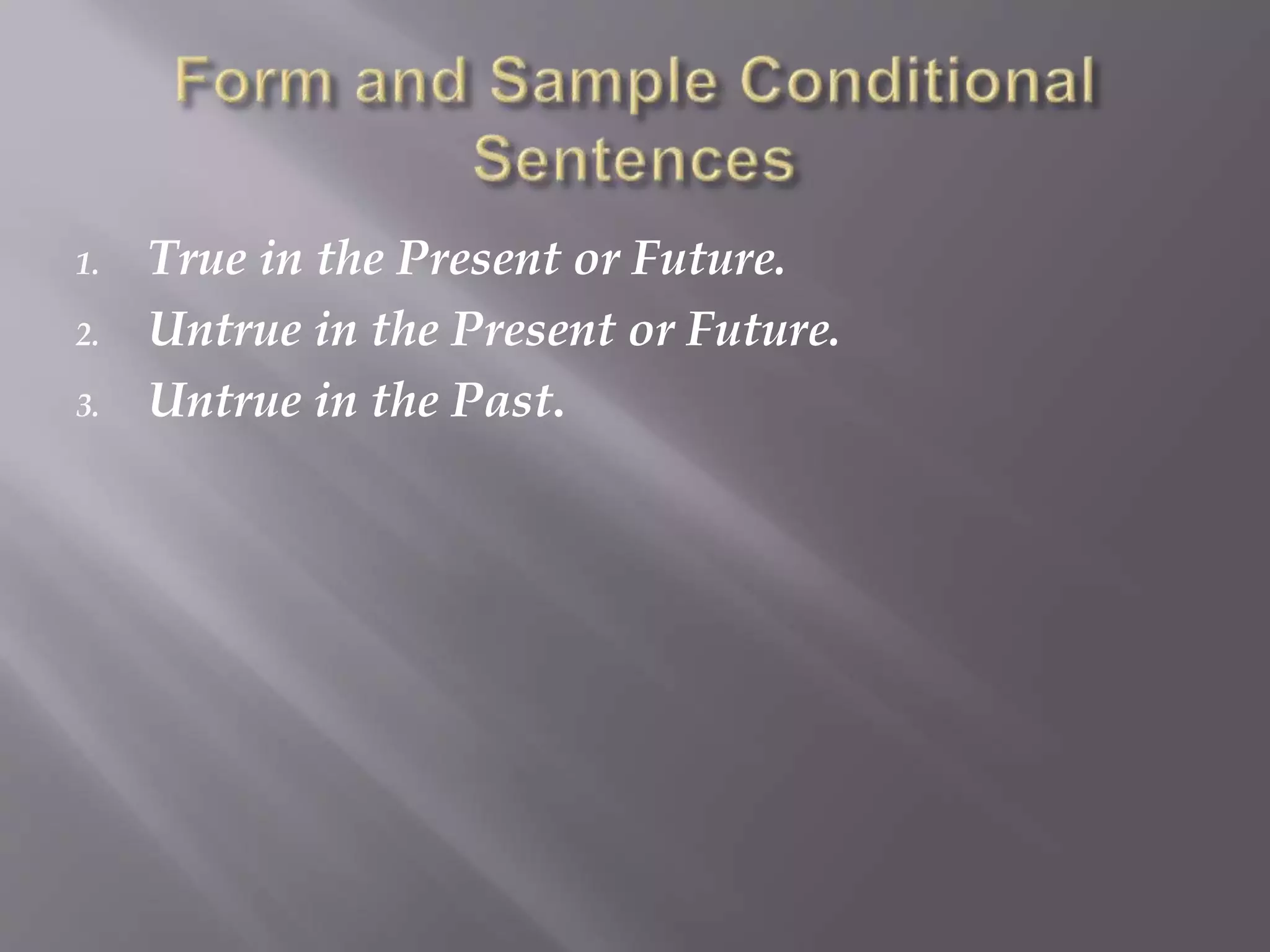
1. True in the Present or Future. 
2. Untrue in the Present or Future. 
3. Untrue in the Past.
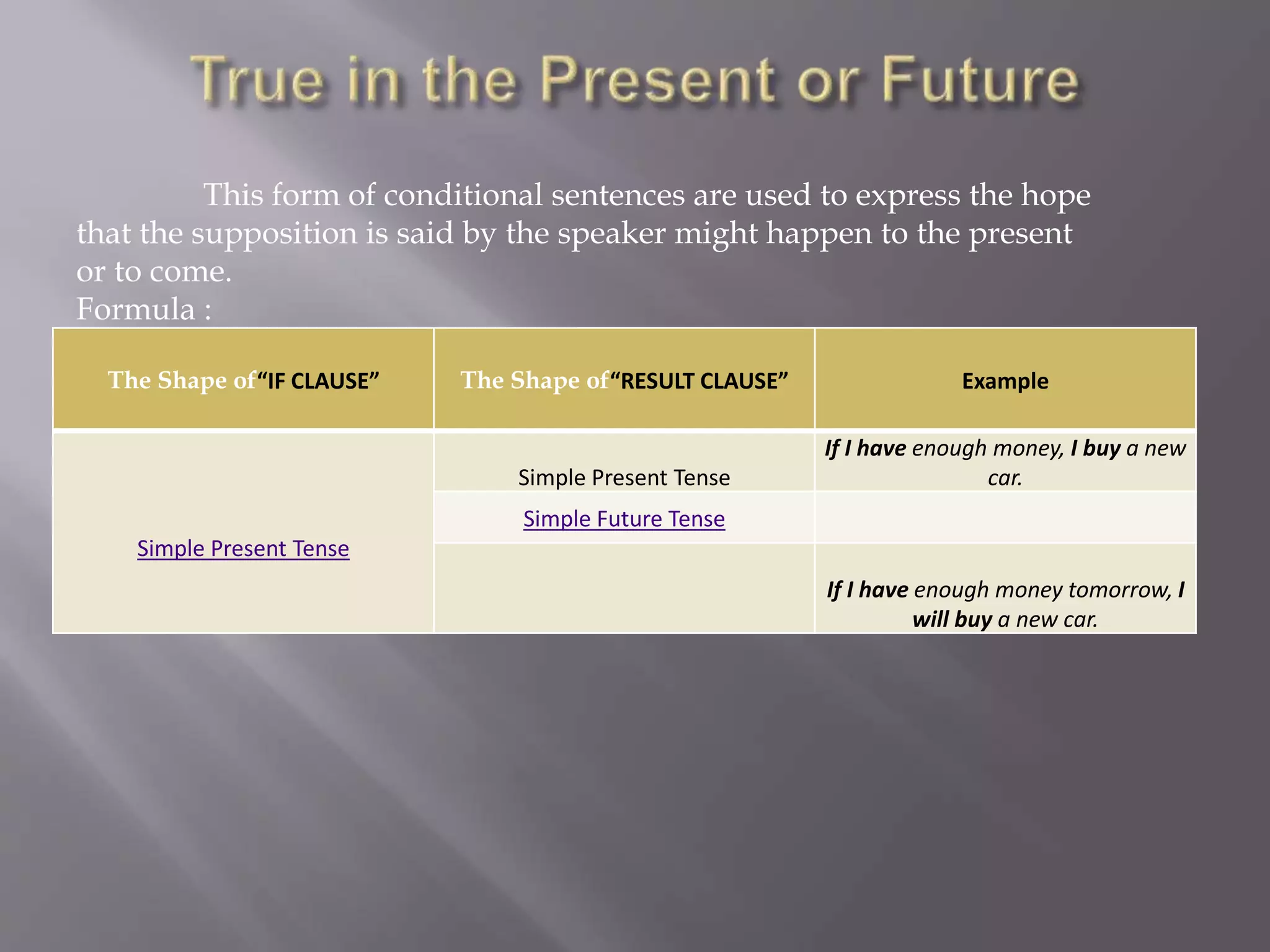
This form of conditional sentences are used to express the hope 
that the supposition is said by the speaker might happen to the present 
or to come. 
Formula : 
The Shape of“IF CLAUSE” The Shape of“RESULT CLAUSE” Example 
Simple Present Tense 
If I have enough money, I buy a new 
car. 
Simple Future Tense 
If I have enough money tomorrow, I 
will buy a new car.
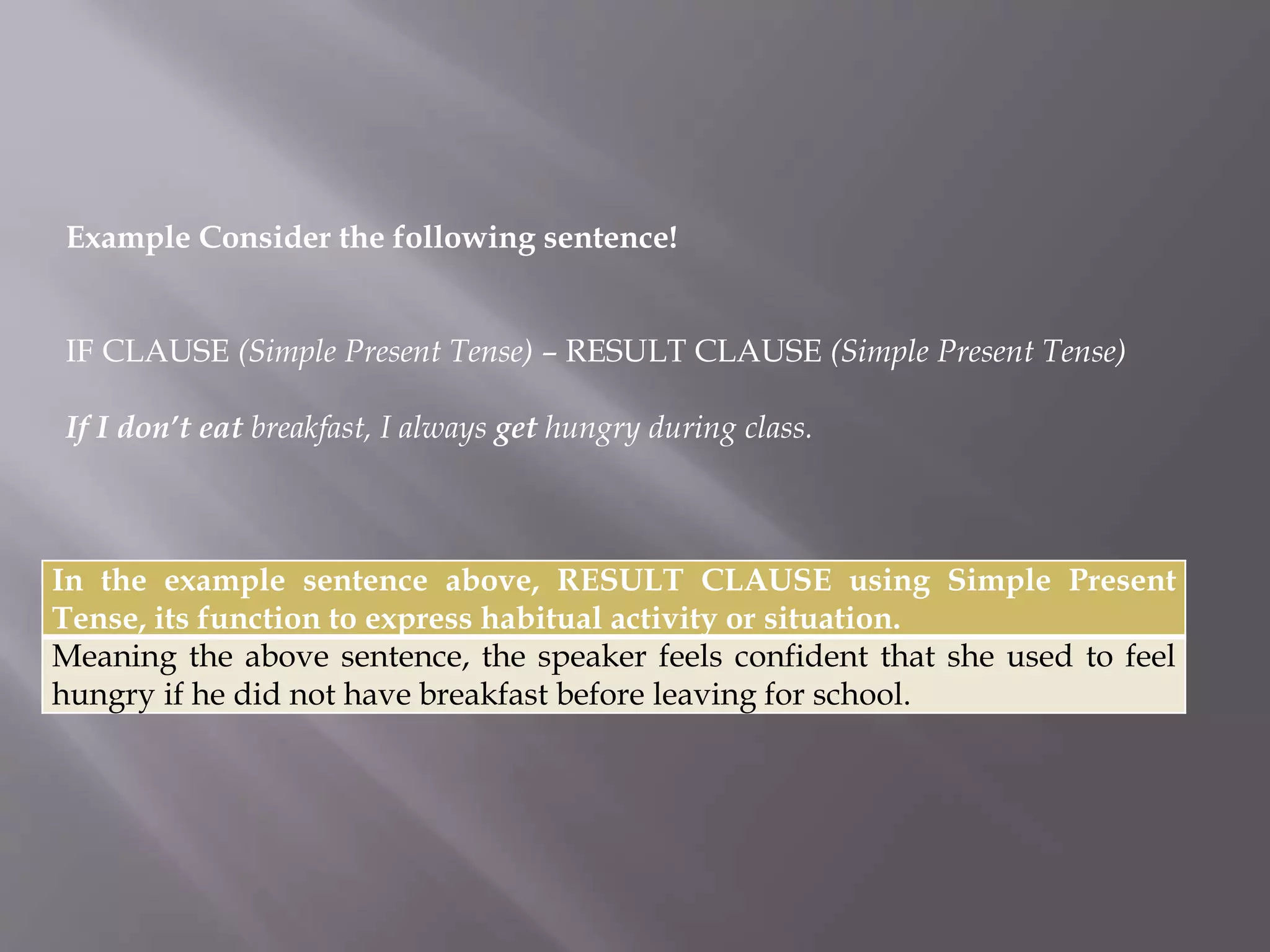
Example Consider the following sentence! 
IF CLAUSE (Simple Present Tense) – RESULT CLAUSE (Simple Present Tense) 
If I don’t eat breakfast, I always get hungry during class. 
In the example sentence above, RESULT CLAUSE using Simple Present 
Tense, its function to express habitual activity or situation. 
Meaning the above sentence, the speaker feels confident that she used to feel 
hungry if he did not have breakfast before leaving for school.
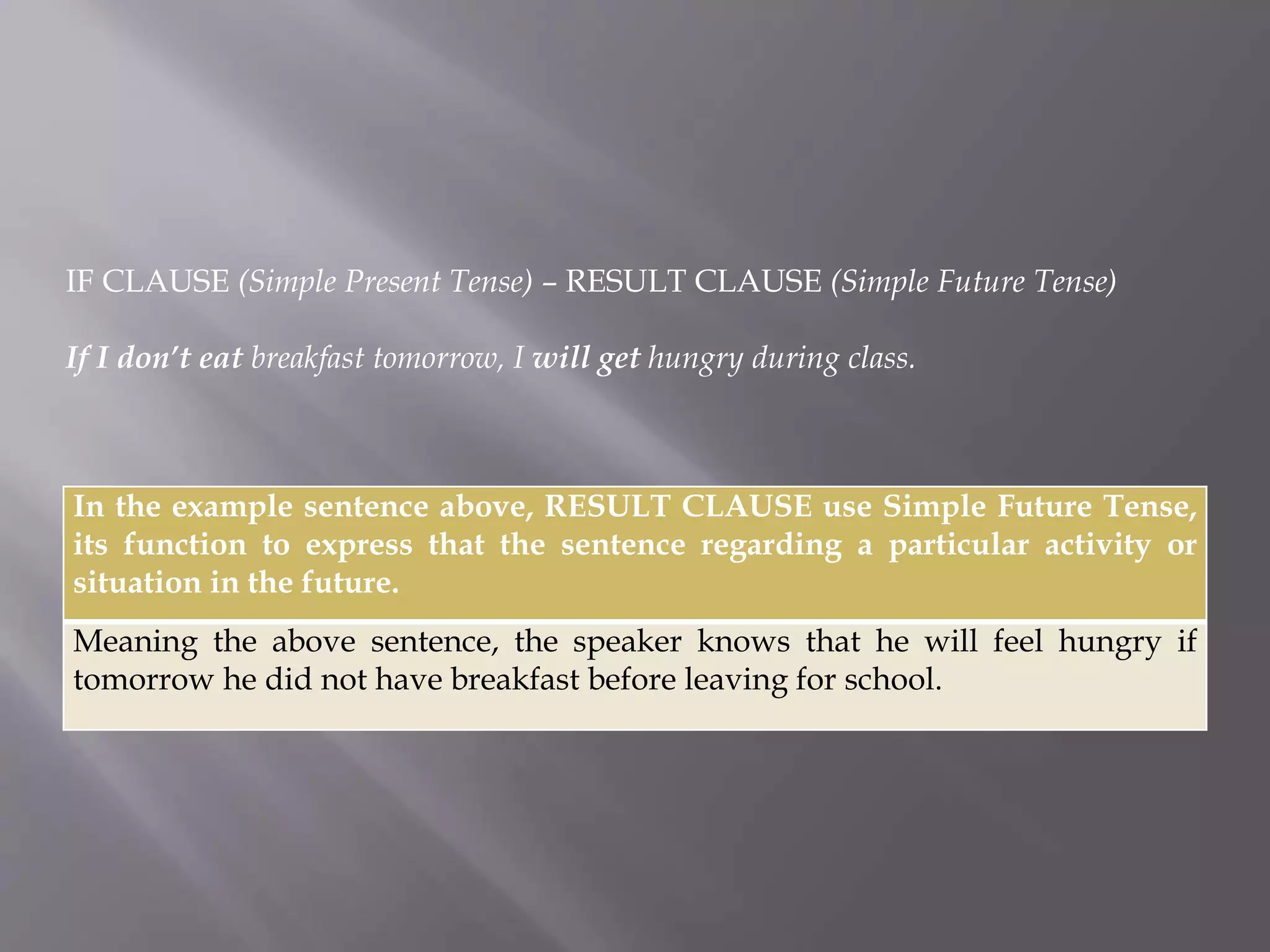
IF CLAUSE (Simple Present Tense) – RESULT CLAUSE (Simple Future Tense) 
If I don’t eat breakfast tomorrow, I will get hungry during class. 
In the example sentence above, RESULT CLAUSE use Simple Future Tense, 
its function to express that the sentence regarding a particular activity or 
situation in the future. 
Meaning the above sentence, the speaker knows that he will feel hungry if 
tomorrow he did not have breakfast before leaving for school.
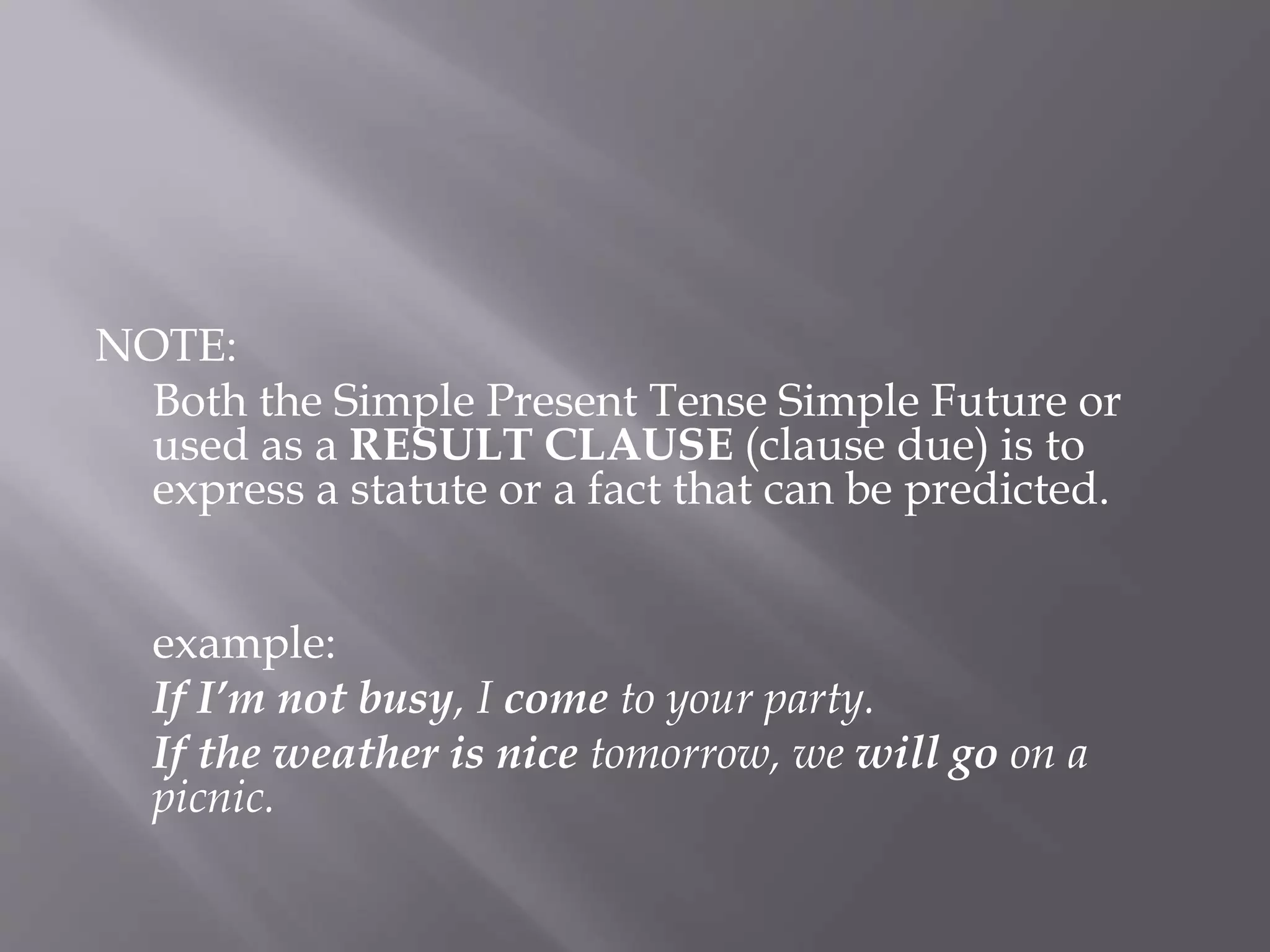
NOTE: 
Both the Simple Present Tense Simple Future or 
used as a RESULT CLAUSE (clause due) is to 
express a statute or a fact that can be predicted. 
example: 
If I’m not busy, I come to your party. 
If the weather is nice tomorrow, we will go on a 
picnic.
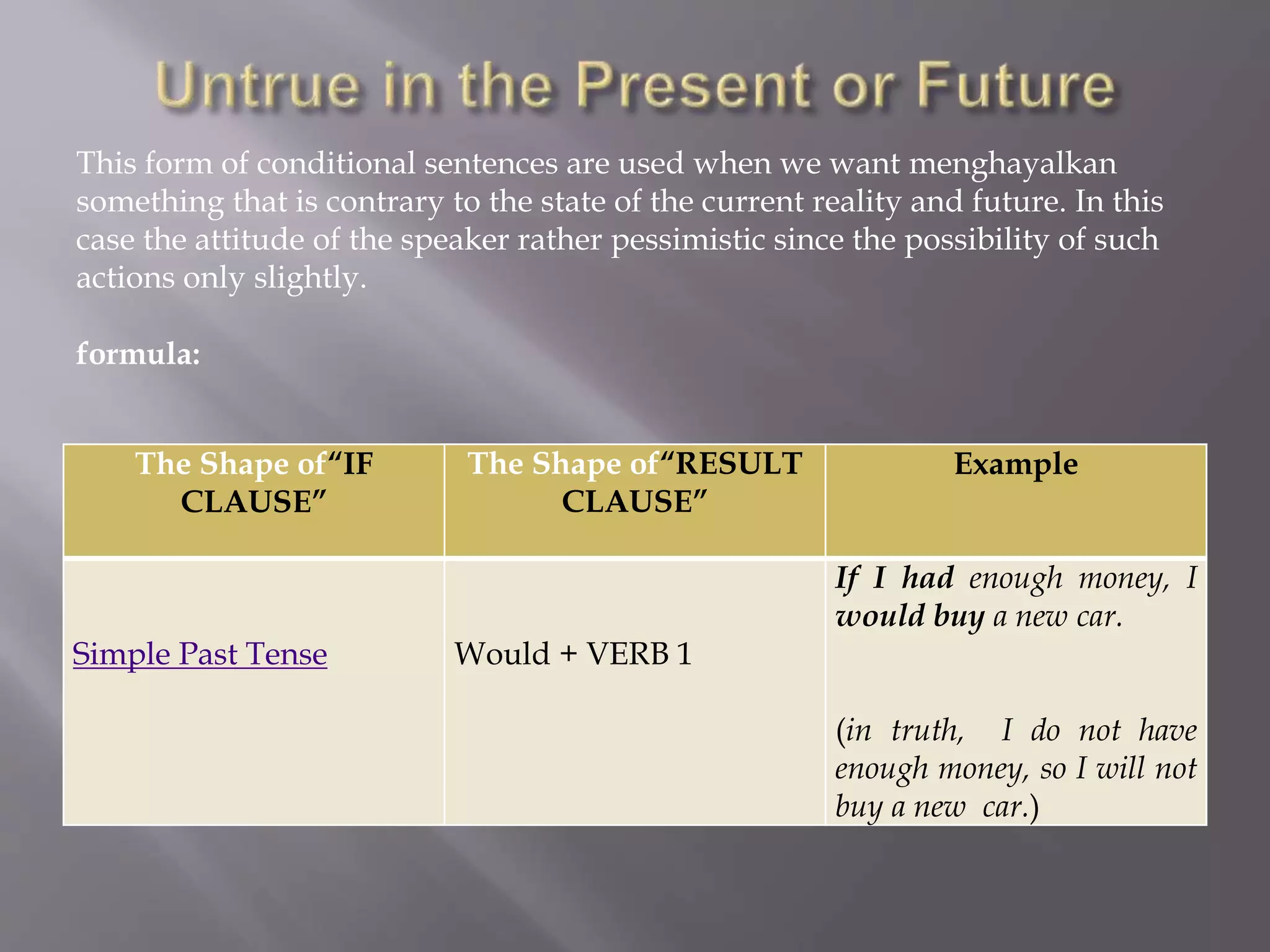
This form of conditional sentences are used when we want menghayalkan 
something that is contrary to the state of the current reality and future. In this 
case the attitude of the speaker rather pessimistic since the possibility of such 
actions only slightly. 
The Shape of“IF 
CLAUSE” 
The Shape of“RESULT 
CLAUSE” 
Example 
Simple Past Tense Would + VERB 1 
If I had enough money, I 
would buy a new car. 
(in truth, I do not have 
enough money, so I will not 
buy a new car.) 
formula:
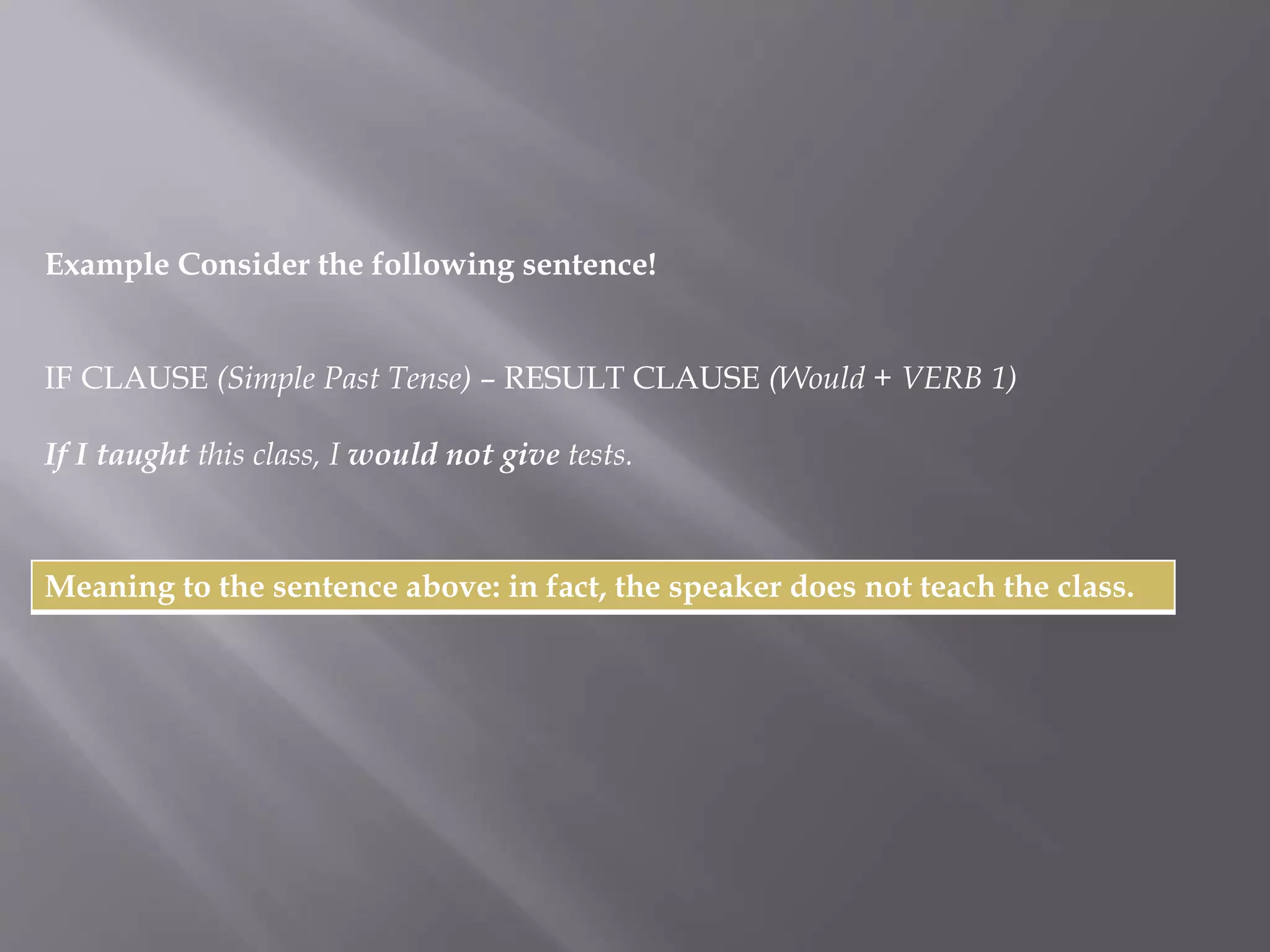
Example Consider the following sentence! 
IF CLAUSE (Simple Past Tense) – RESULT CLAUSE (Would + VERB 1) 
If I taught this class, I would not give tests. 
Meaning to the sentence above: in fact, the speaker does not teach the class.
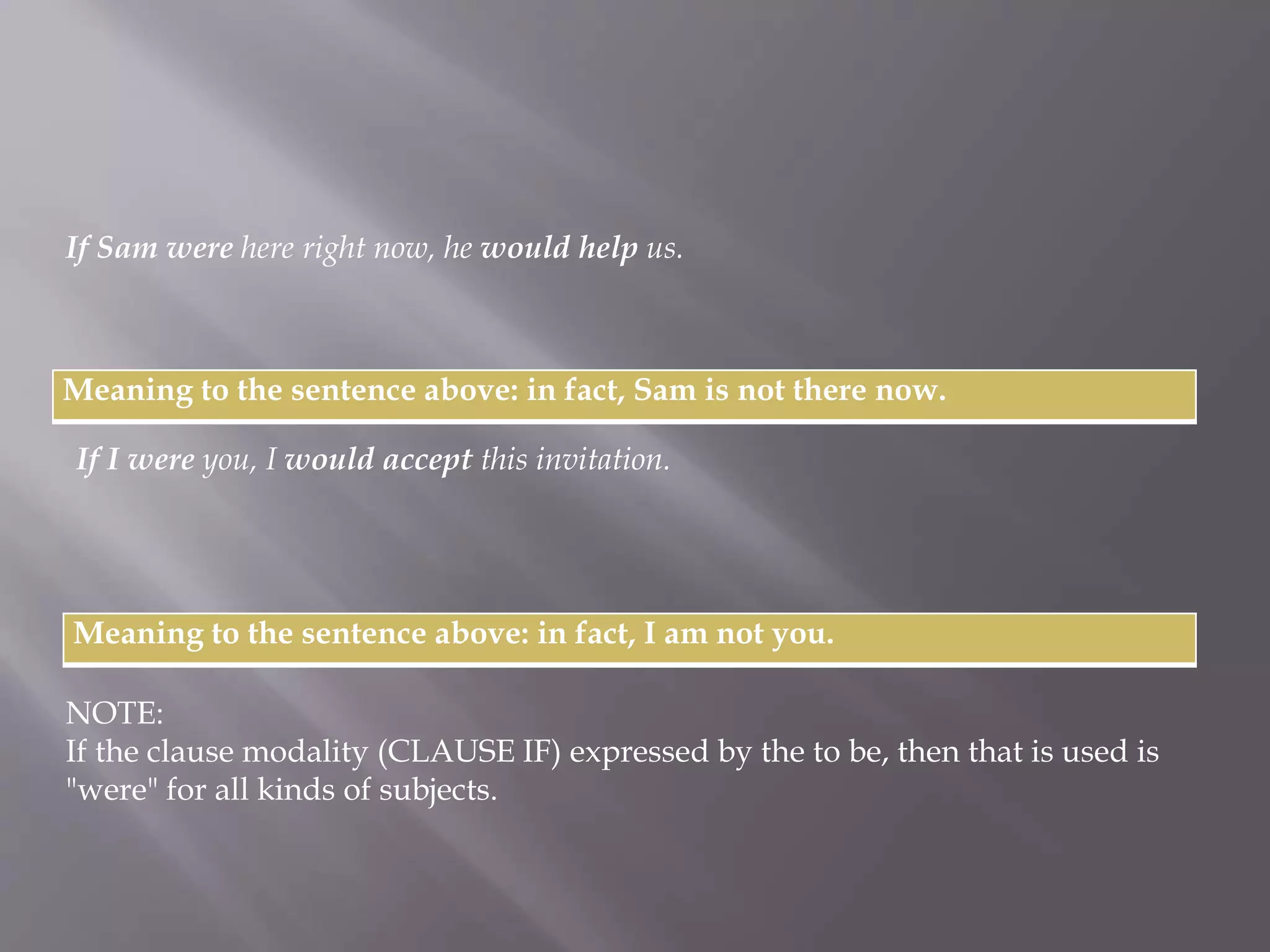
If Sam were here right now, he would help us. 
Meaning to the sentence above: in fact, Sam is not there now. 
If I were you, I would accept this invitation. 
Meaning to the sentence above: in fact, I am not you. 
NOTE: 
If the clause modality (CLAUSE IF) expressed by the to be, then that is used is 
"were" for all kinds of subjects.
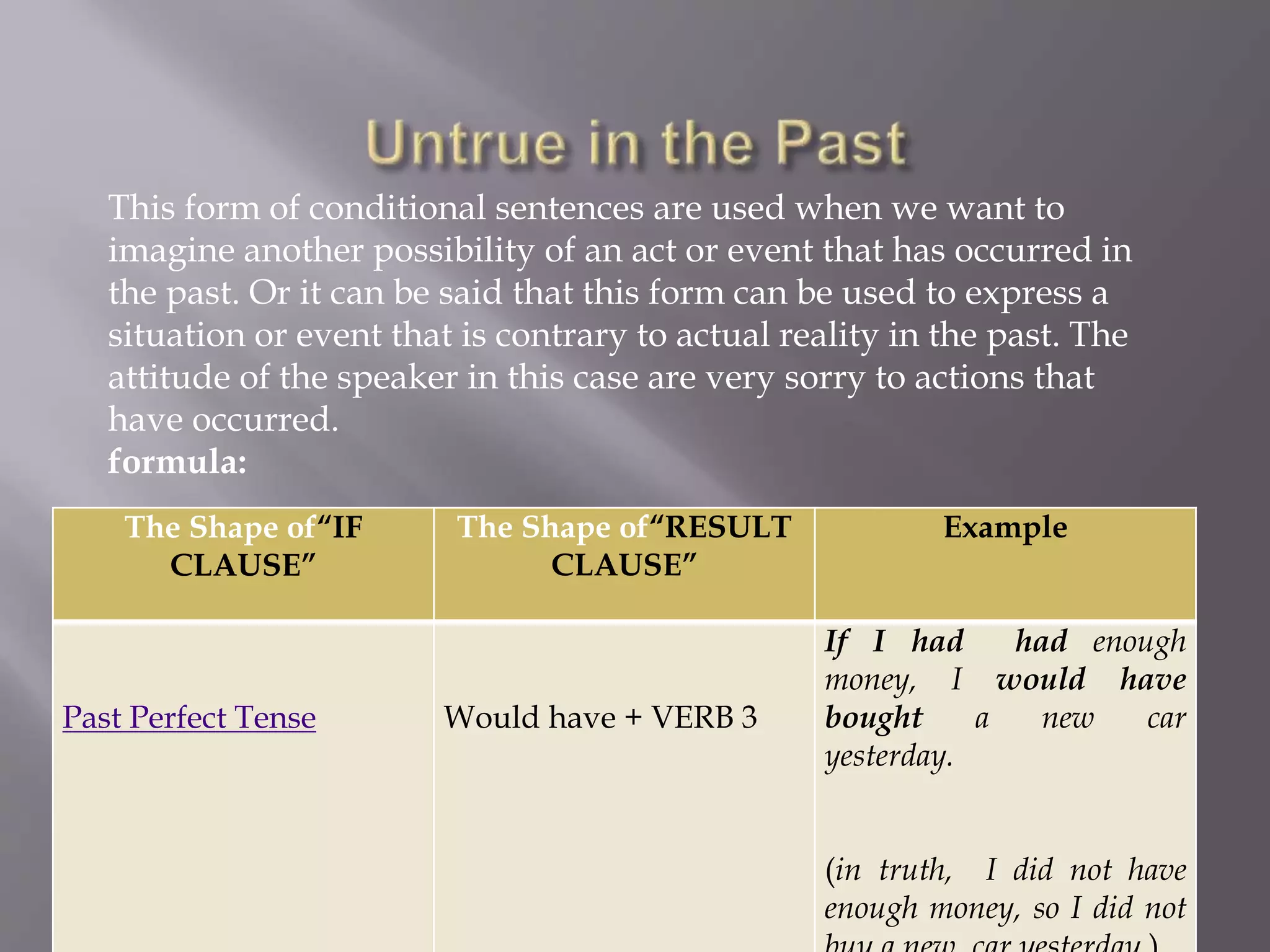
This form of conditional sentences are used when we want to 
imagine another possibility of an act or event that has occurred in 
the past. Or it can be said that this form can be used to express a 
situation or event that is contrary to actual reality in the past. The 
attitude of the speaker in this case are very sorry to actions that 
have occurred. 
formula: 
The Shape of“IF 
CLAUSE” 
The Shape of“RESULT 
CLAUSE” 
Example 
Past Perfect Tense Would have + VERB 3 
If I had had enough 
money, I would have 
bought a new car 
yesterday. 
(in truth, I did not have 
enough money, so I did not 
buy a new car yesterday.)
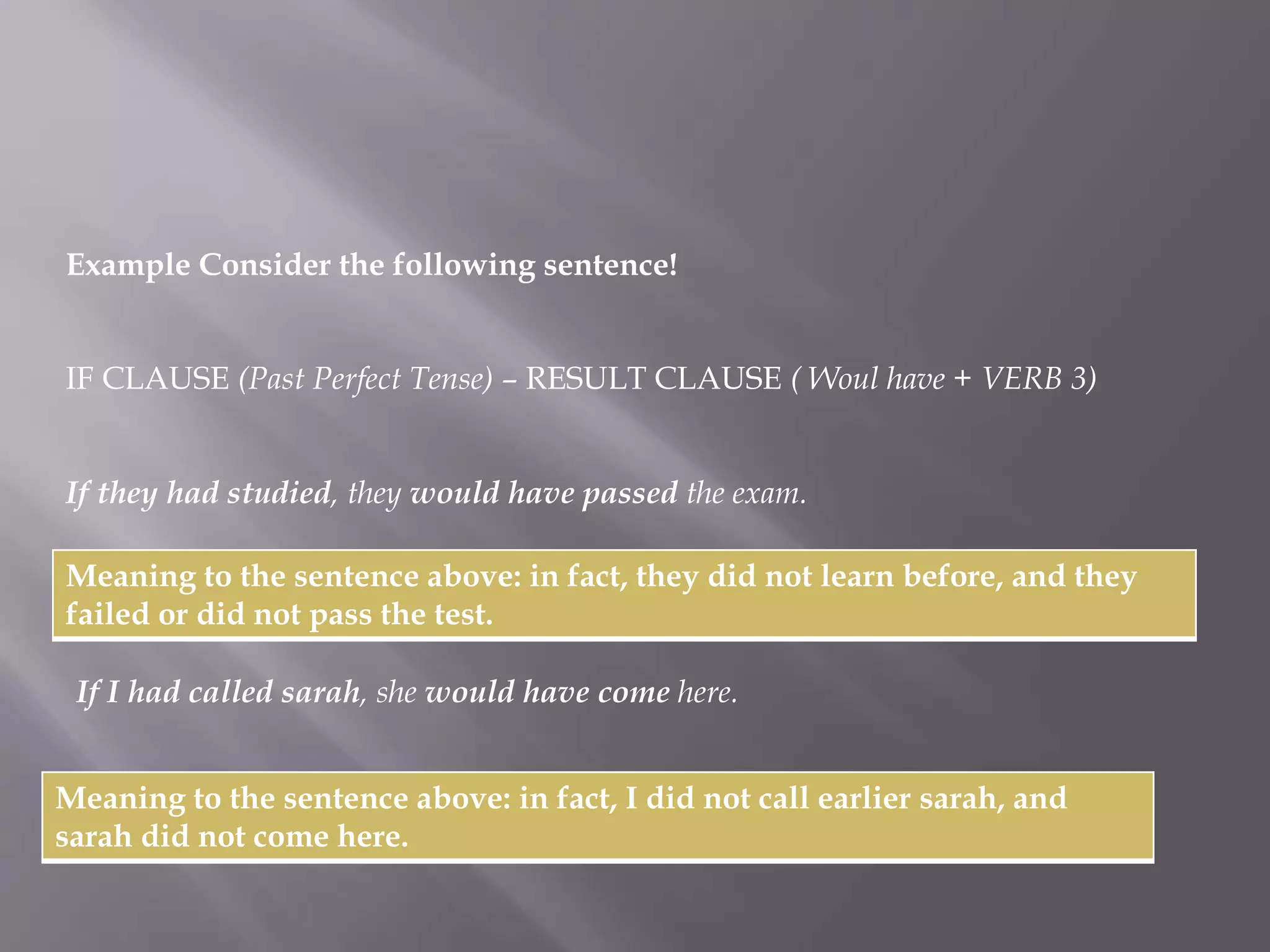
Example Consider the following sentence! 
IF CLAUSE (Past Perfect Tense) – RESULT CLAUSE ( Woul have + VERB 3) 
If they had studied, they would have passed the exam. 
Meaning to the sentence above: in fact, they did not learn before, and they 
failed or did not pass the test. 
If I had called sarah, she would have come here. 
Meaning to the sentence above: in fact, I did not call earlier sarah, and 
sarah did not come here.

Conditional sentences

  • 1.
    Name : DindaPradita Nawang
  • 2.
    Conditional Sentences isa complex,whichy consists of two clauses; the if-clause and main clause. The if-clause is the dependent clause used to express conditional for a result(independent clause). The if-clause can come first or second. When it comes first, we usually put a comma between the two clauses.
  • 3.
    1. True inthe Present or Future. 2. Untrue in the Present or Future. 3. Untrue in the Past.
  • 4.
    This form ofconditional sentences are used to express the hope that the supposition is said by the speaker might happen to the present or to come. Formula : The Shape of“IF CLAUSE” The Shape of“RESULT CLAUSE” Example Simple Present Tense Simple Present Tense If I have enough money, I buy a new car. Simple Future Tense If I have enough money tomorrow, I will buy a new car.
  • 5.
    Example Consider thefollowing sentence! IF CLAUSE (Simple Present Tense) – RESULT CLAUSE (Simple Present Tense) If I don’t eat breakfast, I always get hungry during class. In the example sentence above, RESULT CLAUSE using Simple Present Tense, its function to express habitual activity or situation. Meaning the above sentence, the speaker feels confident that she used to feel hungry if he did not have breakfast before leaving for school.
  • 6.
    IF CLAUSE (SimplePresent Tense) – RESULT CLAUSE (Simple Future Tense) If I don’t eat breakfast tomorrow, I will get hungry during class. In the example sentence above, RESULT CLAUSE use Simple Future Tense, its function to express that the sentence regarding a particular activity or situation in the future. Meaning the above sentence, the speaker knows that he will feel hungry if tomorrow he did not have breakfast before leaving for school.
  • 7.
    NOTE: Both theSimple Present Tense Simple Future or used as a RESULT CLAUSE (clause due) is to express a statute or a fact that can be predicted. example: If I’m not busy, I come to your party. If the weather is nice tomorrow, we will go on a picnic.
  • 8.
    This form ofconditional sentences are used when we want menghayalkan something that is contrary to the state of the current reality and future. In this case the attitude of the speaker rather pessimistic since the possibility of such actions only slightly. The Shape of“IF CLAUSE” The Shape of“RESULT CLAUSE” Example Simple Past Tense Would + VERB 1 If I had enough money, I would buy a new car. (in truth, I do not have enough money, so I will not buy a new car.) formula:
  • 9.
    Example Consider thefollowing sentence! IF CLAUSE (Simple Past Tense) – RESULT CLAUSE (Would + VERB 1) If I taught this class, I would not give tests. Meaning to the sentence above: in fact, the speaker does not teach the class.
  • 10.
    If Sam werehere right now, he would help us. Meaning to the sentence above: in fact, Sam is not there now. If I were you, I would accept this invitation. Meaning to the sentence above: in fact, I am not you. NOTE: If the clause modality (CLAUSE IF) expressed by the to be, then that is used is "were" for all kinds of subjects.
  • 11.
    This form ofconditional sentences are used when we want to imagine another possibility of an act or event that has occurred in the past. Or it can be said that this form can be used to express a situation or event that is contrary to actual reality in the past. The attitude of the speaker in this case are very sorry to actions that have occurred. formula: The Shape of“IF CLAUSE” The Shape of“RESULT CLAUSE” Example Past Perfect Tense Would have + VERB 3 If I had had enough money, I would have bought a new car yesterday. (in truth, I did not have enough money, so I did not buy a new car yesterday.)
  • 12.
    Example Consider thefollowing sentence! IF CLAUSE (Past Perfect Tense) – RESULT CLAUSE ( Woul have + VERB 3) If they had studied, they would have passed the exam. Meaning to the sentence above: in fact, they did not learn before, and they failed or did not pass the test. If I had called sarah, she would have come here. Meaning to the sentence above: in fact, I did not call earlier sarah, and sarah did not come here.