
Concept of Compensation, Exploring 
& Defining Compensation Context 
Dr. G C Mohanta, BE, MSc(Engg), MBA, PhD(Mgt) 
Professor 
Al-Qurmoshi Institute of Business Management 
Hyderabad
Concept of 
Compensation
Compensation 
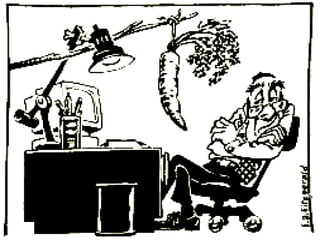
 Compensation - money and other benefits received 
for providing services 
 Cascio defined compensation as “Direct cash 
payments, indirect payments (employee benefits) and 
incentives to motivate employees to strive for higher 
levels of productivity”
Strategic Compensation 
 Strategic compensation is determining & providing 
compensation packages to employees, those are 
aligned with the business goals and objectives 
 Organizations have to take special measures regarding 
compensation to retain the valuable employees
Exploring and Defining 
Compensation Context
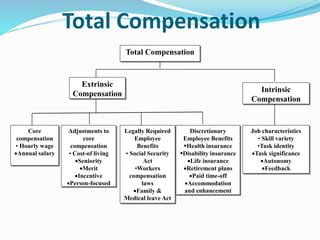
Total Compensation 
Core 
compensation 
• Hourly wage 
Annual salary 
Adjustments to 
core 
compensation 
• Cost-of living 
Seniority 
Merit 
Incentive 
Person-focused 
Total Compensation 
Extrinsic 
Compensation 
Intrinsic 
Compensation 
Legally Required 
Employee 
Benefits 
• Social Security 
Act 
•Workers 
compensation 
laws 
Family & 
Medical leave Act 
Discretionary 
Employee Benefits 
Health insurance 
Disability insurance 
Life insurance 
Retirement plans 
Paid time-off 
Accommodation 
and enhancement 
Job characteristics 
• Skill variety 
•Task identity 
Task significance 
Autonomy 
Feedback
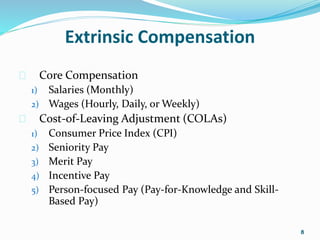
Extrinsic Compensation 
 Core Compensation 
1) Salaries (Monthly) 
2) Wages (Hourly, Daily, or Weekly) 
 Cost-of-Leaving Adjustment (COLAs) 
1) Consumer Price Index (CPI) 
2) Seniority Pay 
3) Merit Pay 
4) Incentive Pay 
5) Person-focused Pay (Pay-for-Knowledge and Skill- 
Based Pay) 
8
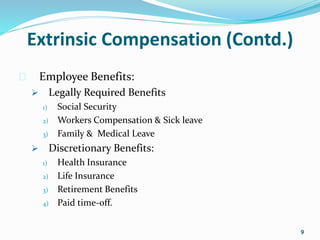
Extrinsic Compensation (Contd.) 
 Employee Benefits: 
 Legally Required Benefits 
1) Social Security 
2) Workers Compensation & Sick leave 
3) Family & Medical Leave 
 Discretionary Benefits: 
1) Health Insurance 
2) Life Insurance 
3) Retirement Benefits 
4) Paid time-off. 
9
Components of Compensation 
 Wage and Salary 
 Incentives 
 Fringe Benefits 
 Perquisites
Wage and Salary 
 Wage - remuneration to workers, hourly-rated 
payment 
 Salary - remuneration paid to white-collar employees 
& managerial personnel 
 Wages and salary - paid on the basis of fixed time 
period, not associated with productivity of an 
employee
Incentives 
 Incentive - Any reward or benefit given to an employee 
over and above the wage or salary with a view to motivate 
him to excel in his work 
 Incentives include both monetary as well as non-monetary 
rewards 
 A scheme of incentive is a plan to motivate an individual 
or a group performers
Benefits
Fringe Benefits 
 Fringe benefits 
- Provident fund, gratuity, pension 
- Medical benefits, accident relief, health and life 
insurance 
- Facilitation in performance of job, like uniforms, 
Canteens & recreation
Perquisites 
 Perquisites - provided to managerial personnel either 
to facilitate their job performance or to retain them in 
the organization 
 Perquisites include company car, club membership, 
free residential accommodation, paid holiday trips and 
stock options
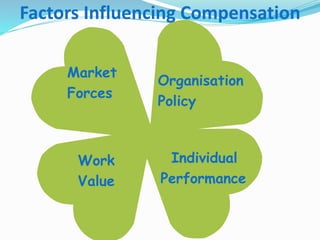
Factors Influencing Compensation 
Market 
Forces 
Work 
Value 
Organisation 
Policy 
Individual 
Performance
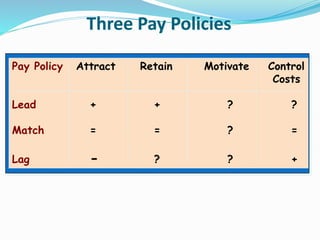
Three Pay Policies 
Pay Policy Attract Retain Motivate Control 
Costs 
Lead + + ? ? 
Match = = ? = 
Lag - ? ? +
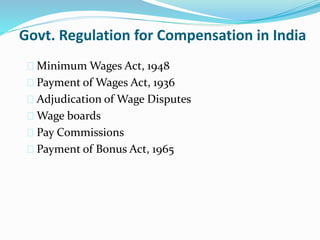
Govt. Regulation for Compensation in India 
 Minimum Wages Act, 1948 
 Payment of Wages Act, 1936 
 Adjudication of Wage Disputes 
 Wage boards 
 Pay Commissions 
 Payment of Bonus Act, 1965
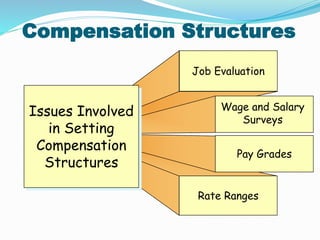
Compensation Structures 
Job Evaluation 
Pay Grades 
Rate Ranges 
Issues Involved 
in Setting 
Compensation 
Structures 
Wage and Salary 
Surveys
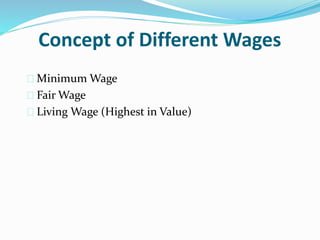
Concept of Different Wages 
 Minimum Wage 
 Fair Wage 
 Living Wage (Highest in Value)
Concept of Minimum Wage 
 Minimum Wage - For sustenance of life and 
preservation of efficiency of workers and to provide 
some measure of education, medical requirements 
and amenities.
Concept of Living Wage 
 Living Wage – In addition to providing food, 
clothing and shelter for worker and family, 
education for children, protection against ill-health, 
essential social needs and insurance against 
misfortunes and old age.
Concept of Fair Wage 
 Fair Wage -above minimum wage but below living 
wage; fair wage to be paid based on capacity of 
industry to pay.
Calculation of Minimum Wages 
 Worker’s family – 3 members, earnings of women, 
children & adolescents disregarded 
 Minimum food requirements - 2,700 calories/adult. 
 Clothing requirements - 18 yards per annum/person. 
 Housing - minimum rent charged by Govt for houses 
under subsidized housing scheme 
 Fuel, lighting and other miscellaneous items - 20 % 
total minimum wage.

Concept of compensation exploring defining concept

  • 1.
    Concept of Compensation,Exploring & Defining Compensation Context Dr. G C Mohanta, BE, MSc(Engg), MBA, PhD(Mgt) Professor Al-Qurmoshi Institute of Business Management Hyderabad
  • 3.
  • 4.
    Compensation  Compensation- money and other benefits received for providing services  Cascio defined compensation as “Direct cash payments, indirect payments (employee benefits) and incentives to motivate employees to strive for higher levels of productivity”
  • 5.
    Strategic Compensation Strategic compensation is determining & providing compensation packages to employees, those are aligned with the business goals and objectives  Organizations have to take special measures regarding compensation to retain the valuable employees
  • 6.
    Exploring and Defining Compensation Context
  • 7.
    Total Compensation Core compensation • Hourly wage Annual salary Adjustments to core compensation • Cost-of living Seniority Merit Incentive Person-focused Total Compensation Extrinsic Compensation Intrinsic Compensation Legally Required Employee Benefits • Social Security Act •Workers compensation laws Family & Medical leave Act Discretionary Employee Benefits Health insurance Disability insurance Life insurance Retirement plans Paid time-off Accommodation and enhancement Job characteristics • Skill variety •Task identity Task significance Autonomy Feedback
  • 8.
    Extrinsic Compensation Core Compensation 1) Salaries (Monthly) 2) Wages (Hourly, Daily, or Weekly)  Cost-of-Leaving Adjustment (COLAs) 1) Consumer Price Index (CPI) 2) Seniority Pay 3) Merit Pay 4) Incentive Pay 5) Person-focused Pay (Pay-for-Knowledge and Skill- Based Pay) 8
  • 9.
    Extrinsic Compensation (Contd.)  Employee Benefits:  Legally Required Benefits 1) Social Security 2) Workers Compensation & Sick leave 3) Family & Medical Leave  Discretionary Benefits: 1) Health Insurance 2) Life Insurance 3) Retirement Benefits 4) Paid time-off. 9
  • 10.
    Components of Compensation  Wage and Salary  Incentives  Fringe Benefits  Perquisites
  • 11.
    Wage and Salary  Wage - remuneration to workers, hourly-rated payment  Salary - remuneration paid to white-collar employees & managerial personnel  Wages and salary - paid on the basis of fixed time period, not associated with productivity of an employee
  • 12.
    Incentives  Incentive- Any reward or benefit given to an employee over and above the wage or salary with a view to motivate him to excel in his work  Incentives include both monetary as well as non-monetary rewards  A scheme of incentive is a plan to motivate an individual or a group performers
  • 13.
  • 14.
    Fringe Benefits Fringe benefits - Provident fund, gratuity, pension - Medical benefits, accident relief, health and life insurance - Facilitation in performance of job, like uniforms, Canteens & recreation
  • 15.
    Perquisites  Perquisites- provided to managerial personnel either to facilitate their job performance or to retain them in the organization  Perquisites include company car, club membership, free residential accommodation, paid holiday trips and stock options
  • 16.
    Factors Influencing Compensation Market Forces Work Value Organisation Policy Individual Performance
  • 17.
    Three Pay Policies Pay Policy Attract Retain Motivate Control Costs Lead + + ? ? Match = = ? = Lag - ? ? +
  • 18.
    Govt. Regulation forCompensation in India  Minimum Wages Act, 1948  Payment of Wages Act, 1936  Adjudication of Wage Disputes  Wage boards  Pay Commissions  Payment of Bonus Act, 1965
  • 19.
    Compensation Structures JobEvaluation Pay Grades Rate Ranges Issues Involved in Setting Compensation Structures Wage and Salary Surveys
  • 20.
    Concept of DifferentWages  Minimum Wage  Fair Wage  Living Wage (Highest in Value)
  • 21.
    Concept of MinimumWage  Minimum Wage - For sustenance of life and preservation of efficiency of workers and to provide some measure of education, medical requirements and amenities.
  • 22.
    Concept of LivingWage  Living Wage – In addition to providing food, clothing and shelter for worker and family, education for children, protection against ill-health, essential social needs and insurance against misfortunes and old age.
  • 23.
    Concept of FairWage  Fair Wage -above minimum wage but below living wage; fair wage to be paid based on capacity of industry to pay.
  • 24.
    Calculation of MinimumWages  Worker’s family – 3 members, earnings of women, children & adolescents disregarded  Minimum food requirements - 2,700 calories/adult.  Clothing requirements - 18 yards per annum/person.  Housing - minimum rent charged by Govt for houses under subsidized housing scheme  Fuel, lighting and other miscellaneous items - 20 % total minimum wage.