Objectives
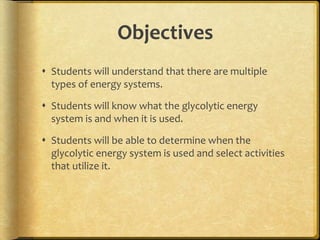
 Students will understand that there are multiple
types of energy systems.
 Students will know what the glycolytic energy
system is and when it is used.
 Students will be able to determine when the
glycolytic energy system is used and select activities
that utilize it.
Select and Define a Concept Through the
Concept’s Essential Characteristics
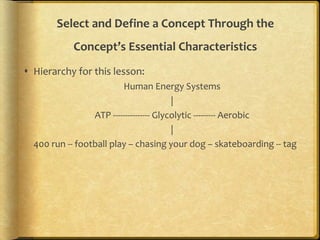
 Hierarchy for this lesson:
Human Energy Systems
|
ATP --------------- Glycolytic --------- Aerobic
|
400 run -- football play – chasing your dog – skateboarding -- tag
Develop a list of positive and
negative examples
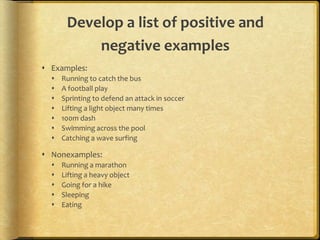
 Examples:
 Running to catch the bus
 A football play
 Sprinting to defend an attack in soccer
 Lifting a light object many times
 100m dash
 Swimming across the pool
 Catching a wave surfing
 Nonexamples:
 Running a marathon
 Lifting a heavy object
 Going for a hike
 Sleeping
 Eating
Review the concept attainment process
with the class
 What do the examples have in common that the
nonexamples don’t have?
 All of the examples are activities that last longer than
30 seconds but not more than 2 minutes.
 The nonexamples are long or short activities that don’t
engage the energy system.
 Yes – No – Hypotheses (column list to defend their
arguments about the concept)
Present the examples
 Glycolytic energy system examples:
 Running 400m (y)
 Sleeping (n)
 Executing a football play (y)
 Lifting a heavy object once (n)
 Chasing the bus for thirty seconds (y)
 Running a marathon (n)
 Students will reevaluate their hypotheses based on
presentation of examples.
Generate hypotheses and continue
example/hypothesis cycle
 Students create hypotheses based on the examples
and nonexamples presented
 All hypotheses will be examined by the group and
crossed out if it does not fit the characteristics of the
examples
Develop a concept label
and definition
 Now that hypotheses have been generated and
listed out, the students will try to develop a label
and definition of the concept that incorporates the
remaining hypotheses.
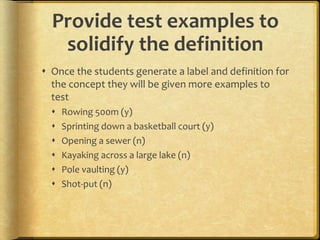
Provide test examples to
solidify the definition
 Once the students generate a label and definition for
the concept they will be given more examples to
test
 Rowing 500m (y)
 Sprinting down a basketball court (y)
 Opening a sewer (n)
 Kayaking across a large lake (n)
 Pole vaulting (y)
 Shot-put (n)
Discuss the process with
the class
 Review with the students how they came about
creating the definition
 What was difficult during the process?
 When did they figure out the concept?
 In what order would you have displayed the
examples?

Concept Attainment Model

  • 2.
    Objectives  Students willunderstand that there are multiple types of energy systems.  Students will know what the glycolytic energy system is and when it is used.  Students will be able to determine when the glycolytic energy system is used and select activities that utilize it.
  • 3.
    Select and Definea Concept Through the Concept’s Essential Characteristics  Hierarchy for this lesson: Human Energy Systems | ATP --------------- Glycolytic --------- Aerobic | 400 run -- football play – chasing your dog – skateboarding -- tag
  • 4.
    Develop a listof positive and negative examples  Examples:  Running to catch the bus  A football play  Sprinting to defend an attack in soccer  Lifting a light object many times  100m dash  Swimming across the pool  Catching a wave surfing  Nonexamples:  Running a marathon  Lifting a heavy object  Going for a hike  Sleeping  Eating
  • 5.
    Review the conceptattainment process with the class  What do the examples have in common that the nonexamples don’t have?  All of the examples are activities that last longer than 30 seconds but not more than 2 minutes.  The nonexamples are long or short activities that don’t engage the energy system.  Yes – No – Hypotheses (column list to defend their arguments about the concept)
  • 6.
    Present the examples Glycolytic energy system examples:  Running 400m (y)  Sleeping (n)  Executing a football play (y)  Lifting a heavy object once (n)  Chasing the bus for thirty seconds (y)  Running a marathon (n)  Students will reevaluate their hypotheses based on presentation of examples.
  • 7.
    Generate hypotheses andcontinue example/hypothesis cycle  Students create hypotheses based on the examples and nonexamples presented  All hypotheses will be examined by the group and crossed out if it does not fit the characteristics of the examples
  • 8.
    Develop a conceptlabel and definition  Now that hypotheses have been generated and listed out, the students will try to develop a label and definition of the concept that incorporates the remaining hypotheses.
  • 9.
    Provide test examplesto solidify the definition  Once the students generate a label and definition for the concept they will be given more examples to test  Rowing 500m (y)  Sprinting down a basketball court (y)  Opening a sewer (n)  Kayaking across a large lake (n)  Pole vaulting (y)  Shot-put (n)
  • 10.
    Discuss the processwith the class  Review with the students how they came about creating the definition  What was difficult during the process?  When did they figure out the concept?  In what order would you have displayed the examples?