Elements of Communication
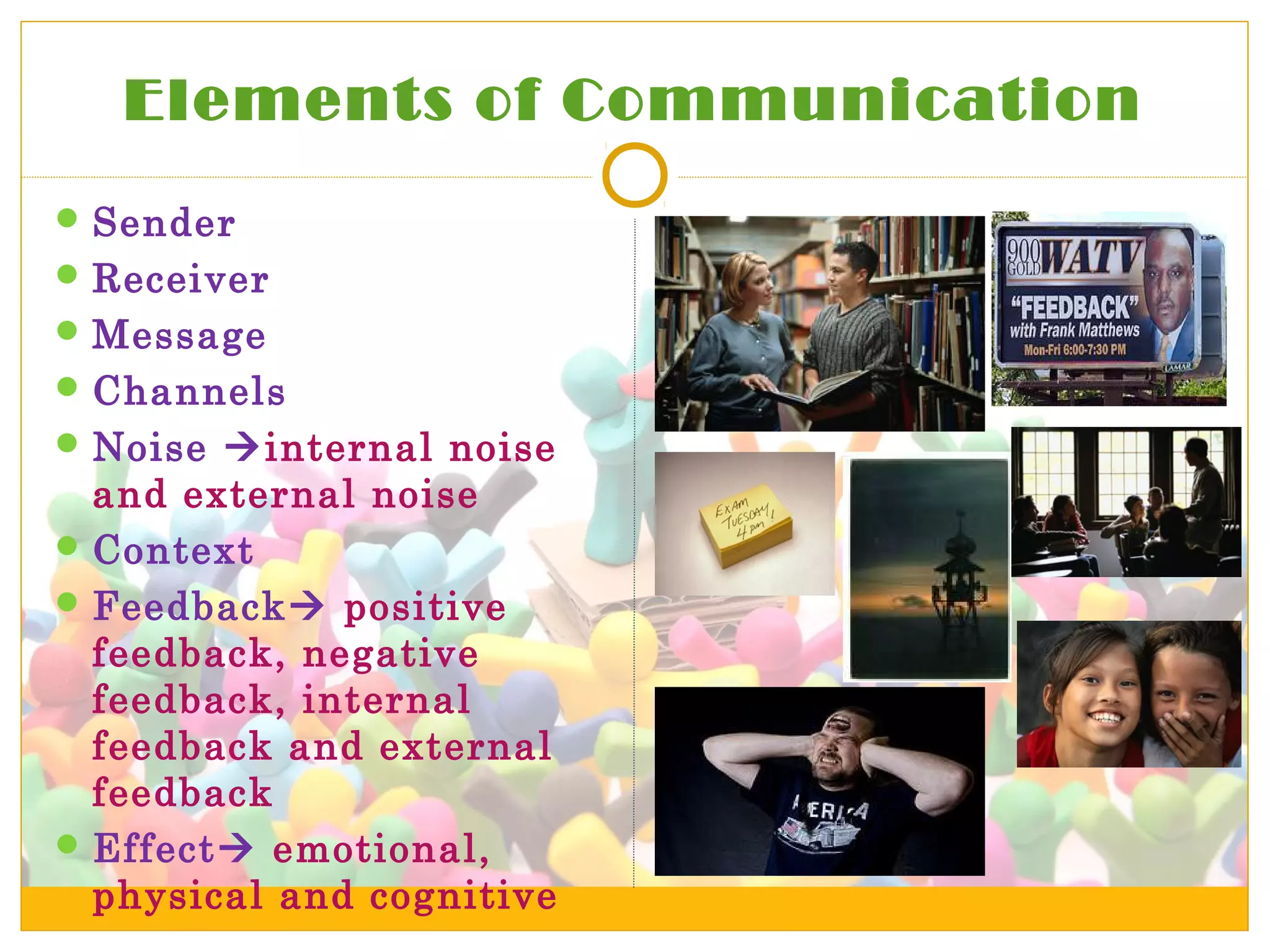
Sender
Receiver
Message
Channels
Noise internal noise
and external noise
Context
Feedback positive
feedback, negative
feedback, internal
feedback and external
feedback
Effect emotional,
physical and cognitive
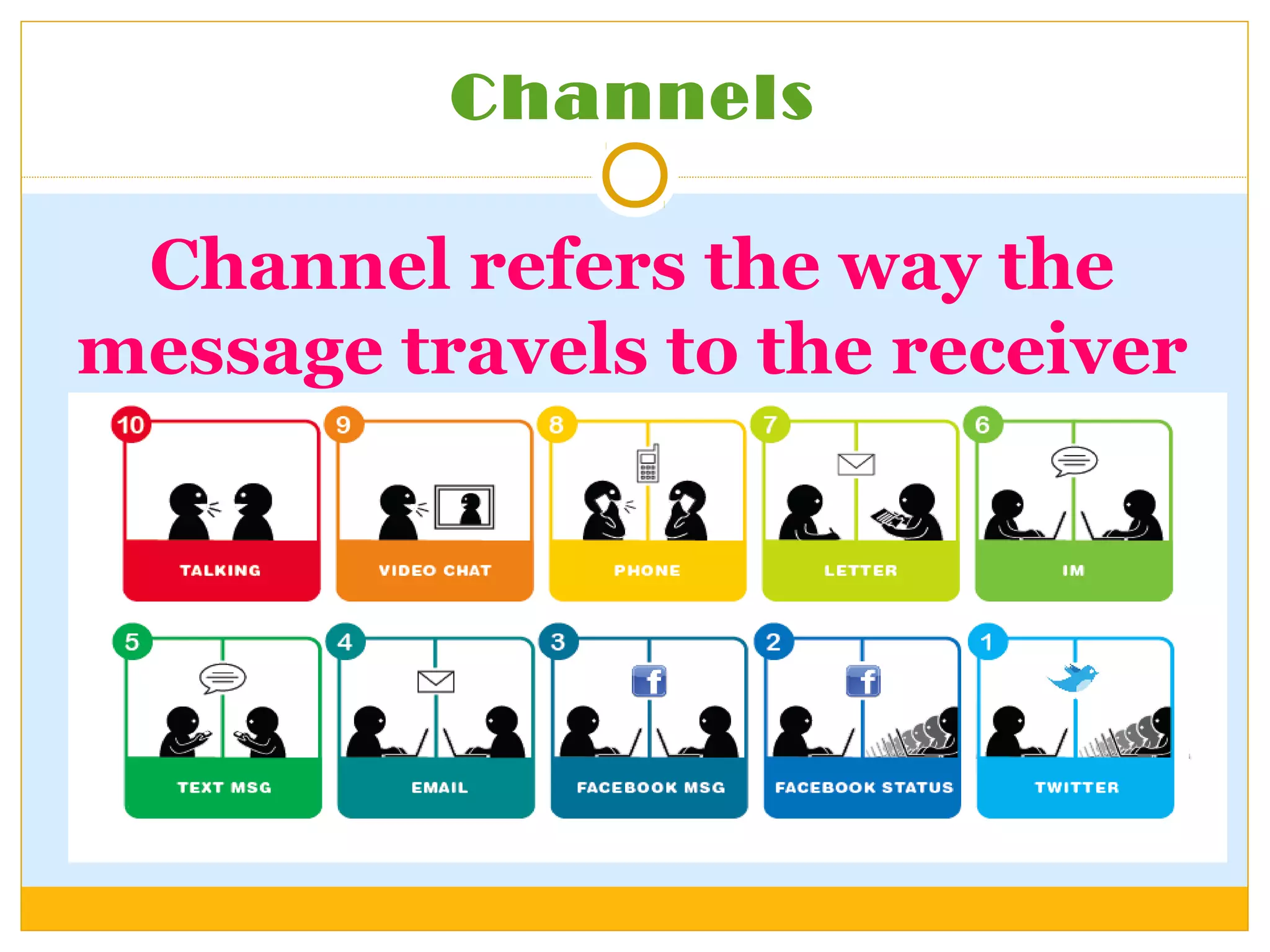
Channels
Channel refers the way the
message travels to the receiver
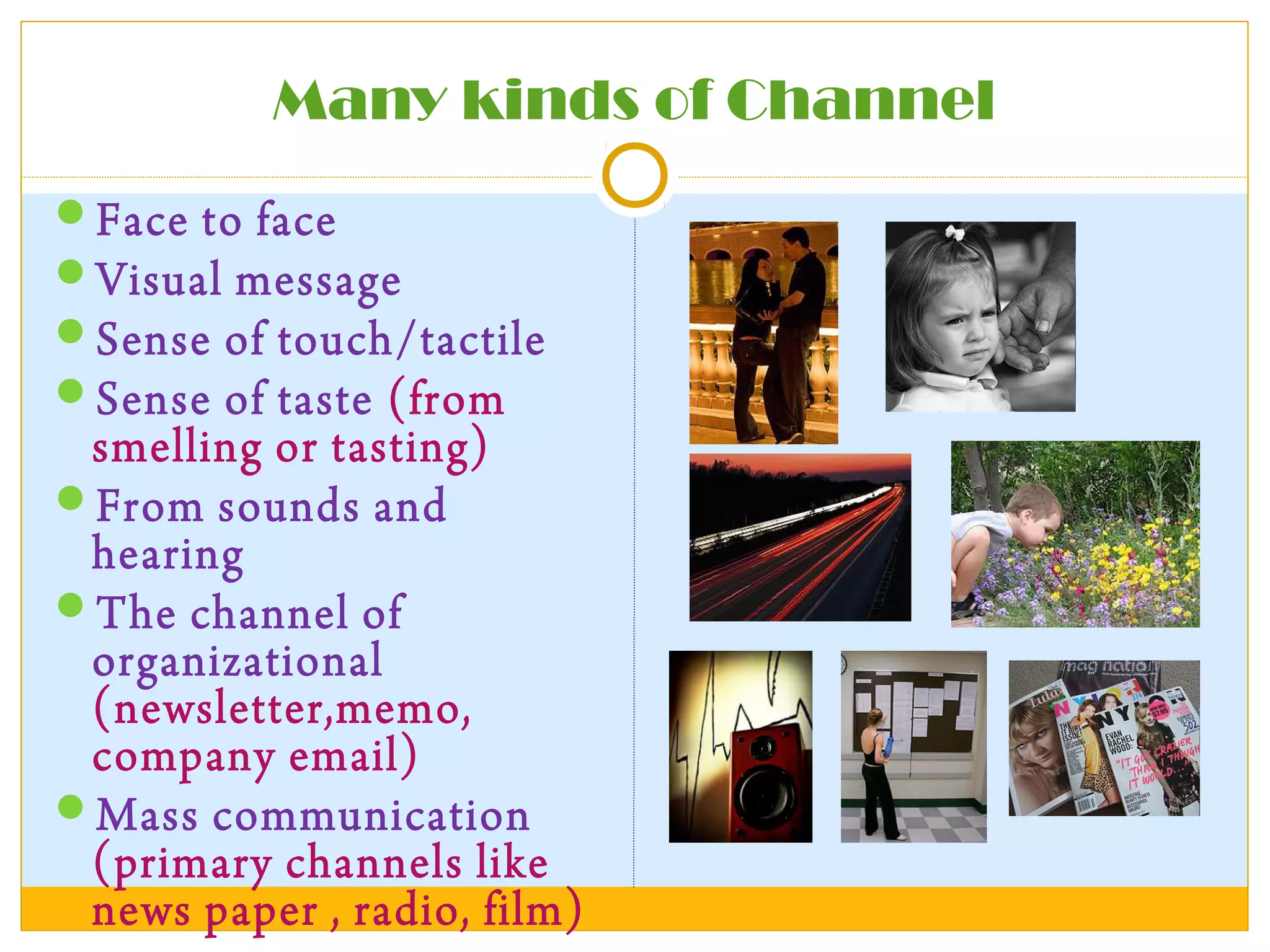
Many kinds of Channel
Face to face
Visual message
Sense of touch/tactile
Sense of taste (from
smelling or tasting)
From sounds and
hearing
The channel of
organizational
(newsletter,memo,
company email)
Mass communication
(primary channels like
news paper , radio, film)
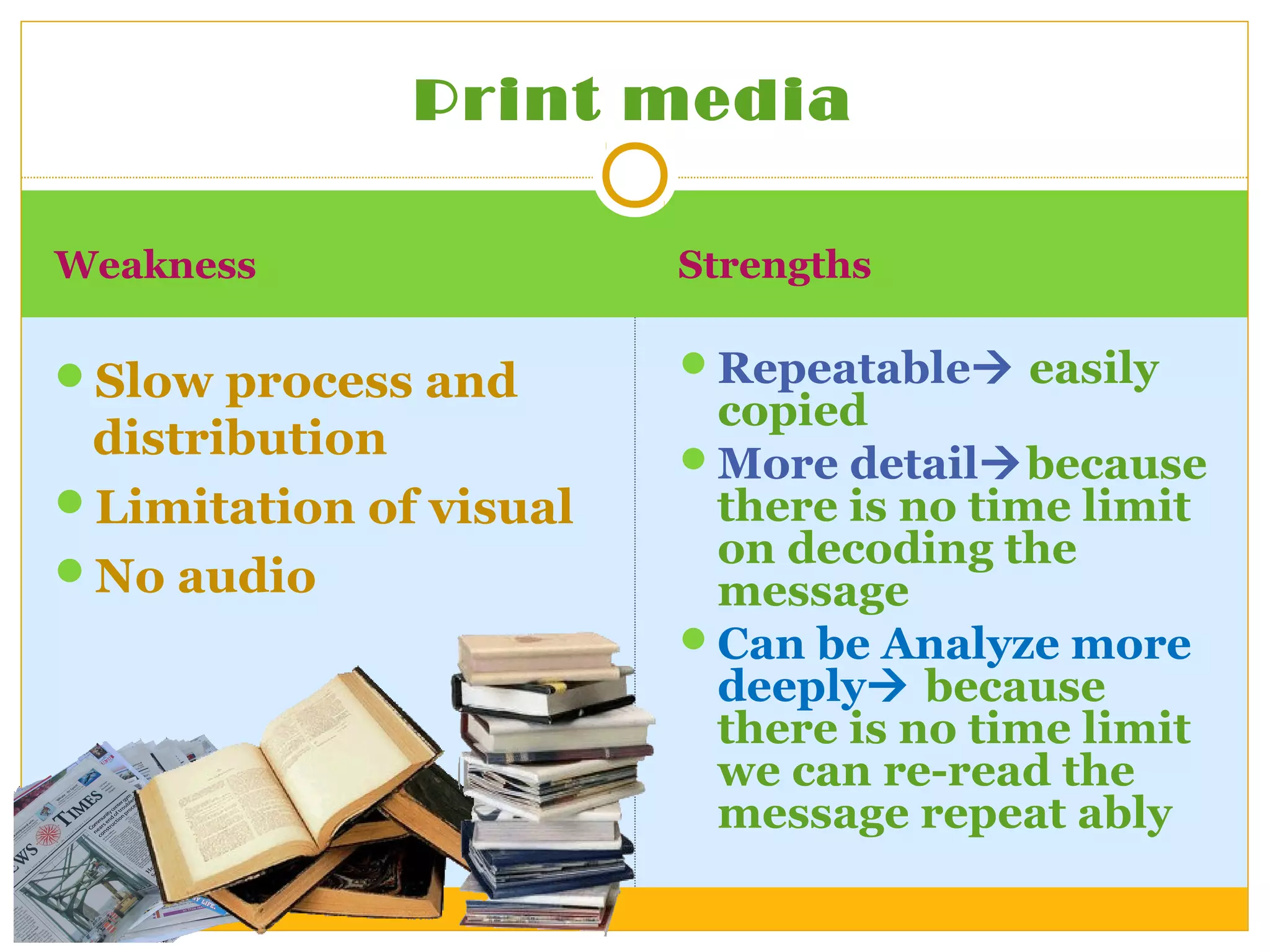
Weakness Strengths
Slow process and
distribution
Limitation of visual
No audio
Repeatable easily
copied
More detailbecause
there is no time limit
on decoding the
message
Can be Analyze more
deeply because
there is no time limit
we can re-read the
message repeat ably
Print media
Weakness Strengths
No repetition
Lack of detail
there is time limit
for the content to be
delivered
High cost
Fast from time
Audio visual
It can reach large
amount of audience
Electronic media
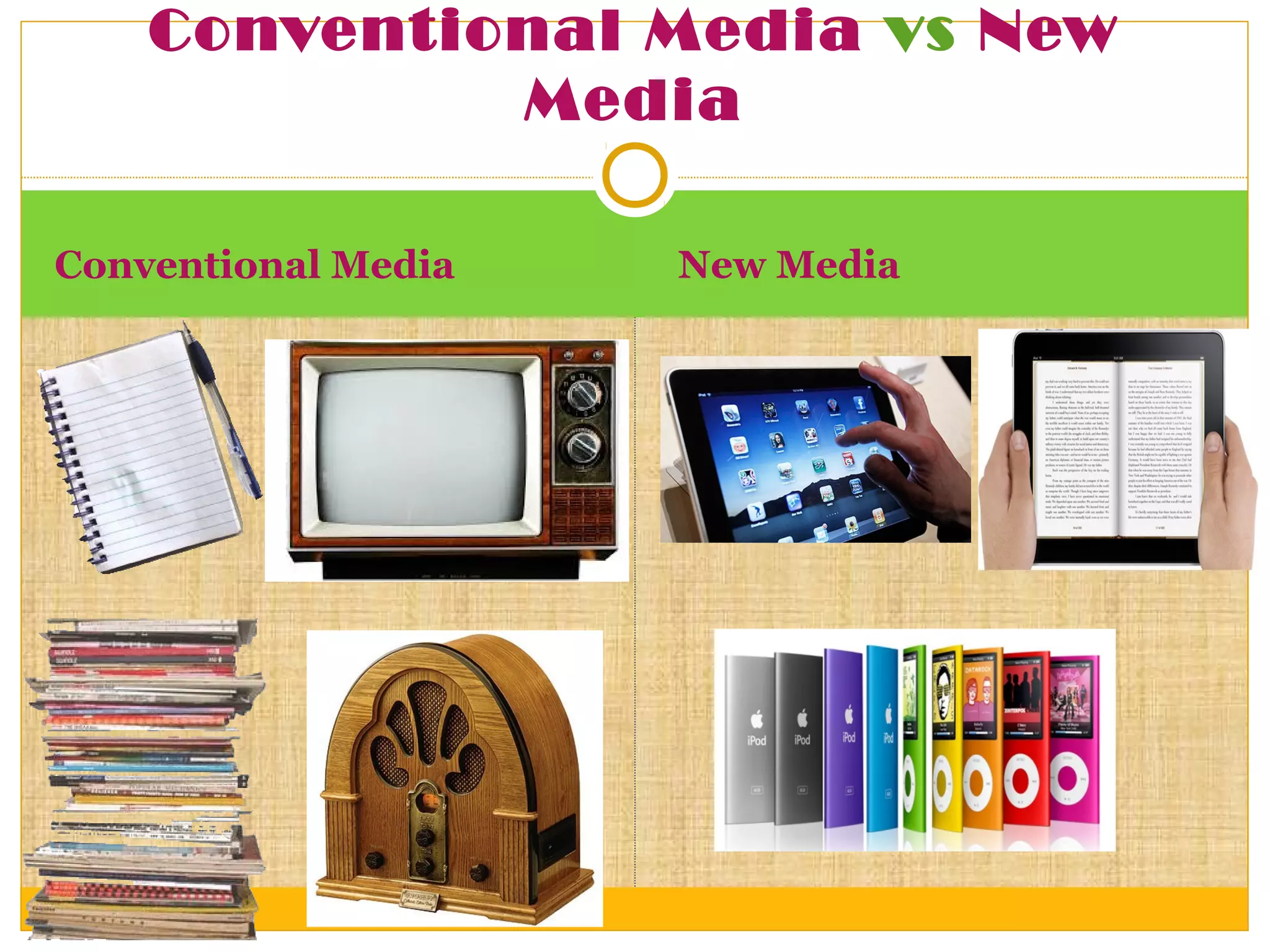
Conventional Media New Media
Conventional Media vs New
Media
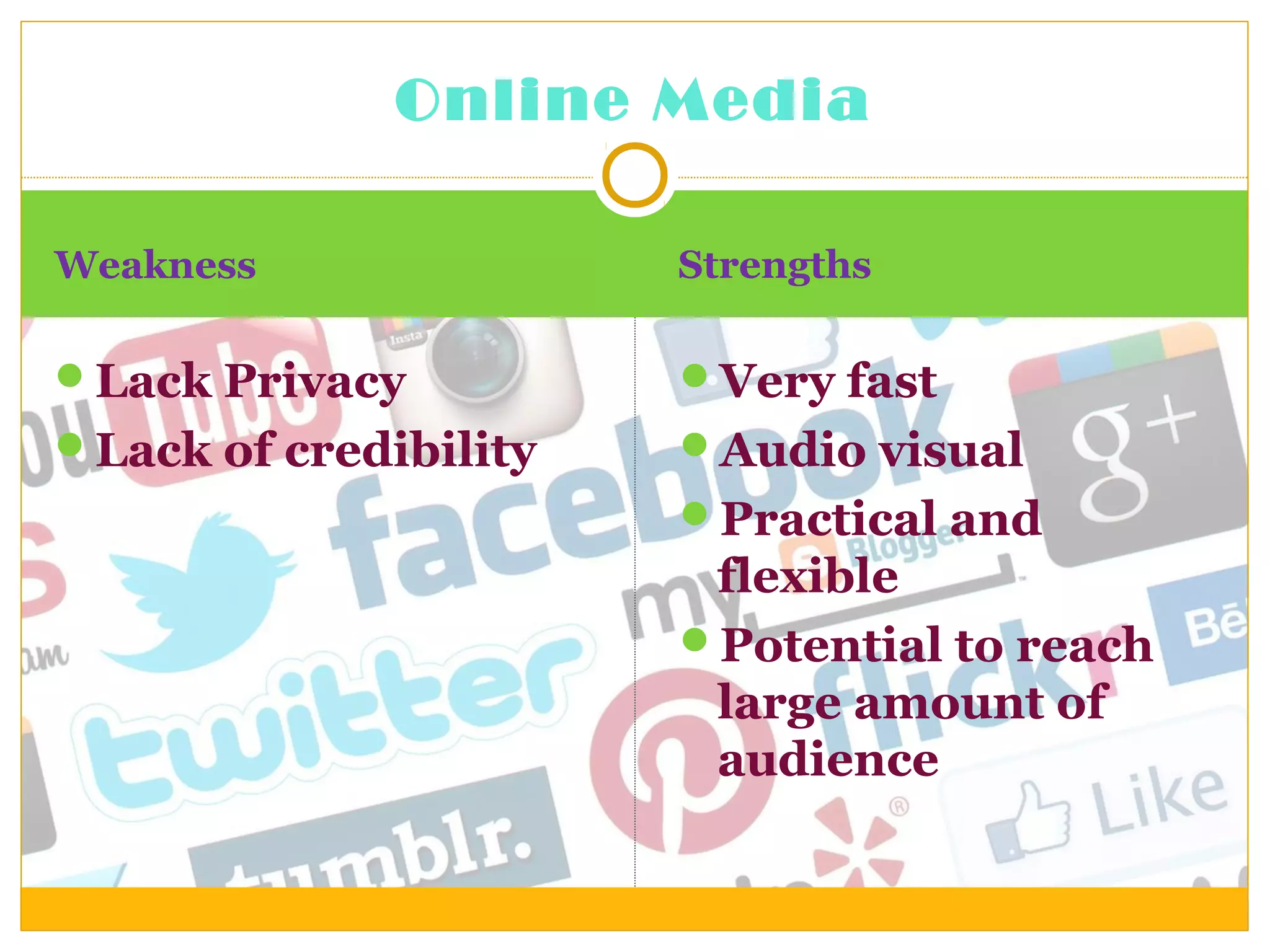
Weakness Strengths
Lack Privacy
Lack of credibility
Very fast
Audio visual
Practical and
flexible
Potential to reach
large amount of
audience
Online Media
The feedback
Feedback is the respond originated
from the receiver in respond to the
message that was sent by the sender.
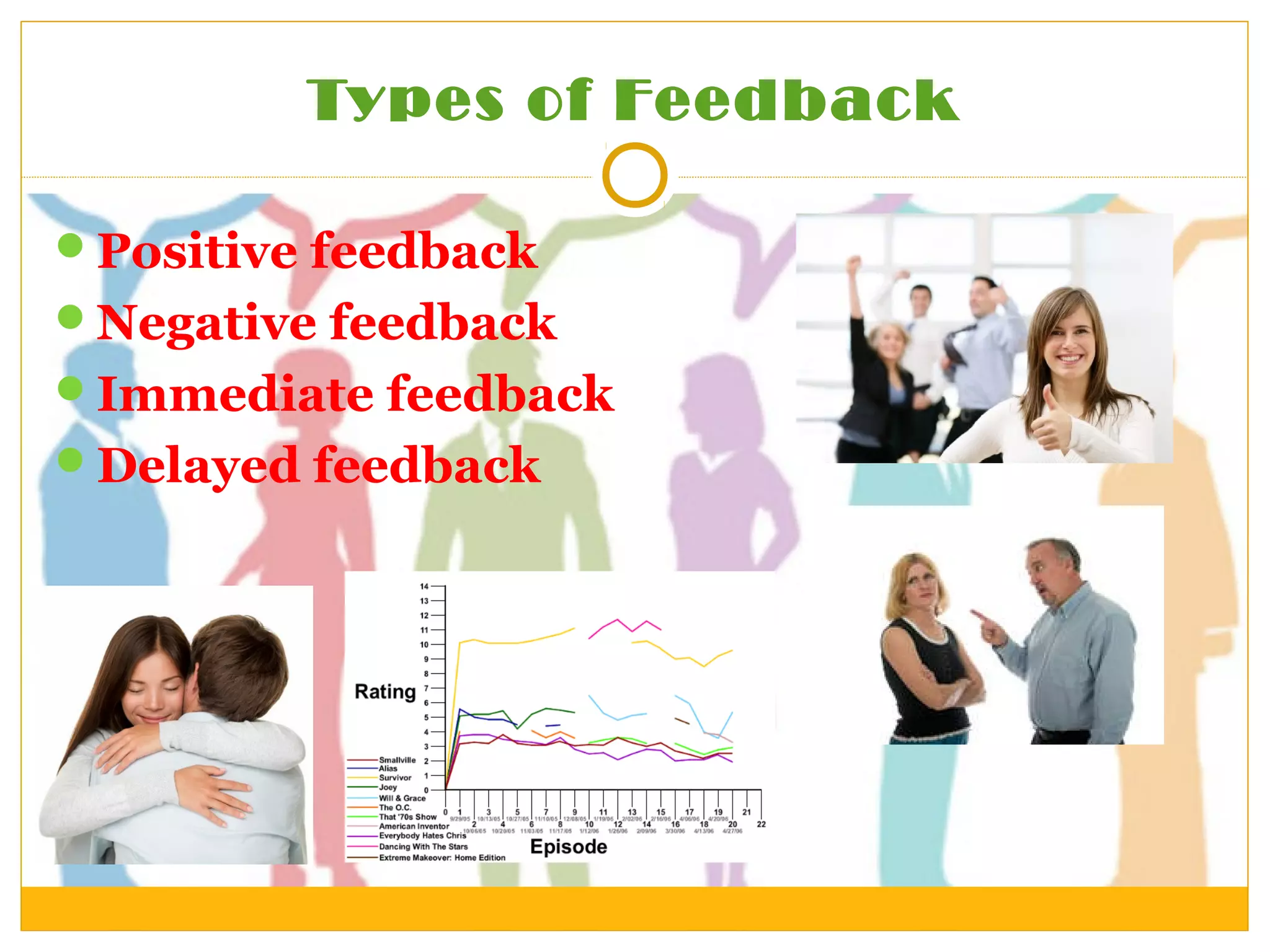
Types of Feedback
Positive feedback
Negative feedback
Immediate feedback
Delayed feedback
Communication Modes
Visual messages (something that can be seen)
Tactile messages (received by sense of touch)
Olfactory and gustatory messages (sense of
smell and taste)
Auditory messages (that can heard)
Basic Life Function
Courtship and mating
Reproduction
Parents offspring's
relation and
socialization
Navigation
Self-defense
Territoriality
Thank You for Your Attention!!!

comunication process

  • 2.
    Elements of Communication Sender Receiver Message Channels Noiseinternal noise and external noise Context Feedback positive feedback, negative feedback, internal feedback and external feedback Effect emotional, physical and cognitive
  • 3.
    Channels Channel refers theway the message travels to the receiver
  • 4.
    Many kinds ofChannel Face to face Visual message Sense of touch/tactile Sense of taste (from smelling or tasting) From sounds and hearing The channel of organizational (newsletter,memo, company email) Mass communication (primary channels like news paper , radio, film)
  • 5.
    Weakness Strengths Slow processand distribution Limitation of visual No audio Repeatable easily copied More detailbecause there is no time limit on decoding the message Can be Analyze more deeply because there is no time limit we can re-read the message repeat ably Print media
  • 6.
    Weakness Strengths No repetition Lackof detail there is time limit for the content to be delivered High cost Fast from time Audio visual It can reach large amount of audience Electronic media
  • 7.
    Conventional Media NewMedia Conventional Media vs New Media
  • 8.
    Weakness Strengths Lack Privacy Lackof credibility Very fast Audio visual Practical and flexible Potential to reach large amount of audience Online Media
  • 9.
    The feedback Feedback isthe respond originated from the receiver in respond to the message that was sent by the sender.
  • 10.
    Types of Feedback Positivefeedback Negative feedback Immediate feedback Delayed feedback
  • 11.
    Communication Modes Visual messages(something that can be seen) Tactile messages (received by sense of touch) Olfactory and gustatory messages (sense of smell and taste) Auditory messages (that can heard)
  • 12.
    Basic Life Function Courtshipand mating Reproduction Parents offspring's relation and socialization Navigation Self-defense Territoriality
  • 13.
    Thank You forYour Attention!!!