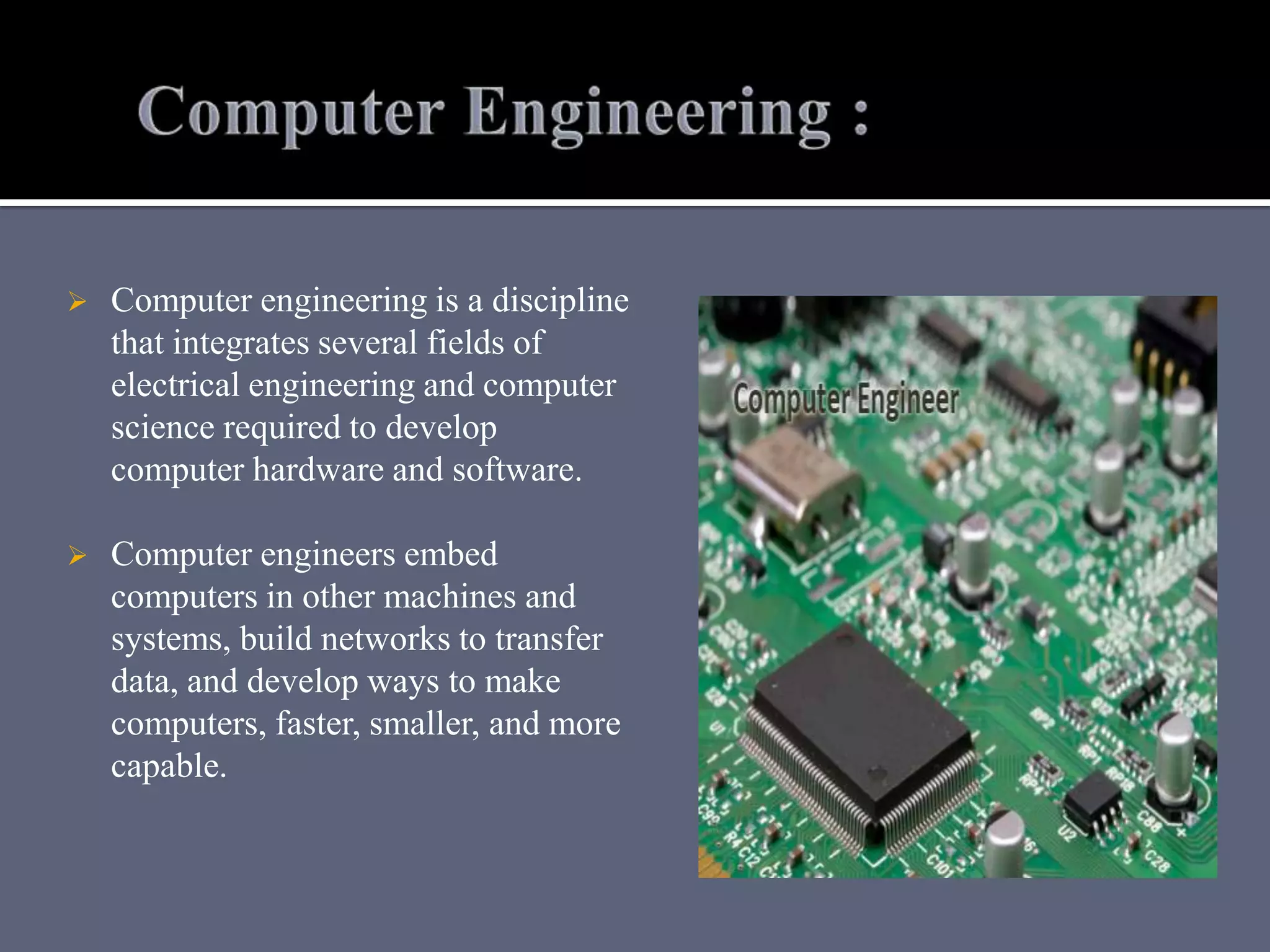
 Computer engineering is a discipline
that integrates several fields of
electrical engineering and computer
science required to develop
computer hardware and software.
 Computer engineers embed
computers in other machines and
systems, build networks to transfer
data, and develop ways to make
computers, faster, smaller, and more
capable.
 Information technology (IT) is the application of
computers and telecommunications equipment to
store, retrieve, transmit and manipulate data, often
in the context of a business or other enterprise.
 Computing, and its many subfields, is about solving problems using
computers. It is concerned with the study of information and
computation and finding solutions to problems using modern computer
systems.
 Computer science and information technology drives many facets of
modern innovation and assists the solving of problems in areas such as
medical research, climate change, the environment, and business.
 It has a significant impact upon the creative industries and in the
development of new products and services.
 Information technology covers everything from designing critical
software to managing information systems.
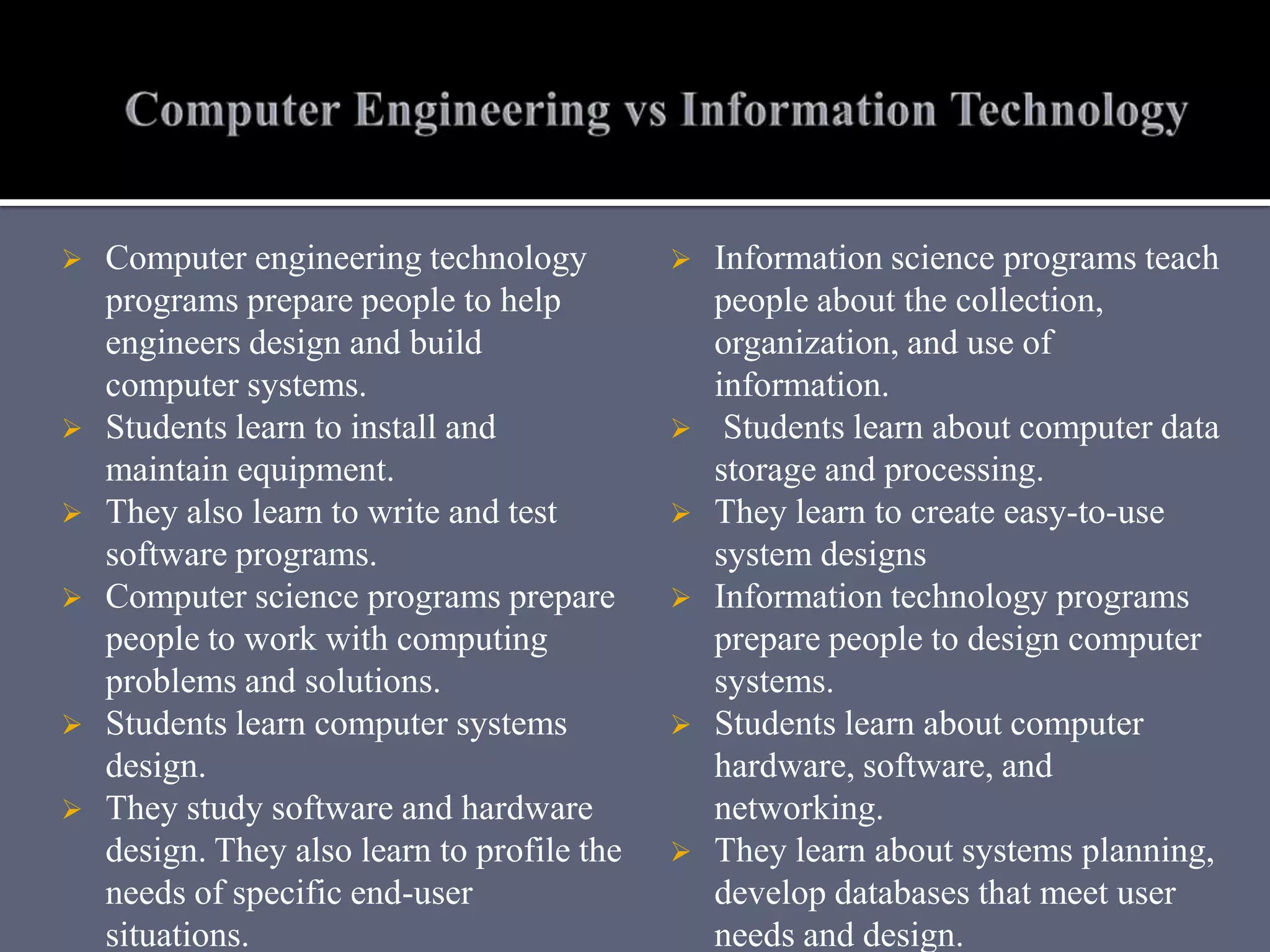
 Computer engineering technology
programs prepare people to help
engineers design and build
computer systems.
 Students learn to install and
maintain equipment.
 They also learn to write and test
software programs.
 Computer science programs prepare
people to work with computing
problems and solutions.
 Students learn computer systems
design.
 They study software and hardware
design. They also learn to profile the
needs of specific end-user
situations.
 Information science programs teach
people about the collection,
organization, and use of
information.
 Students learn about computer data
storage and processing.
 They learn to create easy-to-use
system designs
 Information technology programs
prepare people to design computer
systems.
 Students learn about computer
hardware, software, and
networking.
 They learn about systems planning,
develop databases that meet user
needs and design.
 Computer engineers in federal government.
 Computer and electronic product manufacturing.
 Computer systems design and related services.
 Scientific research and development services.
 Information security analysts.
 Network architect.
 Computer support specialists.
 Database administrators.
 Systems administrators
Computer Engineering

Computer Engineering

  • 2.
     Computer engineeringis a discipline that integrates several fields of electrical engineering and computer science required to develop computer hardware and software.  Computer engineers embed computers in other machines and systems, build networks to transfer data, and develop ways to make computers, faster, smaller, and more capable.
  • 3.
     Information technology(IT) is the application of computers and telecommunications equipment to store, retrieve, transmit and manipulate data, often in the context of a business or other enterprise.
  • 4.
     Computing, andits many subfields, is about solving problems using computers. It is concerned with the study of information and computation and finding solutions to problems using modern computer systems.  Computer science and information technology drives many facets of modern innovation and assists the solving of problems in areas such as medical research, climate change, the environment, and business.  It has a significant impact upon the creative industries and in the development of new products and services.  Information technology covers everything from designing critical software to managing information systems.
  • 5.
     Computer engineeringtechnology programs prepare people to help engineers design and build computer systems.  Students learn to install and maintain equipment.  They also learn to write and test software programs.  Computer science programs prepare people to work with computing problems and solutions.  Students learn computer systems design.  They study software and hardware design. They also learn to profile the needs of specific end-user situations.  Information science programs teach people about the collection, organization, and use of information.  Students learn about computer data storage and processing.  They learn to create easy-to-use system designs  Information technology programs prepare people to design computer systems.  Students learn about computer hardware, software, and networking.  They learn about systems planning, develop databases that meet user needs and design.
  • 6.
     Computer engineersin federal government.  Computer and electronic product manufacturing.  Computer systems design and related services.  Scientific research and development services.
  • 7.
     Information securityanalysts.  Network architect.  Computer support specialists.  Database administrators.  Systems administrators