Computer Advantages:
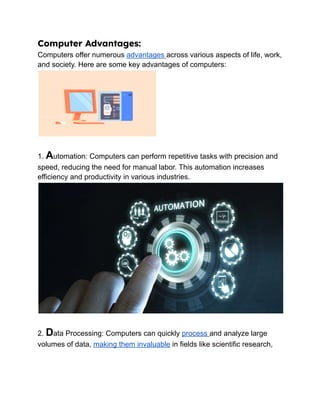
Computers offer numerous advantages across various aspects of life, work,
and society. Here are some key advantages of computers:
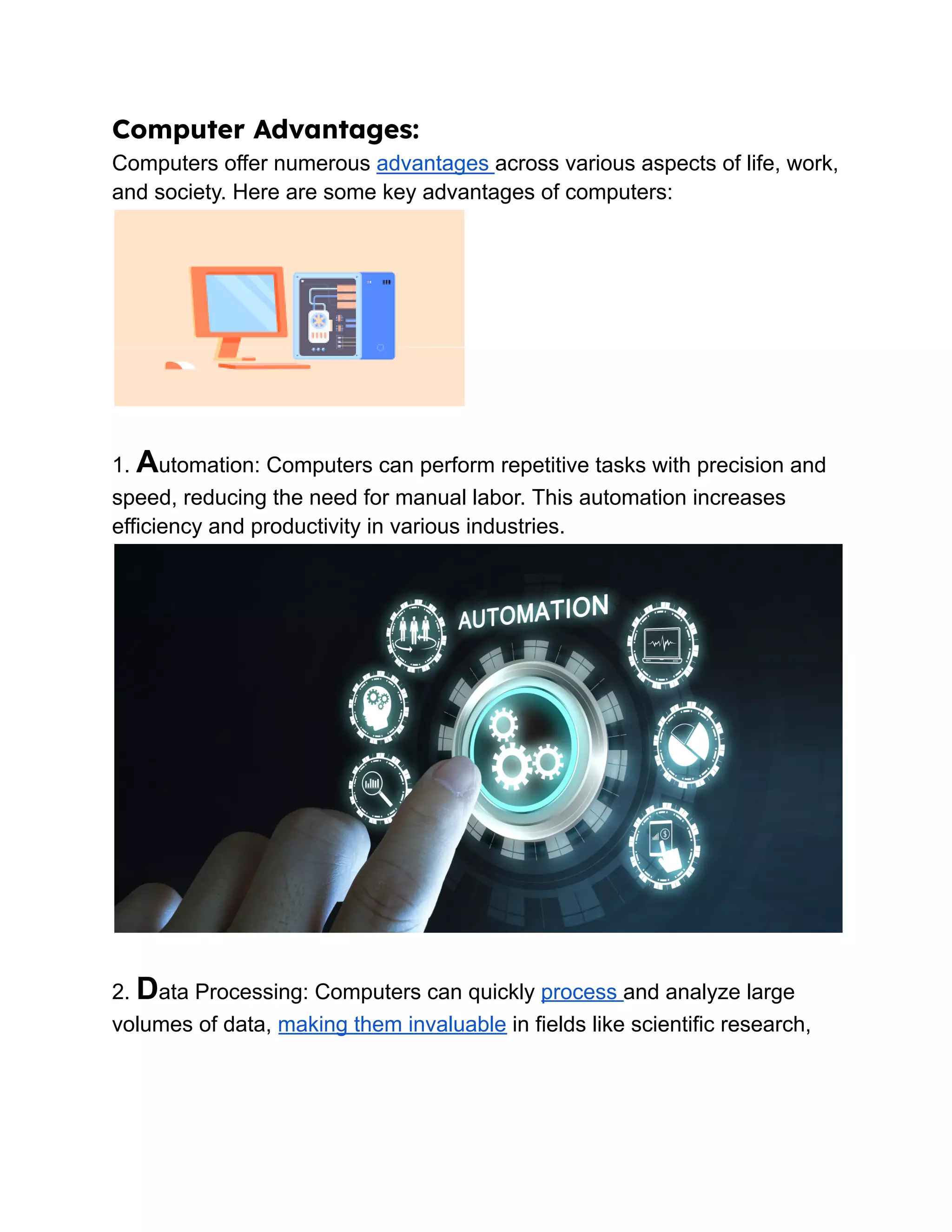
1. Automation: Computers can perform repetitive tasks with precision and
speed, reducing the need for manual labor. This automation increases
efficiency and productivity in various industries.
2. Data Processing: Computers can quickly process and analyze large
volumes of data, making them invaluable in fields like scientific research,
data analysis, and business intelligence.
3. Communication: Computers enable seamless communication through
email, messaging apps, and video conferencing, connecting people
worldwide and facilitating collaboration.
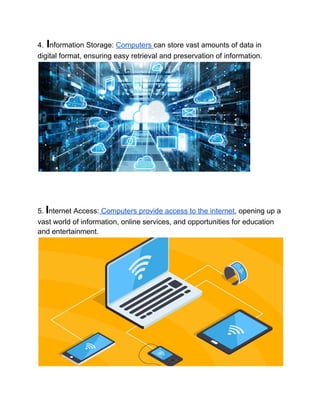
4. Information Storage: Computers can store vast amounts of data in
digital format, ensuring easy retrieval and preservation of information.
5. Internet Access: Computers provide access to the internet, opening up a
vast world of information, online services, and opportunities for education
and entertainment.
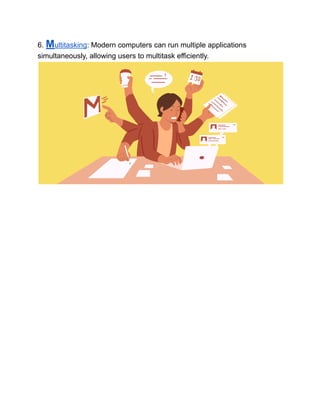
6. Multitasking: Modern computers can run multiple applications
simultaneously, allowing users to multitask efficiently.
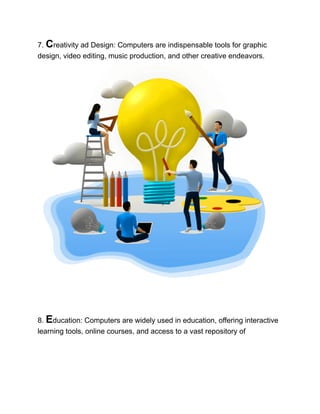
7. Creativity ad Design: Computers are indispensable tools for graphic
design, video editing, music production, and other creative endeavors.
8. Education: Computers are widely used in education, offering interactive
learning tools, online courses, and access to a vast repository of
educational resources.
9. Research: Researchers use computers for simulations, data analysis,
and access to online databases, accelerating the pace of scientific
discovery.
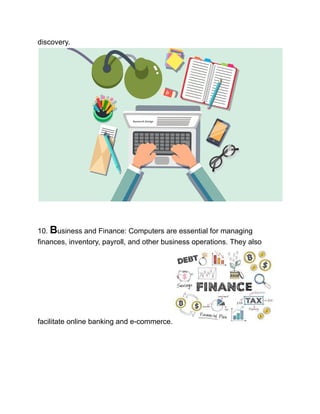
10. Business and Finance: Computers are essential for managing
finances, inventory, payroll, and other business operations. They also
facilitate online banking and e-commerce.
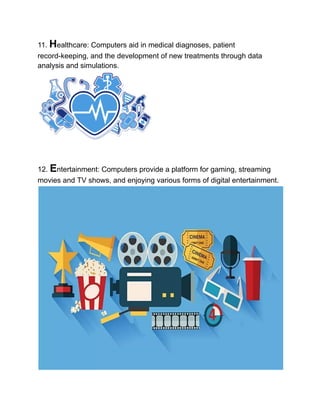
11. Healthcare: Computers aid in medical diagnoses, patient
record-keeping, and the development of new treatments through data
analysis and simulations.
12. Entertainment: Computers provide a platform for gaming, streaming
movies and TV shows, and enjoying various forms of digital entertainment.
13. Efficient Resource Management: Computers help optimize resource
allocation in industries like transportation, agriculture, and energy, leading
to cost savings and reduced environmental impact.
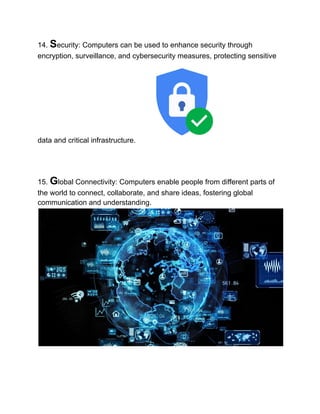
14. Security: Computers can be used to enhance security through
encryption, surveillance, and cybersecurity measures, protecting sensitive
data and critical infrastructure.
15. Global Connectivity: Computers enable people from different parts of
the world to connect, collaborate, and share ideas, fostering global
communication and understanding.
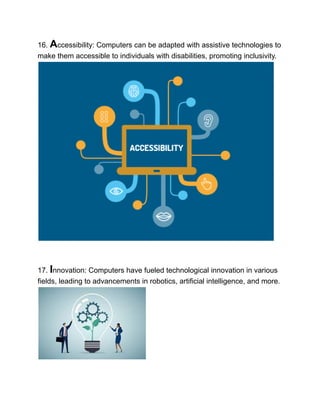
16. Accessibility: Computers can be adapted with assistive technologies to
make them accessible to individuals with disabilities, promoting inclusivity.
17. Innovation: Computers have fueled technological innovation in various
fields, leading to advancements in robotics, artificial intelligence, and more.
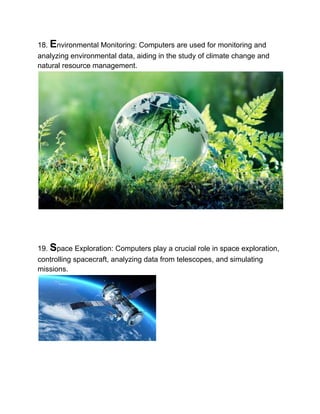
18. Environmental Monitoring: Computers are used for monitoring and
analyzing environmental data, aiding in the study of climate change and
natural resource management.
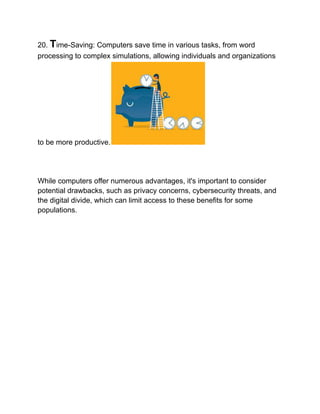
19. Space Exploration: Computers play a crucial role in space exploration,
controlling spacecraft, analyzing data from telescopes, and simulating
missions.
20. Time-Saving: Computers save time in various tasks, from word
processing to complex simulations, allowing individuals and organizations
to be more productive.
While computers offer numerous advantages, it's important to consider
potential drawbacks, such as privacy concerns, cybersecurity threats, and
the digital divide, which can limit access to these benefits for some
populations.

Computer Advantages

  • 1.
    Computer Advantages: Computers offernumerous advantages across various aspects of life, work, and society. Here are some key advantages of computers: 1. Automation: Computers can perform repetitive tasks with precision and speed, reducing the need for manual labor. This automation increases efficiency and productivity in various industries. 2. Data Processing: Computers can quickly process and analyze large volumes of data, making them invaluable in fields like scientific research,
  • 2.
    data analysis, andbusiness intelligence. 3. Communication: Computers enable seamless communication through email, messaging apps, and video conferencing, connecting people
  • 3.
  • 4.
    4. Information Storage:Computers can store vast amounts of data in digital format, ensuring easy retrieval and preservation of information. 5. Internet Access: Computers provide access to the internet, opening up a vast world of information, online services, and opportunities for education and entertainment.
  • 5.
    6. Multitasking: Moderncomputers can run multiple applications simultaneously, allowing users to multitask efficiently.
  • 6.
    7. Creativity adDesign: Computers are indispensable tools for graphic design, video editing, music production, and other creative endeavors. 8. Education: Computers are widely used in education, offering interactive learning tools, online courses, and access to a vast repository of
  • 7.
    educational resources. 9. Research:Researchers use computers for simulations, data analysis, and access to online databases, accelerating the pace of scientific
  • 8.
    discovery. 10. Business andFinance: Computers are essential for managing finances, inventory, payroll, and other business operations. They also facilitate online banking and e-commerce.
  • 9.
    11. Healthcare: Computersaid in medical diagnoses, patient record-keeping, and the development of new treatments through data analysis and simulations. 12. Entertainment: Computers provide a platform for gaming, streaming movies and TV shows, and enjoying various forms of digital entertainment.
  • 10.
    13. Efficient ResourceManagement: Computers help optimize resource allocation in industries like transportation, agriculture, and energy, leading to cost savings and reduced environmental impact.
  • 11.
    14. Security: Computerscan be used to enhance security through encryption, surveillance, and cybersecurity measures, protecting sensitive data and critical infrastructure. 15. Global Connectivity: Computers enable people from different parts of the world to connect, collaborate, and share ideas, fostering global communication and understanding.
  • 12.
    16. Accessibility: Computerscan be adapted with assistive technologies to make them accessible to individuals with disabilities, promoting inclusivity. 17. Innovation: Computers have fueled technological innovation in various fields, leading to advancements in robotics, artificial intelligence, and more.
  • 13.
    18. Environmental Monitoring:Computers are used for monitoring and analyzing environmental data, aiding in the study of climate change and natural resource management. 19. Space Exploration: Computers play a crucial role in space exploration, controlling spacecraft, analyzing data from telescopes, and simulating missions.
  • 14.
    20. Time-Saving: Computerssave time in various tasks, from word processing to complex simulations, allowing individuals and organizations to be more productive. While computers offer numerous advantages, it's important to consider potential drawbacks, such as privacy concerns, cybersecurity threats, and the digital divide, which can limit access to these benefits for some populations.