Photography Like Pro
Photography like a pro takes time, practice, and dedication. Here are
some steps to help you improve your photography skills and start
capturing images like a pro:
1. **Master Your Camera:**
- Learn how to use your camera in manual mode. Understanding
settings like aperture, shutter speed, ISO, and white balance is crucial
for creative control.
- Read your camera's manual to understand its features and
functions thoroughly.
2. **Composition is Key:**
- Understand the rule of thirds, leading lines, framing, and other
composition techniques. These help create visually appealing images.
- Experiment with different angles and perspectives to find the most
interesting and unique shots.
3. **Lighting:**
- Good lighting is essential for great photos. Learn how to use
natural light, artificial light, and various lighting techniques to your
advantage.
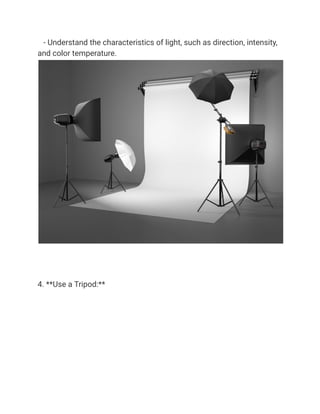
- Understand the characteristics of light, such as direction, intensity,
and color temperature.
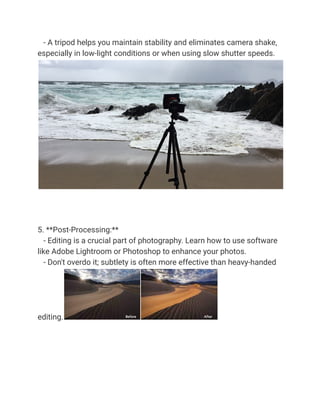
4. **Use a Tripod:**
- A tripod helps you maintain stability and eliminates camera shake,
especially in low-light conditions or when using slow shutter speeds.
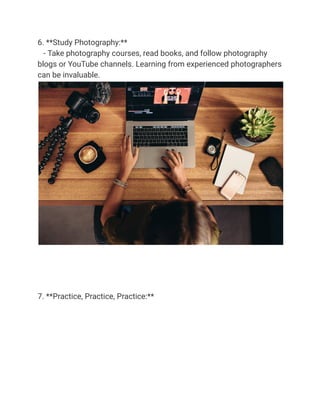
5. **Post-Processing:**
- Editing is a crucial part of photography. Learn how to use software
like Adobe Lightroom or Photoshop to enhance your photos.
- Don't overdo it; subtlety is often more effective than heavy-handed
editing.
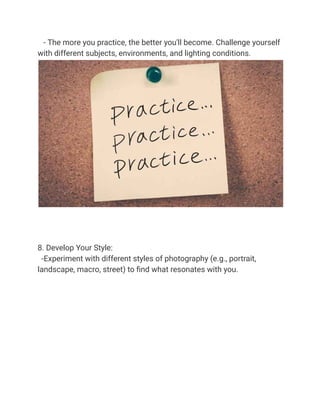
6. **Study Photography:**
- Take photography courses, read books, and follow photography
blogs or YouTube channels. Learning from experienced photographers
can be invaluable.
7. **Practice, Practice, Practice:**
- The more you practice, the better you'll become. Challenge yourself
with different subjects, environments, and lighting conditions.
8. Develop Your Style:
-Experiment with different styles of photography (e.g., portrait,
landscape, macro, street) to find what resonates with you.
- Develop a unique style that sets your work apart from others.
9. **Feedback:**
- Seek feedback from peers or mentors. Constructive criticism can
help you identify areas for improvement.
10. **Build a Portfolio:**
- Create a portfolio of your best work. A strong portfolio is essential
if you plan to pursue photography professionally.
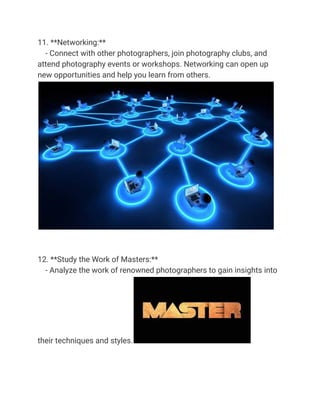
11. **Networking:**
- Connect with other photographers, join photography clubs, and
attend photography events or workshops. Networking can open up
new opportunities and help you learn from others.
12. **Study the Work of Masters:**
- Analyze the work of renowned photographers to gain insights into
their techniques and styles.
13. **Stay Inspired:**
- Keep your creative juices flowing by exploring other forms of art,
traveling, or simply observing the world around you.
14. **Patience and Persistence:**
- Photography can be challenging, and not every shot will be a
masterpiece. Stay patient, persistent, and don't get discouraged by
failures.
15. **Legal and Ethical Considerations:**
- Familiarize yourself with copyright laws and privacy
considerations, especially if you plan to publish or sell your photos.
Remember that photography is a highly subjective art form, and what
defines "pro-level" can vary greatly depending on your goals and the
context in which you're working. Keep honing your skills, trust your
creative instincts, and continue to evolve as a photographer.

Photography Like a Pro

  • 1.
    Photography Like Pro Photographylike a pro takes time, practice, and dedication. Here are some steps to help you improve your photography skills and start capturing images like a pro: 1. **Master Your Camera:** - Learn how to use your camera in manual mode. Understanding settings like aperture, shutter speed, ISO, and white balance is crucial for creative control.
  • 2.
    - Read yourcamera's manual to understand its features and functions thoroughly. 2. **Composition is Key:** - Understand the rule of thirds, leading lines, framing, and other composition techniques. These help create visually appealing images.
  • 3.
    - Experiment withdifferent angles and perspectives to find the most interesting and unique shots. 3. **Lighting:** - Good lighting is essential for great photos. Learn how to use natural light, artificial light, and various lighting techniques to your advantage.
  • 4.
    - Understand thecharacteristics of light, such as direction, intensity, and color temperature. 4. **Use a Tripod:**
  • 5.
    - A tripodhelps you maintain stability and eliminates camera shake, especially in low-light conditions or when using slow shutter speeds. 5. **Post-Processing:** - Editing is a crucial part of photography. Learn how to use software like Adobe Lightroom or Photoshop to enhance your photos. - Don't overdo it; subtlety is often more effective than heavy-handed editing.
  • 6.
    6. **Study Photography:** -Take photography courses, read books, and follow photography blogs or YouTube channels. Learning from experienced photographers can be invaluable. 7. **Practice, Practice, Practice:**
  • 7.
    - The moreyou practice, the better you'll become. Challenge yourself with different subjects, environments, and lighting conditions. 8. Develop Your Style: -Experiment with different styles of photography (e.g., portrait, landscape, macro, street) to find what resonates with you.
  • 8.
    - Develop aunique style that sets your work apart from others. 9. **Feedback:**
  • 9.
    - Seek feedbackfrom peers or mentors. Constructive criticism can help you identify areas for improvement. 10. **Build a Portfolio:** - Create a portfolio of your best work. A strong portfolio is essential if you plan to pursue photography professionally.
  • 10.
    11. **Networking:** - Connectwith other photographers, join photography clubs, and attend photography events or workshops. Networking can open up new opportunities and help you learn from others. 12. **Study the Work of Masters:** - Analyze the work of renowned photographers to gain insights into their techniques and styles.
  • 11.
    13. **Stay Inspired:** -Keep your creative juices flowing by exploring other forms of art, traveling, or simply observing the world around you. 14. **Patience and Persistence:** - Photography can be challenging, and not every shot will be a masterpiece. Stay patient, persistent, and don't get discouraged by failures.
  • 12.
    15. **Legal andEthical Considerations:** - Familiarize yourself with copyright laws and privacy considerations, especially if you plan to publish or sell your photos. Remember that photography is a highly subjective art form, and what defines "pro-level" can vary greatly depending on your goals and the context in which you're working. Keep honing your skills, trust your creative instincts, and continue to evolve as a photographer.