Computer and Internet
Certainly! Computers and the internet are fundamental
aspects of modern technology and communication. Here's an
overview of each:
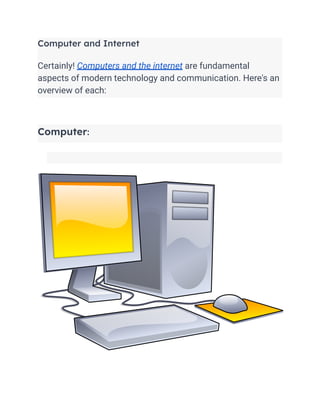
Computer:
​
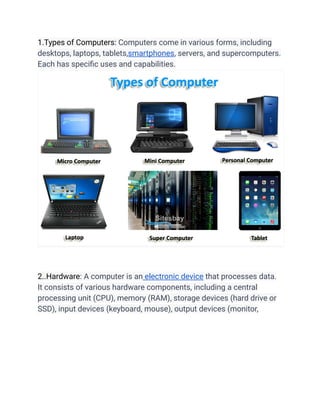
1.Types of Computers: Computers come in various forms, including
desktops, laptops, tablets,smartphones, servers, and supercomputers.
Each has specific uses and capabilities.
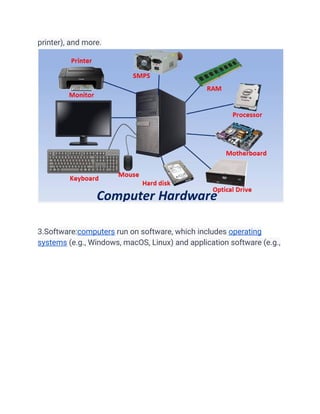
2..Hardware: A computer is an electronic device that processes data.
It consists of various hardware components, including a central
processing unit (CPU), memory (RAM), storage devices (hard drive or
SSD), input devices (keyboard, mouse), output devices (monitor,
printer), and more.
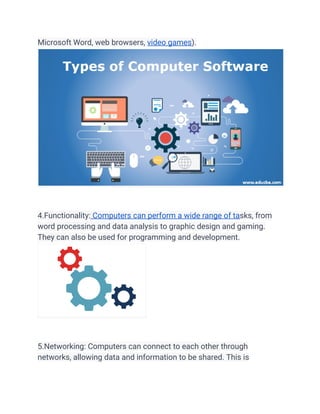
3.Software:computers run on software, which includes operating
systems (e.g., Windows, macOS, Linux) and application software (e.g.,
Microsoft Word, web browsers, video games).
4.Functionality: Computers can perform a wide range of tasks, from
word processing and data analysis to graphic design and gaming.
They can also be used for programming and development.
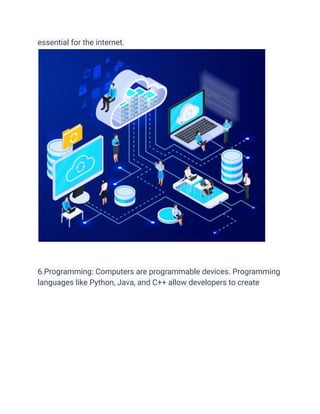
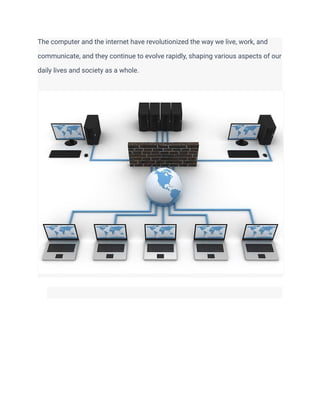
5.Networking: Computers can connect to each other through
networks, allowing data and information to be shared. This is
essential for the internet.
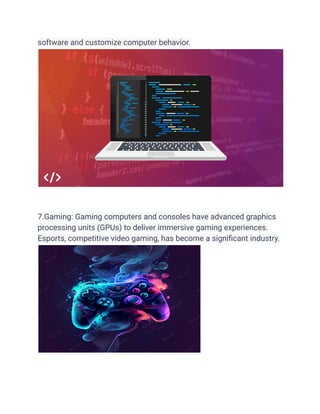
6.Programming: Computers are programmable devices. Programming
languages like Python, Java, and C++ allow developers to create
software and customize computer behavior.
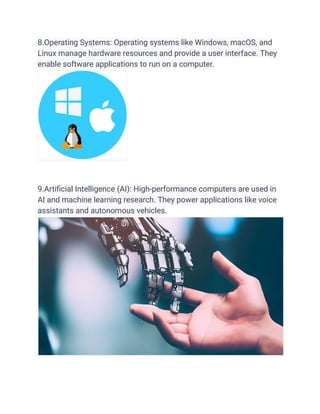
7.Gaming: Gaming computers and consoles have advanced graphics
processing units (GPUs) to deliver immersive gaming experiences.
Esports, competitive video gaming, has become a significant industry.
8.Operating Systems: Operating systems like Windows, macOS, and
Linux manage hardware resources and provide a user interface. They
enable software applications to run on a computer.
9.Artificial Intelligence (AI): High-performance computers are used in
AI and machine learning research. They power applications like voice
assistants and autonomous vehicles.
10.Quantum Computing: An emerging field, quantum computers have
the potential to solve complex problems much faster than classical
computers by utilizing quantum bits (qubits).
Internet:
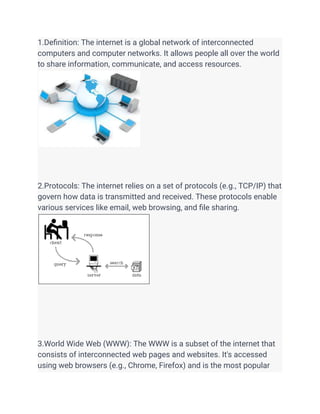
1.Definition: The internet is a global network of interconnected
computers and computer networks. It allows people all over the world
to share information, communicate, and access resources.
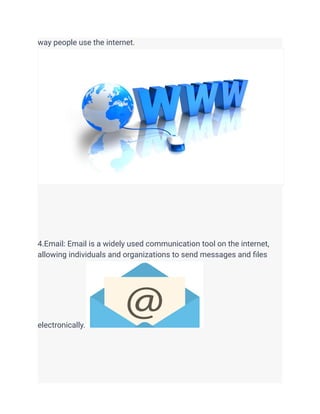
2.Protocols: The internet relies on a set of protocols (e.g., TCP/IP) that
govern how data is transmitted and received. These protocols enable
various services like email, web browsing, and file sharing.
3.World Wide Web (WWW): The WWW is a subset of the internet that
consists of interconnected web pages and websites. It's accessed
using web browsers (e.g., Chrome, Firefox) and is the most popular
way people use the internet.
4.Email: Email is a widely used communication tool on the internet,
allowing individuals and organizations to send messages and files
electronically.
5.Social Media: Social media platforms like Facebook, Twitter, and
Instagram enable users to connect, share content, and communicate
with others online.
6.E-commerce: The internet has revolutionized commerce, enabling
online shopping and electronic payments through services like
Amazon and PayPal.
7.Streaming: Services like Netflix, YouTube, and Spotify deliver
multimedia content (videos, music) over the internet.
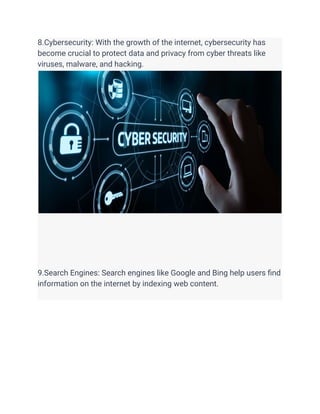
8.Cybersecurity: With the growth of the internet, cybersecurity has
become crucial to protect data and privacy from cyber threats like
viruses, malware, and hacking.
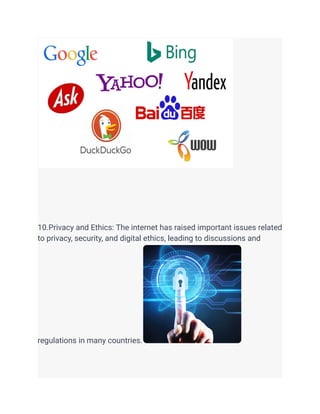
9.Search Engines: Search engines like Google and Bing help users find
information on the internet by indexing web content.
10.Privacy and Ethics: The internet has raised important issues related
to privacy, security, and digital ethics, leading to discussions and
regulations in many countries.
The computer and the internet have revolutionized the way we live, work, and
communicate, and they continue to evolve rapidly, shaping various aspects of our
daily lives and society as a whole.
​

Computer and Internet.pdf

  • 1.
    Computer and Internet Certainly!Computers and the internet are fundamental aspects of modern technology and communication. Here's an overview of each: Computer: ​
  • 2.
    1.Types of Computers:Computers come in various forms, including desktops, laptops, tablets,smartphones, servers, and supercomputers. Each has specific uses and capabilities. 2..Hardware: A computer is an electronic device that processes data. It consists of various hardware components, including a central processing unit (CPU), memory (RAM), storage devices (hard drive or SSD), input devices (keyboard, mouse), output devices (monitor,
  • 3.
    printer), and more. 3.Software:computersrun on software, which includes operating systems (e.g., Windows, macOS, Linux) and application software (e.g.,
  • 4.
    Microsoft Word, webbrowsers, video games). 4.Functionality: Computers can perform a wide range of tasks, from word processing and data analysis to graphic design and gaming. They can also be used for programming and development. 5.Networking: Computers can connect to each other through networks, allowing data and information to be shared. This is
  • 5.
    essential for theinternet. 6.Programming: Computers are programmable devices. Programming languages like Python, Java, and C++ allow developers to create
  • 6.
    software and customizecomputer behavior. 7.Gaming: Gaming computers and consoles have advanced graphics processing units (GPUs) to deliver immersive gaming experiences. Esports, competitive video gaming, has become a significant industry.
  • 7.
    8.Operating Systems: Operatingsystems like Windows, macOS, and Linux manage hardware resources and provide a user interface. They enable software applications to run on a computer. 9.Artificial Intelligence (AI): High-performance computers are used in AI and machine learning research. They power applications like voice assistants and autonomous vehicles.
  • 8.
    10.Quantum Computing: Anemerging field, quantum computers have the potential to solve complex problems much faster than classical computers by utilizing quantum bits (qubits). Internet:
  • 9.
    1.Definition: The internetis a global network of interconnected computers and computer networks. It allows people all over the world to share information, communicate, and access resources. 2.Protocols: The internet relies on a set of protocols (e.g., TCP/IP) that govern how data is transmitted and received. These protocols enable various services like email, web browsing, and file sharing. 3.World Wide Web (WWW): The WWW is a subset of the internet that consists of interconnected web pages and websites. It's accessed using web browsers (e.g., Chrome, Firefox) and is the most popular
  • 10.
    way people usethe internet. 4.Email: Email is a widely used communication tool on the internet, allowing individuals and organizations to send messages and files electronically.
  • 11.
    5.Social Media: Socialmedia platforms like Facebook, Twitter, and Instagram enable users to connect, share content, and communicate with others online. 6.E-commerce: The internet has revolutionized commerce, enabling online shopping and electronic payments through services like
  • 12.
    Amazon and PayPal. 7.Streaming:Services like Netflix, YouTube, and Spotify deliver multimedia content (videos, music) over the internet.
  • 13.
    8.Cybersecurity: With thegrowth of the internet, cybersecurity has become crucial to protect data and privacy from cyber threats like viruses, malware, and hacking. 9.Search Engines: Search engines like Google and Bing help users find information on the internet by indexing web content.
  • 14.
    10.Privacy and Ethics:The internet has raised important issues related to privacy, security, and digital ethics, leading to discussions and regulations in many countries.
  • 15.
    The computer andthe internet have revolutionized the way we live, work, and communicate, and they continue to evolve rapidly, shaping various aspects of our daily lives and society as a whole. ​