Computer and Its
Components
Presented By : Anuj Bhardwaj
What is a Computer?
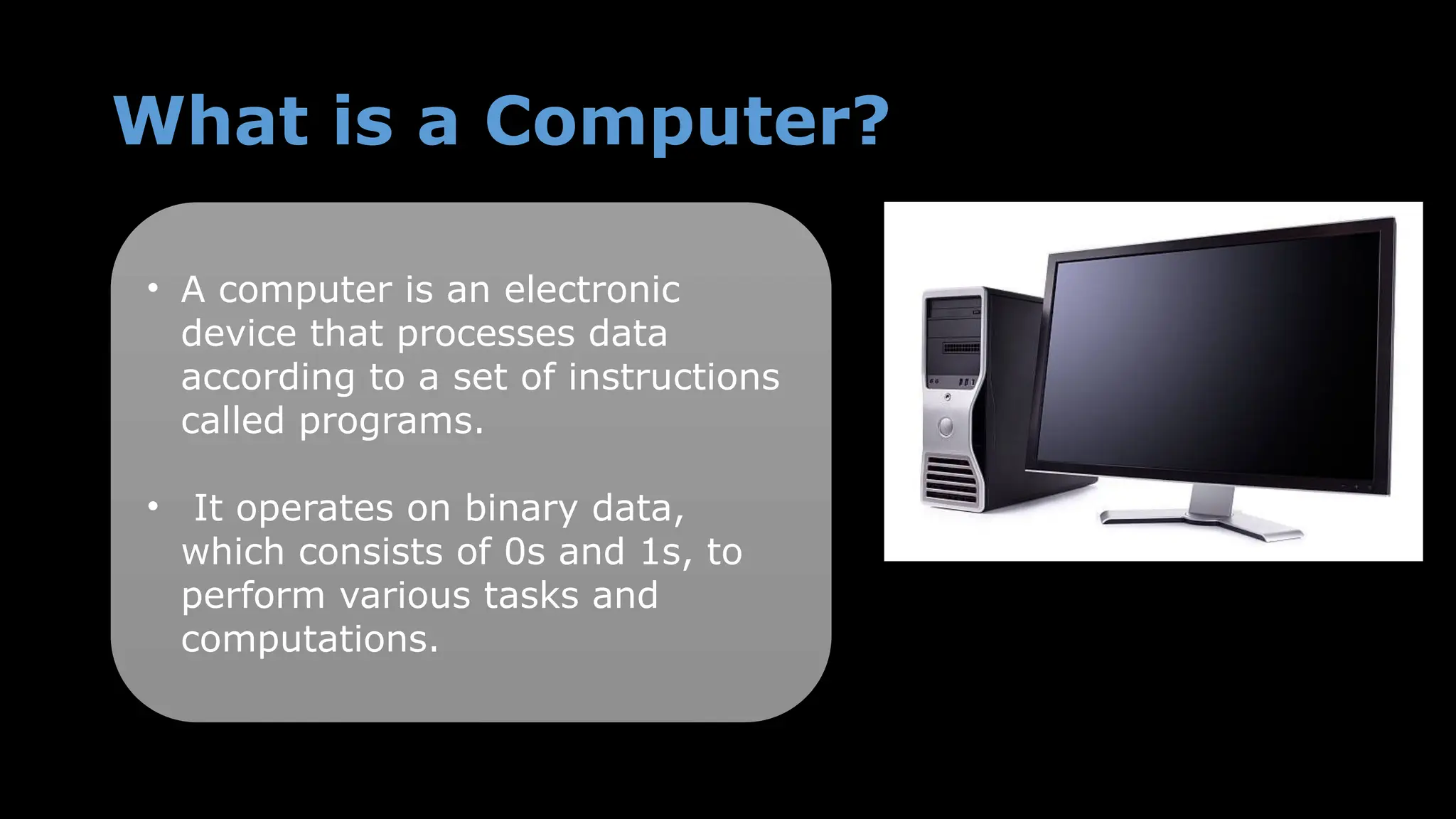
• A computer is an electronic
device that processes data
according to a set of instructions
called programs.
• It operates on binary data,
which consists of 0s and 1s, to
perform various tasks and
computations.
Basic Components of a Computer
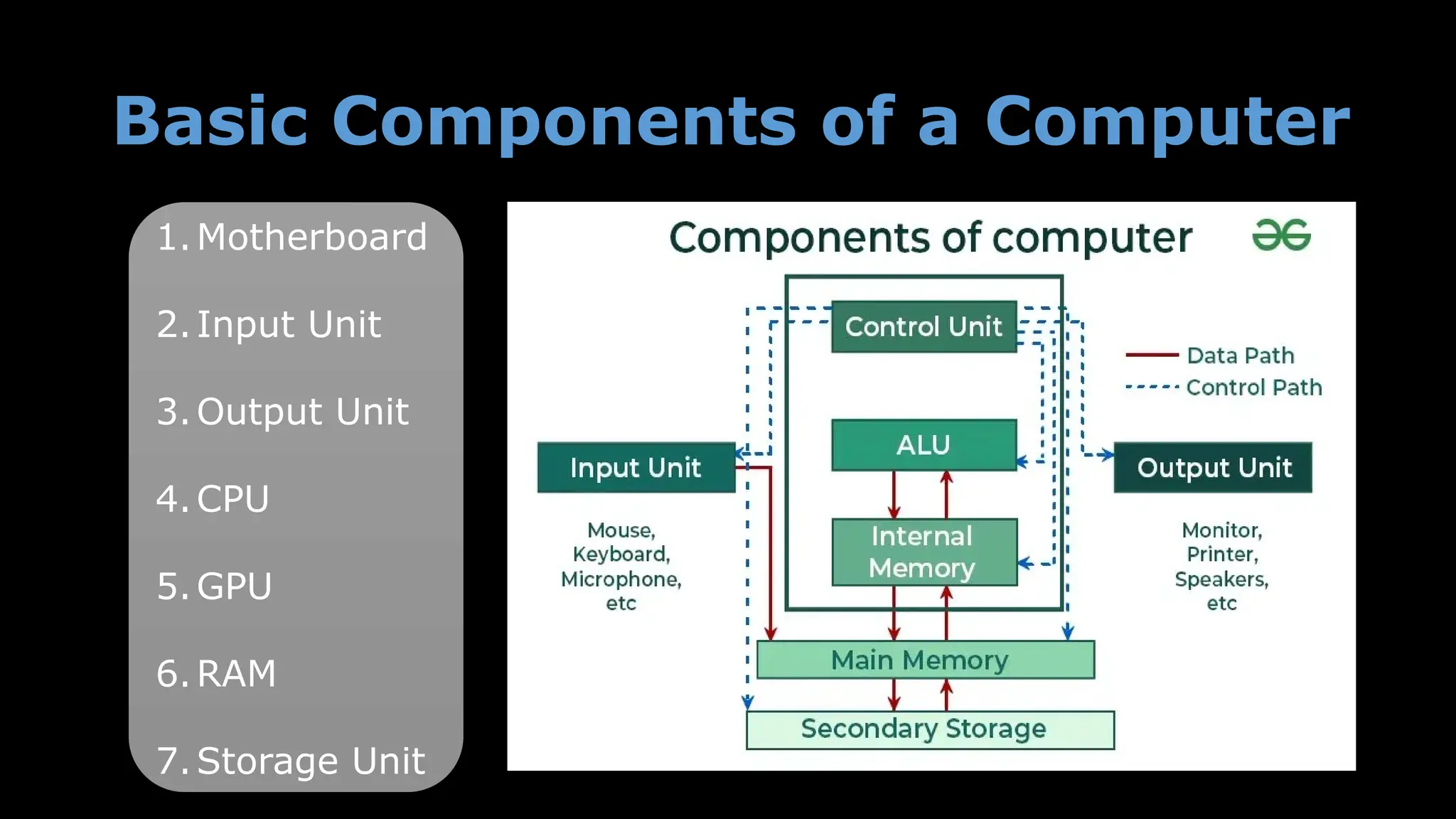
1.Motherboard
2.Input Unit
3.Output Unit
4.CPU
5.GPU
6.RAM
7.Storage Unit
• Input Unit
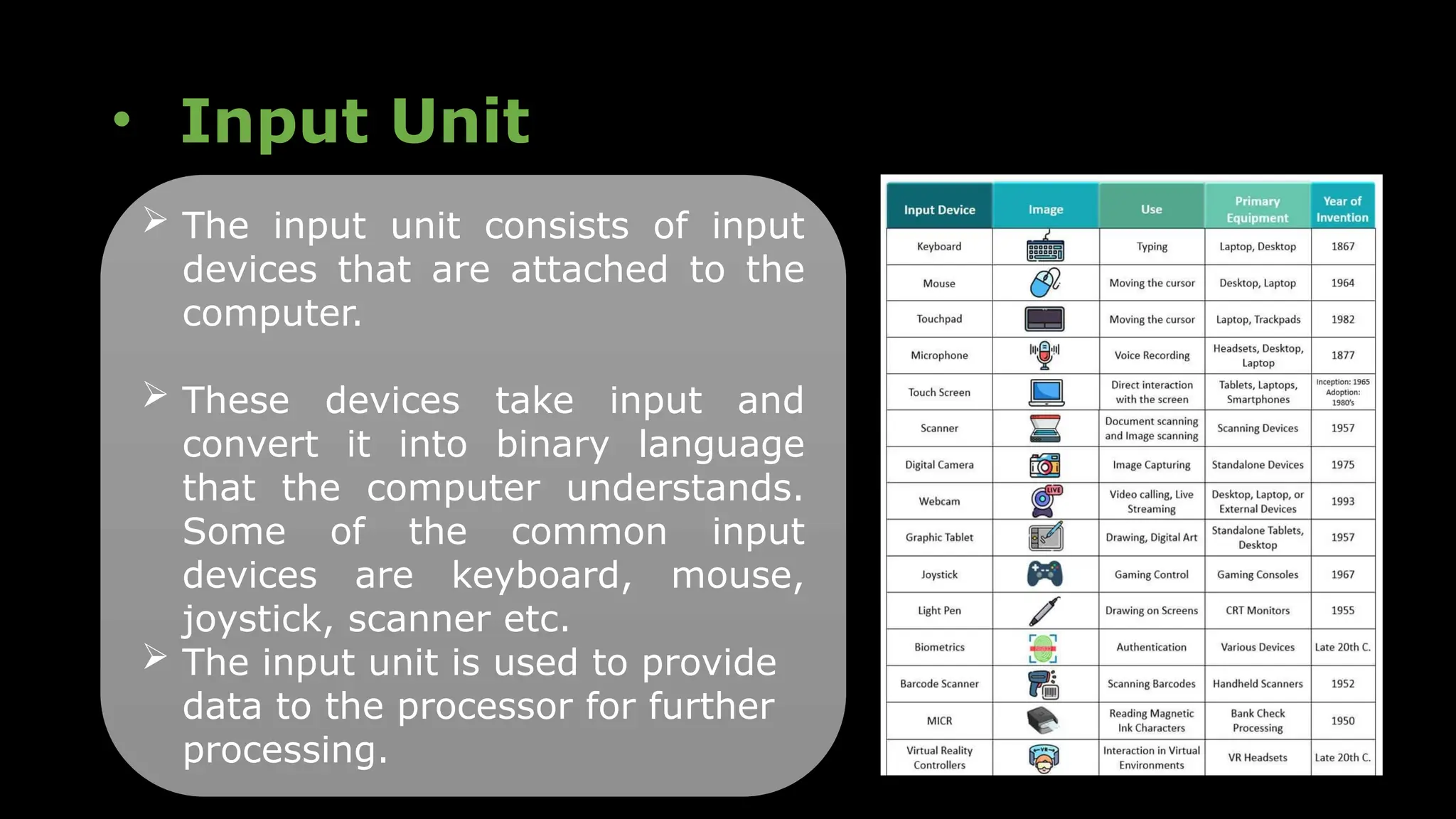
 The input unit consists of input
devices that are attached to the
computer.
 These devices take input and
convert it into binary language
that the computer understands.
Some of the common input
devices are keyboard, mouse,
joystick, scanner etc.
 The input unit is used to provide
data to the processor for further
processing.
• Central Processing Unit
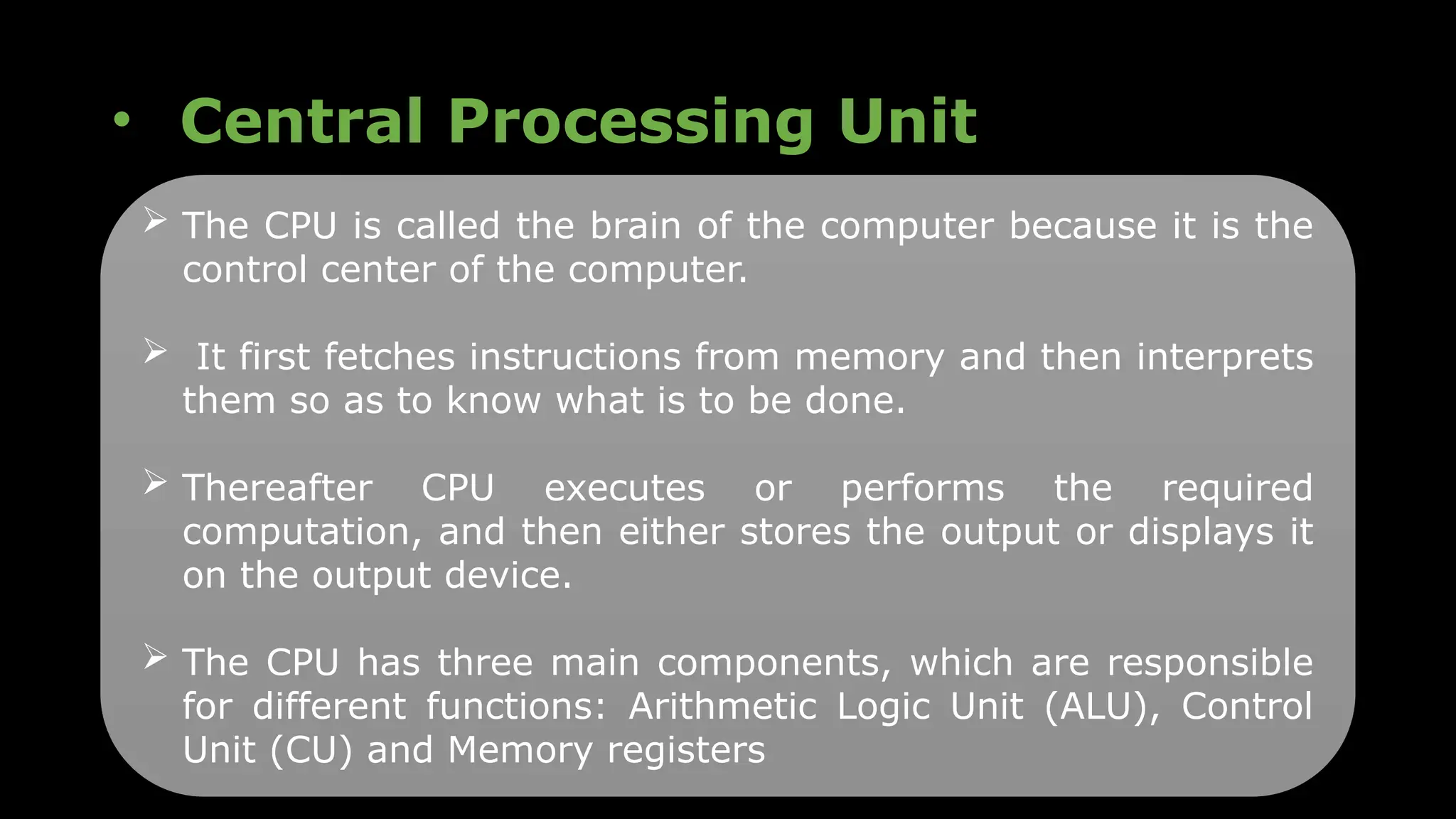
 The CPU is called the brain of the computer because it is the
control center of the computer.
 It first fetches instructions from memory and then interprets
them so as to know what is to be done.
 Thereafter CPU executes or performs the required
computation, and then either stores the output or displays it
on the output device.
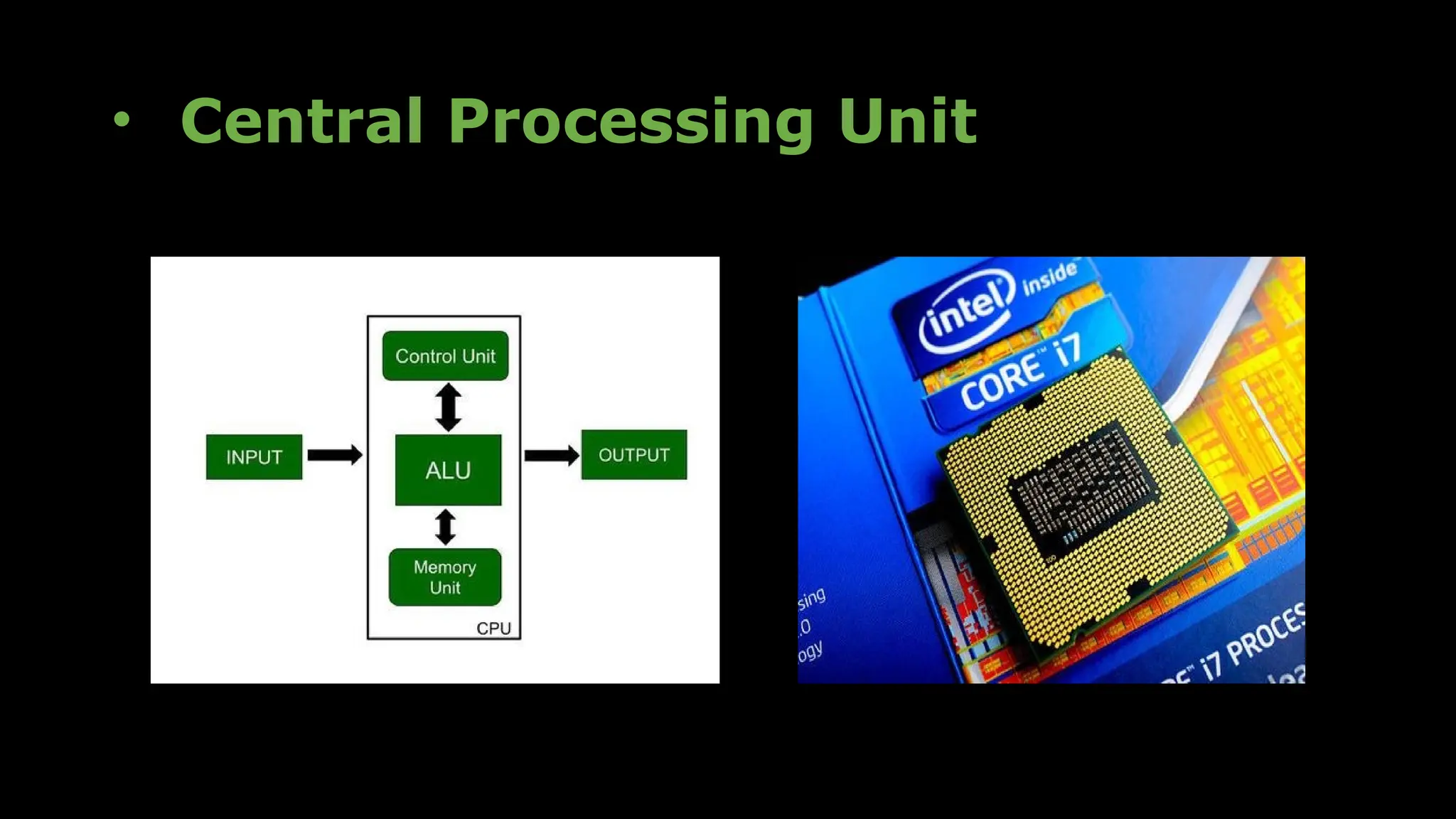
 The CPU has three main components, which are responsible
for different functions: Arithmetic Logic Unit (ALU), Control
Unit (CU) and Memory registers
• Central Processing Unit
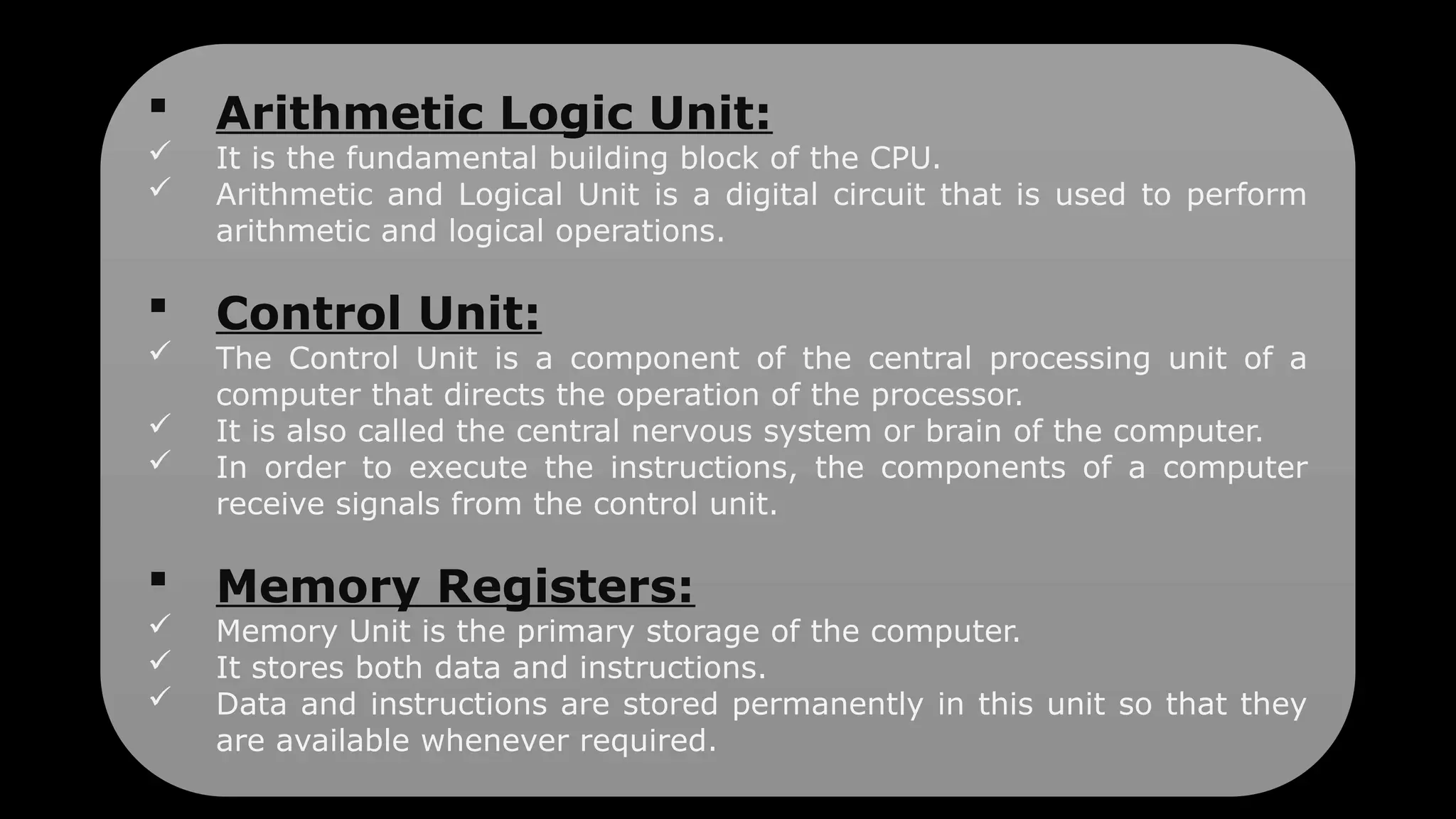
 Arithmetic Logic Unit:
 It is the fundamental building block of the CPU.
 Arithmetic and Logical Unit is a digital circuit that is used to perform
arithmetic and logical operations.
 Control Unit:
 The Control Unit is a component of the central processing unit of a
computer that directs the operation of the processor.
 It is also called the central nervous system or brain of the computer.
 In order to execute the instructions, the components of a computer
receive signals from the control unit.
 Memory Registers:
 Memory Unit is the primary storage of the computer.
 It stores both data and instructions.
 Data and instructions are stored permanently in this unit so that they
are available whenever required.
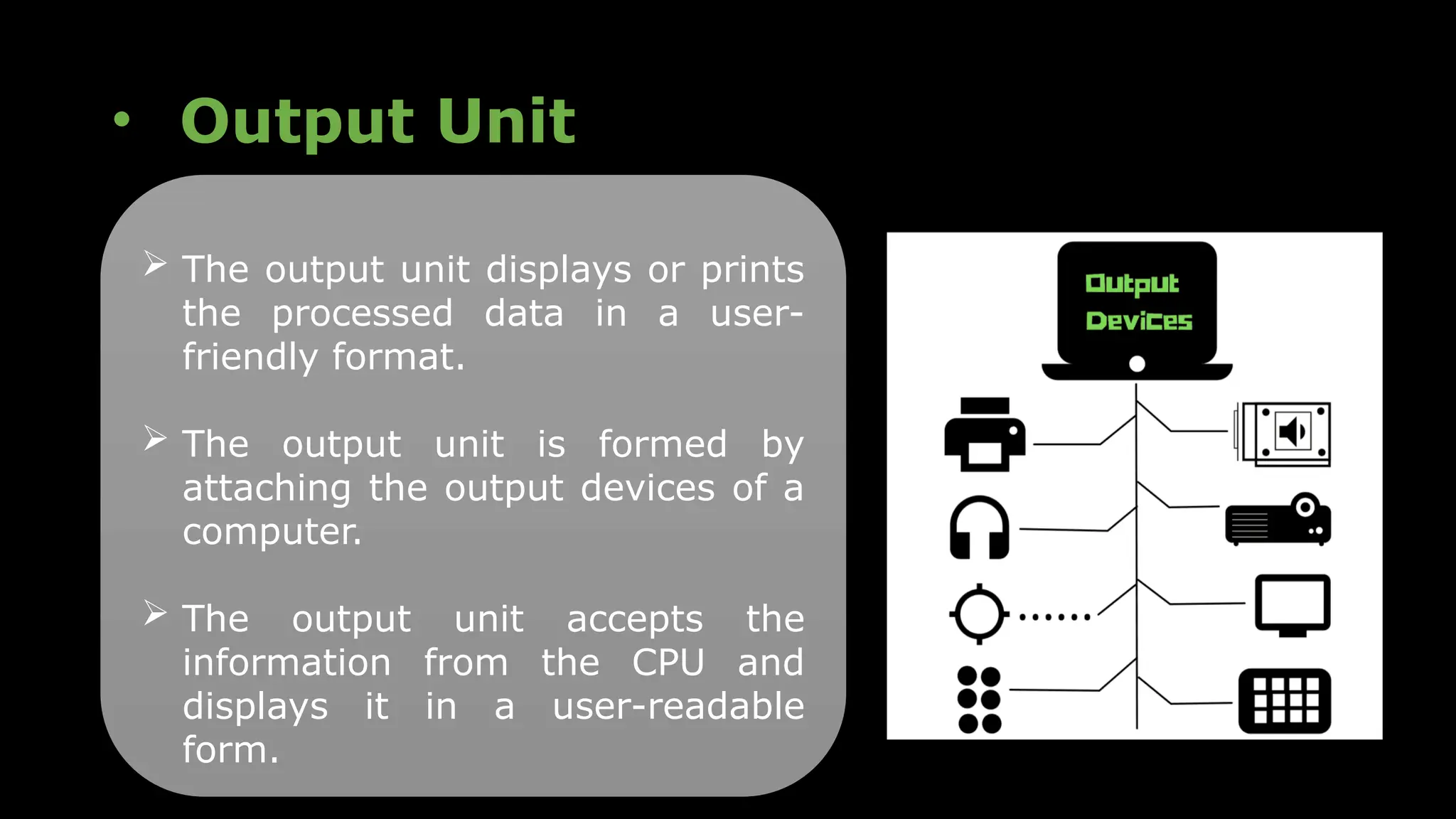
• Output Unit
 The output unit displays or prints
the processed data in a user-
friendly format.
 The output unit is formed by
attaching the output devices of a
computer.
 The output unit accepts the
information from the CPU and
displays it in a user-readable
form.
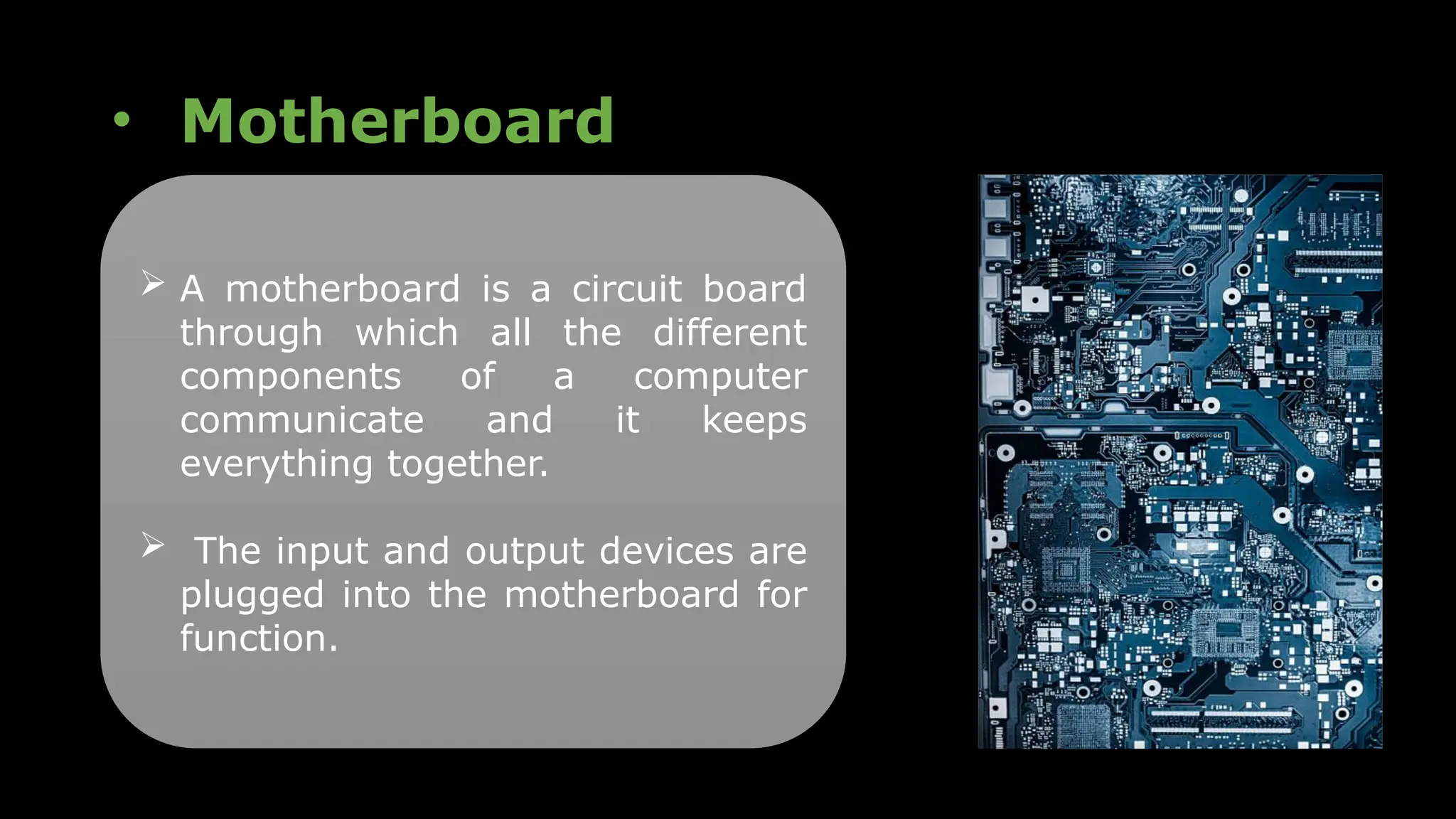
• Motherboard
 A motherboard is a circuit board
through which all the different
components of a computer
communicate and it keeps
everything together.
 The input and output devices are
plugged into the motherboard for
function.
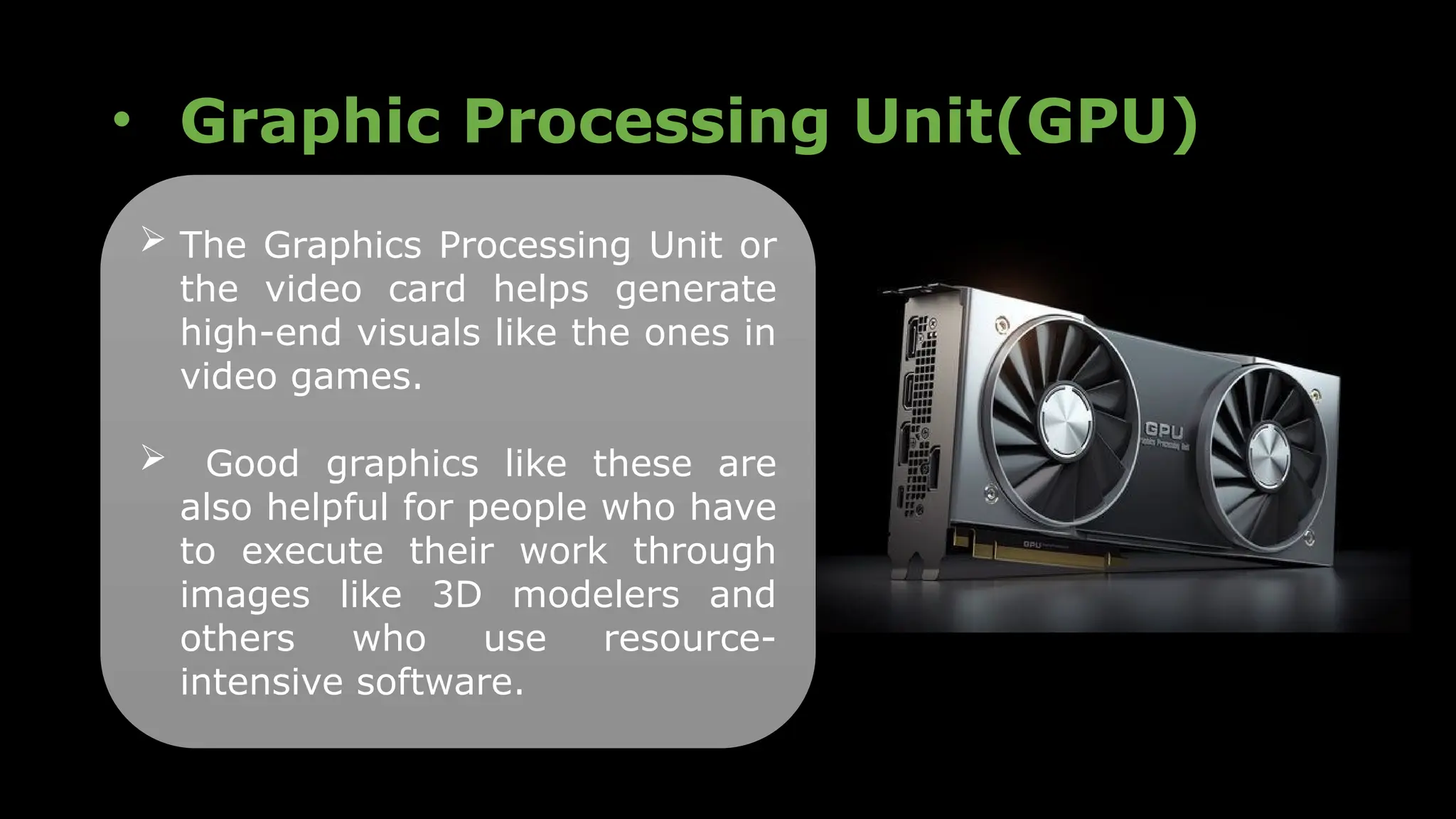
• Graphic Processing Unit(GPU)
 The Graphics Processing Unit or
the video card helps generate
high-end visuals like the ones in
video games.
 Good graphics like these are
also helpful for people who have
to execute their work through
images like 3D modelers and
others who use resource-
intensive software.
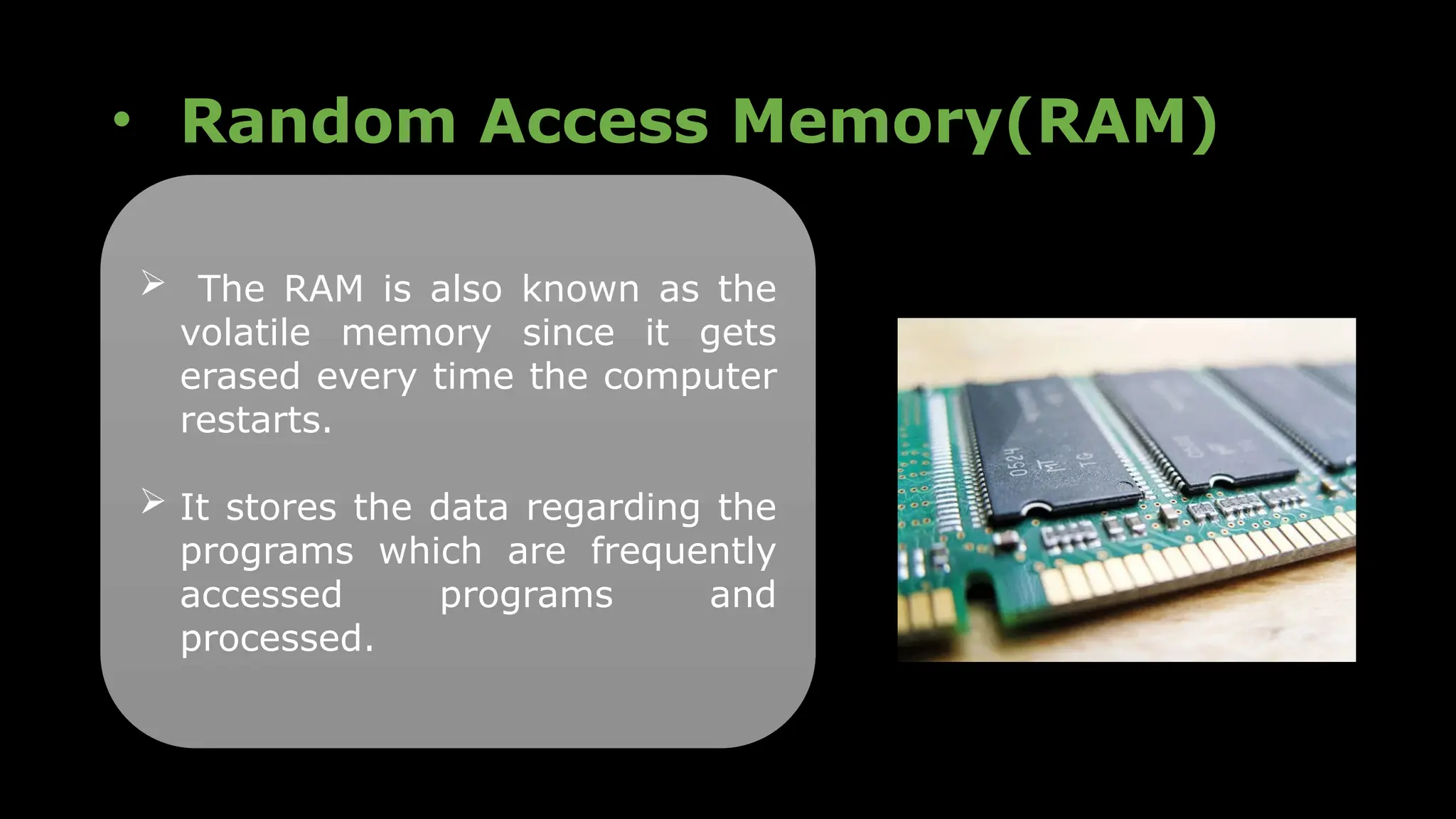
• Random Access Memory(RAM)
 The RAM is also known as the
volatile memory since it gets
erased every time the computer
restarts.
 It stores the data regarding the
programs which are frequently
accessed programs and
processed.
THANK YOU

components of computers and its importance.pptx

  • 1.
  • 2.
    What is aComputer? • A computer is an electronic device that processes data according to a set of instructions called programs. • It operates on binary data, which consists of 0s and 1s, to perform various tasks and computations.
  • 3.
    Basic Components ofa Computer 1.Motherboard 2.Input Unit 3.Output Unit 4.CPU 5.GPU 6.RAM 7.Storage Unit
  • 4.
    • Input Unit The input unit consists of input devices that are attached to the computer.  These devices take input and convert it into binary language that the computer understands. Some of the common input devices are keyboard, mouse, joystick, scanner etc.  The input unit is used to provide data to the processor for further processing.
  • 5.
    • Central ProcessingUnit  The CPU is called the brain of the computer because it is the control center of the computer.  It first fetches instructions from memory and then interprets them so as to know what is to be done.  Thereafter CPU executes or performs the required computation, and then either stores the output or displays it on the output device.  The CPU has three main components, which are responsible for different functions: Arithmetic Logic Unit (ALU), Control Unit (CU) and Memory registers
  • 6.
  • 7.
     Arithmetic LogicUnit:  It is the fundamental building block of the CPU.  Arithmetic and Logical Unit is a digital circuit that is used to perform arithmetic and logical operations.  Control Unit:  The Control Unit is a component of the central processing unit of a computer that directs the operation of the processor.  It is also called the central nervous system or brain of the computer.  In order to execute the instructions, the components of a computer receive signals from the control unit.  Memory Registers:  Memory Unit is the primary storage of the computer.  It stores both data and instructions.  Data and instructions are stored permanently in this unit so that they are available whenever required.
  • 8.
    • Output Unit The output unit displays or prints the processed data in a user- friendly format.  The output unit is formed by attaching the output devices of a computer.  The output unit accepts the information from the CPU and displays it in a user-readable form.
  • 9.
    • Motherboard  Amotherboard is a circuit board through which all the different components of a computer communicate and it keeps everything together.  The input and output devices are plugged into the motherboard for function.
  • 10.
    • Graphic ProcessingUnit(GPU)  The Graphics Processing Unit or the video card helps generate high-end visuals like the ones in video games.  Good graphics like these are also helpful for people who have to execute their work through images like 3D modelers and others who use resource- intensive software.
  • 11.
    • Random AccessMemory(RAM)  The RAM is also known as the volatile memory since it gets erased every time the computer restarts.  It stores the data regarding the programs which are frequently accessed programs and processed.
  • 12.