info@rajstartup.com
www.rajstartup.com
+91-9999385617
D-104/1, Mukund Vihar, Karawal
Nagar, Delhi, 110090
ISO 45001
Certification
Occupational health and safety management
Contents
ISO 45001 in Brief
Why is ISO 45001
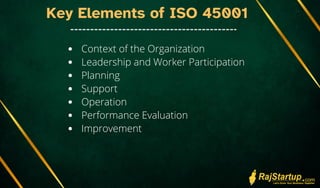
Key Elements of ISO 45001
Key Benefits
Certification Process
Time Duration
Manual Process
SOP's
Do & Don'ts
ISO 45001 in Brief
ISO 45001 is an international standard that specifies
requirements for an occupational health and safety
(OH&S) management system. The primary goal of ISO
45001 is to provide a framework for organizations to
effectively manage and improve their occupational
health and safety performance.
For More info read this article- ISO 45001 Certification
Why is ISO 45001
ISO 45001 exists to address the critical aspects of occupational health
and safety (OH&S) within organizations. The standard is specifically
designed to help organizations establish, implement, and maintain
effective OH&S management systems. Here are some key reasons why
ISO 45001 is crucial for health and safety:
Protection of Workers:
Legal and Regulatory Compliance:
Risk Management:
Improved Performance:
Enhanced Reputation:
Global Consistency:
Key Elements of ISO 45001
Context of the Organization
Leadership and Worker Participation
Planning
Support
Operation
Performance Evaluation
Improvement
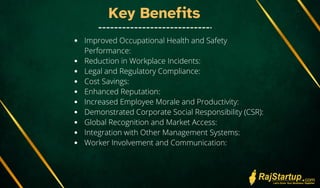
Key Benefits
Improved Occupational Health and Safety
Performance:
Reduction in Workplace Incidents:
Legal and Regulatory Compliance:
Cost Savings:
Enhanced Reputation:
Increased Employee Morale and Productivity:
Demonstrated Corporate Social Responsibility (CSR):
Global Recognition and Market Access:
Integration with Other Management Systems:
Worker Involvement and Communication:
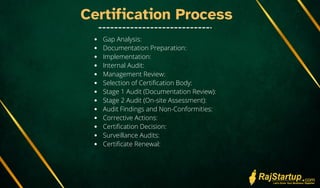
Certification Process
Gap Analysis:
Documentation Preparation:
Implementation:
Internal Audit:
Management Review:
Selection of Certification Body:
Stage 1 Audit (Documentation Review):
Stage 2 Audit (On-site Assessment):
Audit Findings and Non-Conformities:
Corrective Actions:
Certification Decision:
Surveillance Audits:
Certificate Renewal:
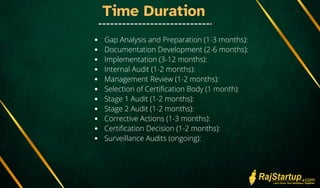
Time Duration
Gap Analysis and Preparation (1-3 months):
Documentation Development (2-6 months):
Implementation (3-12 months):
Internal Audit (1-2 months):
Management Review (1-2 months):
Selection of Certification Body (1 month):
Stage 1 Audit (1-2 months):
Stage 2 Audit (1-2 months):
Corrective Actions (1-3 months):
Certification Decision (1-2 months):
Surveillance Audits (ongoing):
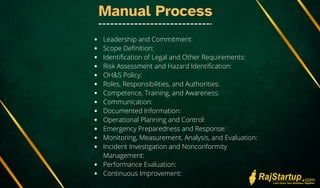
Manual Process
Leadership and Commitment:
Scope Definition:
Identification of Legal and Other Requirements:
Risk Assessment and Hazard Identification:
OH&S Policy:
Roles, Responsibilities, and Authorities:
Competence, Training, and Awareness:
Communication:
Documented Information:
Operational Planning and Control:
Emergency Preparedness and Response:
Monitoring, Measurement, Analysis, and Evaluation:
Incident Investigation and Nonconformity
Management:
Performance Evaluation:
Continuous Improvement:
Standard Operating Procedure
(SOP) Manual
Creating a Standard Operating Procedure (SOP)
Manual for ISO 45001 involves documenting the
standardized procedures and instructions related
to occupational health and safety within an
organization. Below is a general outline for an SOP
Manual specific to ISO 45001:
Title Page:
Include the title "Occupational Health and Safety (OH&S) Standard
Operating Procedure Manual" along with the organization's name,
logo, and the effective date.
Table of Contents:
Provide a comprehensive table of contents to aid in navigation.
Introduction:
Introduction
Offer an introduction to the manual, emphasizing the importance of
following SOPs to maintain a safe and healthy work environment.
Scope and Applicability:
Clearly define the scope of the manual, specifying the processes,
tasks, or activities related to occupational health and safety. Indicate
the departments or individuals to whom the SOPs apply.
References
List relevant ISO 45001 standards, legal requirements, and internal
policies that form the basis for the SOPs.
Document Control:
Detail version control, revision history, and procedures for
approving, updating, and distributing the SOPs.
Responsibilities:
Define the roles and responsibilities of individuals involved in
executing or overseeing the procedures outlined in the manual.
Procedure Format:
Standardize the format for presenting procedures, including
sections such as:
Title
Purpose
Scope
Responsibilities
Materials/Equipment
Procedure Steps
References
Records/Documentation
Revision History
Procedure Development:
Clearly define each procedure with step-by-step instructions,
addressing elements such as hazard identification, risk assessment,
and control measures. Align procedures with ISO 45001
requirements.
Visual Aids:
Integrate flowcharts, diagrams, or images to enhance
understanding, especially for complex procedures. Visual aids can
help communicate safety measures effectively.
Safety Instructions:
Integrate safety precautions and guidelines within the SOPs,
ensuring compliance with ISO 45001 requirements and
emphasizing the organization's commitment to worker safety.
Training and Competence Requirements:
Specify the training and competence requirements for personnel
involved in executing the procedures. Identify training resources,
methods, and assessment criteria.
Monitoring and Measurement:
Describe how the organization will monitor and measure the
effectiveness of the procedures, including criteria for evaluating
performance and methods for continuous improvement.
Review and Update:
Specify the frequency and process for reviewing and updating the
SOPs to align with changes in processes, regulations, or the
organization's OH&S management system
Approval:
Clearly state the process for approving the SOPs. Include signatures
and dates to signify approval by relevant authorities.
Distribution:
Outline how the SOP Manual will be distributed and communicated
within the organization. Consider electronic distribution methods
for easy access and updates.
Appendices:
Include supporting documents, forms, or additional information
that complements the SOPs. This may include risk assessment
templates, incident reporting forms, or relevant checklists.
Glossary:
Provide a glossary of terms and acronyms used in the manual to
ensure clarity and understanding.
Do & Don'ts
Implementing ISO 45001, the international standard for
occupational health and safety (OH&S) management
systems, involves adherence to certain best practices
and considerations. Here are some Do's and Don'ts to
keep in mind when working with ISO 45001:
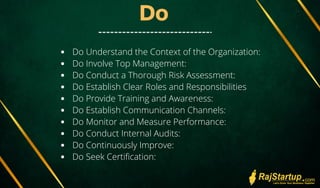
Do
Do Understand the Context of the Organization:
Do Involve Top Management:
Do Conduct a Thorough Risk Assessment:
Do Establish Clear Roles and Responsibilities
Do Provide Training and Awareness:
Do Establish Communication Channels:
Do Monitor and Measure Performance:
Do Conduct Internal Audits:
Do Continuously Improve:
Do Seek Certification:
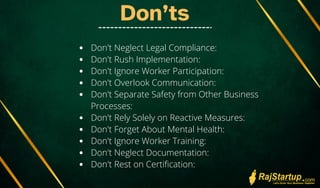
Donโ€™ts
Don't Neglect Legal Compliance:
Don't Rush Implementation:
Don't Ignore Worker Participation:
Don't Overlook Communication:
Don't Separate Safety from Other Business
Processes:
Don't Rely Solely on Reactive Measures:
Don't Forget About Mental Health:
Don't Ignore Worker Training:
Don't Neglect Documentation:
Don't Rest on Certification:
For More info contact us
www.rajstartup.com
info.rajstartup.com +91-9999385617

Complete Guide on ISO 45001 Certification

  • 1.
    info@rajstartup.com www.rajstartup.com +91-9999385617 D-104/1, Mukund Vihar,Karawal Nagar, Delhi, 110090 ISO 45001 Certification Occupational health and safety management
  • 2.
    Contents ISO 45001 inBrief Why is ISO 45001 Key Elements of ISO 45001 Key Benefits Certification Process Time Duration Manual Process SOP's Do & Don'ts
  • 3.
    ISO 45001 inBrief ISO 45001 is an international standard that specifies requirements for an occupational health and safety (OH&S) management system. The primary goal of ISO 45001 is to provide a framework for organizations to effectively manage and improve their occupational health and safety performance. For More info read this article- ISO 45001 Certification
  • 4.
    Why is ISO45001 ISO 45001 exists to address the critical aspects of occupational health and safety (OH&S) within organizations. The standard is specifically designed to help organizations establish, implement, and maintain effective OH&S management systems. Here are some key reasons why ISO 45001 is crucial for health and safety: Protection of Workers: Legal and Regulatory Compliance: Risk Management: Improved Performance: Enhanced Reputation: Global Consistency:
  • 5.
    Key Elements ofISO 45001 Context of the Organization Leadership and Worker Participation Planning Support Operation Performance Evaluation Improvement
  • 6.
    Key Benefits Improved OccupationalHealth and Safety Performance: Reduction in Workplace Incidents: Legal and Regulatory Compliance: Cost Savings: Enhanced Reputation: Increased Employee Morale and Productivity: Demonstrated Corporate Social Responsibility (CSR): Global Recognition and Market Access: Integration with Other Management Systems: Worker Involvement and Communication:
  • 7.
    Certification Process Gap Analysis: DocumentationPreparation: Implementation: Internal Audit: Management Review: Selection of Certification Body: Stage 1 Audit (Documentation Review): Stage 2 Audit (On-site Assessment): Audit Findings and Non-Conformities: Corrective Actions: Certification Decision: Surveillance Audits: Certificate Renewal:
  • 8.
    Time Duration Gap Analysisand Preparation (1-3 months): Documentation Development (2-6 months): Implementation (3-12 months): Internal Audit (1-2 months): Management Review (1-2 months): Selection of Certification Body (1 month): Stage 1 Audit (1-2 months): Stage 2 Audit (1-2 months): Corrective Actions (1-3 months): Certification Decision (1-2 months): Surveillance Audits (ongoing):
  • 9.
    Manual Process Leadership andCommitment: Scope Definition: Identification of Legal and Other Requirements: Risk Assessment and Hazard Identification: OH&S Policy: Roles, Responsibilities, and Authorities: Competence, Training, and Awareness: Communication: Documented Information: Operational Planning and Control: Emergency Preparedness and Response: Monitoring, Measurement, Analysis, and Evaluation: Incident Investigation and Nonconformity Management: Performance Evaluation: Continuous Improvement:
  • 10.
    Standard Operating Procedure (SOP)Manual Creating a Standard Operating Procedure (SOP) Manual for ISO 45001 involves documenting the standardized procedures and instructions related to occupational health and safety within an organization. Below is a general outline for an SOP Manual specific to ISO 45001:
  • 11.
    Title Page: Include thetitle "Occupational Health and Safety (OH&S) Standard Operating Procedure Manual" along with the organization's name, logo, and the effective date. Table of Contents: Provide a comprehensive table of contents to aid in navigation. Introduction: Introduction Offer an introduction to the manual, emphasizing the importance of following SOPs to maintain a safe and healthy work environment.
  • 12.
    Scope and Applicability: Clearlydefine the scope of the manual, specifying the processes, tasks, or activities related to occupational health and safety. Indicate the departments or individuals to whom the SOPs apply. References List relevant ISO 45001 standards, legal requirements, and internal policies that form the basis for the SOPs. Document Control: Detail version control, revision history, and procedures for approving, updating, and distributing the SOPs.
  • 13.
    Responsibilities: Define the rolesand responsibilities of individuals involved in executing or overseeing the procedures outlined in the manual. Procedure Format: Standardize the format for presenting procedures, including sections such as: Title Purpose Scope Responsibilities Materials/Equipment Procedure Steps References Records/Documentation Revision History
  • 14.
    Procedure Development: Clearly defineeach procedure with step-by-step instructions, addressing elements such as hazard identification, risk assessment, and control measures. Align procedures with ISO 45001 requirements. Visual Aids: Integrate flowcharts, diagrams, or images to enhance understanding, especially for complex procedures. Visual aids can help communicate safety measures effectively.
  • 15.
    Safety Instructions: Integrate safetyprecautions and guidelines within the SOPs, ensuring compliance with ISO 45001 requirements and emphasizing the organization's commitment to worker safety. Training and Competence Requirements: Specify the training and competence requirements for personnel involved in executing the procedures. Identify training resources, methods, and assessment criteria.
  • 16.
    Monitoring and Measurement: Describehow the organization will monitor and measure the effectiveness of the procedures, including criteria for evaluating performance and methods for continuous improvement. Review and Update: Specify the frequency and process for reviewing and updating the SOPs to align with changes in processes, regulations, or the organization's OH&S management system
  • 17.
    Approval: Clearly state theprocess for approving the SOPs. Include signatures and dates to signify approval by relevant authorities. Distribution: Outline how the SOP Manual will be distributed and communicated within the organization. Consider electronic distribution methods for easy access and updates.
  • 18.
    Appendices: Include supporting documents,forms, or additional information that complements the SOPs. This may include risk assessment templates, incident reporting forms, or relevant checklists. Glossary: Provide a glossary of terms and acronyms used in the manual to ensure clarity and understanding.
  • 19.
    Do & Don'ts ImplementingISO 45001, the international standard for occupational health and safety (OH&S) management systems, involves adherence to certain best practices and considerations. Here are some Do's and Don'ts to keep in mind when working with ISO 45001:
  • 20.
    Do Do Understand theContext of the Organization: Do Involve Top Management: Do Conduct a Thorough Risk Assessment: Do Establish Clear Roles and Responsibilities Do Provide Training and Awareness: Do Establish Communication Channels: Do Monitor and Measure Performance: Do Conduct Internal Audits: Do Continuously Improve: Do Seek Certification:
  • 21.
    Donโ€™ts Don't Neglect LegalCompliance: Don't Rush Implementation: Don't Ignore Worker Participation: Don't Overlook Communication: Don't Separate Safety from Other Business Processes: Don't Rely Solely on Reactive Measures: Don't Forget About Mental Health: Don't Ignore Worker Training: Don't Neglect Documentation: Don't Rest on Certification:
  • 22.
    For More infocontact us www.rajstartup.com info.rajstartup.com +91-9999385617