A Business Strategy
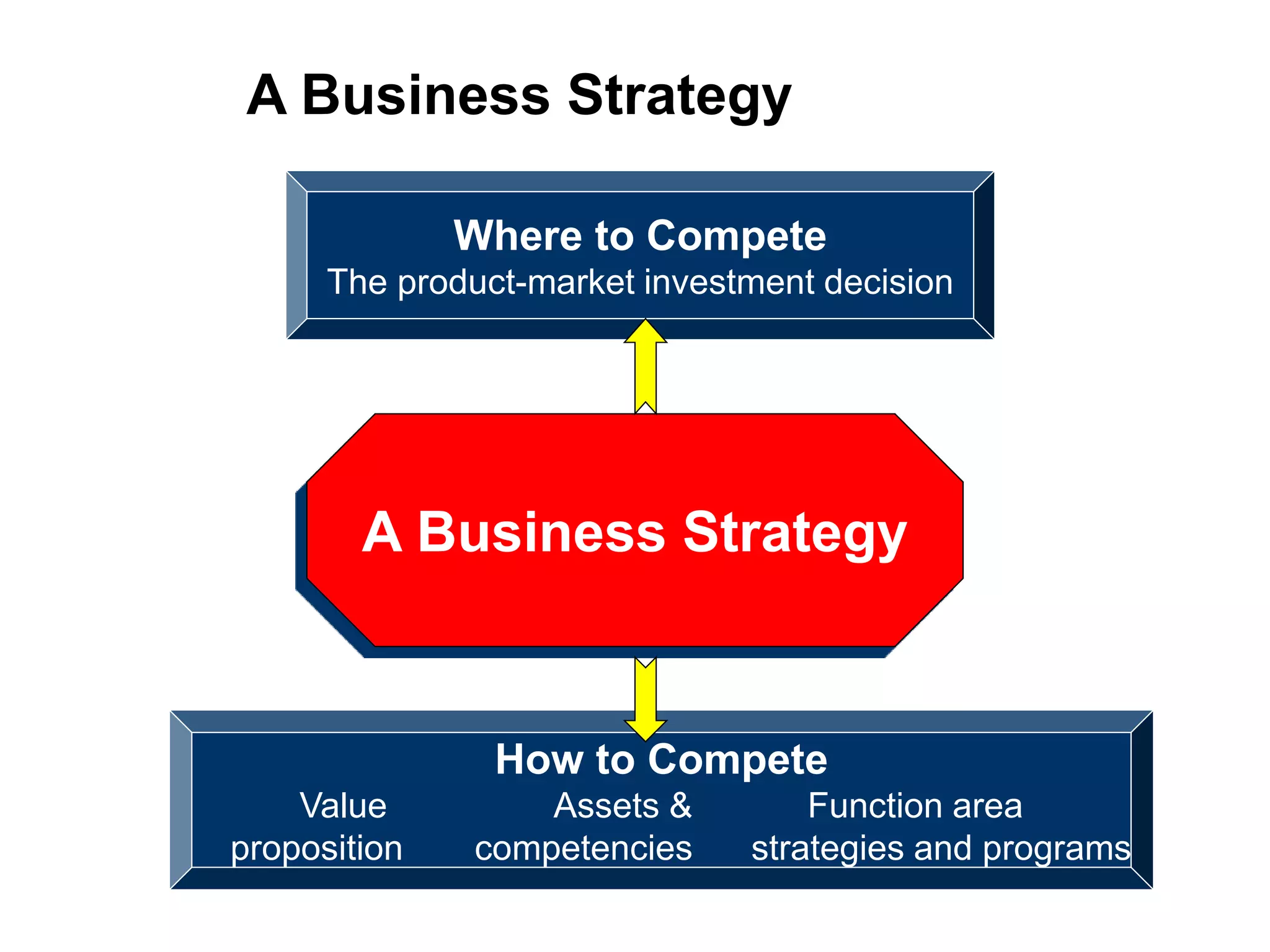
Where to Compete
The product-market investment decision
How to Compete
Value Assets & Function area
proposition competencies strategies and programs
Figure 1.1
A Business Strategy
Competitor Analysis
“They came in groups, they measured,
they sketched and they tape recorded
everything they could. Their questions
were precise. They were surprised how
open the Americans were.”
That was an account of Japanese efforts at
competitor analysis in the 1960s in the U.S
automobile industry. By the 1970s they were
able to penetrate the US market successfully.
They similarly studied the design approaches
of European manufacturers.
“ The best and fastest way to learn a sport is
to watch and imitate a champion.” ( Bruce
Henderson, Founder of BCG)
In contrast …..
The Americans were late in even
recognizing the competitive threat from
Japan and never did well at analyzing
Japanese firms or the new strategic
imperatives created by the revised
competitive environment
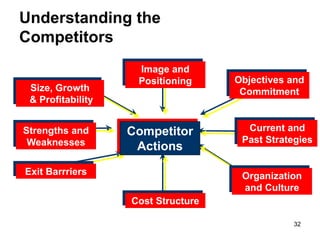
Clearly….
• Competitor analysis was one big reason
why the Japanese were able to succeed
was that they were much better than US
firms at competitor analysis
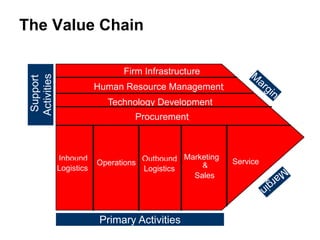
An Indian Fairy tale
• In 1969, Karsanbhai Patel, a chemist at
the Gujarat Government's Department of
Mining and Geology manufactures
phosphate free Synthetic Detergent
Powder, and starts selling it locally. The
new yellow powder is priced at Rs. 3.50
per kg, at a time when HLL’s Surf is priced
at Rs 15.
• Soon, there is a huge demand for Nirma in
Ruppur (Gujarat), Patel’s hometown. He
starts packing the formulation in a 10x10ft
room in his house. Patel names the
powder as Nirma, after his daughter
Nirupama.
• Patel is able to sell about 15-20 packets a
day on his way to the office on bicycle,
some 15 km away. By 1985, Nirma
washing powder has become one of the
most popular, household detergents in
many parts of the country.
• Nirma is the lowest- priced branded washing
powder available in grocery stores. The middle-
class housewife is happy as she can now
choose a lower-priced washing powder against
Surf, which is beyond her budget.
• Nirma also has an impact on upper-middle-
class and higher income families, who choose
Nirma for washing their inexpensive clothes.
• Starting as a one-product one-man outfit in 1969, Nirma
becomes a Rs 17 billion company within three decades.
• The company has multi-locational manufacturing
facilities, and a broad product portfolio under an umbrella
brand – Nirma. The company's mission : to provide,
"Better Products, Better Value, Better Living" contributes
a great deal to its success.
• Nirma successfully counters competition from HLL and
carves a niche for itself in the lower-end of the
detergents and toilet soap market.
The belated response….
• Hindustan Lever Limited (HLL)1 reacts in
a way typical of many multinational
companies. Senior executives are
dismissive of the new product: "That is not
our market", "We need not be concerned."
But very soon, Nirma's success in the
detergents market convinces HLL that it
really needed to take a closer look at the
low-income market.
The Giant awakens…
• Around 1984, HLL decides to take a fresh
look at the market. In order to counter
attack Nirma, HLL launches Sunlight
(yellow), Wheel (green) and Rin (blue)
detergent powders for different market
segments. This strategy of segmenting the
market helps HLL win back part of its lost
market.
The goal of competitor analysis
• To gain insights that will influence the product –
market investment decision or the effort to obtain
or maintain a Sustainable Competitive
Advantage( SCA)
Focus should be on the identification of threats,
opportunities, or strategic uncertainties created
by emerging or potential competitor moves,
weaknesses , or strengths
Competitor Analysis
Commences with identifying current and potential
competitors.
2 Approaches for this :
a) Competitors are grouped according to the degree
they compete for a buyer’s choice. The perspectives
of customers who must make choices among
competitors are examined.
b) Competitors are placed into strategic groups on the
basis of their competitive strength.
After identifying competitors
The focus is on understanding them and
their strategies. An analysis of the
strengths and weaknesses of each
competitor or strategic group is then done.
Structure for Competitor Analysis
Who are the competitors ?
Against whom do we usually compete? Who are our most
intense competitors? Less intense but still serious
competitors? Makers of substitute products?
Can these competitors be grouped into strategic groups on
the basis of their assets, competencies and /or strategies?
Who are the potential competitive entrants? What are their
barriers to entry? Is there anything that can be done to
discourage them?
Evaluating the Competitors
What are their objectives and strategies? Their level of commitment ?
Their exit barriers?
What is their cost structure ? Do they have a cost advantage or
disadvantage?
What is their image and positioning strategy?
Which are the most successful /unsuccessful competitors over time?
Why?
What are the strengths and weaknesses of each competitor or
strategic group?
What leverage points could competitors exploit to enter the market or
become more serious competitors ?
Evaluate the competitors with respect to their assets and competencies.
Generate a competitor strength grid.
Identifying Competitors
• In most instances primary competitors are
obvious
• Coke with Pepsi and other colas brands and
private labels
• Citibank with Chase and BOA and other major
banks
• NBC with CBS and Fox
• Businesses that compete most directly will
often use the same business model and
the same assumptions about customers.
• Usually focusing on price is the winning
factor, with a resulting erosion of
profitability.
Business Models are eroding
Owing to :
Changing customer priorities
Indirect competitors becoming
strategically relevant.
• Colas, Banks, TV networks are no longer as
dominant as they were
• Coffee is bought and consumed differently
• Coke ignored emerging submarkets in water,
iced tea, fruit – based drinks while focusing on
Pepsi. Hence missed opportunity and has had to
follow an expensive and difficult catch – up
strategy.
While major television networks struggle
against each other ESPN, CNN have
flourished.
Nintendo, the Internet, Home Shopping are
competing for the leisure time of viewers.
With banks focusing on competing banks
Mutual funds, insurers, brokers have cut
into their traditional markets.
Thus, Competitive analysis will benefit
from extending the perspective beyond the
obvious direct competitors.
By taking indirect competitors into its
purview the strategic horizon is expanded
In the real world the customer is never
restricted to a firm’s direct competitors but
is always poised to consider other options.
2 approaches to identifying
competitors
• Customer Choices : If not this product, what? If
price of this brand increases what would you
use?
• Product - use Associations : Specific – use
contexts or applications. List use situations and
applications .How appropriate each product is
for each use context?
• Eg. If Pepsi is appropriate for snack occasions it
would compete primarily with products similarly
perceived. This would also hold true in the case
of several distinct applications.
Identifying competitors - Strategic
groups
A group of companies following the same strategy in a
given target market is called a strategic group.
A strategic group is a group of firms that :
Over time pursue similar competitive strategies
Have similar characteristics ( eg, size, aggressiveness)
Have similar assets and competencies
Potential competitors
Market entrants who might engage in :
• Market expansion ( Come into new territory)
• Product expansion ( eg. From shoes to
apparel to the same customers)
• Backward integration ( A soup company
making its own cans)
• Forward integration ( Opening up retail stores for
one’s products)
• The export of assets and competencies ( A current
small competitor with critical strategic weaknesses
bought up by a company with muscle may pose a
threat)
• Retaliatory or defensive strategies (Firms that are
threatened by a potential or actual move in the
market might retaliate).
Understanding Competitors
Competitor actions are influenced by 8
elements :
•Financial performance : Size, growth and
profitability
•Image and positioning strategy
•Competitor Objectives and Commitment
• Current and past strategies
• Competitor Organization and Culture
• Cost Structure
• Exit Barriers
• Assessing Strengths and Weaknesses
32
Understanding the
Competitors
Objectives and
Commitment
Image and
Positioning
Size, Growth
& Profitability
Current and
Past Strategies
Strengths and
Weaknesses
Cost Structure
Exit Barrriers Organization
and Culture
Competitor
Actions
Figure 4.3
Competitor Strengths and
weaknesses
• These are based on the existence or
absence of assets.
• For identifying competitor strengths and
weaknesses it is necessary to identify the
assets and competencies that are relevant
to the industry.
5 questions to ask
Why are successful businesses successful and why
are unsuccessful businesses unsuccessful?
What are the key customer motivations?
What are the large cost components?
What are the industry mobility barriers?
Which components of the value chain can create
competitive advantage?
Value Chain
• The Value Chain is a useful tool to identify
significant value-added components.
• Developed by Michael Porter it consists of
two types of value – creating activities and
should be considered in assessing a
competitor.
The Value Chain
Firm Infrastructure
Human Resource Management
Procurement
Technology Development
&
Source: Reprinted with permission  1985 Michael Porter
Figure 4.5
Support
Activities
Primary Activities
Procurement
Inbound
Logistics
Operations Outbound
Logistics
Marketing
Sales
Service
Human Resource Management
Firm Infrastructure
Primary Value Activities
Inbound Logistics
Operations
Outbound Logistics
Marketing and Sales
Service
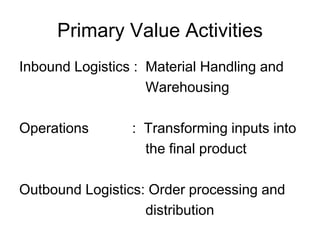
Primary Value Activities
Inbound Logistics : Material Handling and
Warehousing
Operations : Transforming inputs into
the final product
Outbound Logistics: Order processing and
distribution
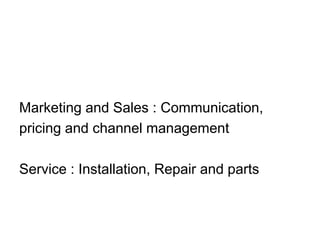
Marketing and Sales : Communication,
pricing and channel management
Service : Installation, Repair and parts
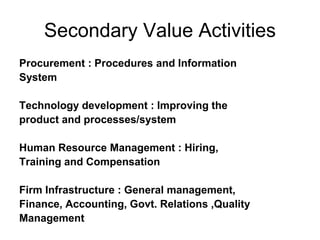
Secondary Value Activities
Procurement : Procedures and Information
System
Technology development : Improving the
product and processes/system
Human Resource Management : Hiring,
Training and Compensation
Firm Infrastructure : General management,
Finance, Accounting, Govt. Relations ,Quality
Management
Question to consider
Which components of the value chain
can create most competitive advantage
for a competitor either in terms of
customer benefits or reduced cost?
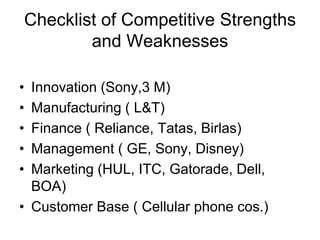
Checklist of Competitive Strengths
and Weaknesses
• Innovation (Sony,3 M)
• Manufacturing ( L&T)
• Finance ( Reliance, Tatas, Birlas)
• Management ( GE, Sony, Disney)
• Marketing (HUL, ITC, Gatorade, Dell,
BOA)
• Customer Base ( Cellular phone cos.)
Innovation
• Technical product or service superiority
• New product capability
• R &D
• Technologies
• Patents
Manufacturing
• Cost structure
• Flexible production operations
• Equipment
• Access to raw materials
• Vertical integration
• Workforce attitude and motivation
• Capacity
Finance Access to capital
• From operations
• From net short term assets
• Ability to use debt and equity financing
• Parent’s willingness to finance
Management
• Quality of Top and Middle Management
• Knowledge of business
• Culture
• Strategic Goals and Plans
• Entrepreneurial thrust
• Planning / Operation System
• Loyalty/Turnover
• Quality of Strategic decision making
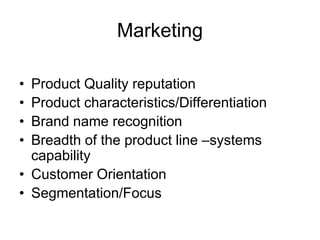
Marketing
• Product Quality reputation
• Product characteristics/Differentiation
• Brand name recognition
• Breadth of the product line –systems
capability
• Customer Orientation
• Segmentation/Focus
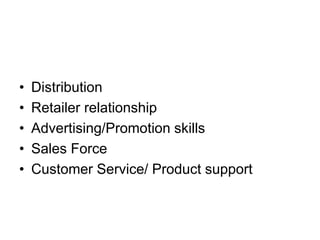
• Distribution
• Retailer relationship
• Advertising/Promotion skills
• Sales Force
• Customer Service/ Product support
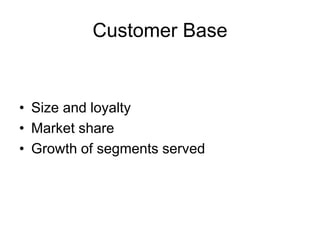
Customer Base
• Size and loyalty
• Market share
• Growth of segments served
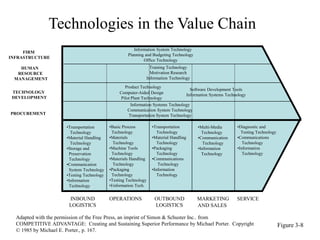
Technologies in the Value Chain
INBOUND
LOGISTICS
OPERATIONS OUTBOUND
LOGISTICS
MARKETING
AND SALES
SERVICE
PROCUREMENT
TECHNOLOGY
DEVELOPMENT
HUMAN
RESOURCE
MANAGEMENT
FIRM
INFRASTRUCTURE
Information System Technology
Planning and Budgeting Technology
Office Technology
Training Technology
Motivation Research
Information Technology
Product Technology
Computer-Aided Design
Pilot Plant Technology
•Diagnostic and
Testing Technology
•Communications
Technology
•Information
Technology
•Transportation
Technology
•Material Handling
Technology
•Storage and
Preservation
Technology
•Communication
System Technology
•Testing Technology
•Information
Technology
Information Systems Technology
Communication System Technology
Transportation System Technology
Software Development Tools
Information Systems Technology
•Basic Process
Technology
•Materials
Technology
•Machine Tools
Technology
•Materials Handling
Technology
•Packaging
Technology
•Testing Technology
•I/nformation Tech.
•Transportation
Technology
•Material Handling
Technology
•Packaging
Technology
•Communications
Technology
•Information
Technology
•Multi-Media
Technology
•Communication
Technology
•Information
Technology
Figure 3-8
Adapted with the permission of the Free Press, an imprint of Simon & Schuster Inc.. from
COMPETITIVE ADVANTAGE: Creating and Sustaining Superior Performance by Michael Porter. Copyright
© 1985 by Michael E. Porter., p. 167.
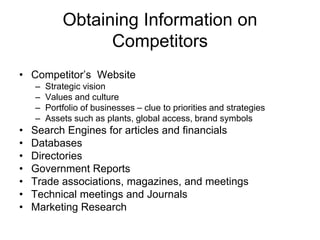
Obtaining Information on
Competitors
• Competitor’s Website
– Strategic vision
– Values and culture
– Portfolio of businesses – clue to priorities and strategies
– Assets such as plants, global access, brand symbols
• Search Engines for articles and financials
• Databases
• Directories
• Government Reports
• Trade associations, magazines, and meetings
• Technical meetings and Journals
• Marketing Research
Competitive Strength Grid
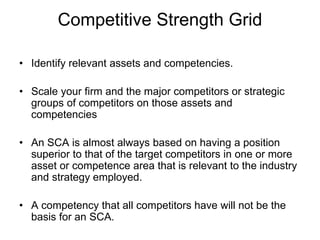
• Identify relevant assets and competencies.
• Scale your firm and the major competitors or strategic
groups of competitors on those assets and
competencies
• An SCA is almost always based on having a position
superior to that of the target competitors in one or more
asset or competence area that is relevant to the industry
and strategy employed.
• A competency that all competitors have will not be the
basis for an SCA.
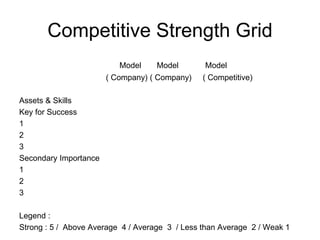
Competitive Strength Grid
Model Model Model
( Company) ( Company) ( Competitive)
Assets & Skills
Key for Success
1
2
3
Secondary Importance
1
2
3
Legend :
Strong : 5 / Above Average 4 / Average 3 / Less than Average 2 / Weak 1
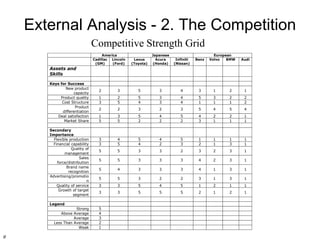
External Analysis - 2. The Competition
America Japanese European
Cadillac
(GM)
Lincoln
(Ford)
Lexus
(Toyota)
Acura
(Honda)
Infiniti
(Nissan)
Benz Volvo BMW Audi
Assets and
Skills
Keys for Success
New product
capacity
2 3 5 3 4 3 1 2 1
Product quality 1 2 5 3 4 5 3 2 2
Cost Structure 3 5 4 3 4 1 1 1 2
Product
differentiation
2 2 3 2 3 5 4 5 4
Deal satisfaction 1 3 5 4 5 4 2 2 1
Market Share 5 5 2 2 2 3 1 1 1
Secondary
Importance
Flexible production 3 4 5 4 5 1 1 1 1
Financial capability 3 5 4 2 3 2 1 3 1
Quality of
management
5 5 3 3 2 3 2 3 1
Sales
force/distribution
5 5 3 3 3 4 2 3 1
Brand name
recognition
5 4 3 3 3 4 1 3 1
Advertising/promotio
n
5 5 3 2 2 3 1 3 1
Quality of service 3 3 5 4 5 1 2 1 1
Growth of target
segment
3 3 5 5 5 2 1 2 1
Legend
Strong 5
Above Average 4
Average 3
Less Than Average 2
Weak 1
Competitive Strength Grid
gl

competitor-analysis

  • 1.
    A Business Strategy Whereto Compete The product-market investment decision How to Compete Value Assets & Function area proposition competencies strategies and programs Figure 1.1 A Business Strategy
  • 2.
    Competitor Analysis “They camein groups, they measured, they sketched and they tape recorded everything they could. Their questions were precise. They were surprised how open the Americans were.”
  • 3.
    That was anaccount of Japanese efforts at competitor analysis in the 1960s in the U.S automobile industry. By the 1970s they were able to penetrate the US market successfully. They similarly studied the design approaches of European manufacturers. “ The best and fastest way to learn a sport is to watch and imitate a champion.” ( Bruce Henderson, Founder of BCG)
  • 4.
    In contrast ….. TheAmericans were late in even recognizing the competitive threat from Japan and never did well at analyzing Japanese firms or the new strategic imperatives created by the revised competitive environment
  • 5.
    Clearly…. • Competitor analysiswas one big reason why the Japanese were able to succeed was that they were much better than US firms at competitor analysis
  • 6.
    An Indian Fairytale • In 1969, Karsanbhai Patel, a chemist at the Gujarat Government's Department of Mining and Geology manufactures phosphate free Synthetic Detergent Powder, and starts selling it locally. The new yellow powder is priced at Rs. 3.50 per kg, at a time when HLL’s Surf is priced at Rs 15.
  • 7.
    • Soon, thereis a huge demand for Nirma in Ruppur (Gujarat), Patel’s hometown. He starts packing the formulation in a 10x10ft room in his house. Patel names the powder as Nirma, after his daughter Nirupama.
  • 8.
    • Patel isable to sell about 15-20 packets a day on his way to the office on bicycle, some 15 km away. By 1985, Nirma washing powder has become one of the most popular, household detergents in many parts of the country.
  • 9.
    • Nirma isthe lowest- priced branded washing powder available in grocery stores. The middle- class housewife is happy as she can now choose a lower-priced washing powder against Surf, which is beyond her budget. • Nirma also has an impact on upper-middle- class and higher income families, who choose Nirma for washing their inexpensive clothes.
  • 10.
    • Starting asa one-product one-man outfit in 1969, Nirma becomes a Rs 17 billion company within three decades. • The company has multi-locational manufacturing facilities, and a broad product portfolio under an umbrella brand – Nirma. The company's mission : to provide, "Better Products, Better Value, Better Living" contributes a great deal to its success. • Nirma successfully counters competition from HLL and carves a niche for itself in the lower-end of the detergents and toilet soap market.
  • 11.
    The belated response…. •Hindustan Lever Limited (HLL)1 reacts in a way typical of many multinational companies. Senior executives are dismissive of the new product: "That is not our market", "We need not be concerned." But very soon, Nirma's success in the detergents market convinces HLL that it really needed to take a closer look at the low-income market.
  • 12.
    The Giant awakens… •Around 1984, HLL decides to take a fresh look at the market. In order to counter attack Nirma, HLL launches Sunlight (yellow), Wheel (green) and Rin (blue) detergent powders for different market segments. This strategy of segmenting the market helps HLL win back part of its lost market.
  • 13.
    The goal ofcompetitor analysis • To gain insights that will influence the product – market investment decision or the effort to obtain or maintain a Sustainable Competitive Advantage( SCA) Focus should be on the identification of threats, opportunities, or strategic uncertainties created by emerging or potential competitor moves, weaknesses , or strengths
  • 14.
    Competitor Analysis Commences withidentifying current and potential competitors. 2 Approaches for this : a) Competitors are grouped according to the degree they compete for a buyer’s choice. The perspectives of customers who must make choices among competitors are examined. b) Competitors are placed into strategic groups on the basis of their competitive strength.
  • 15.
    After identifying competitors Thefocus is on understanding them and their strategies. An analysis of the strengths and weaknesses of each competitor or strategic group is then done.
  • 16.
    Structure for CompetitorAnalysis Who are the competitors ? Against whom do we usually compete? Who are our most intense competitors? Less intense but still serious competitors? Makers of substitute products? Can these competitors be grouped into strategic groups on the basis of their assets, competencies and /or strategies? Who are the potential competitive entrants? What are their barriers to entry? Is there anything that can be done to discourage them?
  • 17.
    Evaluating the Competitors Whatare their objectives and strategies? Their level of commitment ? Their exit barriers? What is their cost structure ? Do they have a cost advantage or disadvantage? What is their image and positioning strategy? Which are the most successful /unsuccessful competitors over time? Why?
  • 18.
    What are thestrengths and weaknesses of each competitor or strategic group? What leverage points could competitors exploit to enter the market or become more serious competitors ? Evaluate the competitors with respect to their assets and competencies. Generate a competitor strength grid.
  • 19.
    Identifying Competitors • Inmost instances primary competitors are obvious • Coke with Pepsi and other colas brands and private labels • Citibank with Chase and BOA and other major banks • NBC with CBS and Fox
  • 20.
    • Businesses thatcompete most directly will often use the same business model and the same assumptions about customers. • Usually focusing on price is the winning factor, with a resulting erosion of profitability.
  • 21.
    Business Models areeroding Owing to : Changing customer priorities Indirect competitors becoming strategically relevant.
  • 22.
    • Colas, Banks,TV networks are no longer as dominant as they were • Coffee is bought and consumed differently • Coke ignored emerging submarkets in water, iced tea, fruit – based drinks while focusing on Pepsi. Hence missed opportunity and has had to follow an expensive and difficult catch – up strategy.
  • 23.
    While major televisionnetworks struggle against each other ESPN, CNN have flourished. Nintendo, the Internet, Home Shopping are competing for the leisure time of viewers.
  • 24.
    With banks focusingon competing banks Mutual funds, insurers, brokers have cut into their traditional markets. Thus, Competitive analysis will benefit from extending the perspective beyond the obvious direct competitors. By taking indirect competitors into its purview the strategic horizon is expanded
  • 25.
    In the realworld the customer is never restricted to a firm’s direct competitors but is always poised to consider other options.
  • 26.
    2 approaches toidentifying competitors • Customer Choices : If not this product, what? If price of this brand increases what would you use? • Product - use Associations : Specific – use contexts or applications. List use situations and applications .How appropriate each product is for each use context? • Eg. If Pepsi is appropriate for snack occasions it would compete primarily with products similarly perceived. This would also hold true in the case of several distinct applications.
  • 27.
    Identifying competitors -Strategic groups A group of companies following the same strategy in a given target market is called a strategic group. A strategic group is a group of firms that : Over time pursue similar competitive strategies Have similar characteristics ( eg, size, aggressiveness) Have similar assets and competencies
  • 28.
    Potential competitors Market entrantswho might engage in : • Market expansion ( Come into new territory) • Product expansion ( eg. From shoes to apparel to the same customers) • Backward integration ( A soup company making its own cans)
  • 29.
    • Forward integration( Opening up retail stores for one’s products) • The export of assets and competencies ( A current small competitor with critical strategic weaknesses bought up by a company with muscle may pose a threat) • Retaliatory or defensive strategies (Firms that are threatened by a potential or actual move in the market might retaliate).
  • 30.
    Understanding Competitors Competitor actionsare influenced by 8 elements : •Financial performance : Size, growth and profitability •Image and positioning strategy •Competitor Objectives and Commitment
  • 31.
    • Current andpast strategies • Competitor Organization and Culture • Cost Structure • Exit Barriers • Assessing Strengths and Weaknesses
  • 32.
    32 Understanding the Competitors Objectives and Commitment Imageand Positioning Size, Growth & Profitability Current and Past Strategies Strengths and Weaknesses Cost Structure Exit Barrriers Organization and Culture Competitor Actions Figure 4.3
  • 33.
    Competitor Strengths and weaknesses •These are based on the existence or absence of assets. • For identifying competitor strengths and weaknesses it is necessary to identify the assets and competencies that are relevant to the industry.
  • 34.
    5 questions toask Why are successful businesses successful and why are unsuccessful businesses unsuccessful? What are the key customer motivations? What are the large cost components? What are the industry mobility barriers? Which components of the value chain can create competitive advantage?
  • 35.
    Value Chain • TheValue Chain is a useful tool to identify significant value-added components. • Developed by Michael Porter it consists of two types of value – creating activities and should be considered in assessing a competitor.
  • 36.
    The Value Chain FirmInfrastructure Human Resource Management Procurement Technology Development & Source: Reprinted with permission  1985 Michael Porter Figure 4.5 Support Activities Primary Activities Procurement Inbound Logistics Operations Outbound Logistics Marketing Sales Service Human Resource Management Firm Infrastructure
  • 37.
    Primary Value Activities InboundLogistics Operations Outbound Logistics Marketing and Sales Service
  • 38.
    Primary Value Activities InboundLogistics : Material Handling and Warehousing Operations : Transforming inputs into the final product Outbound Logistics: Order processing and distribution
  • 39.
    Marketing and Sales: Communication, pricing and channel management Service : Installation, Repair and parts
  • 40.
    Secondary Value Activities Procurement: Procedures and Information System Technology development : Improving the product and processes/system Human Resource Management : Hiring, Training and Compensation Firm Infrastructure : General management, Finance, Accounting, Govt. Relations ,Quality Management
  • 41.
    Question to consider Whichcomponents of the value chain can create most competitive advantage for a competitor either in terms of customer benefits or reduced cost?
  • 42.
    Checklist of CompetitiveStrengths and Weaknesses • Innovation (Sony,3 M) • Manufacturing ( L&T) • Finance ( Reliance, Tatas, Birlas) • Management ( GE, Sony, Disney) • Marketing (HUL, ITC, Gatorade, Dell, BOA) • Customer Base ( Cellular phone cos.)
  • 43.
    Innovation • Technical productor service superiority • New product capability • R &D • Technologies • Patents
  • 44.
    Manufacturing • Cost structure •Flexible production operations • Equipment • Access to raw materials • Vertical integration • Workforce attitude and motivation • Capacity
  • 45.
    Finance Access tocapital • From operations • From net short term assets • Ability to use debt and equity financing • Parent’s willingness to finance
  • 46.
    Management • Quality ofTop and Middle Management • Knowledge of business • Culture • Strategic Goals and Plans • Entrepreneurial thrust • Planning / Operation System • Loyalty/Turnover • Quality of Strategic decision making
  • 47.
    Marketing • Product Qualityreputation • Product characteristics/Differentiation • Brand name recognition • Breadth of the product line –systems capability • Customer Orientation • Segmentation/Focus
  • 48.
    • Distribution • Retailerrelationship • Advertising/Promotion skills • Sales Force • Customer Service/ Product support
  • 49.
    Customer Base • Sizeand loyalty • Market share • Growth of segments served
  • 50.
    Technologies in theValue Chain INBOUND LOGISTICS OPERATIONS OUTBOUND LOGISTICS MARKETING AND SALES SERVICE PROCUREMENT TECHNOLOGY DEVELOPMENT HUMAN RESOURCE MANAGEMENT FIRM INFRASTRUCTURE Information System Technology Planning and Budgeting Technology Office Technology Training Technology Motivation Research Information Technology Product Technology Computer-Aided Design Pilot Plant Technology •Diagnostic and Testing Technology •Communications Technology •Information Technology •Transportation Technology •Material Handling Technology •Storage and Preservation Technology •Communication System Technology •Testing Technology •Information Technology Information Systems Technology Communication System Technology Transportation System Technology Software Development Tools Information Systems Technology •Basic Process Technology •Materials Technology •Machine Tools Technology •Materials Handling Technology •Packaging Technology •Testing Technology •I/nformation Tech. •Transportation Technology •Material Handling Technology •Packaging Technology •Communications Technology •Information Technology •Multi-Media Technology •Communication Technology •Information Technology Figure 3-8 Adapted with the permission of the Free Press, an imprint of Simon & Schuster Inc.. from COMPETITIVE ADVANTAGE: Creating and Sustaining Superior Performance by Michael Porter. Copyright © 1985 by Michael E. Porter., p. 167.
  • 51.
    Obtaining Information on Competitors •Competitor’s Website – Strategic vision – Values and culture – Portfolio of businesses – clue to priorities and strategies – Assets such as plants, global access, brand symbols • Search Engines for articles and financials • Databases • Directories • Government Reports • Trade associations, magazines, and meetings • Technical meetings and Journals • Marketing Research
  • 52.
    Competitive Strength Grid •Identify relevant assets and competencies. • Scale your firm and the major competitors or strategic groups of competitors on those assets and competencies • An SCA is almost always based on having a position superior to that of the target competitors in one or more asset or competence area that is relevant to the industry and strategy employed. • A competency that all competitors have will not be the basis for an SCA.
  • 53.
    Competitive Strength Grid ModelModel Model ( Company) ( Company) ( Competitive) Assets & Skills Key for Success 1 2 3 Secondary Importance 1 2 3 Legend : Strong : 5 / Above Average 4 / Average 3 / Less than Average 2 / Weak 1
  • 54.
    External Analysis -2. The Competition America Japanese European Cadillac (GM) Lincoln (Ford) Lexus (Toyota) Acura (Honda) Infiniti (Nissan) Benz Volvo BMW Audi Assets and Skills Keys for Success New product capacity 2 3 5 3 4 3 1 2 1 Product quality 1 2 5 3 4 5 3 2 2 Cost Structure 3 5 4 3 4 1 1 1 2 Product differentiation 2 2 3 2 3 5 4 5 4 Deal satisfaction 1 3 5 4 5 4 2 2 1 Market Share 5 5 2 2 2 3 1 1 1 Secondary Importance Flexible production 3 4 5 4 5 1 1 1 1 Financial capability 3 5 4 2 3 2 1 3 1 Quality of management 5 5 3 3 2 3 2 3 1 Sales force/distribution 5 5 3 3 3 4 2 3 1 Brand name recognition 5 4 3 3 3 4 1 3 1 Advertising/promotio n 5 5 3 2 2 3 1 3 1 Quality of service 3 3 5 4 5 1 2 1 1 Growth of target segment 3 3 5 5 5 2 1 2 1 Legend Strong 5 Above Average 4 Average 3 Less Than Average 2 Weak 1 Competitive Strength Grid gl