EMPLOYEE WELFARE
ANNOTATED OUTLINE
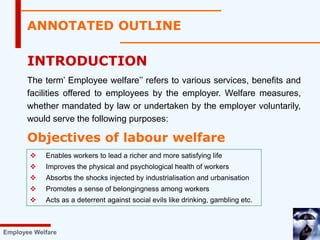
INTRODUCTION
The term’ Employee welfare’’ refers to various services, benefits and
facilities offered to employees by the employer. Welfare measures,
whether mandated by law or undertaken by the employer voluntarily,
would serve the following purposes:
Employee Welfare
Objectives of labour welfare
 Enables workers to lead a richer and more satisfying life
 Improves the physical and psychological health of workers
 Absorbs the shocks injected by industrialisation and urbanisation
 Promotes a sense of belongingness among workers
 Acts as a deterrent against social evils like drinking, gambling etc.
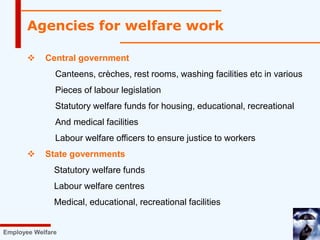
 Central government
Canteens, crèches, rest rooms, washing facilities etc in various
Pieces of labour legislation
Statutory welfare funds for housing, educational, recreational
And medical facilities
Labour welfare officers to ensure justice to workers
 State governments
Statutory welfare funds
Labour welfare centres
Medical, educational, recreational facilities
Employee Welfare
Agencies for welfare work
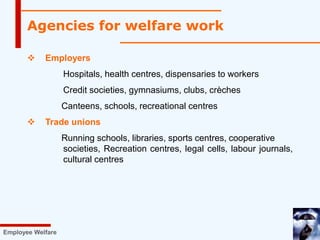
 Employers
Hospitals, health centres, dispensaries to workers
Credit societies, gymnasiums, clubs, crèches
Canteens, schools, recreational centres
 Trade unions
Running schools, libraries, sports centres, cooperative
societies, Recreation centres, legal cells, labour journals,
cultural centres
Employee Welfare
Agencies for welfare work
Types of Welfare Facilities
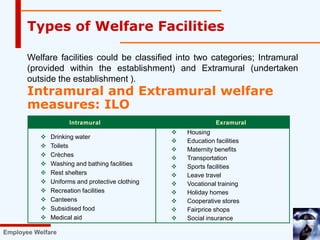
Welfare facilities could be classified into two categories; Intramural
(provided within the establishment) and Extramural (undertaken
outside the establishment ).
Employee Welfare
Intramural and Extramural welfare
measures: ILO
Intramural Exramural
 Drinking water
 Toilets
 Crèches
 Washing and bathing facilities
 Rest shelters
 Uniforms and protective clothing
 Recreation facilities
 Canteens
 Subsidised food
 Medical aid
 Housing
 Education facilities
 Maternity benefits
 Transportation
 Sports facilities
 Leave travel
 Vocational training
 Holiday homes
 Cooperative stores
 Fairprice shops
 Social insurance
Employee Welfare
Measures undertaken by Employers in India
 Education
 Housing
 Transportation
 Recreation
 Other facilities
 Canteens, rest rooms, lunch rooms
 Washing facilities, medical aid, leave travel concessions
 Consumer cooperative societies
Types of Welfare Facilities
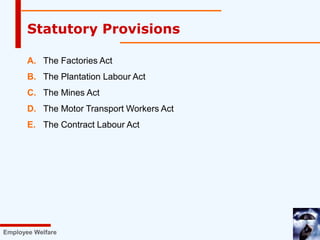
A. The Factories Act
B. The Plantation Labour Act
C. The Mines Act
D. The Motor Transport Workers Act
E. The Contract Labour Act
Employee Welfare
Statutory Provisions
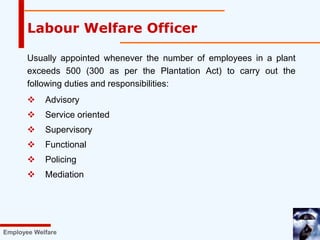
Usually appointed whenever the number of employees in a plant
exceeds 500 (300 as per the Plantation Act) to carry out the
following duties and responsibilities:
 Advisory
 Service oriented
 Supervisory
 Functional
 Policing
 Mediation
Labour Welfare Officer
Employee Welfare

Employee-Welfare.ppt

  • 1.
  • 2.
    ANNOTATED OUTLINE INTRODUCTION The term’Employee welfare’’ refers to various services, benefits and facilities offered to employees by the employer. Welfare measures, whether mandated by law or undertaken by the employer voluntarily, would serve the following purposes: Employee Welfare Objectives of labour welfare  Enables workers to lead a richer and more satisfying life  Improves the physical and psychological health of workers  Absorbs the shocks injected by industrialisation and urbanisation  Promotes a sense of belongingness among workers  Acts as a deterrent against social evils like drinking, gambling etc.
  • 3.
     Central government Canteens,crèches, rest rooms, washing facilities etc in various Pieces of labour legislation Statutory welfare funds for housing, educational, recreational And medical facilities Labour welfare officers to ensure justice to workers  State governments Statutory welfare funds Labour welfare centres Medical, educational, recreational facilities Employee Welfare Agencies for welfare work
  • 4.
     Employers Hospitals, healthcentres, dispensaries to workers Credit societies, gymnasiums, clubs, crèches Canteens, schools, recreational centres  Trade unions Running schools, libraries, sports centres, cooperative societies, Recreation centres, legal cells, labour journals, cultural centres Employee Welfare Agencies for welfare work
  • 5.
    Types of WelfareFacilities Welfare facilities could be classified into two categories; Intramural (provided within the establishment) and Extramural (undertaken outside the establishment ). Employee Welfare Intramural and Extramural welfare measures: ILO Intramural Exramural  Drinking water  Toilets  Crèches  Washing and bathing facilities  Rest shelters  Uniforms and protective clothing  Recreation facilities  Canteens  Subsidised food  Medical aid  Housing  Education facilities  Maternity benefits  Transportation  Sports facilities  Leave travel  Vocational training  Holiday homes  Cooperative stores  Fairprice shops  Social insurance
  • 6.
    Employee Welfare Measures undertakenby Employers in India  Education  Housing  Transportation  Recreation  Other facilities  Canteens, rest rooms, lunch rooms  Washing facilities, medical aid, leave travel concessions  Consumer cooperative societies Types of Welfare Facilities
  • 7.
    A. The FactoriesAct B. The Plantation Labour Act C. The Mines Act D. The Motor Transport Workers Act E. The Contract Labour Act Employee Welfare Statutory Provisions
  • 8.
    Usually appointed wheneverthe number of employees in a plant exceeds 500 (300 as per the Plantation Act) to carry out the following duties and responsibilities:  Advisory  Service oriented  Supervisory  Functional  Policing  Mediation Labour Welfare Officer Employee Welfare