Name:- Hitaxi H Bhatt.
Roll No:- 03
Email id:-hitaxidave81@gmail.com
Paper No:- 05 ( The Romantic Literature).
Topic:- Comparison between Sense & Sensibility And
Pride & prejudice
Submitted To:- Maharaja Krishnakumarsinhji
Bhavnagar University.
 Introduction.
1. Pride & Prejudice.
2. Sense & Sensibility.
3. Persuasion.
4. Emma.
5. Northanger Abbey.
6. Mansfield Park.
 Her works
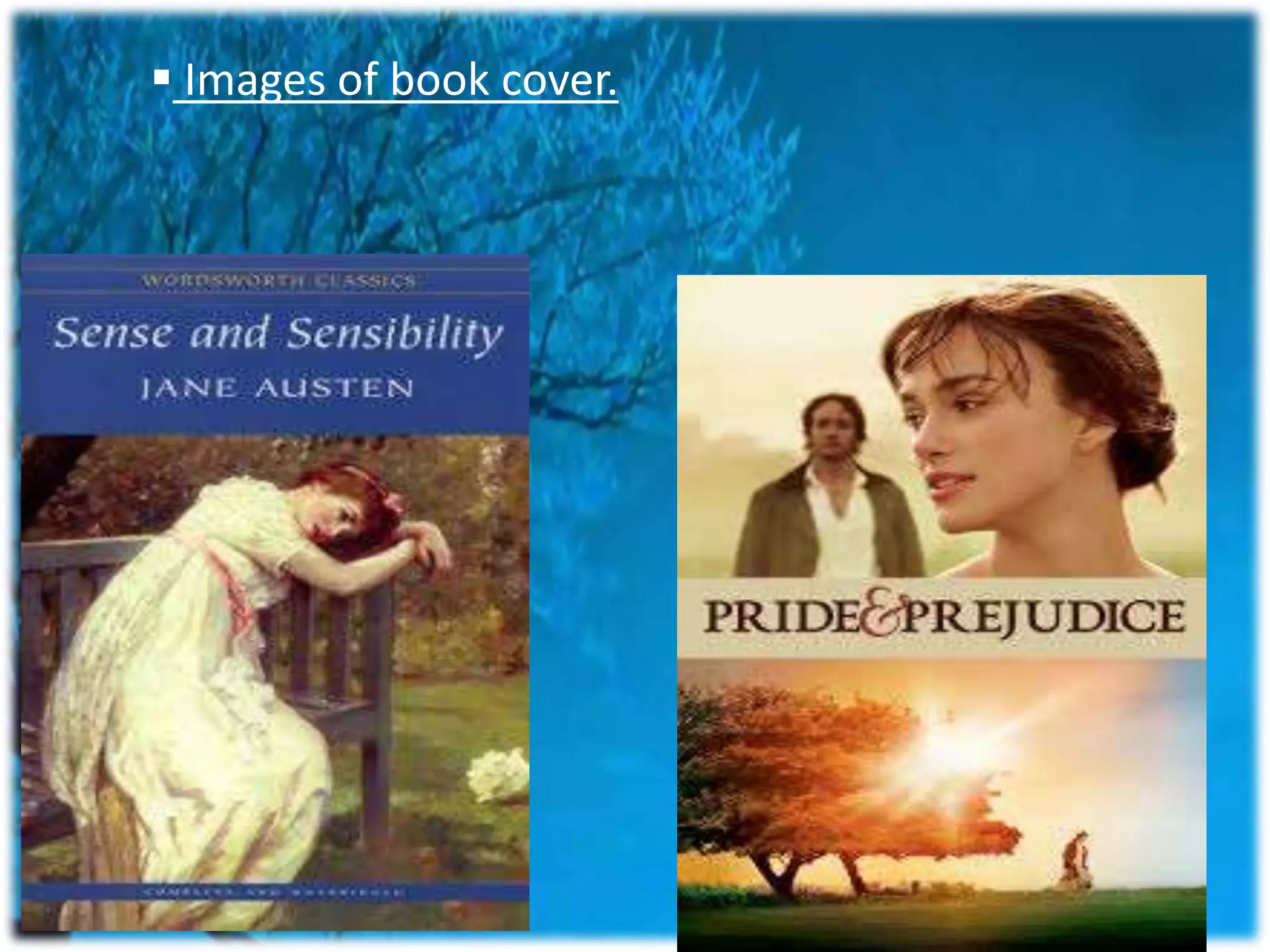
 Images of book cover.
Major women Characters in both
novel
 Sense & Sensibility
• Mrs Dashwood
 Pride & Prejudice
 Mrs Bennet
Elinor
Marianne
Margaret
Jane
Elizabeth
Mary
Kitty
Lydia
 The titles of the novels announce the temperament
difference between the principle characters.
Sense:- deals with common understanding
Sensibility:- deals with emotions and attitude
&
Pride:- leads to narrow mindedness
Prejudice:- leads to false perception of others
 Jane Austen uses extremely similar character in almost the exact
same situation in Sense & Sensibility and Pride & Prejudice.
In both Novels of Jane Austen revolves around the typical issues like
Love Marriage
Class/Wealth
 Mothers are very eager to the attention of wealthy
men for her daughters.
S&S Mrs. Dashwood and in P&P Mrs. Bennet.
 In both novels their fathers money going to the male
relatives.
S&S John Dashwood inherits the property and in P&P
Mr. Collins inherits the property.
oBoth novels traces the courtships of couple through various
misunderstandings before they were happily married to each
other.
S&S:-
P&P:-
Elinor- Edward
Marianne- col. Brandon
Jane – Bingley
Elizabeth- Darcy
• Characters of the both novel are well off but their
greed to became more rich affect their relationships
S&S :-Willoughby loves Marianne but at last he marry
with Sophia Grey because of her wealth.
P&P:- Elizabeth says about class that “ He is a
gentleman, I am a gentleman’s daughter; so far we are
equal.”
The two novels are clear manifestation of 19 th century
environments
In the 19 th century marriage for women was considered the
only escape from depressing spinsterhood.
 By focusing on matrimony she brings out the social customs
of her age.
Bibliography
http://www.exampleessays.com/viewpaper/23025.html
http://www.teenink.com
Thank
you.

Comparison between Sense & Sensibility and Pride & Prejudice.

  • 1.
    Name:- Hitaxi HBhatt. Roll No:- 03 Email id:-hitaxidave81@gmail.com Paper No:- 05 ( The Romantic Literature). Topic:- Comparison between Sense & Sensibility And Pride & prejudice Submitted To:- Maharaja Krishnakumarsinhji Bhavnagar University.
  • 2.
     Introduction. 1. Pride& Prejudice. 2. Sense & Sensibility. 3. Persuasion. 4. Emma. 5. Northanger Abbey. 6. Mansfield Park.  Her works
  • 3.
     Images ofbook cover.
  • 4.
    Major women Charactersin both novel  Sense & Sensibility • Mrs Dashwood  Pride & Prejudice  Mrs Bennet Elinor Marianne Margaret Jane Elizabeth Mary Kitty Lydia
  • 5.
     The titlesof the novels announce the temperament difference between the principle characters. Sense:- deals with common understanding Sensibility:- deals with emotions and attitude & Pride:- leads to narrow mindedness Prejudice:- leads to false perception of others
  • 6.
     Jane Austenuses extremely similar character in almost the exact same situation in Sense & Sensibility and Pride & Prejudice. In both Novels of Jane Austen revolves around the typical issues like Love Marriage Class/Wealth
  • 7.
     Mothers arevery eager to the attention of wealthy men for her daughters. S&S Mrs. Dashwood and in P&P Mrs. Bennet.  In both novels their fathers money going to the male relatives. S&S John Dashwood inherits the property and in P&P Mr. Collins inherits the property.
  • 8.
    oBoth novels tracesthe courtships of couple through various misunderstandings before they were happily married to each other. S&S:- P&P:- Elinor- Edward Marianne- col. Brandon Jane – Bingley Elizabeth- Darcy
  • 9.
    • Characters ofthe both novel are well off but their greed to became more rich affect their relationships S&S :-Willoughby loves Marianne but at last he marry with Sophia Grey because of her wealth. P&P:- Elizabeth says about class that “ He is a gentleman, I am a gentleman’s daughter; so far we are equal.”
  • 10.
    The two novelsare clear manifestation of 19 th century environments In the 19 th century marriage for women was considered the only escape from depressing spinsterhood.  By focusing on matrimony she brings out the social customs of her age.
  • 11.
  • 12.