The citizen expects police officers to have
the wisdom of Solomon,
the courage of David,
the strength of Samson,
the patience of Job,
the leadership of Moses,
the kindness of the Good Samaritan,
the strategical training of Alexander,
the faith of Daniel,
the diplomacy of Lincoln,
the tolerance of the Carpenter of Nazareth, and finally,
an intimate knowledge of every branch
of the natural, biological, and social sciences.
If he had all these, he might be a good policeman!
(August Vollmer, cited in Bain, 1939).
What’s the difference – The
“Ferguson Effect” ?
“COPS OR CRIMINALS – WHAT IS THE DIFFERENCE?”
(The Departed, 2006)
C – COURTESY:
P – PROFESSIONALISM:
R- RESPECT:
United States – History of
Policing
Cities versus Rural
Qualifications
The Southern Slaves Patrol
Multiculturalism – whose values/interests?
Power Corrupts
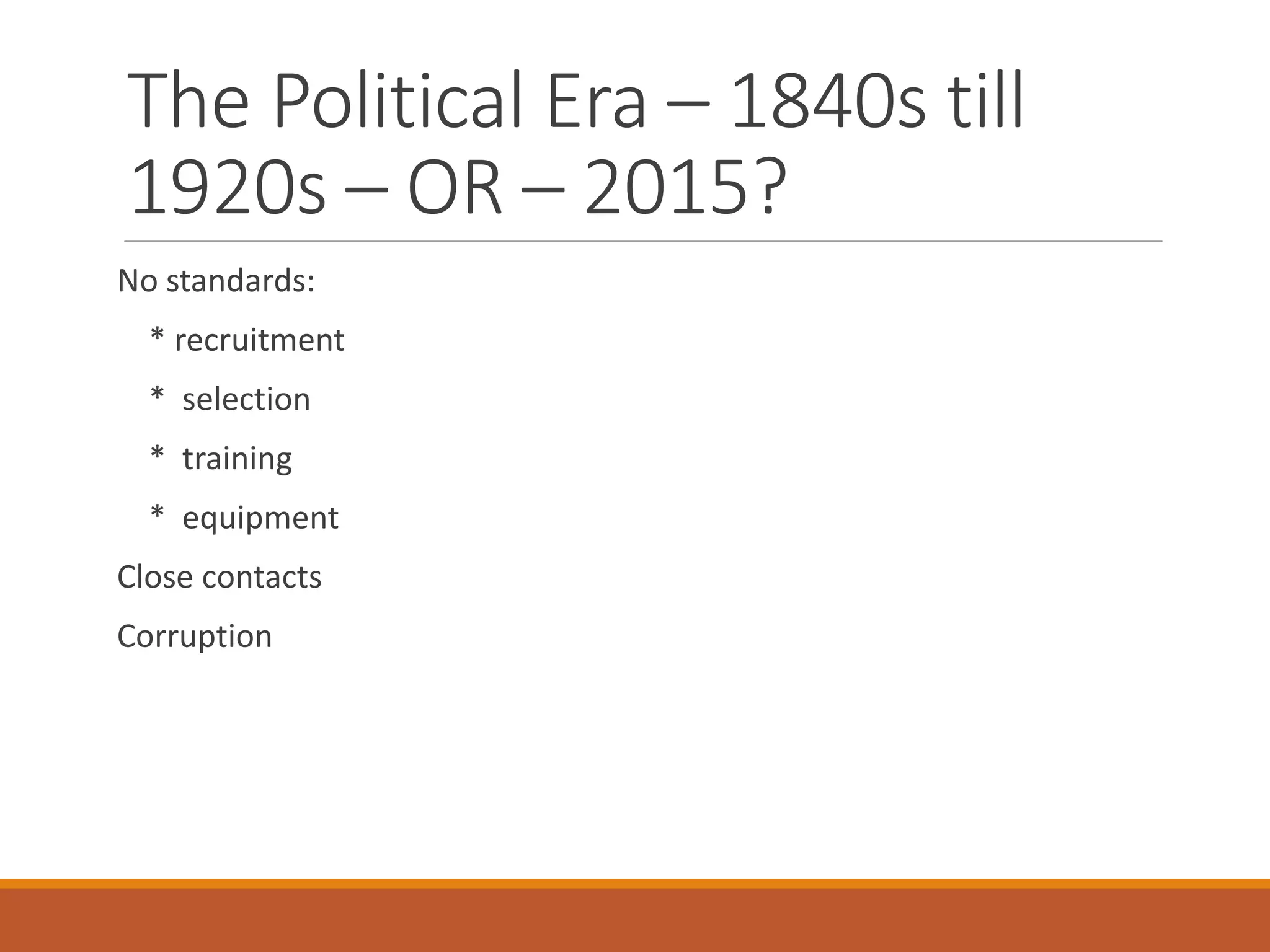
The Political Era – 1840s till
1920s – OR – 2015?
No standards:
* recruitment
* selection
* training
* equipment
Close contacts
Corruption
The Professional Era – 1930s
till 1970s – OR – 2015?
Standards (?)
Education/training (?)
Technology
Change in Deployment
Change in Philosophy (?)
Civil Rights and Progress
Pre-Community Policing Era (late 1970s-
early 1980s) and 2015 Intelligence, Data
Driven, Predictive Policing
Goldsteinand the Problem Oriented
Policing – from Reactive to Proactive
The SARA Model
Scanning
Analyzing
Responding
Assessing
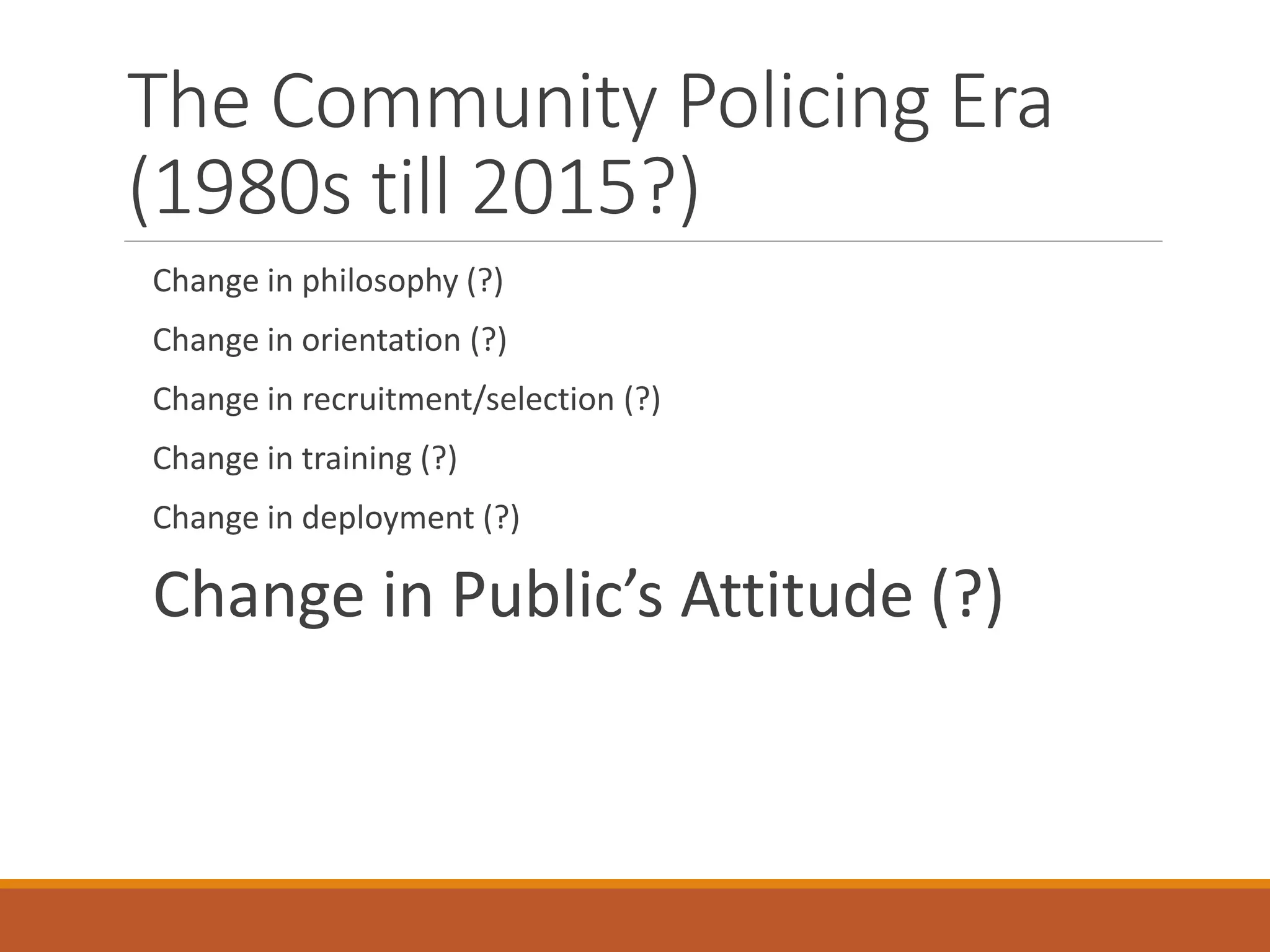
The Community Policing Era
(1980s till 2015?)
Change in philosophy (?)
Change in orientation (?)
Change in recruitment/selection (?)
Change in training (?)
Change in deployment (?)
Change in Public’s Attitude (?)
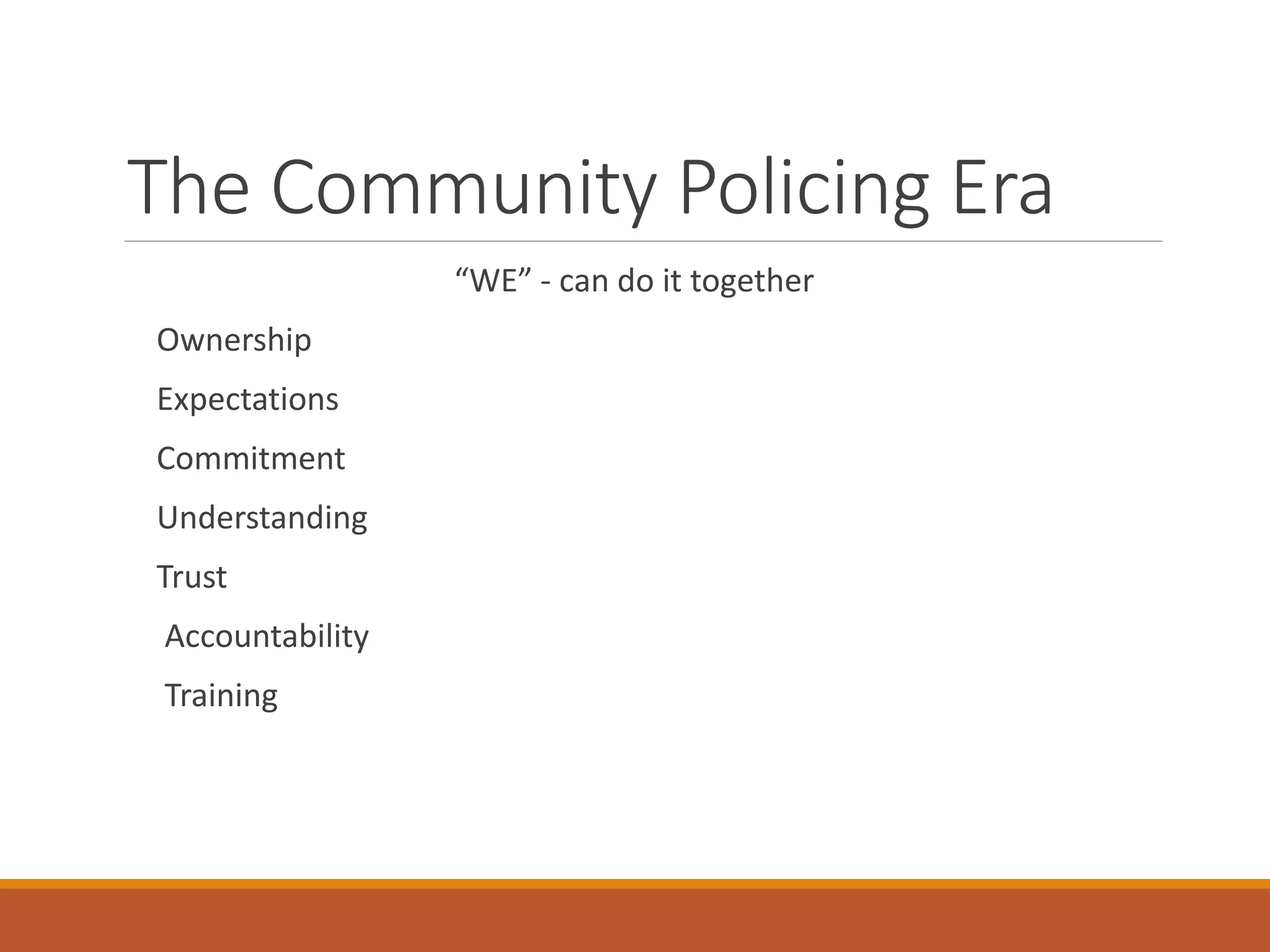
The Community Policing Era
“WE” - can do it together
Ownership
Expectations
Commitment
Understanding
Trust
Accountability
Training
2015 – the Ferguson Effect
The Predatory Era (?)
“Policing is hard on Democracy”
Policing “the Community”
Policing post 9/11
Policing post Ferguson
MISSION STATEMENT OF THE
NEW YORK CITY POLICE DEPARTMENT
IS TO ENHANCE THE QUALITY OF LIFE IN OUR CITY BY WORKING IN
PARTNERSHIP WITH THE COMMUNITY AND IN ACCORDANCE WITH
CONSTITUTIONAL RIGHTS
TO ENFORCE THE LAWS, PRESERVE THE PEACE, REDUCE FEAR, AND PROVIDE
FOR A SAFE ENVIRONMENT.
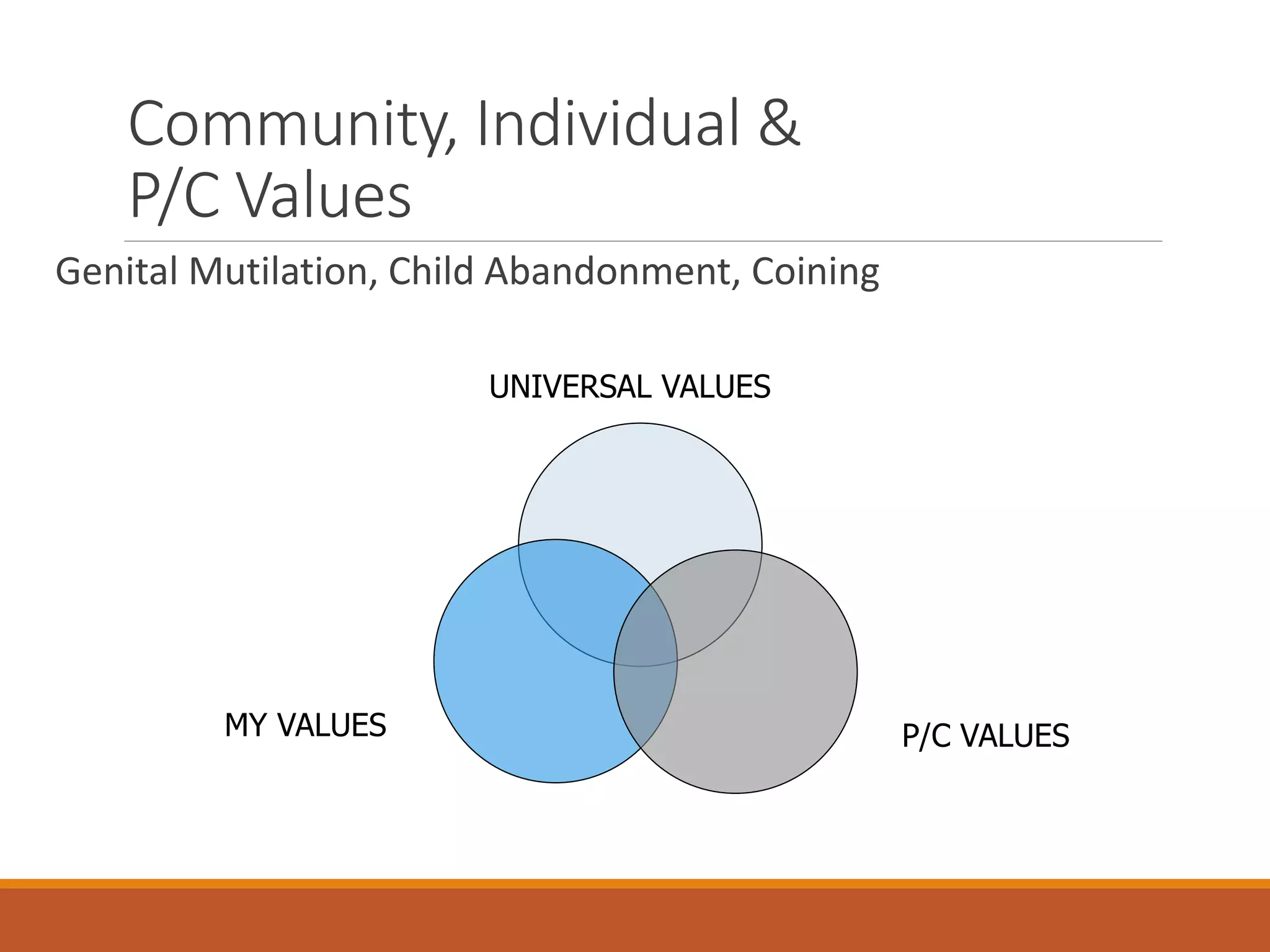
Community, Individual &
P/C Values
Genital Mutilation, Child Abandonment, Coining
UNIVERSAL VALUES
MY VALUES P/C VALUES
Enforcing The Law – Case
Studies: NYPD, Fayetteville, NC
CONSTITUTION, STATE LAWS, LOCAL ORDINANCES
RIGHT TO PURSUE HAPINESS FREEDOM OF SPEECH
Drug Use, Preferred Health Care… The Militia Movements, Radical Organizations…
How Do You Focus & Perform?
COMMUNITY VALUES
INDIVIDUAL VALUES LAW DRIVEN VALUES
THE PRICE
HUMAN LIFE AS A PRICE TO PAY – Focus on violations that cost lives, like
speeding and drunken driving
HOW EXPENSIVE IS IT TO REDUCE FEAR? – NYPD: Stop and Frisk
Cost of a Safe Environment
Who pays and at what cost?
Will you still respect me the morning after?
Will you still respect yourself the next morning?
Bridging the Divide or Falling from the
Bridge?
Back to the Past?
EXPERIMENTS – 1970S
The Kansas City Patrol
Neighborhood Food Patrol
ICAP; SARA
Team Policing
EXPERIMENTS – 2015
2014 – NYPD – Reengineering
NYPD – NCO
Coffee with a cop
Intelligence Led, Data/Evidence
Driven, Predictive Policing
IMPACT

Community Oriented Policing, United States, 2015

  • 2.
    The citizen expectspolice officers to have the wisdom of Solomon, the courage of David, the strength of Samson, the patience of Job, the leadership of Moses, the kindness of the Good Samaritan, the strategical training of Alexander, the faith of Daniel, the diplomacy of Lincoln, the tolerance of the Carpenter of Nazareth, and finally, an intimate knowledge of every branch of the natural, biological, and social sciences. If he had all these, he might be a good policeman! (August Vollmer, cited in Bain, 1939).
  • 3.
    What’s the difference– The “Ferguson Effect” ? “COPS OR CRIMINALS – WHAT IS THE DIFFERENCE?” (The Departed, 2006)
  • 4.
    C – COURTESY: P– PROFESSIONALISM: R- RESPECT:
  • 5.
    United States –History of Policing Cities versus Rural Qualifications The Southern Slaves Patrol Multiculturalism – whose values/interests? Power Corrupts
  • 6.
    The Political Era– 1840s till 1920s – OR – 2015? No standards: * recruitment * selection * training * equipment Close contacts Corruption
  • 7.
    The Professional Era– 1930s till 1970s – OR – 2015? Standards (?) Education/training (?) Technology Change in Deployment Change in Philosophy (?) Civil Rights and Progress
  • 8.
    Pre-Community Policing Era(late 1970s- early 1980s) and 2015 Intelligence, Data Driven, Predictive Policing Goldsteinand the Problem Oriented Policing – from Reactive to Proactive The SARA Model Scanning Analyzing Responding Assessing
  • 9.
    The Community PolicingEra (1980s till 2015?) Change in philosophy (?) Change in orientation (?) Change in recruitment/selection (?) Change in training (?) Change in deployment (?) Change in Public’s Attitude (?)
  • 10.
    The Community PolicingEra “WE” - can do it together Ownership Expectations Commitment Understanding Trust Accountability Training
  • 11.
    2015 – theFerguson Effect The Predatory Era (?) “Policing is hard on Democracy” Policing “the Community” Policing post 9/11 Policing post Ferguson
  • 12.
    MISSION STATEMENT OFTHE NEW YORK CITY POLICE DEPARTMENT IS TO ENHANCE THE QUALITY OF LIFE IN OUR CITY BY WORKING IN PARTNERSHIP WITH THE COMMUNITY AND IN ACCORDANCE WITH CONSTITUTIONAL RIGHTS TO ENFORCE THE LAWS, PRESERVE THE PEACE, REDUCE FEAR, AND PROVIDE FOR A SAFE ENVIRONMENT.
  • 13.
    Community, Individual & P/CValues Genital Mutilation, Child Abandonment, Coining UNIVERSAL VALUES MY VALUES P/C VALUES
  • 14.
    Enforcing The Law– Case Studies: NYPD, Fayetteville, NC CONSTITUTION, STATE LAWS, LOCAL ORDINANCES RIGHT TO PURSUE HAPINESS FREEDOM OF SPEECH Drug Use, Preferred Health Care… The Militia Movements, Radical Organizations…
  • 15.
    How Do YouFocus & Perform? COMMUNITY VALUES INDIVIDUAL VALUES LAW DRIVEN VALUES
  • 16.
    THE PRICE HUMAN LIFEAS A PRICE TO PAY – Focus on violations that cost lives, like speeding and drunken driving HOW EXPENSIVE IS IT TO REDUCE FEAR? – NYPD: Stop and Frisk
  • 17.
    Cost of aSafe Environment Who pays and at what cost? Will you still respect me the morning after? Will you still respect yourself the next morning?
  • 18.
    Bridging the Divideor Falling from the Bridge? Back to the Past? EXPERIMENTS – 1970S The Kansas City Patrol Neighborhood Food Patrol ICAP; SARA Team Policing EXPERIMENTS – 2015 2014 – NYPD – Reengineering NYPD – NCO Coffee with a cop Intelligence Led, Data/Evidence Driven, Predictive Policing IMPACT