Community Management
During Hurricane Sandy

           By: Andrew Torba
  CEO and Co-Founder of Kuhcoon.com.
Some Staggering Social Facts
    • 9 million tweets sent with the hashtag “Sandy”
      as of 10/31/12 - Topsy

    • 10 pictures uploaded per second during the
      storm on Instagram with the hashtag “Sandy”-
      CBS News

    • Hurricane Sandy quickly rose to the second
      most talked about topic on Facebook in 2012,
      behind only the Presidential election.

2
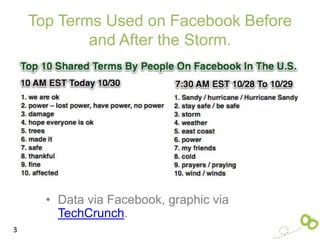
Top Terms Used on Facebook Before
            and After the Storm.


      • Data via Facebook, graphic via
        TechCrunch.
3
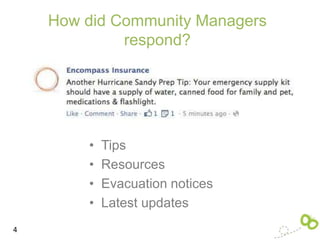
How did Community Managers
             respond?


        •   Tips
        •   Resources
        •   Evacuation notices
        •   Latest updates
4
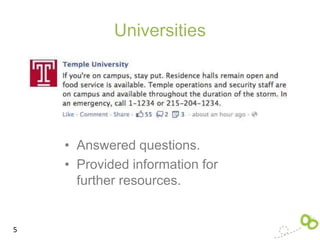
Universities


    • Answered questions.
    • Provided information for
      further resources.


5
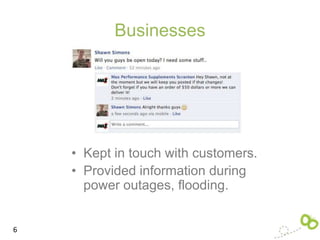
Businesses


    • Kept in touch with customers.
    • Provided information during
      power outages, flooding.


6
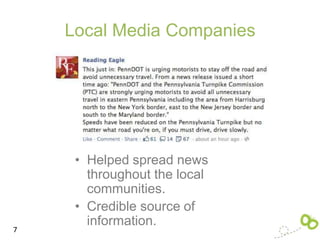
Local Media Companies


     • Helped spread news
       throughout the local
       communities.
     • Credible source of
       information.
7
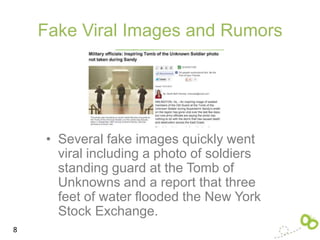
Fake Viral Images and Rumors


    • Several fake images quickly went
      viral including a photo of soldiers
      standing guard at the Tomb of
      Unknowns and a report that three
      feet of water flooded the New York
      Stock Exchange.
8
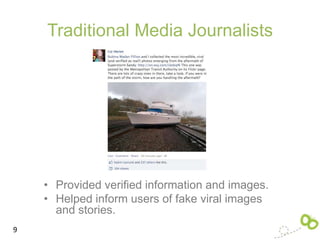
Traditional Media Journalists


    • Provided verified information and images.
    • Helped inform users of fake viral images
      and stories.
9
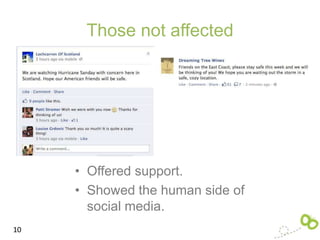
Those not affected


     • Offered support.
     • Showed the human side of
       social media.
10
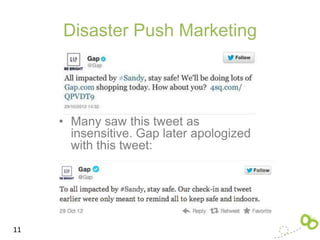
Disaster Push Marketing


     • Many saw this tweet as
       insensitive. Gap later apologized
       with this tweet:


11
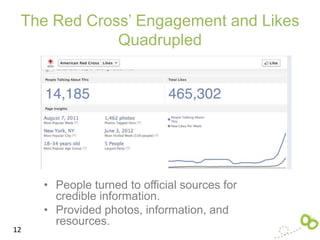
The Red Cross’ Engagement and Likes
             Quadrupled


     • People turned to official sources for
       credible information.
     • Provided photos, information, and
       resources.
12
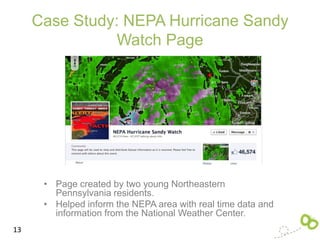
Case Study: NEPA Hurricane Sandy
                Watch Page


      • Page created by two young Northeastern
        Pennsylvania residents.
      • Helped inform the NEPA area with real time data and
        information from the National Weather Center.
13
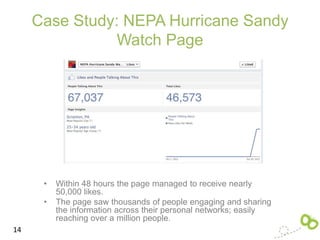
Case Study: NEPA Hurricane Sandy
                Watch Page


      •   Within 48 hours the page managed to receive nearly
          50,000 likes.
      •   The page saw thousands of people engaging and sharing
          the information across their personal networks; easily
          reaching over a million people.
14
Lessons Learned
     • Don’t believe everything you see on
       the Internet.
     • Verify information before sharing with
       your community.
     • Do not advertise and push market
       during a disaster.
     • Provide tips, news, credible
       information, and resources.


15
Community Management During Hurricane Sandy

Community Management During Hurricane Sandy

  • 1.
    Community Management During HurricaneSandy By: Andrew Torba CEO and Co-Founder of Kuhcoon.com.
  • 2.
    Some Staggering SocialFacts • 9 million tweets sent with the hashtag “Sandy” as of 10/31/12 - Topsy • 10 pictures uploaded per second during the storm on Instagram with the hashtag “Sandy”- CBS News • Hurricane Sandy quickly rose to the second most talked about topic on Facebook in 2012, behind only the Presidential election. 2
  • 3.
    Top Terms Usedon Facebook Before and After the Storm. • Data via Facebook, graphic via TechCrunch. 3
  • 4.
    How did CommunityManagers respond? • Tips • Resources • Evacuation notices • Latest updates 4
  • 5.
    Universities • Answered questions. • Provided information for further resources. 5
  • 6.
    Businesses • Kept in touch with customers. • Provided information during power outages, flooding. 6
  • 7.
    Local Media Companies • Helped spread news throughout the local communities. • Credible source of information. 7
  • 8.
    Fake Viral Imagesand Rumors • Several fake images quickly went viral including a photo of soldiers standing guard at the Tomb of Unknowns and a report that three feet of water flooded the New York Stock Exchange. 8
  • 9.
    Traditional Media Journalists • Provided verified information and images. • Helped inform users of fake viral images and stories. 9
  • 10.
    Those not affected • Offered support. • Showed the human side of social media. 10
  • 11.
    Disaster Push Marketing • Many saw this tweet as insensitive. Gap later apologized with this tweet: 11
  • 12.
    The Red Cross’Engagement and Likes Quadrupled • People turned to official sources for credible information. • Provided photos, information, and resources. 12
  • 13.
    Case Study: NEPAHurricane Sandy Watch Page • Page created by two young Northeastern Pennsylvania residents. • Helped inform the NEPA area with real time data and information from the National Weather Center. 13
  • 14.
    Case Study: NEPAHurricane Sandy Watch Page • Within 48 hours the page managed to receive nearly 50,000 likes. • The page saw thousands of people engaging and sharing the information across their personal networks; easily reaching over a million people. 14
  • 15.
    Lessons Learned • Don’t believe everything you see on the Internet. • Verify information before sharing with your community. • Do not advertise and push market during a disaster. • Provide tips, news, credible information, and resources. 15