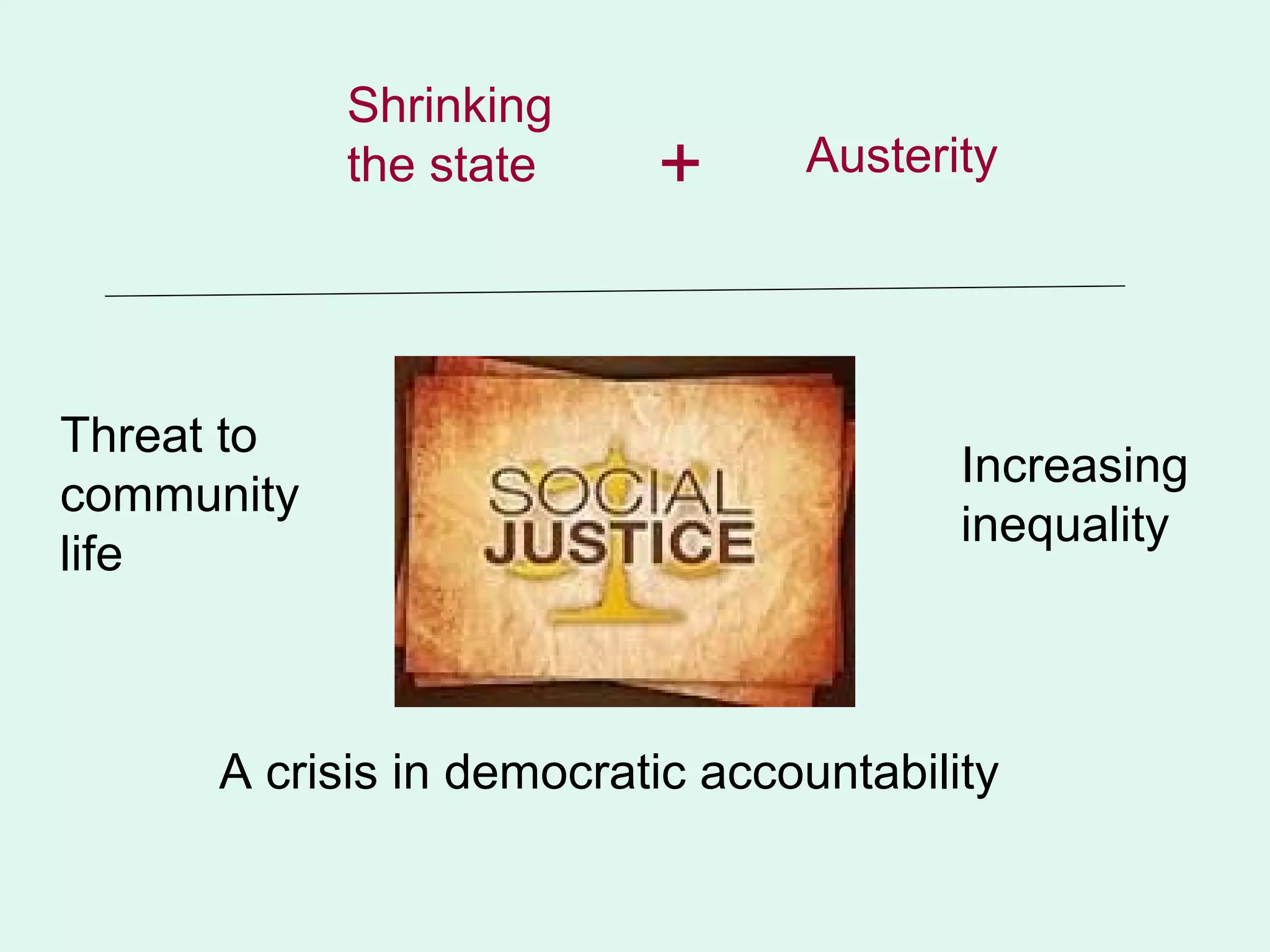

Shrinking
            the state    +      Austerity


Threat to
                                        Increasing
community
                                        inequality
life


     A crisis in democratic accountability
Communities, power
   and health

    Brian Fisher MBE
Chair of the Socialist health
        Association
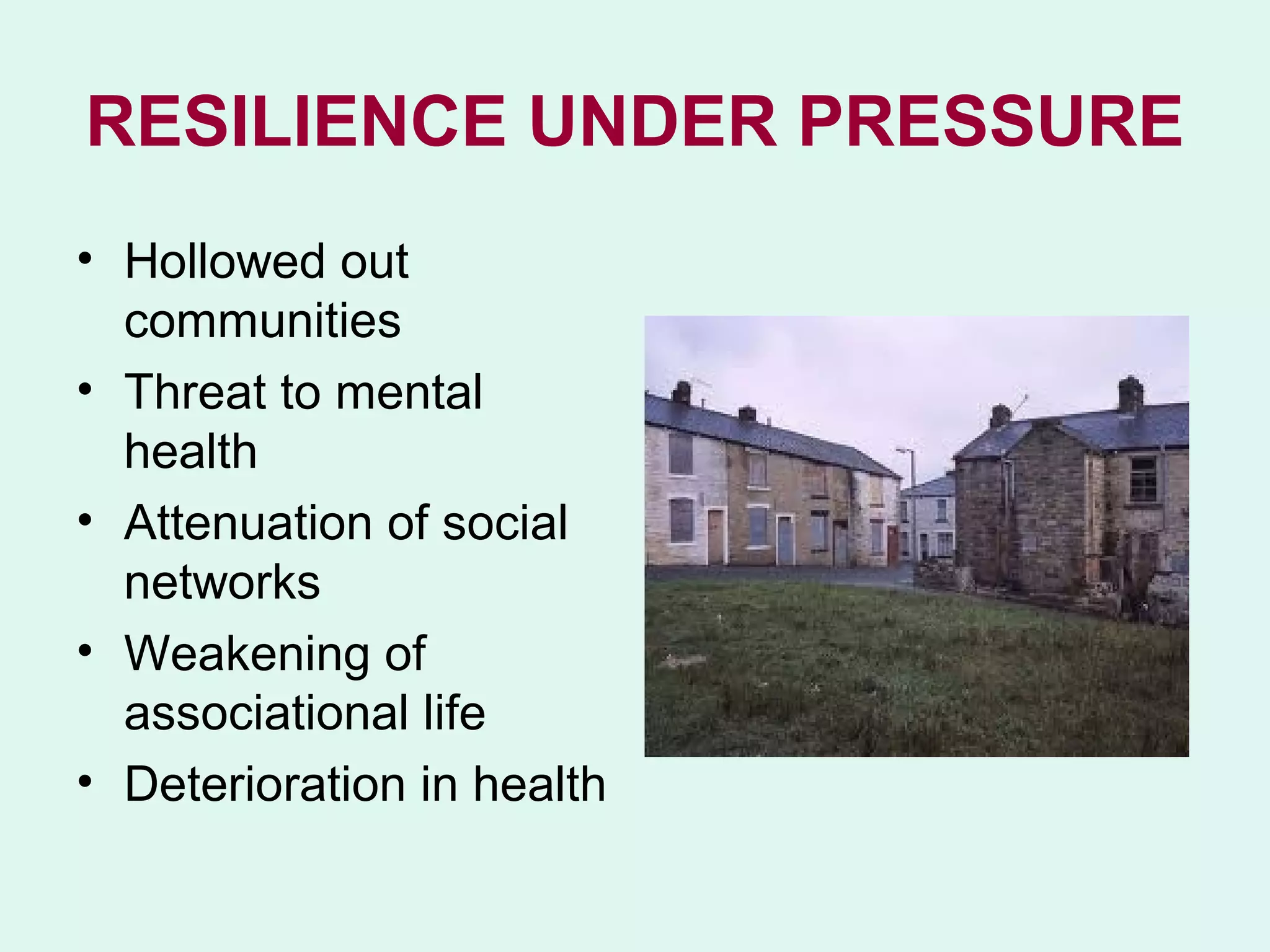
RESILIENCE UNDER PRESSURE
• Hollowed out
  communities
• Threat to mental
  health
• Attenuation of social
  networks
• Weakening of
  associational life
• Deterioration in health
PARTICIPATORY

ACCOUNTABILITY
     DEMOCRATIC
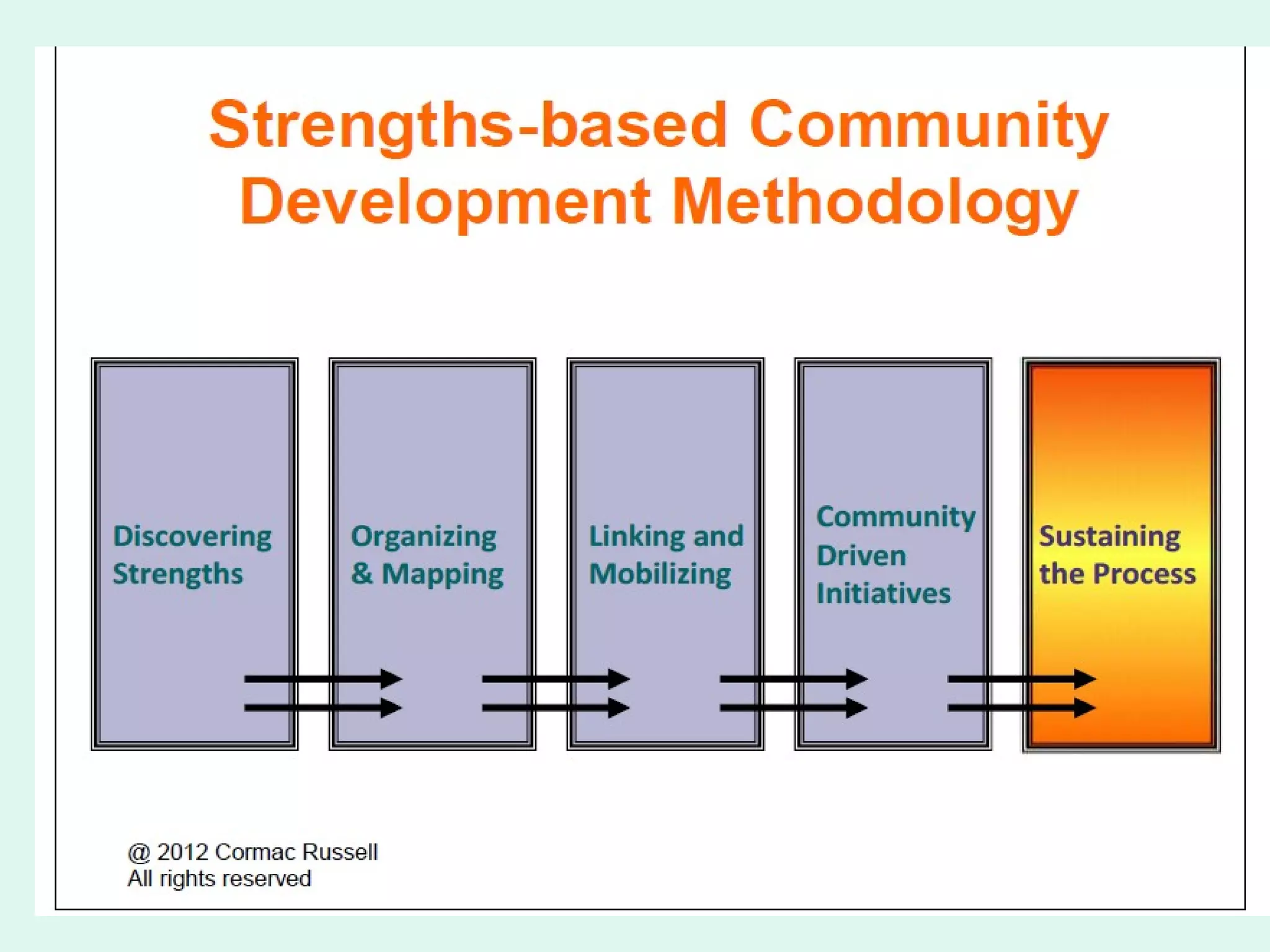
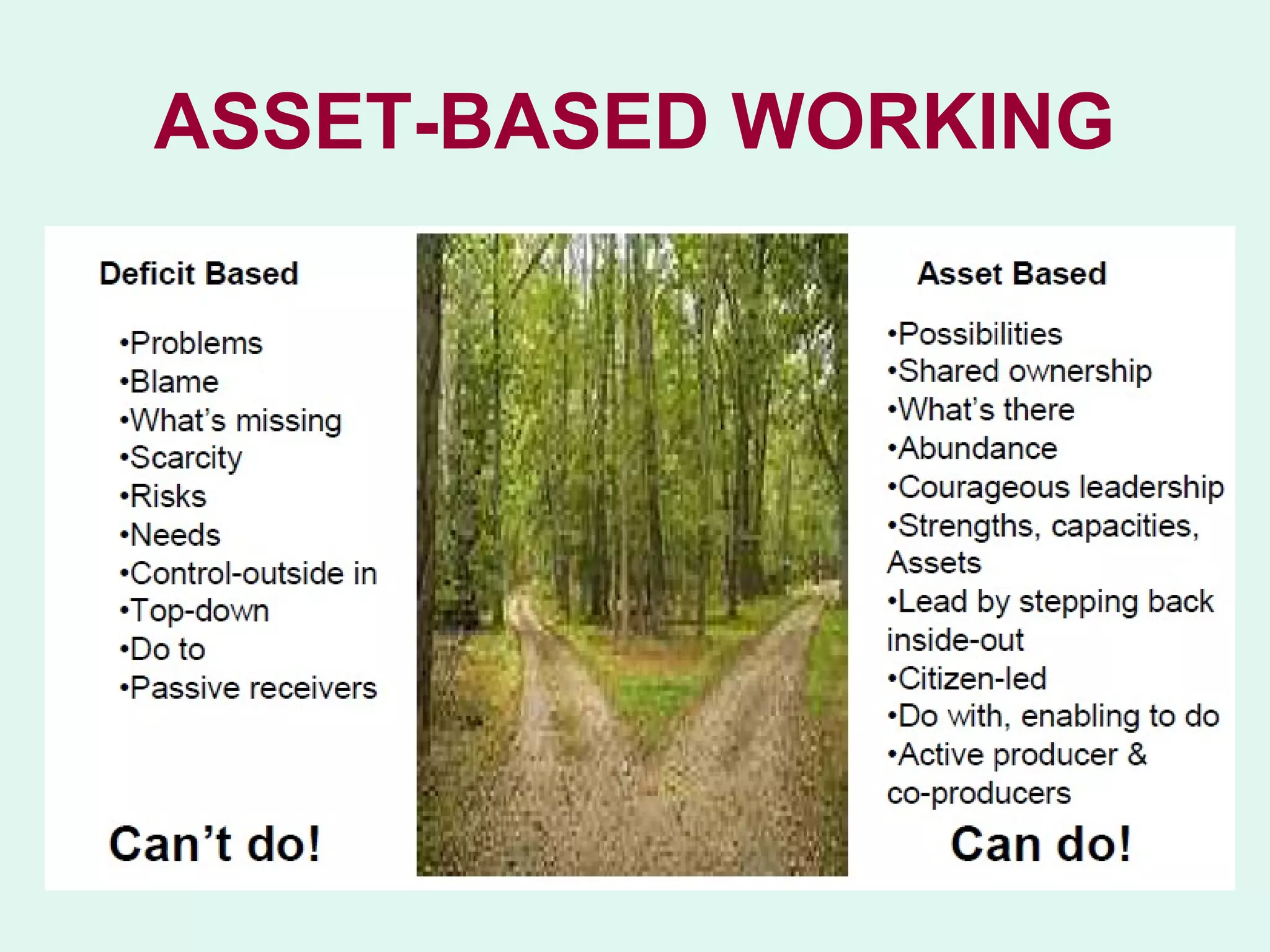
ASSET-BASED WORKING
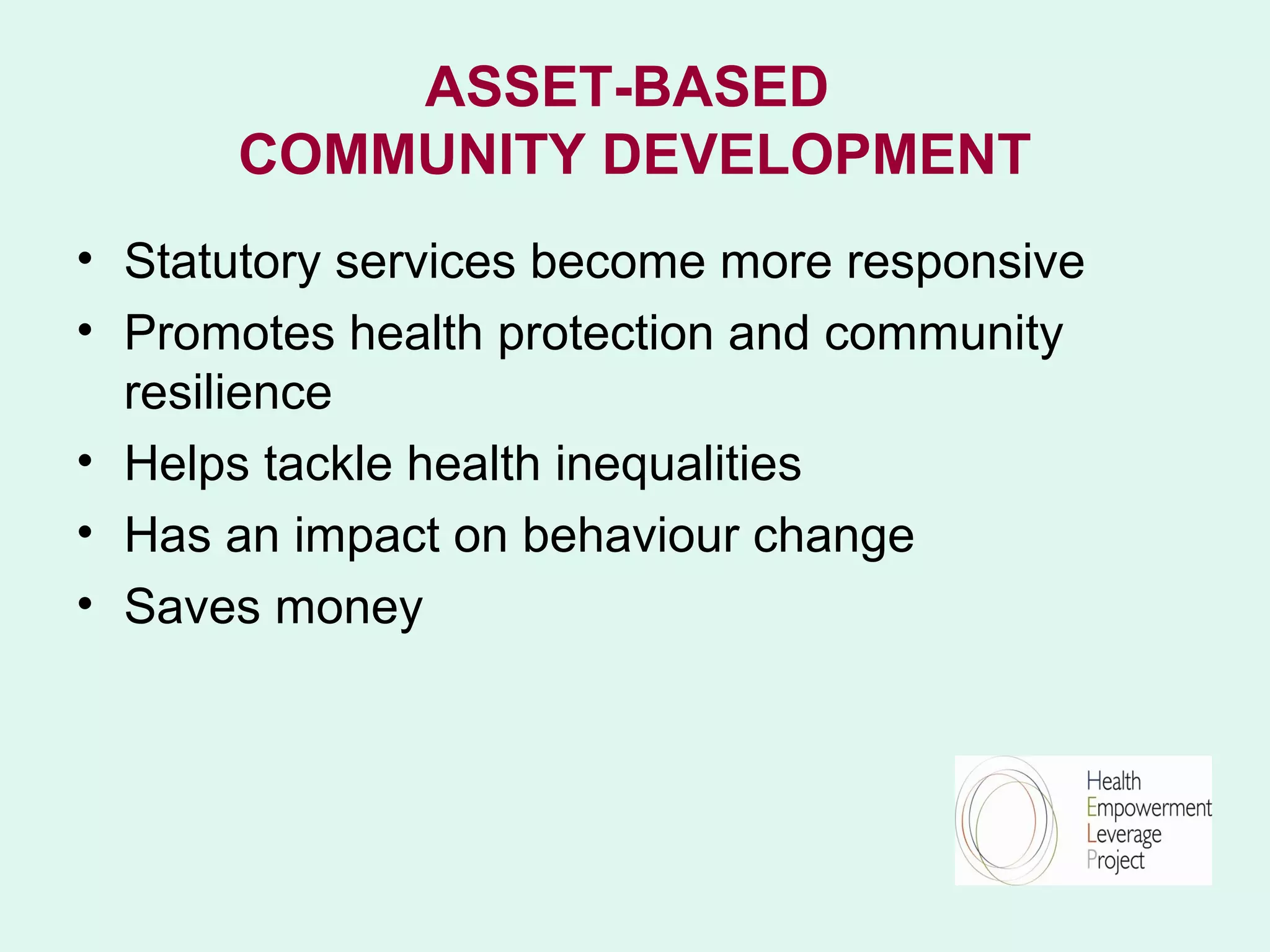
ASSET-BASED
      COMMUNITY DEVELOPMENT
• Statutory services become more responsive
• Promotes health protection and community
  resilience
• Helps tackle health inequalities
• Has an impact on behaviour change
• Saves money
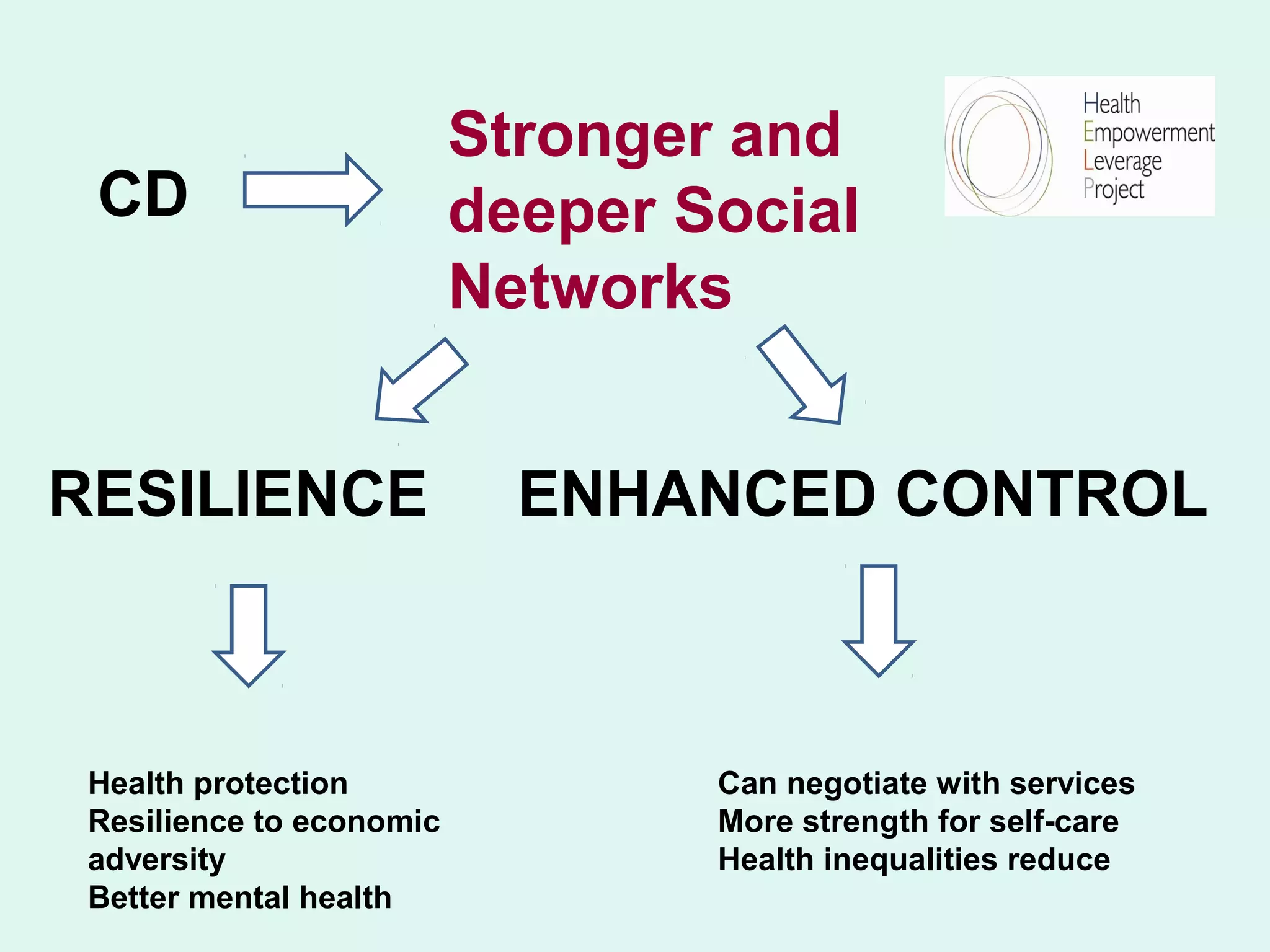
Stronger and
 CD                       deeper Social
                          Networks


RESILIENCE                  ENHANCED CONTROL


 Health protection                Can negotiate with services
 Resilience to economic           More strength for self-care
 adversity                        Health inequalities reduce
 Better mental health
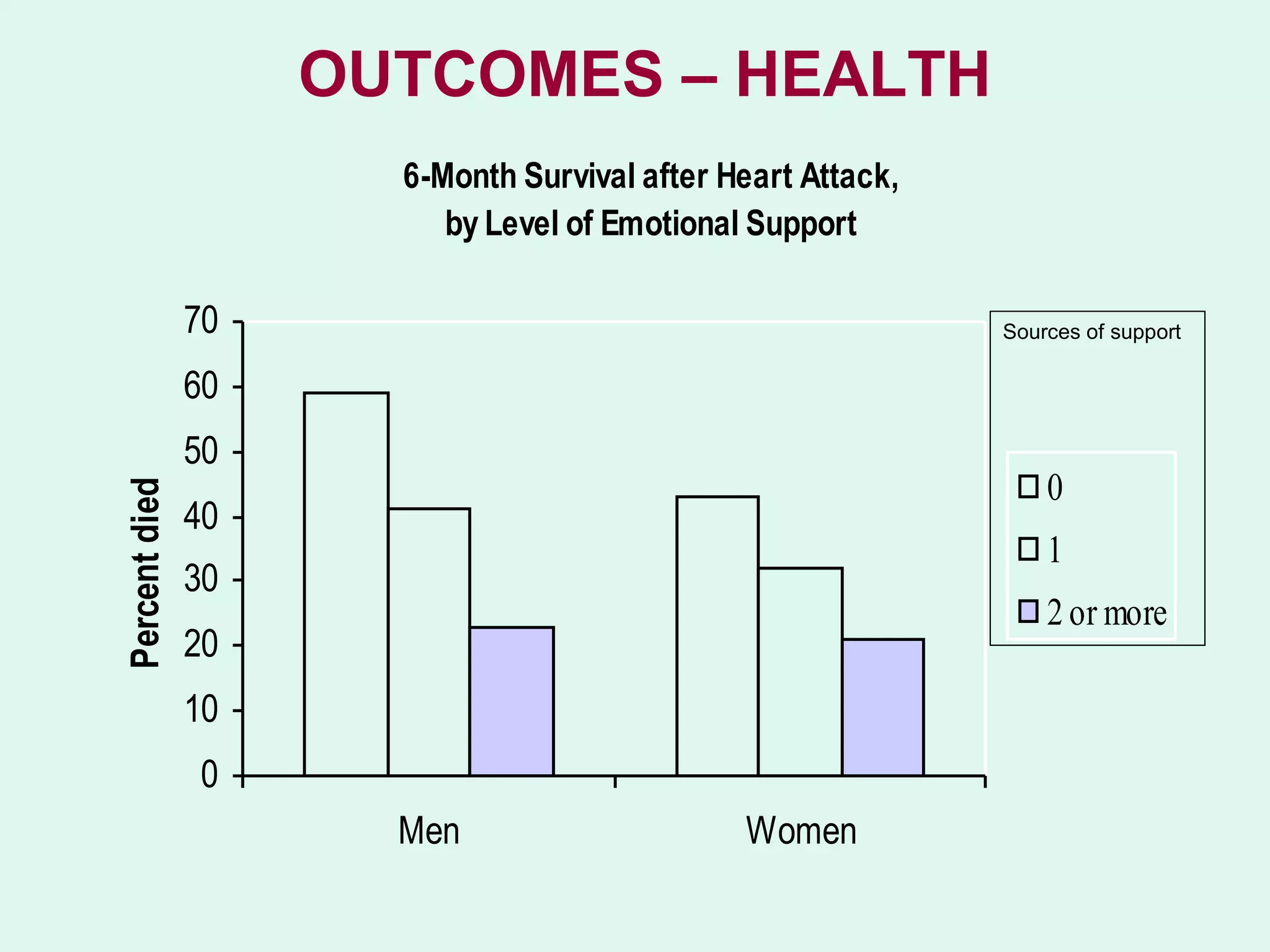
OUTCOMES – HEALTH
                      6-Month Survival after Heart Attack,
                         by Level of Emotional Support

               70                                            Sources of support

               60
               50
                                                                 0
Percent died


               40
                                                                 1
               30
                                                                 2 or more
               20
               10
               0
                      Men                     Women
SOCIAL NETWORKS
         REDUCE MORTALITY RISK
• 50 % increased likelihood of survival for people with
  stronger social relationships
• Comparable with risks such as smoking, alcohol, BMI
  and physical activity.
• Consistent across age,
  sex, cause of death.


•   2010 meta-analysis of data [1] across 308,849 individuals,
    followed for an average of 7.5 years
    1] Social relationships and mortality risk: a meta-analytic review. Holt-Lunstadt, Smith, Bradley
    Layton.Plos Medicine July 2010, Vol 7, Issue 7. www.plosmedicine.org
    doi:10.1371/journal.pmed.1000316
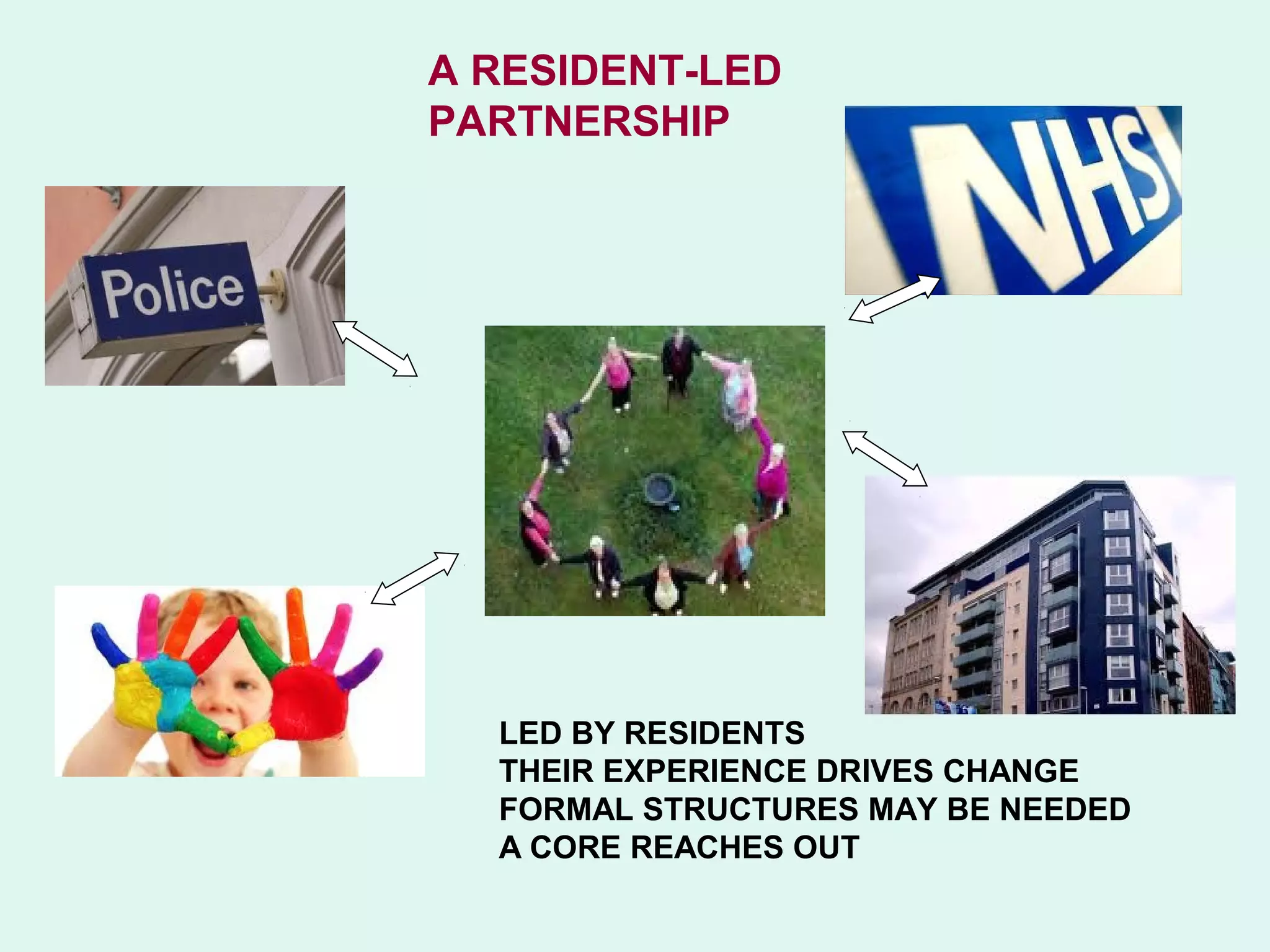
A RESIDENT-LED
PARTNERSHIP


  LED BY RESIDENTS
  THEIR EXPERIENCE DRIVES CHANGE
  FORMAL STRUCTURES MAY BE NEEDED
  A CORE REACHES OUT
OUTCOMES - RESPONSIVE
         SERVICES
• Services begin to change within 6
  months
• Affects many sectors simultaneously
  (health, police, education)
• Communities gain confidence and
  leaders emerge
• Staff enjoy their jobs more
RESPONSIVE SERVICES
• A new dental service established
• Funding of £95k to transform a derelict area into a
  playpark awarded
• A new GP surgery planned
• Well attended social events and football sessions
• Relations with the housing department improved and
  tenants more satisfied.
• Summer holiday activities for all ages
• A cooperative plan for social renewal agreed between
  the community and public agencies
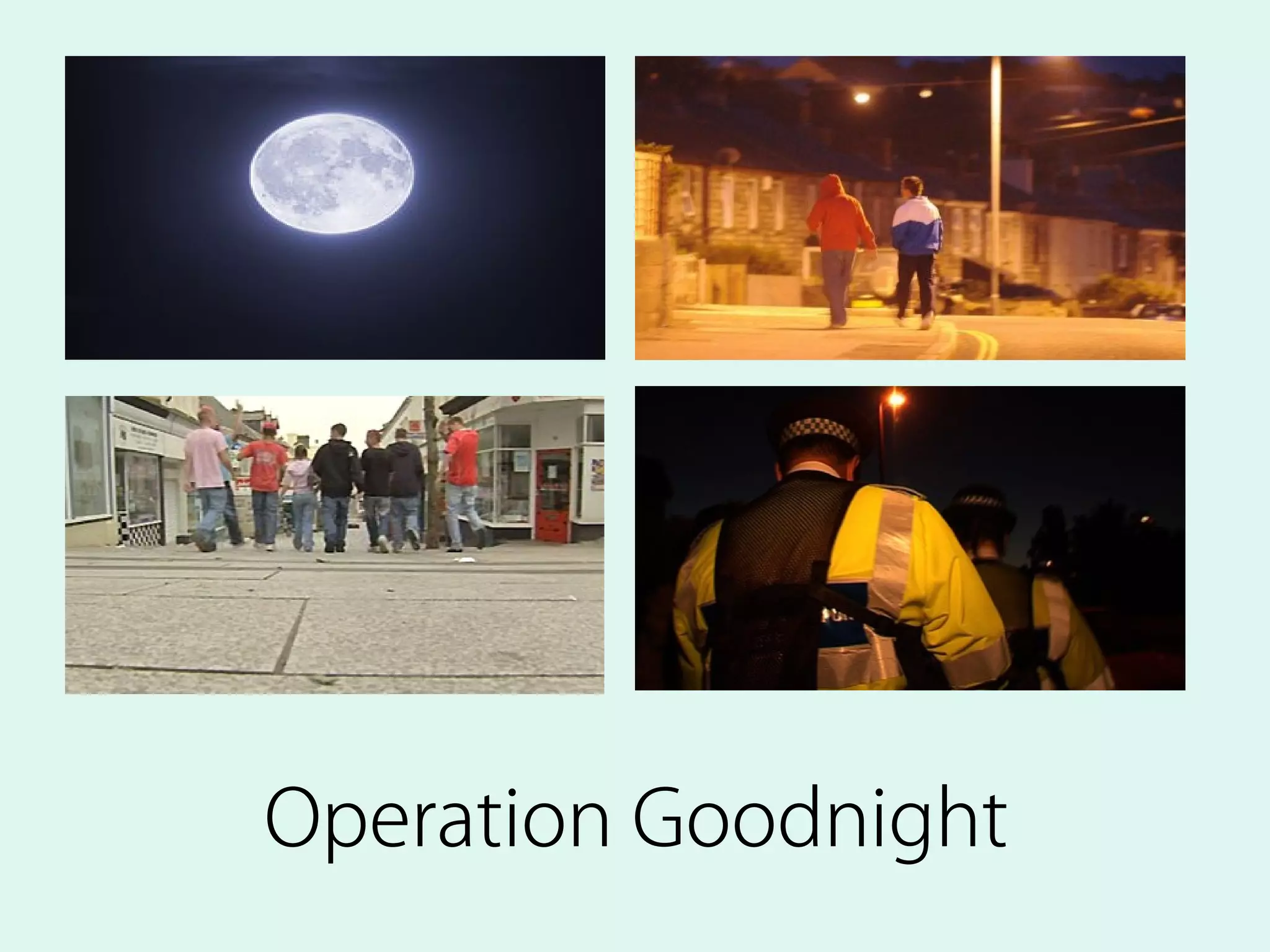
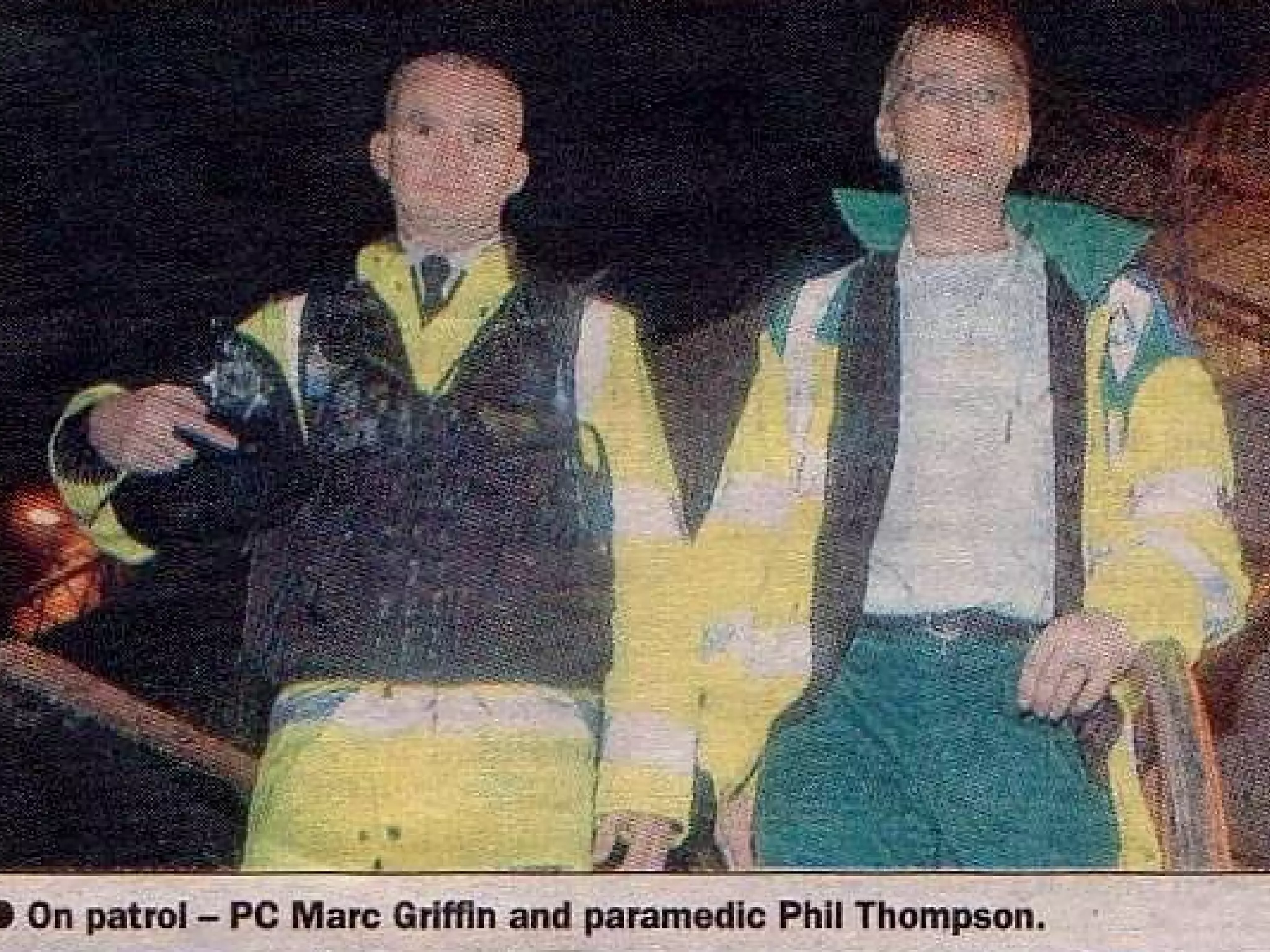
Operation Goodnight
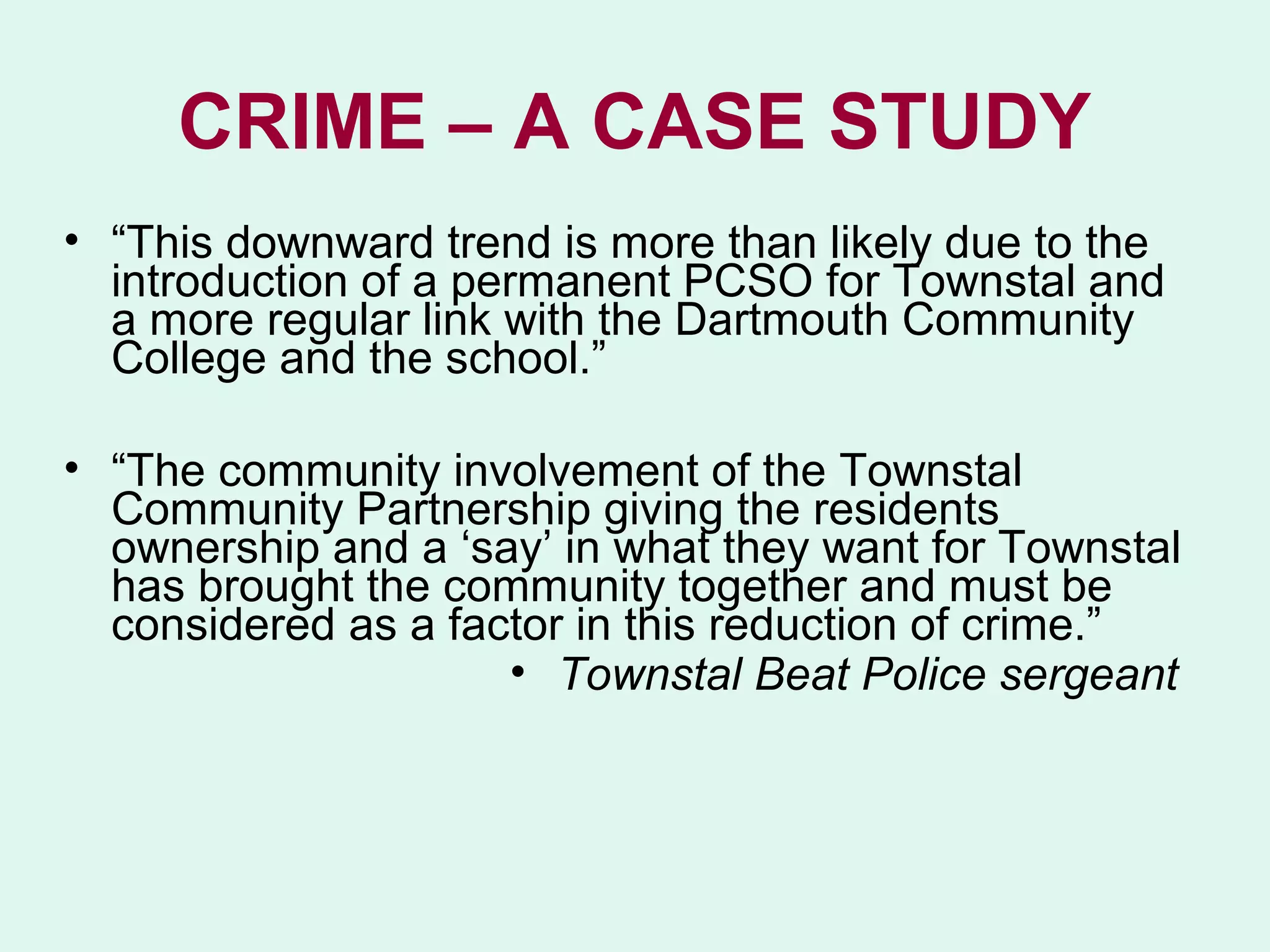
CRIME – A CASE STUDY
• “This downward trend is more than likely due to the
  introduction of a permanent PCSO for Townstal and
  a more regular link with the Dartmouth Community
  College and the school.”

• “The community involvement of the Townstal
  Community Partnership giving the residents
  ownership and a ‘say’ in what they want for Townstal
  has brought the community together and must be
  considered as a factor in this reduction of crime.”
                     • Townstal Beat Police sergeant
SOCIAL RETURN ON
             INVESTMENT
• With modest gains on the eight indicators, the model
  posits a saving of £559,000 over three years in a
  neighbourhood of 5,000 people, for an investment of
  £145,000: a return of 1:3.8
• For £233,655 invested across four authorities the social
  return was £3.5 million.
• For every £1 a local authority invests, £15 of value is
  created.
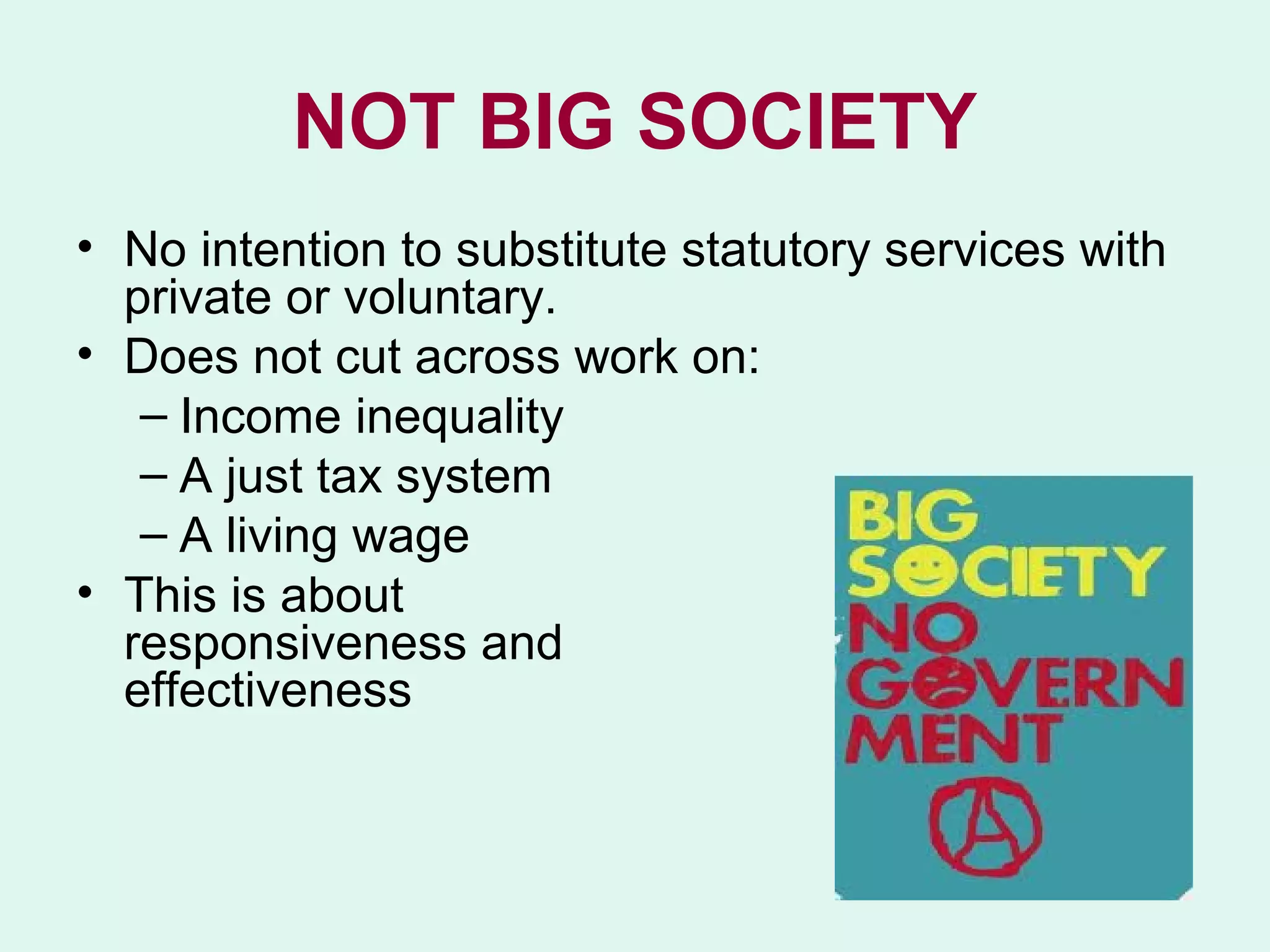
NOT BIG SOCIETY
• No intention to substitute statutory services with
  private or voluntary.
• Does not cut across work on:
   – Income inequality
   – A just tax system
   – A living wage
• This is about
  responsiveness and
  effectiveness
AN OPPORTUNITY
• A new approach to improving population
  health
• Wraps around primary care
• Links LAs and primary care
• Challenges the balance of power
• A number of models to choose from
  – HELP
  – Altogether Better
  – Turning Point
It has transformed the way we practice medicine. It has
stopped us seeing our patients as if we were just service
providers to people who are ‘needy’.

We now recognise that they can contribute, and when you
see people light up when you ask them to do so, it changes
your relationship with them.

The culture has changed. The relationships are different,
deeper and more therapeutic than they are in the usual
doctor’s office.

Dr Abby Letcher
www.healthempowerment.co.uk

Community Development and Health

  • 1.
    Shrinking the state + Austerity Threat to Increasing community inequality life A crisis in democratic accountability
  • 2.
    Communities, power and health Brian Fisher MBE Chair of the Socialist health Association
  • 3.
    RESILIENCE UNDER PRESSURE •Hollowed out communities • Threat to mental health • Attenuation of social networks • Weakening of associational life • Deterioration in health
  • 4.
  • 6.
  • 7.
    ASSET-BASED COMMUNITY DEVELOPMENT • Statutory services become more responsive • Promotes health protection and community resilience • Helps tackle health inequalities • Has an impact on behaviour change • Saves money
  • 8.
    Stronger and CD deeper Social Networks RESILIENCE ENHANCED CONTROL Health protection Can negotiate with services Resilience to economic More strength for self-care adversity Health inequalities reduce Better mental health
  • 9.
    OUTCOMES – HEALTH 6-Month Survival after Heart Attack, by Level of Emotional Support 70 Sources of support 60 50 0 Percent died 40 1 30 2 or more 20 10 0 Men Women
  • 10.
    SOCIAL NETWORKS REDUCE MORTALITY RISK • 50 % increased likelihood of survival for people with stronger social relationships • Comparable with risks such as smoking, alcohol, BMI and physical activity. • Consistent across age, sex, cause of death. • 2010 meta-analysis of data [1] across 308,849 individuals, followed for an average of 7.5 years 1] Social relationships and mortality risk: a meta-analytic review. Holt-Lunstadt, Smith, Bradley Layton.Plos Medicine July 2010, Vol 7, Issue 7. www.plosmedicine.org doi:10.1371/journal.pmed.1000316
  • 12.
    A RESIDENT-LED PARTNERSHIP LED BY RESIDENTS THEIR EXPERIENCE DRIVES CHANGE FORMAL STRUCTURES MAY BE NEEDED A CORE REACHES OUT
  • 13.
    OUTCOMES - RESPONSIVE SERVICES • Services begin to change within 6 months • Affects many sectors simultaneously (health, police, education) • Communities gain confidence and leaders emerge • Staff enjoy their jobs more
  • 14.
    RESPONSIVE SERVICES • Anew dental service established • Funding of £95k to transform a derelict area into a playpark awarded • A new GP surgery planned • Well attended social events and football sessions • Relations with the housing department improved and tenants more satisfied. • Summer holiday activities for all ages • A cooperative plan for social renewal agreed between the community and public agencies
  • 15.
  • 18.
    CRIME – ACASE STUDY • “This downward trend is more than likely due to the introduction of a permanent PCSO for Townstal and a more regular link with the Dartmouth Community College and the school.” • “The community involvement of the Townstal Community Partnership giving the residents ownership and a ‘say’ in what they want for Townstal has brought the community together and must be considered as a factor in this reduction of crime.” • Townstal Beat Police sergeant
  • 19.
    SOCIAL RETURN ON INVESTMENT • With modest gains on the eight indicators, the model posits a saving of £559,000 over three years in a neighbourhood of 5,000 people, for an investment of £145,000: a return of 1:3.8 • For £233,655 invested across four authorities the social return was £3.5 million. • For every £1 a local authority invests, £15 of value is created.
  • 20.
    NOT BIG SOCIETY •No intention to substitute statutory services with private or voluntary. • Does not cut across work on: – Income inequality – A just tax system – A living wage • This is about responsiveness and effectiveness
  • 21.
    AN OPPORTUNITY • Anew approach to improving population health • Wraps around primary care • Links LAs and primary care • Challenges the balance of power • A number of models to choose from – HELP – Altogether Better – Turning Point
  • 22.
    It has transformedthe way we practice medicine. It has stopped us seeing our patients as if we were just service providers to people who are ‘needy’. We now recognise that they can contribute, and when you see people light up when you ask them to do so, it changes your relationship with them. The culture has changed. The relationships are different, deeper and more therapeutic than they are in the usual doctor’s office. Dr Abby Letcher
  • 23.

Editor's Notes

  • #24 Welcome to HELP presentation will explain ¥ what HELP is ¥ who we are ¥ how we work ¥ our impact