Community Based Education (CBE)
vCBE is a means of achieving educational relevance to
community needs.
vIt consists of learning activities that uses the
community extensively as a learning environment.
vStudents, teacher, members of the community and
representatives of other sectors are actively and
continuously engaged in the CBE exercises.
vThe recognition of the importance of community
based training as Community development problem-
solving mechanism was documented since 1940s
(Trostle, 1986; WHO, 1987).
• CBE evolved from the field of community
development that grew in the industrialization
model of the mid-1900.
• The best substitute for the word “development,”
are terms that are more supportive of process
concepts such as advancement; betterment;
capacity building; empowerment; and nurturing,
hence, community development is shortly
defined as “the capacity of people to work
collectively in addressing their common interests
(Maser, 1997).
Objectives of CBE
• Produce competent professionals who are responsive
to the felt needs of the community through
development approach and contribute to improve the
livelihood of society by involving the community and
stakeholders in community development.
• Produce professionals who are socially accountable
and ensure lifelong learning in the community through
integrating training, research and services in the
community
Specific objective
Ø Produce competent professionals who are responsive to the
felt needs of society
Ø Redirect the learning approach into participatory, team
learning by taking into
Ø account the development needs of the community
Ø Ensure participatory development by involving the
community in the problem identification and solving process.
Ø Empower the community to address their development
needs within local resources and ensure sustainability of the
development projects.
vWork with government and non- government
organization and contribute in
vimproving the livelihood of the community
v Promote development through multidisciplinary and
team approach
vUndertake community based research to identify and
solve development problems.
v Initiate, participate in local, national and
international training research and development
services.
Components of the strategies of CBE
vIn order to realize the educational philosophy of CBE,
the university has developed three strategies.
vThese are: Community Based Education Program
(CBTP), Team Training Program (TTP),
Development Team Training Program (DTTP),
and Student Research Program (SRP)
v CBTP is one of the components of CBE.
v The number of CBTP phases in medical laboratory program has
two phase.
v As part of CBE activity students are given orientation before they
are assigned to the community.
v The orientation focuses on creation of awareness of students
with norms and cultures of the community.
v The students are also oriented on techniques of instrument
development, data collection and culture of team work.
v The CBE activity has field work and desk work.
v The CBE activity involves community selection, getting the list of
households, sampling of the respondents and collection of data
vThe data is analyzed, documented and presented
which is a part of desk work.
vThe same group of students will be assigned to the
same locality in the subsequent years, this ensures
knowing the real problems of the locality and lead into
making difference in the community through working
vtogether with the community and other stake holders
involve in community development for extended
period. Colleges are the main drivers of CBTP
implementation.
vThere are also resources shared among colleges.
vTherefore, proper planning is crucial to implement
CBTP and bring benefit to all stakeholders
Orientation of supervisors and students in CBTP
vAt each phase of CBTP before departing to the
particular community of their assignment a one day
orientation will be given to students and supervisors.
Four years programs
vThree year program will run two CBTP phases.
vThe students taking the first phase of CBTP will focus on
understanding the environment which is geared towards
collecting base line information and documentation of
the base line information which will serve to run the
second phase of CBTP.
vThe CBTP involves group formation (10-15 students),
assign two supervisors, provide orientation on how to
work in community, development of instrument,
provision of logistics, selection of the community,
collection of data, program evaluation, documentation
and presentation of the CBTP activity.
CBTP I:
v Baseline data collection and situation analyses:
v The students will develop data collection
v Collecting demographic data, mapping and zoning of the
community
v Study socio-economic characteristics of the community
v Collect secondary data on climatic and geographic characteristics
v Collect data on cultural aspects of the community
v Collect data on the resource endowed by the community
v Constraint analyses for respective disciplines (ranking of problems
v Report writing, documentation and presentation in symposium
Duties and responsibilities of individual
students during CBE activities
üShould be disciplined while evolved in CBE activities
ü Be punctual for the day to day activity
üShould discharge individual and group tasks
assigned to him/her
üShould actively participate in group meetings
üShould participate in implementation and
evaluation activities
üShould participate in all CBE activities and report
writing
üShould do all other tasks assigned to him/her by
the group team leader
Job description of student team leader
üThe Student team leader is selected by the
students and will have the following job
description:
§ She/he is directly responsible to supervisory team leader
§ Organize, lead and play a role model to other students
§ Take attendances in every day activity
§ Assign specific and individual tasks to members
§ Leads team student members meetings
§ Participate in evaluation of the students
§ Makes sure all necessary materials to be used in the
program is available before hand
§ Participate in all CBE activities and produce reports
Job description of student team
reporter
vThe reporter of the student team is selected by the
students democratically and will have the following job
descriptions:
§ He/ she is directly responsible to students team leader
§ Organize the students in the write-up process of the team
report.
§ Compiles findings and job accomplished by the team in the
symposium.
§ Assist the student team leader in leading and organizing
activities
§ Represent the student team leader during his absence.
§ Present the findings of the study during CBTP symposium
Job description of student team logistic
personnel
v One student team will have a logistic personnel.
v The students elect these personnel democratically.
v The students’ logistic personnel(s) will have the following tasks:
vTake responsibilities to receive and distribute
stationeries and other materials
%
peer Evaluation 5
Supervisor 25
Community Leader 10
Written Exam 20
Final Report 20
Presentation and Discussion 20 20
Total 100%
Students deployed for CBTP program will be
continuously evaluated by supervisors, peers, and
community leaders.
Student evaluation when deployed to program
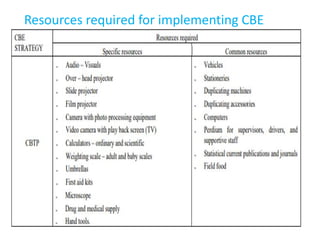
Resources required for implementing CBE
Community Based Education (CBE).pdf

Community Based Education (CBE).pdf

  • 1.
    Community Based Education(CBE) vCBE is a means of achieving educational relevance to community needs. vIt consists of learning activities that uses the community extensively as a learning environment. vStudents, teacher, members of the community and representatives of other sectors are actively and continuously engaged in the CBE exercises. vThe recognition of the importance of community based training as Community development problem- solving mechanism was documented since 1940s (Trostle, 1986; WHO, 1987).
  • 2.
    • CBE evolvedfrom the field of community development that grew in the industrialization model of the mid-1900. • The best substitute for the word “development,” are terms that are more supportive of process concepts such as advancement; betterment; capacity building; empowerment; and nurturing, hence, community development is shortly defined as “the capacity of people to work collectively in addressing their common interests (Maser, 1997).
  • 3.
    Objectives of CBE •Produce competent professionals who are responsive to the felt needs of the community through development approach and contribute to improve the livelihood of society by involving the community and stakeholders in community development. • Produce professionals who are socially accountable and ensure lifelong learning in the community through integrating training, research and services in the community
  • 4.
    Specific objective Ø Producecompetent professionals who are responsive to the felt needs of society Ø Redirect the learning approach into participatory, team learning by taking into Ø account the development needs of the community Ø Ensure participatory development by involving the community in the problem identification and solving process. Ø Empower the community to address their development needs within local resources and ensure sustainability of the development projects.
  • 5.
    vWork with governmentand non- government organization and contribute in vimproving the livelihood of the community v Promote development through multidisciplinary and team approach vUndertake community based research to identify and solve development problems. v Initiate, participate in local, national and international training research and development services.
  • 6.
    Components of thestrategies of CBE vIn order to realize the educational philosophy of CBE, the university has developed three strategies. vThese are: Community Based Education Program (CBTP), Team Training Program (TTP), Development Team Training Program (DTTP), and Student Research Program (SRP)
  • 7.
    v CBTP isone of the components of CBE. v The number of CBTP phases in medical laboratory program has two phase. v As part of CBE activity students are given orientation before they are assigned to the community. v The orientation focuses on creation of awareness of students with norms and cultures of the community. v The students are also oriented on techniques of instrument development, data collection and culture of team work. v The CBE activity has field work and desk work. v The CBE activity involves community selection, getting the list of households, sampling of the respondents and collection of data
  • 8.
    vThe data isanalyzed, documented and presented which is a part of desk work. vThe same group of students will be assigned to the same locality in the subsequent years, this ensures knowing the real problems of the locality and lead into making difference in the community through working vtogether with the community and other stake holders involve in community development for extended period. Colleges are the main drivers of CBTP implementation. vThere are also resources shared among colleges. vTherefore, proper planning is crucial to implement CBTP and bring benefit to all stakeholders
  • 9.
    Orientation of supervisorsand students in CBTP vAt each phase of CBTP before departing to the particular community of their assignment a one day orientation will be given to students and supervisors.
  • 10.
    Four years programs vThreeyear program will run two CBTP phases. vThe students taking the first phase of CBTP will focus on understanding the environment which is geared towards collecting base line information and documentation of the base line information which will serve to run the second phase of CBTP. vThe CBTP involves group formation (10-15 students), assign two supervisors, provide orientation on how to work in community, development of instrument, provision of logistics, selection of the community, collection of data, program evaluation, documentation and presentation of the CBTP activity.
  • 11.
    CBTP I: v Baselinedata collection and situation analyses: v The students will develop data collection v Collecting demographic data, mapping and zoning of the community v Study socio-economic characteristics of the community v Collect secondary data on climatic and geographic characteristics v Collect data on cultural aspects of the community v Collect data on the resource endowed by the community v Constraint analyses for respective disciplines (ranking of problems v Report writing, documentation and presentation in symposium
  • 12.
    Duties and responsibilitiesof individual students during CBE activities üShould be disciplined while evolved in CBE activities ü Be punctual for the day to day activity üShould discharge individual and group tasks assigned to him/her üShould actively participate in group meetings üShould participate in implementation and evaluation activities üShould participate in all CBE activities and report writing üShould do all other tasks assigned to him/her by the group team leader
  • 13.
    Job description ofstudent team leader üThe Student team leader is selected by the students and will have the following job description: § She/he is directly responsible to supervisory team leader § Organize, lead and play a role model to other students § Take attendances in every day activity § Assign specific and individual tasks to members § Leads team student members meetings § Participate in evaluation of the students § Makes sure all necessary materials to be used in the program is available before hand § Participate in all CBE activities and produce reports
  • 14.
    Job description ofstudent team reporter vThe reporter of the student team is selected by the students democratically and will have the following job descriptions: § He/ she is directly responsible to students team leader § Organize the students in the write-up process of the team report. § Compiles findings and job accomplished by the team in the symposium. § Assist the student team leader in leading and organizing activities § Represent the student team leader during his absence. § Present the findings of the study during CBTP symposium
  • 15.
    Job description ofstudent team logistic personnel v One student team will have a logistic personnel. v The students elect these personnel democratically. v The students’ logistic personnel(s) will have the following tasks: vTake responsibilities to receive and distribute stationeries and other materials
  • 16.
    % peer Evaluation 5 Supervisor25 Community Leader 10 Written Exam 20 Final Report 20 Presentation and Discussion 20 20 Total 100% Students deployed for CBTP program will be continuously evaluated by supervisors, peers, and community leaders. Student evaluation when deployed to program
  • 17.
    Resources required forimplementing CBE