Communication
for research
Mak Dukan and Hedviga Blazincic, Starfish Energy
The challenge statement
Most EU funded research projects should
substantially improve their communication &
dissemination activities and reach wider target
audiences
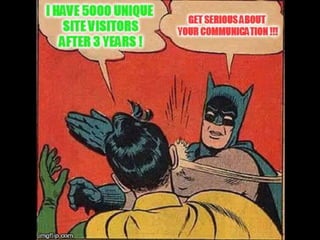
Typical situation after 3 years
 50 to 100 Twitter/Facebook followers
 LinkedIn Groups composed only of consortium members
 highly ambitious communication and dissemination plan but no
execution
 unprofessional logos and graphic design
 inability to report correctly on project impact: number of people
reached
 web pages rank badly in Google – on pages 10+
 after 3 years the projects have around 10.000 unique site visitor's –
in comparison good blogs receive about 15.000 per month
Is this also the case with your
projects?
The solutions to better online
visibility and project
communication
Step 1: Set up SEO basics
(system engine optimization)
Think of your target audience when writing the web site text > use
common keywords to increase visibility on Google
Example: use “renewable energy sources” instead of “RES”
Make sure to instruct the partners to use these specific keywords in all
documents that will be uploaded online
Example: “renewable energy aggregators” and not “aggregators
of renewable energy sources”
Name your meta title and meta description so that Google can find your
web page more easily – use common search terms
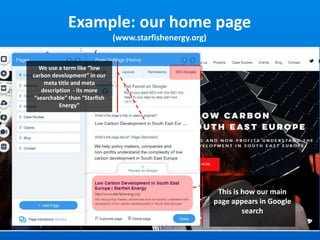
Example: our home page
(www.starfishenergy.org)
We use a term like “low
carbon development” in our
meta title and meta
description - its more
“searchable” than “Starfish
Energy”
This is how our main
page appears in Google
search
Step 2: Create great content
Instead of just publishing complex reports, write blogs that present the
topic in a simple way – allocate hours in proposal writing stage
Example: in M6 a report on Renewable energy aggregators is
due. Arrange that the authors write a simple blog that can be
shared on social media and give it an attractive name “How
renewable energy aggregators are accelerating the energy
transition?”
Arrange video interviews with main researchers and decision makers
during workshops – videos receive more views
Example: a top researcher from University X explains in simple
terms what renewable energy aggregators are – use humor and
be yourself
Allocate budget in proposal writing to create attractive charts using tools
like Piktochart (www.piktochart.com)
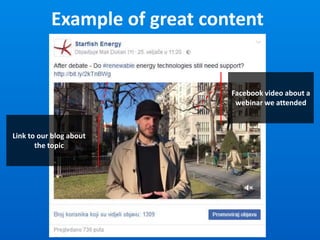
Example of great content
Facebook video about a
webinar we attended
Link to our blog about
the topic
Step 3: Use social media … a lot !
Social media like Facebook, Twitter, Youtube, LinkedIn spread your
message to larger audiences and with small budget
Example: using Facebook Ads to reach bigger audiences when
publishing the project video, or a major report. This can be
targeted to very specific groups. For budget of 5 EUR a reach of
20.000 people is possible
Create LinkedIn groups that are named as terms that people use when
looking online for the topic, instead of the project name itself. In this way
you attract audiences that will stay with you in the future and that are
interested in the topic and not just the project
Example: use “Renewable energy aggregators” instead of
BESTRES (a project name dealing with the topic)
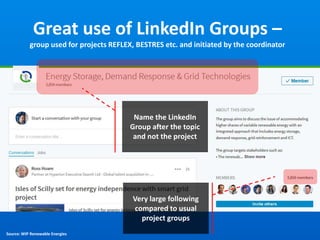
Great use of LinkedIn Groups –
group used for projects REFLEX, BESTRES etc. and initiated by the coordinator
Name the LinkedIn
Group after the topic
and not the project
Source: WIP Renewable Energies
Very large following
compared to usual
project groups
Step 4: Leverage the social media
capital of the consortium
The communication partner is not alone – there are other partners in the
consortium with large following on social media platforms. Instead of
relying on its own social media, the communication partner can reach out
to project partners and ask for help in spreading project news etc.
Example: in PV SITES project the coordinator (WIP Renewable
Energies) has only 150 Twitter followers but its partner Onxy has
14.000 so it makes sense to ask for “re-tweets” when needed
Plan more hours than usual of the partners for communication activities so
they can justify the “extra” input into managing the social media
Step 5: Track your progress
Use tools like Google Analytics to track the effects of putting out great
content and then learn what receives better response. Maybe your
audience likes videos more than blogs.
Connect your project web page to Google Console to learn how well your
page ranks, what terms are people using to find your web page etc.
Track the impact of social media through Nuvi.com
! These tools are very helpful for project reporting purposes !
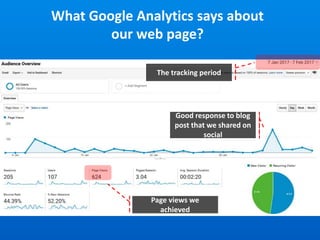
What Google Analytics says about
our web page?
The tracking period
Good response to blog
post that we shared on
social
Page views we
achieved
Interested in having learning
more about communication for
research projects?
Mak Dukan
Email: mak.dukan@gmail.com

Communication for research

  • 1.
    Communication for research Mak Dukanand Hedviga Blazincic, Starfish Energy
  • 2.
    The challenge statement MostEU funded research projects should substantially improve their communication & dissemination activities and reach wider target audiences
  • 3.
    Typical situation after3 years  50 to 100 Twitter/Facebook followers  LinkedIn Groups composed only of consortium members  highly ambitious communication and dissemination plan but no execution  unprofessional logos and graphic design  inability to report correctly on project impact: number of people reached  web pages rank badly in Google – on pages 10+  after 3 years the projects have around 10.000 unique site visitor's – in comparison good blogs receive about 15.000 per month
  • 4.
    Is this alsothe case with your projects?
  • 6.
    The solutions tobetter online visibility and project communication
  • 7.
    Step 1: Setup SEO basics (system engine optimization) Think of your target audience when writing the web site text > use common keywords to increase visibility on Google Example: use “renewable energy sources” instead of “RES” Make sure to instruct the partners to use these specific keywords in all documents that will be uploaded online Example: “renewable energy aggregators” and not “aggregators of renewable energy sources” Name your meta title and meta description so that Google can find your web page more easily – use common search terms
  • 8.
    Example: our homepage (www.starfishenergy.org) We use a term like “low carbon development” in our meta title and meta description - its more “searchable” than “Starfish Energy” This is how our main page appears in Google search
  • 9.
    Step 2: Creategreat content Instead of just publishing complex reports, write blogs that present the topic in a simple way – allocate hours in proposal writing stage Example: in M6 a report on Renewable energy aggregators is due. Arrange that the authors write a simple blog that can be shared on social media and give it an attractive name “How renewable energy aggregators are accelerating the energy transition?” Arrange video interviews with main researchers and decision makers during workshops – videos receive more views Example: a top researcher from University X explains in simple terms what renewable energy aggregators are – use humor and be yourself Allocate budget in proposal writing to create attractive charts using tools like Piktochart (www.piktochart.com)
  • 10.
    Example of greatcontent Facebook video about a webinar we attended Link to our blog about the topic
  • 11.
    Step 3: Usesocial media … a lot ! Social media like Facebook, Twitter, Youtube, LinkedIn spread your message to larger audiences and with small budget Example: using Facebook Ads to reach bigger audiences when publishing the project video, or a major report. This can be targeted to very specific groups. For budget of 5 EUR a reach of 20.000 people is possible Create LinkedIn groups that are named as terms that people use when looking online for the topic, instead of the project name itself. In this way you attract audiences that will stay with you in the future and that are interested in the topic and not just the project Example: use “Renewable energy aggregators” instead of BESTRES (a project name dealing with the topic)
  • 12.
    Great use ofLinkedIn Groups – group used for projects REFLEX, BESTRES etc. and initiated by the coordinator Name the LinkedIn Group after the topic and not the project Source: WIP Renewable Energies Very large following compared to usual project groups
  • 13.
    Step 4: Leveragethe social media capital of the consortium The communication partner is not alone – there are other partners in the consortium with large following on social media platforms. Instead of relying on its own social media, the communication partner can reach out to project partners and ask for help in spreading project news etc. Example: in PV SITES project the coordinator (WIP Renewable Energies) has only 150 Twitter followers but its partner Onxy has 14.000 so it makes sense to ask for “re-tweets” when needed Plan more hours than usual of the partners for communication activities so they can justify the “extra” input into managing the social media
  • 14.
    Step 5: Trackyour progress Use tools like Google Analytics to track the effects of putting out great content and then learn what receives better response. Maybe your audience likes videos more than blogs. Connect your project web page to Google Console to learn how well your page ranks, what terms are people using to find your web page etc. Track the impact of social media through Nuvi.com ! These tools are very helpful for project reporting purposes !
  • 15.
    What Google Analyticssays about our web page? The tracking period Good response to blog post that we shared on social Page views we achieved
  • 16.
    Interested in havinglearning more about communication for research projects? Mak Dukan Email: mak.dukan@gmail.com