Common Online
Terminologies
Jenina Alba
Bachelor of Secondary Education
University of Santo Tomas
Email
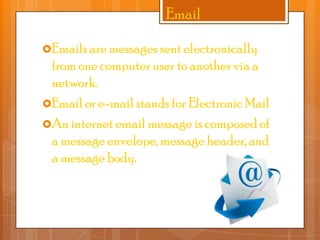
Emails are messages sent electronically

from one computer user to another via a
network.
Email or e-mail stands for Electronic Mail
An internet email message is composed of
a message envelope, message header, and
a message body.
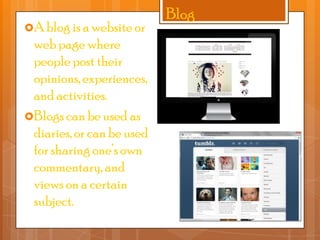
A blog is a website or

web page where
people post their
opinions, experiences,
and activities.
Blogs can be used as
diaries, or can be used
for sharing one’s own
commentary, and
views on a certain
subject.

Blog
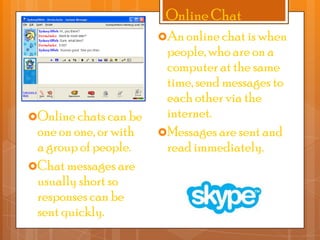
Online Chat
An online chat is when

Online chats can be

one on one, or with
a group of people.
Chat messages are
usually short so
responses can be
sent quickly.

people, who are on a
computer at the same
time, send messages to
each other via the
internet.
Messages are sent and
read immediately.
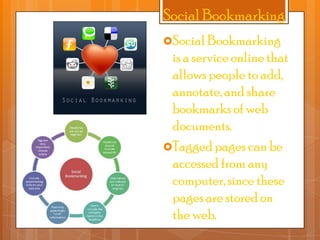
Social Bookmarking
Social Bookmarking

is a service online that
allows people to add,
annotate, and share
bookmarks of web
documents.
Tagged pages can be
accessed from any
computer, since these
pages are stored on
the web.
URL stands for

Uniform Resource
Locator.
It is a formatted text
string used to identify
a reference or
resource on the
internet.

URL

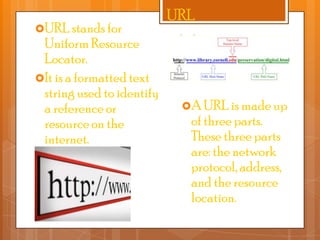
A URL is made up

of three parts.
These three parts
are: the network
protocol, address,
and the resource
location.
Streaming
Streaming is a method of relaying data on a

computer as a stream continuously.
Live streaming is media delivered live over the
internet.
Podcast

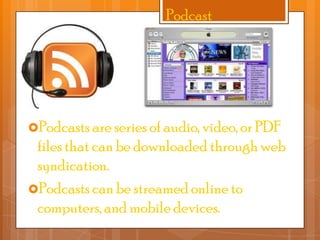
Podcasts are series of audio, video, or PDF

files that can be downloaded through web
syndication.
Podcasts can be streamed online to
computers, and mobile devices.
VoIP
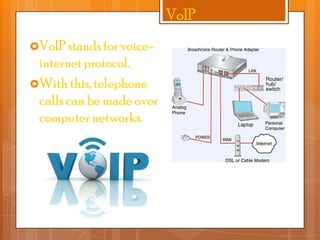
VoIP stands for voice-

internet protocol.
With this, telephone
calls can be made over
computer networks.
Wiki
A wiki is a website

where people can
edit content in
collaboration with
other people.
Social Networking
Social Networking

are websites and
applications where
people can
communicate with
each other
informally.
WWW
 WWW stands for

World Wide Web
 The World Wide
Web refers to all of
the resources and
users using the
Hypertext Transfer
Protocol (HTTP)
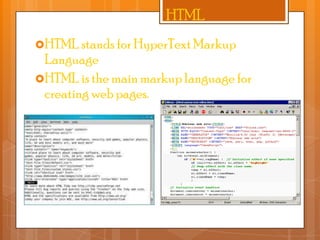
HTML
HTML stands for HyperText Markup

Language
HTML is the main markup language for
creating web pages.
Web Feed
A web feed is a

data format used
for providing users
with content that is
updated
frequently.
References
 http://compnetworking.about.com/cs/voicefaxoveri

p/g/bldef_voip.htm
 http://searchsoa.techtarget.com/definition/wiki
 http://searchsoa.techtarget.com/definition/chatting
 http://searchcio.techtarget.com/definition/socialnetwork
 http://searchcrm.techtarget.com/definition/WorldWide-Web
 http://whatis.techtarget.com/definition/streamingmedia-receiver
 http://compnetworking.about.com/od/internetacce
ssbestuses/g/bldef-url.htm

Common Online Terminologies

  • 1.
    Common Online Terminologies Jenina Alba Bachelorof Secondary Education University of Santo Tomas
  • 2.
    Email Emails are messagessent electronically from one computer user to another via a network. Email or e-mail stands for Electronic Mail An internet email message is composed of a message envelope, message header, and a message body.
  • 3.
    A blog isa website or web page where people post their opinions, experiences, and activities. Blogs can be used as diaries, or can be used for sharing one’s own commentary, and views on a certain subject. Blog
  • 4.
    Online Chat An onlinechat is when Online chats can be one on one, or with a group of people. Chat messages are usually short so responses can be sent quickly. people, who are on a computer at the same time, send messages to each other via the internet. Messages are sent and read immediately.
  • 5.
    Social Bookmarking Social Bookmarking isa service online that allows people to add, annotate, and share bookmarks of web documents. Tagged pages can be accessed from any computer, since these pages are stored on the web.
  • 6.
    URL stands for UniformResource Locator. It is a formatted text string used to identify a reference or resource on the internet. URL A URL is made up of three parts. These three parts are: the network protocol, address, and the resource location.
  • 7.
    Streaming Streaming is amethod of relaying data on a computer as a stream continuously. Live streaming is media delivered live over the internet.
  • 8.
    Podcast Podcasts are seriesof audio, video, or PDF files that can be downloaded through web syndication. Podcasts can be streamed online to computers, and mobile devices.
  • 9.
    VoIP VoIP stands forvoice- internet protocol. With this, telephone calls can be made over computer networks.
  • 10.
    Wiki A wiki isa website where people can edit content in collaboration with other people.
  • 11.
    Social Networking Social Networking arewebsites and applications where people can communicate with each other informally.
  • 12.
    WWW  WWW standsfor World Wide Web  The World Wide Web refers to all of the resources and users using the Hypertext Transfer Protocol (HTTP)
  • 13.
    HTML HTML stands forHyperText Markup Language HTML is the main markup language for creating web pages.
  • 14.
    Web Feed A webfeed is a data format used for providing users with content that is updated frequently.
  • 15.
    References  http://compnetworking.about.com/cs/voicefaxoveri p/g/bldef_voip.htm  http://searchsoa.techtarget.com/definition/wiki http://searchsoa.techtarget.com/definition/chatting  http://searchcio.techtarget.com/definition/socialnetwork  http://searchcrm.techtarget.com/definition/WorldWide-Web  http://whatis.techtarget.com/definition/streamingmedia-receiver  http://compnetworking.about.com/od/internetacce ssbestuses/g/bldef-url.htm