COMBUSTIBLE DUST
COMPLIANCE
A V O I D I N G C O M M O N P I T F A L L S
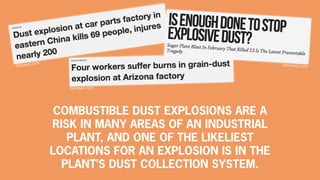
COMBUSTIBLE DUST EXPLOSIONS ARE A
RISK IN MANY AREAS OF AN INDUSTRIAL
PLANT, AND ONE OF THE LIKELIEST
LOCATIONS FOR AN EXPLOSION IS IN THE
PLANT’S DUST COLLECTION SYSTEM.
foxnews.com
foxnews.com
cbsnews.com
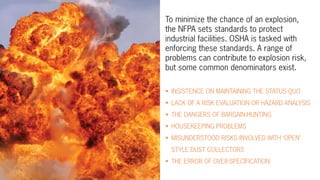
To minimize the chance of an explosion,
the NFPA sets standards to protect
industrial facilities. OSHA is tasked with
enforcing these standards. A range of
problems can contribute to explosion risk,
but some common denominators exist.
•	 INSISTENCE ON MAINTAINING THE STATUS QUO
•	 LACK OF A RISK EVALUATION OR HAZARD ANALYSIS
•	 THE DANGERS OF BARGAIN-HUNTING
•	 HOUSEKEEPING PROBLEMS
•	 MISUNDERSTOOD RISKS INVOLVED WITH ‘OPEN’
STYLE DUST COLLECTORS
•	 THE ERROR OF OVER-SPECIFICATION
INSISTENCE ON
MAINTAINING THE
STATUS QUO
“I’ve worked here for 30 years and we’ve
never had a problem,” is a frequently heard
refrain. This mindset stems in part from a
common misconception that the dust is not
explosive because the facility has not had
an explosion – when, in fact, the opposite
may be true. In some cases, it may take
many years for dust to accumulate to
explosive levels.
LACK OF A RISK
EVALUATION OR
HAZARD ANALYSIS
Failure to conduct a hazard analysis is
an all-to-common oversight. The NFPA
states that a hazard analysis is needed
to assess risk and determine the required
level of fire and explosion protection. The
analysis can be conducted internally or
by an independent consultant, but either
way, the authority having jurisdiction
will ultimately review and approve the
findings.
THE DANGERS OF BARGAIN-HUNTING
Every EHS manager is acquainted
with the benefits of basing
purchasing decisions on life-cycle
cost – sometimes called “total
cost of ownership” – over choosing
equipment with the lowest price tag.
A dust collection is no exception. A
well-designed dust collection system
can pay for itself rapidly in energy
and maintenance savings, costing far
less to operate than a unit with a low
initial price.
Documented both in full-scale
testing and field experience, in the
event that a dust explosion occurs
in the collector, a “bargain” model
will more than likely require total
replacement. However, a collector
made of thicker-guage metal with
higher vessel strength will survive
an explosion and often can continue
in service with only the explosion
vent and filter cartridges needing to
be replaced.
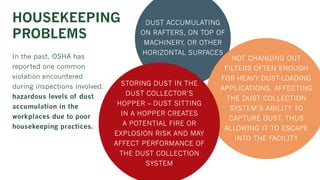
HOUSEKEEPING
PROBLEMS
In the past, OSHA has
reported one common
violation encountered
during inspections involved:
hazardous levels of dust
accumulation in the
workplaces due to poor
housekeeping practices.
DUST ACCUMULATING
ON RAFTERS, ON TOP OF
MACHINERY, OR OTHER
HORIZONTAL SURFACES
NOT CHANGING OUT
FILTERS OFTEN ENOUGH
FOR HEAVY DUST-LOADING
APPLICATIONS, AFFECTING
THE DUST COLLECTION
SYSTEM’S ABILITY TO
CAPTURE DUST, THUS
ALLOWING IT TO ESCAPE
INTO THE FACILITY
STORING DUST IN THE
DUST COLLECTOR’S
HOPPER – DUST SITTING
IN A HOPPER CREATES
A POTENTIAL FIRE OR
EXPLOSION RISK AND MAY
AFFECT PERFORMANCE OF
THE DUST COLLECTION
SYSTEM
MISUNDERSTANDING RISKS INVOLVED
WITH ‘OPEN’ STYLE DUST COLLECTORS
There is a misconception that open
type dust collection systems, such
as those incorporated into bag-
dump stations, downdraft tables and
booths, are not a hazard. While these
collectors differ from traditional dust
collectors, at least four of the five
ingredients of the explosion pentagon
may still be present: combustible
dust, an ignition source, oxygen and
dispersion of the dust in sufficient
concentration to pose a hazard.
THE ERROR OF OVER-SPECIFICATION
Sometimes safety engineers err on the side of doing
too much – the error of over-engineering or over-
specification, which results in explosion protection
solutions that may be needlessly expensive and time
consuming to maintain and monitor.
COMBUSTIBLE DUST
D O W N L O A D F U L L A R T I C L E
www.farrapc.com/articles/combustible-dust-
compliance-avoiding-common-pitfalls/

Combustible Dust Compliance: Avoiding Common Pitfalls

  • 1.
    COMBUSTIBLE DUST COMPLIANCE A VO I D I N G C O M M O N P I T F A L L S
  • 2.
    COMBUSTIBLE DUST EXPLOSIONSARE A RISK IN MANY AREAS OF AN INDUSTRIAL PLANT, AND ONE OF THE LIKELIEST LOCATIONS FOR AN EXPLOSION IS IN THE PLANT’S DUST COLLECTION SYSTEM. foxnews.com foxnews.com cbsnews.com
  • 3.
    To minimize thechance of an explosion, the NFPA sets standards to protect industrial facilities. OSHA is tasked with enforcing these standards. A range of problems can contribute to explosion risk, but some common denominators exist. • INSISTENCE ON MAINTAINING THE STATUS QUO • LACK OF A RISK EVALUATION OR HAZARD ANALYSIS • THE DANGERS OF BARGAIN-HUNTING • HOUSEKEEPING PROBLEMS • MISUNDERSTOOD RISKS INVOLVED WITH ‘OPEN’ STYLE DUST COLLECTORS • THE ERROR OF OVER-SPECIFICATION
  • 4.
    INSISTENCE ON MAINTAINING THE STATUSQUO “I’ve worked here for 30 years and we’ve never had a problem,” is a frequently heard refrain. This mindset stems in part from a common misconception that the dust is not explosive because the facility has not had an explosion – when, in fact, the opposite may be true. In some cases, it may take many years for dust to accumulate to explosive levels.
  • 5.
    LACK OF ARISK EVALUATION OR HAZARD ANALYSIS Failure to conduct a hazard analysis is an all-to-common oversight. The NFPA states that a hazard analysis is needed to assess risk and determine the required level of fire and explosion protection. The analysis can be conducted internally or by an independent consultant, but either way, the authority having jurisdiction will ultimately review and approve the findings.
  • 6.
    THE DANGERS OFBARGAIN-HUNTING Every EHS manager is acquainted with the benefits of basing purchasing decisions on life-cycle cost – sometimes called “total cost of ownership” – over choosing equipment with the lowest price tag. A dust collection is no exception. A well-designed dust collection system can pay for itself rapidly in energy and maintenance savings, costing far less to operate than a unit with a low initial price. Documented both in full-scale testing and field experience, in the event that a dust explosion occurs in the collector, a “bargain” model will more than likely require total replacement. However, a collector made of thicker-guage metal with higher vessel strength will survive an explosion and often can continue in service with only the explosion vent and filter cartridges needing to be replaced.
  • 7.
    HOUSEKEEPING PROBLEMS In the past,OSHA has reported one common violation encountered during inspections involved: hazardous levels of dust accumulation in the workplaces due to poor housekeeping practices. DUST ACCUMULATING ON RAFTERS, ON TOP OF MACHINERY, OR OTHER HORIZONTAL SURFACES NOT CHANGING OUT FILTERS OFTEN ENOUGH FOR HEAVY DUST-LOADING APPLICATIONS, AFFECTING THE DUST COLLECTION SYSTEM’S ABILITY TO CAPTURE DUST, THUS ALLOWING IT TO ESCAPE INTO THE FACILITY STORING DUST IN THE DUST COLLECTOR’S HOPPER – DUST SITTING IN A HOPPER CREATES A POTENTIAL FIRE OR EXPLOSION RISK AND MAY AFFECT PERFORMANCE OF THE DUST COLLECTION SYSTEM
  • 8.
    MISUNDERSTANDING RISKS INVOLVED WITH‘OPEN’ STYLE DUST COLLECTORS There is a misconception that open type dust collection systems, such as those incorporated into bag- dump stations, downdraft tables and booths, are not a hazard. While these collectors differ from traditional dust collectors, at least four of the five ingredients of the explosion pentagon may still be present: combustible dust, an ignition source, oxygen and dispersion of the dust in sufficient concentration to pose a hazard.
  • 9.
    THE ERROR OFOVER-SPECIFICATION Sometimes safety engineers err on the side of doing too much – the error of over-engineering or over- specification, which results in explosion protection solutions that may be needlessly expensive and time consuming to maintain and monitor.
  • 10.
    COMBUSTIBLE DUST D OW N L O A D F U L L A R T I C L E www.farrapc.com/articles/combustible-dust- compliance-avoiding-common-pitfalls/