The Color Theory
Prepared by:
Melvin N. Espineda, MDC
How colors play a
vital role in your life?
Colors (Understanding Colors,
n.d.)
• It is a component of light which is
separated when it is reflected off of an
object.
• It begins with light and the colors we
see are influenced by the
characteristics of the lightsource.
Properties to Consider in Colors
(Understanding Colors, n.d.)
• Hue;
• Value; and
• Saturation
Hue (Understanding Colors, n.d.)
• It is a name we give colors on the color
wheel (red, yellow, green, blue, and so on).
• It’s basically the technical definition of color
perception.
• It has a natural value where they look the
purest and some colors, like yellow, are
naturally light.
Value (Understanding Colors, n.d.)
• It is the light and dark property of a
color.
Saturation
(Understanding Colors, n.d.)
• A.K.A. “purity” is the level of grayness
present.
• The less saturated, the more gray a
color appears.
Camera Versus the Human Eye
(Understanding Colors, n.d.)
The sensor in a digital camera records
light as it actually is.
Your eye/brain, however, will always
correct light back to “normal” and our
brain is constantly compensating to
what it sees.
Camera Versus the Human Eye
(Understanding Colors, n.d.)
Fluorescent light contains only enough
green and yellow light to photos turn out
a bit “off” in color.
However, by using a magenta filter in
front of the lens, the overall lighting is
more natural and “warm”.
The Psychology of
Colors
The Psychology of Colors
(Rikard, 2015)
There is a large array of emotional
responses that are associated with
colors. Some of these are obvious, some
obscure.
The Psychology of Colors
(Rikard, 2015)
Some colors can have different
meanings, even opposing meanings,
based entirely on context and
application.
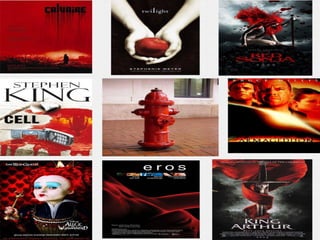
Red
(Rikard, 2015)
• It shows warmth, anger, crudity, excitement,
power, strength, love, passion, fire, blood,
extreme emotions, battle.
• Red is supposed to prompt impulse buying. It
has been used by the church to give the
feeling of pomp andcircumstance.
• In history it represents royalty, majesty and
triumph. Usually thought of as a violentand
exciting color.
Red: Emotional Response
(Rikard, 2015)
• It is a very emotionally intense color.
•It enhances human metabolism,
increases respiration rate, and raises
blood pressure.
• It has very high visibility, which is why
stop signs, stoplights, and fire
equipment are usually painted red.
• In heraldry, red is used to indicate
courage.
Green
(Rikard, 2015)
It presents the feeling of light and
coolness, cheer and restraint.
It is the color of nature as usuallyseen.
It alleviates tension and implies
restfulness.
Green: Emotional Response
(Rikard, 2015)
Supposedly, it has healing power.
It is the most restful color for the
human eye; it can improve vision.
It suggests stability and endurance.
Yellow
(Rikard, 2015)
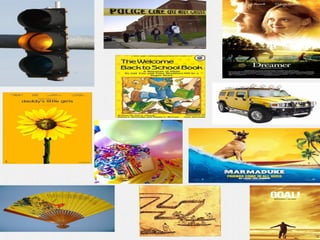
• It is connected with cheer and
springtime.
• Yellow claims attention first and
fastest and sits alongside red as
the most obvious and vibrant
color.
Yellow: Emotional Response
(Rikard, 2015)
• Yellow produces a warming effect,
arouses cheerfulness, stimulates
mental activity, and generates muscle
energy.
•Bright, pure yellow is an attention
getter, which is the reason taxicabs are
painted this color.
Blue
(Rikard, 2015)
• Blue is usually associated
with knowledge and
serenity.
• Coolness, ethereality, the
infinite, significance, repose,
formality.
• It has always been the symbol of truth,
Blue: Emotional Response
(Rikard, 2015)
• Blue is considered beneficial to the mind and
body.
• It slows human metabolism and produces a
calming effect.
• Blue is strongly associated with tranquility
and calmness.
• It is used to symbolize piety and sincerity.
Color vs. Black and
White
When to Use Color
(PhotographyVox, n.d.)
Color is a key element in the story your
photo is telling.
Color catches the eye. A bright hue that
highlights an image’s subject will draw a
viewer in right away.
When to Black and White
(PhotographyVox, n.d.)
Black and white is a good choice when
the color in a photo serves only as a
distraction from the message you want
the image to convey.
End of
Presentation
Any question?
References:
• Color vs black and white photography – What makes sense and
when? By PhotographyVox. (n.d.) Retrieved from
http://www.photographyvox.com/a/color-vs-black-and-white-
photography/
• Rikard. (2015). The Psychology of Color: A Designer’s Guide to
Color Association & Meaning. Retrieved from
https://zevendesign.com/color-association/
• Understanding Color in Photograph. (n.d.) Retrieved from
https://photographycourse.net/understanding-color-in-
photography/

Color Theory .pdf

  • 1.
    The Color Theory Preparedby: Melvin N. Espineda, MDC
  • 2.
    How colors playa vital role in your life?
  • 3.
    Colors (Understanding Colors, n.d.) •It is a component of light which is separated when it is reflected off of an object. • It begins with light and the colors we see are influenced by the characteristics of the lightsource.
  • 4.
    Properties to Considerin Colors (Understanding Colors, n.d.) • Hue; • Value; and • Saturation
  • 5.
    Hue (Understanding Colors,n.d.) • It is a name we give colors on the color wheel (red, yellow, green, blue, and so on). • It’s basically the technical definition of color perception. • It has a natural value where they look the purest and some colors, like yellow, are naturally light.
  • 6.
    Value (Understanding Colors,n.d.) • It is the light and dark property of a color.
  • 7.
    Saturation (Understanding Colors, n.d.) •A.K.A. “purity” is the level of grayness present. • The less saturated, the more gray a color appears.
  • 9.
    Camera Versus theHuman Eye (Understanding Colors, n.d.) The sensor in a digital camera records light as it actually is. Your eye/brain, however, will always correct light back to “normal” and our brain is constantly compensating to what it sees.
  • 10.
    Camera Versus theHuman Eye (Understanding Colors, n.d.) Fluorescent light contains only enough green and yellow light to photos turn out a bit “off” in color. However, by using a magenta filter in front of the lens, the overall lighting is more natural and “warm”.
  • 13.
  • 14.
    The Psychology ofColors (Rikard, 2015) There is a large array of emotional responses that are associated with colors. Some of these are obvious, some obscure.
  • 15.
    The Psychology ofColors (Rikard, 2015) Some colors can have different meanings, even opposing meanings, based entirely on context and application.
  • 16.
    Red (Rikard, 2015) • Itshows warmth, anger, crudity, excitement, power, strength, love, passion, fire, blood, extreme emotions, battle. • Red is supposed to prompt impulse buying. It has been used by the church to give the feeling of pomp andcircumstance. • In history it represents royalty, majesty and triumph. Usually thought of as a violentand exciting color.
  • 17.
    Red: Emotional Response (Rikard,2015) • It is a very emotionally intense color. •It enhances human metabolism, increases respiration rate, and raises blood pressure. • It has very high visibility, which is why stop signs, stoplights, and fire equipment are usually painted red. • In heraldry, red is used to indicate courage.
  • 19.
    Green (Rikard, 2015) It presentsthe feeling of light and coolness, cheer and restraint. It is the color of nature as usuallyseen. It alleviates tension and implies restfulness.
  • 20.
    Green: Emotional Response (Rikard,2015) Supposedly, it has healing power. It is the most restful color for the human eye; it can improve vision. It suggests stability and endurance.
  • 22.
    Yellow (Rikard, 2015) • Itis connected with cheer and springtime. • Yellow claims attention first and fastest and sits alongside red as the most obvious and vibrant color.
  • 23.
    Yellow: Emotional Response (Rikard,2015) • Yellow produces a warming effect, arouses cheerfulness, stimulates mental activity, and generates muscle energy. •Bright, pure yellow is an attention getter, which is the reason taxicabs are painted this color.
  • 25.
    Blue (Rikard, 2015) • Blueis usually associated with knowledge and serenity. • Coolness, ethereality, the infinite, significance, repose, formality. • It has always been the symbol of truth,
  • 26.
    Blue: Emotional Response (Rikard,2015) • Blue is considered beneficial to the mind and body. • It slows human metabolism and produces a calming effect. • Blue is strongly associated with tranquility and calmness. • It is used to symbolize piety and sincerity.
  • 28.
    Color vs. Blackand White
  • 29.
    When to UseColor (PhotographyVox, n.d.) Color is a key element in the story your photo is telling. Color catches the eye. A bright hue that highlights an image’s subject will draw a viewer in right away.
  • 30.
    When to Blackand White (PhotographyVox, n.d.) Black and white is a good choice when the color in a photo serves only as a distraction from the message you want the image to convey.
  • 31.
  • 32.
    References: • Color vsblack and white photography – What makes sense and when? By PhotographyVox. (n.d.) Retrieved from http://www.photographyvox.com/a/color-vs-black-and-white- photography/ • Rikard. (2015). The Psychology of Color: A Designer’s Guide to Color Association & Meaning. Retrieved from https://zevendesign.com/color-association/ • Understanding Color in Photograph. (n.d.) Retrieved from https://photographycourse.net/understanding-color-in- photography/