Downloaded 20 times
![Good men, the last wave by, crying how bright
Their frail deeds might have danced in a green bay,
Rage, rage against the dying of the light.
Once again, the best way to understand how all these poetic images
work together is to untangle Thomas's sentences, which are all twisted
up so that they fit the meter and form of the villanelle.
The basic parts of this sentence are the subject, "Good men" (line 7),
and the verb, "Rage" (line9). In the speaker's opinion, true goodness
consists of fighting the inevitability of death with all your might: "Good
men […] Rage, rage against the dying of the light."
Next, Thomas adds an image of the ocean waves; the most recent
generation of good men, the "last wave by" (line 7), are about to crash
against the shore, or die.
As they approach death, these men shout out how great their actions
could've been if they'd been allowed to live longer.
Or, to use the metaphor in the poem, as their wave crashes against the
rocks, the men shout how beautifully that wave could have danced in
the bay if it could've stayed out at sea instead of rolling onto the
beach.
So this generation is like a wave, death is like the breaking of the wave
on the shore, the sea is like life, and the dancing waters in the ocean
are like beautiful actions.
The bay is "green" because the sea is really brimming with life – plants,
seaweed, algae, you name it.
In this image, being out at sea is like life and coming back to the barren
shore is death –the opposite of the metaphor you might expect, in
which drifting out to sea would be like death.
Notice that Thomas describes the good men's potential future actions –
the things they won't be able to do because they have to die – as "frail
deeds." It's not clear whether the men or the actions are weakened by
age; perhaps both.](https://image.slidesharecdn.com/collectionsofpoem-120325061004-phpapp01/75/Collections-of-poem-6-2048.jpg)
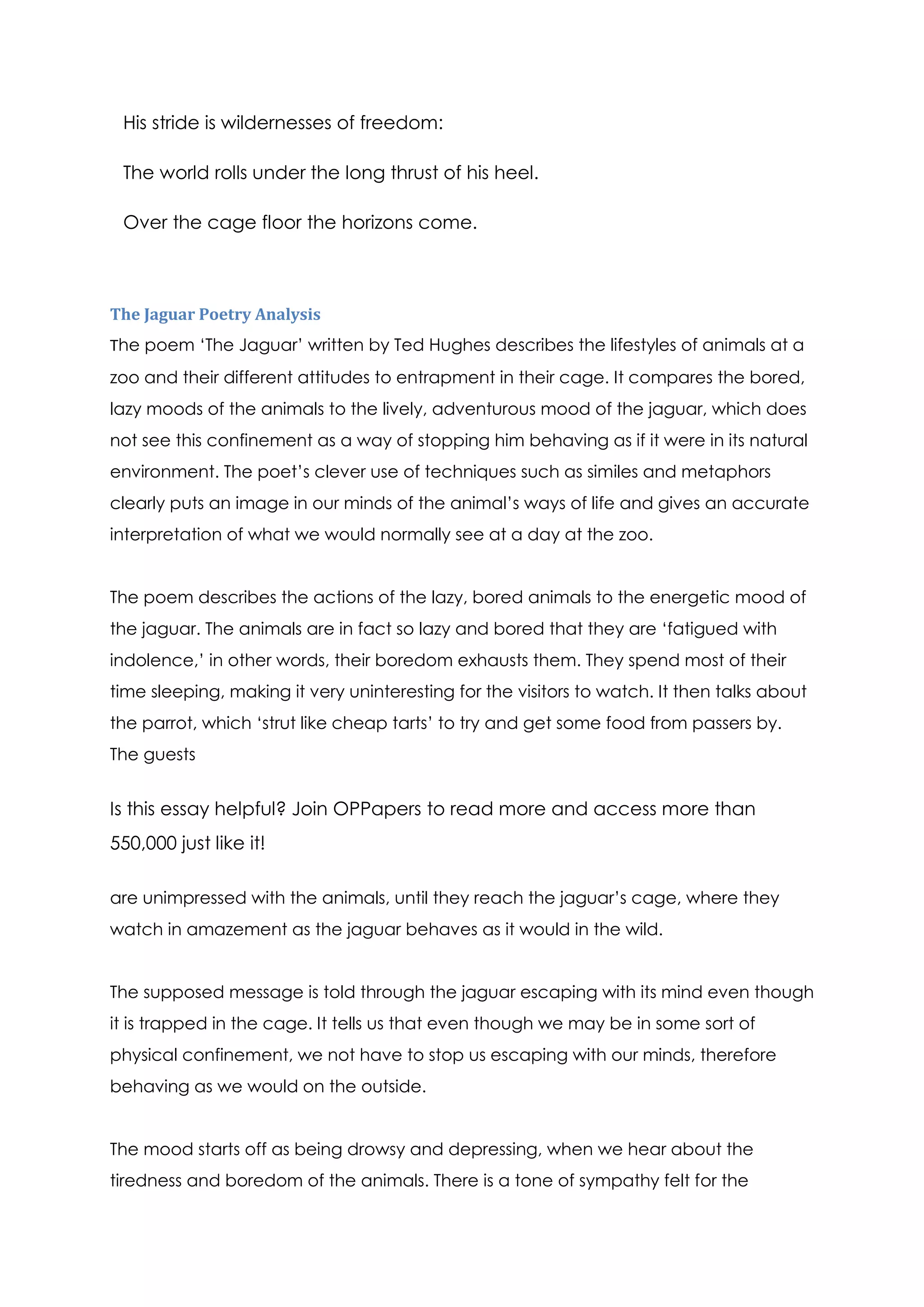
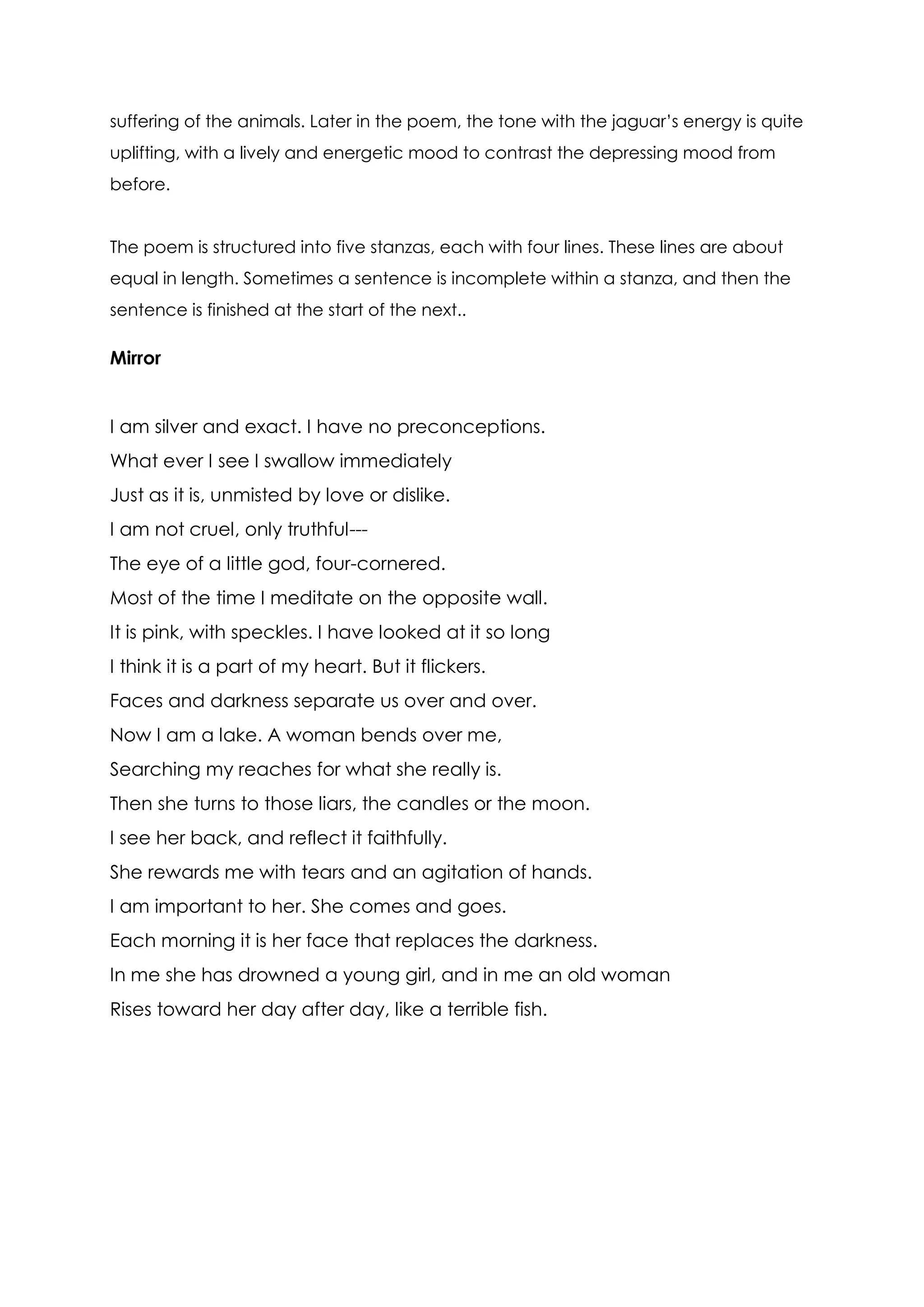
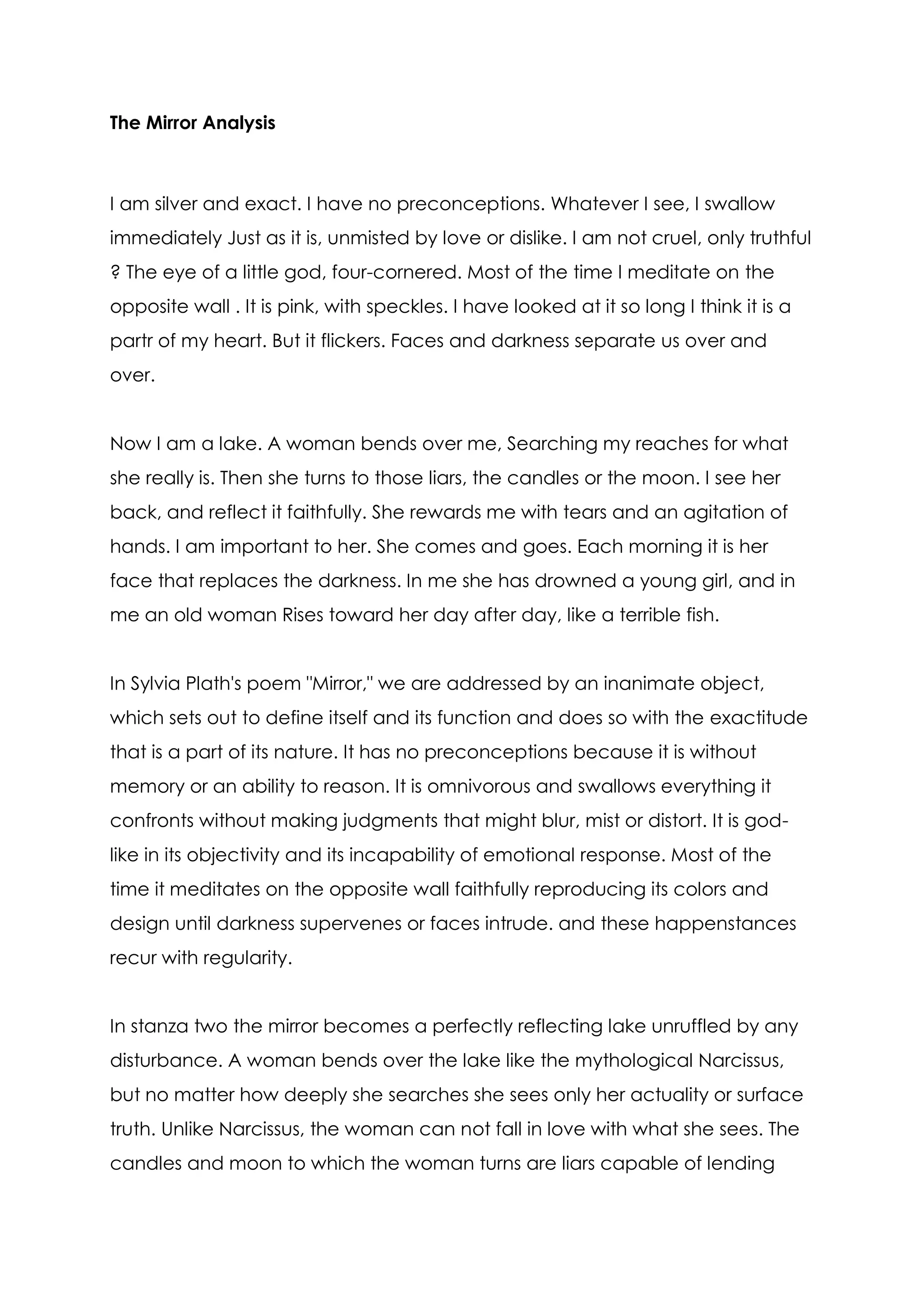
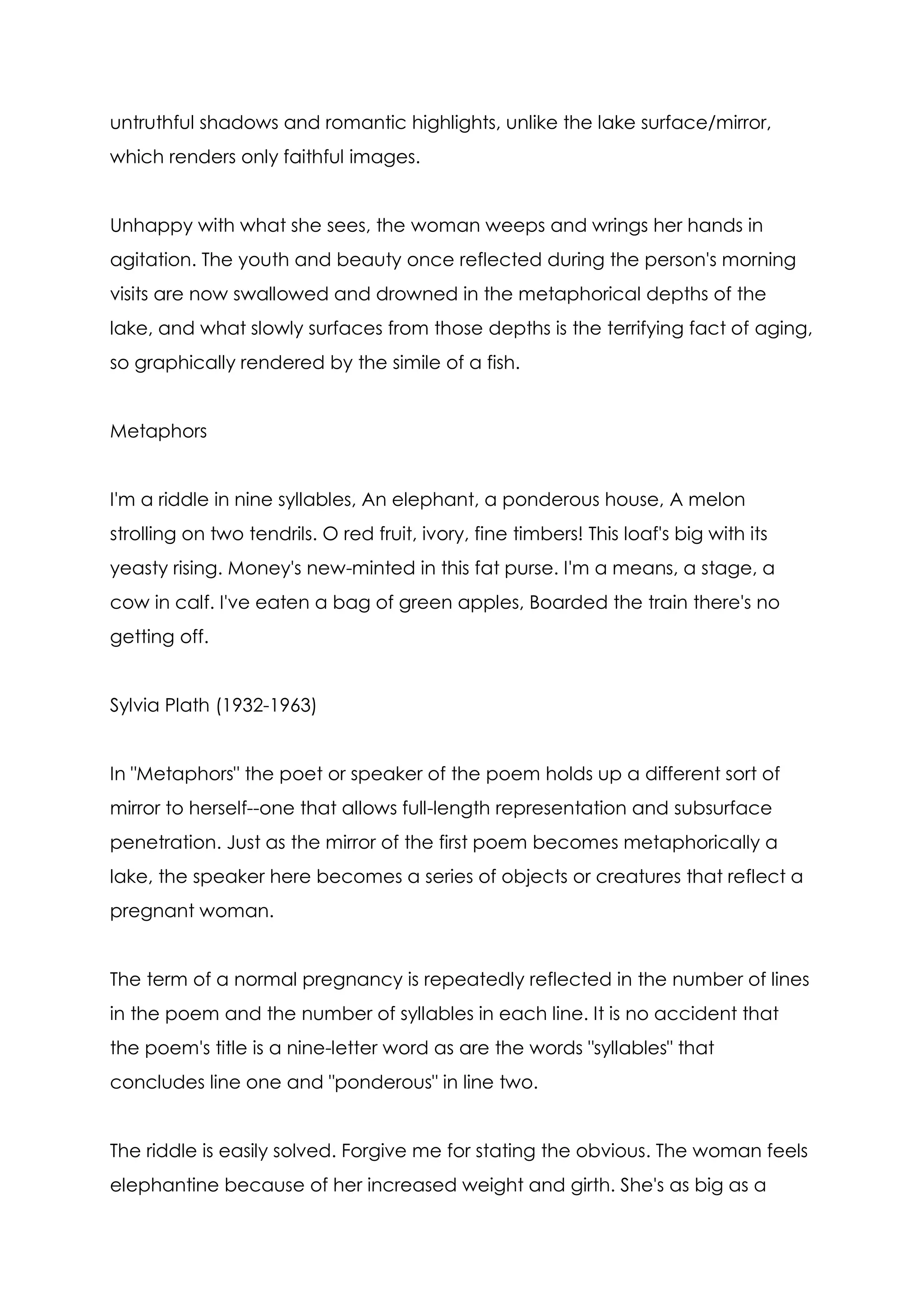

The poem tells the listener not to accept death passively. It uses imagery of night representing death and urges one to "rage, rage against the dying of the light." Wise men know death is inevitable but shouldn't just accept it if they haven't achieved their full potential. Earlier generations cry out at the end of their lives about deeds left undone. Wild, lively men celebrate life but learn too late that it is fleeting. Even when nearing death, one should continue fighting against their impending demise.


![Poem [autosaved]](https://cdn.slidesharecdn.com/ss_thumbnails/poemautosaved-140407074615-phpapp01-thumbnail.jpg?width=640&height=640&fit=bounds)


