Great Lakes Aquatic Connectivity
            Project
Healing Our Waters
Great Lakes Restoration Conference
Cleveland, Ohio
September 11-13, 2012


Stewart Cogswell
U.S. Fish and Wildlife Service
                                     Page 1
Page 2
Page 3
Stream Restoration/Connectivity –

 What watershed?
              What stream?
                     What individual site?
                             What site first?


HOW Cleveland 2012                              Page 4
Great Lakes Aquatic Connectivity Project

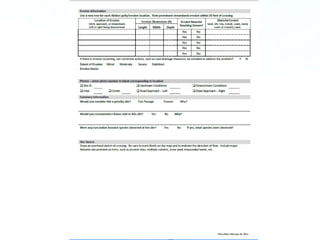
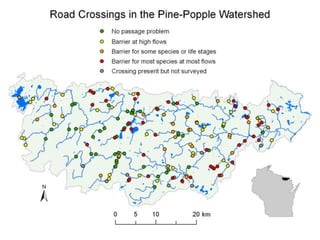
Road/stream crossing & barrier inventories

                     - consistent approach

                     - prioritization models

                     - cost/benefit analysis


HOW Cleveland 2012                             Page 5
Page 6
Page 7
Page 8
Page 9
Prioritizing Remediation – Pine/Popple River
            1001

             0.95
             95

             90
              0.9
 Percent %
 Watershed 0.85
             85
Connectivity
  Status
              0.8
             80
   (Cmin)

             0.75
             75

             0.7
             70

             0.65
              65
                    0   2      4           6           8       10        12
                            Total Cost (Millions of Dollars)        Page 10
Cost estimates are important for prioritizing
    projects
   • Excavation
   • Pipe (bevel and polymer coating)
   • Bedding and fill (including raised road elevation)
   • Road surfacing
              • Haul away old pipe and unusable fill
                      • Riprap, silt fence
                             • Dewatering / pumping
                             • Project administration and surveys


HOW Cleveland 2012                                           Page 11
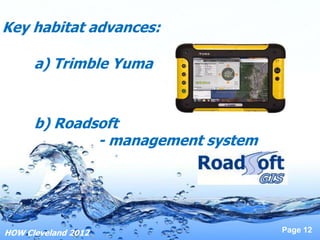
Key habitat advances:

      a) Trimble Yuma


      b) Roadsoft
              - management system


HOW Cleveland 2012                  Page 12
Next steps -
 a) Model development
     - refine current model
     - new models (truncated, species)
     - decision based (remove vs. remain)
 b) Measure biological and habitat response


HOW Cleveland 2012                    Page 13
Thinking about collecting road/stream
 crossing data on your watershed?


 http://conserveonline.org/
          workspaces/streamconnect


HOW Cleveland 2012                   Page 14
Questions?

HOW Cleveland 2012          Page 15

Aquatic Connectivity: Benefitting Streams and Communities-Cogswell, 2012

  • 1.
    Great Lakes AquaticConnectivity Project Healing Our Waters Great Lakes Restoration Conference Cleveland, Ohio September 11-13, 2012 Stewart Cogswell U.S. Fish and Wildlife Service Page 1
  • 2.
  • 3.
  • 4.
    Stream Restoration/Connectivity – What watershed? What stream? What individual site? What site first? HOW Cleveland 2012 Page 4
  • 5.
    Great Lakes AquaticConnectivity Project Road/stream crossing & barrier inventories - consistent approach - prioritization models - cost/benefit analysis HOW Cleveland 2012 Page 5
  • 6.
  • 7.
  • 8.
  • 9.
  • 10.
    Prioritizing Remediation –Pine/Popple River 1001 0.95 95 90 0.9 Percent % Watershed 0.85 85 Connectivity Status 0.8 80 (Cmin) 0.75 75 0.7 70 0.65 65 0 2 4 6 8 10 12 Total Cost (Millions of Dollars) Page 10
  • 11.
    Cost estimates areimportant for prioritizing projects • Excavation • Pipe (bevel and polymer coating) • Bedding and fill (including raised road elevation) • Road surfacing • Haul away old pipe and unusable fill • Riprap, silt fence • Dewatering / pumping • Project administration and surveys HOW Cleveland 2012 Page 11
  • 12.
    Key habitat advances: a) Trimble Yuma b) Roadsoft - management system HOW Cleveland 2012 Page 12
  • 13.
    Next steps - a) Model development - refine current model - new models (truncated, species) - decision based (remove vs. remain) b) Measure biological and habitat response HOW Cleveland 2012 Page 13
  • 14.
    Thinking about collectingroad/stream crossing data on your watershed? http://conserveonline.org/ workspaces/streamconnect HOW Cleveland 2012 Page 14
  • 15.