Code-to-Code Search Based on
Deep Neural Network and Code Mutation
Yuji
Fujiwara
1
Eunjong
Choi
Norihiro
Yoshida
Katsuro
Inoue
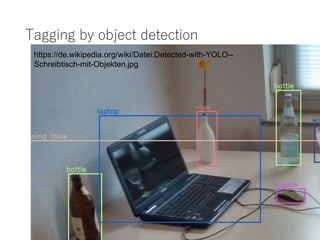
YOLO: Real-time Object Detection
Using DNN (Deep Neural Network) [1]
2
[1] Redmon et al.: You only look once: Unified, real-time object detection. CVPR 2016.
https://de.wikipedia.org/wiki/Datei:Detected-with-YOLO--Schreibtisch-mit-Objekten.jpg
Tagging by object detection
https://de.wikipedia.org/wiki/Datei:Detected-with-YOLO--
Schreibtisch-mit-Objekten.jpg
3
Is it possible to apply
the idea of object detection
into
source code?
My first idea
4
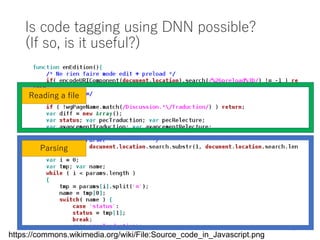
Is code tagging using DNN possible?
(If so, is it useful?)
5
Reading a file
Parsing
https://commons.wikimedia.org/wiki/File:Source_code_in_Javascript.png
Code tagging in a collection of repositories
•Supporting change propagation
•Fix the same vulnerability
•Catch-up API changes
•Extracting libraries / Enhancing languages
•If the same tag occurs many times
6
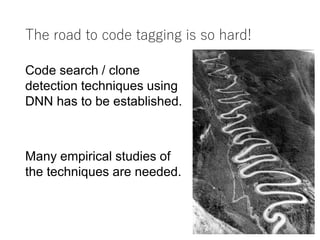
The road to code tagging is so hard!
7
Code search / clone
detection techniques using
DNN has to be established.
Many empirical studies of
the techniques are needed.
Related Work:
Code Search/Clone Detection Using DNN
• White et al. @ASE2016
• RtvNN
• Wei and Li @IJCAI 2017
• CDLH
• Gu et al. @ICSE 2018
• CODEnn
• Zhao and Huang @FSE 2018
• DeepSim
• Saini et al. @FSE 2018
• Oreo
8
https://pixabay.com/
Cloners meet DNN
DNN is useful for code search
/ clone detection?
• F-Score is extremely high
• 0.98 (DeepSim, BigCloneBench) [Zhao and Huang 2018]
• Incremental detection can be performed efficiently
• Once a DNN model is built.
9
Positive side
Negative side
• A DNN model is often unable to be useful for another
dataset
• It takes much time for learning phase
DNN is useful for code search
/ clone detection?
More research on
DNN-based code search /
clone detection are
needed to answer it.
10
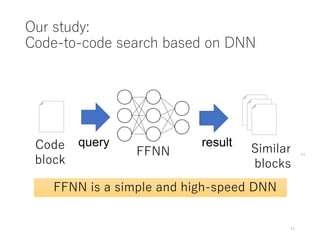
Our study:
Code-to-code search based on DNN
11FFNN
Code
block
Similar
blocks
query result
FFNN is a simple and high-speed DNN
11
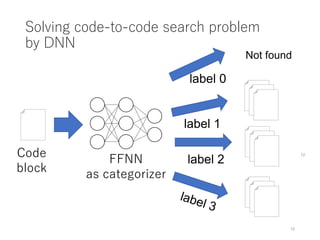
Solving code-to-code search problem
by DNN
12
FFNN
as categorizer
Code
block
Not found
label 0
label 1
label 2
12
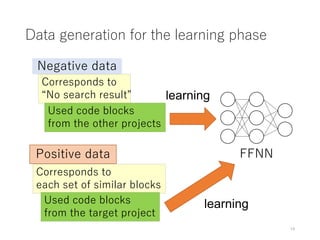
Data generation for the learning phase
Positive data
Negative data
FFNN
learning
learning
Corresponds to
“No search result”
Corresponds to
each set of similar blocks
Used code blocks
from the other projects
Used code blocks
from the target project
13
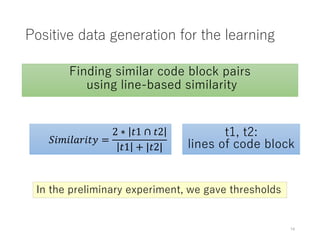
Positive data generation for the learning
Finding similar code block pairs
using line-based similarity
𝑆𝑖𝑚𝑖𝑙𝑎𝑟𝑖𝑡𝑦 =
2 ∗ 𝑡1 ∩ 𝑡2
𝑡1 + |𝑡2|
t1, t2:
lines of code block
In the preliminary experiment, we gave thresholds
14
Deep learning needs much feed
Generating code blocks by
mutating similar block pairs
• Line insertion/deletion
• Replacement of identifier names
• Replacement of operators
Mutation operators [Roy and Cordy 2009]
15
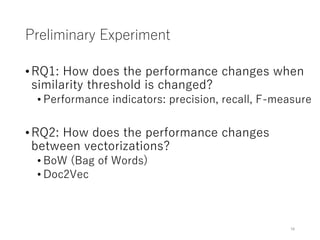
Preliminary Experiment
•RQ1: How does the performance changes when
similarity threshold is changed?
• Performance indicators: precision, recall, F-measure
•RQ2: How does the performance changes
between vectorizations?
• BoW (Bag of Words)
• Doc2Vec
16
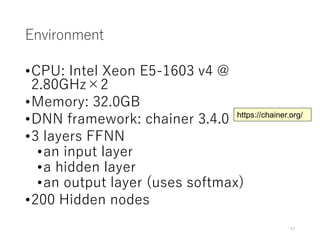
Environment
•CPU: Intel Xeon E5-1603 v4 @
2.80GHz×2
•Memory: 32.0GB
•DNN framework: chainer 3.4.0
•3 layers FFNN
•an input layer
•a hidden layer
•an output layer (uses softmax)
•200 Hidden nodes
17
https://chainer.org/
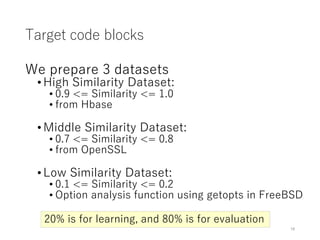
Target code blocks
We prepare 3 datasets
• High Similarity Dataset:
• 0.9 <= Similarity <= 1.0
• from Hbase
• Middle Similarity Dataset:
• 0.7 <= Similarity <= 0.8
• from OpenSSL
• Low Similarity Dataset:
• 0.1 <= Similarity <= 0.2
• Option analysis function using getopts in FreeBSD
18
20% is for learning, and 80% is for evaluation
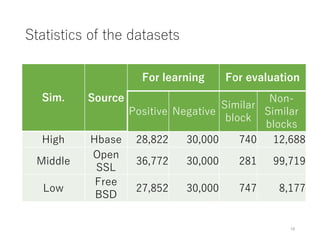
Statistics of the datasets
Sim. Source
For learning For evaluation
Positive Negative
Similar
block
Non-
Similar
blocks
High Hbase 28,822 30,000 740 12,688
Middle
Open
SSL
36,772 30,000 281 99,719
Low
Free
BSD
27,852 30,000 747 8,177
19
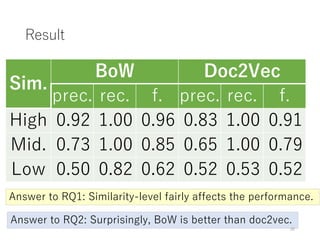
Result
Sim.
BoW Doc2Vec
prec. rec. f. prec. rec. f.
High 0.92 1.00 0.96 0.83 1.00 0.91
Mid. 0.73 1.00 0.85 0.65 1.00 0.79
Low 0.50 0.82 0.62 0.52 0.53 0.52
Answer to RQ1: Similarity-level fairly affects the performance.
Answer to RQ2: Surprisingly, BoW is better than doc2vec.
20
Summary and Future work
• We propose a code-to-code search system using
FFNN.
• We also performed the preliminary experiment.
• Similarity-level fairly affects the performance.
• Surprisingly, BoW is better than Doc2Vec.
• As near future work, we will compare the proposed
approach with other DNN-based techniques.
• We plan to develop code tagging system using
DNN.
21

Code Search Based on Deep Neural Network and Code Mutation

  • 1.
    Code-to-Code Search Basedon Deep Neural Network and Code Mutation Yuji Fujiwara 1 Eunjong Choi Norihiro Yoshida Katsuro Inoue
  • 2.
    YOLO: Real-time ObjectDetection Using DNN (Deep Neural Network) [1] 2 [1] Redmon et al.: You only look once: Unified, real-time object detection. CVPR 2016. https://de.wikipedia.org/wiki/Datei:Detected-with-YOLO--Schreibtisch-mit-Objekten.jpg
  • 3.
    Tagging by objectdetection https://de.wikipedia.org/wiki/Datei:Detected-with-YOLO-- Schreibtisch-mit-Objekten.jpg 3
  • 4.
    Is it possibleto apply the idea of object detection into source code? My first idea 4
  • 5.
    Is code taggingusing DNN possible? (If so, is it useful?) 5 Reading a file Parsing https://commons.wikimedia.org/wiki/File:Source_code_in_Javascript.png
  • 6.
    Code tagging ina collection of repositories •Supporting change propagation •Fix the same vulnerability •Catch-up API changes •Extracting libraries / Enhancing languages •If the same tag occurs many times 6
  • 7.
    The road tocode tagging is so hard! 7 Code search / clone detection techniques using DNN has to be established. Many empirical studies of the techniques are needed.
  • 8.
    Related Work: Code Search/CloneDetection Using DNN • White et al. @ASE2016 • RtvNN • Wei and Li @IJCAI 2017 • CDLH • Gu et al. @ICSE 2018 • CODEnn • Zhao and Huang @FSE 2018 • DeepSim • Saini et al. @FSE 2018 • Oreo 8 https://pixabay.com/ Cloners meet DNN
  • 9.
    DNN is usefulfor code search / clone detection? • F-Score is extremely high • 0.98 (DeepSim, BigCloneBench) [Zhao and Huang 2018] • Incremental detection can be performed efficiently • Once a DNN model is built. 9 Positive side Negative side • A DNN model is often unable to be useful for another dataset • It takes much time for learning phase
  • 10.
    DNN is usefulfor code search / clone detection? More research on DNN-based code search / clone detection are needed to answer it. 10
  • 11.
    Our study: Code-to-code searchbased on DNN 11FFNN Code block Similar blocks query result FFNN is a simple and high-speed DNN 11
  • 12.
    Solving code-to-code searchproblem by DNN 12 FFNN as categorizer Code block Not found label 0 label 1 label 2 12
  • 13.
    Data generation forthe learning phase Positive data Negative data FFNN learning learning Corresponds to “No search result” Corresponds to each set of similar blocks Used code blocks from the other projects Used code blocks from the target project 13
  • 14.
    Positive data generationfor the learning Finding similar code block pairs using line-based similarity 𝑆𝑖𝑚𝑖𝑙𝑎𝑟𝑖𝑡𝑦 = 2 ∗ 𝑡1 ∩ 𝑡2 𝑡1 + |𝑡2| t1, t2: lines of code block In the preliminary experiment, we gave thresholds 14
  • 15.
    Deep learning needsmuch feed Generating code blocks by mutating similar block pairs • Line insertion/deletion • Replacement of identifier names • Replacement of operators Mutation operators [Roy and Cordy 2009] 15
  • 16.
    Preliminary Experiment •RQ1: Howdoes the performance changes when similarity threshold is changed? • Performance indicators: precision, recall, F-measure •RQ2: How does the performance changes between vectorizations? • BoW (Bag of Words) • Doc2Vec 16
  • 17.
    Environment •CPU: Intel XeonE5-1603 v4 @ 2.80GHz×2 •Memory: 32.0GB •DNN framework: chainer 3.4.0 •3 layers FFNN •an input layer •a hidden layer •an output layer (uses softmax) •200 Hidden nodes 17 https://chainer.org/
  • 18.
    Target code blocks Weprepare 3 datasets • High Similarity Dataset: • 0.9 <= Similarity <= 1.0 • from Hbase • Middle Similarity Dataset: • 0.7 <= Similarity <= 0.8 • from OpenSSL • Low Similarity Dataset: • 0.1 <= Similarity <= 0.2 • Option analysis function using getopts in FreeBSD 18 20% is for learning, and 80% is for evaluation
  • 19.
    Statistics of thedatasets Sim. Source For learning For evaluation Positive Negative Similar block Non- Similar blocks High Hbase 28,822 30,000 740 12,688 Middle Open SSL 36,772 30,000 281 99,719 Low Free BSD 27,852 30,000 747 8,177 19
  • 20.
    Result Sim. BoW Doc2Vec prec. rec.f. prec. rec. f. High 0.92 1.00 0.96 0.83 1.00 0.91 Mid. 0.73 1.00 0.85 0.65 1.00 0.79 Low 0.50 0.82 0.62 0.52 0.53 0.52 Answer to RQ1: Similarity-level fairly affects the performance. Answer to RQ2: Surprisingly, BoW is better than doc2vec. 20
  • 21.
    Summary and Futurework • We propose a code-to-code search system using FFNN. • We also performed the preliminary experiment. • Similarity-level fairly affects the performance. • Surprisingly, BoW is better than Doc2Vec. • As near future work, we will compare the proposed approach with other DNN-based techniques. • We plan to develop code tagging system using DNN. 21

Editor's Notes

  • #2 順伝播型ニューラルネットワークを用いた類似コードブロック検索の試みという題目で,大阪大学の藤原が発表させていただきます。
  • #19 早口になってない?