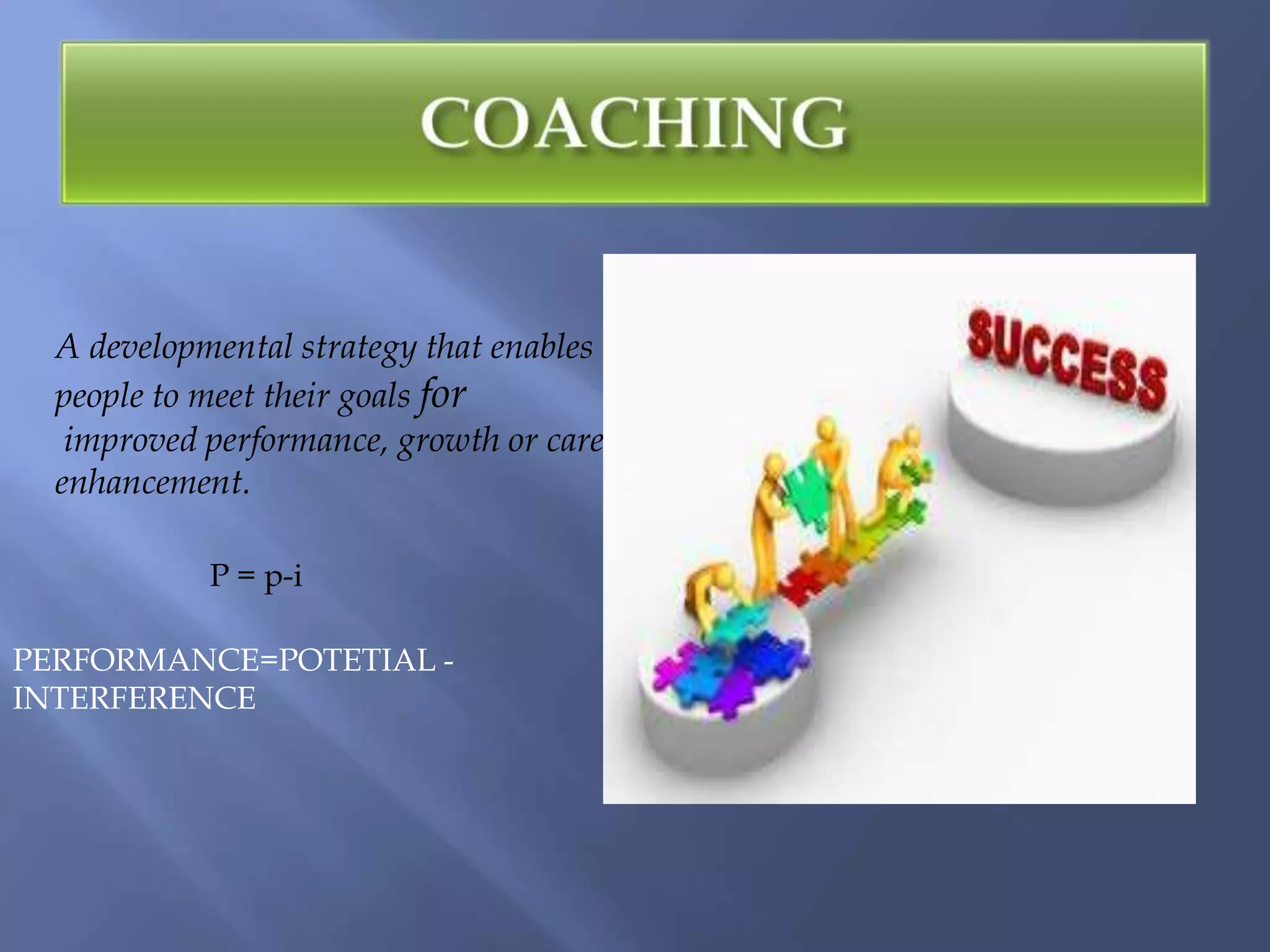
A developmental strategy that enables
  people to meet their goals for
   improved performance, growth or career
  enhancement.

            P = p-i

PERFORMANCE=POTETIAL -
INTERFERENCE
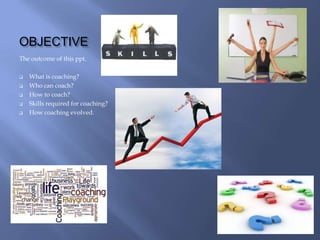
OBJECTIVE
The outcome of this ppt.

   What is coaching?
   Who can coach?
   How to coach?
   Skills required for coaching?
   How coaching evolved.
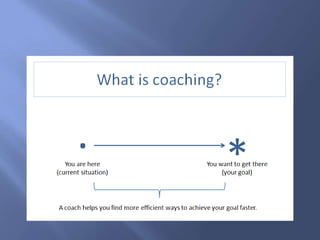
WHAT IS COACHING?
The coachee has a goal that the coach helps him or her to
                         meet.
WHO CAN COACH.!
A Coach having the below
mentioned skills
 Listening

 Questing & clarification

 Rapport

 Trust & empathy

 Work with

 Takes responsibility

 Seeks commitment

 Observation

 Feedback
LISTENING
   listening is a communication technique that requires the listener
   to feed back what they hear to the speaker
RAPPORT
  Rapport occurs when two or more people feel that they are in sync or on
   the same wavelength because they
QUESTING
   It the concept of
   letterboxing where clues lead to sealed boxes
OBSERVATION
    Observation is either an activity of a living being, such as a human,
    consisting of receiving knowledge of the outside world through the senses
 EMPATHY
     Empathy is the capacity to recognize feelings that are being experienced
     by another sentient or semi-sentient (in fiction writing) being.
 FEEDBACK

      Feedback is a process in which information about the past or the present
      influences the same phenomenon in the present or future.
Meeting

HOW COACHING
WORKS

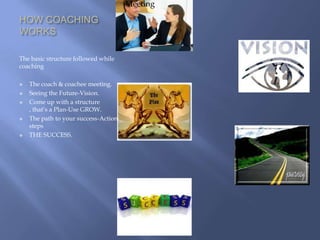
The basic structure followed while
coaching

   The coach & coachee meeting.
   Seeing the Future-Vision.
   Come up with a structure
    , that’s a Plan-Use GROW.
   The path to your success-Action
    steps
   THE SUCCESS.
MEETING

  In a meeting, two or more people come together to discuss one
  or more topics, often in a formal setting.

VISION
   Visions generally have more clarity than dreams
GROW
    The GROW model (or process) is a technique for problem solving or
    goal setting.

SUCCESSS

    A goal is a desired resulta system envisions, plans
     and commits to achieve—a personal or organizational desired end-point
    in some sort of assumed development


                                                                             .
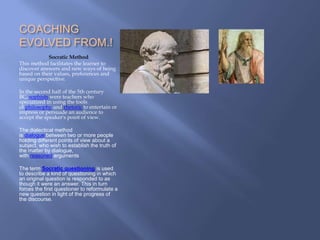
COACHING
EVOLVED FROM.!
            Socratic Method
This method facilitates the learner to
discover answers and new ways of being
based on their values, preferences and
unique perspective.

In the second half of the 5th century
BC, sophists were teachers who
specialized in using the tools
of philosophy and rhetoric to entertain or
impress or persuade an audience to
accept the speaker's point of view.

The dialectical method
is dialogue between two or more people
holding different points of view about a
subject, who wish to establish the truth of
the matter by dialogue,
with reasoned arguments

The term Socratic questioning is used
to describe a kind of questioning in which
an original question is responded to as
though it were an answer. This in turn
forces the first questioner to reformulate a
new question in light of the progress of
the discourse.
For further clarification on CareerKraft,
refer to the website or send an email
for quarries based on Coaching.

Website link: www.careerkraft.in
Email: mohang.ebullience@gmail.com


          Thank you

Coaching insights

  • 1.
    A developmental strategythat enables people to meet their goals for improved performance, growth or career enhancement. P = p-i PERFORMANCE=POTETIAL - INTERFERENCE
  • 2.
    OBJECTIVE The outcome ofthis ppt.  What is coaching?  Who can coach?  How to coach?  Skills required for coaching?  How coaching evolved.
  • 4.
    WHAT IS COACHING? Thecoachee has a goal that the coach helps him or her to meet.
  • 5.
    WHO CAN COACH.! ACoach having the below mentioned skills  Listening  Questing & clarification  Rapport  Trust & empathy  Work with  Takes responsibility  Seeks commitment  Observation  Feedback
  • 6.
    LISTENING listening is a communication technique that requires the listener to feed back what they hear to the speaker RAPPORT Rapport occurs when two or more people feel that they are in sync or on the same wavelength because they QUESTING It the concept of letterboxing where clues lead to sealed boxes OBSERVATION Observation is either an activity of a living being, such as a human, consisting of receiving knowledge of the outside world through the senses EMPATHY Empathy is the capacity to recognize feelings that are being experienced by another sentient or semi-sentient (in fiction writing) being. FEEDBACK Feedback is a process in which information about the past or the present influences the same phenomenon in the present or future.
  • 7.
    Meeting HOW COACHING WORKS The basicstructure followed while coaching  The coach & coachee meeting.  Seeing the Future-Vision.  Come up with a structure , that’s a Plan-Use GROW.  The path to your success-Action steps  THE SUCCESS.
  • 8.
    MEETING Ina meeting, two or more people come together to discuss one or more topics, often in a formal setting. VISION Visions generally have more clarity than dreams GROW The GROW model (or process) is a technique for problem solving or goal setting. SUCCESSS A goal is a desired resulta system envisions, plans and commits to achieve—a personal or organizational desired end-point in some sort of assumed development .
  • 9.
    COACHING EVOLVED FROM.! Socratic Method This method facilitates the learner to discover answers and new ways of being based on their values, preferences and unique perspective. In the second half of the 5th century BC, sophists were teachers who specialized in using the tools of philosophy and rhetoric to entertain or impress or persuade an audience to accept the speaker's point of view. The dialectical method is dialogue between two or more people holding different points of view about a subject, who wish to establish the truth of the matter by dialogue, with reasoned arguments The term Socratic questioning is used to describe a kind of questioning in which an original question is responded to as though it were an answer. This in turn forces the first questioner to reformulate a new question in light of the progress of the discourse.
  • 11.
    For further clarificationon CareerKraft, refer to the website or send an email for quarries based on Coaching. Website link: www.careerkraft.in Email: mohang.ebullience@gmail.com Thank you