



Socio-Technical 
Systems Under Stress 
Brian C. Keegan, Ph.D. 
Research Associate, Harvard Business School & HBX 
December 3, 2014 
Human-Computer Interaction Institute, Carnegie Mellon 
University 
1
I am a… 
computational social scientist 
who 
uses network analysis methods 
to study 
socio-technical systems under 
stress 
2
I am a… 
computational social scientist 
who 
uses network analysis methods 
to study 
socio-technical systems under 
stress 
3
pressure or tension exerted on a 
material object 
4
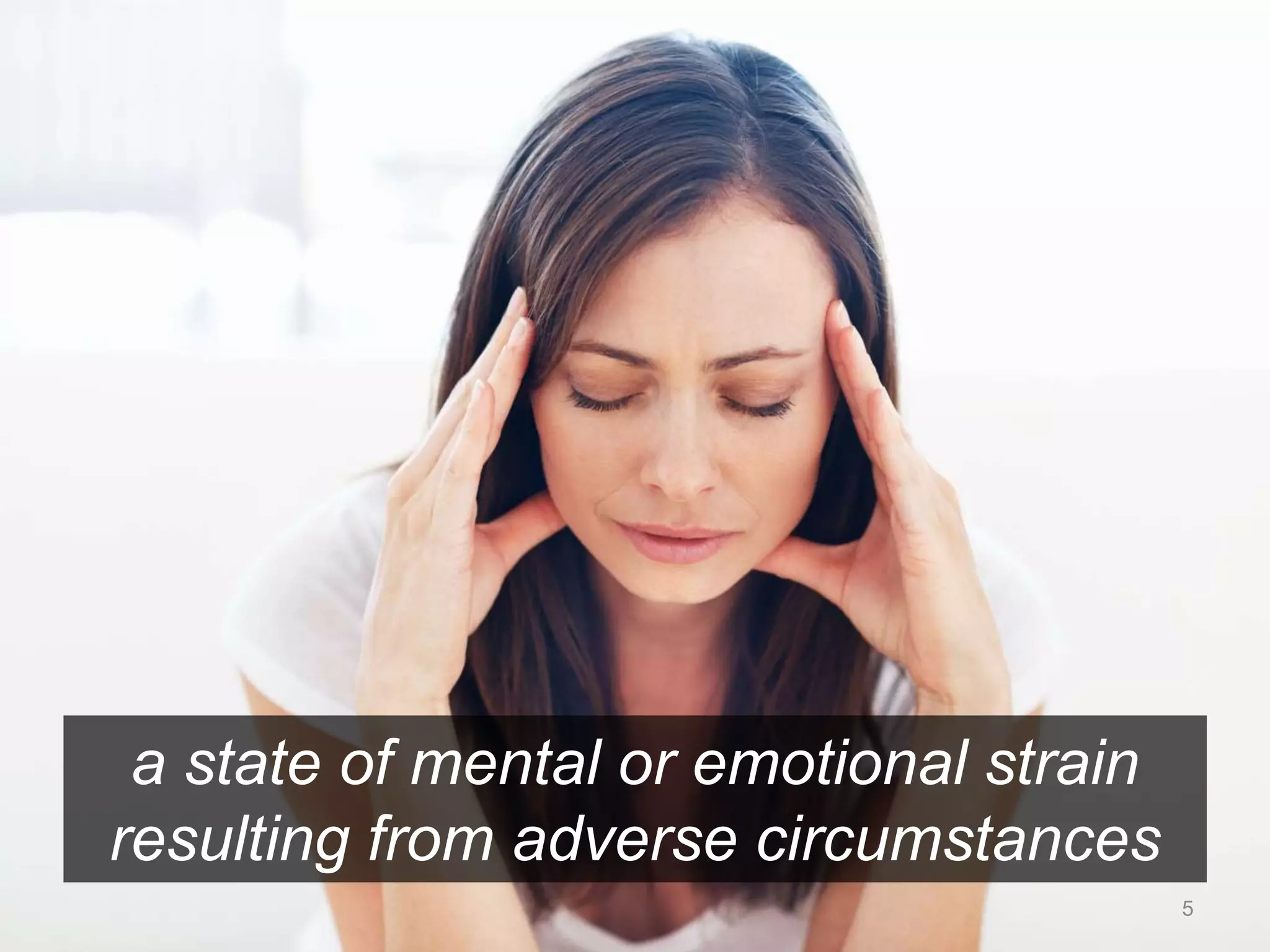
a state of mental or emotional strain 
resulting from adverse circumstances 
5
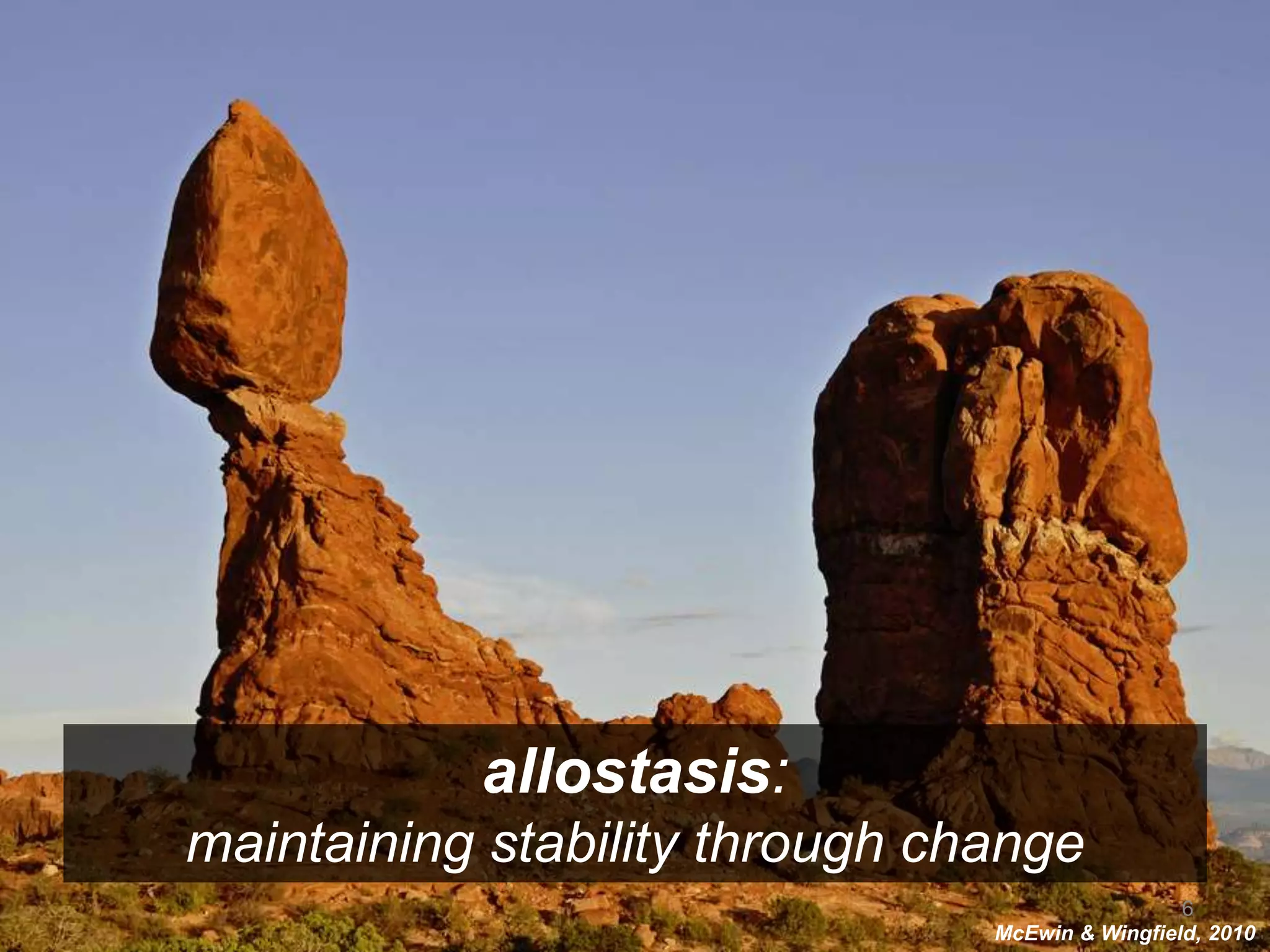
allostasis: 
maintaining stability through change 
6 
McEwin & Wingfield, 2010
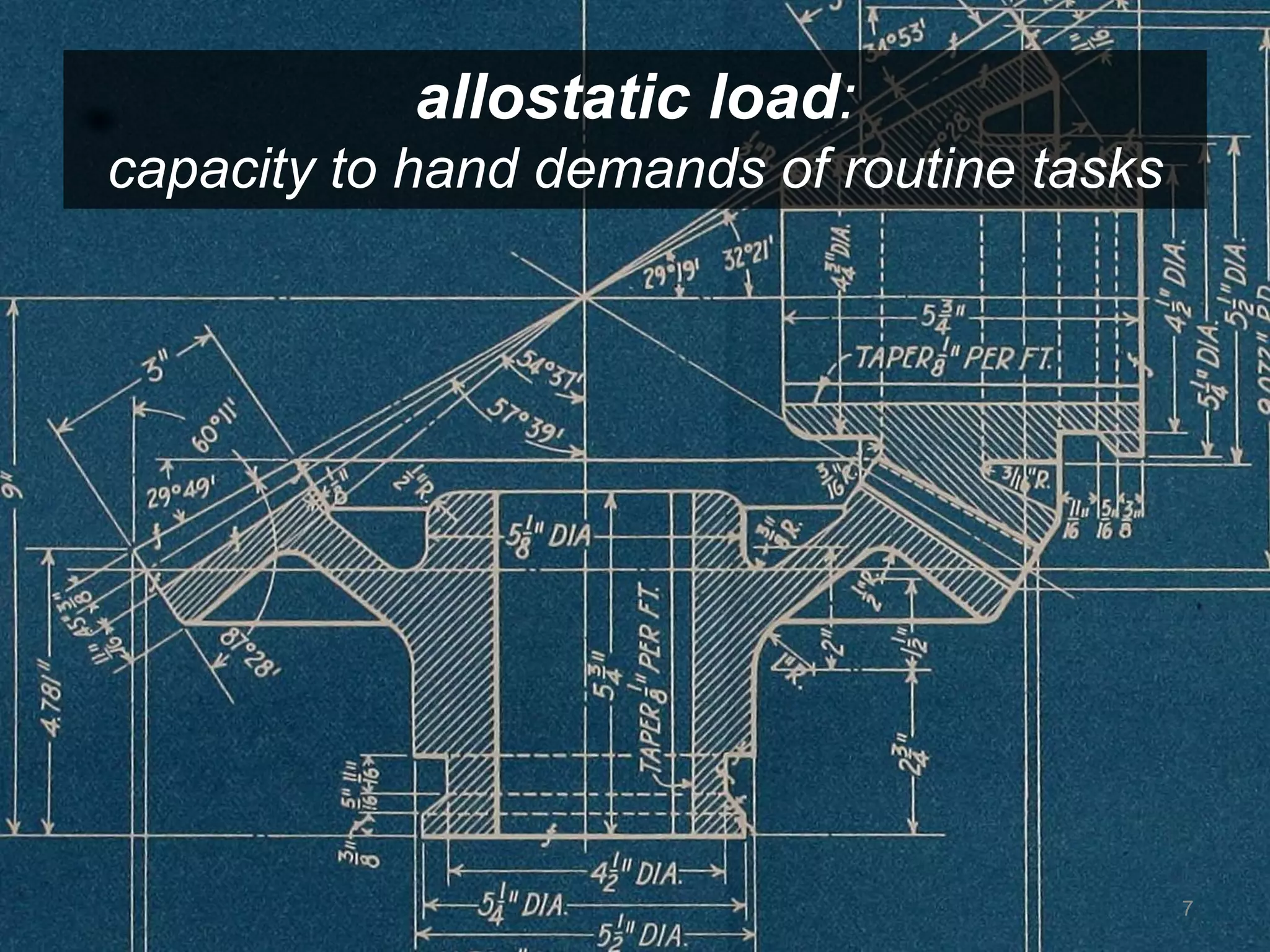
allostatic load: 
capacity to hand demands of routine tasks 
7
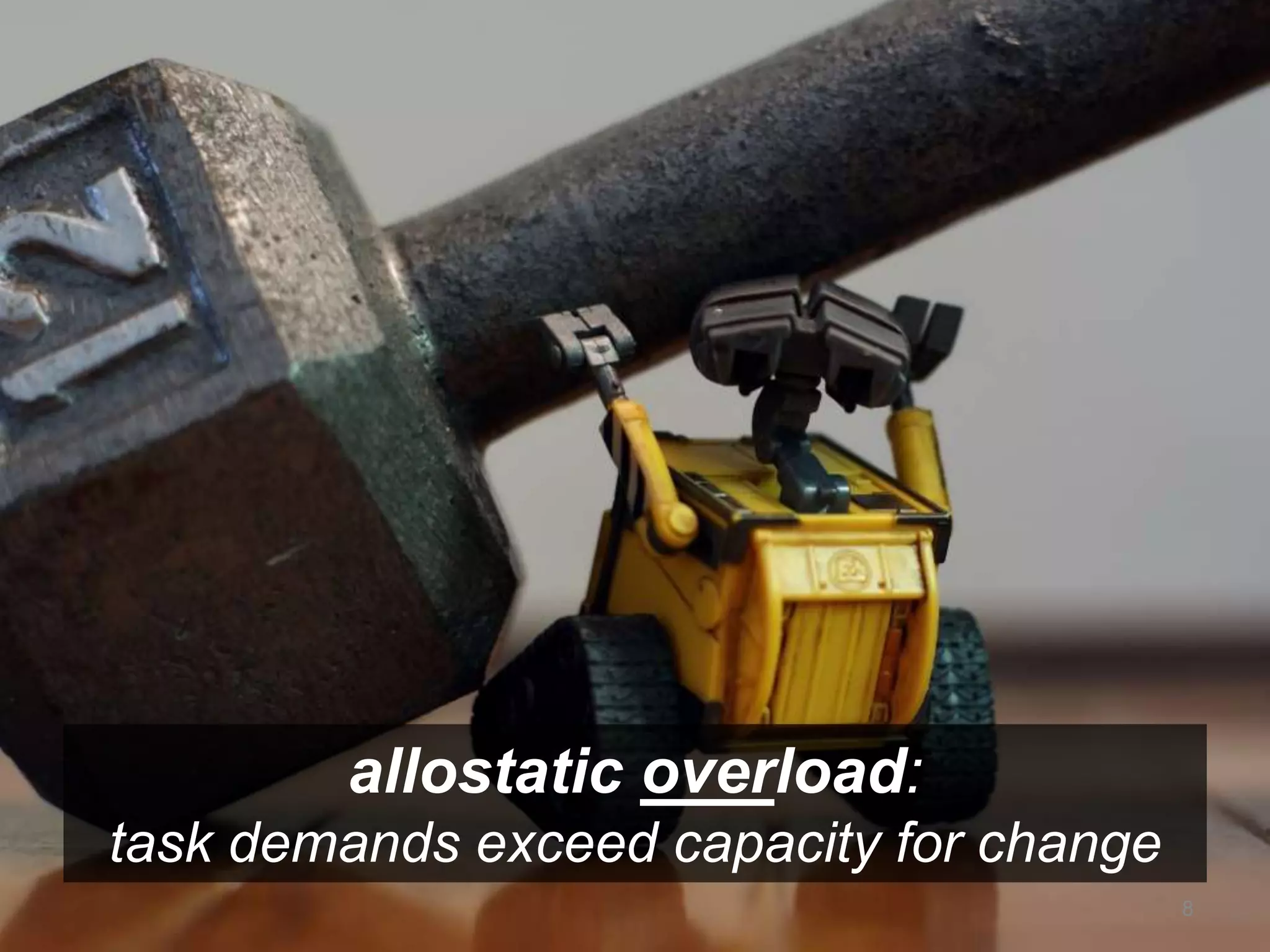
allostatic overload: 
task demands exceed capacity for change 
8
9 
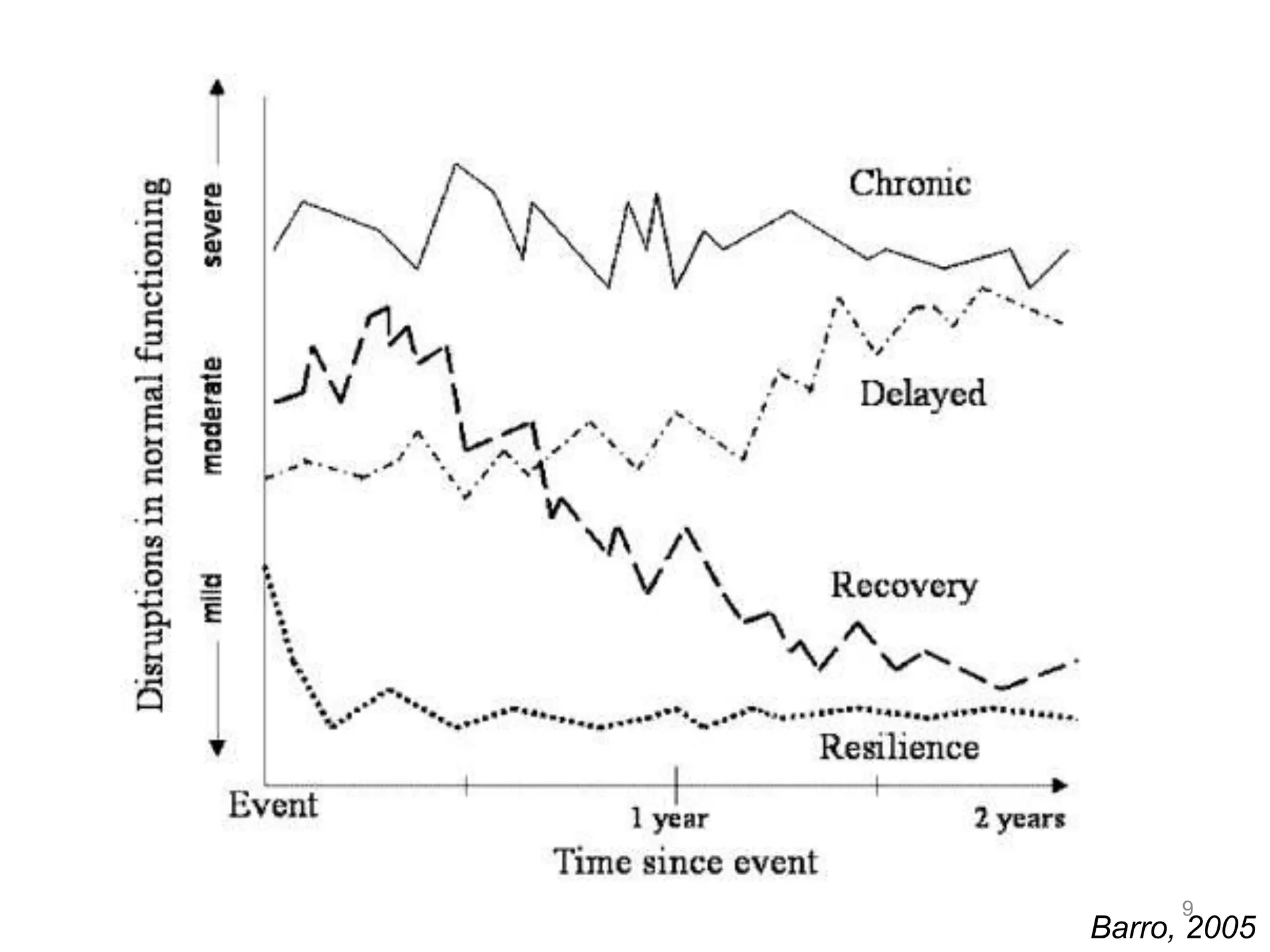
Barro, 2005
10 
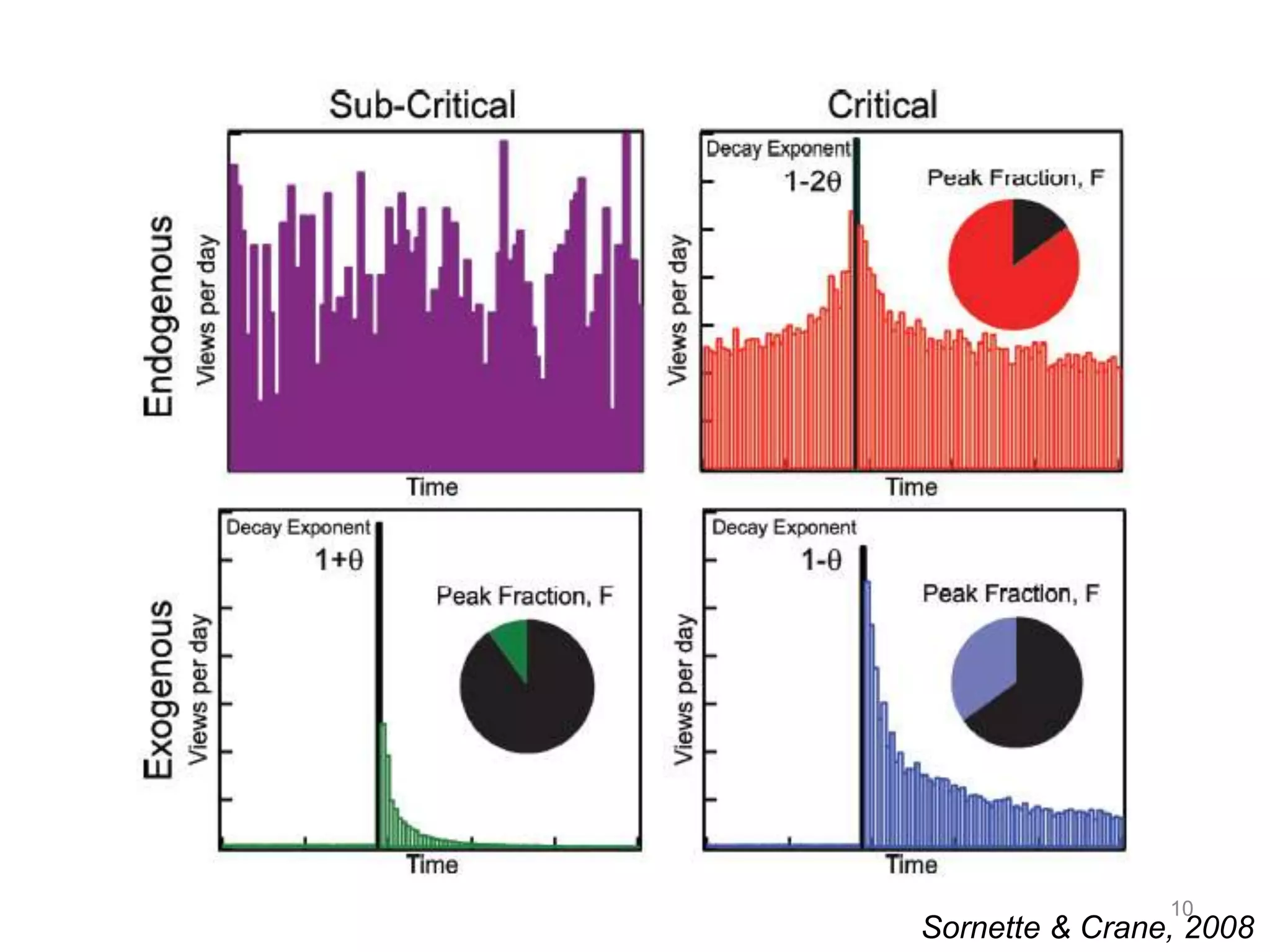
Sornette & Crane, 2008
11
12
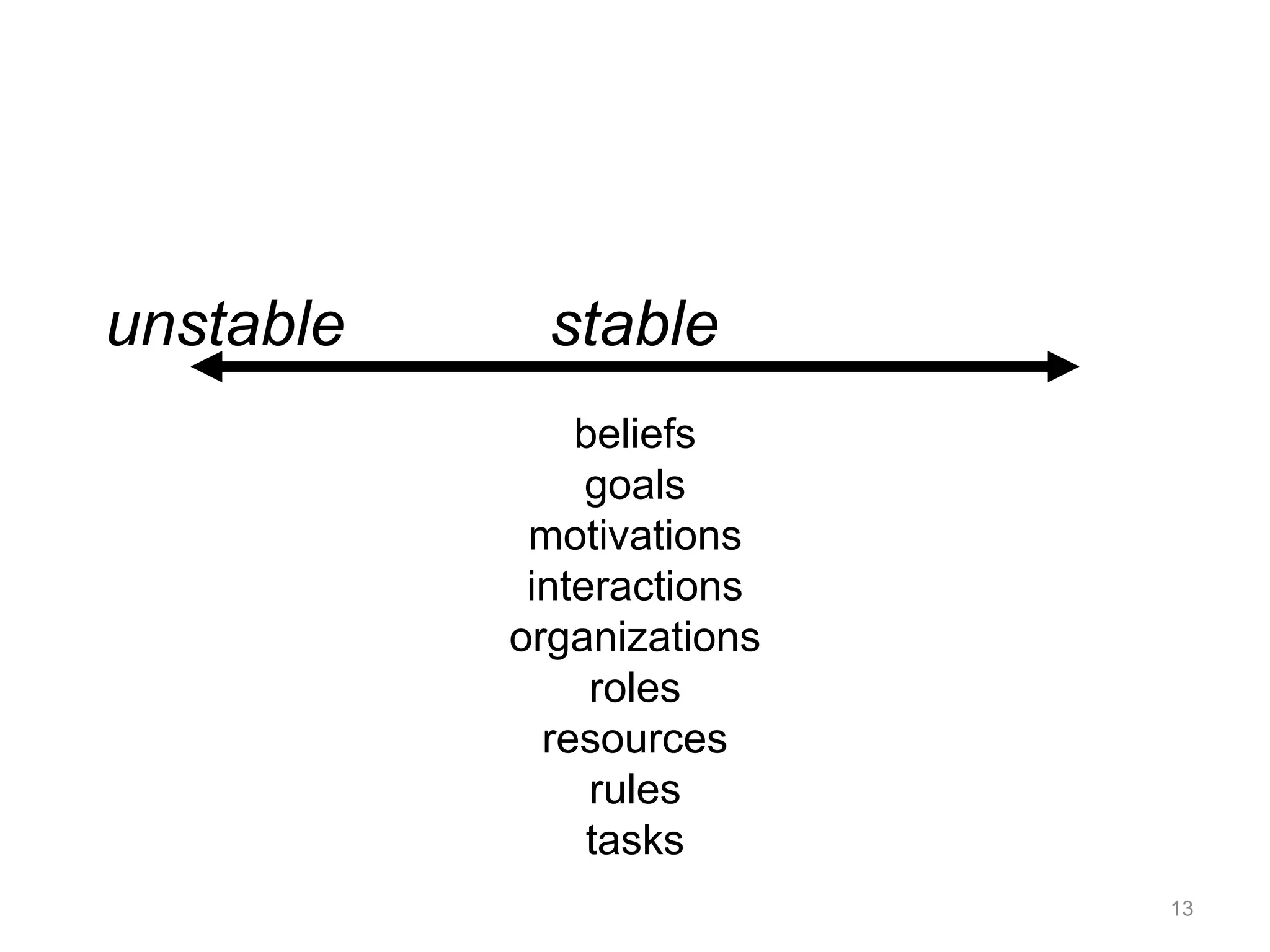
unstable stable 
beliefs 
goals 
motivations 
interactions 
organizations 
roles 
resources 
rules 
tasks 
13
14
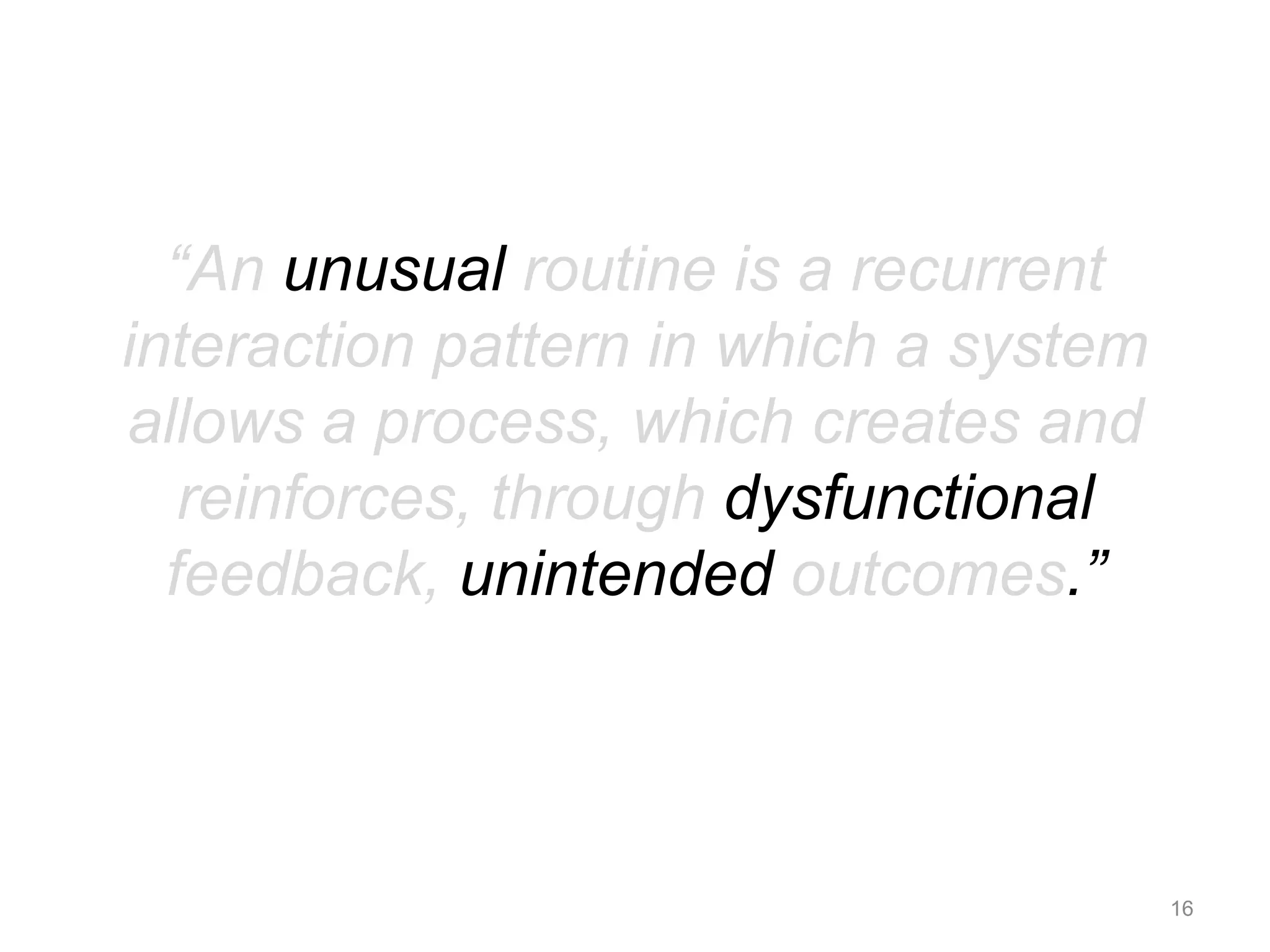
“An unusual routine is a recurrent 
interaction pattern in which a system 
allows a process, which creates and 
reinforces, through dysfunctional 
feedback, unintended outcomes.” 
15
“An unusual routine is a recurrent 
interaction pattern in which a system 
allows a process, which creates and 
reinforces, through dysfunctional 
feedback, unintended outcomes.” 
16
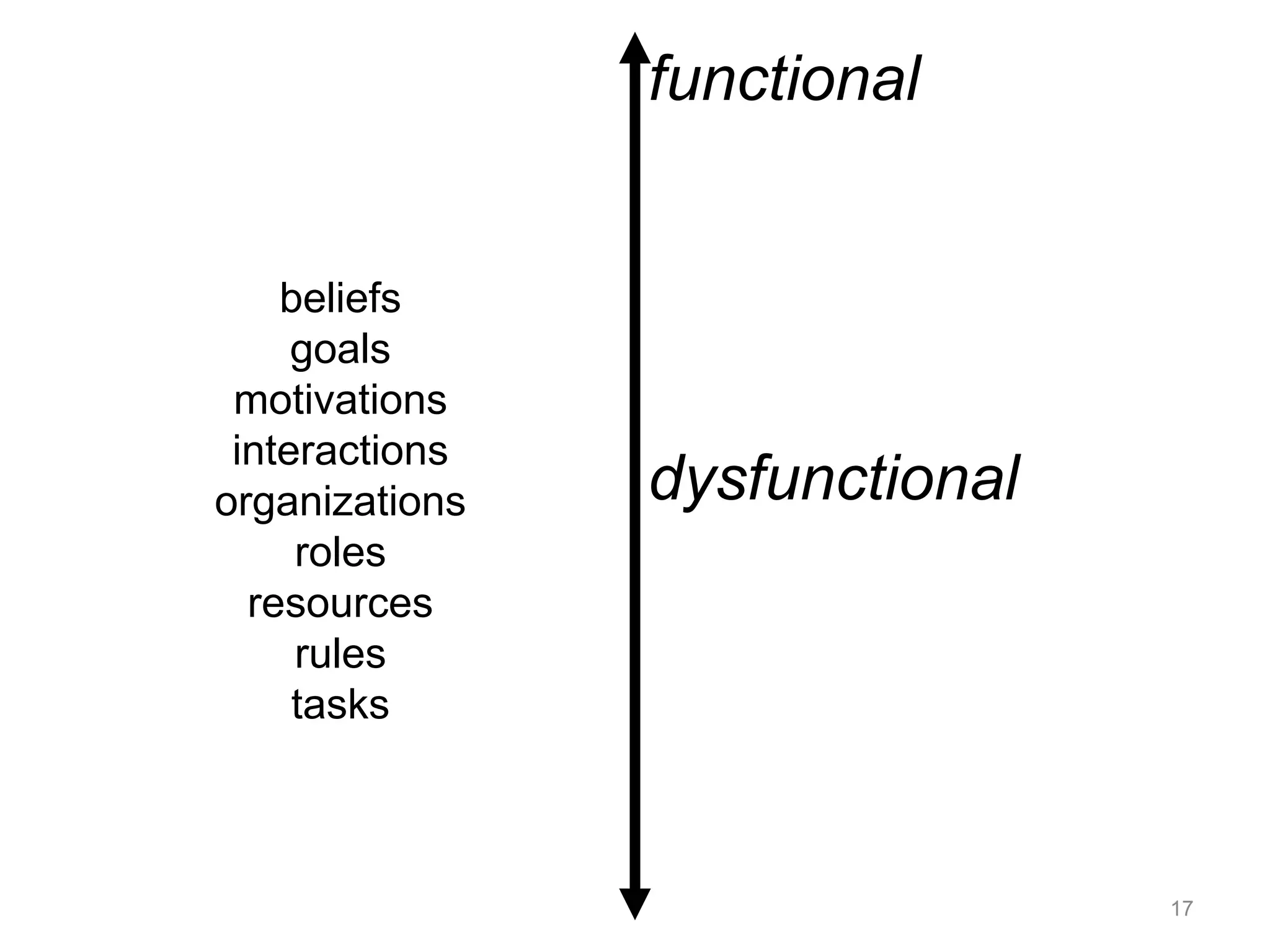
functional 
dysfunctional 
beliefs 
goals 
motivations 
interactions 
organizations 
roles 
resources 
rules 
tasks 
17
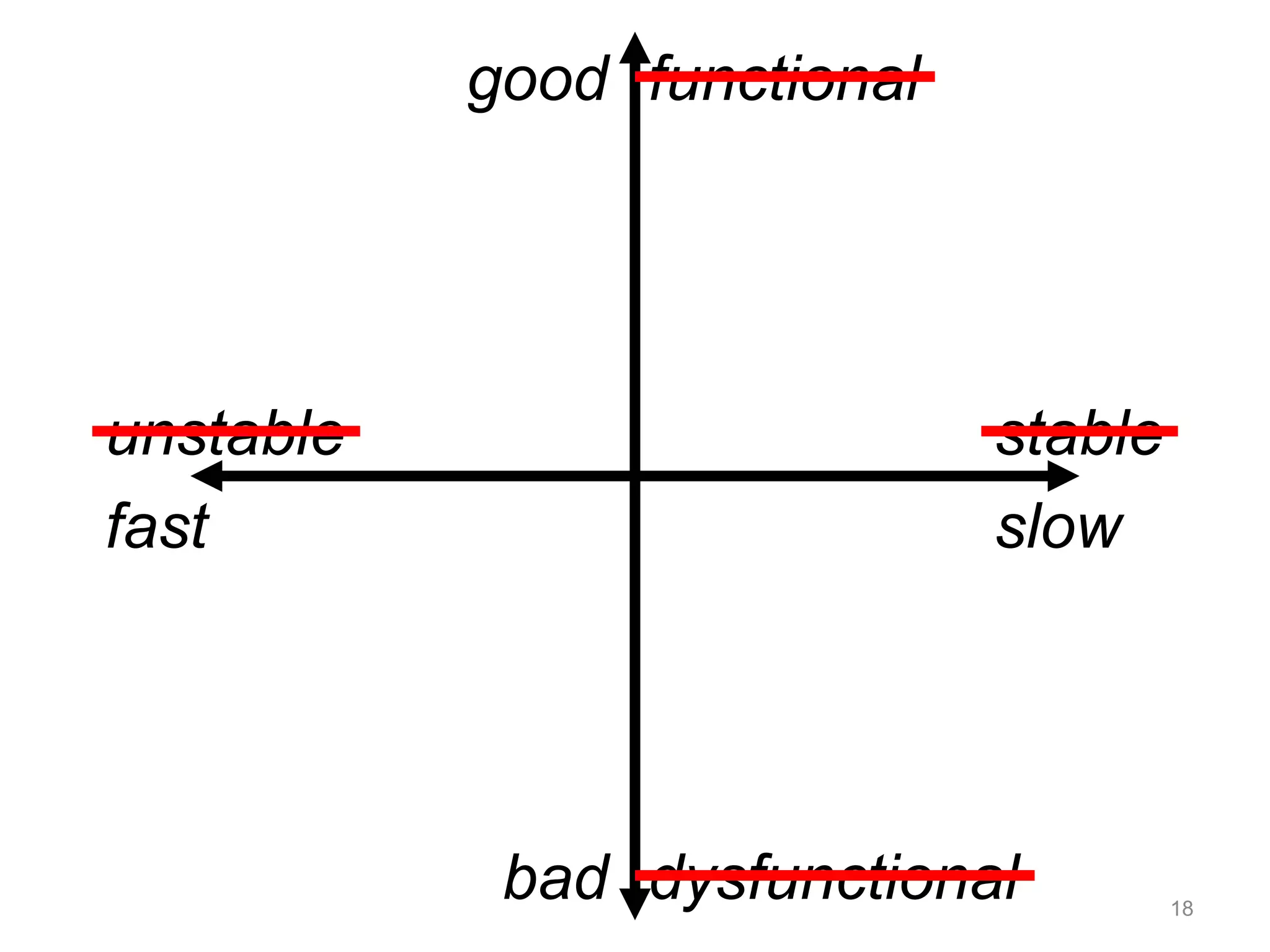
functional 
unstable stable 
dysfunctional 
good 
slow 
bad 
fast 
18
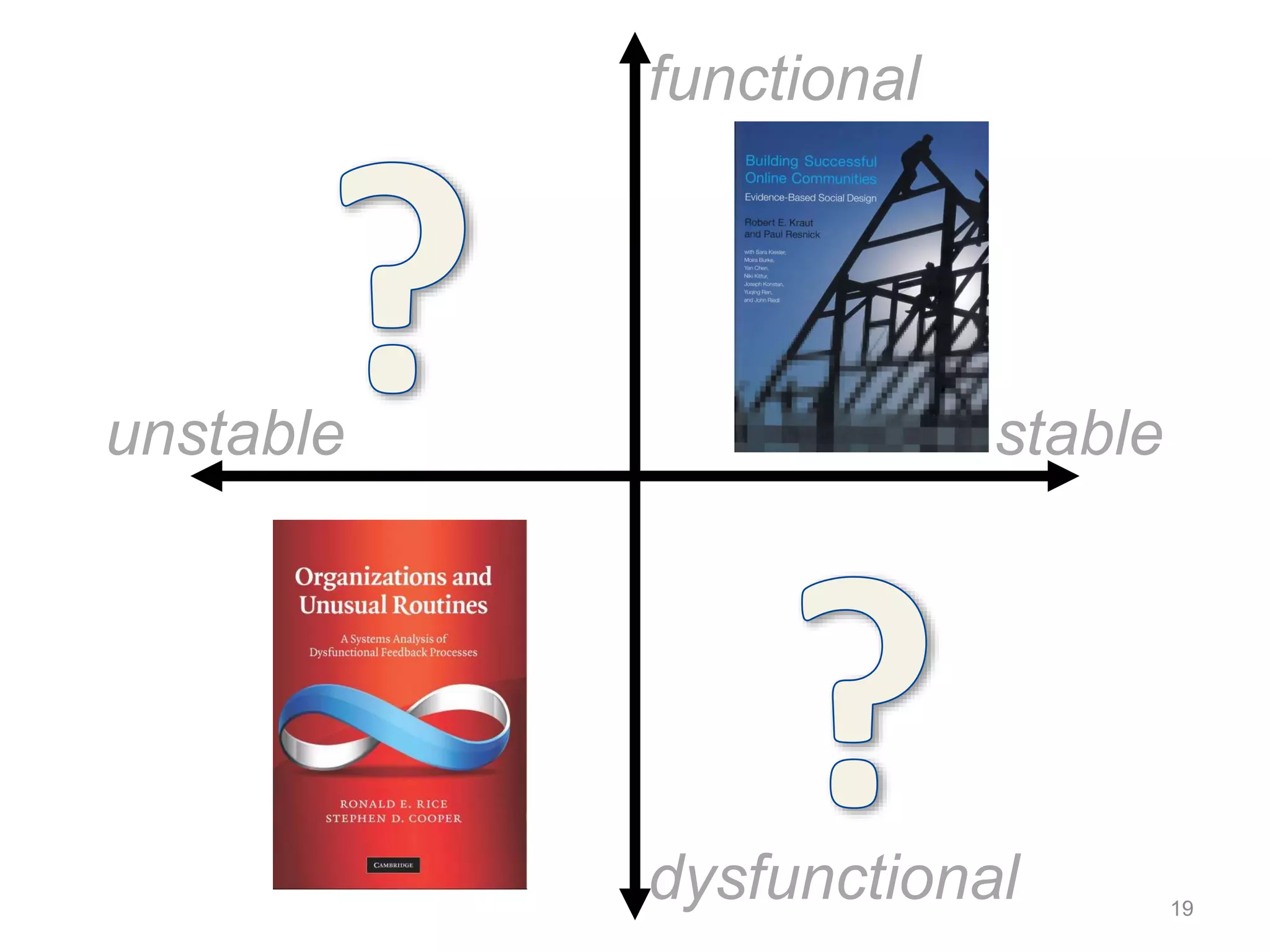
functional 
unstable stable 
dysfunctional 19
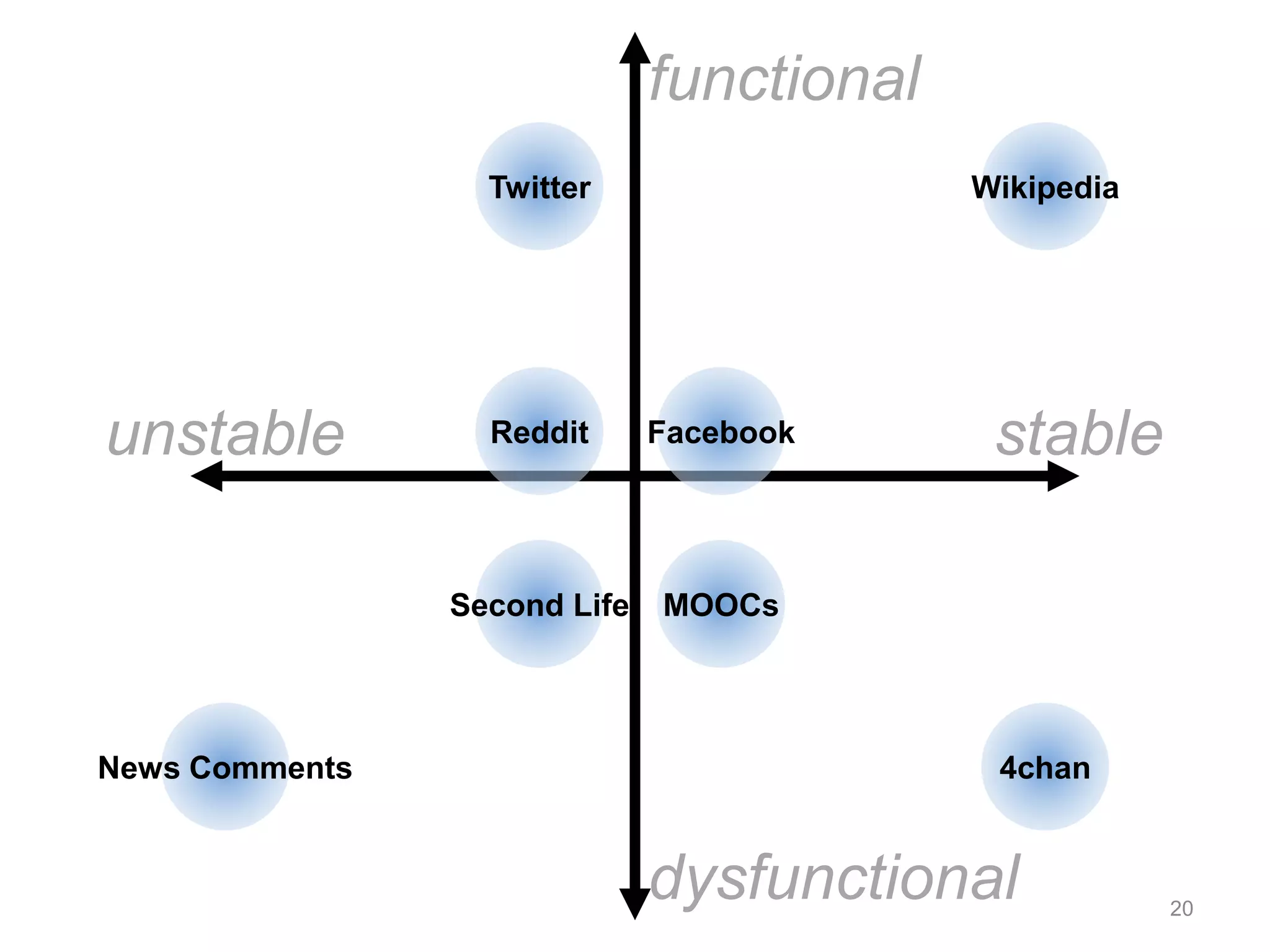
functional 
Wikipedia 
unstable stable 
4chan 
dysfunctional 
Reddit 
News Comments 
Twitter 
Facebook 
Second Life MOOCs 
20
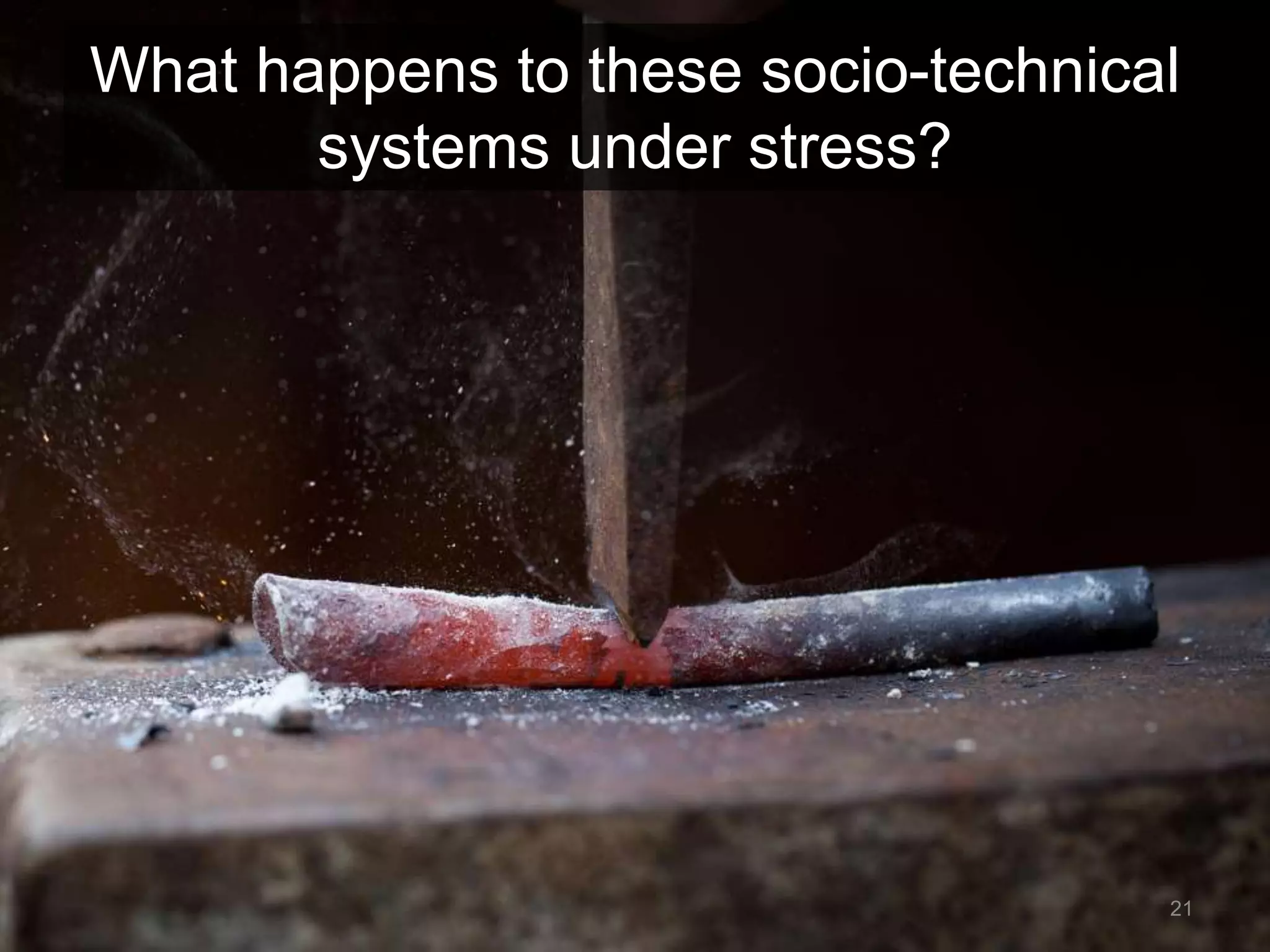
What happens to these socio-technical 
systems under stress? 
21
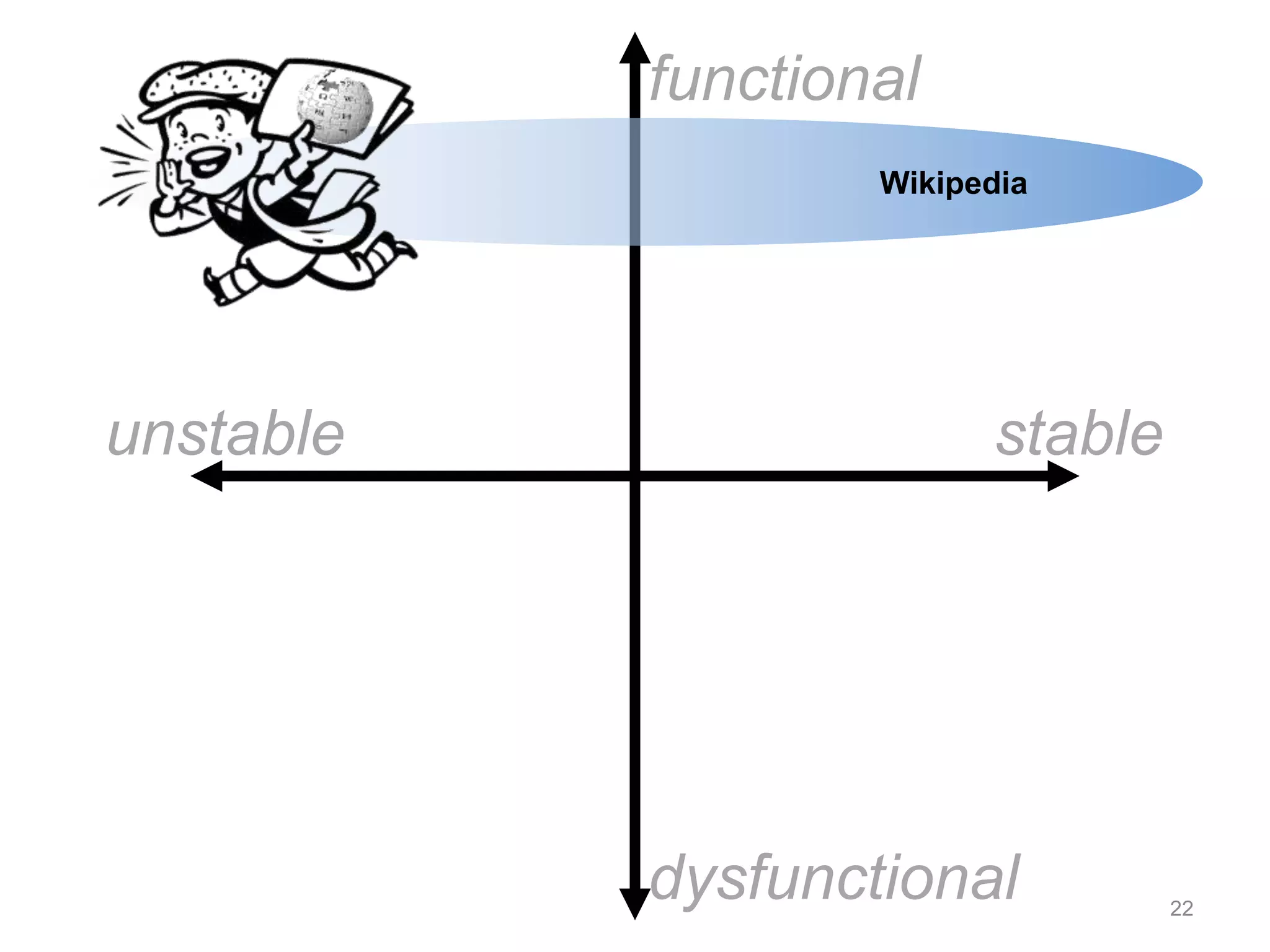
functional 
Wikipedia 
unstable stable 
dysfunctional 
22
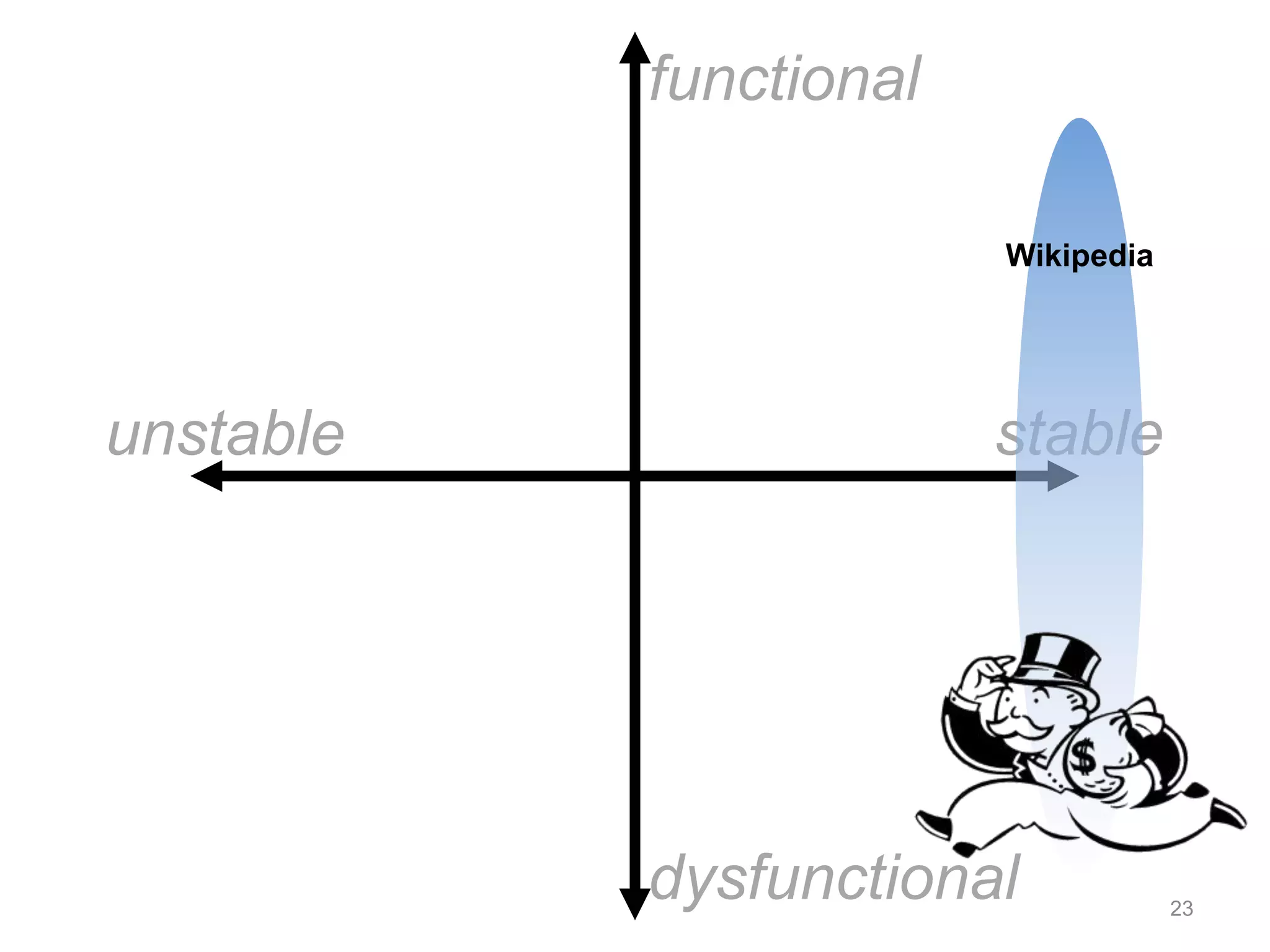
functional 
Wikipedia 
unstable stable 
dysfunctional 
23
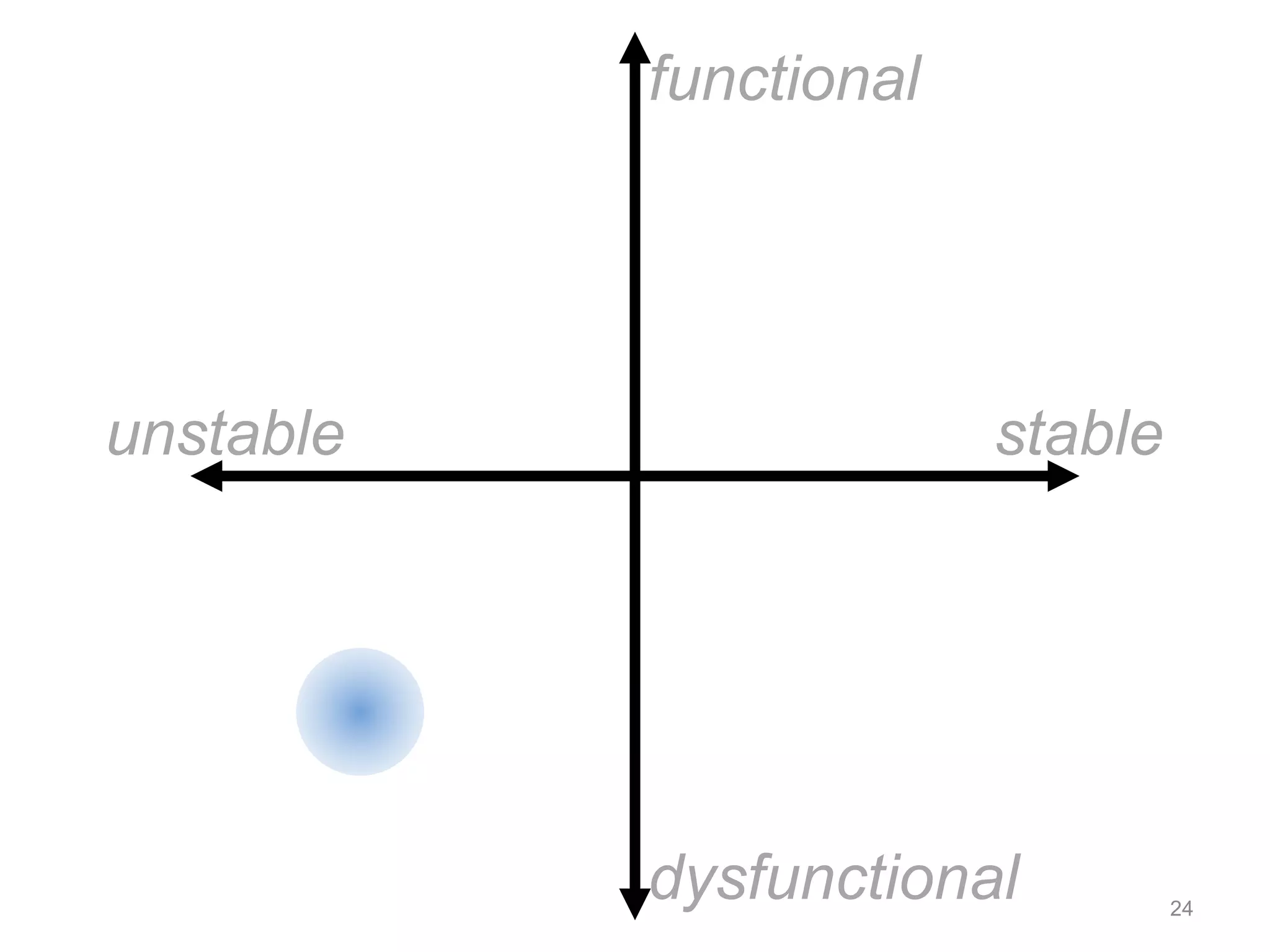
functional 
unstable stable 
dysfunctional 24
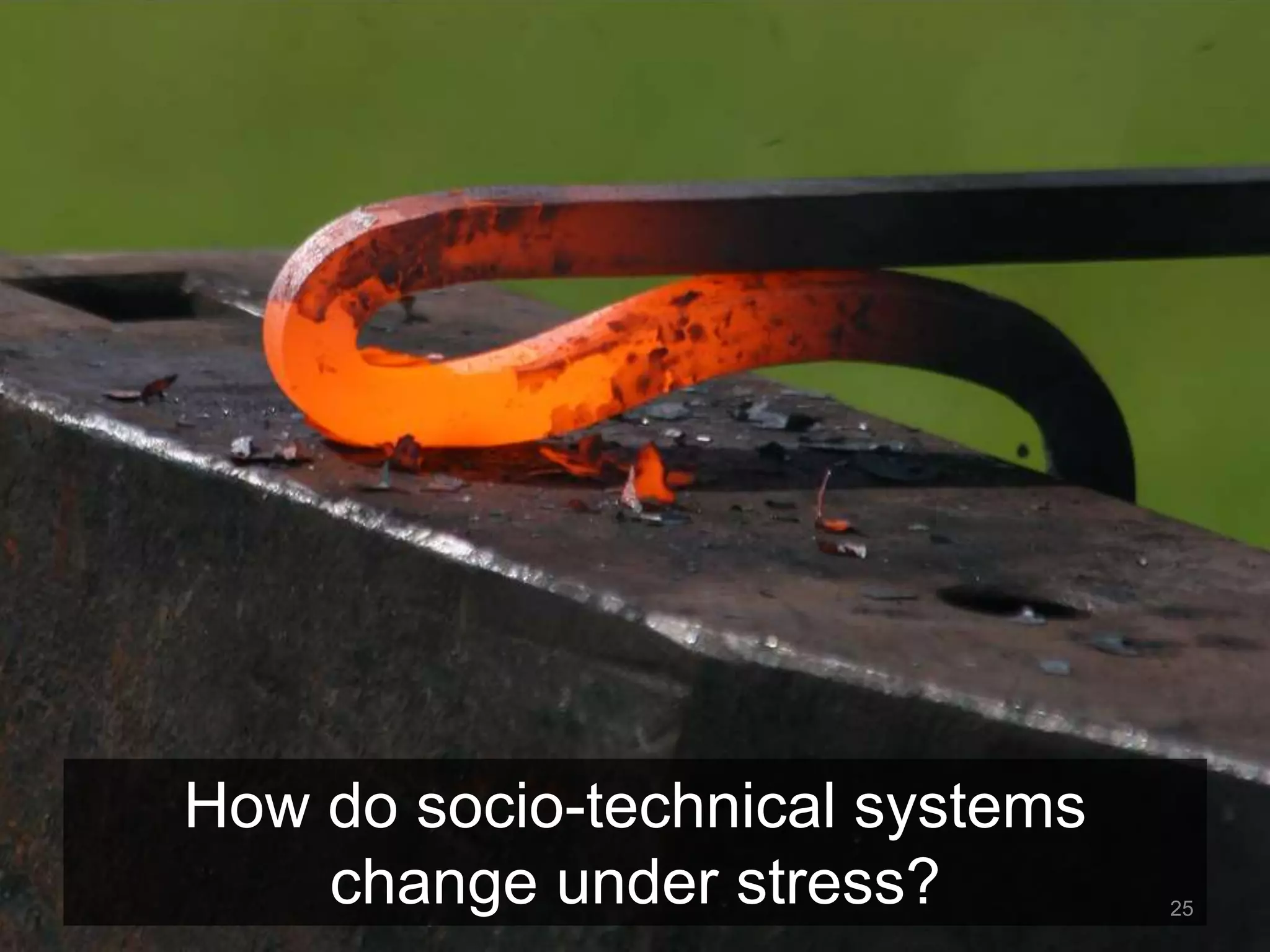
How do socio-technical systems 
change under stress? 25
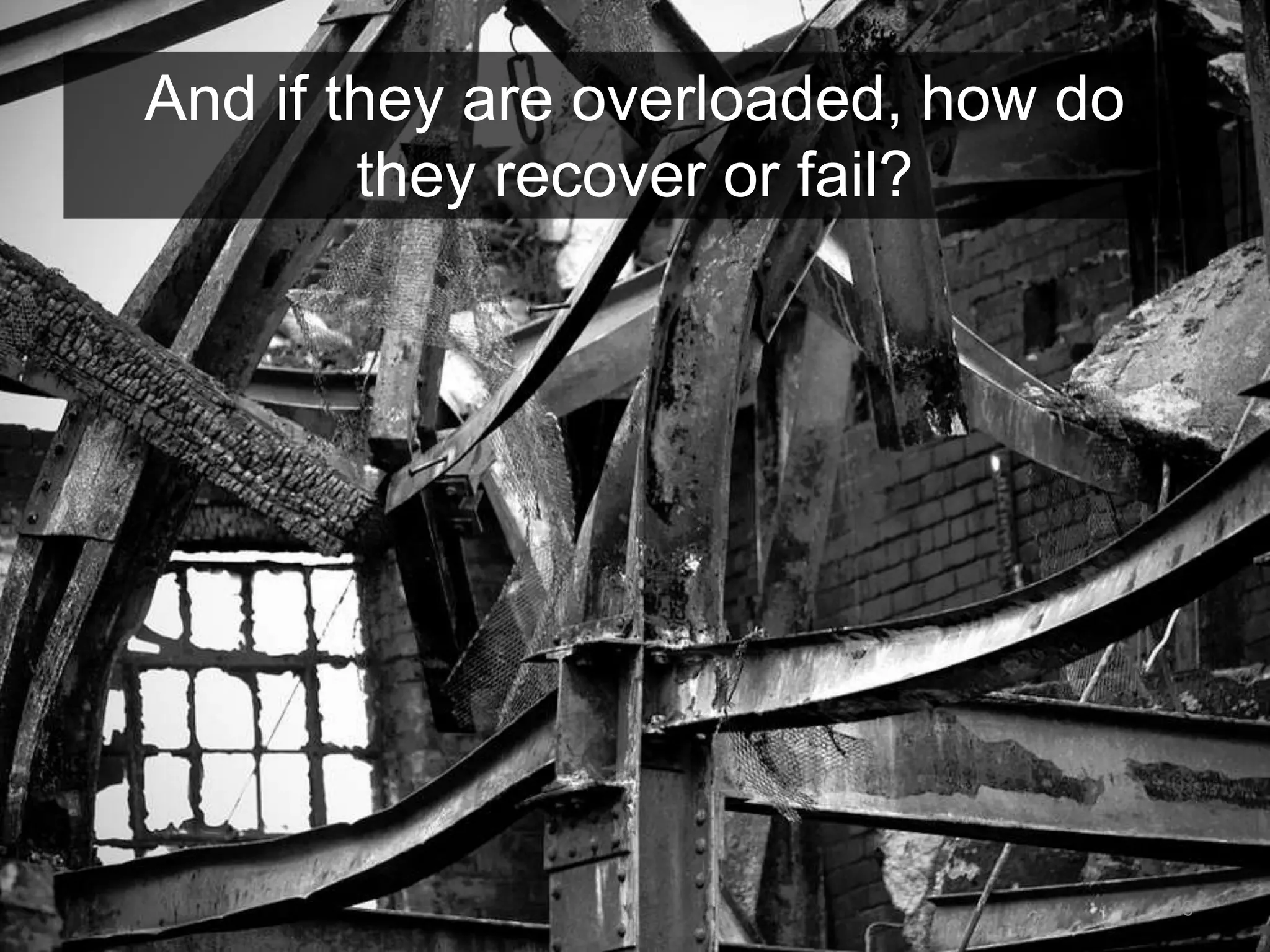
And if they are overloaded, how do 
they recover or fail? 
26
27
28
29
30
31 
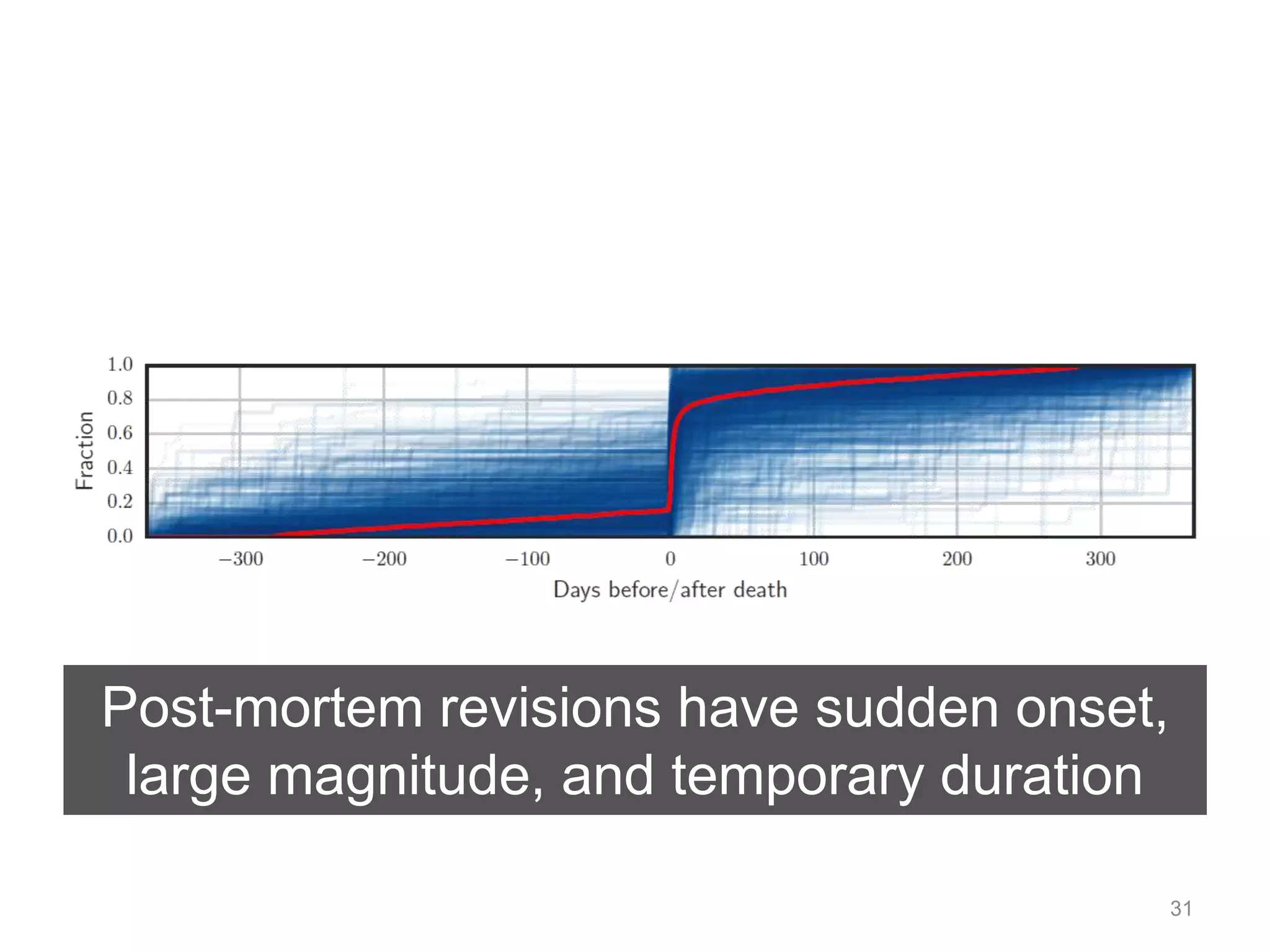
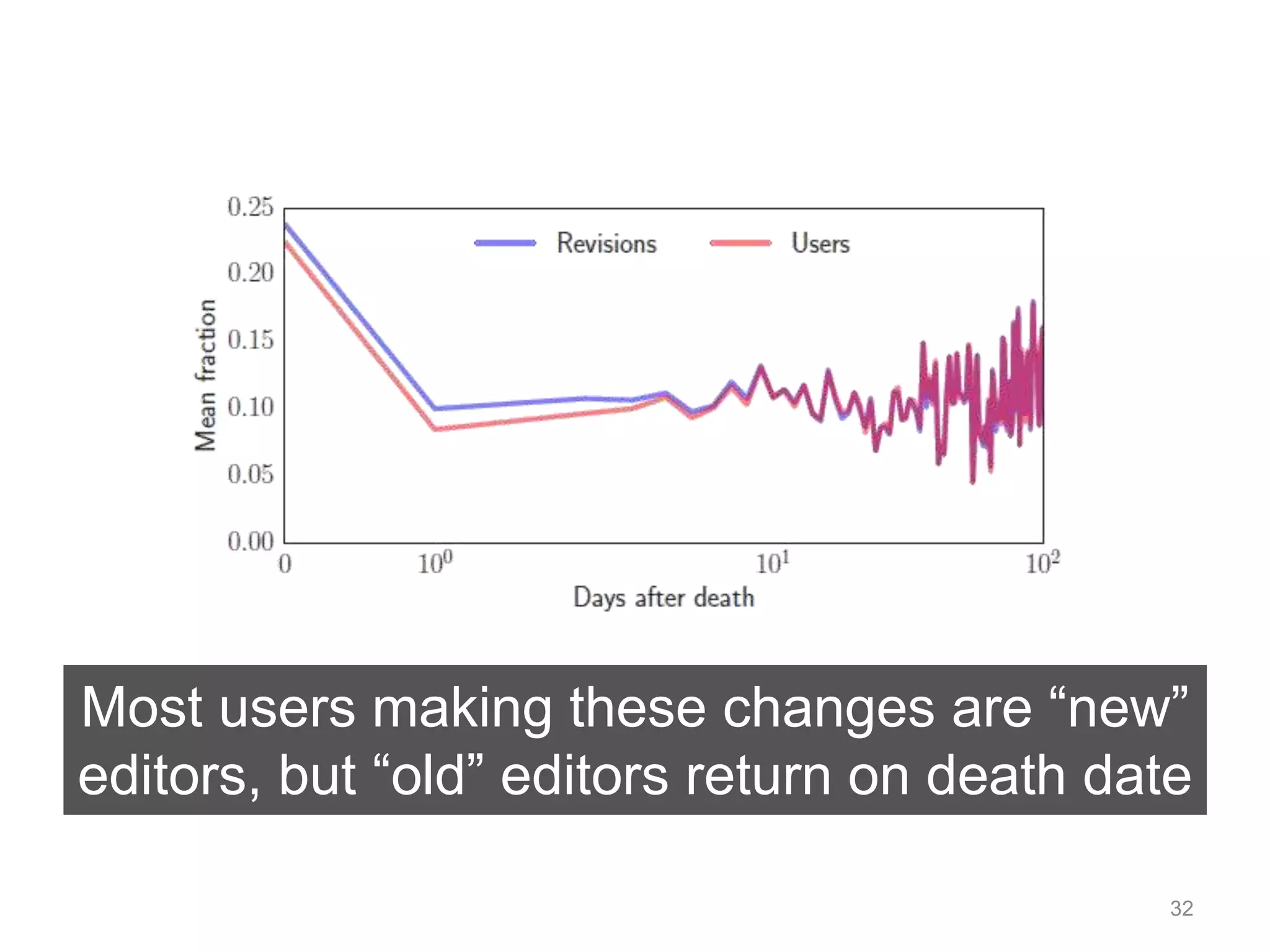
Post-mortem revisions have sudden onset, 
large magnitude, and temporary duration
Most users making these changes are “new” 
editors, but “old” editors return on death date 
32
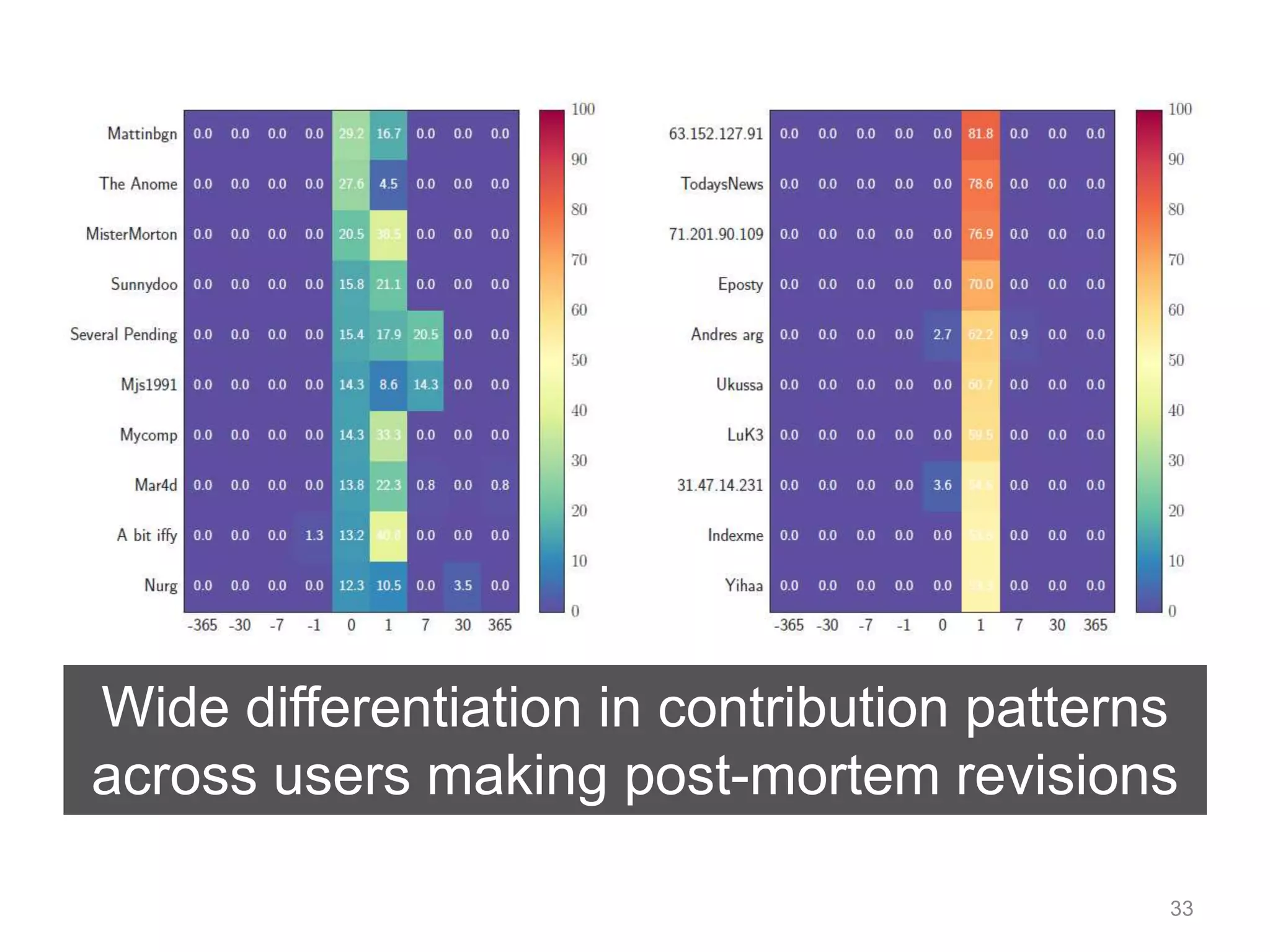
Wide differentiation in contribution patterns 
across users making post-mortem revisions 
33
functional 
Wikipedia 
unstable stable 
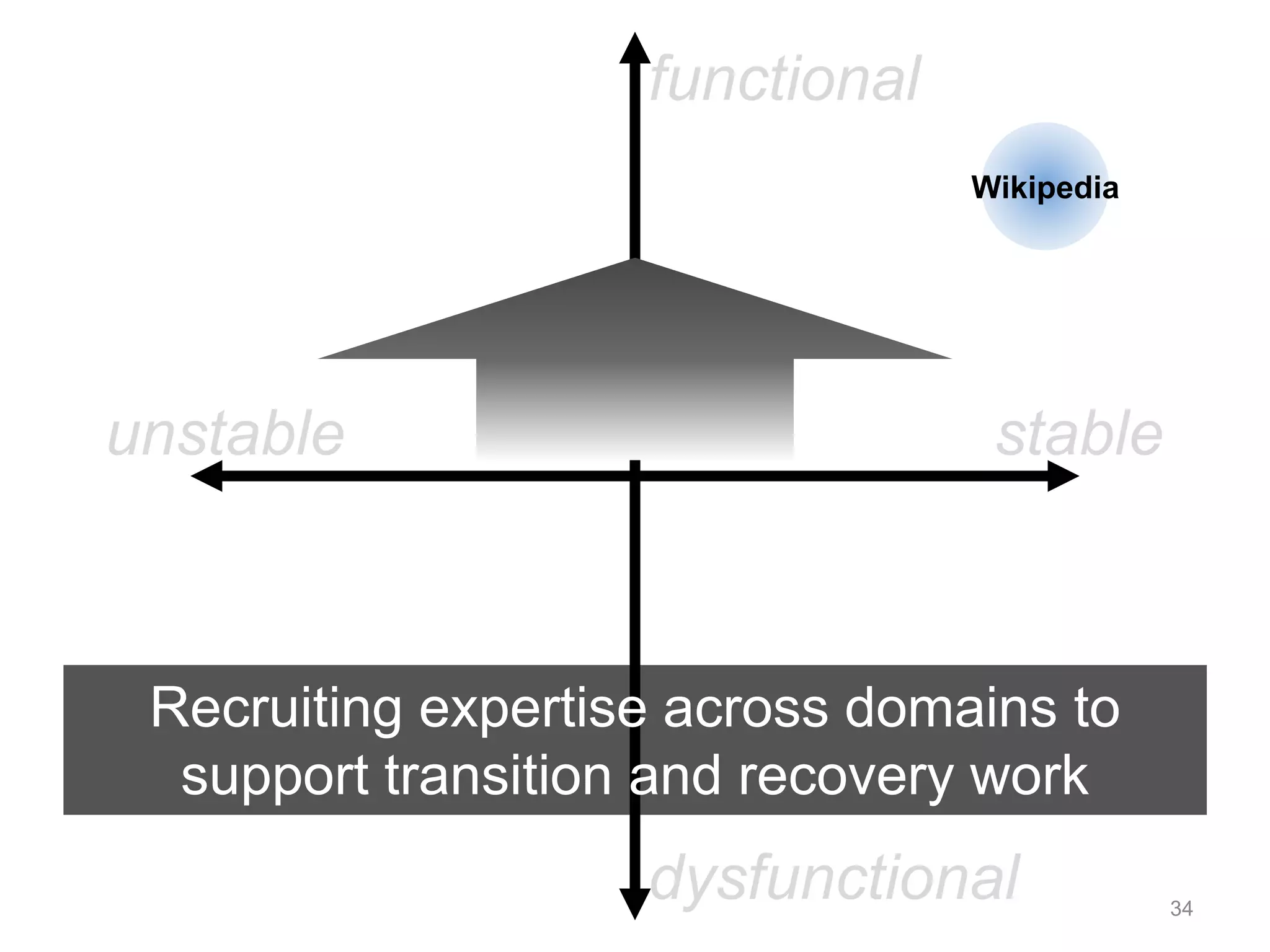
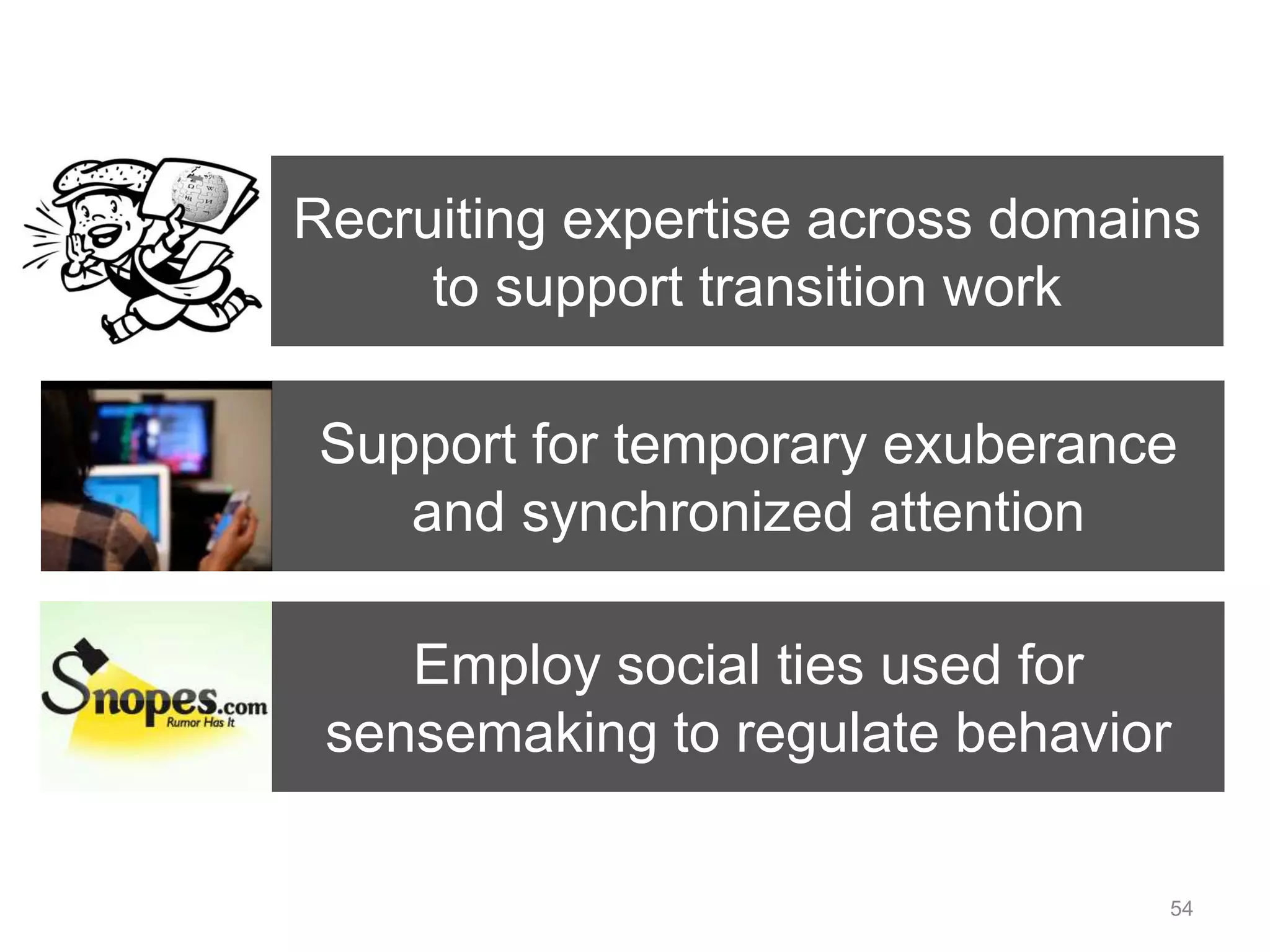
Recruiting expertise across domains to 
support transition and recovery work 
dysfunctional 34
35
36 
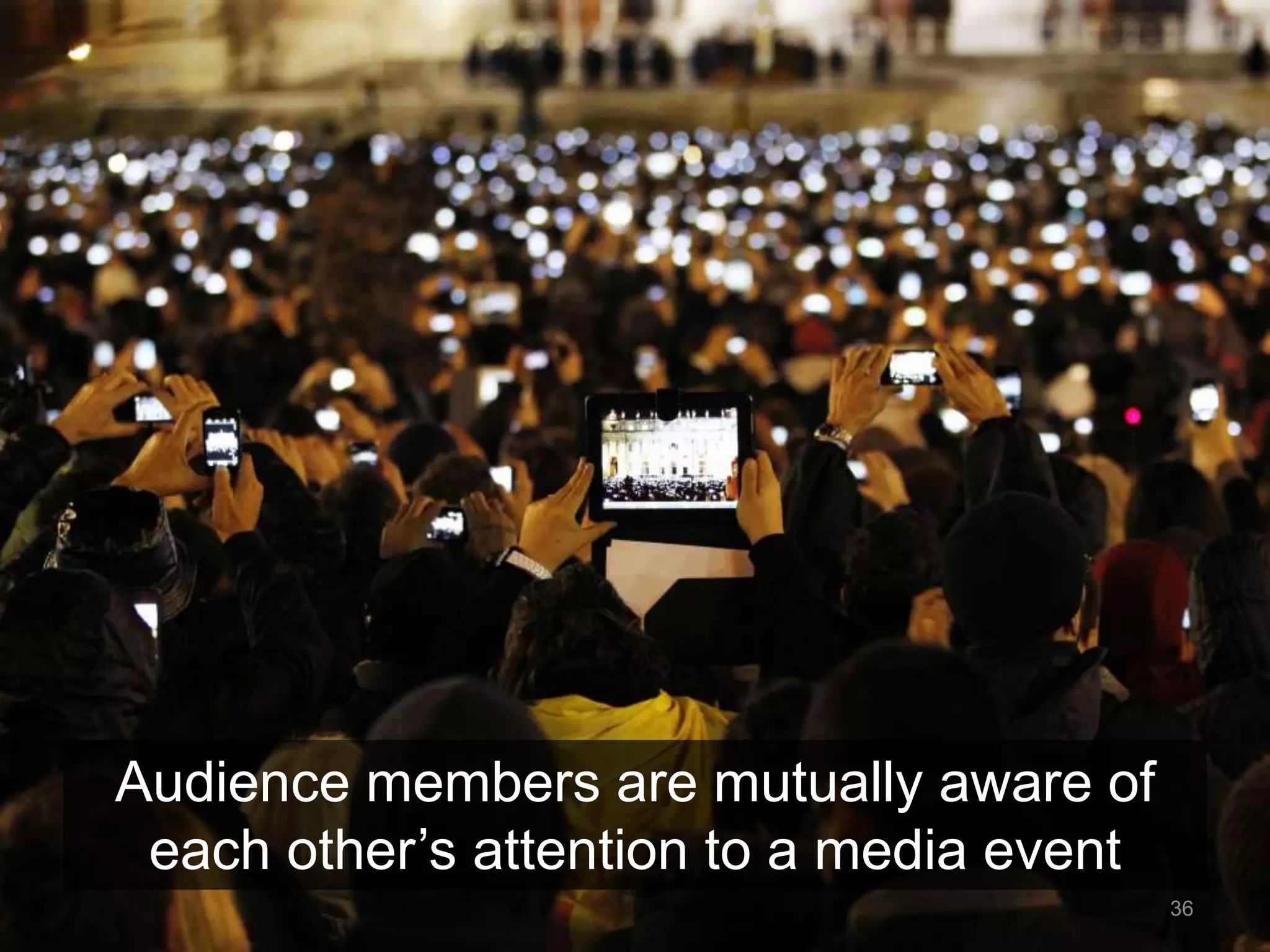
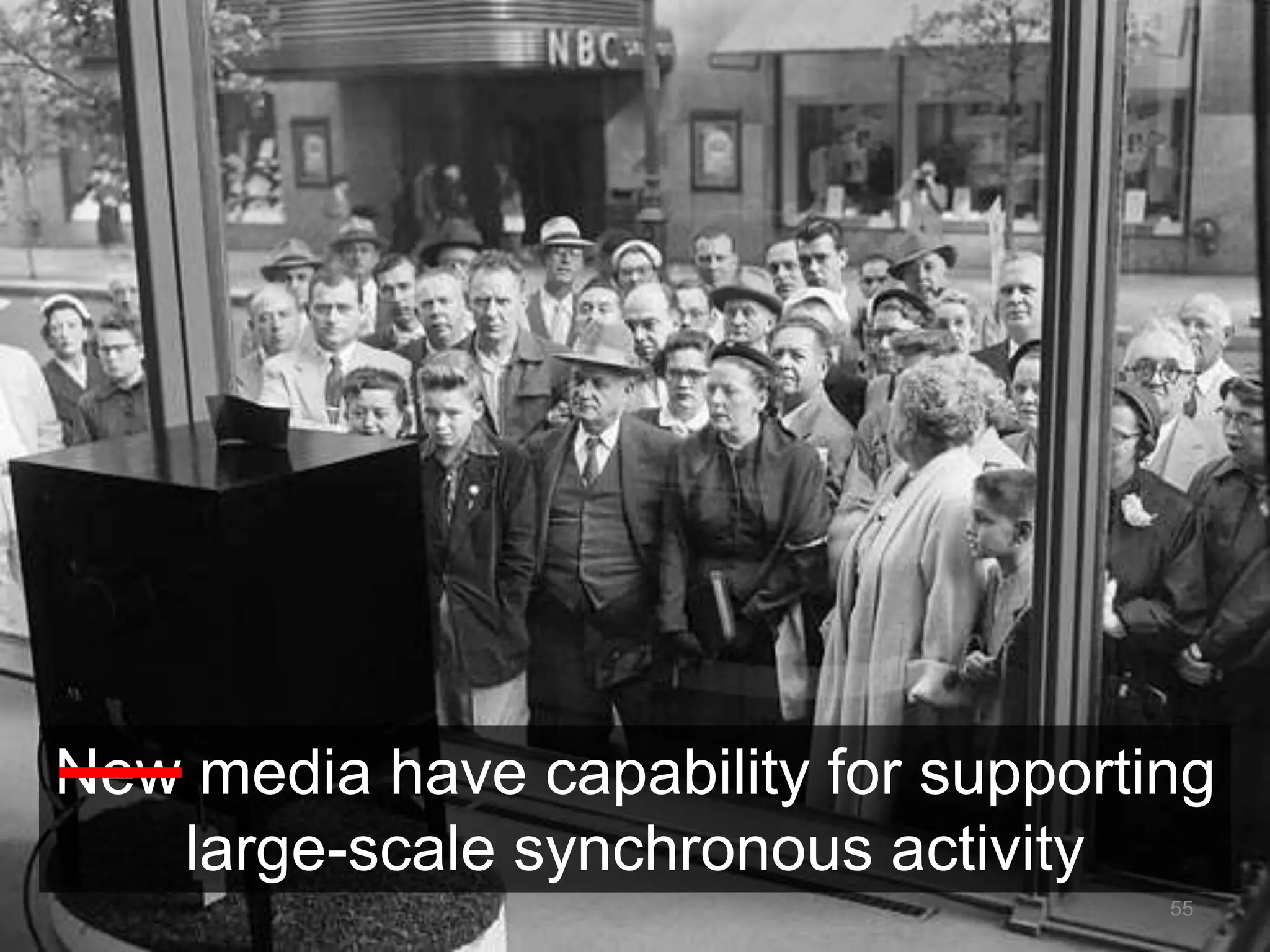
Audience members are mutually aware of 
each other’s attention to a media event
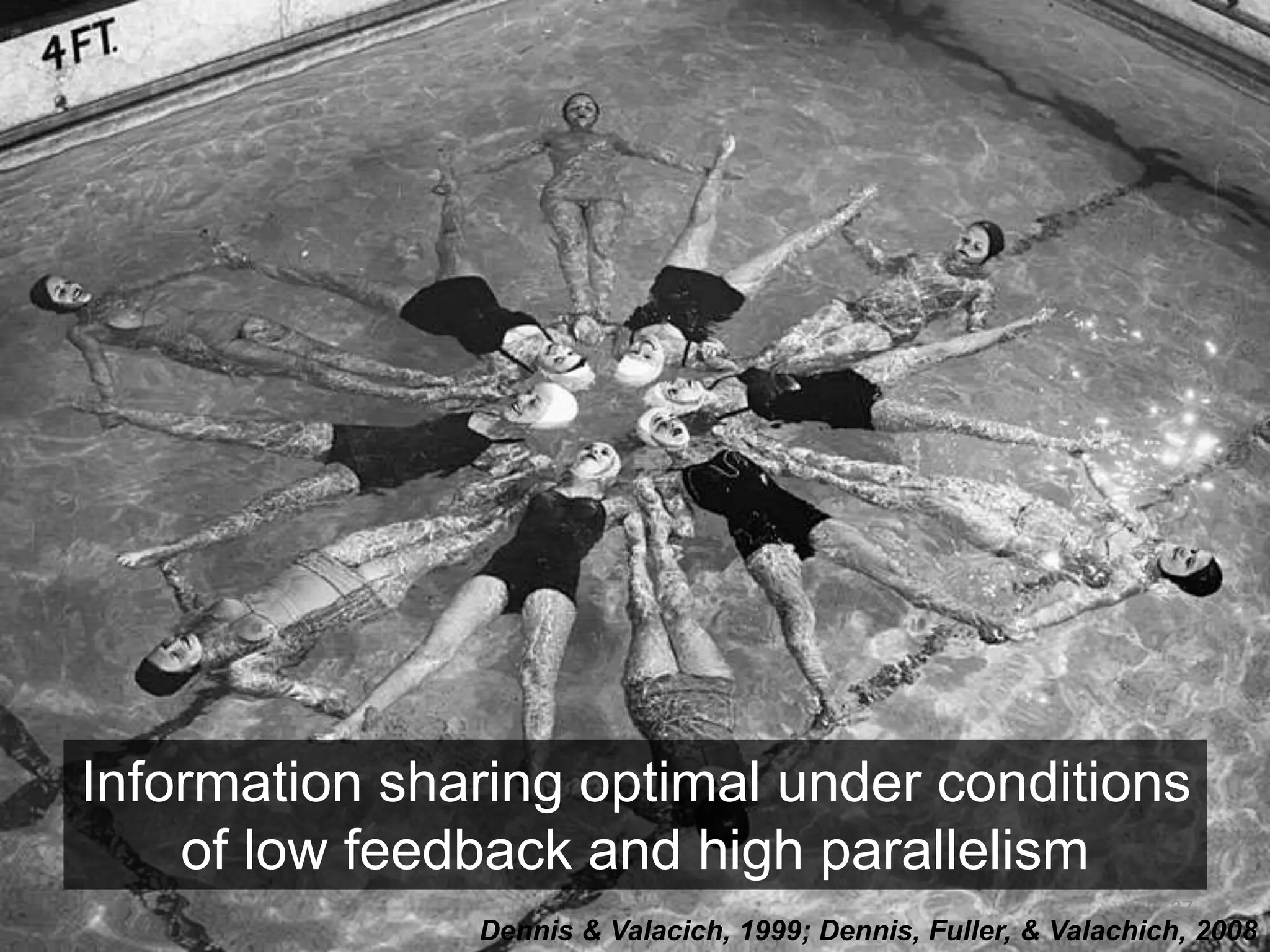
Information sharing optimal under conditions 
37 
of low feedback and high parallelism 
Dennis & Valacich, 1999; Dennis, Fuller, & Valachich, 2008
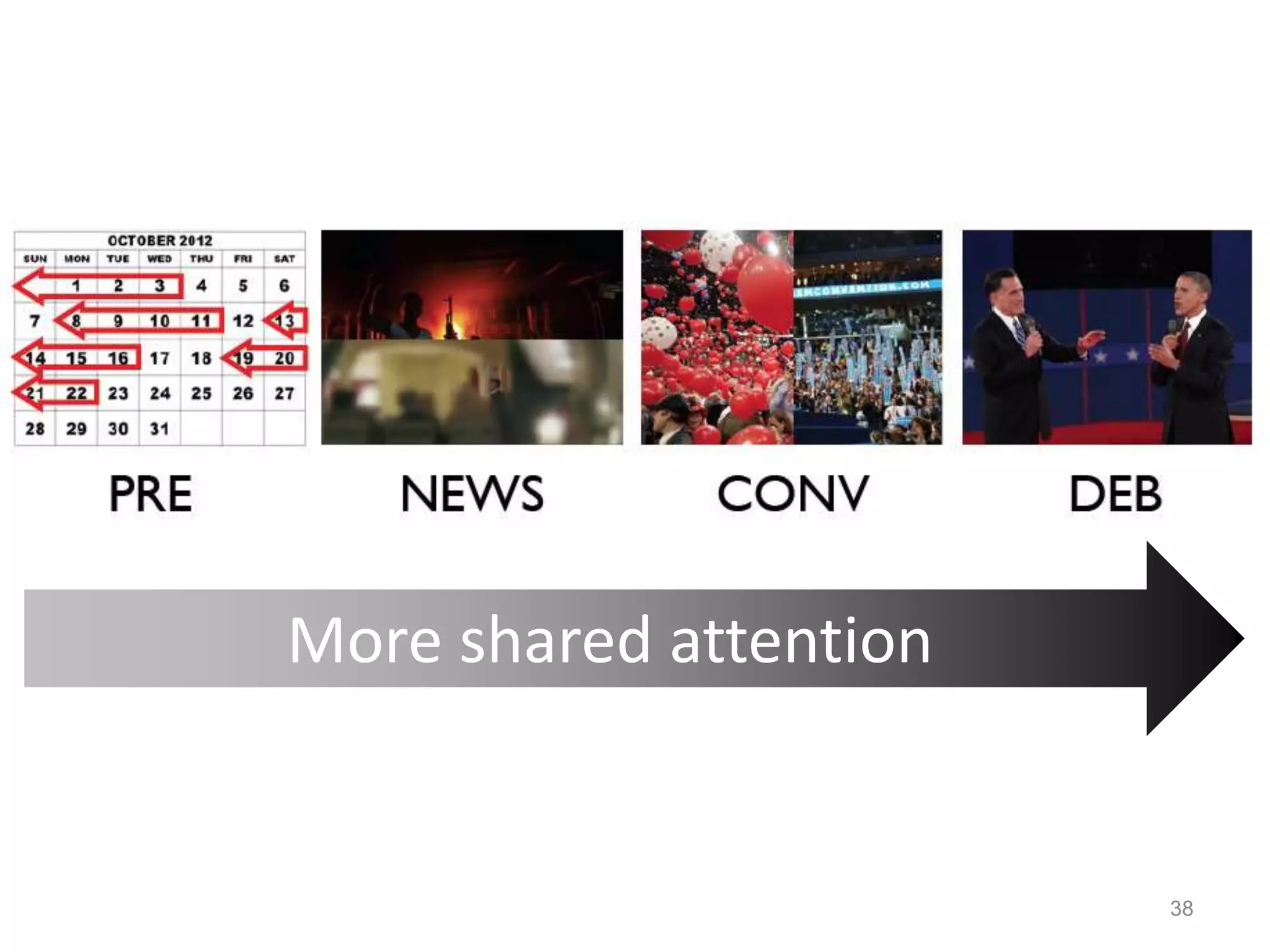
More shared attention 
38
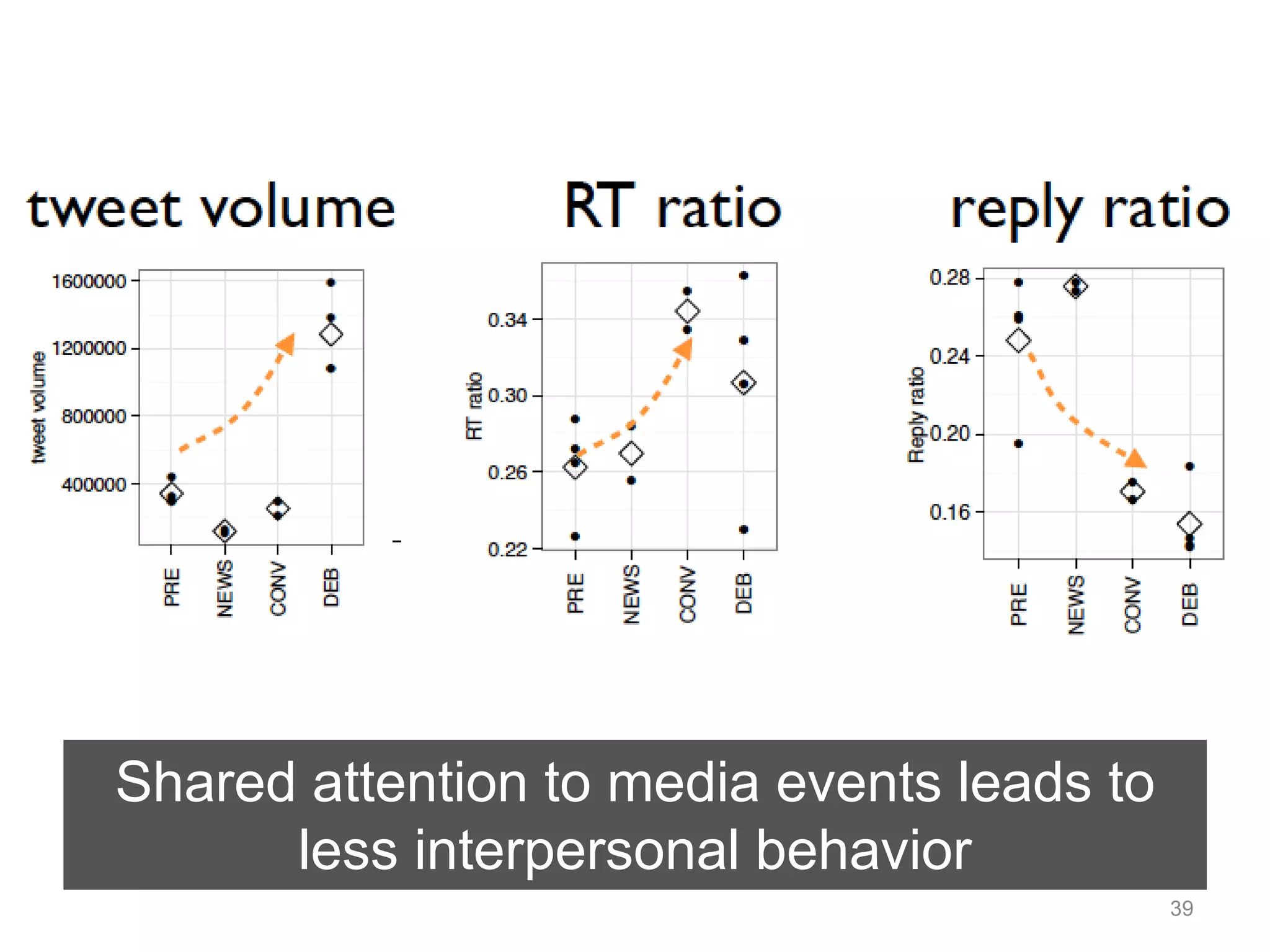
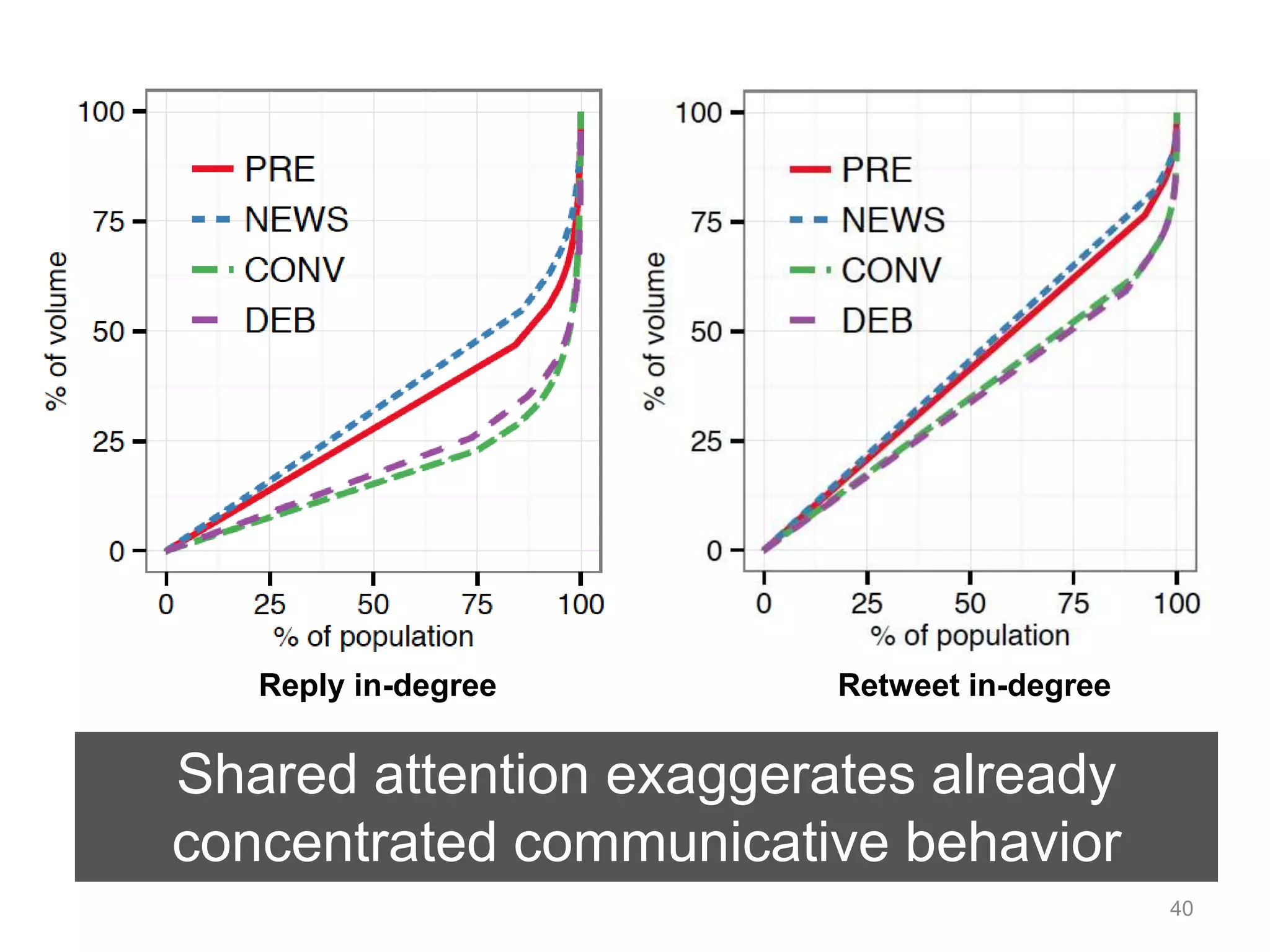
Shared attention to media events leads to 
less interpersonal behavior 
39
Reply in-degree Retweet in-degree 
Shared attention exaggerates already 
concentrated communicative behavior 
40
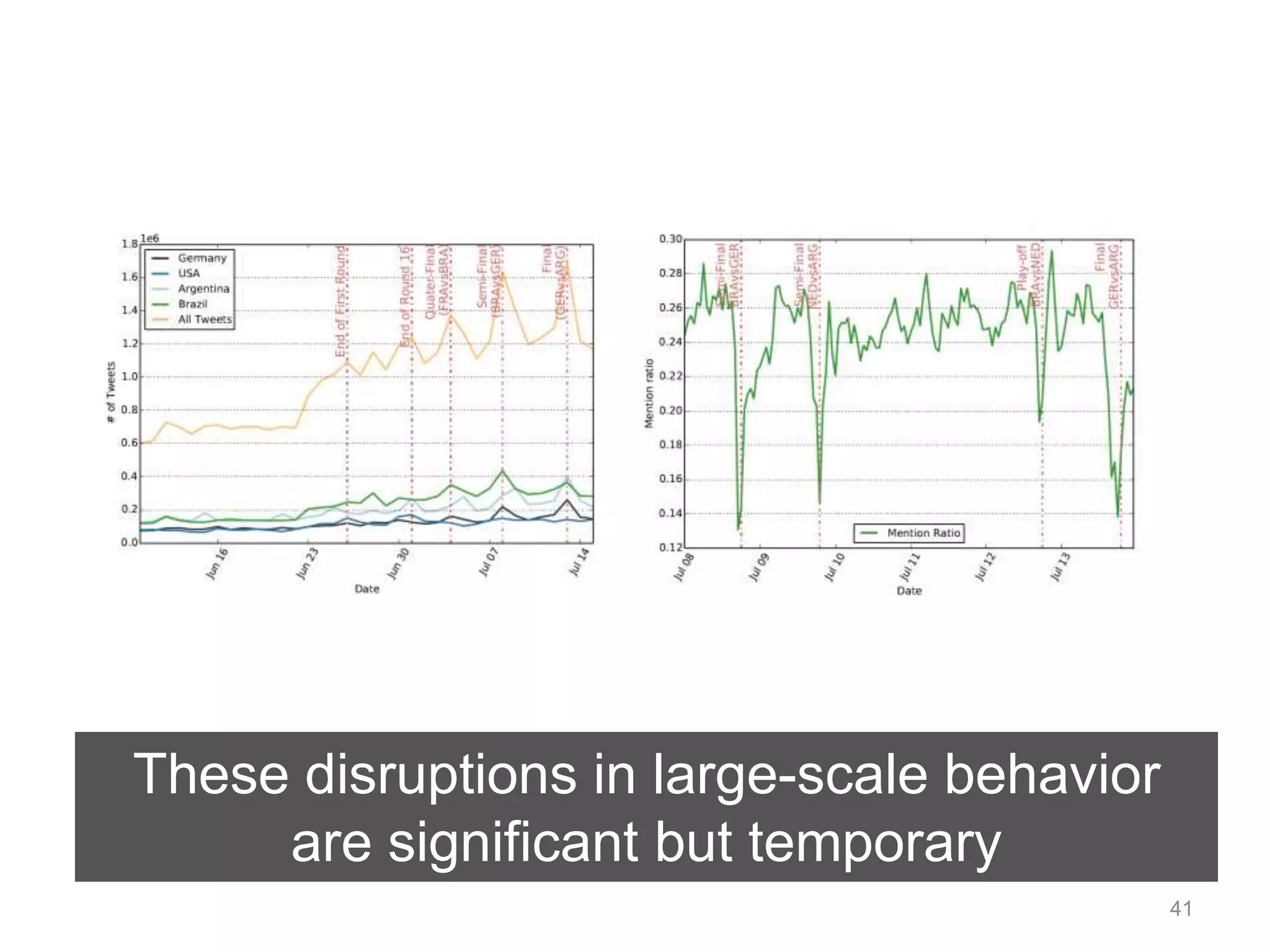
41 
These disruptions in large-scale behavior 
are significant but temporary
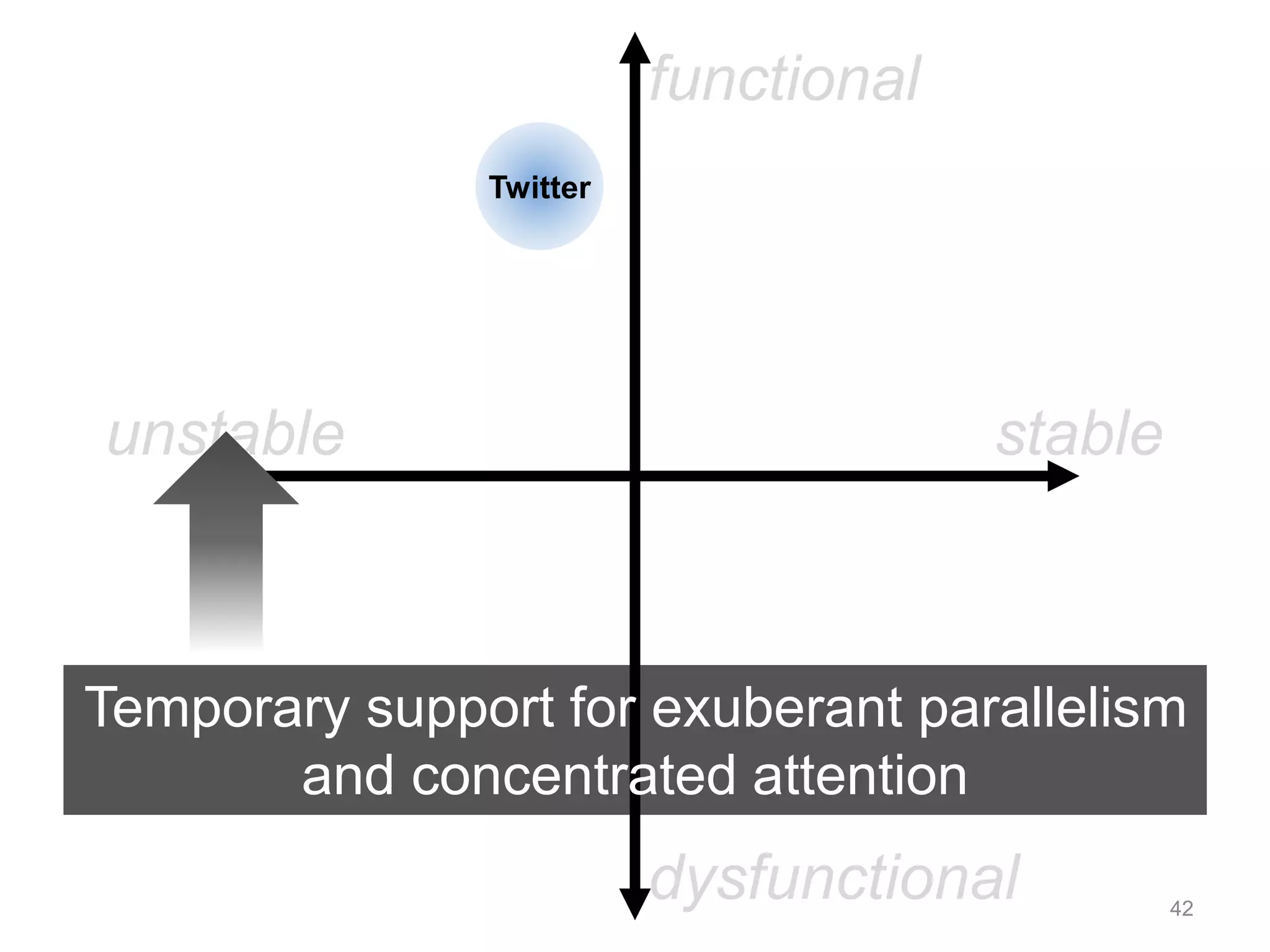
functional 
unstable stable 
Temporary support for exuberant parallelism 
and concentrated attention 
dysfunctional 42 
Twitter
43
44
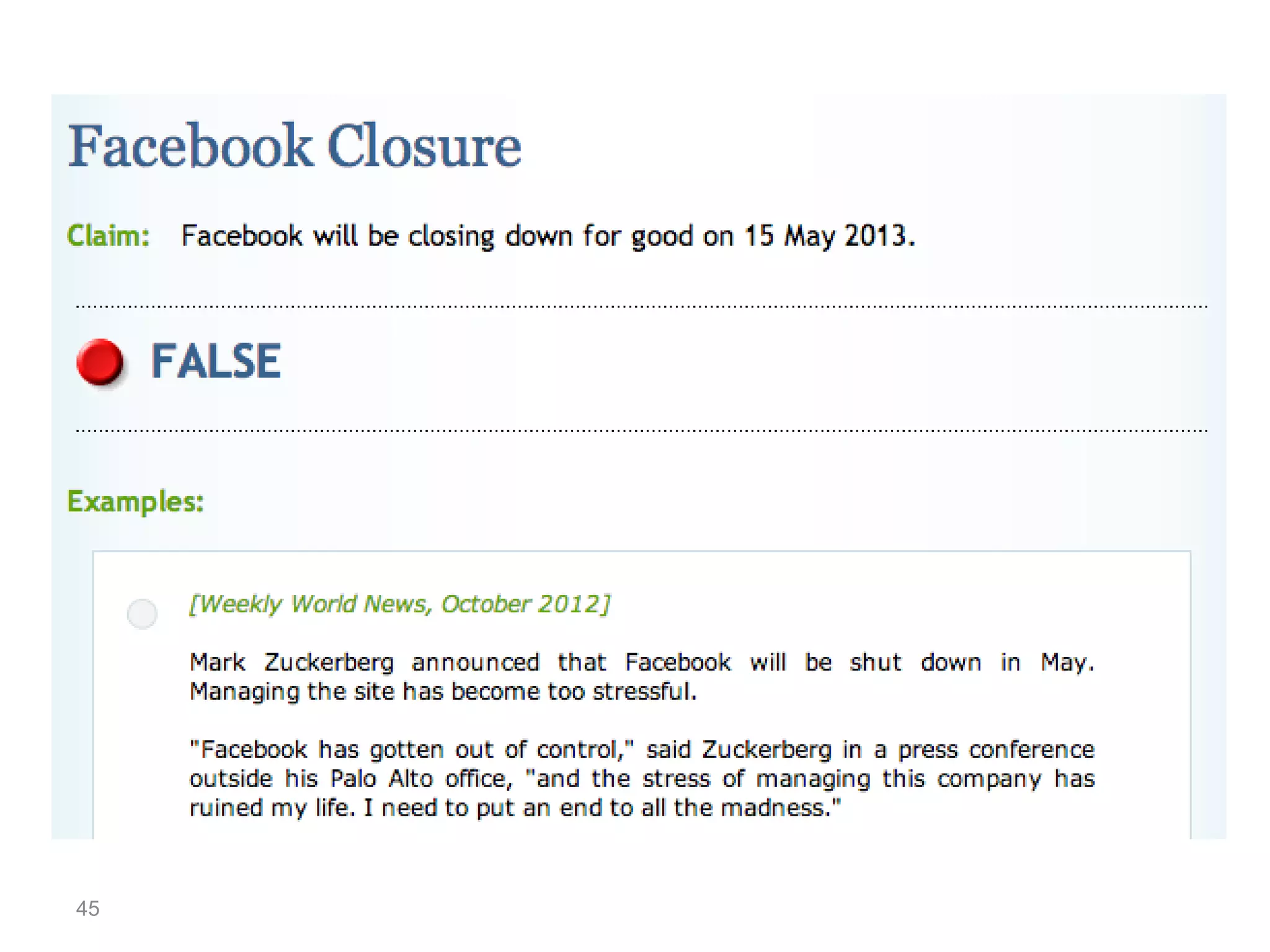
45
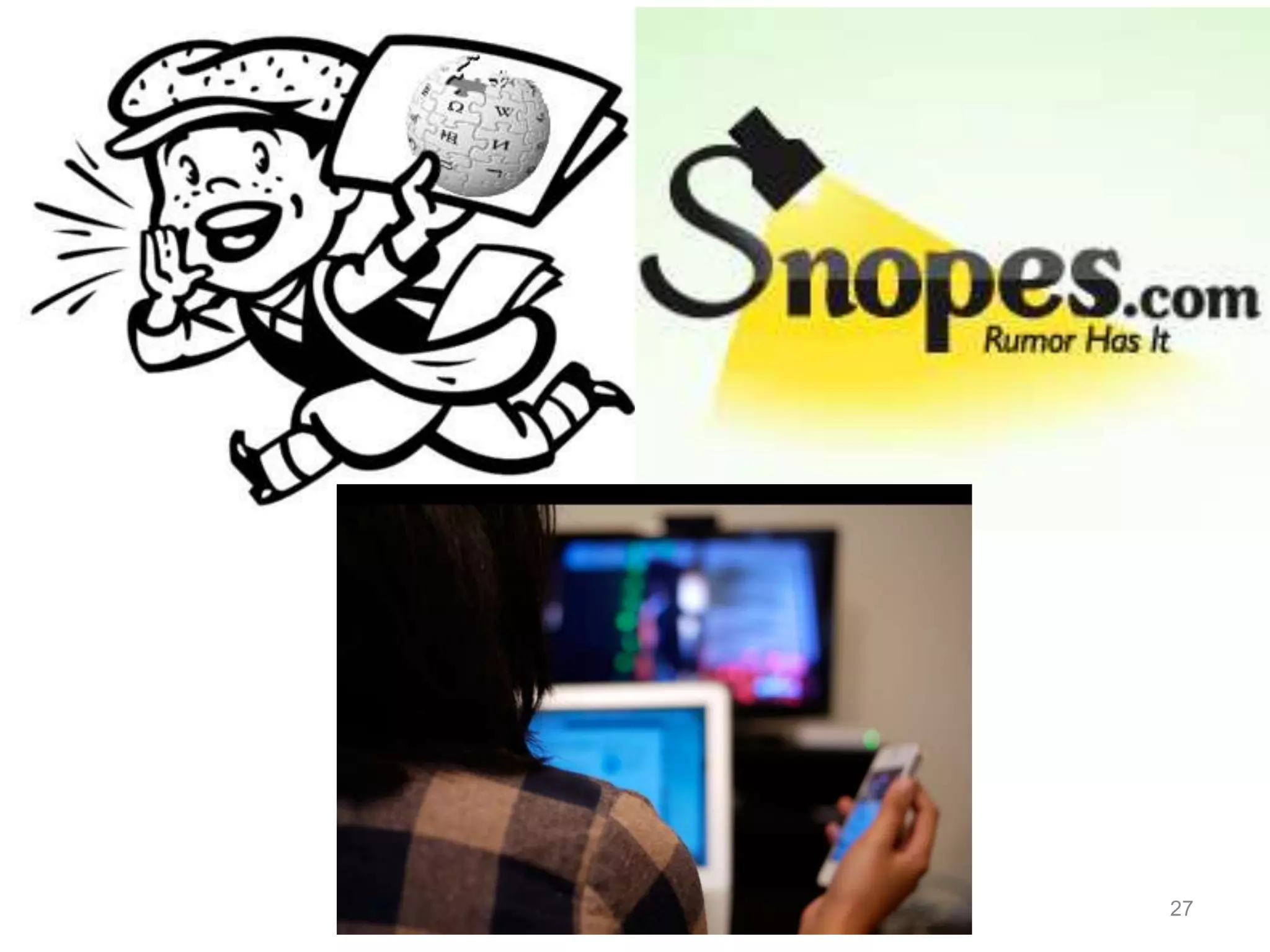
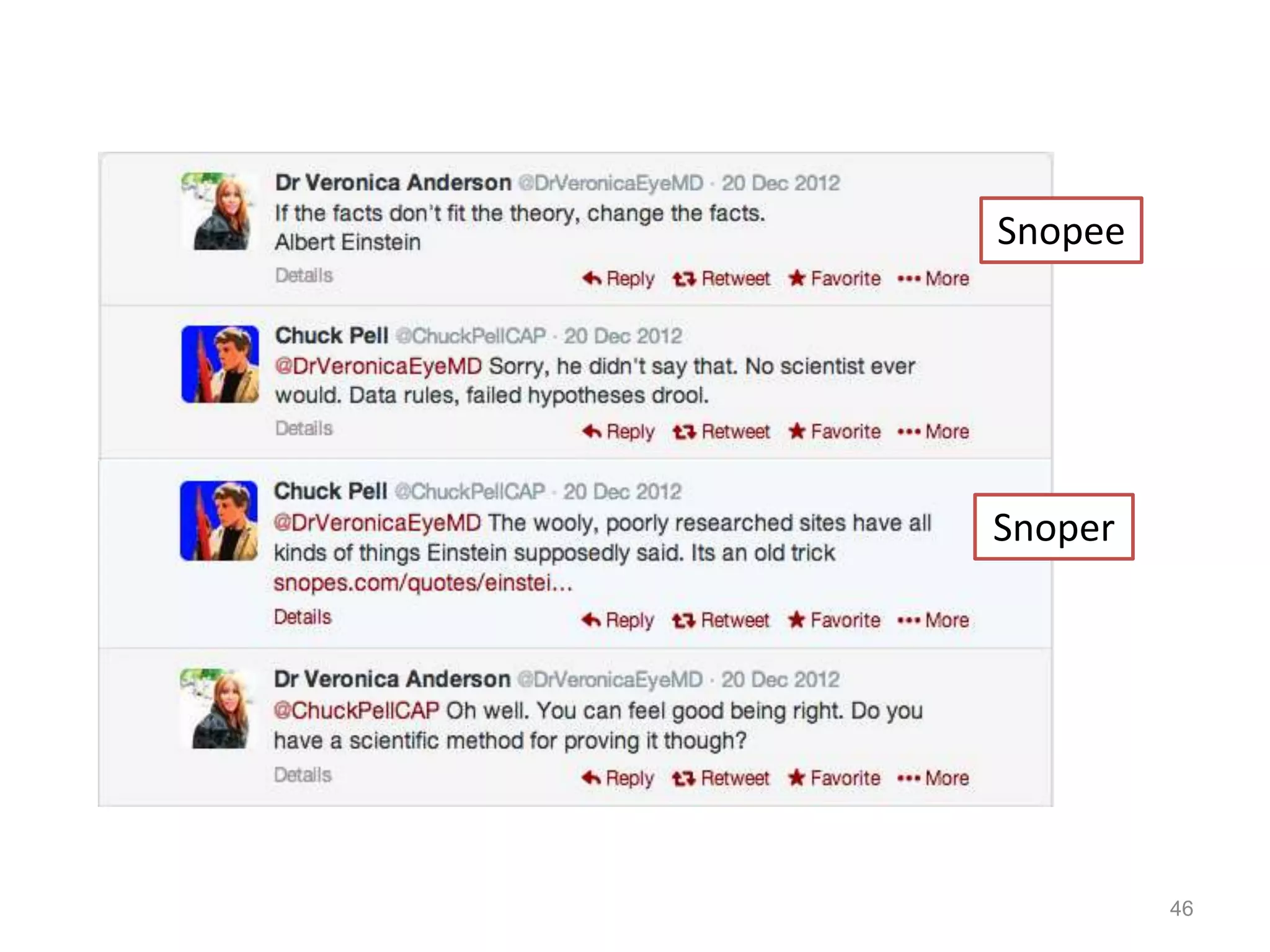
Snopee 
Snoper 
46
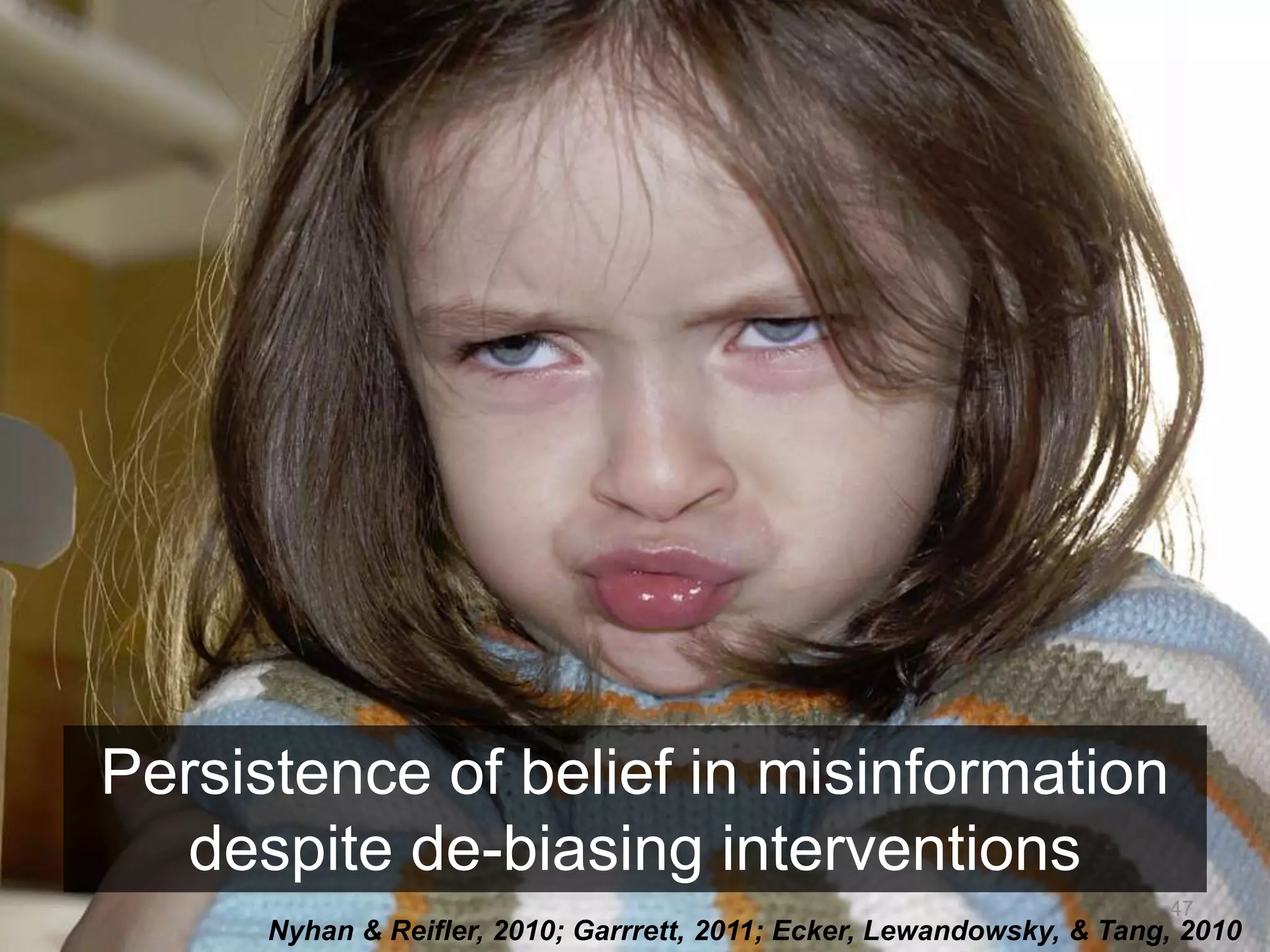
Persistence of belief in misinformation 
despite de-biasing interventions 
47 
Nyhan & Reifler, 2010; Garrrett, 2011; Ecker, Lewandowsky, & Tang, 2010
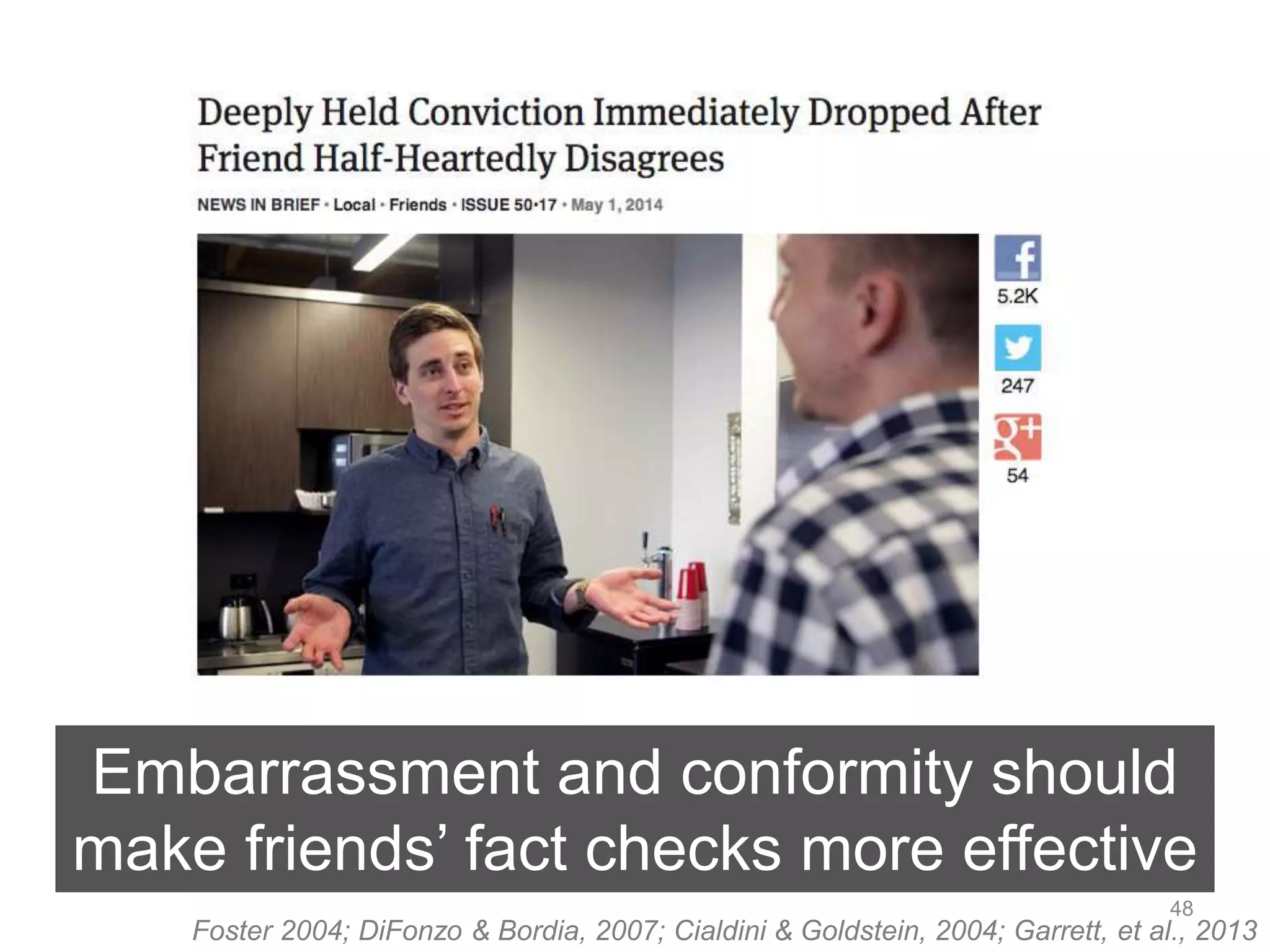
Embarrassment and conformity should 
make friends’ fact checks more effective 
48 
Foster 2004; DiFonzo & Bordia, 2007; Cialdini & Goldstein, 2004; Garrett, et al., 2013
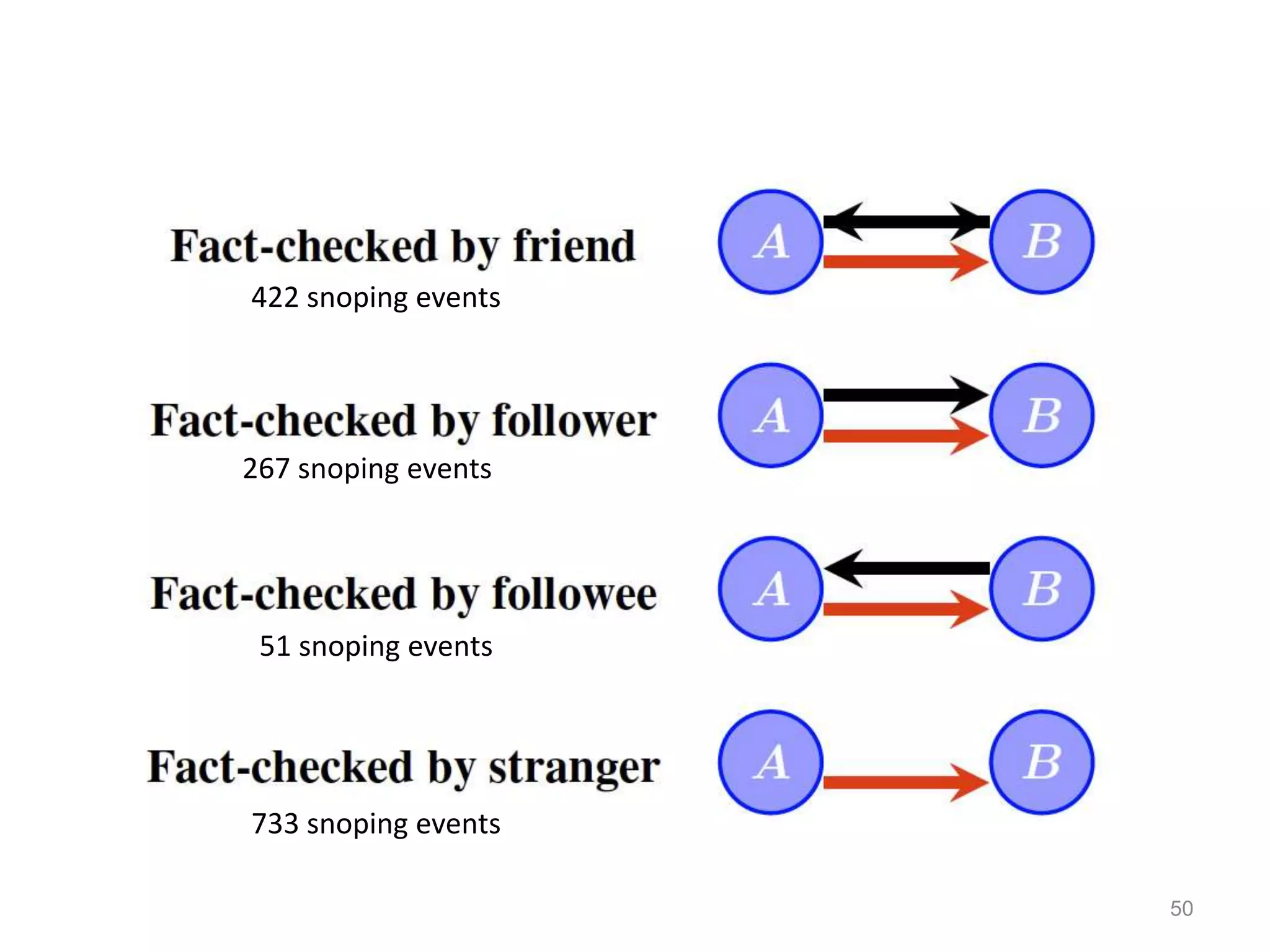
422 snoping events 
267 snoping events 
51 snoping events 
733 snoping events 
50
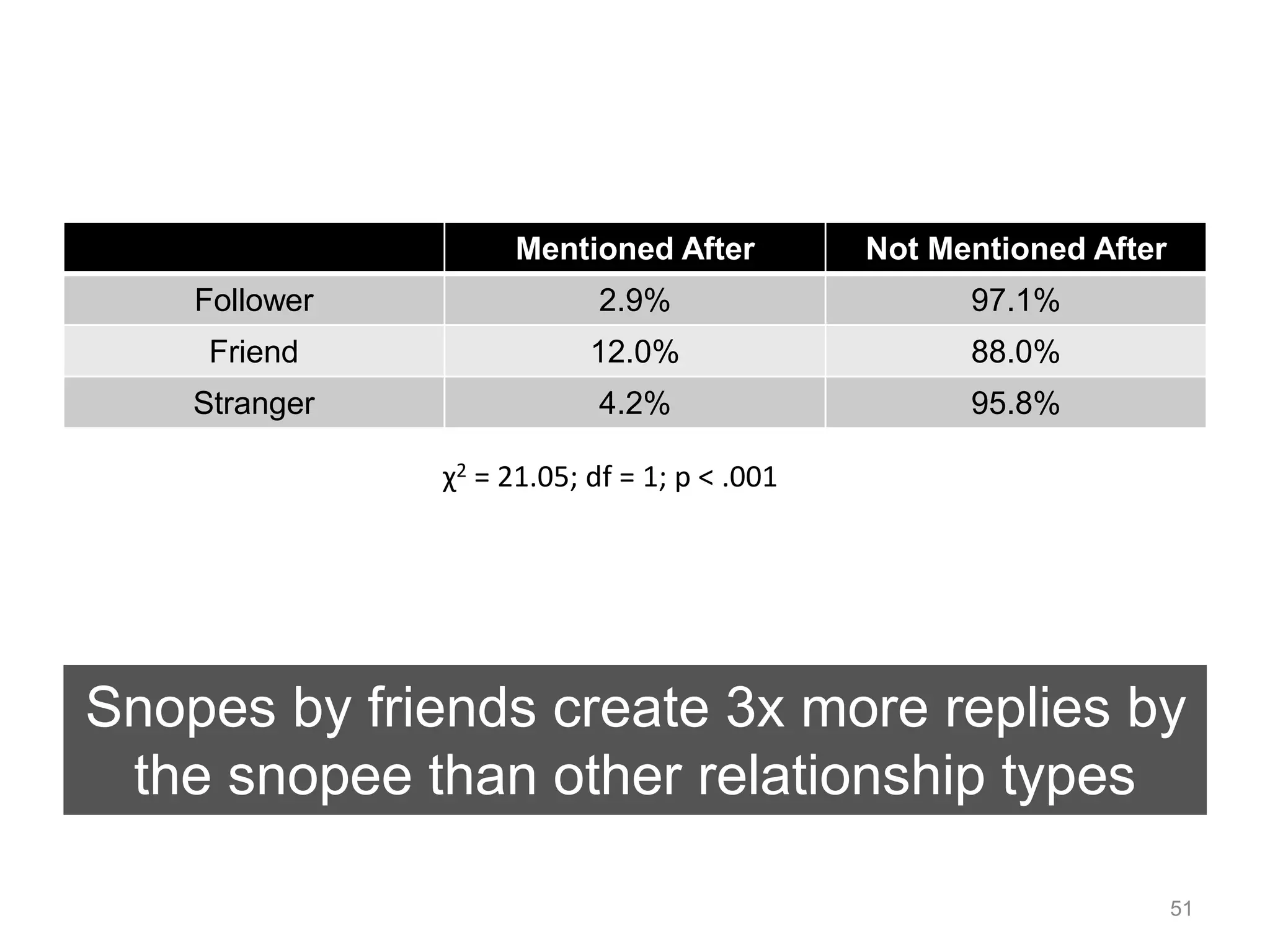
Mentioned After Not Mentioned After 
Follower 2.9% 97.1% 
Friend 12.0% 88.0% 
Stranger 4.2% 95.8% 
χ2 = 21.05; df = 1; p < .001 
Snopes by friends create 3x more replies by 
the snopee than other relationship types 
51
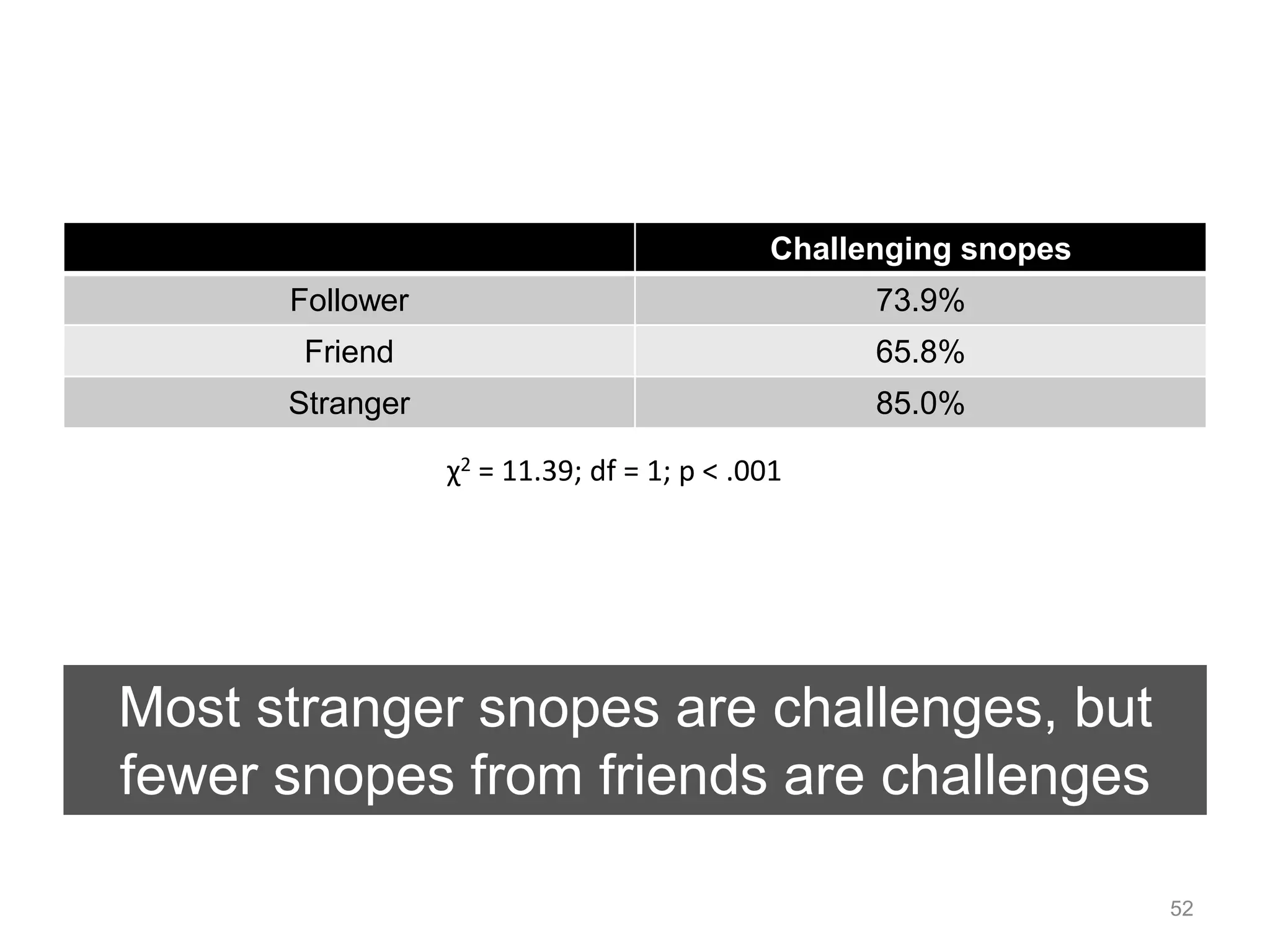
Challenging snopes 
Follower 73.9% 
Friend 65.8% 
Stranger 85.0% 
χ2 = 11.39; df = 1; p < .001 
52 
Most stranger snopes are challenges, but 
fewer snopes from friends are challenges
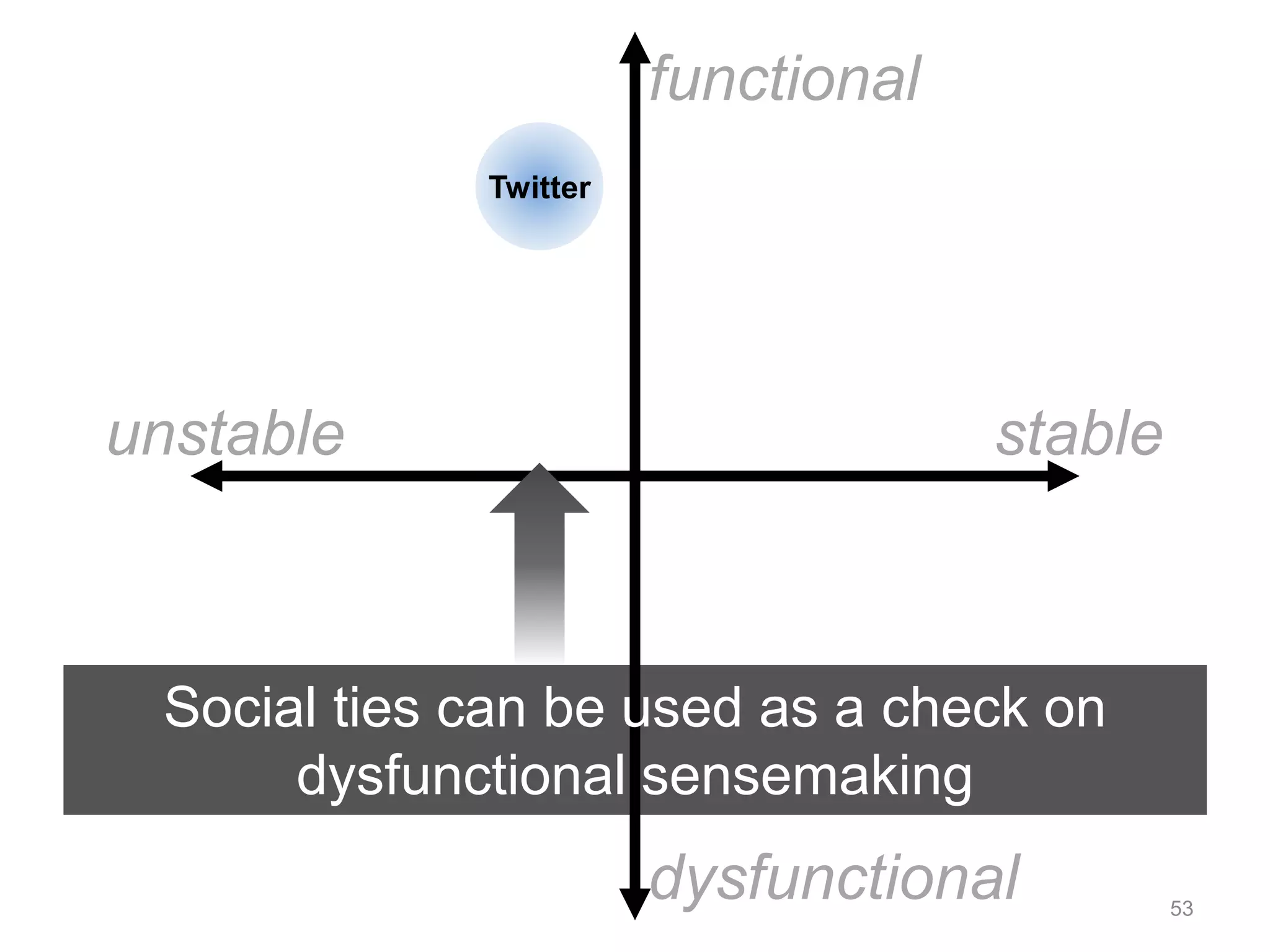
functional 
unstable stable 
Social ties can be used as a check on 
dysfunctional sensemaking 
dysfunctional 53 
Twitter
Recruiting expertise across domains 
Support for temporary exuberance 
54 
to support transition work 
and synchronized attention 
Employ social ties used for 
sensemaking to regulate behavior
New media have capability for supporting 
55 
large-scale synchronous activity
56 
Selecting on dependent variable by 
analyzing systems that can recover 
Barro, 2005
57 
Ability to accommodate temporary 
changes to media characteristics
58 
Adapting theories of allostasis to 
socio-technical settings and processes
59 
Stressors, mediators, reactions, 
recovery, acclimation, dependence
60 
Ethics of engineering disruptions for 
behavioral change
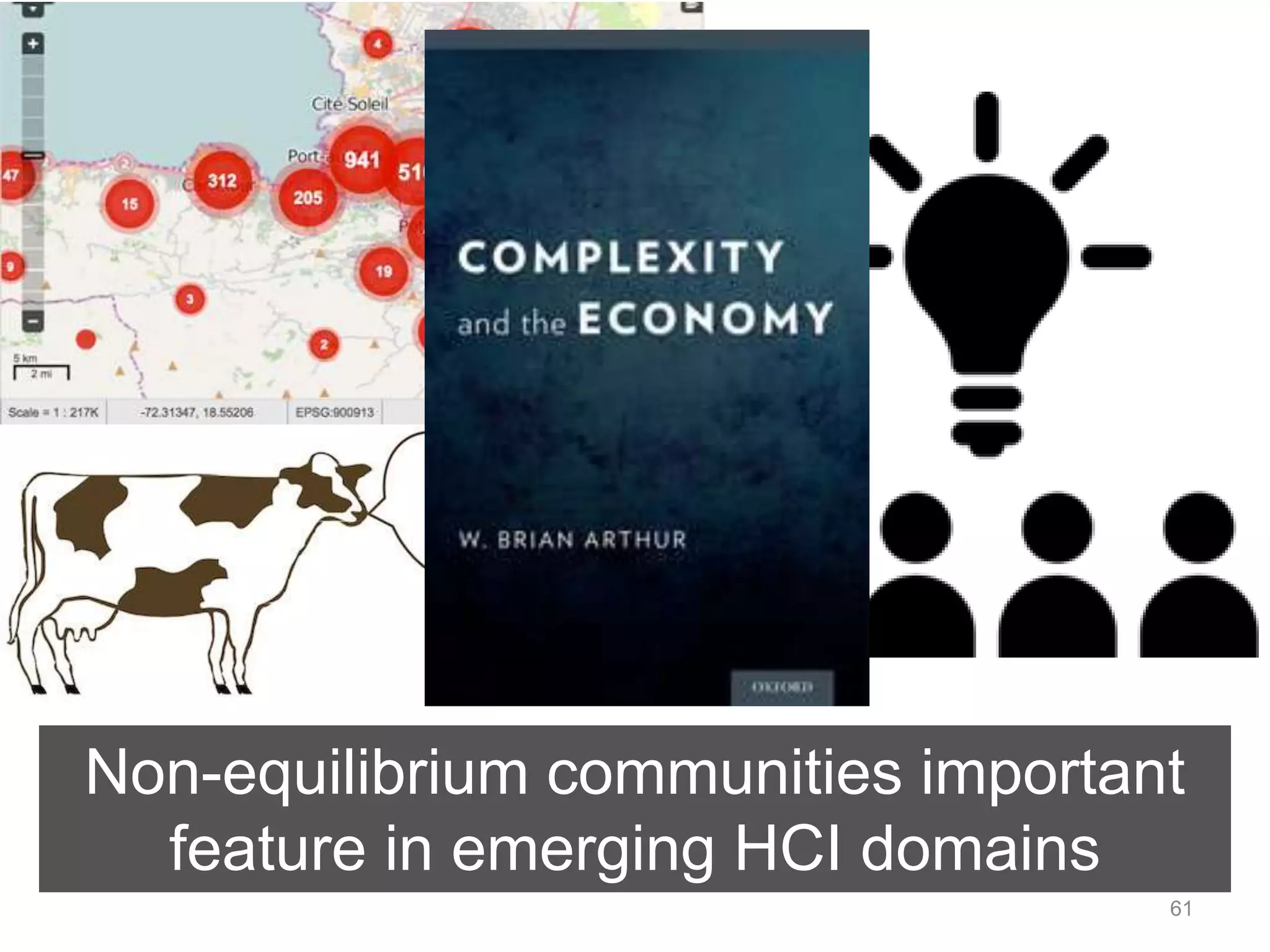
Non-equilibrium communities important 
61 
feature in emerging HCI domains
Thank you! 
www.brianckeegan.com 
@bkeegan 
github.com/brianckeegan 
62 
CMU HCII for invitation 
Co-authors: Jed Brubaker (UC Irvine), Yu-Ru Lin (Pitt), Drew 
Margolin (Cornell), Ancsa Hannak (NEU), Ingmar Weber (QCRI), 
David Lazer (NEU), 
Darren Gergle (NU), Noshir Contractor (NU) 
CSCW DC 2012, iConference DC 2012, DSST Workshop 2013, 
Berkman Cooperation Reading Group

CMU HCII Speaker Series - Stress in Socio-technical Systems

Editor's Notes

  • #5 https://www.flickr.com/photos/tamuresearch/4724825738/
  • #7 https://www.flickr.com/photos/lakota41/4444738501/sizes/l Recovering from change, re-establishing homeostasis, response to a challenge Homeostasis: standing the same Allostasis: variable stability
  • #8 https://www.flickr.com/photos/internetarchivebookimages/14757743076/
  • #9 https://www.flickr.com/photos/davethielen/3718663030
  • #10 http://cdp.sagepub.com/content/14/3/135
  • #11 Didier & Sornette classes
  • #12 Starting a new community, attracting and socializing new members, encouraging commitment, encouraging contribution, regulating behavior
  • #22 https://www.flickr.com/photos/flash_and_blur/7965513510
  • #26 https://www.flickr.com/photos/neil74/7467566548/sizes/l/
  • #27 https://www.flickr.com/photos/terrymc/6301657093/sizes/l
  • #37 http://www.corbisimages.com/stock-photo/rights-managed/42-44344737/vatican-pope
  • #38 https://www.flickr.com/photos/uwdigicollec/2247502690/
  • #48 https://www.flickr.com/photos/yogy/3087605910/sizes/l Presentation of “correct” information has limited effects in change in individual attitudes Difficulty of dislodging “sticky” misinformation arises from consistency with attitudes, beliefs, and worldviews Rumors, gossip, and misinformation demarcate group boundaries and communicate shared values Dissemination of misinformation also aids sensemaking under uncertainty and reinforces strong, trusted ties
  • #53 Friends more likely (45%) to reply to friends’ challenges than friends’ general messages (25%)
  • #56 http://www.corbisimages.com/stock-photo/rights-managed/BE031926/crowd-looking-into-store-window “Convergence is the development of shared meaning for information. By definition it is convergent, in that participants strive to agree on the meaning of information and agree that they have agreed. This means that participants must understand each other's views.” (Dennis & Valacich 1999)
  • #57 http://cdp.sagepub.com/content/14/3/135
  • #58 https://www.flickr.com/photos/tehchix0r/8532040475 Immediacy – ability to give rapid feedback on communications received Symbolic variety – number of ways information can be communicated Parallelism – supporting simultaneous conversations Rehearsability – Fine tuning message before sending Reprocessability – Messages can be re-examined
  • #59 https://www.flickr.com/photos/mrclick/5814391954 Predictive/reactive homeostasis – normal range of behaviors versus normal responses to stresses Homeostatic overload/failure – mediators of behaviors overwhelm normal functions
  • #60 http://www.istockphoto.com/photo/exhausted-marathon-runners-18722543 System and users
  • #61 https://www.flickr.com/photos/_insomniac/6166737525/
  • #62 Crowdwork, crisis informatics, MOOCs, news (picture of complexity and economics)