111.16.2015
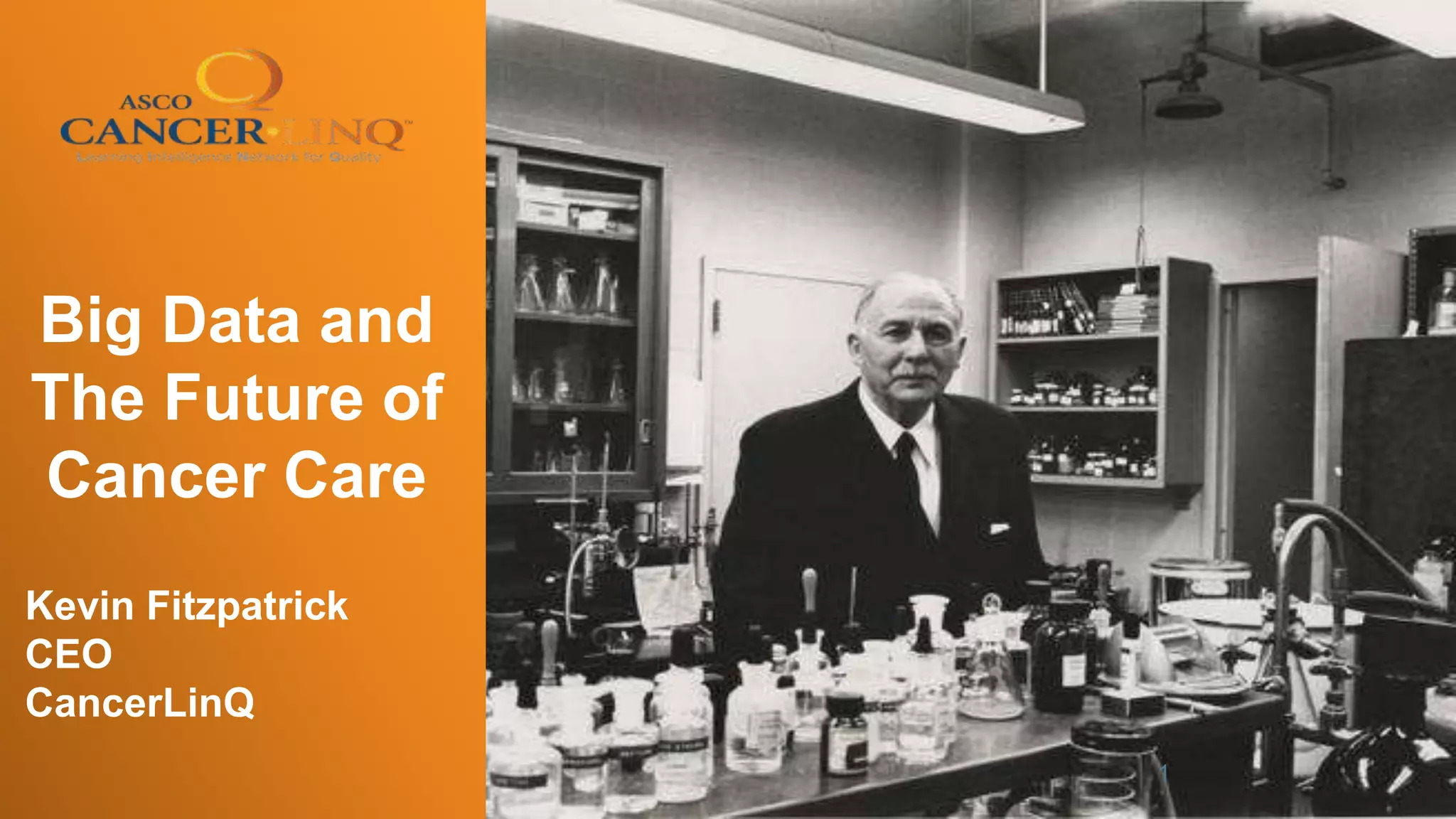
Big Data and
The Future of
Cancer Care
Kevin Fitzpatrick
CEO
CancerLinQ
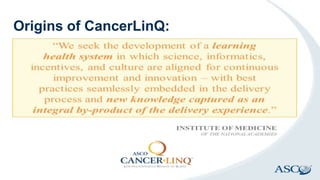
Origins of CancerLinQ:
The Challenges
1. Learn from every patient
2. Harness data in powerful new ways
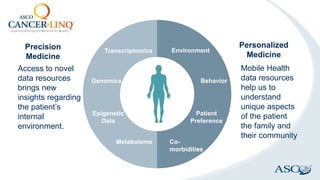
Genomics
Transcriptomics
Epigenetic
Data
Metabolome
Environment
Behavior
Patient
Preference
Co-
morbidities
Access to novel
data resources
brings new
insights regarding
the patient’s
internal
environment.
Mobile Health
data resources
help us to
understand
unique aspects
of the patient
the family and
their community
Precision
Medicine
Personalized
Medicine
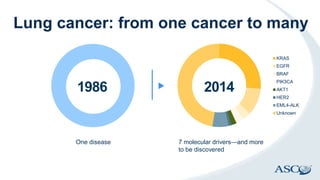
One disease 7 molecular drivers—and more
to be discovered
Lung cancer: from one cancer to many
KRAS
EGFR
BRAF
PIK3CA
AKT1
HER2
EML4-ALK
Unknown
20141986
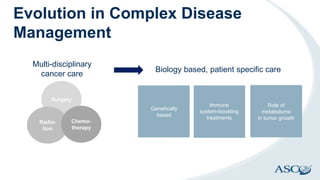
Evolution in Complex Disease
Management
Genetically
based
Immune
system-boosting
treatments
Role of
metabolome
in tumor growth
Surgery
Radia-
tion
Chemo-
therapy
Multi-disciplinary
cancer care
Biology based, patient specific care
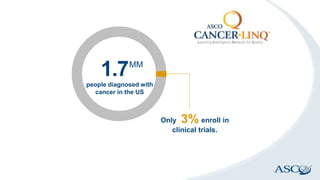
Only3% enroll in
clinical trials.
3%
1.7people diagnosed with
cancer in the US
MM
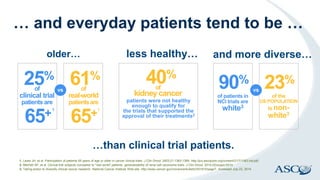
90%
of patients in
NCI trials are
white3
23%
of the
US POPULATION
Is non-
white3
vs
40%
of
kidneycancer
patients were not healthy
enough to qualify for
the trials that supported the
approval of their treatments2
25%
of
clinical trial
patients are
65+
1
61%
of
real-world
patientsare
65+
1
vs
… and everyday patients tend to be …
less healthy…older… and more diverse…
…than clinical trial patients.
1. Lewis JH, et al. Participation of patients 65 years of age or older in cancer clinical trials. J Clin Oncol. 2003;21:1383-1389. http://jco.ascopubs.org/content/21/7/1383.full.pdf.
2. Mitchell AP, et al. Clinical trial subjects compared to "real world" patients: generalizability of renal cell carcinoma trials. J Clin Oncol. 2014;32(suppl):6510.
3. Taking action to diversify clinical cancer research. National Cancer Institute Web site. http://www.cancer.gov/ncicancerbulletin/051810/page7. Accessed July 23, 2014.
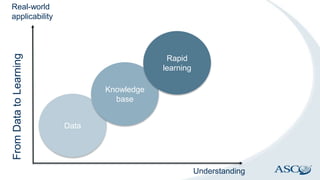
Data
Knowledge
base
Rapid
learning
Understanding
Real-world
applicabilityFromDatatoLearning
12
Vanguard Practice - SouthCoast Cancer
Center
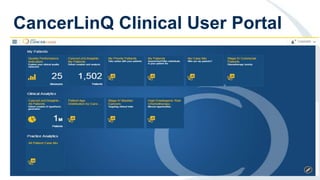
CancerLinQ Clinical User Portal
My Favorites
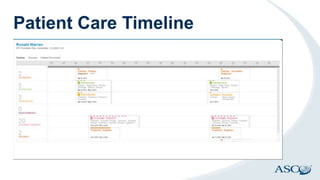
Patient Care Timeline
My Favorites
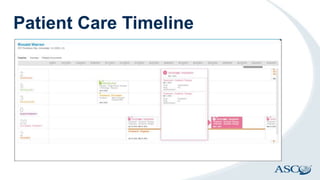
Patient Care Timeline
My Favorites
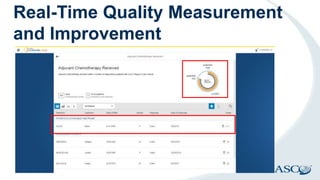
Real-Time Quality Measurement
and Improvement
My Favorites
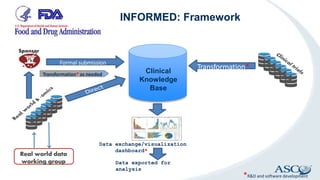
INFORMED: Framework
Transformation*
Formal submission
Data exported for
analysis
Data exchange/visualization
dashboard*
Sponsor
Transformation* as needed
*R&D and software development
Real world data
working group
Clinical
Knowledge
Base
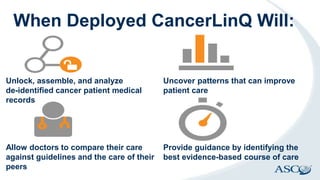
When Deployed CancerLinQ Will:
Unlock, assemble, and analyze
de-identified cancer patient medical
records
Uncover patterns that can improve
patient care
Allow doctors to compare their care
against guidelines and the care of their
peers
Provide guidance by identifying the
best evidence-based course of care
20
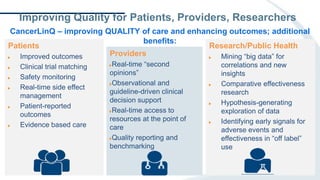
Improving Quality for Patients, Providers, Researchers
CancerLinQ – improving QUALITY of care and enhancing outcomes; additional
benefits:
Patients
Improved outcomes
Clinical trial matching
Safety monitoring
Real-time side effect
management
Patient-reported
outcomes
Evidence based care
Providers
Real-time “second
opinions”
Observational and
guideline-driven clinical
decision support
Real-time access to
resources at the point of
care
Quality reporting and
benchmarking
Research/Public Health
Mining “big data” for
correlations and new
insights
Comparative effectiveness
research
Hypothesis-generating
exploration of data
Identifying early signals for
adverse events and
effectiveness in “off label”
use
21
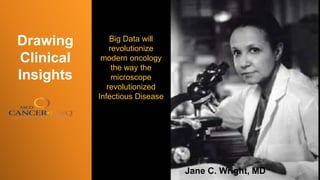
Drawing
Clinical
Insights
Jane C. Wright, MD
Big Data will
revolutionize
modern oncology
the way the
microscope
revolutionized
Infectious Disease
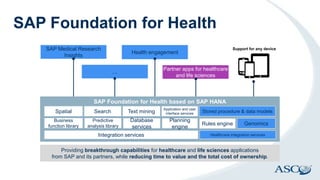
SAP Foundation for Health
Providing breakthrough capabilities for healthcare and life sciences applications
from SAP and its partners, while reducing time to value and the total cost of ownership.
Support for any device
Partner apps for healthcare
and life sciences
SAP Medical Research
Insights
Health engagement
SAP Foundation for Health based on SAP HANA
Integration services
Spatial
Business
function library
Search Text mining
Predictive
analysis library
Database
services
Stored procedure & data models
Planning
engine
Rules engine
Application and user
interface services
Genomics
Healthcare integration services
…
CancerLinQ Confidential 2311.16.2015

CLQ Overview Deck

  • 1.
    111.16.2015 Big Data and TheFuture of Cancer Care Kevin Fitzpatrick CEO CancerLinQ
  • 2.
  • 3.
    The Challenges 1. Learnfrom every patient 2. Harness data in powerful new ways
  • 4.
    Genomics Transcriptomics Epigenetic Data Metabolome Environment Behavior Patient Preference Co- morbidities Access to novel dataresources brings new insights regarding the patient’s internal environment. Mobile Health data resources help us to understand unique aspects of the patient the family and their community Precision Medicine Personalized Medicine
  • 5.
    One disease 7molecular drivers—and more to be discovered Lung cancer: from one cancer to many KRAS EGFR BRAF PIK3CA AKT1 HER2 EML4-ALK Unknown 20141986
  • 6.
    Evolution in ComplexDisease Management Genetically based Immune system-boosting treatments Role of metabolome in tumor growth Surgery Radia- tion Chemo- therapy Multi-disciplinary cancer care Biology based, patient specific care
  • 7.
    Only3% enroll in clinicaltrials. 3% 1.7people diagnosed with cancer in the US MM
  • 8.
    90% of patients in NCItrials are white3 23% of the US POPULATION Is non- white3 vs 40% of kidneycancer patients were not healthy enough to qualify for the trials that supported the approval of their treatments2 25% of clinical trial patients are 65+ 1 61% of real-world patientsare 65+ 1 vs … and everyday patients tend to be … less healthy…older… and more diverse… …than clinical trial patients. 1. Lewis JH, et al. Participation of patients 65 years of age or older in cancer clinical trials. J Clin Oncol. 2003;21:1383-1389. http://jco.ascopubs.org/content/21/7/1383.full.pdf. 2. Mitchell AP, et al. Clinical trial subjects compared to "real world" patients: generalizability of renal cell carcinoma trials. J Clin Oncol. 2014;32(suppl):6510. 3. Taking action to diversify clinical cancer research. National Cancer Institute Web site. http://www.cancer.gov/ncicancerbulletin/051810/page7. Accessed July 23, 2014.
  • 9.
  • 10.
    12 Vanguard Practice -SouthCoast Cancer Center
  • 11.
    CancerLinQ Clinical UserPortal My Favorites
  • 12.
  • 13.
  • 14.
    Real-Time Quality Measurement andImprovement My Favorites
  • 16.
    INFORMED: Framework Transformation* Formal submission Dataexported for analysis Data exchange/visualization dashboard* Sponsor Transformation* as needed *R&D and software development Real world data working group Clinical Knowledge Base
  • 17.
    When Deployed CancerLinQWill: Unlock, assemble, and analyze de-identified cancer patient medical records Uncover patterns that can improve patient care Allow doctors to compare their care against guidelines and the care of their peers Provide guidance by identifying the best evidence-based course of care
  • 18.
    20 Improving Quality forPatients, Providers, Researchers CancerLinQ – improving QUALITY of care and enhancing outcomes; additional benefits: Patients Improved outcomes Clinical trial matching Safety monitoring Real-time side effect management Patient-reported outcomes Evidence based care Providers Real-time “second opinions” Observational and guideline-driven clinical decision support Real-time access to resources at the point of care Quality reporting and benchmarking Research/Public Health Mining “big data” for correlations and new insights Comparative effectiveness research Hypothesis-generating exploration of data Identifying early signals for adverse events and effectiveness in “off label” use
  • 19.
    21 Drawing Clinical Insights Jane C. Wright,MD Big Data will revolutionize modern oncology the way the microscope revolutionized Infectious Disease
  • 20.
    SAP Foundation forHealth Providing breakthrough capabilities for healthcare and life sciences applications from SAP and its partners, while reducing time to value and the total cost of ownership. Support for any device Partner apps for healthcare and life sciences SAP Medical Research Insights Health engagement SAP Foundation for Health based on SAP HANA Integration services Spatial Business function library Search Text mining Predictive analysis library Database services Stored procedure & data models Planning engine Rules engine Application and user interface services Genomics Healthcare integration services …
  • 21.

Editor's Notes

  • #4 But to do that, we face two key challenges: We need to learn from many more patients than we do today – in fact, we need to learn from all of them; and We have to harness data in powerful new ways
  • #5 As you can see here, the left represents an individual’s genomic make-up. And the right are clinical data that reflect a patient’s unique environment, behaviors and preferences. To make a meaningful impact on cancer care, we can’t take either of these in isolation.
  • #6 Take lung cancer for example… soon, every cancer will be a rare cancer, defined by unique molecular characteristics Brings vast increase in number of possibilities and the information physicians have to make sense of Only way to do this is through powerful new data analytic tools
  • #7 Precision medicine also adds a new level of complexity to cancer care, creating the need for information management
  • #8 Right now, we essentially only learn from 3 percent of patients – those who participate in clinical trials
  • #9 These clinical trial patients rarely reflect the real-world patients we see in clinics The only way to keep pace with expanding scientific possibilities is to expand the number and diversity of the patients we can learn from
  • #10 This is the cancer data architecture – in the inner circle, you have various sources of health data including data from EHRs, and clinical and genomic data that are critically important to patient care. But these data are all housed in different places – in their own information systems and data repositories. We have to figure out how we can capture, move and share this information. We need to understand how these data are structured, map that to a common model, move the data around from one warehouse to another, create information exchanges, and establish standards to transmit data. If we do that we achieve interoperability and have data liquidity. And this is where SAP comes in – because SAP’s HANA technology can move massive amounts of data, precisely, and in real time.
  • #11 [Dr. Yu – this is an adaptation of your slide on data to learning, to show how raw data can be transformed to what CancerLinQ aims to get at, increasing the understanding and real-world applicability of information. Please let us know if we captured it correctly or if you would like to revise]
  • #12 [Dr. Yu – we took the next few slides from the slides you shared with us; let us know if your talking points for these slides fit with what comes before and after this section]
  • #14 Each stage of CancerLinQ will deliver successively more powerful tools and insights to physicians, researchers, patients and others in the cancer community. The first version, being rolled out later this year, features several core components of the CancerLinQ system.
  • #15 First, doctors will have powerful new ways to visualize data from their electronic health records. For example – They’ll be able to view a visual, longitudinal record of any given patient’s care over time – as you see here.   In effect, CancerLinQ gives them – in an instant – the story of that patient’s characteristics, the care they’ve received, and the outcomes they’ve experienced. Until now, most physicians have had no simple way of constructing something like this.
  • #16 Doctors can dig down into any part of that story to: Better understand why their patient might be experiencing some new health problem See if any opportunities have been missed 
  • #17 Second, the physician will have a new way to see the quality of care they’re delivering – at any moment.   And not just that – they’ll see if there are specific patients who are currently in need of an intervention to meet standards of care. Example of a physician who is meeting a given quality measure 80 percent of the time. CancerLinQ will identify what we call an “actionable patient” – flagging a patient that requires follow-up care. So if she’s not already scheduled for that care, the practice can reach out and ask her to come in to discuss. The big shift here is from measuring quality retrospectively – after the fact – to intervening in real time to ensure that quality is achieved.
  • #21 Primary goal is QUALITY. This will deliver benefits for multiple audiences. Educate and empower patients by linking them to their cancer care teams and providing personalized treatment information at their fingertips. Improve personalized treatment decisions by cancer care teams by capturing patient information in real time at the point of care; providing real-time decision support tailored to each patient and his or her cancer; and automatically reporting on the quality of care compared with clinical guidelines and the outcomes of other patients. Create a powerful new de-identified data source for use in real-world quality and comparative effectiveness studies, and to generate new ideas for clinical research.