Cloud computing
technologies
Subash Basnet | Kathford
@itssubas
Photo by Jesse Gardner on Unsplash
1
2
- Steve Jobs
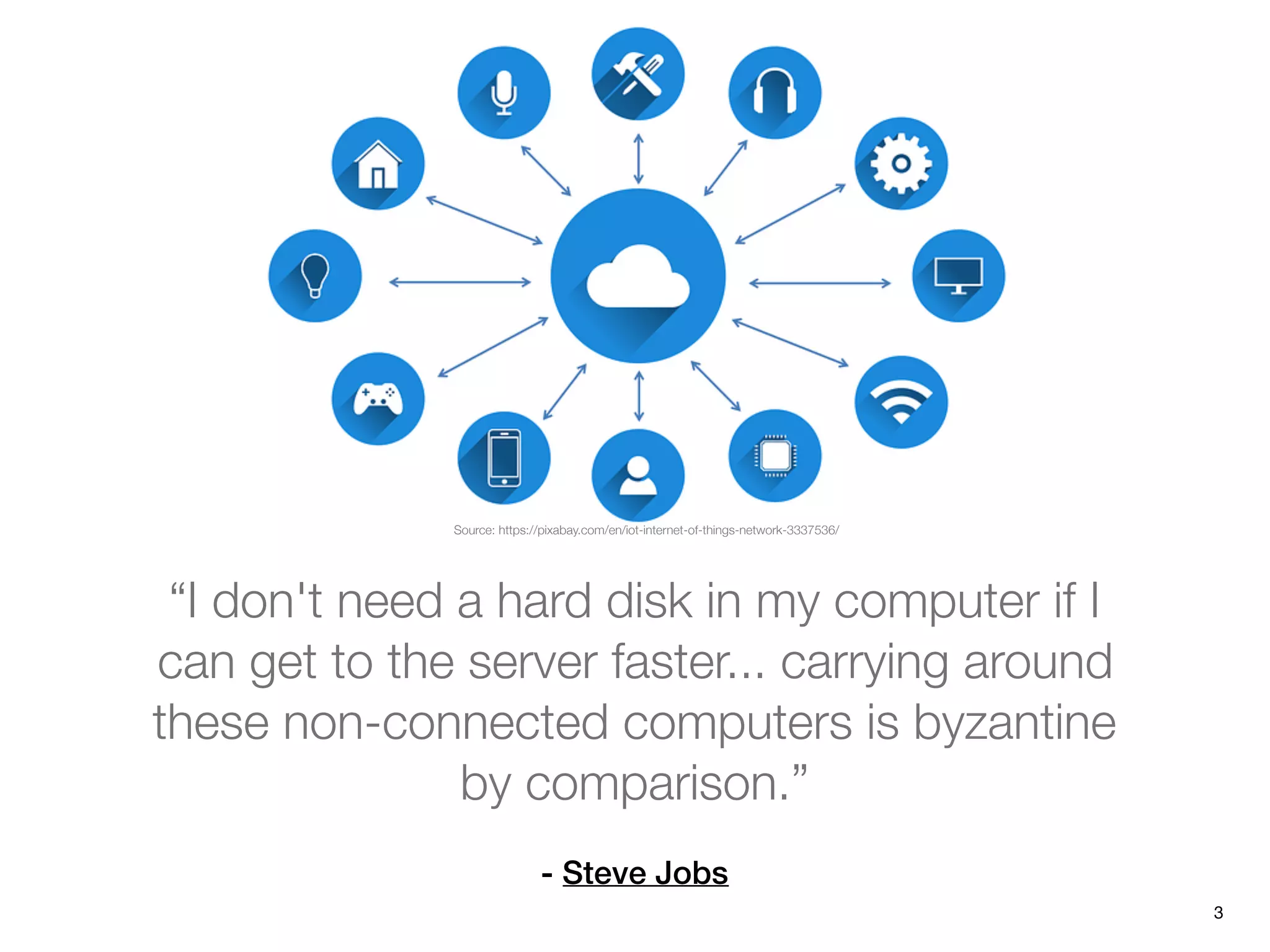
“I don't need a hard disk in my computer if I
can get to the server faster... carrying around
these non-connected computers is byzantine
by comparison.”
Source: https://pixabay.com/en/iot-internet-of-things-network-3337536/
3
Introduction
Source: https://upload.wikimedia.org/wikipedia/commons/b/b5/Cloud_computing.svg
4
Introduction
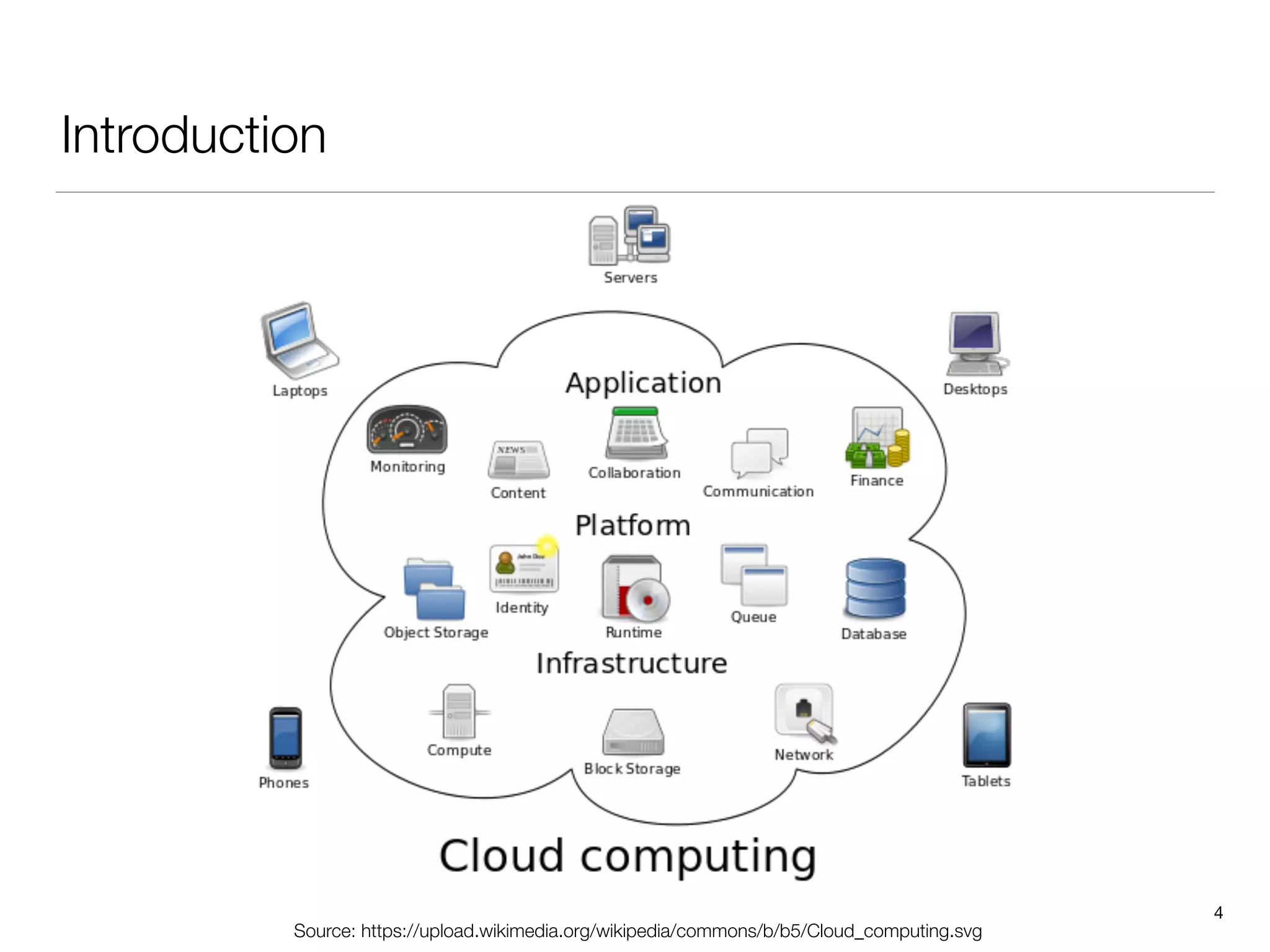
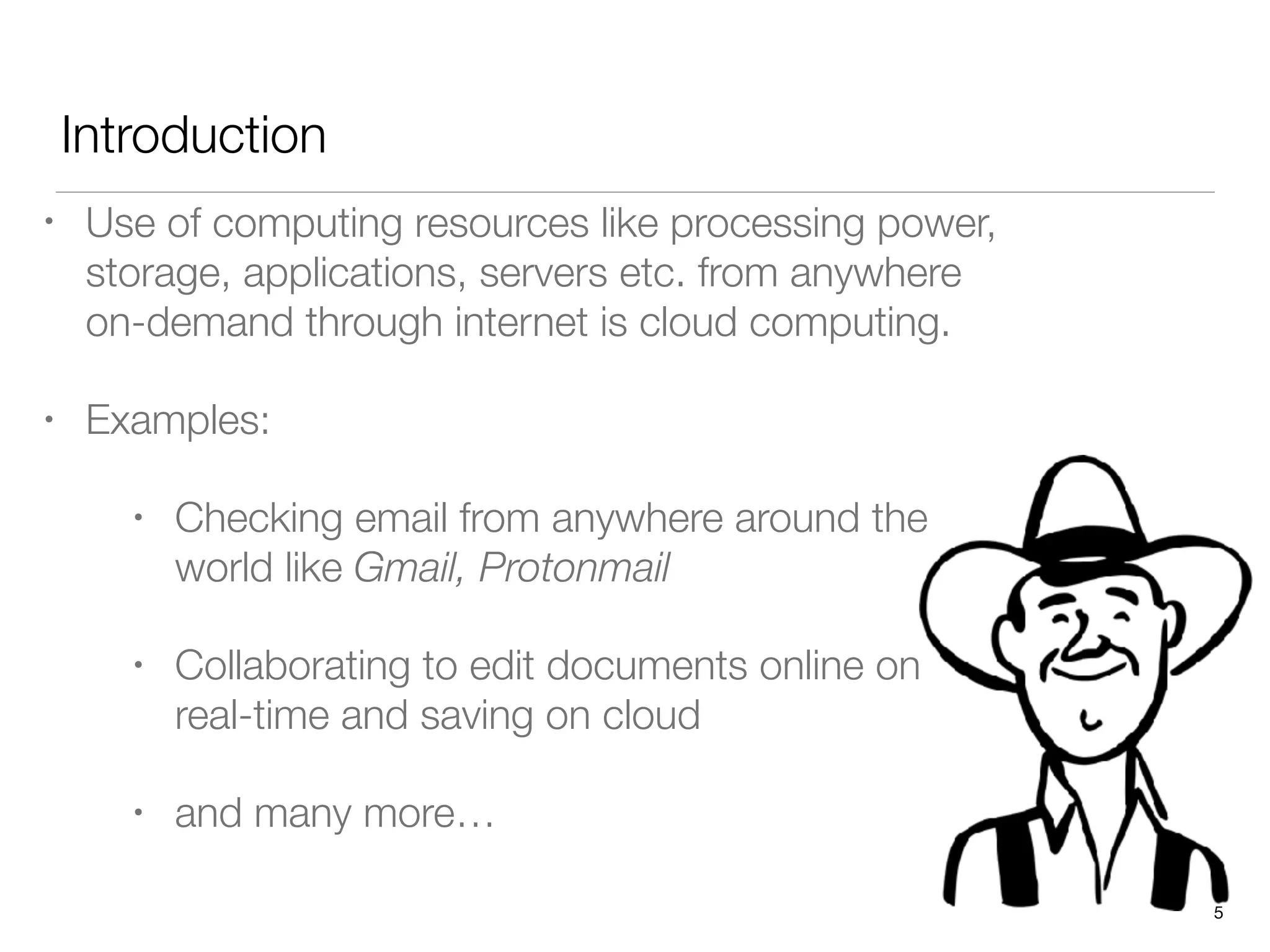
• Use of computing resources like processing power,
storage, applications, servers etc. from anywhere
on-demand through internet is cloud computing.
• Examples:
• Checking email from anywhere around the
world like Gmail, Protonmail
• Collaborating to edit documents online on
real-time and saving on cloud
• and many more…
5
• Business? … cloud reduces capital expenses
• software/security updates, maintenance, configuration?? ugh.. no need to
worry
• Seasonal business? scale-up or scale-down as per the need
• Collaboration is easy
• Access from anywhere using any device …
• Security?? cloud service providers’ business
• Buy just the service that is needed, nothing else.. No extra hardware/
softwares
6
Types of cloud
Based on location — Public, private, hybrid and community cloud
• Public: Cloud computing company’s infrastructure, located on their
own premises; public customers pay and get services.
• Private: Infrastructure solely owned by one customer/organization, not
shared with others. Security and control is highest in private clouds.
• Hybrid: using both — public cloud to interact with customers, private
to store data
• Community cloud: Shared between organizations — for example
cloud owned by government
7
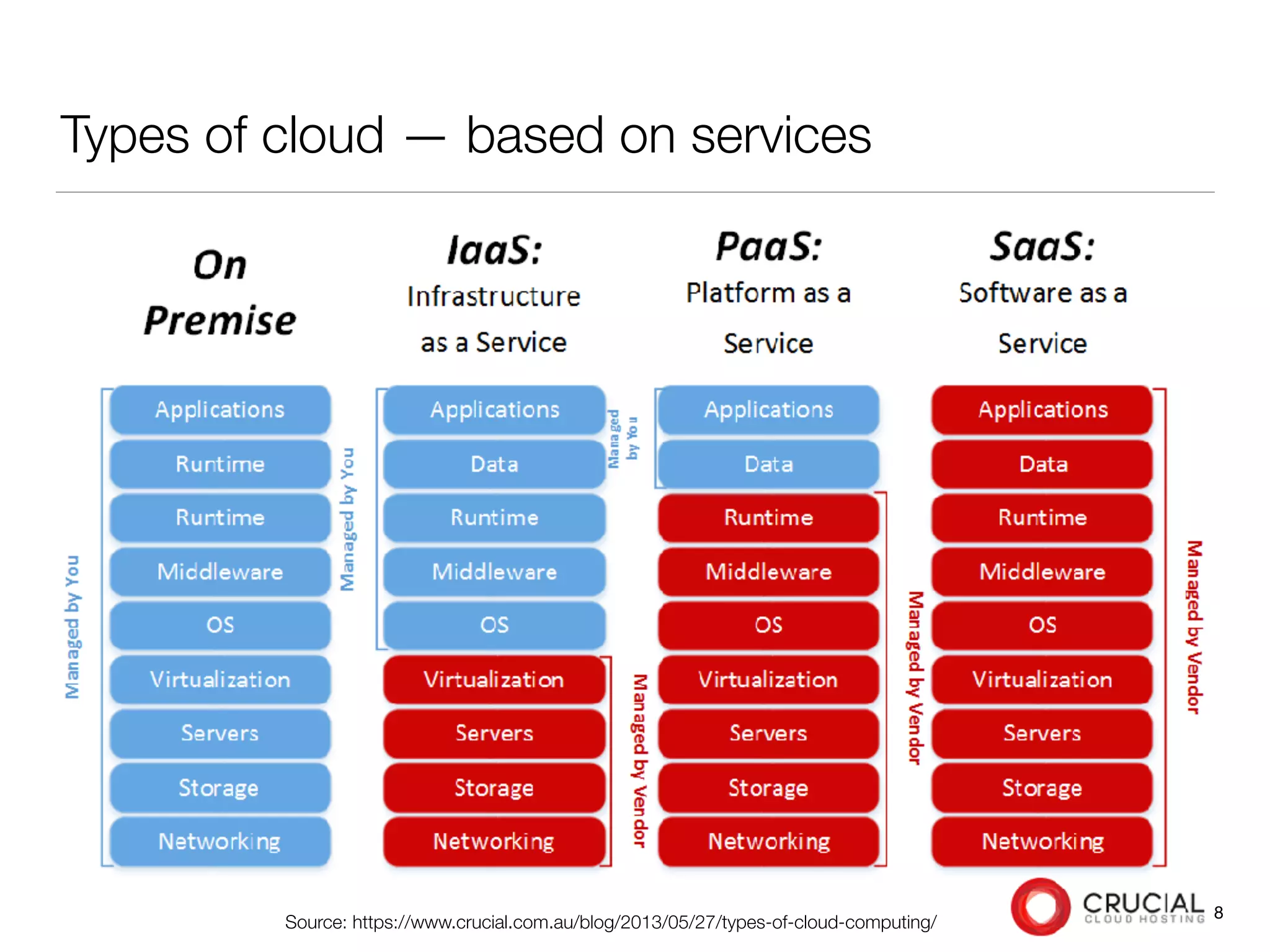
Types of cloud — based on services
Source: https://www.crucial.com.au/blog/2013/05/27/types-of-cloud-computing/
8
Cloud computing in 2018
•Multi-cloud goes mainstream
•Not only cloud adoption but optimization
•Containers, micro-services are hot topics
•Serverless — Back-end as a Service (BaaS) in practice
•Cloud Monitoring as a Service (CMaaS) to monitor
performance across multiple cloud service providers
9
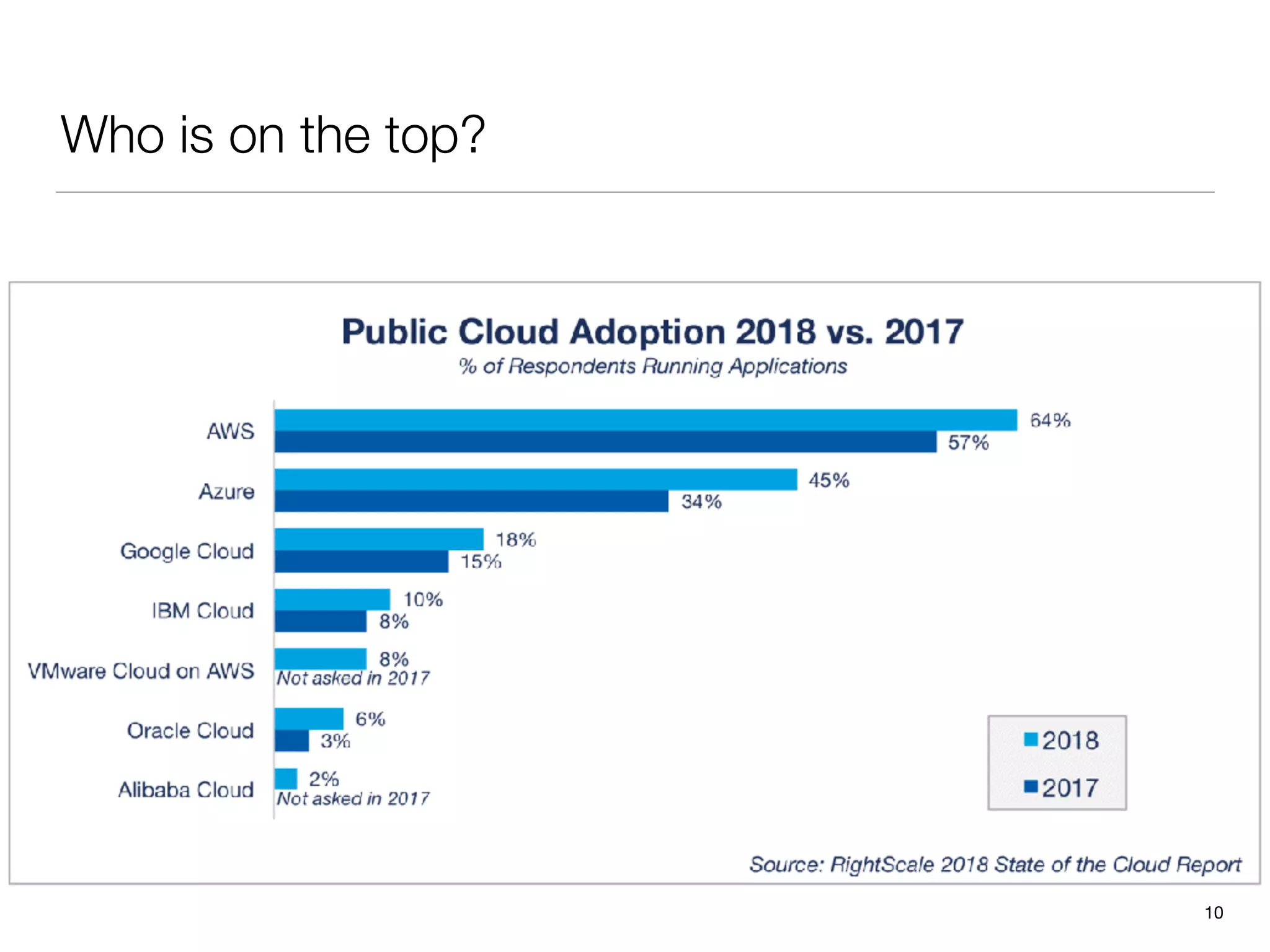
Who is on the top?
10
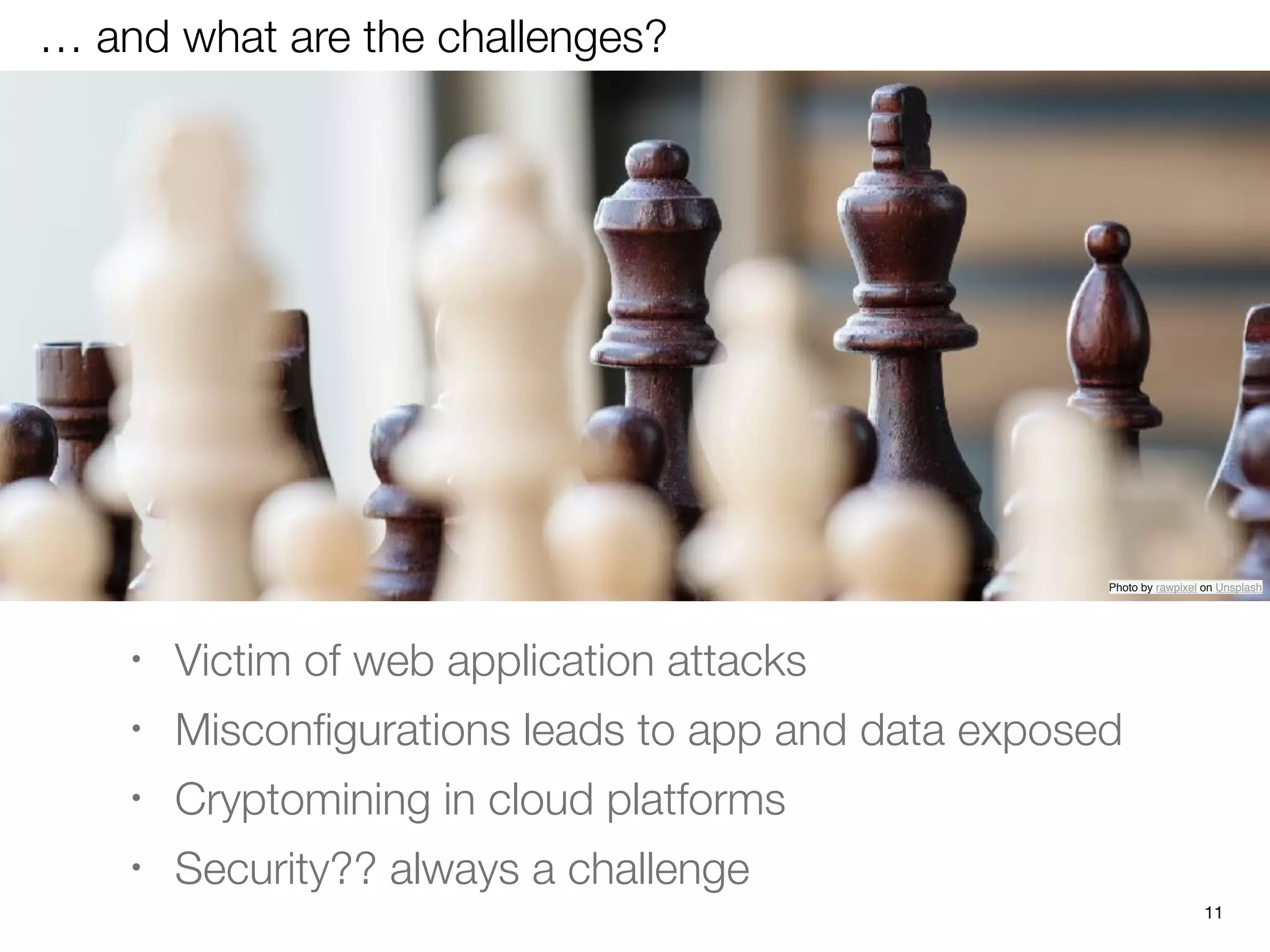
… and what are the challenges?
• Victim of web application attacks
• Misconfigurations leads to app and data exposed
• Cryptomining in cloud platforms
• Security?? always a challenge
Photo by rawpixel on Unsplash
11
–Marc Benioff, Founder, CEO and Chairman of Salesforce
“The cloud services companies of all sizes…
The cloud is for everyone. The cloud is a
democracy.”
12
– Vivek Kundra, Executive Vice President at Salesforce.com
“Cloud computing is often far more secure than
traditional computing, because companies like
Google and Amazon can attract and retain
cyber-security personnel of a higher quality
than many governmental agencies.”
13
Thank You
14

Cloud computing-pdf

  • 1.
    Cloud computing technologies Subash Basnet| Kathford @itssubas Photo by Jesse Gardner on Unsplash 1
  • 2.
  • 3.
    - Steve Jobs “Idon't need a hard disk in my computer if I can get to the server faster... carrying around these non-connected computers is byzantine by comparison.” Source: https://pixabay.com/en/iot-internet-of-things-network-3337536/ 3
  • 4.
  • 5.
    Introduction • Use ofcomputing resources like processing power, storage, applications, servers etc. from anywhere on-demand through internet is cloud computing. • Examples: • Checking email from anywhere around the world like Gmail, Protonmail • Collaborating to edit documents online on real-time and saving on cloud • and many more… 5
  • 6.
    • Business? …cloud reduces capital expenses • software/security updates, maintenance, configuration?? ugh.. no need to worry • Seasonal business? scale-up or scale-down as per the need • Collaboration is easy • Access from anywhere using any device … • Security?? cloud service providers’ business • Buy just the service that is needed, nothing else.. No extra hardware/ softwares 6
  • 7.
    Types of cloud Basedon location — Public, private, hybrid and community cloud • Public: Cloud computing company’s infrastructure, located on their own premises; public customers pay and get services. • Private: Infrastructure solely owned by one customer/organization, not shared with others. Security and control is highest in private clouds. • Hybrid: using both — public cloud to interact with customers, private to store data • Community cloud: Shared between organizations — for example cloud owned by government 7
  • 8.
    Types of cloud— based on services Source: https://www.crucial.com.au/blog/2013/05/27/types-of-cloud-computing/ 8
  • 9.
    Cloud computing in2018 •Multi-cloud goes mainstream •Not only cloud adoption but optimization •Containers, micro-services are hot topics •Serverless — Back-end as a Service (BaaS) in practice •Cloud Monitoring as a Service (CMaaS) to monitor performance across multiple cloud service providers 9
  • 10.
    Who is onthe top? 10
  • 11.
    … and whatare the challenges? • Victim of web application attacks • Misconfigurations leads to app and data exposed • Cryptomining in cloud platforms • Security?? always a challenge Photo by rawpixel on Unsplash 11
  • 12.
    –Marc Benioff, Founder,CEO and Chairman of Salesforce “The cloud services companies of all sizes… The cloud is for everyone. The cloud is a democracy.” 12
  • 13.
    – Vivek Kundra,Executive Vice President at Salesforce.com “Cloud computing is often far more secure than traditional computing, because companies like Google and Amazon can attract and retain cyber-security personnel of a higher quality than many governmental agencies.” 13
  • 14.