BW11
Concurrent Session 
11/7/2012 10:15 AM 


"Cloud Computing:
Powering the Future of Development
and Testing"


Presented by:
Brian White
Skytap, Inc.


Brought to you by: 


340 Corporate Way, Suite 300, Orange Park, FL 32073 
888‐268‐8770 ∙ 904‐278‐0524 ∙ sqeinfo@sqe.com ∙ www.sqe.com


Brian White
Skytap
As vice president of products at Skytap, Brian White is responsible for product strategy
and product management. Prior to Skytap, he was director of developer resources for
Amazon Web Services where he launched AWS Elastic Beanstalk, a platform-as-aservice. Brian was previously VP of products for iConclude, the leader in the Run Book
Automation space, which was acquired by Opsware and then HP, where he drove
product direction for what is now HP Operations Orchestration and the Network
Automation System. Brian had earlier held senior product management and technical
sales positions for Microsoft’s Visual Studio Team Foundation Server and IBM
Rational’s ClearCase/ClearQuest product line.
 
Cloud Computing: 
Powering the Future of Development and Testing
Brian White, VP of Products

Cloud‐enabled Development

“Provisioning infrastructure for our Application
Development Teams went from 3 months to
less than an hour.”
- Keith Weisel, IT Manager

2

1
Cloud‐enabled Development

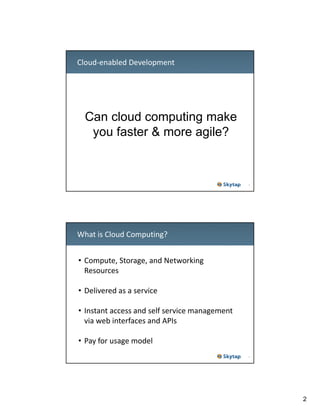
Can cloud computing make
you faster & more agile?

3

What is Cloud Computing?
• Compute, Storage, and Networking 
Resources
• Delivered as a service
• Instant access and self service management 
via web interfaces and APIs
• Pay for usage model
4

2
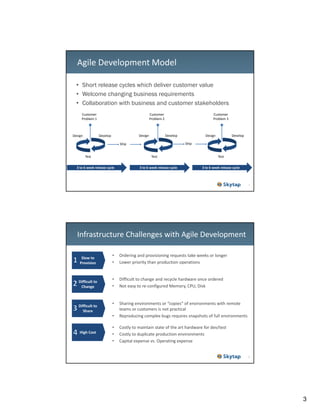
Agile Development Model
• Short release cycles which deliver customer value
• Welcome changing business requirements
• Collaboration with business and customer stakeholders
Customer 
Problem 1

Design

Customer 
Problem 2

Design

Develop

Customer 
Problem 3

Develop

Test

3 to 6 week release cycle

Develop

Ship

Ship
Test

Design

3 to 6 week release cycle

Test
3 to 6 week release cycle

5

Infrastructure Challenges with Agile Development
Slow to 
Provision

•
•

Ordering and provisioning requests take weeks or longer 
Lower priority than production operations

Difficult to 
Change

•
•

Difficult to change and recycle hardware once ordered
Not easy to re‐configured Memory, CPU, Disk 

•
•

Sharing environments or “copies” of environments with remote 
teams or customers is not practical
Reproducing complex bugs requires snapshots of full environments
Reproducing complex bugs requires snapshots of full environments

•
•
•

Costly to maintain state of the art hardware for dev/test
Costly to duplicate production environments
Capital expense vs. Operating expense

Difficult to 
Share

High Cost

6

3
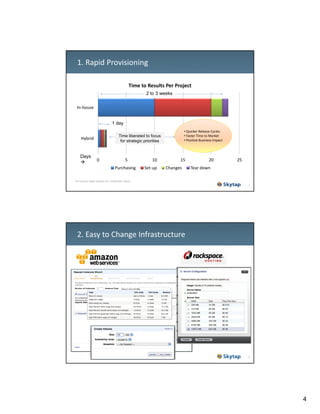
1. Rapid Provisioning
Time to Results Per Project
2 to 3 weeks
In‐house
1 day

Days

• Quicker Release Cycles
• Faster Time to Market
• Positive Business Impact

Time liberated to focus
for strategic priorities

Hybrid

0

5
Purchasing

10
Set‐up

15
Changes

20

25

Tear down

In-house data based on customer input
7

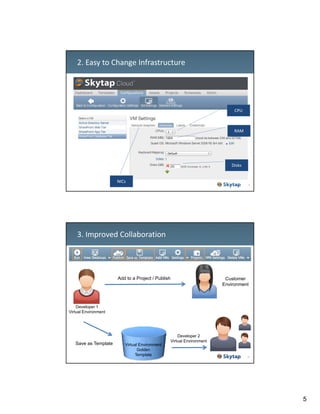
2. Easy to Change Infrastructure

8

4
2. Easy to Change Infrastructure

CPU

RAM

Disks
NICs

9

3. Improved Collaboration

Add to a Project / Publish

Customer
Environment

Developer 1
Virtual Environment

Save as Template

Virtual Environment
Golden
Template

Developer 2
Virtual Environment

10

5
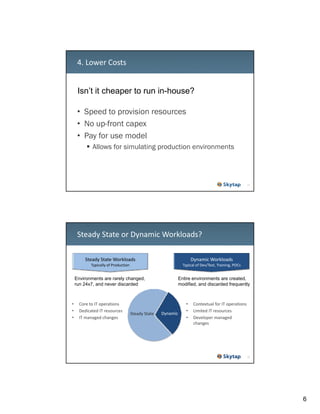
4. Lower Costs
Isn’t it cheaper to run in-house?
• Speed to provision resources
• No up-front capex
• Pay for use model
Allows for simulating production environments
All
f
i l ti
d ti
i
t

11

Steady State or Dynamic Workloads?
Steady State Workloads

Dynamic Workloads

Typically of Production

Typical of Dev/Test, Training, POCs

Environments are rarely changed,
run 24x7, and never discarded

•
•
•

Core to IT operations
Dedicated IT resources
IT managed changes
IT
d h

Predictable
Steady State

Entire environments are created,
modified, and discarded frequently

Dynamic
Dynamic

•
•
•

Contextual for IT operations
Limited IT resources
Developer managed 
D l
d
changes

12

6
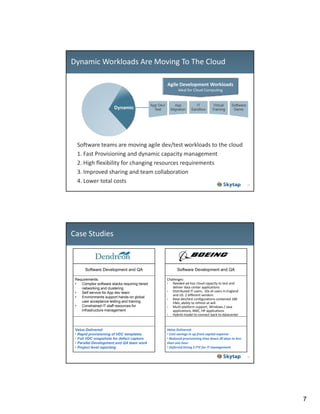
Dynamic Workloads Are Moving To The Cloud
Agile Development Workloads
Ideal for Cloud Computing

Dynamic

App Dev/
Test

App
Migration

IT
Sandbox

Virtual
Training

Software
Demo

Dynamic
Predictable
Software teams are moving agile dev/test workloads to the cloud
Software teams are moving agile Dynamic workloads to the cloud
dev/test
1. Fast Provisioning and dynamic capacity management
2. High flexibility for changing resources requirements
3. Improved sharing and team collaboration
4. Lower total costs

13

Case Studies

Software Development and QA

Software Development and QA

Requirements:
•
Complex software stacks requiring tiered
networking and clustering
•
Self service for App dev team
•
Environments support hands-on global
user acceptance testing and training
•
Constrained IT staff resources for
infrastructure management

Challenges:
•
Needed ad‐hoc cloud capacity to test and 
deliver data center applications
•
Distributed IT users;  10s of users in England 
and US. 2 different vendors 
•
Base dev/test configurations contained 180 
VMs; ability to refresh at will
•
Multi‐platform support, Windows / Java 
applications, BMC, HP applications
•
Hybrid model to connect back to datacenter

Value Delivered:
• Rapid provisioning of VDC templates
• Full VDC snapshots for defect capture
• Parallel Development and QA team work
• Project level reporting

Value Delivered: 
• Cost savings in up front capital expense 
• Reduced provisioning time down 20 days to less 
than one hour
• Deferred hiring 2 FTE for IT management
14

7
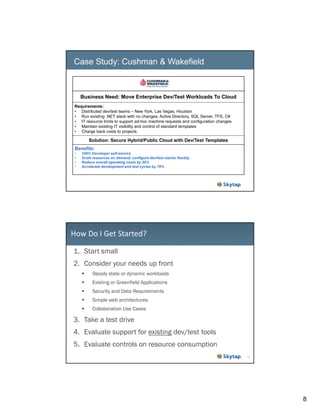
Case Study: Cushman & Wakefield

Business Need: Move Enterprise Dev/Test Workloads To Cloud
Requirements:
• Distributed dev/test teams – New York, Las Vegas, Houston
• Run existing .NET stack with no changes; Active Directory, SQL Server, TFS, C#
• IT resource limits to support ad-hoc machine requests and configuration changes
• Maintain existing IT visibility and control of standard templates
• Charge back costs to projects

Solution: Secure Hybrid/Public Cloud with Dev/Test Templates
Benefits:
•
•
•
•

100% Developer self-service
Scale resources on demand, configure dev/test stacks flexibly
Reduce overall operating costs by 50%
Accelerate development and test cycles by 70%

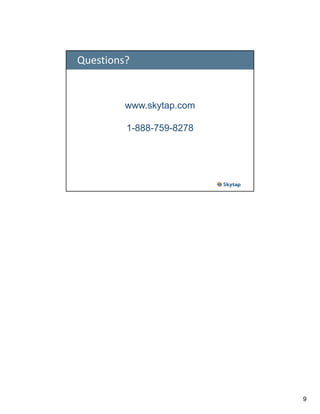
How Do I Get Started?
1. Start small
2. Consider your needs up front
Steady state or dynamic workloads
Existing or Greenfield Applications
Security and Data Requirements
Simple web architectures
Collaboration Use Cases

3. Take a test drive
4. Evaluate support for existing dev/test tools
5. Evaluate controls on resource consumption
16

8
Questions?

www.skytap.com
1-888-759-8278

9

Cloud Computing: Powering the Future of Development and Testing

  • 1.
              BW11 Concurrent Session  11/7/2012 10:15 AM                "Cloud Computing: Powering theFuture of Development and Testing"       Presented by: Brian White Skytap, Inc.           Brought to you by:        340 Corporate Way, Suite 300, Orange Park, FL 32073  888‐268‐8770 ∙ 904‐278‐0524 ∙ sqeinfo@sqe.com ∙ www.sqe.com
  • 2.
        Brian White Skytap As vicepresident of products at Skytap, Brian White is responsible for product strategy and product management. Prior to Skytap, he was director of developer resources for Amazon Web Services where he launched AWS Elastic Beanstalk, a platform-as-aservice. Brian was previously VP of products for iConclude, the leader in the Run Book Automation space, which was acquired by Opsware and then HP, where he drove product direction for what is now HP Operations Orchestration and the Network Automation System. Brian had earlier held senior product management and technical sales positions for Microsoft’s Visual Studio Team Foundation Server and IBM Rational’s ClearCase/ClearQuest product line.  
  • 3.
    Cloud Computing:  Powering the Future of Development and Testing Brian White, VPof Products Cloud‐enabled Development “Provisioning infrastructure for our Application Development Teams went from 3 months to less than an hour.” - Keith Weisel, IT Manager 2 1
  • 4.
    Cloud‐enabled Development Can cloud computingmake you faster & more agile? 3 What is Cloud Computing? • Compute, Storage, and Networking  Resources • Delivered as a service • Instant access and self service management  via web interfaces and APIs • Pay for usage model 4 2
  • 5.
    Agile Development Model • Short releasecycles which deliver customer value • Welcome changing business requirements • Collaboration with business and customer stakeholders Customer  Problem 1 Design Customer  Problem 2 Design Develop Customer  Problem 3 Develop Test 3 to 6 week release cycle Develop Ship Ship Test Design 3 to 6 week release cycle Test 3 to 6 week release cycle 5 Infrastructure Challenges with Agile Development Slow to  Provision • • Ordering and provisioning requests take weeks or longer  Lower priority than production operations Difficult to  Change • • Difficult to change and recycle hardware once ordered Not easy to re‐configured Memory, CPU, Disk  • • Sharing environments or “copies” of environments with remote  teams or customers is not practical Reproducing complex bugs requires snapshots of full environments Reproducing complex bugs requires snapshots of full environments • • • Costly to maintain state of the art hardware for dev/test Costly to duplicate production environments Capital expense vs. Operating expense Difficult to  Share High Cost 6 3
  • 6.
    1. Rapid Provisioning Time to Results Per Project 2 to 3weeks In‐house 1 day Days • Quicker Release Cycles • Faster Time to Market • Positive Business Impact Time liberated to focus for strategic priorities Hybrid 0 5 Purchasing 10 Set‐up 15 Changes 20 25 Tear down In-house data based on customer input 7 2. Easy to Change Infrastructure 8 4
  • 7.
    2. Easy to Change Infrastructure CPU RAM Disks NICs 9 3. Improved Collaboration Add to aProject / Publish Customer Environment Developer 1 Virtual Environment Save as Template Virtual Environment Golden Template Developer 2 Virtual Environment 10 5
  • 8.
    4. Lower Costs Isn’t it cheaperto run in-house? • Speed to provision resources • No up-front capex • Pay for use model Allows for simulating production environments All f i l ti d ti i t 11 Steady State or Dynamic Workloads? Steady State Workloads Dynamic Workloads Typically of Production Typical of Dev/Test, Training, POCs Environments are rarely changed, run 24x7, and never discarded • • • Core to IT operations Dedicated IT resources IT managed changes IT d h Predictable Steady State Entire environments are created, modified, and discarded frequently Dynamic Dynamic • • • Contextual for IT operations Limited IT resources Developer managed  D l d changes 12 6
  • 9.
    Dynamic Workloads Are Moving To The Cloud Agile Development Workloads Ideal for Cloud Computing Dynamic App Dev/ Test App Migration IT Sandbox Virtual Training Software Demo Dynamic Predictable Software teams are moving agile dev/test workloads to the cloud Software teamsare moving agile Dynamic workloads to the cloud dev/test 1. Fast Provisioning and dynamic capacity management 2. High flexibility for changing resources requirements 3. Improved sharing and team collaboration 4. Lower total costs 13 Case Studies Software Development and QA Software Development and QA Requirements: • Complex software stacks requiring tiered networking and clustering • Self service for App dev team • Environments support hands-on global user acceptance testing and training • Constrained IT staff resources for infrastructure management Challenges: • Needed ad‐hoc cloud capacity to test and  deliver data center applications • Distributed IT users;  10s of users in England  and US. 2 different vendors  • Base dev/test configurations contained 180  VMs; ability to refresh at will • Multi‐platform support, Windows / Java  applications, BMC, HP applications • Hybrid model to connect back to datacenter Value Delivered: • Rapid provisioning of VDC templates • Full VDC snapshots for defect capture • Parallel Development and QA team work • Project level reporting Value Delivered:  • Cost savings in up front capital expense  • Reduced provisioning time down 20 days to less  than one hour • Deferred hiring 2 FTE for IT management 14 7
  • 10.
    Case Study: Cushman& Wakefield Business Need: Move Enterprise Dev/Test Workloads To Cloud Requirements: • Distributed dev/test teams – New York, Las Vegas, Houston • Run existing .NET stack with no changes; Active Directory, SQL Server, TFS, C# • IT resource limits to support ad-hoc machine requests and configuration changes • Maintain existing IT visibility and control of standard templates • Charge back costs to projects Solution: Secure Hybrid/Public Cloud with Dev/Test Templates Benefits: • • • • 100% Developer self-service Scale resources on demand, configure dev/test stacks flexibly Reduce overall operating costs by 50% Accelerate development and test cycles by 70% How Do I Get Started? 1. Start small 2. Consider your needs up front Steady state or dynamic workloads Existing or Greenfield Applications Security and Data Requirements Simple web architectures Collaboration Use Cases 3. Take a test drive 4. Evaluate support for existing dev/test tools 5. Evaluate controls on resource consumption 16 8
  • 11.