Webinar: Atmosera and iTrellis
Re-Platforming Applications for the Cloud
February 28, 2018
Agenda
• Why the cloud and why now?
• What re-platforming means and why you need
to think about it?
• How to take full advantage of a cloud such
as Azure?
• Lessons learned and best practices for planning
a successful move to a modern cloud?
• Q&A
2
Two Sides of the Same Coin
Get your applications
ready for the cloud.
Setup your cloud environment
and keep it running.
3
About Your Speakers
4
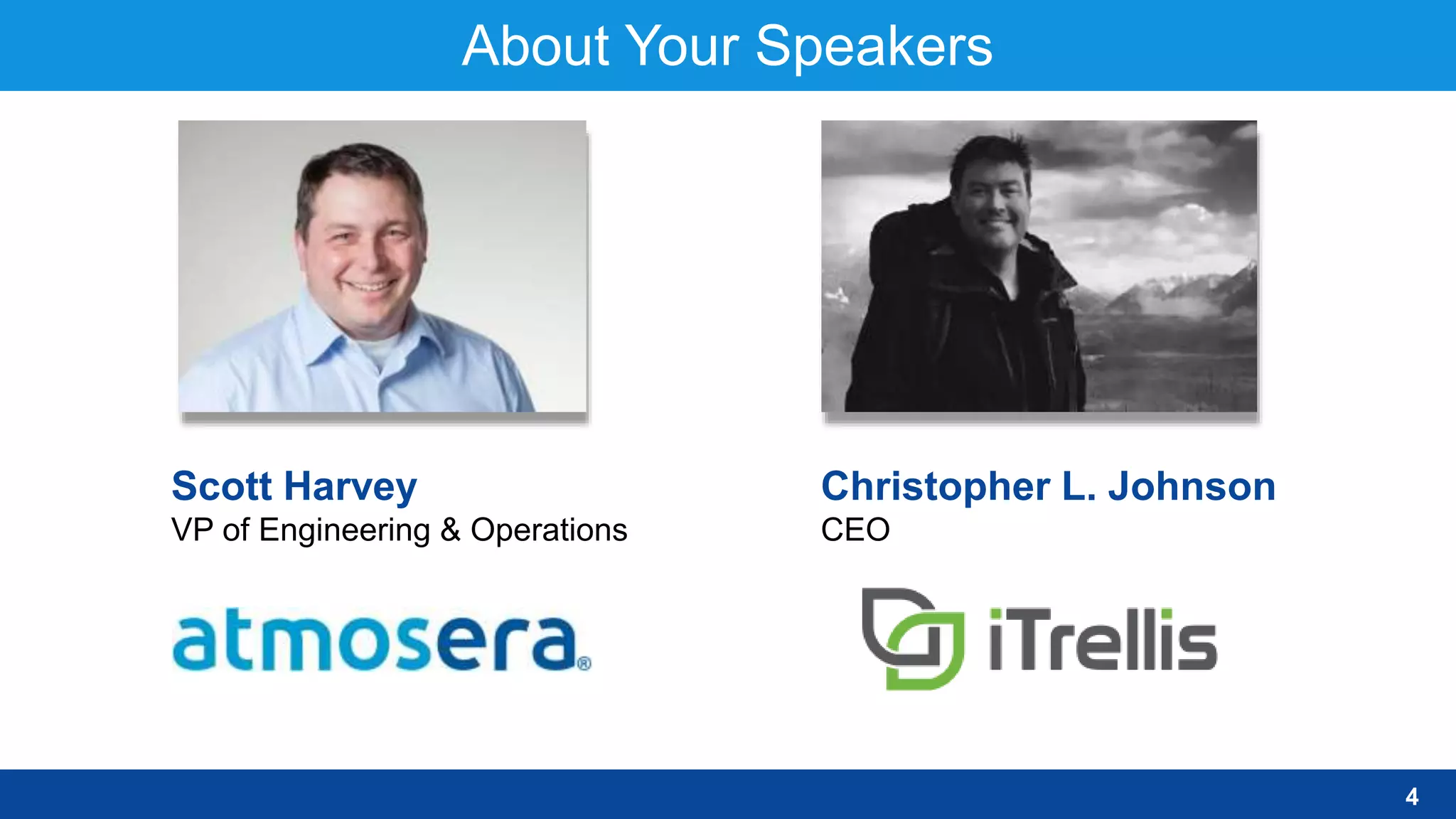
Scott Harvey
VP of Engineering & Operations
Christopher L. Johnson
CEO
Why the Cloud & Why Now?
5
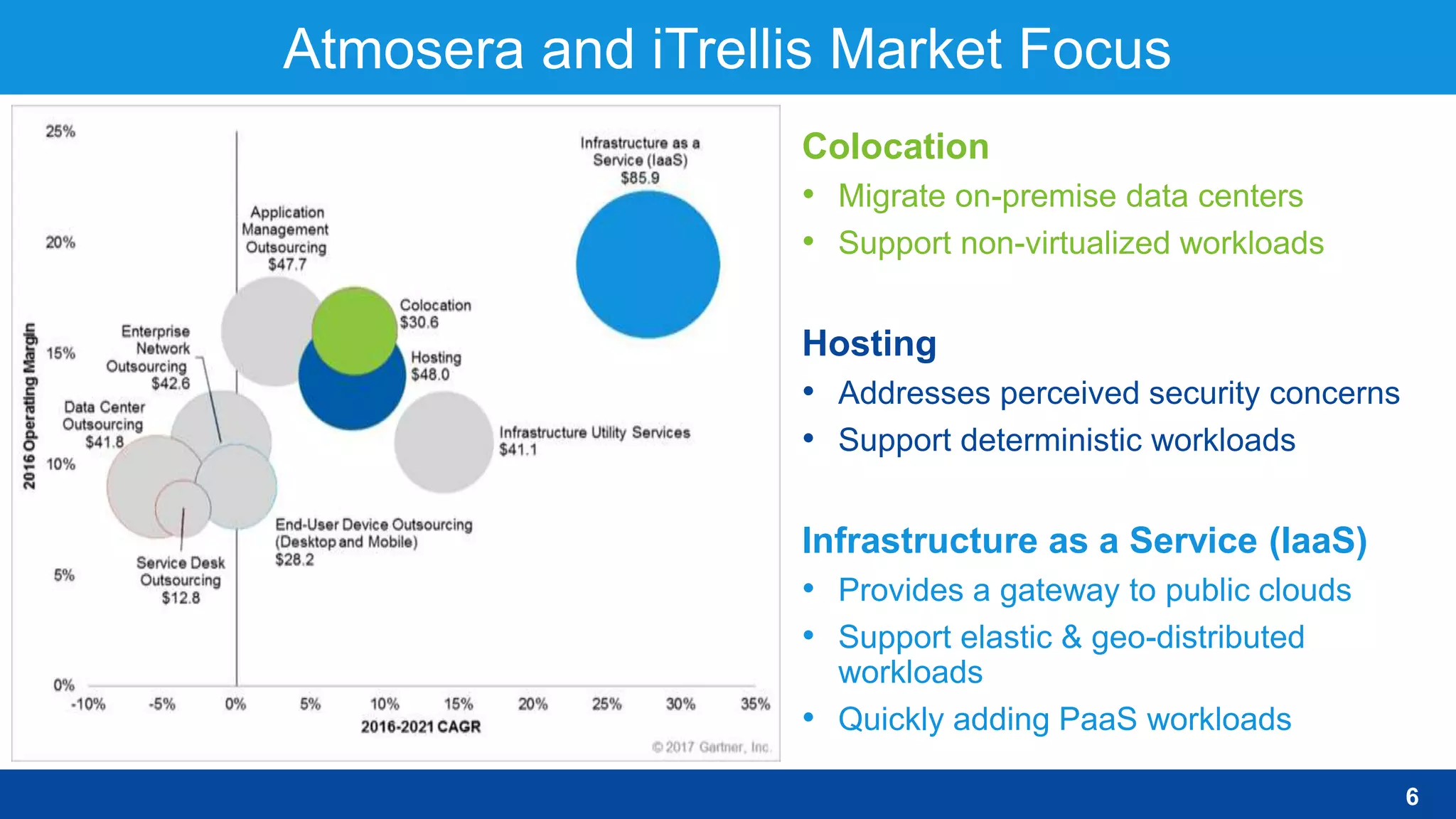
Atmosera and iTrellis Market Focus
Colocation
• Migrate on-premise data centers
• Support non-virtualized workloads
Hosting
• Addresses perceived security concerns
• Support deterministic workloads
Infrastructure as a Service (IaaS)
• Provides a gateway to public clouds
• Support elastic & geo-distributed
workloads
• Quickly adding PaaS workloads
6
7
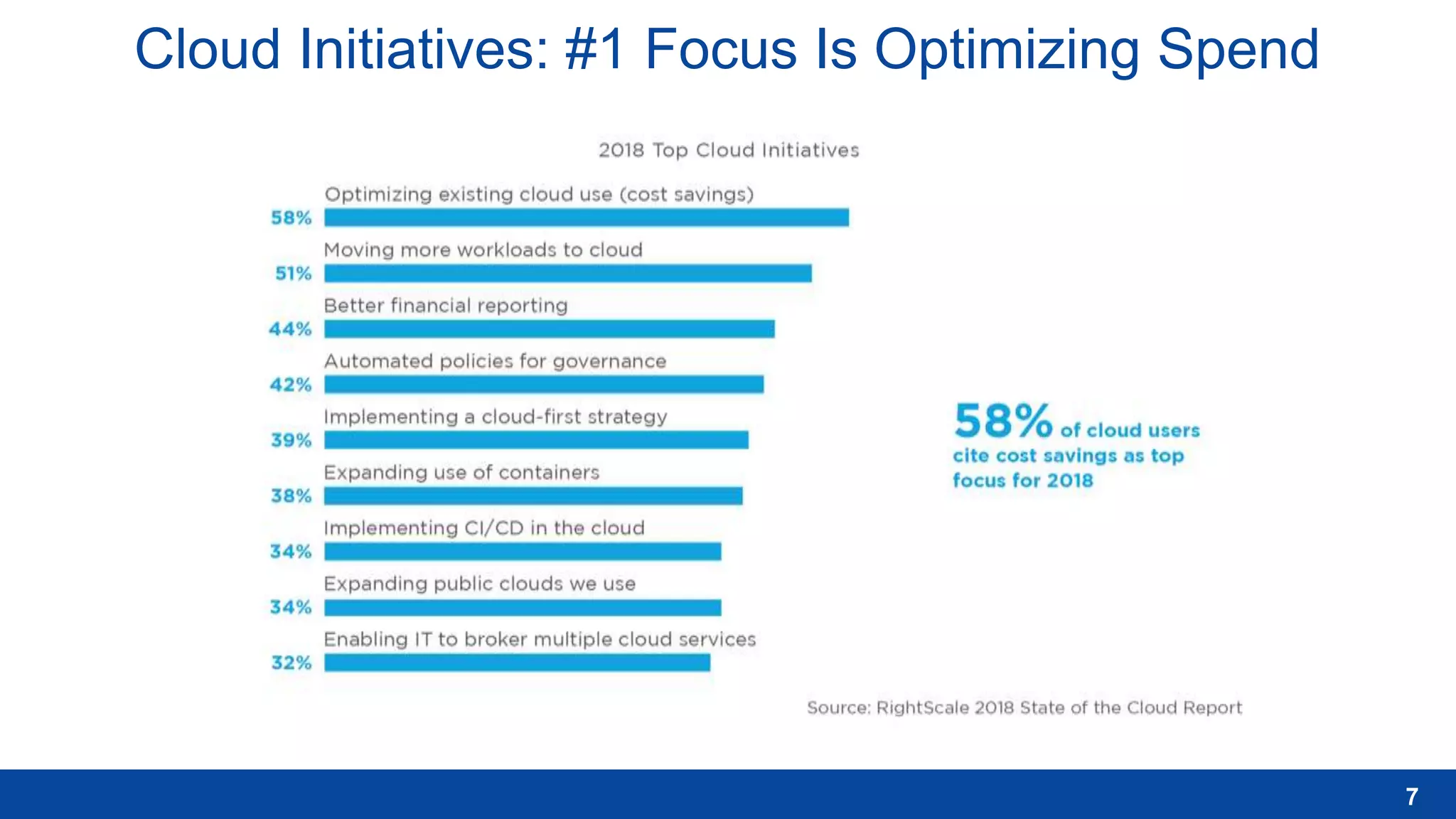
Cloud Initiatives: #1 Focus Is Optimizing Spend
What Re-Platforming Means
& Why You Need to Think About It?
8
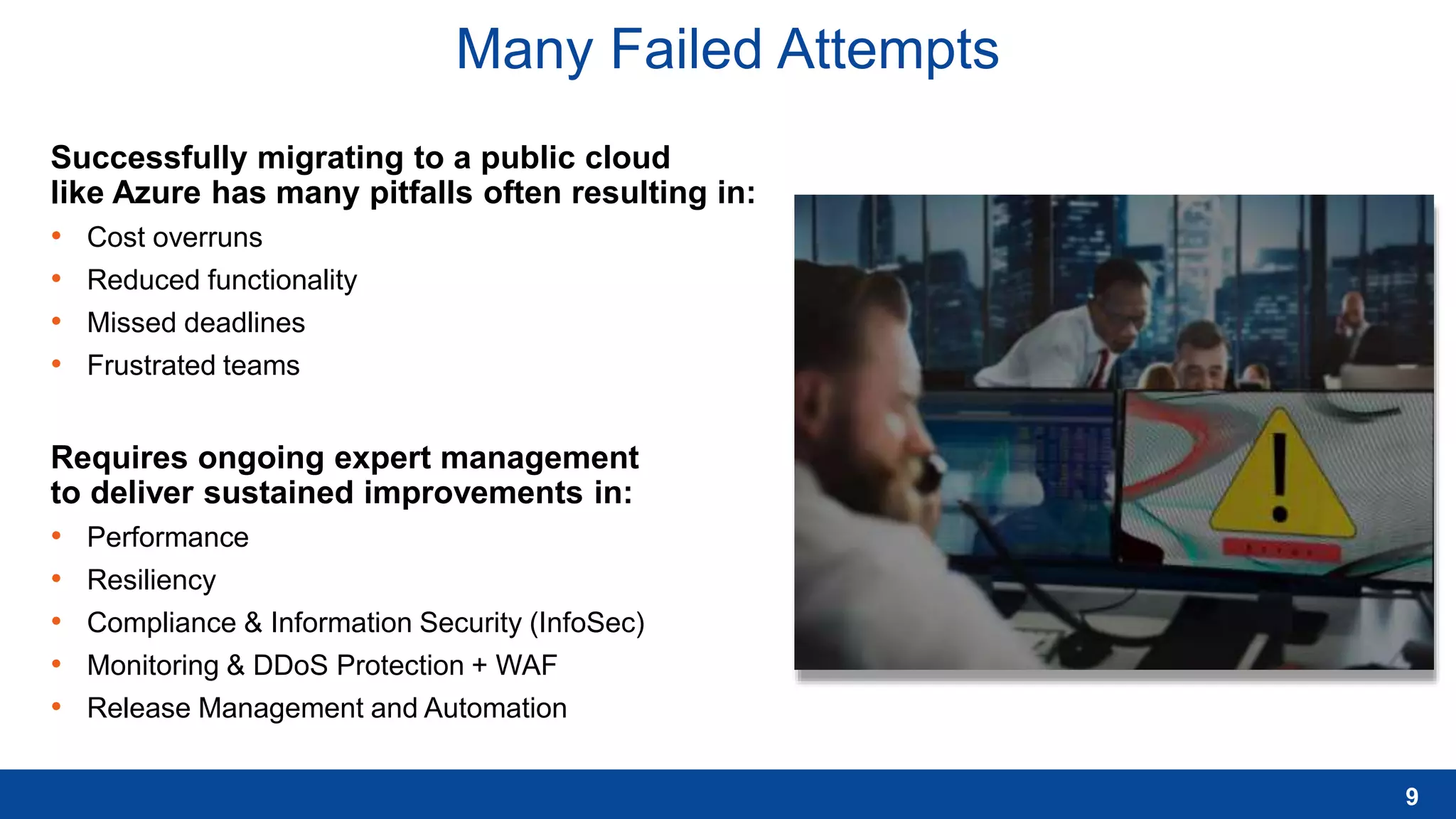
Many Failed Attempts
Successfully migrating to a public cloud
like Azure has many pitfalls often resulting in:
• Cost overruns
• Reduced functionality
• Missed deadlines
• Frustrated teams
Requires ongoing expert management
to deliver sustained improvements in:
• Performance
• Resiliency
• Compliance & Information Security (InfoSec)
• Monitoring & DDoS Protection + WAF
• Release Management and Automation
9
Cloud Migrations – Another Industrialization Wave
10
More Cloud Adoption -> More Standards, Less Confusion
More Standards -> More Commonly Used Tools
More Commonly Used Tools -> Improved Solution Delivery Techniques
Improved Solution Delivery Techniques -> Faster Speed to Market, Cost Savings
• Collaborative
• Transparent
• Reliable
• Predictable
• Cost Effective
• Scalable
Cloud Migrations – Common Reasons
11
We have re-factored a wide variety of standalone desktop applications and client/server
applications into “The Cloud”.
Some applications were written 20 years ago, were significant investments, they “work”, and
continue to provide business value.
However, with increasing frequency they are going “terminal”. Typical reasons:
• Programmer scarcity
• Earlier implementations of current languages in Architectures (e.g. Client/Server) that
cannot be effectively deployed without significant modification, e.g. C++, Java, C#
• User Experience awkward by today’s standards
• New Feature Requests that cannot be accommodated
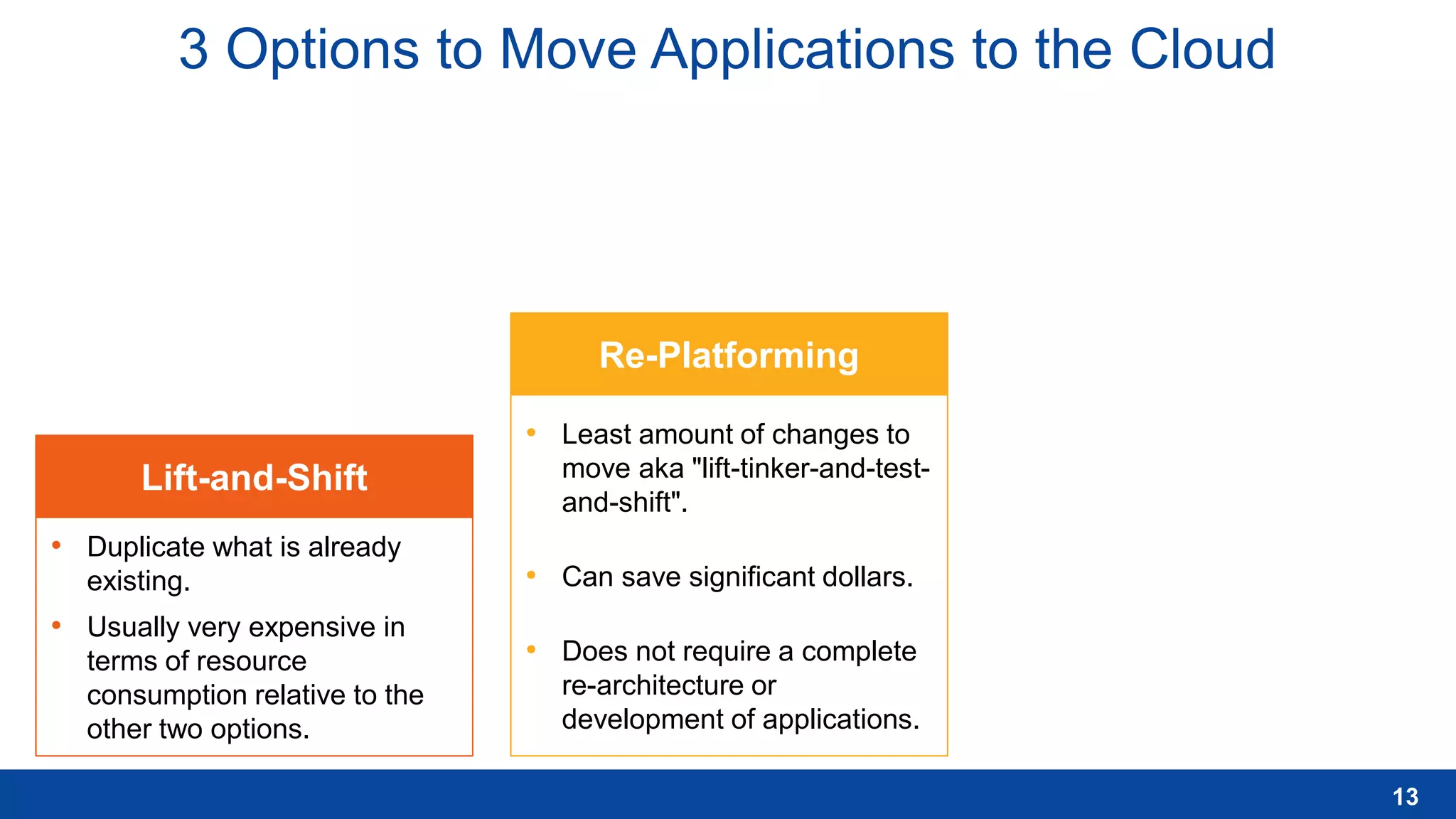
3 Options to Move Applications to the Cloud
Lift-and-Shift
12
• Duplicate what is already
existing.
• Usually very expensive in
terms of resource
consumption relative to the
other two options.
3 Options to Move Applications to the Cloud
Lift-and-Shift
Re-Platforming
13
• Duplicate what is already
existing.
• Usually very expensive in
terms of resource
consumption relative to the
other two options.
• Least amount of changes to
move aka "lift-tinker-and-test-
and-shift".
• Can save significant dollars.
• Does not require a complete
re-architecture or
development of applications.
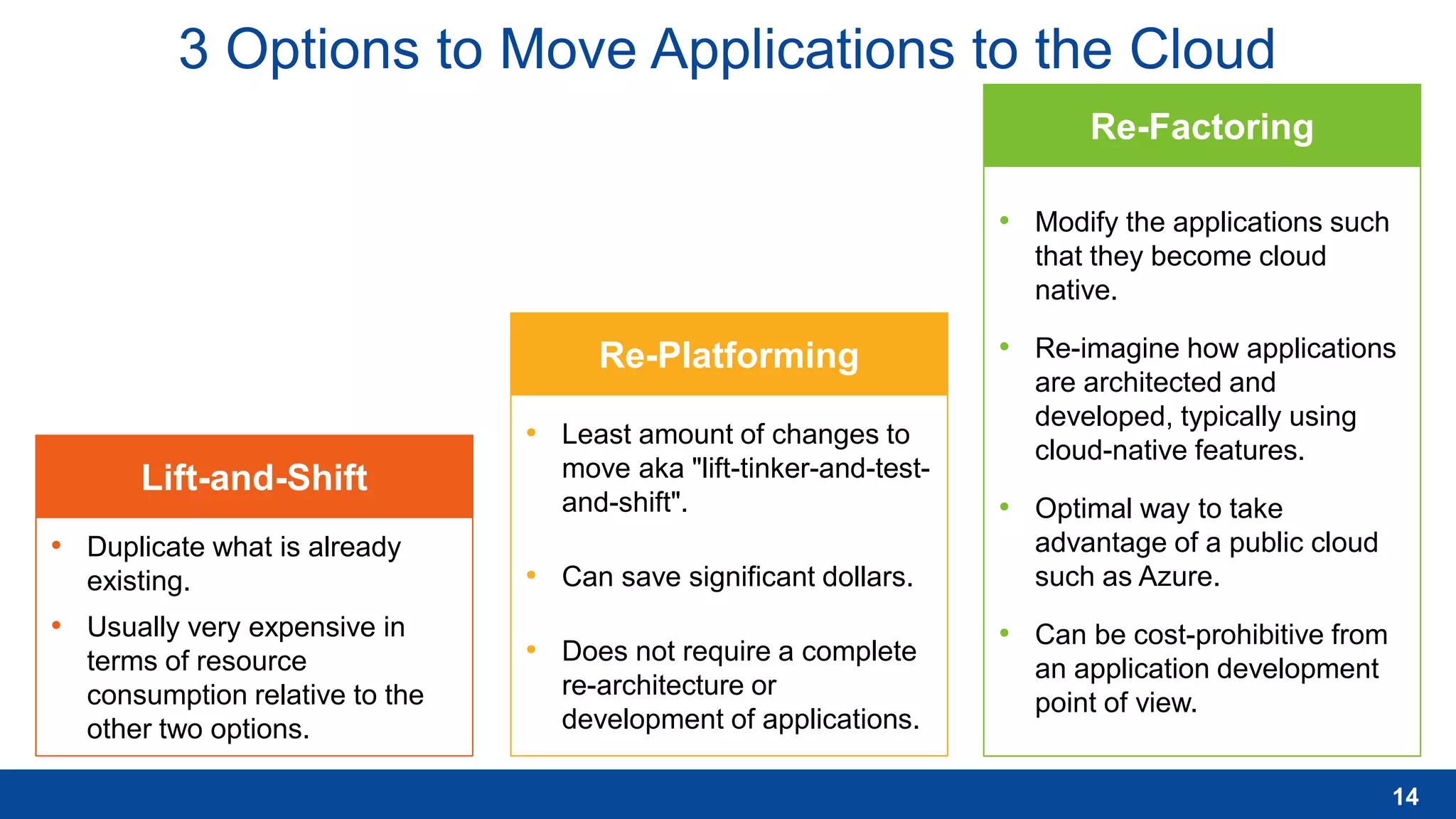
3 Options to Move Applications to the Cloud
Lift-and-Shift
Re-Platforming
Re-Factoring
14
• Duplicate what is already
existing.
• Usually very expensive in
terms of resource
consumption relative to the
other two options.
• Least amount of changes to
move aka "lift-tinker-and-test-
and-shift".
• Can save significant dollars.
• Does not require a complete
re-architecture or
development of applications.
• Modify the applications such
that they become cloud
native.
• Re-imagine how applications
are architected and
developed, typically using
cloud-native features.
• Optimal way to take
advantage of a public cloud
such as Azure.
• Can be cost-prohibitive from
an application development
point of view.
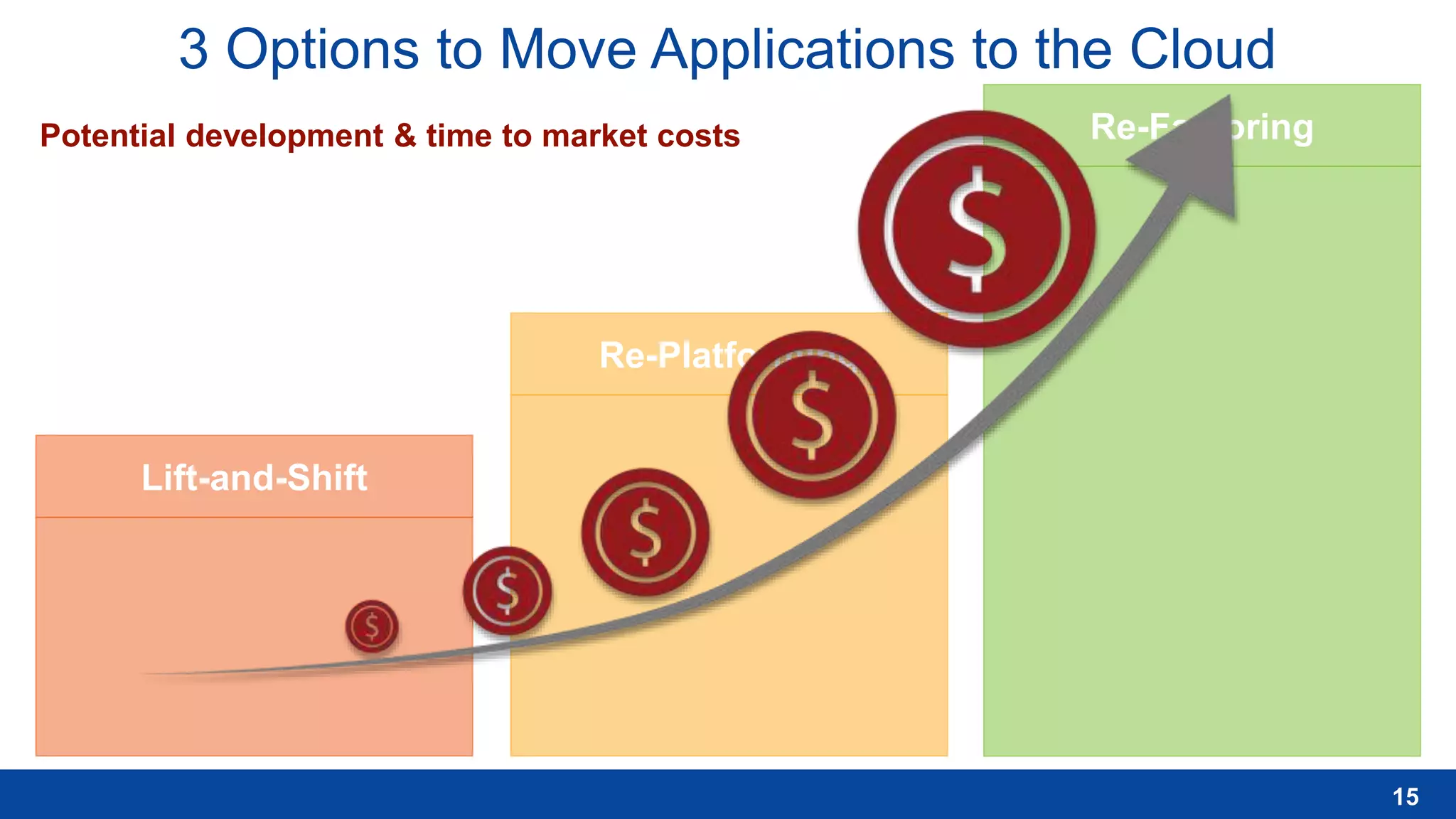
3 Options to Move Applications to the Cloud
Lift-and-Shift
Re-Platforming
Re-Factoring
15
Potential development & time to market costs
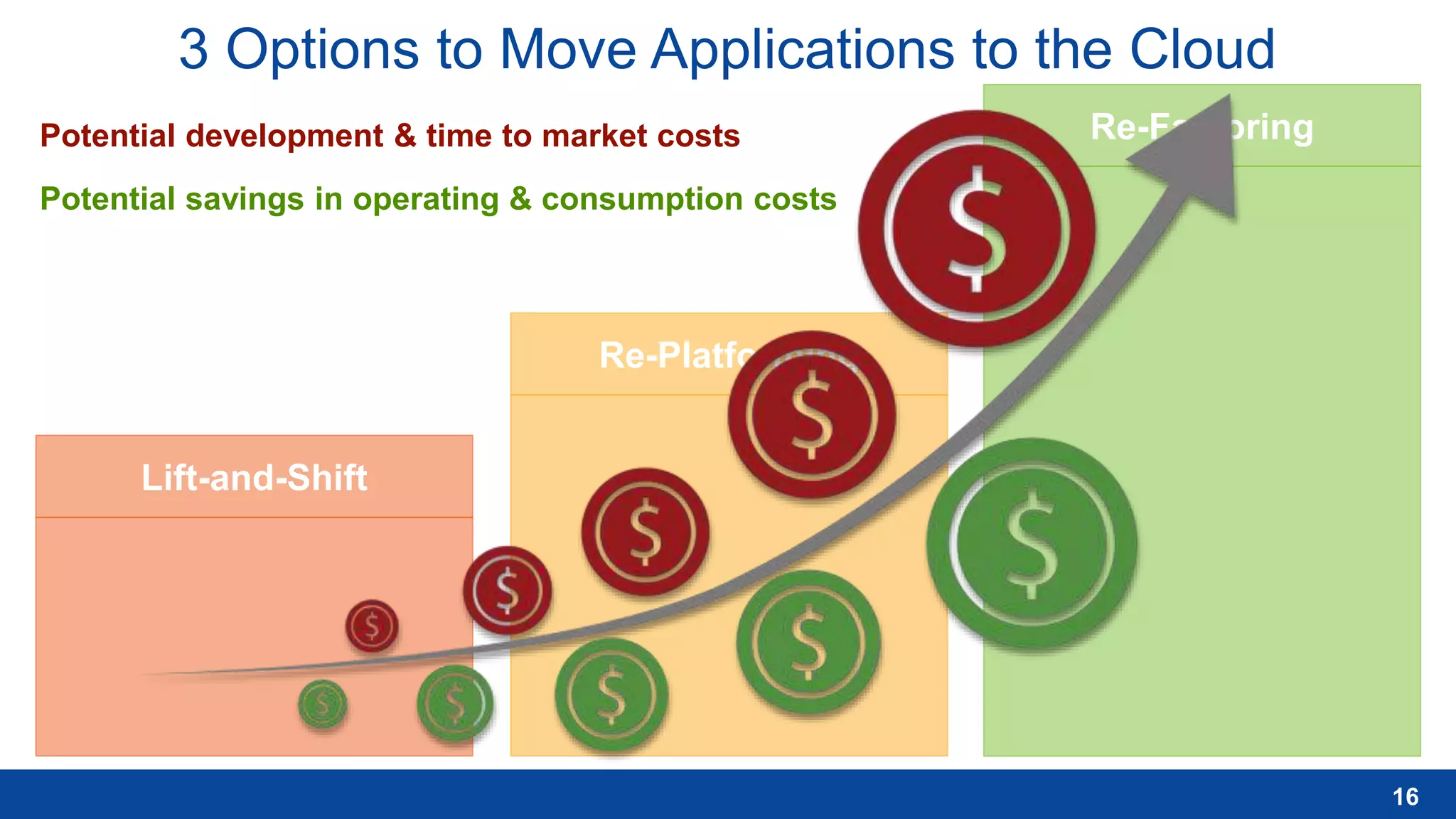
3 Options to Move Applications to the Cloud
Lift-and-Shift
Re-Platforming
Re-Factoring
16
Potential development & time to market costs
Potential savings in operating & consumption costs
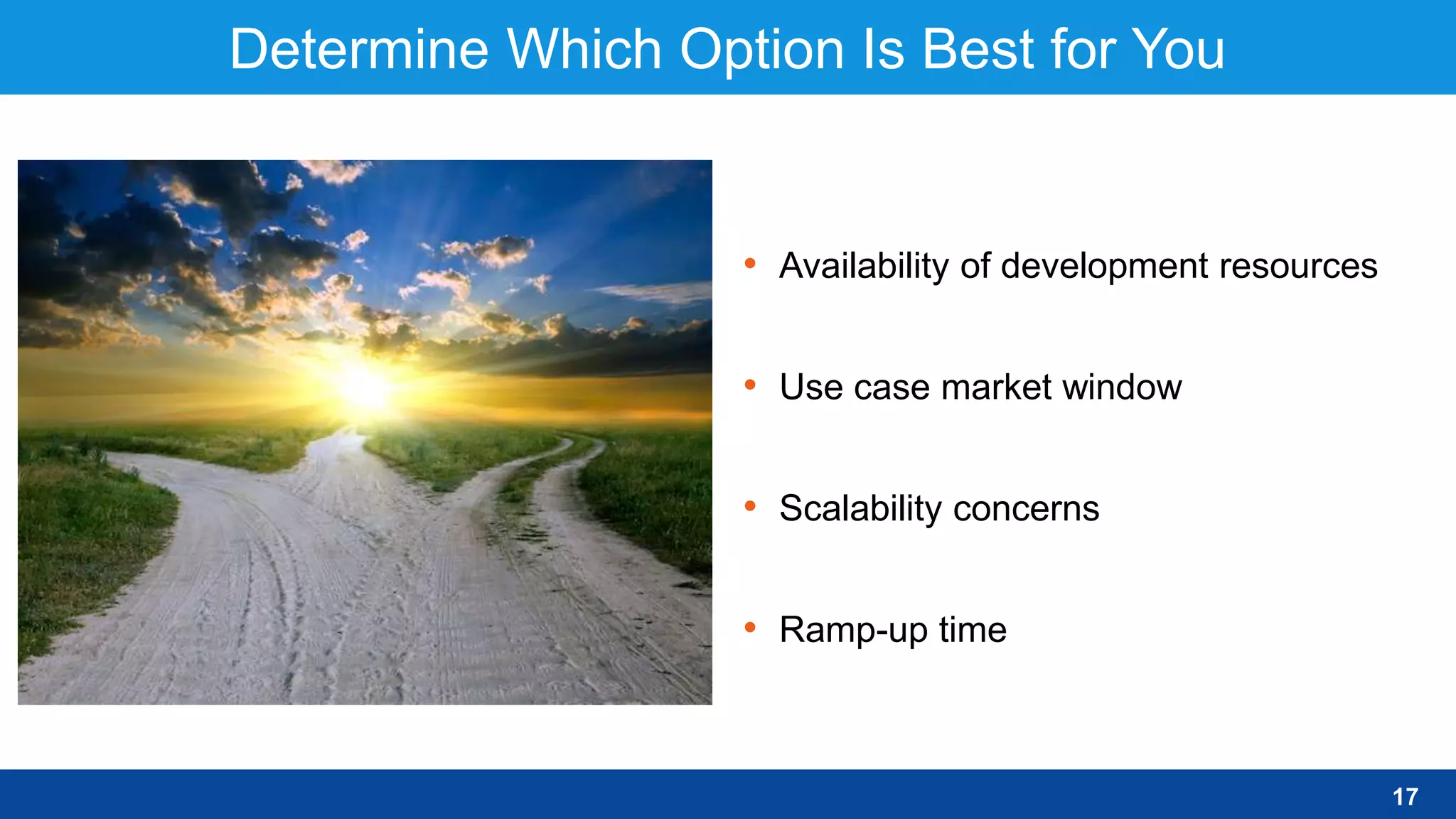
Determine Which Option Is Best for You
• Availability of development resources
• Use case market window
• Scalability concerns
• Ramp-up time
17
How to Take Full Advantage
of a Cloud Such as Azure?
18
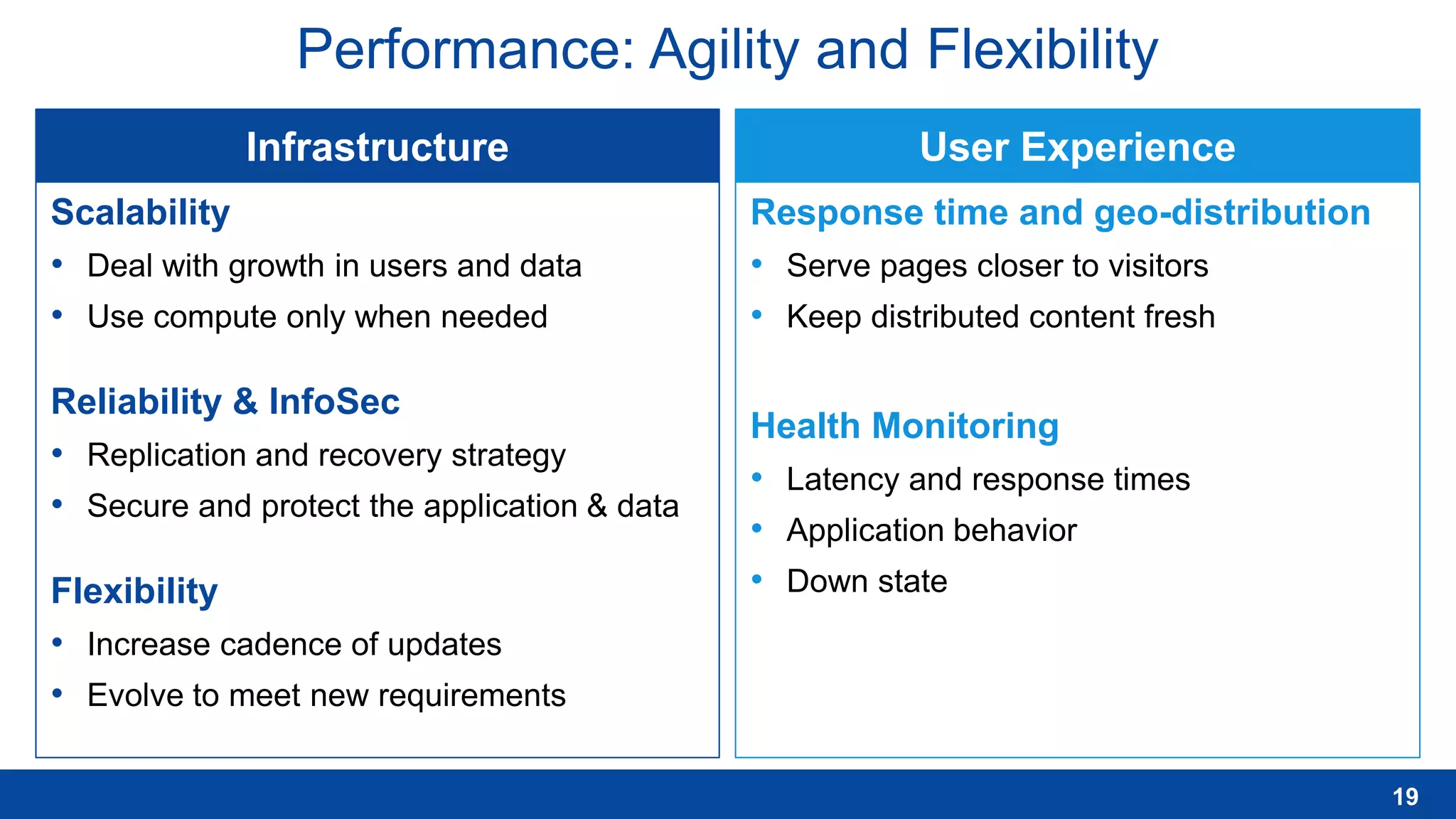
Performance: Agility and Flexibility
Infrastructure User Experience
19
Scalability
• Deal with growth in users and data
• Use compute only when needed
Reliability & InfoSec
• Replication and recovery strategy
• Secure and protect the application & data
Flexibility
• Increase cadence of updates
• Evolve to meet new requirements
Response time and geo-distribution
• Serve pages closer to visitors
• Keep distributed content fresh
Health Monitoring
• Latency and response times
• Application behavior
• Down state
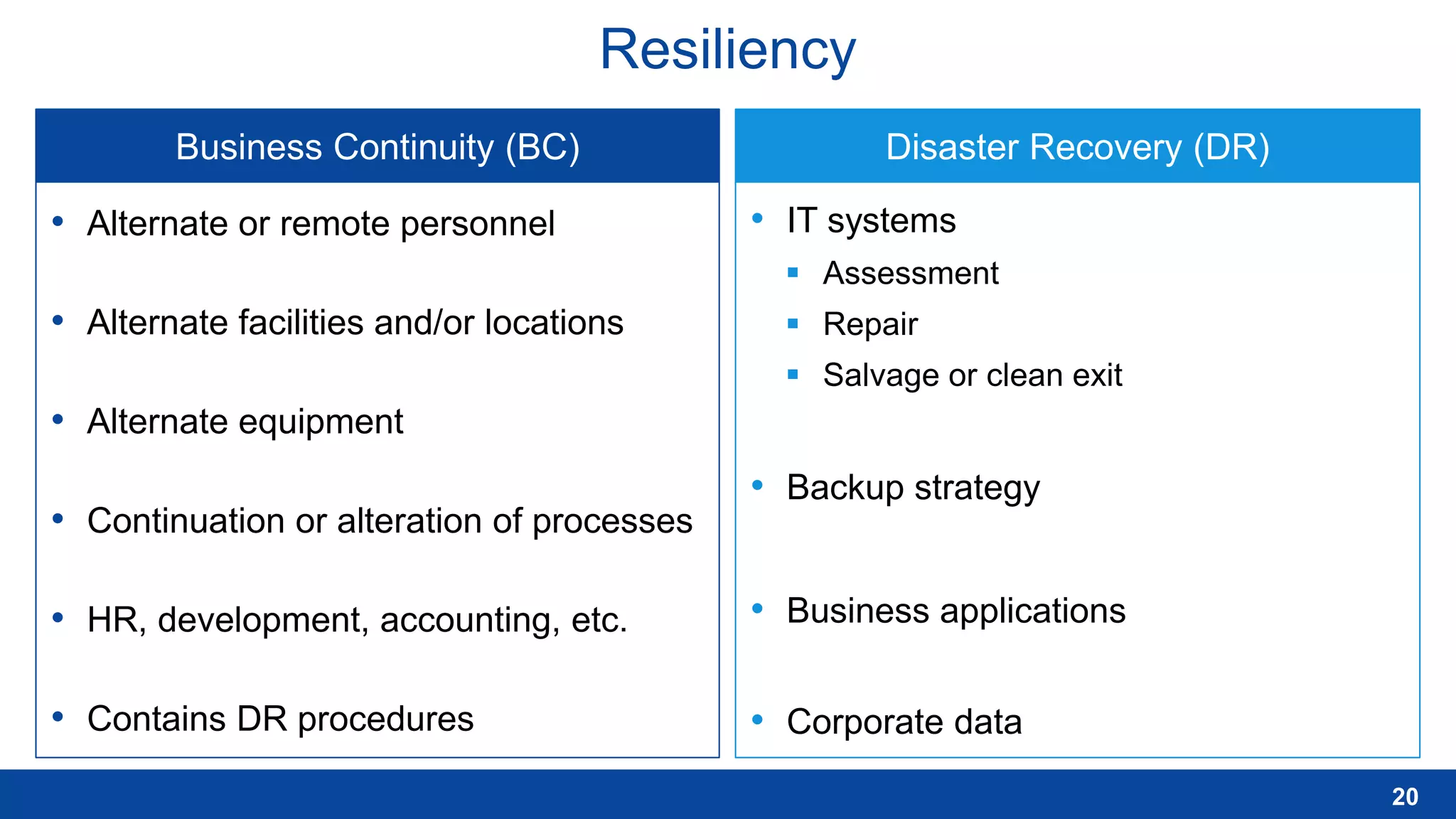
Resiliency
Business Continuity (BC) Disaster Recovery (DR)
20
• Alternate or remote personnel
• Alternate facilities and/or locations
• Alternate equipment
• Continuation or alteration of processes
• HR, development, accounting, etc.
• Contains DR procedures
• IT systems
 Assessment
 Repair
 Salvage or clean exit
• Backup strategy
• Business applications
• Corporate data
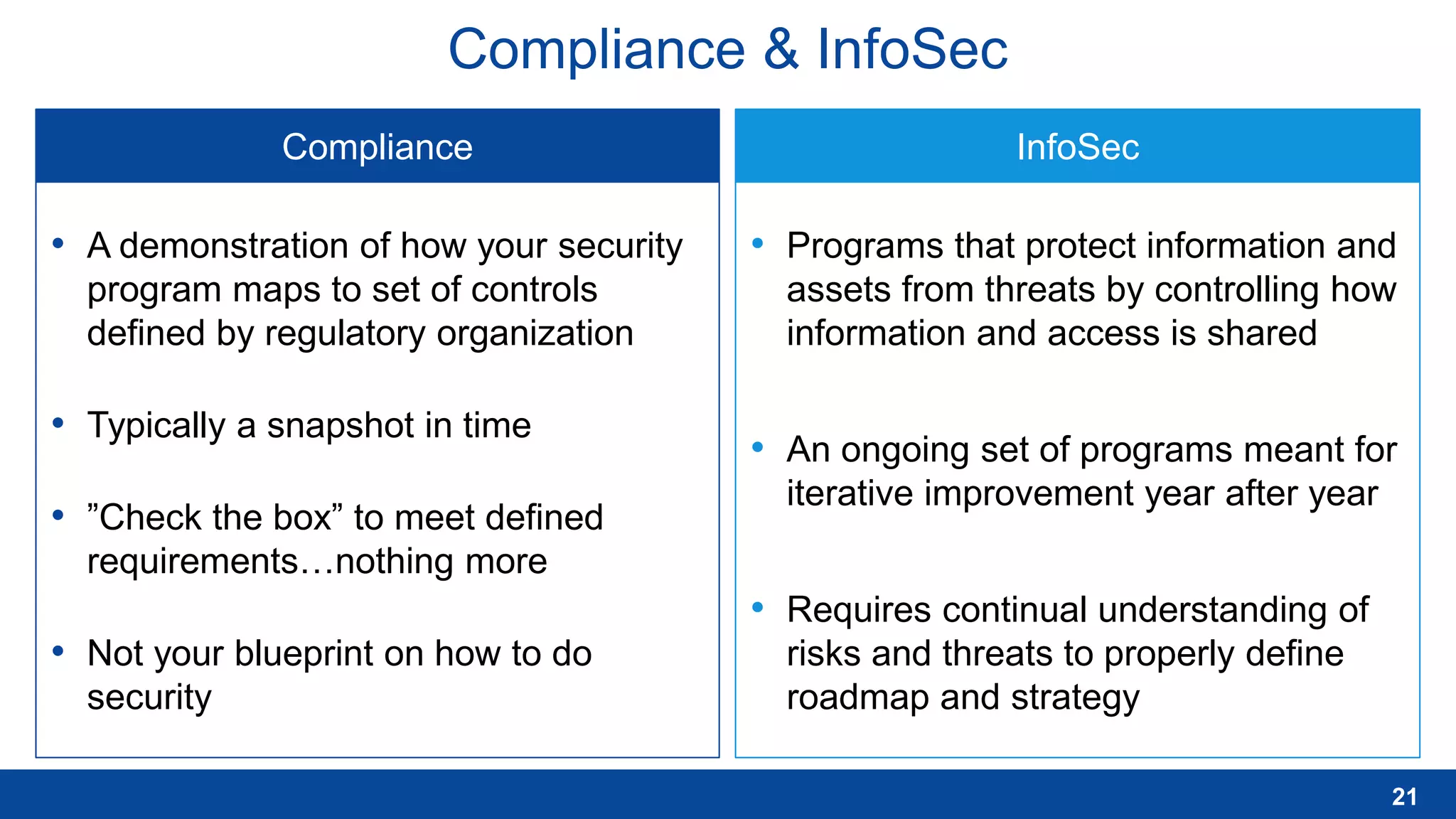
Compliance & InfoSec
Compliance InfoSec
21
• A demonstration of how your security
program maps to set of controls
defined by regulatory organization
• Typically a snapshot in time
• ”Check the box” to meet defined
requirements…nothing more
• Not your blueprint on how to do
security
• Programs that protect information and
assets from threats by controlling how
information and access is shared
• An ongoing set of programs meant for
iterative improvement year after year
• Requires continual understanding of
risks and threats to properly define
roadmap and strategy
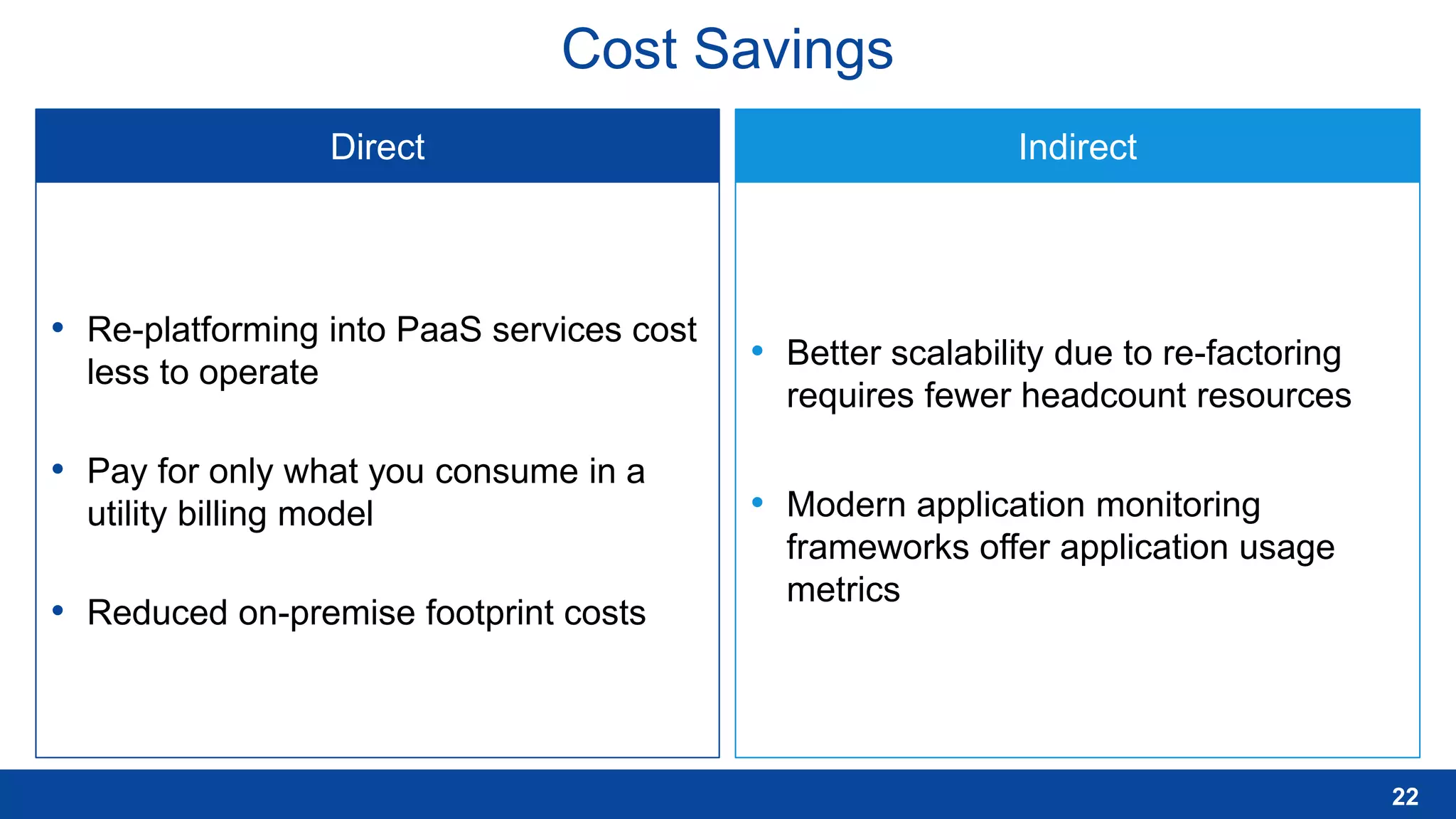
Cost Savings
Direct Indirect
22
• Re-platforming into PaaS services cost
less to operate
• Pay for only what you consume in a
utility billing model
• Reduced on-premise footprint costs
• Better scalability due to re-factoring
requires fewer headcount resources
• Modern application monitoring
frameworks offer application usage
metrics
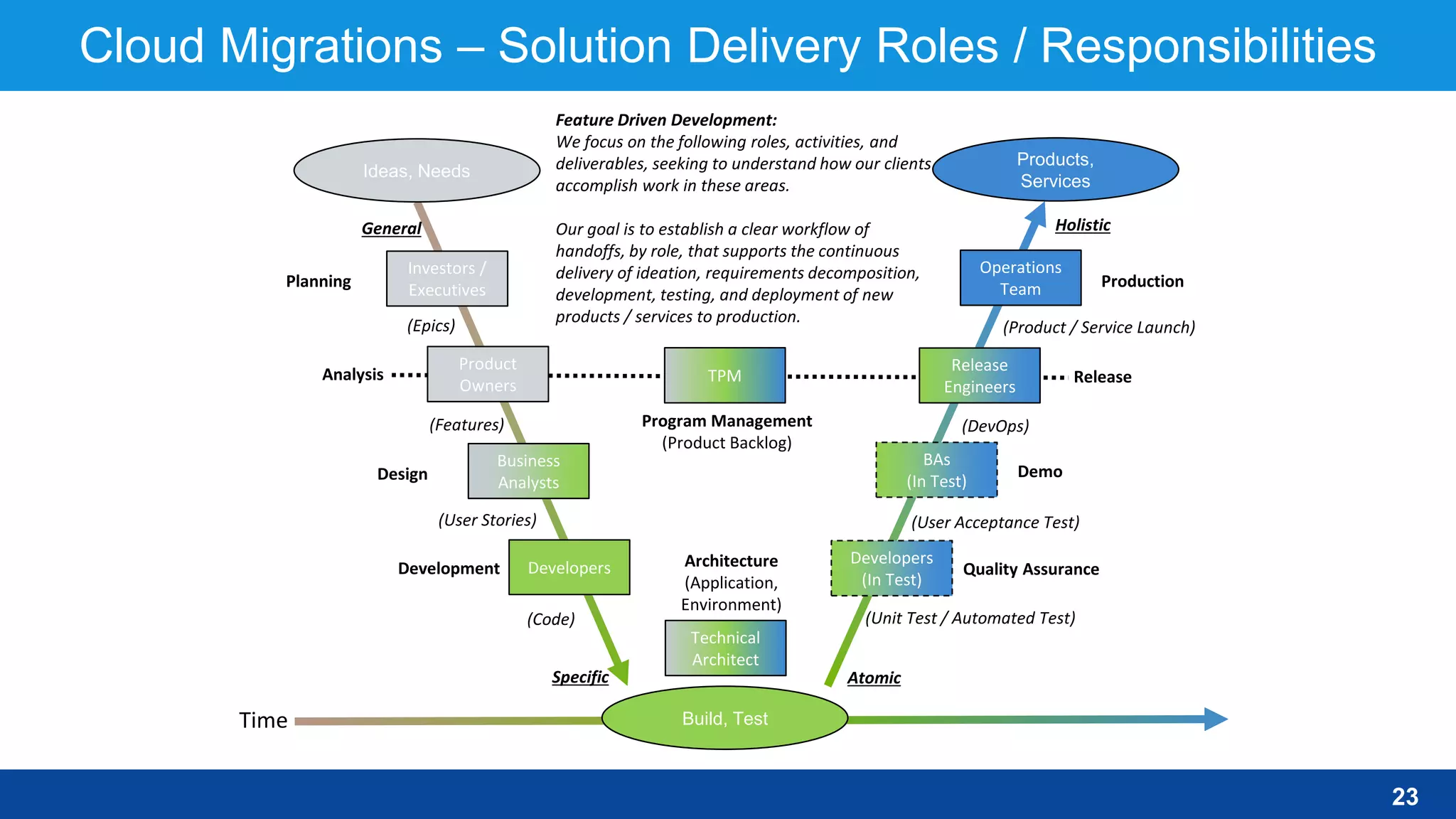
Cloud Migrations – Solution Delivery Roles / Responsibilities
23
Build, Test
Product
Owners
Release
Engineers
Business
Analysts
Developers
Investors /
Executives
Time
Operations
Team
BAs
(In Test)
Planning
Analysis
Design
Development Quality Assurance
Demo
Release
Production
Ideas, Needs
Products,
Services
General
Specific Atomic
Holistic
Technical
Architect
Developers
(In Test)
TPM
Feature Driven Development:
We focus on the following roles, activities, and
deliverables, seeking to understand how our clients
accomplish work in these areas.
Our goal is to establish a clear workflow of
handoffs, by role, that supports the continuous
delivery of ideation, requirements decomposition,
development, testing, and deployment of new
products / services to production.
Program Management
(Product Backlog)
Architecture
(Application,
Environment)
(Epics)
(User Stories)
(Features)
(Code) (Unit Test / Automated Test)
(User Acceptance Test)
(DevOps)
(Product / Service Launch)
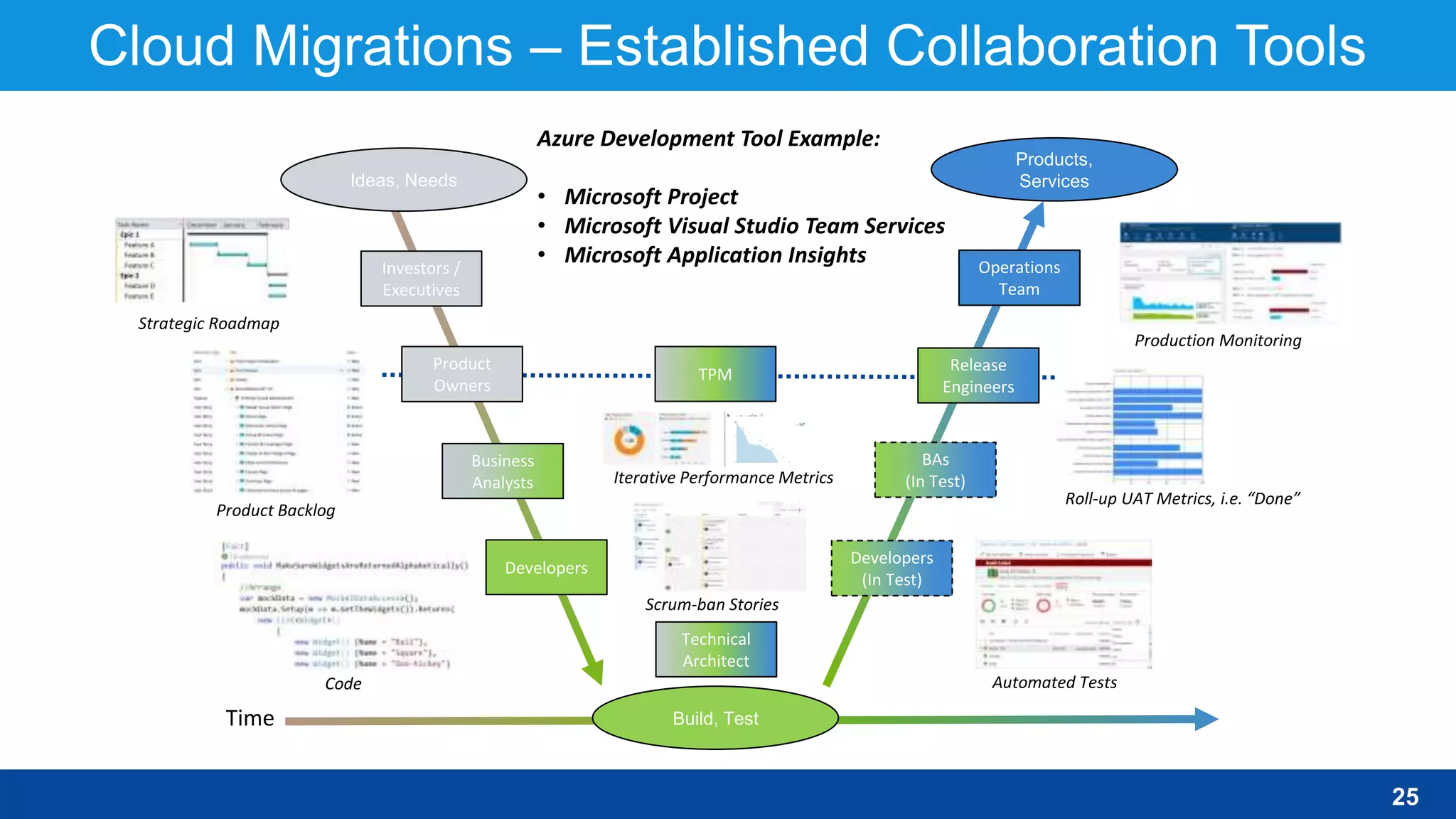
Cloud Migrations – Established Collaboration Tools
25
Build, Test
Product
Owners
Release
Engineers
Business
Analysts
Developers
Investors /
Executives
Time
Operations
Team
BAs
(In Test)
Products,
Services
TPM
Technical
Architect
Developers
(In Test)
Scrum-ban Stories
Iterative Performance Metrics
Ideas, Needs
Strategic Roadmap
Automated Tests
Roll-up UAT Metrics, i.e. “Done”
Production Monitoring
Code
Product Backlog
Azure Development Tool Example:
• Microsoft Project
• Microsoft Visual Studio Team Services
• Microsoft Application Insights
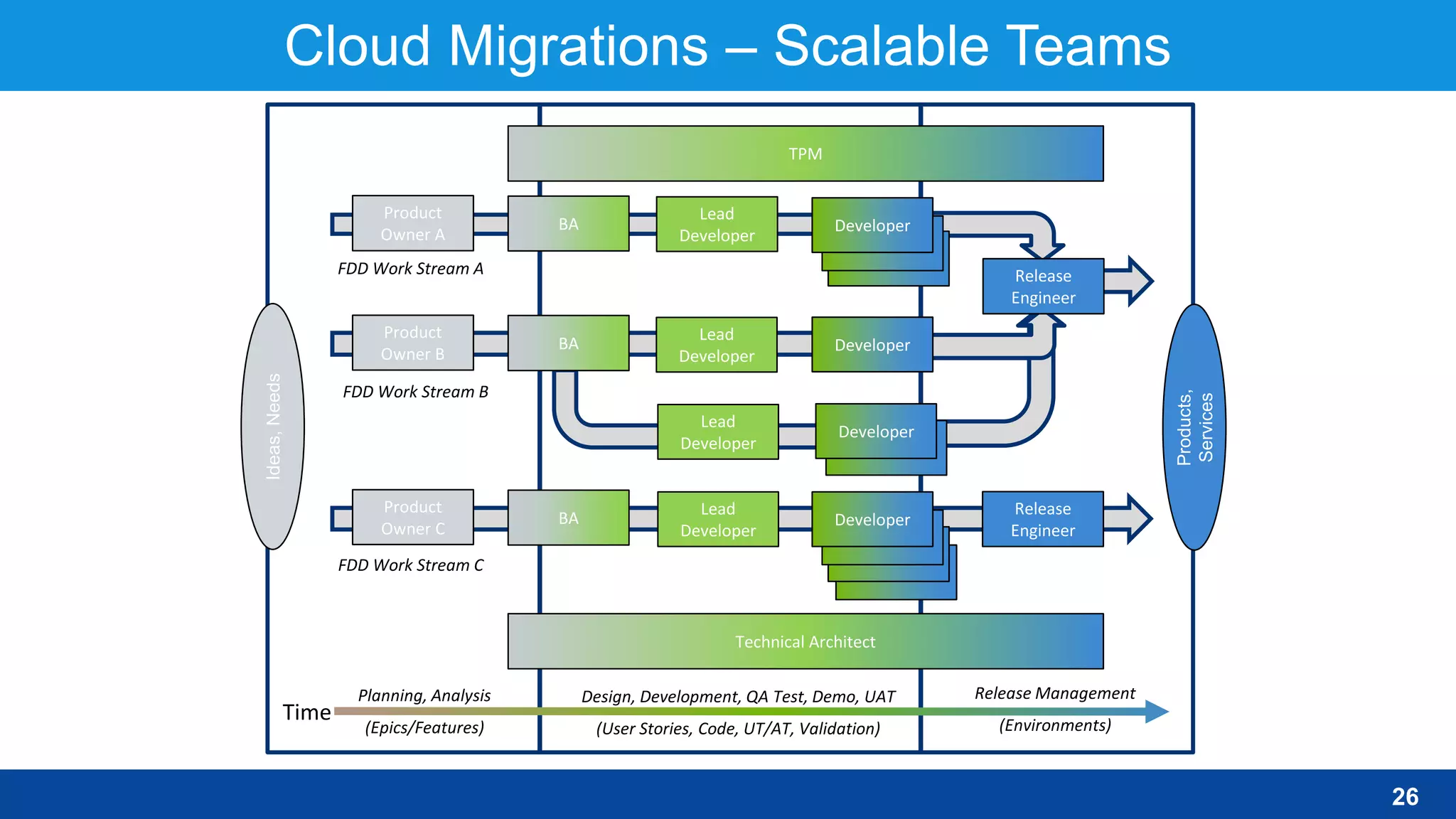
Cloud Migrations – Scalable Teams
26
Developer
Product
Owner A
BA
Lead
Developer
Time
TPM
Technical Architect
Product
Owner B
Lead
Developer
Developer
Developer
Developer
Developer
Lead
Developer Developer
Developer
Product
Owner C
BA
Lead
Developer
Developer
Developer
Developer
BA
Release
Engineer
Release
Engineer
Ideas,Needs
Products,
Services
Planning, Analysis
(Epics/Features)
Design, Development, QA Test, Demo, UAT
(User Stories, Code, UT/AT, Validation)
Release Management
(Environments)
FDD Work Stream A
FDD Work Stream B
FDD Work Stream C
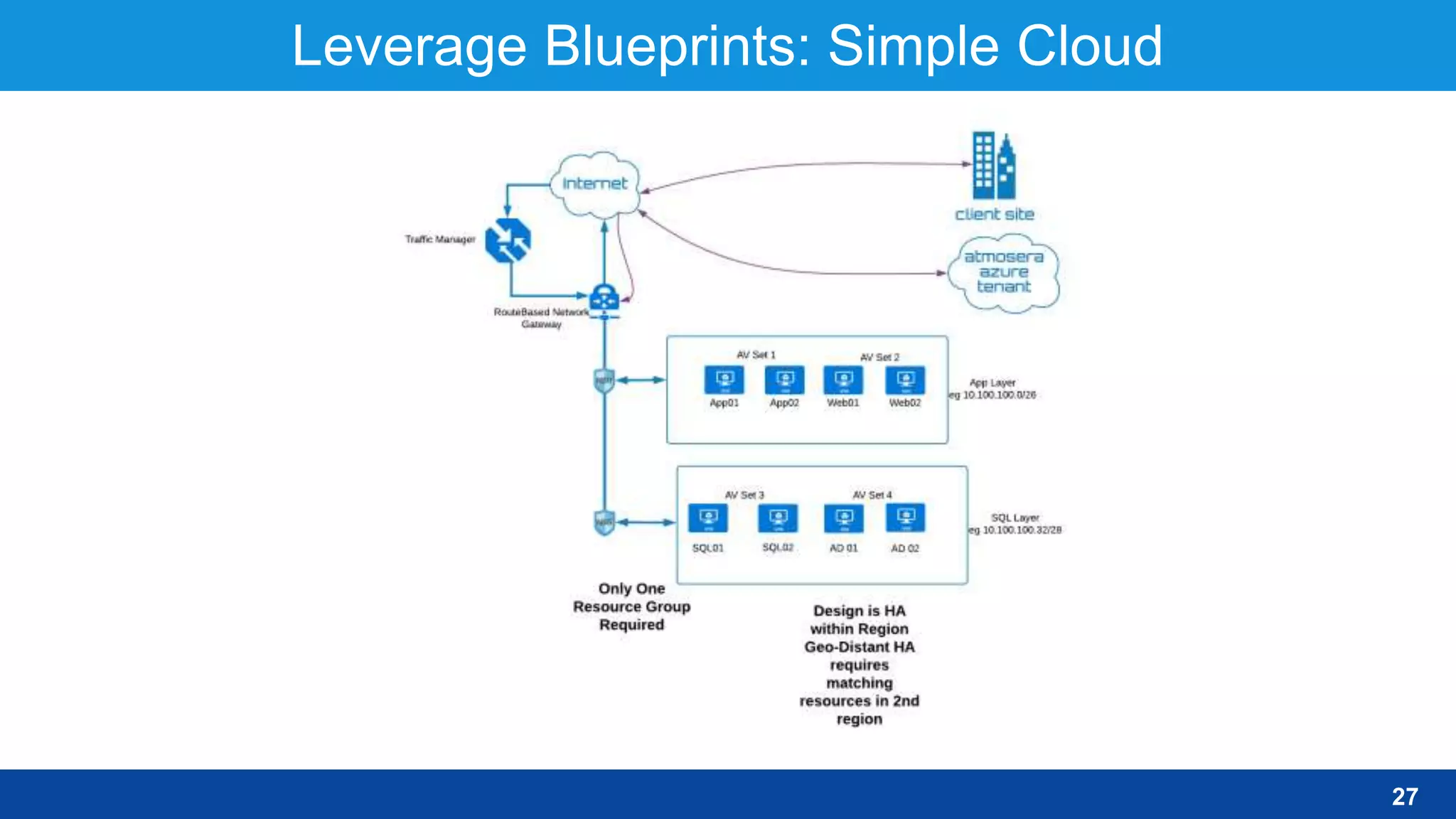
Leverage Blueprints: Simple Cloud
27
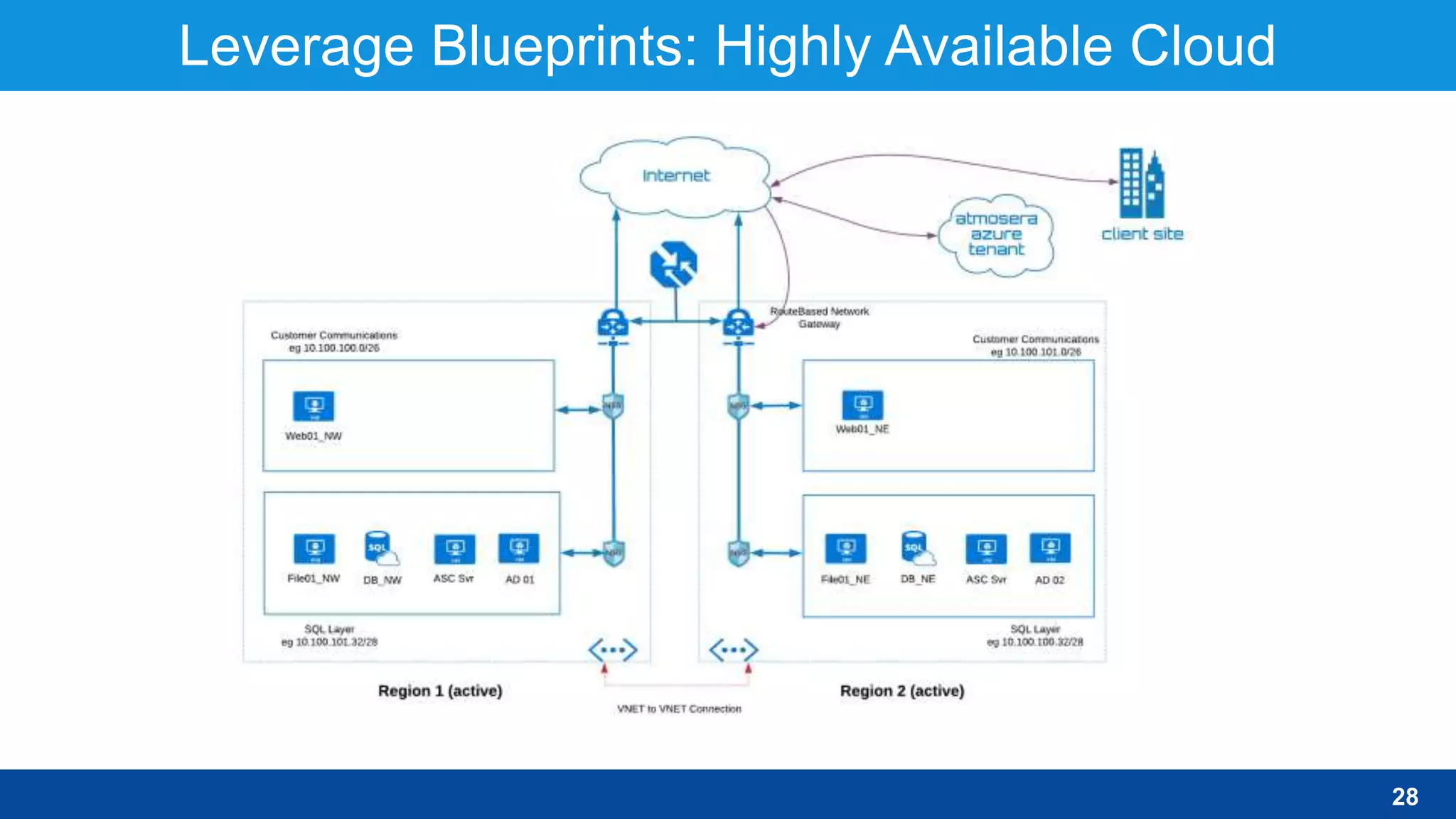
Leverage Blueprints: Highly Available Cloud
28
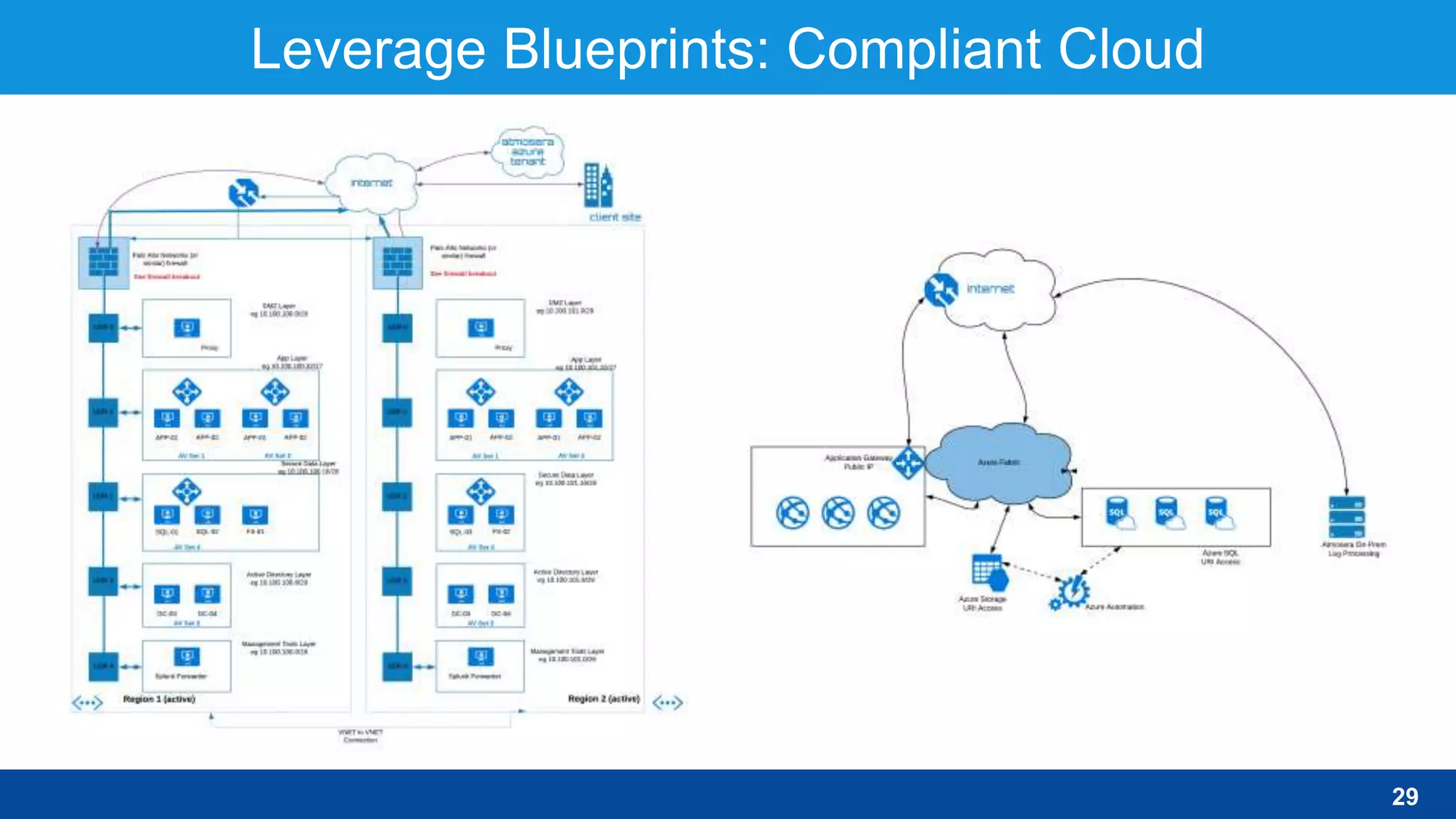
Leverage Blueprints: Compliant Cloud
29
Lessons learned and best practices
for planning a successful move to
a modern cloud?
30
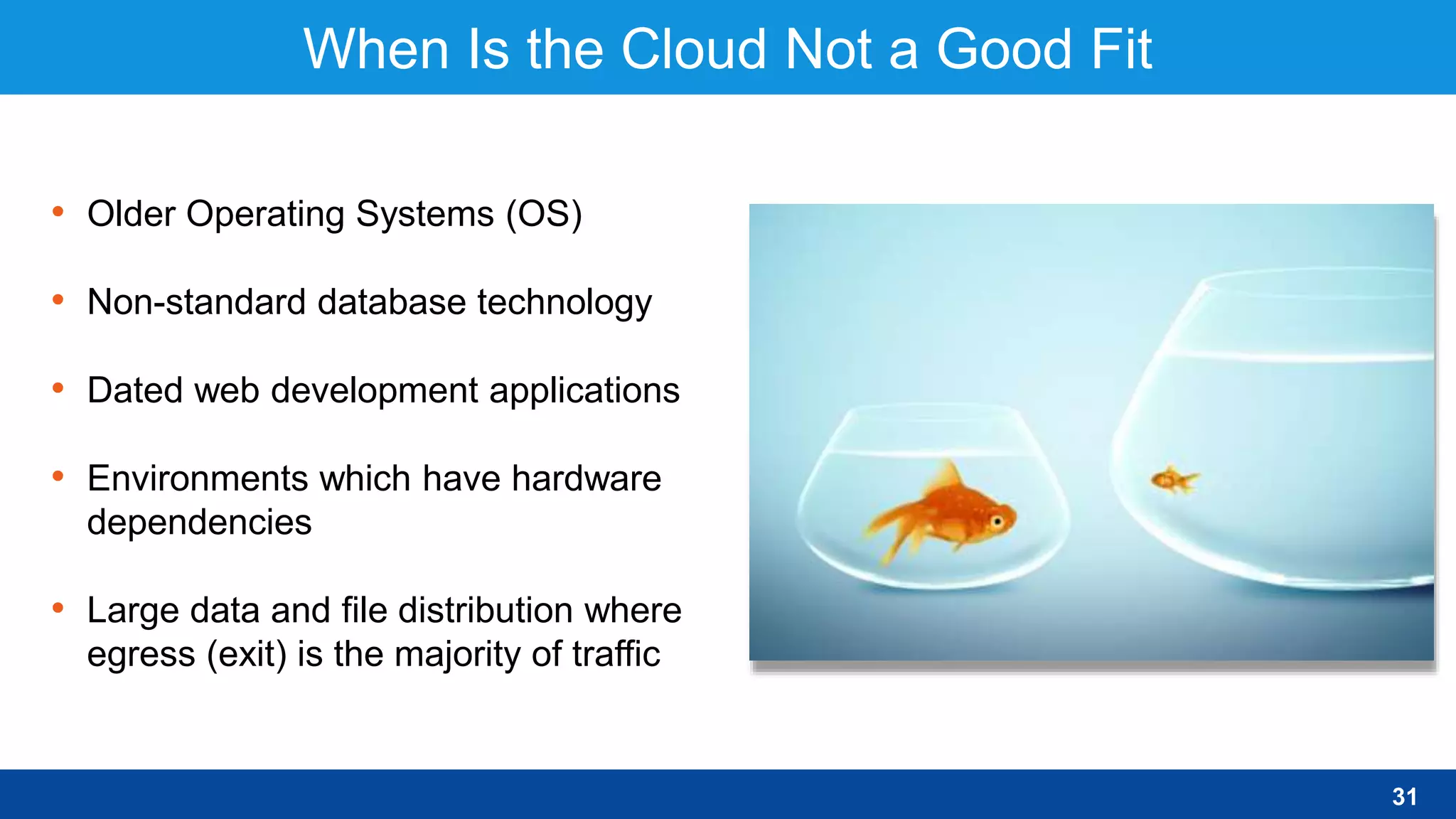
When Is the Cloud Not a Good Fit
• Older Operating Systems (OS)
• Non-standard database technology
• Dated web development applications
• Environments which have hardware
dependencies
• Large data and file distribution where
egress (exit) is the majority of traffic
31
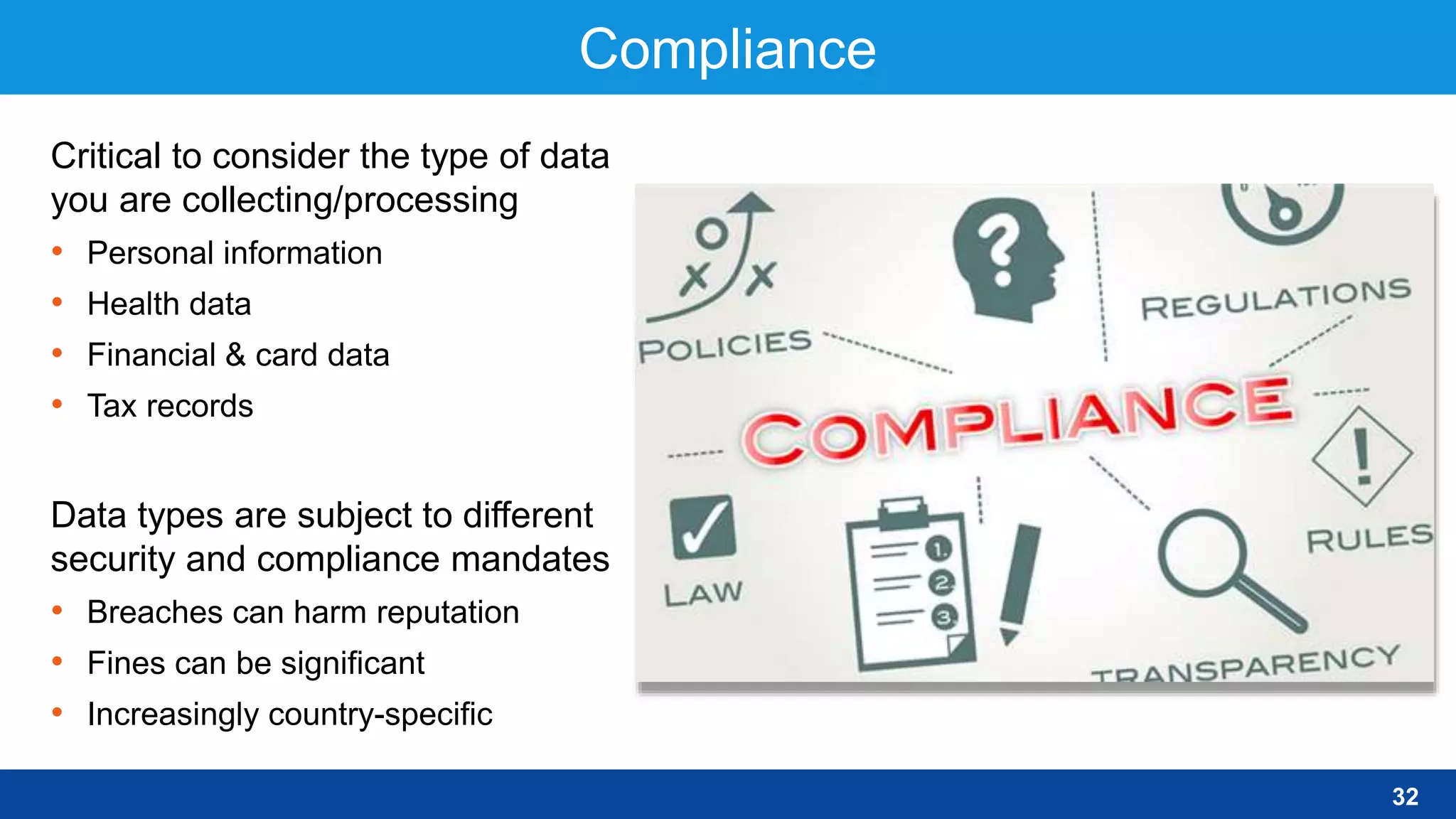
Compliance
32
Critical to consider the type of data
you are collecting/processing
• Personal information
• Health data
• Financial & card data
• Tax records
Data types are subject to different
security and compliance mandates
• Breaches can harm reputation
• Fines can be significant
• Increasingly country-specific
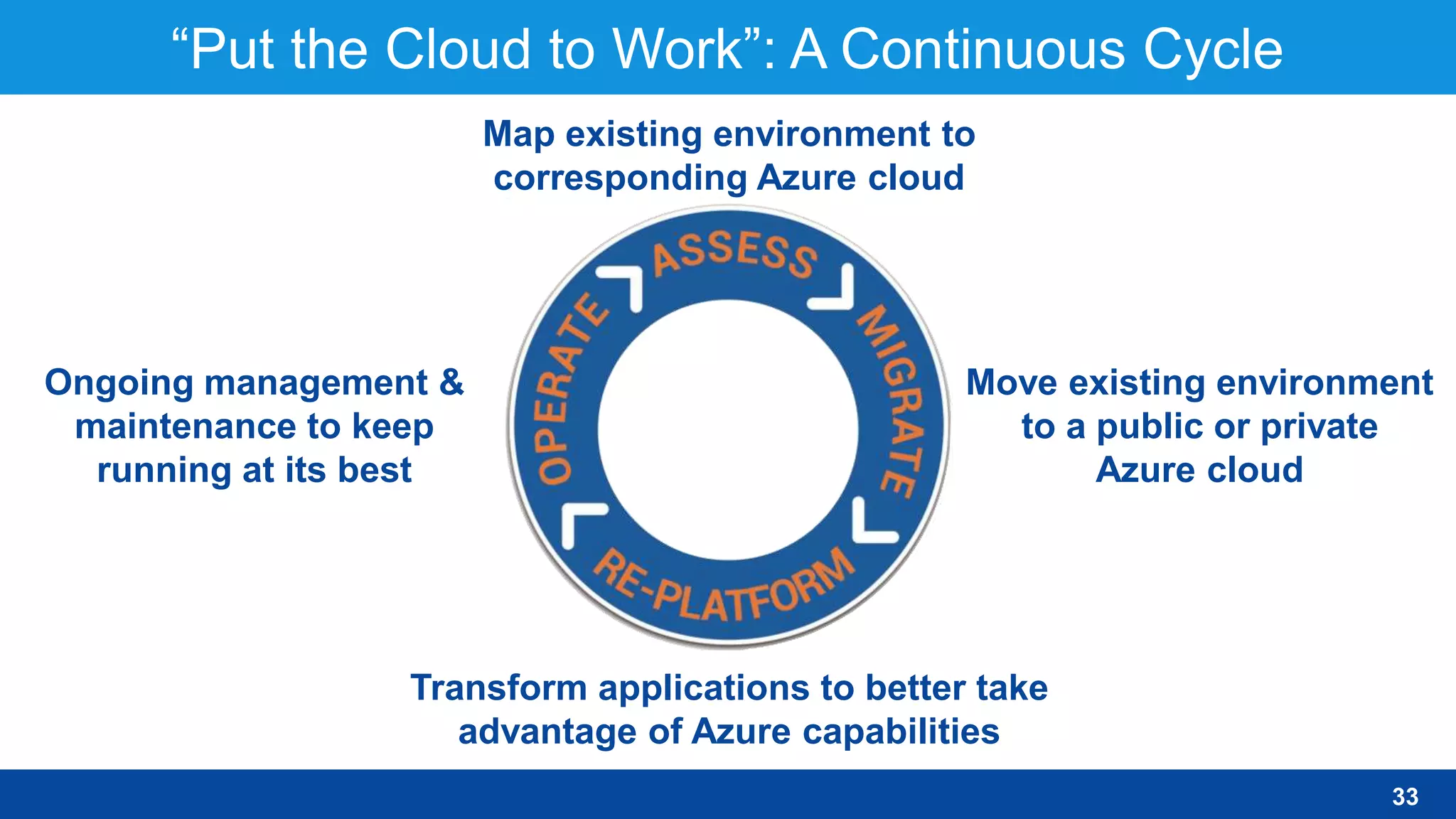
“Put the Cloud to Work”: A Continuous Cycle
Map existing environment to
corresponding Azure cloud
Move existing environment
to a public or private
Azure cloud
Transform applications to better take
advantage of Azure capabilities
Ongoing management &
maintenance to keep
running at its best
33
Q&A
34
Re-Platforming Applications for the Cloud

Re-Platforming Applications for the Cloud

  • 1.
    Webinar: Atmosera andiTrellis Re-Platforming Applications for the Cloud February 28, 2018
  • 2.
    Agenda • Why thecloud and why now? • What re-platforming means and why you need to think about it? • How to take full advantage of a cloud such as Azure? • Lessons learned and best practices for planning a successful move to a modern cloud? • Q&A 2
  • 3.
    Two Sides ofthe Same Coin Get your applications ready for the cloud. Setup your cloud environment and keep it running. 3
  • 4.
    About Your Speakers 4 ScottHarvey VP of Engineering & Operations Christopher L. Johnson CEO
  • 5.
    Why the Cloud& Why Now? 5
  • 6.
    Atmosera and iTrellisMarket Focus Colocation • Migrate on-premise data centers • Support non-virtualized workloads Hosting • Addresses perceived security concerns • Support deterministic workloads Infrastructure as a Service (IaaS) • Provides a gateway to public clouds • Support elastic & geo-distributed workloads • Quickly adding PaaS workloads 6
  • 7.
    7 Cloud Initiatives: #1Focus Is Optimizing Spend
  • 8.
    What Re-Platforming Means &Why You Need to Think About It? 8
  • 9.
    Many Failed Attempts Successfullymigrating to a public cloud like Azure has many pitfalls often resulting in: • Cost overruns • Reduced functionality • Missed deadlines • Frustrated teams Requires ongoing expert management to deliver sustained improvements in: • Performance • Resiliency • Compliance & Information Security (InfoSec) • Monitoring & DDoS Protection + WAF • Release Management and Automation 9
  • 10.
    Cloud Migrations –Another Industrialization Wave 10 More Cloud Adoption -> More Standards, Less Confusion More Standards -> More Commonly Used Tools More Commonly Used Tools -> Improved Solution Delivery Techniques Improved Solution Delivery Techniques -> Faster Speed to Market, Cost Savings • Collaborative • Transparent • Reliable • Predictable • Cost Effective • Scalable
  • 11.
    Cloud Migrations –Common Reasons 11 We have re-factored a wide variety of standalone desktop applications and client/server applications into “The Cloud”. Some applications were written 20 years ago, were significant investments, they “work”, and continue to provide business value. However, with increasing frequency they are going “terminal”. Typical reasons: • Programmer scarcity • Earlier implementations of current languages in Architectures (e.g. Client/Server) that cannot be effectively deployed without significant modification, e.g. C++, Java, C# • User Experience awkward by today’s standards • New Feature Requests that cannot be accommodated
  • 12.
    3 Options toMove Applications to the Cloud Lift-and-Shift 12 • Duplicate what is already existing. • Usually very expensive in terms of resource consumption relative to the other two options.
  • 13.
    3 Options toMove Applications to the Cloud Lift-and-Shift Re-Platforming 13 • Duplicate what is already existing. • Usually very expensive in terms of resource consumption relative to the other two options. • Least amount of changes to move aka "lift-tinker-and-test- and-shift". • Can save significant dollars. • Does not require a complete re-architecture or development of applications.
  • 14.
    3 Options toMove Applications to the Cloud Lift-and-Shift Re-Platforming Re-Factoring 14 • Duplicate what is already existing. • Usually very expensive in terms of resource consumption relative to the other two options. • Least amount of changes to move aka "lift-tinker-and-test- and-shift". • Can save significant dollars. • Does not require a complete re-architecture or development of applications. • Modify the applications such that they become cloud native. • Re-imagine how applications are architected and developed, typically using cloud-native features. • Optimal way to take advantage of a public cloud such as Azure. • Can be cost-prohibitive from an application development point of view.
  • 15.
    3 Options toMove Applications to the Cloud Lift-and-Shift Re-Platforming Re-Factoring 15 Potential development & time to market costs
  • 16.
    3 Options toMove Applications to the Cloud Lift-and-Shift Re-Platforming Re-Factoring 16 Potential development & time to market costs Potential savings in operating & consumption costs
  • 17.
    Determine Which OptionIs Best for You • Availability of development resources • Use case market window • Scalability concerns • Ramp-up time 17
  • 18.
    How to TakeFull Advantage of a Cloud Such as Azure? 18
  • 19.
    Performance: Agility andFlexibility Infrastructure User Experience 19 Scalability • Deal with growth in users and data • Use compute only when needed Reliability & InfoSec • Replication and recovery strategy • Secure and protect the application & data Flexibility • Increase cadence of updates • Evolve to meet new requirements Response time and geo-distribution • Serve pages closer to visitors • Keep distributed content fresh Health Monitoring • Latency and response times • Application behavior • Down state
  • 20.
    Resiliency Business Continuity (BC)Disaster Recovery (DR) 20 • Alternate or remote personnel • Alternate facilities and/or locations • Alternate equipment • Continuation or alteration of processes • HR, development, accounting, etc. • Contains DR procedures • IT systems  Assessment  Repair  Salvage or clean exit • Backup strategy • Business applications • Corporate data
  • 21.
    Compliance & InfoSec ComplianceInfoSec 21 • A demonstration of how your security program maps to set of controls defined by regulatory organization • Typically a snapshot in time • ”Check the box” to meet defined requirements…nothing more • Not your blueprint on how to do security • Programs that protect information and assets from threats by controlling how information and access is shared • An ongoing set of programs meant for iterative improvement year after year • Requires continual understanding of risks and threats to properly define roadmap and strategy
  • 22.
    Cost Savings Direct Indirect 22 •Re-platforming into PaaS services cost less to operate • Pay for only what you consume in a utility billing model • Reduced on-premise footprint costs • Better scalability due to re-factoring requires fewer headcount resources • Modern application monitoring frameworks offer application usage metrics
  • 23.
    Cloud Migrations –Solution Delivery Roles / Responsibilities 23 Build, Test Product Owners Release Engineers Business Analysts Developers Investors / Executives Time Operations Team BAs (In Test) Planning Analysis Design Development Quality Assurance Demo Release Production Ideas, Needs Products, Services General Specific Atomic Holistic Technical Architect Developers (In Test) TPM Feature Driven Development: We focus on the following roles, activities, and deliverables, seeking to understand how our clients accomplish work in these areas. Our goal is to establish a clear workflow of handoffs, by role, that supports the continuous delivery of ideation, requirements decomposition, development, testing, and deployment of new products / services to production. Program Management (Product Backlog) Architecture (Application, Environment) (Epics) (User Stories) (Features) (Code) (Unit Test / Automated Test) (User Acceptance Test) (DevOps) (Product / Service Launch)
  • 24.
    Cloud Migrations –Established Collaboration Tools 25 Build, Test Product Owners Release Engineers Business Analysts Developers Investors / Executives Time Operations Team BAs (In Test) Products, Services TPM Technical Architect Developers (In Test) Scrum-ban Stories Iterative Performance Metrics Ideas, Needs Strategic Roadmap Automated Tests Roll-up UAT Metrics, i.e. “Done” Production Monitoring Code Product Backlog Azure Development Tool Example: • Microsoft Project • Microsoft Visual Studio Team Services • Microsoft Application Insights
  • 25.
    Cloud Migrations –Scalable Teams 26 Developer Product Owner A BA Lead Developer Time TPM Technical Architect Product Owner B Lead Developer Developer Developer Developer Developer Lead Developer Developer Developer Product Owner C BA Lead Developer Developer Developer Developer BA Release Engineer Release Engineer Ideas,Needs Products, Services Planning, Analysis (Epics/Features) Design, Development, QA Test, Demo, UAT (User Stories, Code, UT/AT, Validation) Release Management (Environments) FDD Work Stream A FDD Work Stream B FDD Work Stream C
  • 26.
  • 27.
    Leverage Blueprints: HighlyAvailable Cloud 28
  • 28.
  • 29.
    Lessons learned andbest practices for planning a successful move to a modern cloud? 30
  • 30.
    When Is theCloud Not a Good Fit • Older Operating Systems (OS) • Non-standard database technology • Dated web development applications • Environments which have hardware dependencies • Large data and file distribution where egress (exit) is the majority of traffic 31
  • 31.
    Compliance 32 Critical to considerthe type of data you are collecting/processing • Personal information • Health data • Financial & card data • Tax records Data types are subject to different security and compliance mandates • Breaches can harm reputation • Fines can be significant • Increasingly country-specific
  • 32.
    “Put the Cloudto Work”: A Continuous Cycle Map existing environment to corresponding Azure cloud Move existing environment to a public or private Azure cloud Transform applications to better take advantage of Azure capabilities Ongoing management & maintenance to keep running at its best 33
  • 33.

Editor's Notes

  • #7 Scott Source: Market Opportunity Map: Infrastructure Outsourcing and Managed Services, Worldwide Published: 17 May 2017 ID: G00314754 https://www.gartner.com/document/3719317?ref=solrAll&refval=198653774&qid=d899fd736cd14f6a9893a3690fcb465b
  • #8 Chris + Scott Source: https://www.rightscale.com/lp/state-of-the-cloud?campaign=7010g0000016JiA
  • #10 Scott + Chris
  • #11 Chris
  • #12 Chris
  • #13 Scott
  • #14 Scott
  • #15 Chris
  • #16 Chris
  • #17 Scott
  • #18 Scott
  • #20 Scott m+ Chris
  • #21 Scott
  • #22 Scott
  • #23 Scott
  • #24 Chris
  • #25 Chris
  • #26 Chris
  • #27 Chris
  • #28 Scott and Chris
  • #29 Scott and Chris
  • #30 Scott and Chris
  • #32 Scott and Chris
  • #33 Scott
  • #34 Scott and Chris