Here comes who?
   Introduction
   Closed systems vs. open systems
   Opensource vs. community sourced
   APIs, RSS, crosswalking
   How all of that stuff works
   Questions and wrap-up


Robin Fay, Univ. of Georgia, robinfay.net
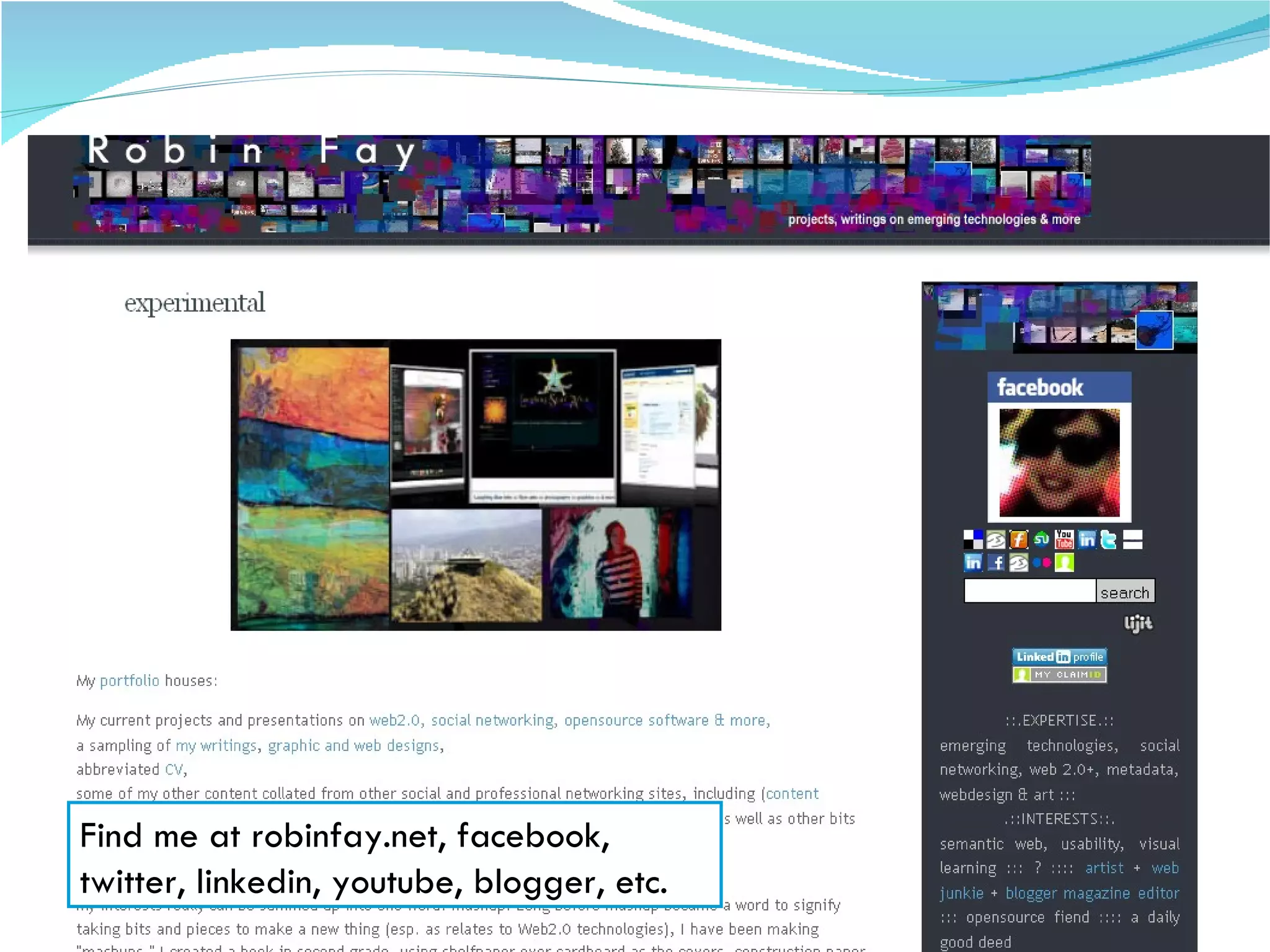
Find me at robinfay.net, facebook,
  twitter, linkedin, youtube, blogger, etc.
Robin Fay, Univ. of Georgia, Metadata 101, robinfay.net
Here comes who?
                                Open systems are systems which allow users to
                                    contribute, manipulate, edit, use, reuse, mashup,
                                    and in some way actually create or alter content
                                    and/or the actual programming of the system
                                   While the coding language may be proprietory
                                    (FBML is Facebook specific markup language) the
                                    actual software encourages user contributions
                                   Examples of open systems include Wordpress and
                                    Unix; to a lesser extent Facebook.
                                    If you can mod (modify it) the software, it is
                                    probably an open system.
                                   Collaboration!


Robin Fay, Univ. of Georgia, robinfay.net
Here comes who?
                                Closed systems are systems which allow users to use
                                    content as is, with minimal to modification to the actual
                                    system or program. Users may email content, but the
                                    amount of what can be done is very small.

                                Content can sometimes be created but under very
                                    tight restrictions and generally does not actually alter
                                    the system or program or create content in a public
                                    space.

                                Examples of closed systems include many library
                                    catalog softwares, email software such as listservs,
                                    Microsoft Office, web browsers, etc.

                                Many pay to play, proprietary software are closed
                                    systems.
Robin Fay, Univ. of Georgia, robinfay.net
Here comes who?

  Unfortunately, many systems are a mix of closed and
   open. You can often do some creation/alteration but you
   can’t actually change the program
  For example> Add, edit, delete entries in Wikipedia,
   but you are not actually altering the software, just the
   website
  However, if you install the Opensource software
   MediaWiki (used by Wikipedia) then you can mod the
   system

Robin Fay, Univ. of Georgia,, robinfay.net
 Opensource is software that is
  released and licensed to the
  public for use and modification.
   It may be developed by one
  developer, a team, or a
  community. Modifications may
  be supported. It may or may
  not be open system.
 Community source is software
  that is developed by a
  community or group. Community
  source does not necessarily
  mean opensource.
 ...but in order for all of the
  things to work and talk to each
  other and be open....

 Robin Fay, Univ. of Georgia,, robinfay.net
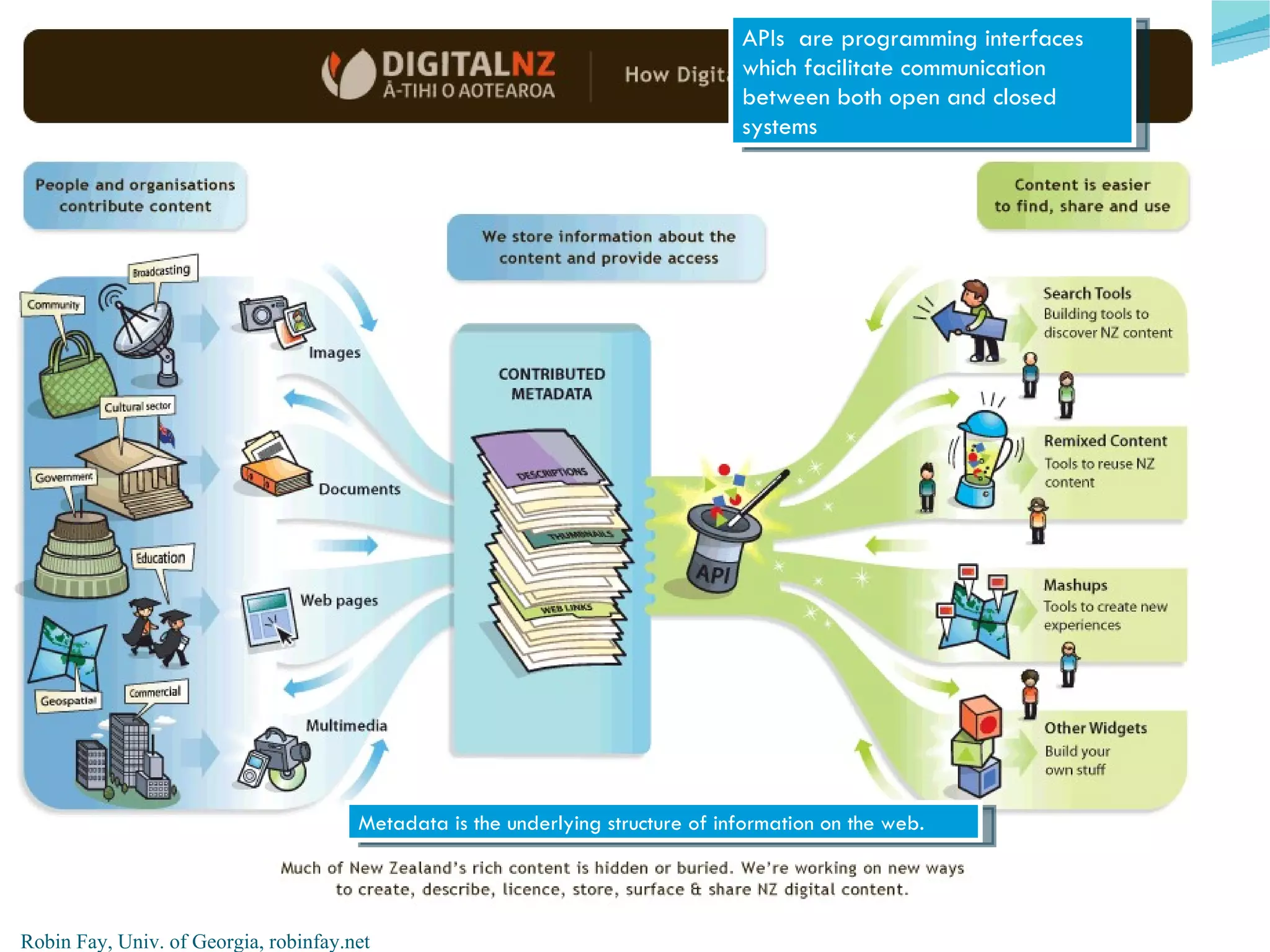
APIs are programming interfaces
                                                                                 which facilitate communication
                                                                                 between both open and closed
                                                                                 systems


                                       Metadata is the underlying structure of information on the web.


Robin Fay, Univ. of Georgia, robinfay.net
Here comes who?
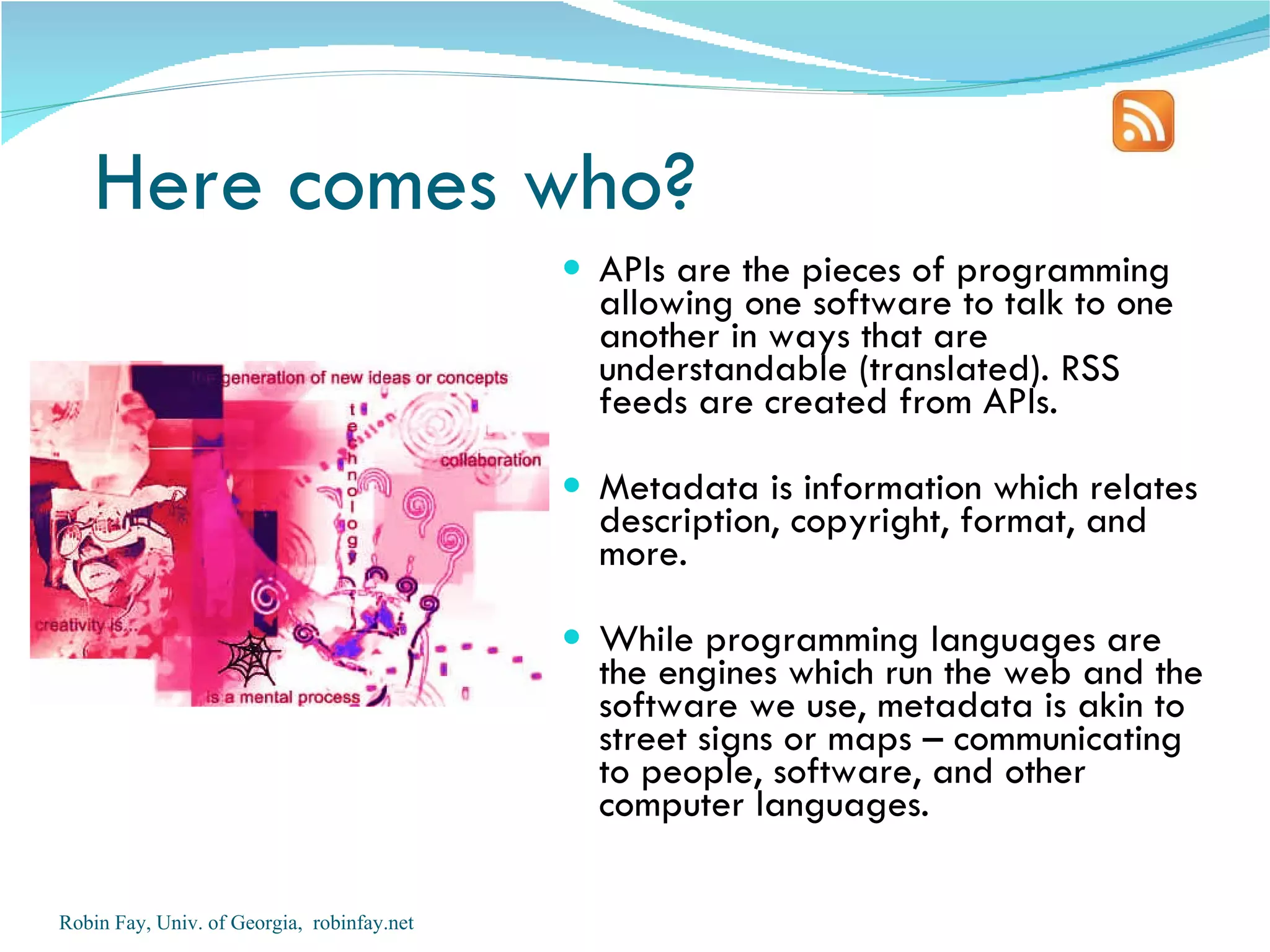
                                             APIs are the pieces of programming
                                              allowing one software to talk to one
                                              another in ways that are
                                              understandable (translated). RSS
                                              feeds are created from APIs.

                                             Metadata is information which relates
                                              description, copyright, format, and
                                              more.

                                             While programming languages are
                                              the engines which run the web and the
                                              software we use, metadata is akin to
                                              street signs or maps – communicating
                                              to people, software, and other
                                              computer languages.

Robin Fay, Univ. of Georgia, robinfay.net
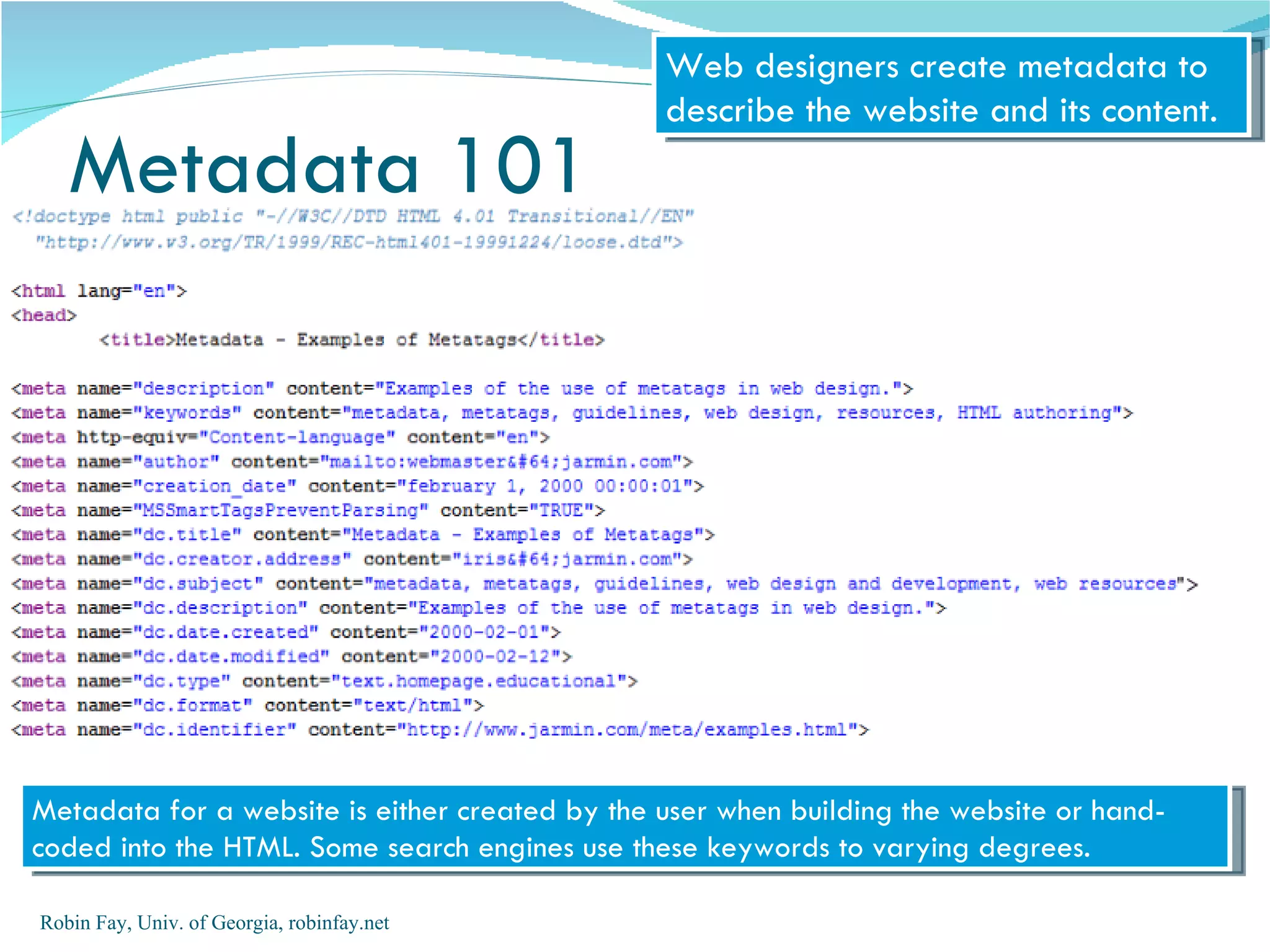
Web designers create metadata to
                                                describe the website and its content.
   Metadata 101


Metadata for a website is either created by the user when building the website or hand-
coded into the HTML. Some search engines use these keywords to varying degrees.

Robin Fay, Univ. of Georgia, robinfay.net
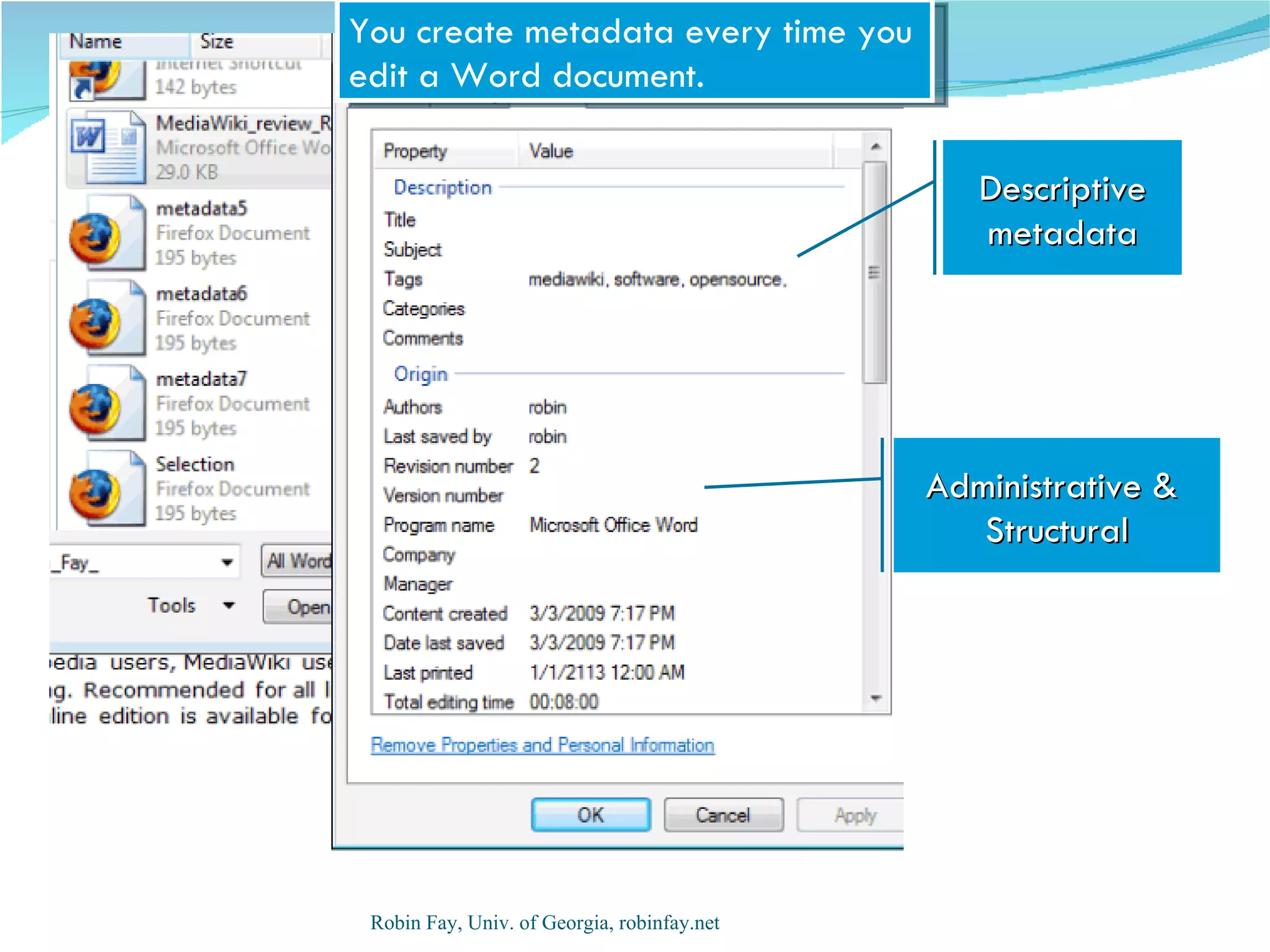
You create metadata every time you
edit a Word document.

                                                Descriptive
                                                metadata


                                             Administrative &
                                                Structural


 Robin Fay, Univ. of Georgia, robinfay.net
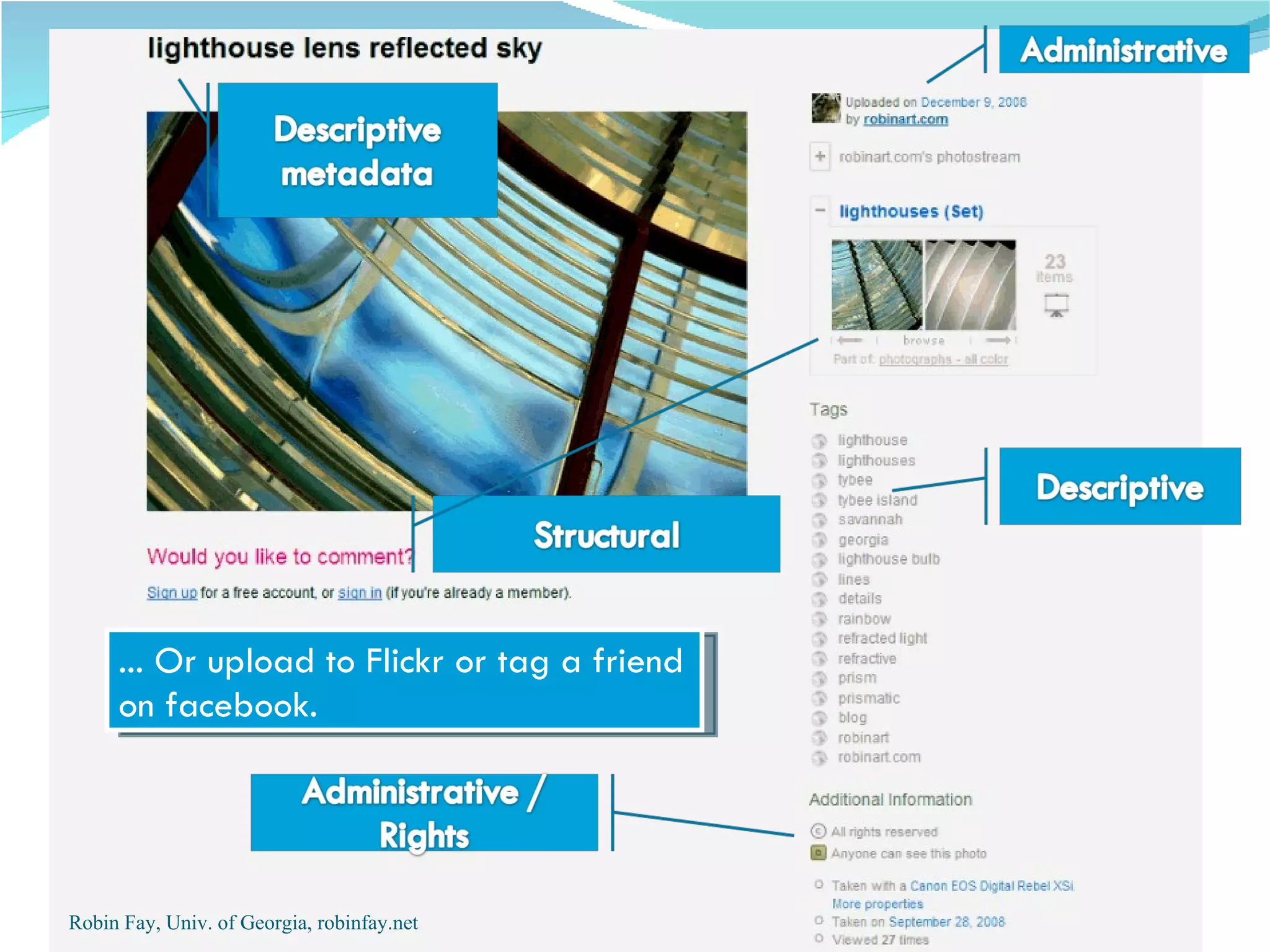
... Or upload to Flickr or tag a friend
     on facebook.


Robin Fay, Univ. of Georgia, robinfay.net
Here comes who?
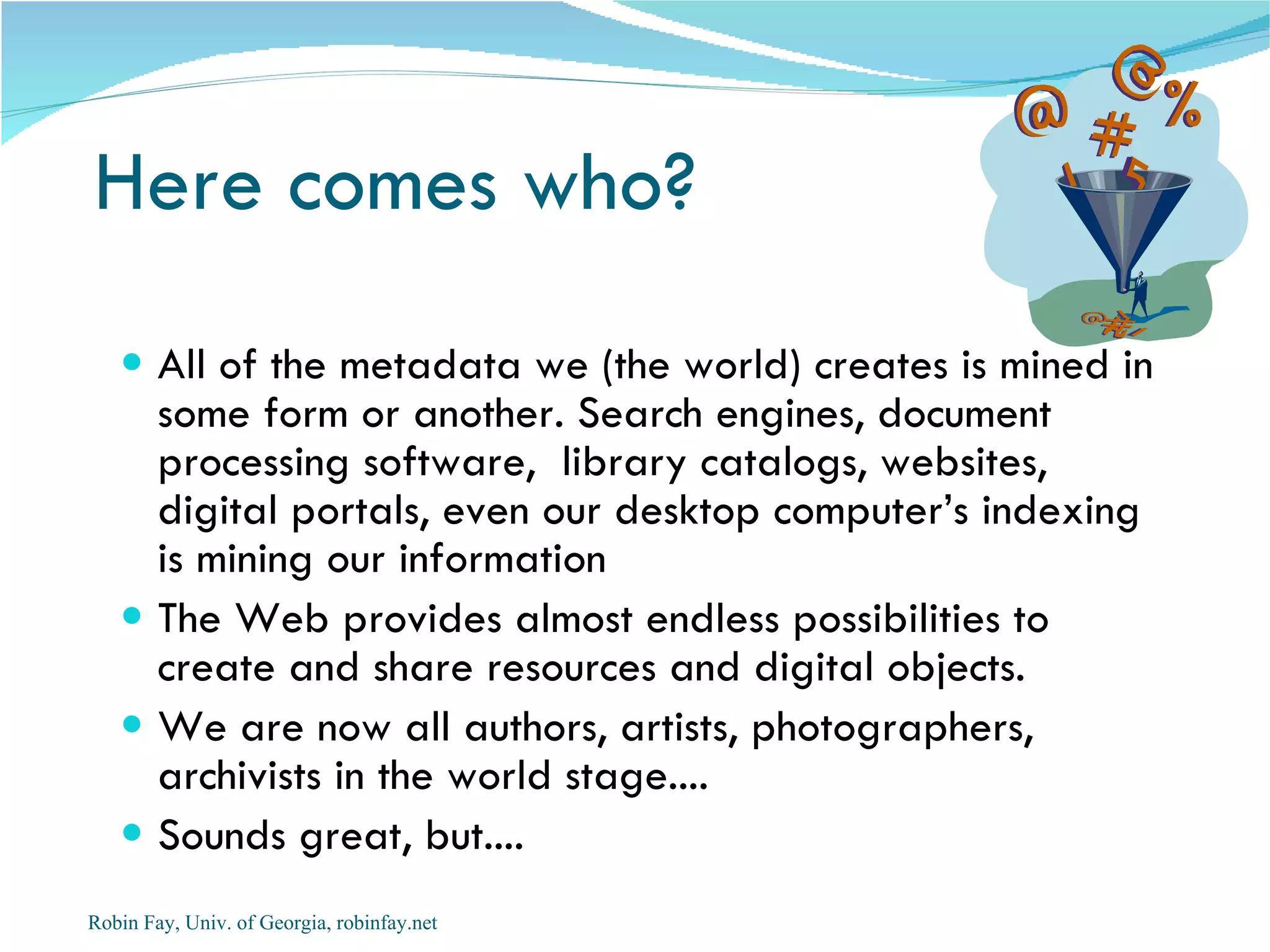
    All of the metadata we (the world) creates is mined in
     some form or another. Search engines, document
     processing software, library catalogs, websites,
     digital portals, even our desktop computer’s indexing
     is mining our information
    The Web provides almost endless possibilities to
     create and share resources and digital objects.
    We are now all authors, artists, photographers,
     archivists in the world stage....
    Sounds great, but....
Robin Fay, Univ. of Georgia, robinfay.net
Here comes who?
      Many collaborative websites (social networking) such
       as Wikipedia rely on the collective expertise of the
       group -- the “true” or accurate information will rise to
       the top. Untrue or irrelevant information will either sink
       to the bottom (fewer hits, bad reviews, marked for
       review, etc.) or will be revised by more expert
       opinions.
      For the most part, this works fairly well; however, there
       are drawbacks and quality control is an ongoing issue.
      Accuracy and relevance are too big issues with user
       generated content.

Robin Fay, Univ. of Georgia, Metadata 101, robinfay.net
Here comes who?
 Thoughts
   Who owns information?
     In the past, priest and experts controlled information. Now content
      is created and distributed by users – all of us. What is expertise?
      Who controls it?
   How does copyright fit into this way of creating the human
    experience? What about mashups? When is something new?
   Who controls information? Who controls our identity? If we
    chose not participate, will others create an identity for you?


   Robin Fay, Univ. of Georgia, robinfay.net
Closed systems, open systems

Closed systems, open systems

  • 1.
    Here comes who?  Introduction  Closed systems vs. open systems  Opensource vs. community sourced  APIs, RSS, crosswalking  How all of that stuff works  Questions and wrap-up Robin Fay, Univ. of Georgia, robinfay.net
  • 2.
    Find me atrobinfay.net, facebook, twitter, linkedin, youtube, blogger, etc. Robin Fay, Univ. of Georgia, Metadata 101, robinfay.net
  • 3.
    Here comes who?  Open systems are systems which allow users to contribute, manipulate, edit, use, reuse, mashup, and in some way actually create or alter content and/or the actual programming of the system  While the coding language may be proprietory (FBML is Facebook specific markup language) the actual software encourages user contributions  Examples of open systems include Wordpress and Unix; to a lesser extent Facebook.  If you can mod (modify it) the software, it is probably an open system.  Collaboration! Robin Fay, Univ. of Georgia, robinfay.net
  • 4.
    Here comes who?  Closed systems are systems which allow users to use content as is, with minimal to modification to the actual system or program. Users may email content, but the amount of what can be done is very small.  Content can sometimes be created but under very tight restrictions and generally does not actually alter the system or program or create content in a public space.  Examples of closed systems include many library catalog softwares, email software such as listservs, Microsoft Office, web browsers, etc.  Many pay to play, proprietary software are closed systems. Robin Fay, Univ. of Georgia, robinfay.net
  • 5.
    Here comes who?  Unfortunately, many systems are a mix of closed and open. You can often do some creation/alteration but you can’t actually change the program  For example> Add, edit, delete entries in Wikipedia, but you are not actually altering the software, just the website  However, if you install the Opensource software MediaWiki (used by Wikipedia) then you can mod the system Robin Fay, Univ. of Georgia,, robinfay.net
  • 6.
     Opensource issoftware that is released and licensed to the public for use and modification. It may be developed by one developer, a team, or a community. Modifications may be supported. It may or may not be open system.  Community source is software that is developed by a community or group. Community source does not necessarily mean opensource.  ...but in order for all of the things to work and talk to each other and be open.... Robin Fay, Univ. of Georgia,, robinfay.net
  • 7.
    APIs are programminginterfaces which facilitate communication between both open and closed systems Metadata is the underlying structure of information on the web. Robin Fay, Univ. of Georgia, robinfay.net
  • 8.
    Here comes who?  APIs are the pieces of programming allowing one software to talk to one another in ways that are understandable (translated). RSS feeds are created from APIs.  Metadata is information which relates description, copyright, format, and more.  While programming languages are the engines which run the web and the software we use, metadata is akin to street signs or maps – communicating to people, software, and other computer languages. Robin Fay, Univ. of Georgia, robinfay.net
  • 9.
    Web designers createmetadata to describe the website and its content. Metadata 101 Metadata for a website is either created by the user when building the website or hand- coded into the HTML. Some search engines use these keywords to varying degrees. Robin Fay, Univ. of Georgia, robinfay.net
  • 10.
    You create metadataevery time you edit a Word document. Descriptive metadata Administrative & Structural Robin Fay, Univ. of Georgia, robinfay.net
  • 11.
    ... Or uploadto Flickr or tag a friend on facebook. Robin Fay, Univ. of Georgia, robinfay.net
  • 12.
    Here comes who?  All of the metadata we (the world) creates is mined in some form or another. Search engines, document processing software, library catalogs, websites, digital portals, even our desktop computer’s indexing is mining our information  The Web provides almost endless possibilities to create and share resources and digital objects.  We are now all authors, artists, photographers, archivists in the world stage....  Sounds great, but.... Robin Fay, Univ. of Georgia, robinfay.net
  • 13.
    Here comes who?  Many collaborative websites (social networking) such as Wikipedia rely on the collective expertise of the group -- the “true” or accurate information will rise to the top. Untrue or irrelevant information will either sink to the bottom (fewer hits, bad reviews, marked for review, etc.) or will be revised by more expert opinions.  For the most part, this works fairly well; however, there are drawbacks and quality control is an ongoing issue.  Accuracy and relevance are too big issues with user generated content. Robin Fay, Univ. of Georgia, Metadata 101, robinfay.net
  • 14.
    Here comes who? Thoughts  Who owns information?  In the past, priest and experts controlled information. Now content is created and distributed by users – all of us. What is expertise? Who controls it?  How does copyright fit into this way of creating the human experience? What about mashups? When is something new?  Who controls information? Who controls our identity? If we chose not participate, will others create an identity for you? Robin Fay, Univ. of Georgia, robinfay.net