Clinical
Enzymology
Prepared by: Sr. Siti Norhaiza Bt Hadzir
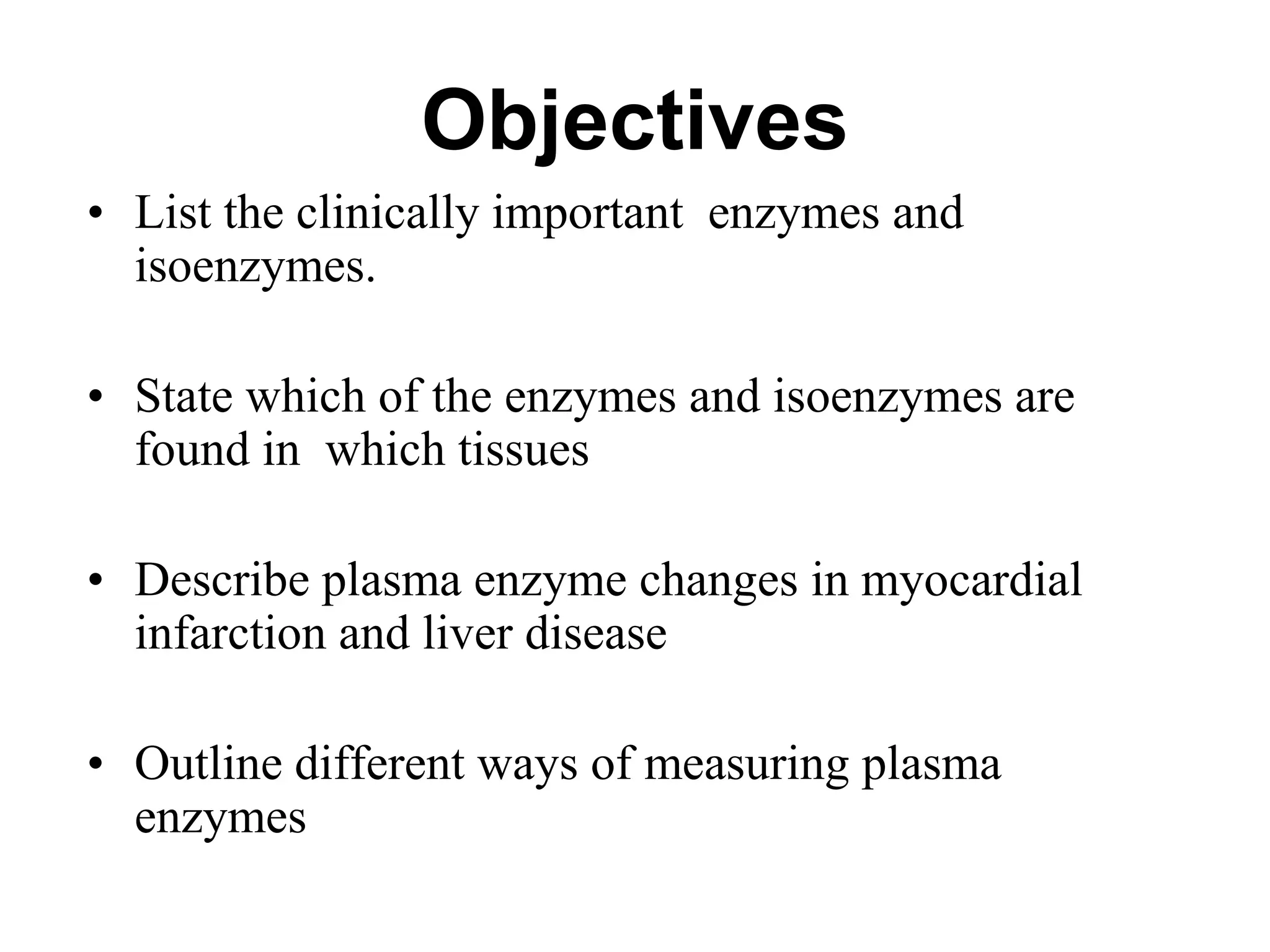
Objectives
• List the clinically important enzymes and
isoenzymes.
• State which of the enzymes and isoenzymes are
found in which tissues
• Describe plasma enzyme changes in myocardial
infarction and liver disease
• Outline different ways of measuring plasma
enzymes
Enzymes
Biological catalysis
Very efficient –can increase reaction
rates at the order of x 10
All are proteins- so liable to denaturation
Specific to substrates
Partly specific to tissues
Assay by measure of rate of specific
reaction catalyzed by that enzyme
Measurement of serum enzymes
 Diagnostic enzymology
 Enzymes are normally intracellular and LOW
concentration in blood
 Enzyme release (leakage)in the blood indicates cell
damage (cell –death, hypoxia, intracellular toxicity)
 Quantitative measure of cell/tissue damage
 Fairly non invasive possible to do repeated tests
 Organ specificity- but not absolute specificity
in spite of same gene content.
 Most enzymes are present in most cells-
differing amounts
Information from enzymes
measurements in serum
 Presence of disease
 Organs involved
 Aetiology /nature of disease: differential
diagnosis
 Extent of disease-more damaged cells-
more leaked enzymes in blood
 Time course of disease
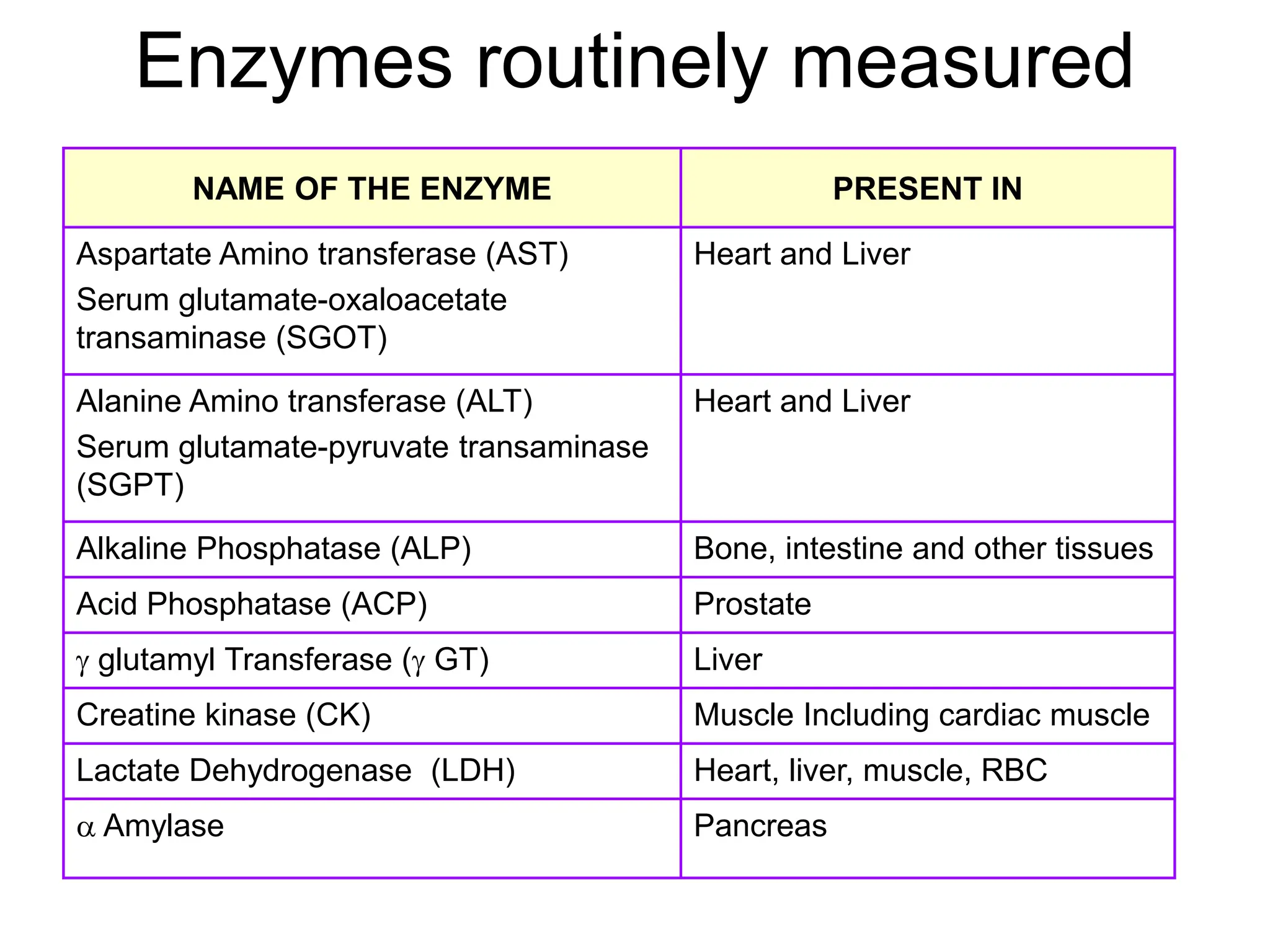
Enzymes routinely measured
NAME OF THE ENZYME PRESENT IN
Aspartate Amino transferase (AST)
Serum glutamate-oxaloacetate
transaminase (SGOT)
Heart and Liver
Alanine Amino transferase (ALT)
Serum glutamate-pyruvate transaminase
(SGPT)
Heart and Liver
Alkaline Phosphatase (ALP) Bone, intestine and other tissues
Acid Phosphatase (ACP) Prostate
 glutamyl Transferase ( GT) Liver
Creatine kinase (CK) Muscle Including cardiac muscle
Lactate Dehydrogenase (LDH) Heart, liver, muscle, RBC
 Amylase Pancreas
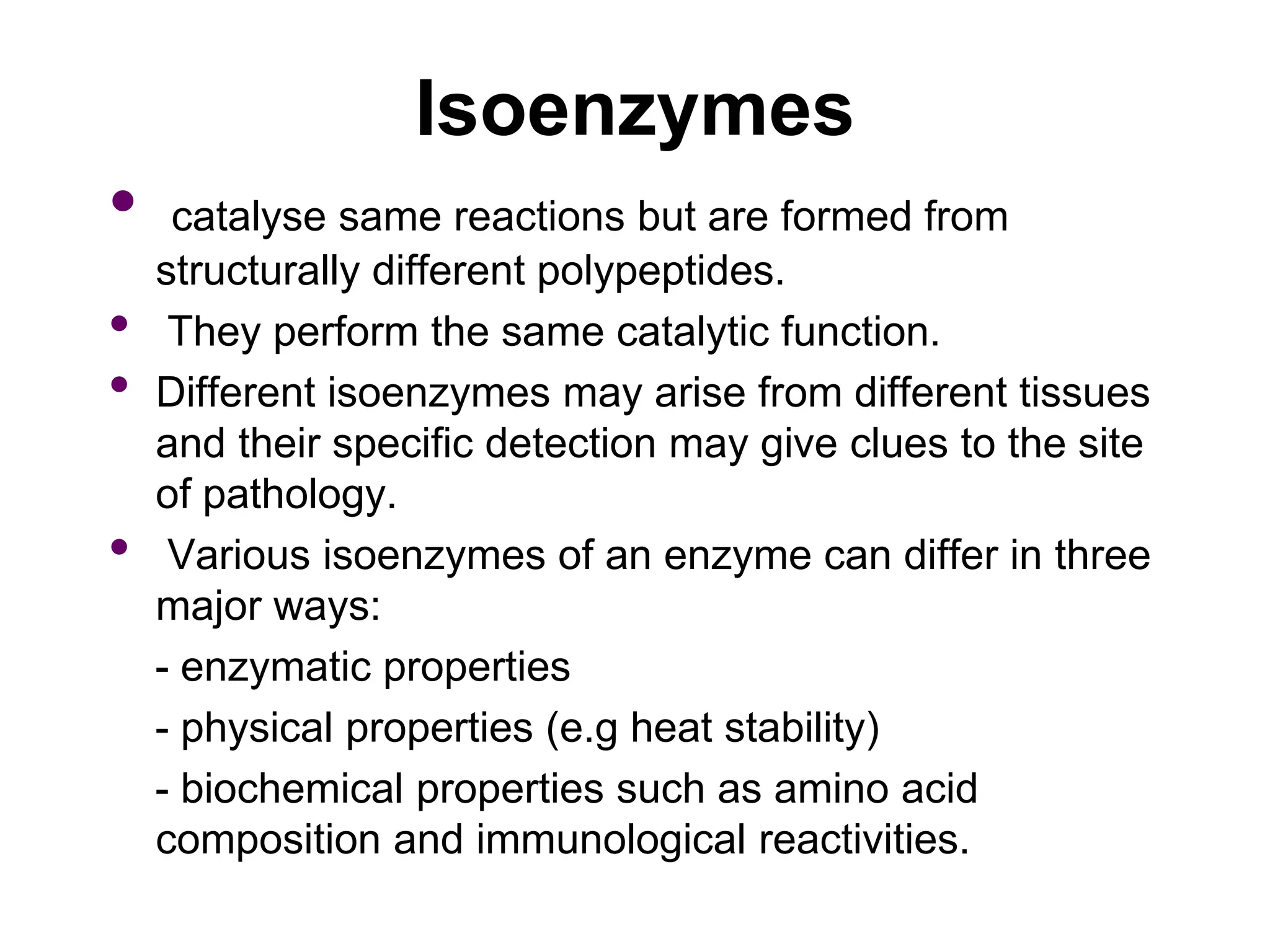
Isoenzymes
• catalyse same reactions but are formed from
structurally different polypeptides.
• They perform the same catalytic function.
• Different isoenzymes may arise from different tissues
and their specific detection may give clues to the site
of pathology.
• Various isoenzymes of an enzyme can differ in three
major ways:
- enzymatic properties
- physical properties (e.g heat stability)
- biochemical properties such as amino acid
composition and immunological reactivities.
Measurement of enzyme activity
• Enzyme activity is expressed in
International unit (IU)
It corresponds to the amount of enzymes that
catalyzes the conversion of one micromole
(mol) of substrate to product per minute
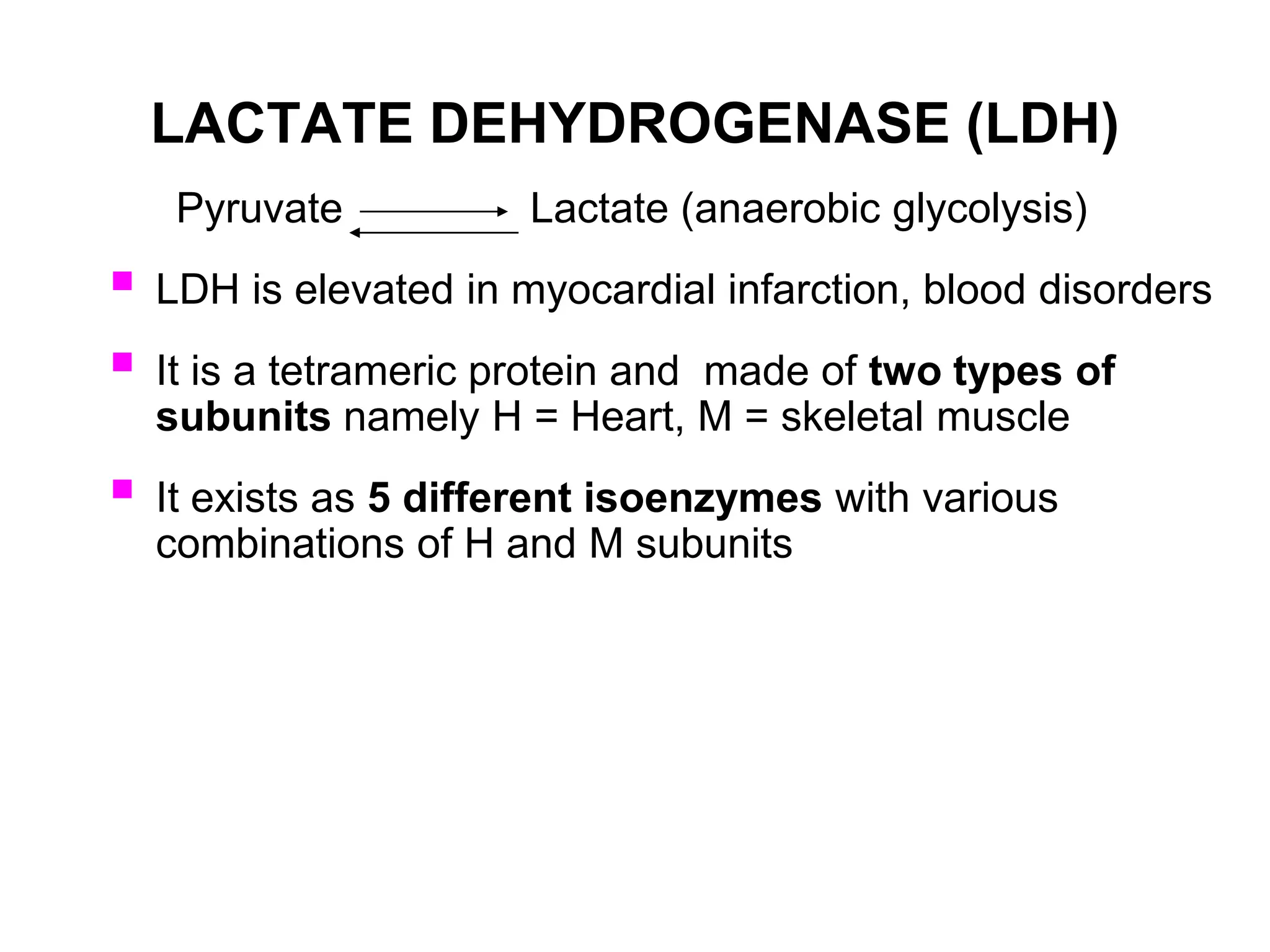
LACTATE DEHYDROGENASE (LDH)
Pyruvate Lactate (anaerobic glycolysis)
 LDH is elevated in myocardial infarction, blood disorders
 It is a tetrameric protein and made of two types of
subunits namely H = Heart, M = skeletal muscle
 It exists as 5 different isoenzymes with various
combinations of H and M subunits
Isoenzyme
name
Composition Composition Present in Elevated in
LDH1 ( H4) HHHH Myocardium,
RBC
myocardial
infarction
LDH2 (H3M1) HHHM Myocardium,
RBC
LDH3 (H2M2) HHMM Kidney,
Skeletal
muscle
LDH4 (H1M3) HMMM Kidney,
Skeletal
muscle
LDH5 (M4) MMMM Skeletal
muscle, Liver
Skeletal muscle
and liver
diseases
Creatine + ATP phosphocreatine + ADP
(Phosphocreatine – serves as energy reserve during muscle
contraction)
 Creatine kinase is a dimer made of 2 monomers
occurs in the tissues
 Skeletal muscle contains M subunit, Brain
contains B subunits
 Three different isoenzymes are formed
CREATINE KINASE (CK)
Isoenzyme
name
Composition Present in Elevated in
CK-1 BB Brain CNS diseases
CK-2 MB
Myocardium
/ Heart
Acute
myocardial
infarction
CK-3 MM
Skeletal
muscle,
Myocardium
Alanine
aminotransferase
(ALT)
Aspartate
aminotransferase
(AST)
ALANINE TRANSAMINASE (ALT) AND ASPARTATE
TRANSAMINASE( AST)
- Oxoglutarate + L-aspartate
L- glutamate + oxaloacetate L - glutamate + pyruvate
- Oxoglutarate + L-alanine
 Alanine transaminase (ALT) and Aspartate transaminase (AST) enzymes are
the most abundantly present in the liver and is elevated in blood as a result of
leakage from damaged cells
 Measurement of these transaminases is useful for the diagnosis of liver diseases
 In viral hepatitis the enzyme levels are increased 20-50 times above the upper
limit of the normal range
 Alanine transaminase (ALT) increase is specific for liver damage involving
hepatocellular damage
 Aspartate transaminase (AST) is moderately increased in Muscular dystrophy
and acute myocardial infarction
LEVELS OF ENZYMES IN DISEASES
INVOLVING LIVER DAMAGE
In viral hepatitis
Rapid rise in
transaminases (AST &
ALT) in serum occurs
even before bilirubin
rise is seen
LEVELS OF ENZYMES IN MYOCARDIAL
INFARCTION
CK
CK-MB
AST
LDH
HBDH
AST and CK rise in 6
hours following acute
myocardial infarction
HBDH and LDH are
elevated much later and
remains high for a
longer period of days
 Is a group of enzymes that have maximal activity at a high
pH 9.0-10.5
 Widely distributed throughout the body
 High levels are seen is liver, bone, placenta and intestine
and useful to assess hepatobiliary and bone diseases
 In hepatobiliary obstruction,hepatocytes lining the biliary
ducts induces the ALP synthesis.
 High levels of ALP is indicative of extrahepatic obstruction
rather than intrahepatic obstruction
 In bones, the enzyme is derived from osteoblasts. Hence
increased in bone diseases like rickets, osteomalacia,
neoplastic diseases with bone metastates and healing
fractures
ALKALINE PHOSPHATASE (ALP)
 The activity of the bone isoenzyme can be estimated by heat
treating a serum sample at 56oC. The bone ALP is heat
liable and is destroyed or heat inactivated at this
temperature.
 Measurement of ALP before and after heat treatment gives a
measure of bone ALP
ALKALINE PHOSPHATASE (ALP) conti
p-NPP + H2O p-NP (benzenoid form) + PO4
3-
p-NP (quinonoid form) + PO4
3-
Colorless
Yellow
Rearrangement
Color read at 405nm
Para nitro
phenylphosphate
ALP, Mg2+
pH 10.3
ACID PHOSPHATASE (ACP)
 Is a group of enzymes that have maximal activity at pH
5.0-6.0
 It is present in prostate gland, liver, spleen and RBC.
 The main source of ACP is prostate gland and so can be
used as a marker for prostate disease.
AMYLASE
Is the digestive enzymes from the pancreas and salivary
glands to digest complex carbohydrates.
Elevated in acute pancreatitis.
It is used as a marker to detect acute pancreatitis AND
appendicitis.
Amino acid + Glutathione  -glutamyl amino acid +
Cysteinylglycine
It is involved in aminoacid transport across the membranes.
Found mainly in biliary ducts of the liver, kidney and pancreas.
Enzyme activity is induced by a number of drugs and in
particular alcohol.
-GT increased in liver diseases especially in obstructive
jaundice.
-GT levels are used as a marker of alcohol induced liver disease
and in liver cirrhosis.
( GT)
 glutamyltransferase ( GT)
MEASUREMENT OF ENZYMES
Enzymes are measured
End point assay
Kinetic assay
Measurement of enzymes are affected by the presence of
inhibitors or activators.
Hence most of the enzymes are measured by coupled assay.
A coupled assay is one in which a second enzyme is used to act
on the product of the enzyme of primary interest. Second
enzyme used NADH as coenzyme. The rate can be followed by
measuring oxidation of NADH which can be done conveniently
at 340nm.
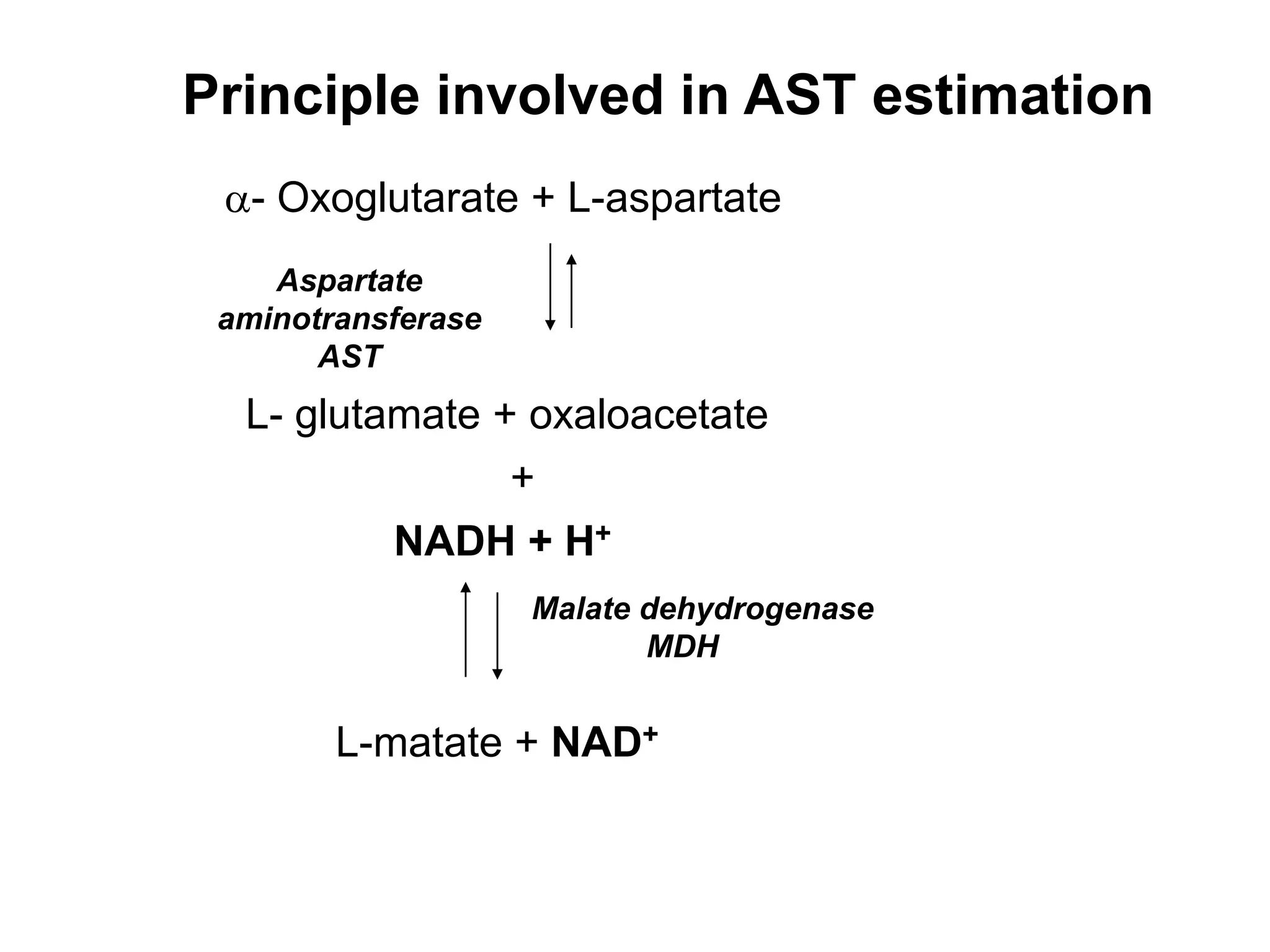
L-matate + NAD+
Malate dehydrogenase
MDH
Principle involved in AST estimation
Aspartate
aminotransferase
AST
- Oxoglutarate + L-aspartate
L- glutamate + oxaloacetate
NADH + H+
+
MEASUREMENT OF ENZYMES
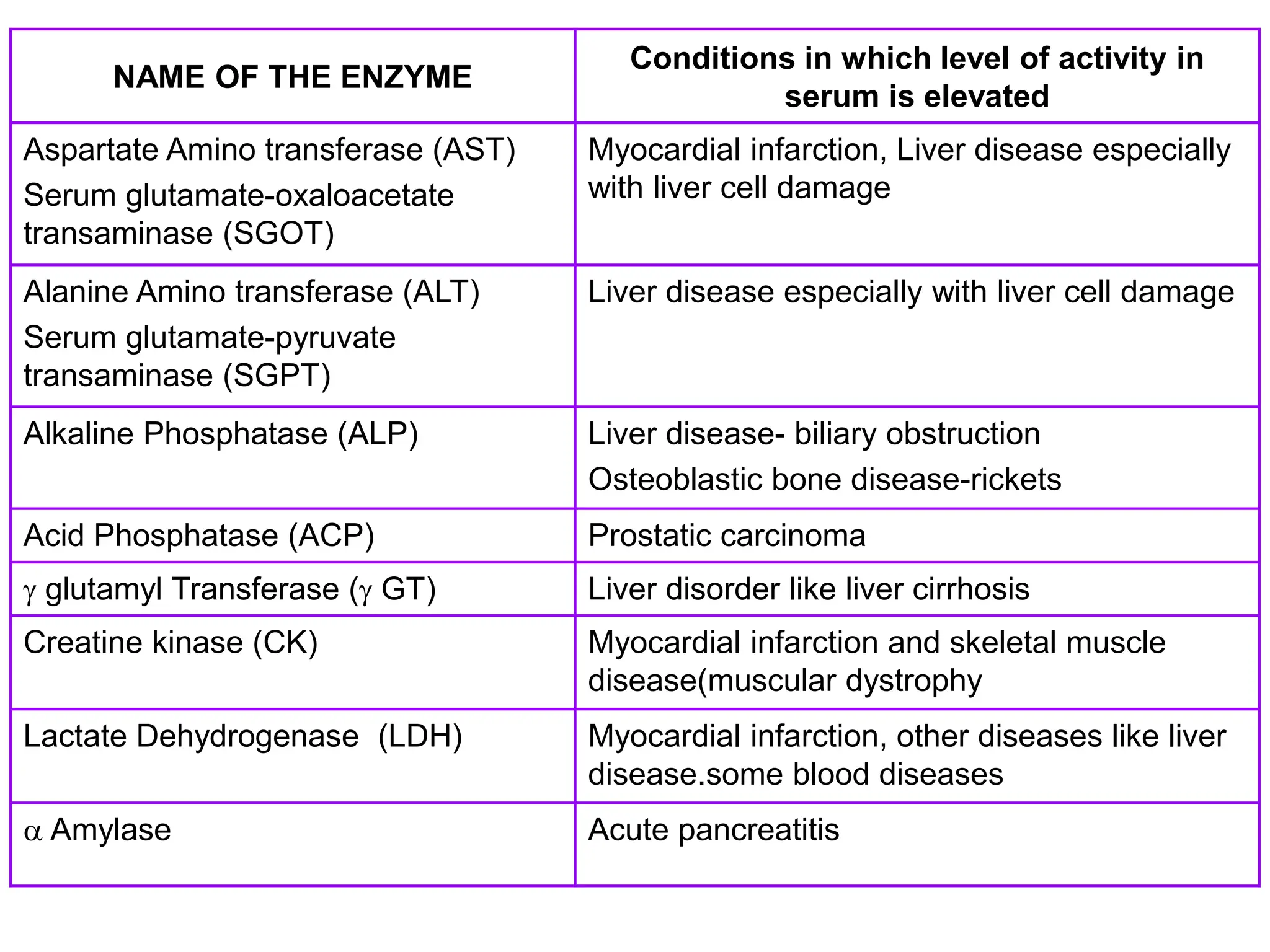
NAME OF THE ENZYME
Conditions in which level of activity in
serum is elevated
Aspartate Amino transferase (AST)
Serum glutamate-oxaloacetate
transaminase (SGOT)
Myocardial infarction, Liver disease especially
with liver cell damage
Alanine Amino transferase (ALT)
Serum glutamate-pyruvate
transaminase (SGPT)
Liver disease especially with liver cell damage
Alkaline Phosphatase (ALP) Liver disease- biliary obstruction
Osteoblastic bone disease-rickets
Acid Phosphatase (ACP) Prostatic carcinoma
 glutamyl Transferase ( GT) Liver disorder like liver cirrhosis
Creatine kinase (CK) Myocardial infarction and skeletal muscle
disease(muscular dystrophy
Lactate Dehydrogenase (LDH) Myocardial infarction, other diseases like liver
disease.some blood diseases
 Amylase Acute pancreatitis
SUMMARY
 Enzymes are biological catalysts present in every cell of the body.
 An enzyme will act on a specific substrate yielding a product.
 An isoenzyme is a genetic variant produced largely within a specific tissue.
 Isoenzyme patterns can give information about organ-specific disease.
 Important enzymes in the investigation of heart disease are CK, LDH and AST.
 Important enzymes in the investigation of liver disease are AST, ALT, alkaline
phosphatase and GGT.
 Creatine kinase has three isoenzymes: CK-MM, CK-MB and CK-BB.
 LDH has five isoenzymes.
 Alkaline phosphatase can be used in the investigation of liver and bone disease.
 Increased levels of acid phosphatase are found in prostate cancer.
 GGT is induced by alcohol and is useful in monitoring alcohol abuse.
 Enzyme measurements should be performed using zero order kinetics, i.e. using
excess substrate.
 Determinations of enzyme activity can be performed using an end-point or kinetic
method
Thank you

clinical-enzymology.ppt..................

  • 1.
    Clinical Enzymology Prepared by: Sr.Siti Norhaiza Bt Hadzir
  • 2.
    Objectives • List theclinically important enzymes and isoenzymes. • State which of the enzymes and isoenzymes are found in which tissues • Describe plasma enzyme changes in myocardial infarction and liver disease • Outline different ways of measuring plasma enzymes
  • 3.
    Enzymes Biological catalysis Very efficient–can increase reaction rates at the order of x 10 All are proteins- so liable to denaturation Specific to substrates Partly specific to tissues Assay by measure of rate of specific reaction catalyzed by that enzyme
  • 4.
    Measurement of serumenzymes  Diagnostic enzymology  Enzymes are normally intracellular and LOW concentration in blood  Enzyme release (leakage)in the blood indicates cell damage (cell –death, hypoxia, intracellular toxicity)  Quantitative measure of cell/tissue damage  Fairly non invasive possible to do repeated tests  Organ specificity- but not absolute specificity in spite of same gene content.  Most enzymes are present in most cells- differing amounts
  • 5.
    Information from enzymes measurementsin serum  Presence of disease  Organs involved  Aetiology /nature of disease: differential diagnosis  Extent of disease-more damaged cells- more leaked enzymes in blood  Time course of disease
  • 6.
    Enzymes routinely measured NAMEOF THE ENZYME PRESENT IN Aspartate Amino transferase (AST) Serum glutamate-oxaloacetate transaminase (SGOT) Heart and Liver Alanine Amino transferase (ALT) Serum glutamate-pyruvate transaminase (SGPT) Heart and Liver Alkaline Phosphatase (ALP) Bone, intestine and other tissues Acid Phosphatase (ACP) Prostate  glutamyl Transferase ( GT) Liver Creatine kinase (CK) Muscle Including cardiac muscle Lactate Dehydrogenase (LDH) Heart, liver, muscle, RBC  Amylase Pancreas
  • 7.
    Isoenzymes • catalyse samereactions but are formed from structurally different polypeptides. • They perform the same catalytic function. • Different isoenzymes may arise from different tissues and their specific detection may give clues to the site of pathology. • Various isoenzymes of an enzyme can differ in three major ways: - enzymatic properties - physical properties (e.g heat stability) - biochemical properties such as amino acid composition and immunological reactivities.
  • 8.
    Measurement of enzymeactivity • Enzyme activity is expressed in International unit (IU) It corresponds to the amount of enzymes that catalyzes the conversion of one micromole (mol) of substrate to product per minute
  • 9.
    LACTATE DEHYDROGENASE (LDH) PyruvateLactate (anaerobic glycolysis)  LDH is elevated in myocardial infarction, blood disorders  It is a tetrameric protein and made of two types of subunits namely H = Heart, M = skeletal muscle  It exists as 5 different isoenzymes with various combinations of H and M subunits
  • 10.
    Isoenzyme name Composition Composition Presentin Elevated in LDH1 ( H4) HHHH Myocardium, RBC myocardial infarction LDH2 (H3M1) HHHM Myocardium, RBC LDH3 (H2M2) HHMM Kidney, Skeletal muscle LDH4 (H1M3) HMMM Kidney, Skeletal muscle LDH5 (M4) MMMM Skeletal muscle, Liver Skeletal muscle and liver diseases
  • 11.
    Creatine + ATPphosphocreatine + ADP (Phosphocreatine – serves as energy reserve during muscle contraction)  Creatine kinase is a dimer made of 2 monomers occurs in the tissues  Skeletal muscle contains M subunit, Brain contains B subunits  Three different isoenzymes are formed CREATINE KINASE (CK)
  • 12.
    Isoenzyme name Composition Present inElevated in CK-1 BB Brain CNS diseases CK-2 MB Myocardium / Heart Acute myocardial infarction CK-3 MM Skeletal muscle, Myocardium
  • 13.
    Alanine aminotransferase (ALT) Aspartate aminotransferase (AST) ALANINE TRANSAMINASE (ALT)AND ASPARTATE TRANSAMINASE( AST) - Oxoglutarate + L-aspartate L- glutamate + oxaloacetate L - glutamate + pyruvate - Oxoglutarate + L-alanine  Alanine transaminase (ALT) and Aspartate transaminase (AST) enzymes are the most abundantly present in the liver and is elevated in blood as a result of leakage from damaged cells  Measurement of these transaminases is useful for the diagnosis of liver diseases  In viral hepatitis the enzyme levels are increased 20-50 times above the upper limit of the normal range  Alanine transaminase (ALT) increase is specific for liver damage involving hepatocellular damage  Aspartate transaminase (AST) is moderately increased in Muscular dystrophy and acute myocardial infarction
  • 14.
    LEVELS OF ENZYMESIN DISEASES INVOLVING LIVER DAMAGE In viral hepatitis Rapid rise in transaminases (AST & ALT) in serum occurs even before bilirubin rise is seen
  • 15.
    LEVELS OF ENZYMESIN MYOCARDIAL INFARCTION CK CK-MB AST LDH HBDH AST and CK rise in 6 hours following acute myocardial infarction HBDH and LDH are elevated much later and remains high for a longer period of days
  • 16.
     Is agroup of enzymes that have maximal activity at a high pH 9.0-10.5  Widely distributed throughout the body  High levels are seen is liver, bone, placenta and intestine and useful to assess hepatobiliary and bone diseases  In hepatobiliary obstruction,hepatocytes lining the biliary ducts induces the ALP synthesis.  High levels of ALP is indicative of extrahepatic obstruction rather than intrahepatic obstruction  In bones, the enzyme is derived from osteoblasts. Hence increased in bone diseases like rickets, osteomalacia, neoplastic diseases with bone metastates and healing fractures ALKALINE PHOSPHATASE (ALP)
  • 17.
     The activityof the bone isoenzyme can be estimated by heat treating a serum sample at 56oC. The bone ALP is heat liable and is destroyed or heat inactivated at this temperature.  Measurement of ALP before and after heat treatment gives a measure of bone ALP ALKALINE PHOSPHATASE (ALP) conti p-NPP + H2O p-NP (benzenoid form) + PO4 3- p-NP (quinonoid form) + PO4 3- Colorless Yellow Rearrangement Color read at 405nm Para nitro phenylphosphate ALP, Mg2+ pH 10.3
  • 18.
    ACID PHOSPHATASE (ACP) Is a group of enzymes that have maximal activity at pH 5.0-6.0  It is present in prostate gland, liver, spleen and RBC.  The main source of ACP is prostate gland and so can be used as a marker for prostate disease. AMYLASE Is the digestive enzymes from the pancreas and salivary glands to digest complex carbohydrates. Elevated in acute pancreatitis. It is used as a marker to detect acute pancreatitis AND appendicitis.
  • 19.
    Amino acid +Glutathione  -glutamyl amino acid + Cysteinylglycine It is involved in aminoacid transport across the membranes. Found mainly in biliary ducts of the liver, kidney and pancreas. Enzyme activity is induced by a number of drugs and in particular alcohol. -GT increased in liver diseases especially in obstructive jaundice. -GT levels are used as a marker of alcohol induced liver disease and in liver cirrhosis. ( GT)  glutamyltransferase ( GT)
  • 20.
    MEASUREMENT OF ENZYMES Enzymesare measured End point assay Kinetic assay Measurement of enzymes are affected by the presence of inhibitors or activators. Hence most of the enzymes are measured by coupled assay. A coupled assay is one in which a second enzyme is used to act on the product of the enzyme of primary interest. Second enzyme used NADH as coenzyme. The rate can be followed by measuring oxidation of NADH which can be done conveniently at 340nm.
  • 21.
    L-matate + NAD+ Malatedehydrogenase MDH Principle involved in AST estimation Aspartate aminotransferase AST - Oxoglutarate + L-aspartate L- glutamate + oxaloacetate NADH + H+ +
  • 22.
  • 23.
    NAME OF THEENZYME Conditions in which level of activity in serum is elevated Aspartate Amino transferase (AST) Serum glutamate-oxaloacetate transaminase (SGOT) Myocardial infarction, Liver disease especially with liver cell damage Alanine Amino transferase (ALT) Serum glutamate-pyruvate transaminase (SGPT) Liver disease especially with liver cell damage Alkaline Phosphatase (ALP) Liver disease- biliary obstruction Osteoblastic bone disease-rickets Acid Phosphatase (ACP) Prostatic carcinoma  glutamyl Transferase ( GT) Liver disorder like liver cirrhosis Creatine kinase (CK) Myocardial infarction and skeletal muscle disease(muscular dystrophy Lactate Dehydrogenase (LDH) Myocardial infarction, other diseases like liver disease.some blood diseases  Amylase Acute pancreatitis
  • 24.
    SUMMARY  Enzymes arebiological catalysts present in every cell of the body.  An enzyme will act on a specific substrate yielding a product.  An isoenzyme is a genetic variant produced largely within a specific tissue.  Isoenzyme patterns can give information about organ-specific disease.  Important enzymes in the investigation of heart disease are CK, LDH and AST.  Important enzymes in the investigation of liver disease are AST, ALT, alkaline phosphatase and GGT.  Creatine kinase has three isoenzymes: CK-MM, CK-MB and CK-BB.  LDH has five isoenzymes.  Alkaline phosphatase can be used in the investigation of liver and bone disease.  Increased levels of acid phosphatase are found in prostate cancer.  GGT is induced by alcohol and is useful in monitoring alcohol abuse.  Enzyme measurements should be performed using zero order kinetics, i.e. using excess substrate.  Determinations of enzyme activity can be performed using an end-point or kinetic method
  • 25.