Clinical Audit Service 
Supporting better care 
EHI Live 2013
Clinical Audit Development 
• Clinical Leadership and Engagement 
• Inclusive Approach 
- Patient and Carer representatives 
- AHPs and Care Team representatives 
• Audit Measurement 
- Existing standards? 
- Baseline and variability? 
- Indicator Development and Assurance
Clinical Audit Design 
• NICE Quality Standards 
• Professional and Clinical Standards 
• Information Standards 
• Data Standards 
• Statistical Standards
Clinical Audit Considerations 
• Mandated or not? 
• Considering the burden 
• How to present findings and feedback 
• Support for improvement activities 
• Re-auditing
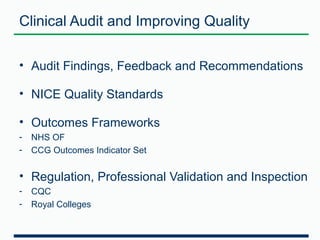
Clinical Audit and Improving Quality 
• Audit Findings, Feedback and Recommendations 
• NICE Quality Standards 
• Outcomes Frameworks 
- NHS OF 
- CCG Outcomes Indicator Set 
• Regulation, Professional Validation and Inspection 
- CQC 
- Royal Colleges
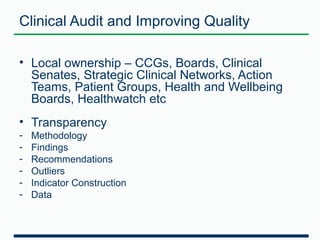
Clinical Audit and Improving Quality 
• Local ownership – CCGs, Boards, Clinical 
Senates, Strategic Clinical Networks, Action 
Teams, Patient Groups, Health and Wellbeing 
Boards, Healthwatch etc 
• Transparency 
- Methodology 
- Findings 
- Recommendations 
- Outliers 
- Indicator Construction 
- Data
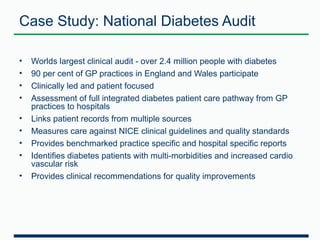
Case Study: National Diabetes Audit 
• Worlds largest clinical audit - over 2.4 million people with diabetes 
• 90 per cent of GP practices in England and Wales participate 
• Clinically led and patient focused 
• Assessment of full integrated diabetes patient care pathway from GP 
practices to hospitals 
• Links patient records from multiple sources 
• Measures care against NICE clinical guidelines and quality standards 
• Provides benchmarked practice specific and hospital specific reports 
• Identifies diabetes patients with multi-morbidities and increased cardio 
vascular risk 
• Provides clinical recommendations for quality improvements
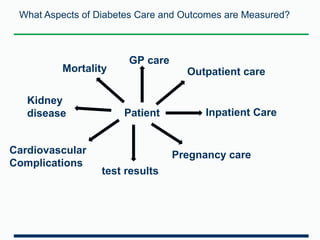
What Aspects of Diabetes Care and Outcomes are Measured? 
GP care 
Patient 
Inpatient Care 
Mortality 
test results 
Outpatient care 
Cardiovascular 
Complications 
Pregnancy care 
Kidney 
disease
Who is Involved in the NDA? 
• The NDA is a fully collaborative clinical audit that 
brings together: 
- Patients 
- GPs 
- Diabetologists 
- Physicians 
- Nurses 
- Midwifes 
- Commissioners 
- Informaticians 
- Governance specialists 
- Analytical methodologists
What Reports are Available? 
• NDA publishes national, CCG and Trust reports 
and provides GPs with practice specific reports 
Reports contain 
• Compliance with NICE clinical guidelines and quality 
standards 
• Clinical recommendations for quality improvement 
• Benchmarked analysis 
• Increased risk of adverse outcomes and cardiovascular 
complications 
• Increased risk of mortality 
• Equity of care measures
Clinical Improvements 
NICE updated clinical guidelines in 2008 to recommend that people 
with diabetes have a urine albumin: creatinine ratio (ACR) test 
annually. Urine ACR test is used to detect and monitor kidney disease 
Early detection and treatment can prevent or delay the progression of 
chronic kidney disease (CKD), reduce or prevent the development of 
complications and reduce the risk of cardiovascular disease 
In 2010 the NDA reported that 65 per cent of people with diabetes were 
receiving the NICE recommended Urine ACR test. The NDA initiated a 
programme of communication and improvement to highlight these 
issues. In 2 years the percentage of people with diabetes receiving the 
test rose to 75 per cent 
This means that an additional 200,000 people with diabetes are 
receiving this test that identifies and monitors kidney disease
National Lung Cancer Audit 
Audit Finding: not enough patients with small cell lung 
cancer receive chemotherapy 
Recommendation: chemotherapy rates below 65 per cent for 
this group of patients should be reviewed 
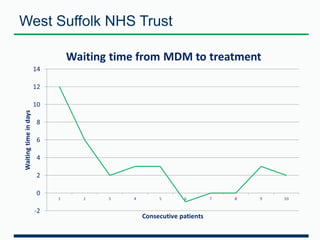
West Suffolk NHS Trust 
This trust identified that patients were waiting too long for 
treatment and therefore the cancer was too advanced for 
chemotherapy 
An alert system was established to flag up patients with the 
very aggressive small cell lung cancer, which allowed fast 
track booking of oncology appointments
West Suffolk NHS Trust
West Suffolk NHS Trust 
The Trust then followed this up by assessing whether 
this reduction in waiting times meant that more 
patients were able to receive treatment before they 
deteriorated and became too ill for chemotherapy 
The treatment rates for Small Cell Lung Cancer were 
between 50 and 60 per cent prior to improvement 
activities 
Following the quality interventions this increased to 
over 70 per cent
Connect with us 
www.hscic.gov.uk 
@hscic 
www.slideshare.net/hscic

Clinical Audit Service

  • 1.
    Clinical Audit Service Supporting better care EHI Live 2013
  • 2.
    Clinical Audit Development • Clinical Leadership and Engagement • Inclusive Approach - Patient and Carer representatives - AHPs and Care Team representatives • Audit Measurement - Existing standards? - Baseline and variability? - Indicator Development and Assurance
  • 3.
    Clinical Audit Design • NICE Quality Standards • Professional and Clinical Standards • Information Standards • Data Standards • Statistical Standards
  • 4.
    Clinical Audit Considerations • Mandated or not? • Considering the burden • How to present findings and feedback • Support for improvement activities • Re-auditing
  • 5.
    Clinical Audit andImproving Quality • Audit Findings, Feedback and Recommendations • NICE Quality Standards • Outcomes Frameworks - NHS OF - CCG Outcomes Indicator Set • Regulation, Professional Validation and Inspection - CQC - Royal Colleges
  • 6.
    Clinical Audit andImproving Quality • Local ownership – CCGs, Boards, Clinical Senates, Strategic Clinical Networks, Action Teams, Patient Groups, Health and Wellbeing Boards, Healthwatch etc • Transparency - Methodology - Findings - Recommendations - Outliers - Indicator Construction - Data
  • 7.
    Case Study: NationalDiabetes Audit • Worlds largest clinical audit - over 2.4 million people with diabetes • 90 per cent of GP practices in England and Wales participate • Clinically led and patient focused • Assessment of full integrated diabetes patient care pathway from GP practices to hospitals • Links patient records from multiple sources • Measures care against NICE clinical guidelines and quality standards • Provides benchmarked practice specific and hospital specific reports • Identifies diabetes patients with multi-morbidities and increased cardio vascular risk • Provides clinical recommendations for quality improvements
  • 8.
    What Aspects ofDiabetes Care and Outcomes are Measured? GP care Patient Inpatient Care Mortality test results Outpatient care Cardiovascular Complications Pregnancy care Kidney disease
  • 9.
    Who is Involvedin the NDA? • The NDA is a fully collaborative clinical audit that brings together: - Patients - GPs - Diabetologists - Physicians - Nurses - Midwifes - Commissioners - Informaticians - Governance specialists - Analytical methodologists
  • 10.
    What Reports areAvailable? • NDA publishes national, CCG and Trust reports and provides GPs with practice specific reports Reports contain • Compliance with NICE clinical guidelines and quality standards • Clinical recommendations for quality improvement • Benchmarked analysis • Increased risk of adverse outcomes and cardiovascular complications • Increased risk of mortality • Equity of care measures
  • 11.
    Clinical Improvements NICEupdated clinical guidelines in 2008 to recommend that people with diabetes have a urine albumin: creatinine ratio (ACR) test annually. Urine ACR test is used to detect and monitor kidney disease Early detection and treatment can prevent or delay the progression of chronic kidney disease (CKD), reduce or prevent the development of complications and reduce the risk of cardiovascular disease In 2010 the NDA reported that 65 per cent of people with diabetes were receiving the NICE recommended Urine ACR test. The NDA initiated a programme of communication and improvement to highlight these issues. In 2 years the percentage of people with diabetes receiving the test rose to 75 per cent This means that an additional 200,000 people with diabetes are receiving this test that identifies and monitors kidney disease
  • 12.
    National Lung CancerAudit Audit Finding: not enough patients with small cell lung cancer receive chemotherapy Recommendation: chemotherapy rates below 65 per cent for this group of patients should be reviewed West Suffolk NHS Trust This trust identified that patients were waiting too long for treatment and therefore the cancer was too advanced for chemotherapy An alert system was established to flag up patients with the very aggressive small cell lung cancer, which allowed fast track booking of oncology appointments
  • 13.
  • 14.
    West Suffolk NHSTrust The Trust then followed this up by assessing whether this reduction in waiting times meant that more patients were able to receive treatment before they deteriorated and became too ill for chemotherapy The treatment rates for Small Cell Lung Cancer were between 50 and 60 per cent prior to improvement activities Following the quality interventions this increased to over 70 per cent
  • 15.
    Connect with us www.hscic.gov.uk @hscic www.slideshare.net/hscic