CLIMATE CHANGE
&
SUSTAINABLE DEVELOPMENT
By
P.K.K
(ESM)
CLIMATE CHANGE
Definition of climate change
• Any significant change in the measures of climate
lasting for an extended period of time (10 to 100s of
years). In other words, climate change includes
major changes in:
 Temperature
 Precipitation
 Winds
 other indicators
• Climate change can involve both changes in average
conditions and changes in variability, including, for
example, extreme events
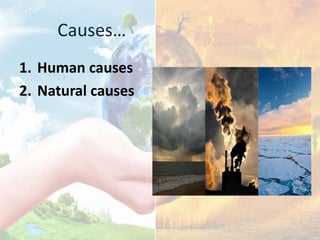
Causes…
1. Human causes
2. Natural causes
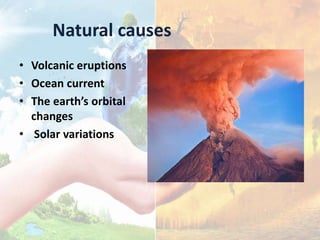
Natural causes
• Volcanic eruptions
• Ocean current
• The earth’s orbital
changes
• Solar variations
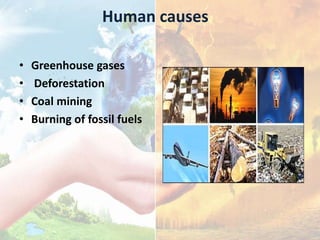
Human causes
• Greenhouse gases
• Deforestation
• Coal mining
• Burning of fossil fuels
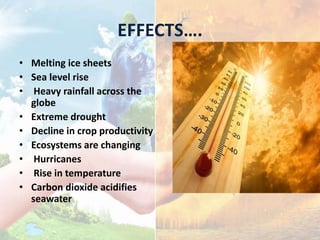
EFFECTS….
• Melting ice sheets
• Sea level rise
• Heavy rainfall across the
globe
• Extreme drought
• Decline in crop productivity
• Ecosystems are changing
• Hurricanes
• Rise in temperature
• Carbon dioxide acidifies
seawater
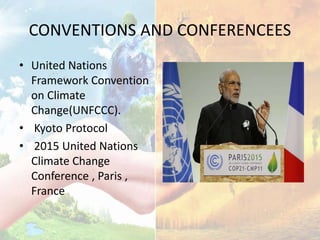
CONVENTIONS AND CONFERENCEES
• United Nations
Framework Convention
on Climate
Change(UNFCCC).
• Kyoto Protocol
• 2015 United Nations
Climate Change
Conference , Paris ,
France
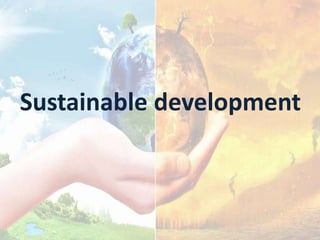
Sustainable development
SUSTAINABLE DEVELOPMENT
• Sustainable development is
development that meets the
needs of the present without
compromising the ability of
future generations to meet their
own needs……. World Commission on Environment
and Development, Our Common Future (1987)
Primary Goals of Sustainability
• The end of poverty and hunger
• Better standards of education and healthcare -
particularly as it pertains to water quality and better
sanitation
• Sustainable economic growth while promoting jobs
and stronger economies
• All of the above and more while tackling the effects
of climate change, pollution and other environmental
factors that can harm and do harm people's health,
livelihoods and lives.
• Sustainability to include health of the land, air and
sea
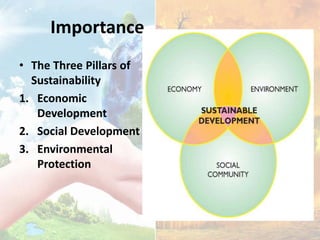
Importance
• The Three Pillars of
Sustainability
1. Economic
Development
2. Social Development
3. Environmental
Protection
Climate change ...

Climate change ...

  • 1.
  • 2.
  • 3.
    Definition of climatechange • Any significant change in the measures of climate lasting for an extended period of time (10 to 100s of years). In other words, climate change includes major changes in:  Temperature  Precipitation  Winds  other indicators • Climate change can involve both changes in average conditions and changes in variability, including, for example, extreme events
  • 4.
  • 5.
    Natural causes • Volcaniceruptions • Ocean current • The earth’s orbital changes • Solar variations
  • 6.
    Human causes • Greenhousegases • Deforestation • Coal mining • Burning of fossil fuels
  • 7.
    EFFECTS…. • Melting icesheets • Sea level rise • Heavy rainfall across the globe • Extreme drought • Decline in crop productivity • Ecosystems are changing • Hurricanes • Rise in temperature • Carbon dioxide acidifies seawater
  • 8.
    CONVENTIONS AND CONFERENCEES •United Nations Framework Convention on Climate Change(UNFCCC). • Kyoto Protocol • 2015 United Nations Climate Change Conference , Paris , France
  • 9.
  • 10.
    SUSTAINABLE DEVELOPMENT • Sustainabledevelopment is development that meets the needs of the present without compromising the ability of future generations to meet their own needs……. World Commission on Environment and Development, Our Common Future (1987)
  • 11.
    Primary Goals ofSustainability • The end of poverty and hunger • Better standards of education and healthcare - particularly as it pertains to water quality and better sanitation • Sustainable economic growth while promoting jobs and stronger economies • All of the above and more while tackling the effects of climate change, pollution and other environmental factors that can harm and do harm people's health, livelihoods and lives. • Sustainability to include health of the land, air and sea
  • 12.
    Importance • The ThreePillars of Sustainability 1. Economic Development 2. Social Development 3. Environmental Protection

Editor's Notes

  • #4 Climate is usually defined as the "average weather" in a place. It includes patterns of temperature, precipitation (rain or snow), humidity, wind and seasons. Climate patterns play a fundamental role in shaping natural ecosystems, and the human economies and cultures that depend on them. But the climate we’ve come to expect is not what it used to be, because the past is no longer a reliable predictor of the future. Our climate is rapidly changing with disruptive impacts, and that change is progressing faster than any seen in the last 2,000 years
  • #7 Industrial processes AgricultureIndustrial processes from agriculture transport fuel to generate energy
  • #11 Brundtland Report Since the Brundtland Report, the concept of sustainable development has developed beyond the initial intergenerational framework to focus more on the goal of "socially inclusive and environmentally sustainable economic growth".[12] In 1992, the UN Conference on Environment and Development published the Earth Charter, which outlines the building of a just, sustainable, and peaceful global society in the 21st century. The action plan Agenda 21 for sustainable development identified information, integration, and participation as key building blocks to help countries achieve development that recognises these interdependent pillars. It emphasises that in sustainable development everyone is a user and provider of information. It stresses the need to change from old sector-centered ways of doing business to new approaches that involve cross-sectoral co-ordination and the integration of environmental and social concerns into all development processes. Furthermore, Agenda 21 emphasises that broad public participation in decision making is a fundamental prerequisite for achieving sustainable development.[13]
  • #13 n 2005, the World Summit on Social Development identified three core areas that contribute to the philosophy and social science of sustainable development. These “pillars” in many national standards and certification schemes, form the backbone of tackling the core areas that the world now faces. The Brundtland Commission described it as “development that meets the needs of the present without compromising the ability of future generations to meet their own needs" (6). We must consider the future then, in making our decisions about the present. Economic Development This is the issue that proves the most problematic as most people disagree on political ideology what is and is not economically sound, and how it will affect businesses and by extension, jobs and employability (2, p4). It is also about providing incentives for businesses and other organisations to adhere to sustainability guidelines beyond their normal legislative requirements. Also, to encourage and foster incentives for the average person to do their bit where and when they can; one person can rarely achieve much, but taken as a group, effects in some areas are cumulative. The supply and demand market is consumerist in nature and modern life requires a lot of resources every single day (6); for the sake of the environment, getting what we consume under control is the paramount issue. Economic development is about giving people what they want without compromising quality of life, especially in the developing world, and reducing the financial burden and “red tape” of doing the right thing. Social Development There are many facets to this pillar. Most importantly is awareness of and legislation protection of the health of people from pollution and other harmful activities of business and other organisations (6). In North America, Europe and the rest of the developed world, there are strong checks and programmes of legislation in place to ensure that people's health and wellness is strongly protected. It is also about maintaining access to basic resources without compromising the quality of life. The biggest hot topic for many people right now is sustainable housing and how we can better build the homes we live in from sustainable material. The final element is education - encouraging people to participate in environmental sustainability and teaching them about the effects of environmental protection as well as warning of the dangers if we cannot achieve our goals (7, p7-12). Environmental Protection We all know what we need to do to protect the environment, whether that is recycling, reducing our power consumption by switching electronic devices off rather than using standby, by walking short journeys instead of taking the bus. Businesses are regulated to prevent pollution and to keep their own carbon emissions low. There are incentives to installing renewable power sources in our homes and businesses. Environmental protection is the third pillar and to many, the primary concern of the future of humanity. It defines how we should study and protect ecosystems, air quality, integrity and sustainability of our resources and focusing on the elements that place stress on the environment (6). It also concerns how technology will drive our greener future; the EPA recognized that developing technology is key to this sustainability, and protecting the environment of the future from potential damage that technological advances could potentially bring (1).