- Climate Change is the long term
statistical expression of short term
weather. Climate can be defined as
“expected weather”. Climate may
change in different ways, over
different time.
Climate Change has long since
ceased to be a scientific curiosity,
and is no longer just one of many
environmental and regulatory
concerns. It is a growing crisis with
the economic, food production,
security, health and safety, and other
dimension
Climate change,
also called global
warming, refers to the
rise of average
surface temperature
on earth.
It is due to primarily to
the human use of fossil
fuels, which release
carbon dioxide and other
green house gases into
the air
THE
CAUSES
OF CLIMATE
*HUMAN ACTIVITIES
-DEFORESTATION
-MINING
-CONTRIBUTE OF THE
GASES
-BURNING FOSSILS
-ILLEGAL FISHING
THE EFFECT
OF
CLIMATE
CHANGE
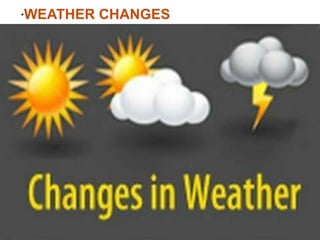
*WEATHER CHANGES
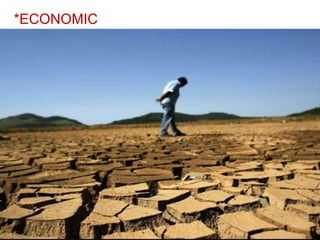
*ECONOMIC
DAMAGES
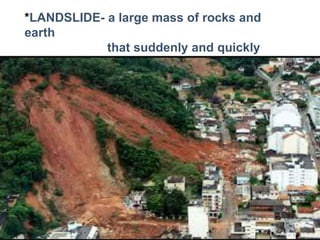
*LANDSLIDE- a large mass of rocks and
earth
that suddenly and quickly
moves
down the side
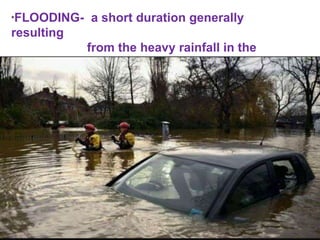
*FLOODING- a short duration generally
resulting
from the heavy rainfall in the
immediate vicinity
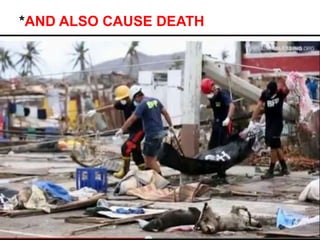
*AND ALSO CAUSE DEATH
THE NATURAL
CAUSES OF
CLIMATE
CHANGE
The earth’s climate can be
affected by natural factors that
are external to the climate
system, such as changes in
volcanic activity, solar output,
and the earth orbit around the
suns.
The two factors relevant of
the timescale of contemporary
climate change are changes
in the volcanic activity and
changes in the solar radiation.
In terms of the earth balance, these
factors primarily influence the
amount of incoming energy. Volcanic
eruption are episodic and have
relatively short term effects on
climate. Changes in solar irradiance
have contributed to climate trends
over the past century.
THE CLIMATE CHANGE ARTICLE
Earth is warming. Sea levels are rising.
There’s more carbon in the air ,and arctic ice
is melting faster than at any time in the
record history. Scientists who study the
environment to better gauge earth future
climate now argue that these changes may
not reverse for a long time.
PUBLIC OPINION ON CLIMATE CHANGE
Is the aggregate of attitudes or
beliefs held by the adult population
concerning the science,
economics, and politics of global
warming. It is affected by media
coverage of climate change.
CLIMATE CHANGE ON OTHER COUNTRY
The median of people perceiving it
as a threat was 47% . Latin America
and developed countries in Asia led
the belief that climate was a result
of human activities, while Africa,
parts of Asia and Middle East, and
countries from the former Soviet
Union led in the opposite.
STUDY OF
CLIMATE
CHANGE
CONDITION
PALEOCLIMATOLOGY
The study of climate
condition, and their causes
and effects, in the geologic
past, using evidence found
in glacial deposits, fossils,
and sediments.
UNEP ON CLIMATE CHANGE
State of global environment,
international partnership, global
sustainability. World mostly urgently
up action to cut a further 25%
predicted 2030 emission.
Ecosystem management.
Definition of
Terms in Climate
Change
Climate change refers to the rise in average
surface
temperature on Earth. It’s due to human
activity.Temperature is an objective comparative
measurement of hot or cold.
Carbon dioxide: is an element that’s all over
the
world. It is a colorless and odorless gas
that
is vital to life of earth.
Global warming a gradual
increase of temperature
Erosion the action of the
surface
processes that remove the
soil
& rock
Greenhouse gases is
the atmosphere that absorbs and
emits radiation with the thermal
ranges. In greenhouse energy
from the sun passes the glass as
rays of light. This energy absorb
by the plant, soil, and other
objects in the green house.
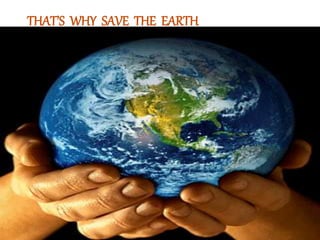
THAT’S WHY SAVE THE EARTH

Climate change #8

  • 3.
    - Climate Changeis the long term statistical expression of short term weather. Climate can be defined as “expected weather”. Climate may change in different ways, over different time.
  • 4.
    Climate Change haslong since ceased to be a scientific curiosity, and is no longer just one of many environmental and regulatory concerns. It is a growing crisis with the economic, food production, security, health and safety, and other dimension
  • 5.
    Climate change, also calledglobal warming, refers to the rise of average surface temperature on earth.
  • 6.
    It is dueto primarily to the human use of fossil fuels, which release carbon dioxide and other green house gases into the air
  • 8.
  • 9.
    *HUMAN ACTIVITIES -DEFORESTATION -MINING -CONTRIBUTE OFTHE GASES -BURNING FOSSILS -ILLEGAL FISHING
  • 10.
  • 11.
  • 12.
  • 13.
    *LANDSLIDE- a largemass of rocks and earth that suddenly and quickly moves down the side
  • 14.
    *FLOODING- a shortduration generally resulting from the heavy rainfall in the immediate vicinity
  • 15.
  • 16.
  • 17.
    The earth’s climatecan be affected by natural factors that are external to the climate system, such as changes in volcanic activity, solar output, and the earth orbit around the suns.
  • 18.
    The two factorsrelevant of the timescale of contemporary climate change are changes in the volcanic activity and changes in the solar radiation.
  • 19.
    In terms ofthe earth balance, these factors primarily influence the amount of incoming energy. Volcanic eruption are episodic and have relatively short term effects on climate. Changes in solar irradiance have contributed to climate trends over the past century.
  • 20.
    THE CLIMATE CHANGEARTICLE Earth is warming. Sea levels are rising. There’s more carbon in the air ,and arctic ice is melting faster than at any time in the record history. Scientists who study the environment to better gauge earth future climate now argue that these changes may not reverse for a long time.
  • 21.
    PUBLIC OPINION ONCLIMATE CHANGE Is the aggregate of attitudes or beliefs held by the adult population concerning the science, economics, and politics of global warming. It is affected by media coverage of climate change.
  • 22.
    CLIMATE CHANGE ONOTHER COUNTRY The median of people perceiving it as a threat was 47% . Latin America and developed countries in Asia led the belief that climate was a result of human activities, while Africa, parts of Asia and Middle East, and countries from the former Soviet Union led in the opposite.
  • 23.
  • 24.
    PALEOCLIMATOLOGY The study ofclimate condition, and their causes and effects, in the geologic past, using evidence found in glacial deposits, fossils, and sediments.
  • 25.
    UNEP ON CLIMATECHANGE State of global environment, international partnership, global sustainability. World mostly urgently up action to cut a further 25% predicted 2030 emission. Ecosystem management.
  • 26.
    Definition of Terms inClimate Change
  • 27.
    Climate change refersto the rise in average surface temperature on Earth. It’s due to human activity.Temperature is an objective comparative measurement of hot or cold. Carbon dioxide: is an element that’s all over the world. It is a colorless and odorless gas that is vital to life of earth.
  • 28.
    Global warming agradual increase of temperature Erosion the action of the surface processes that remove the soil & rock
  • 29.
    Greenhouse gases is theatmosphere that absorbs and emits radiation with the thermal ranges. In greenhouse energy from the sun passes the glass as rays of light. This energy absorb by the plant, soil, and other objects in the green house.
  • 30.