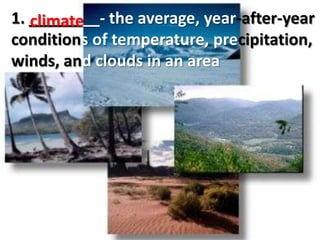
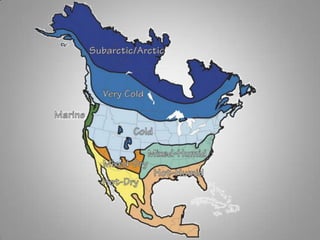
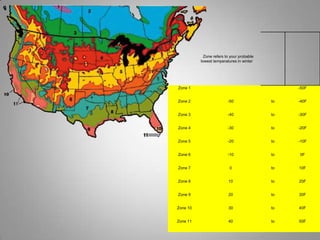
1. ________-the average, year-after-year conditionsof temperature, precipitation, winds, andclouds in an areaclimate
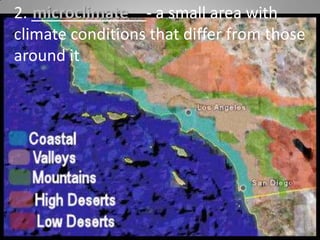
2. _____________- a small area with climate conditions that differ from those around itmicroclimate
3. Factors that affect temperature:____________latitude
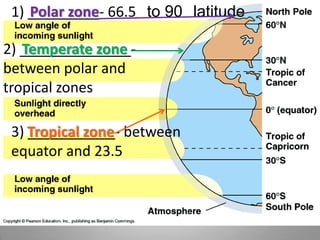
1) _________- 66.5° to 90° latitudePolar zone2) ______________- between polar and tropical zonesTemperate zone 3) ___________- between equator and 23.5°Tropical zone
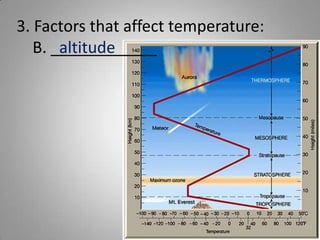
3. Factors that affect temperature:B. ____________altitude
3. Factors that affect temperature:C. _________________________ ________Distance from large bodies of water
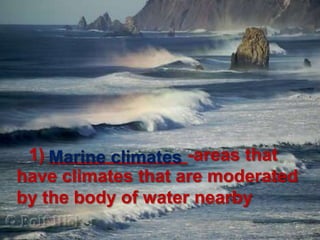
1)______________-areas that have climates that are moderated by the body of water nearbyMarine climates
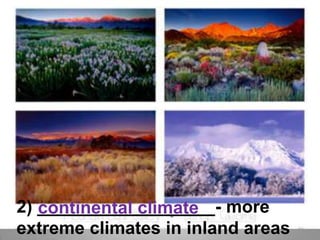
2) __________________- more extreme climates in inland areascontinental climate
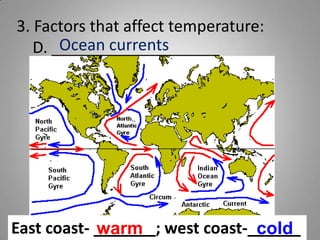
3. Factors that affect temperature:D. ___________________Ocean currentsEast coast- _______; west coast-______warmcold
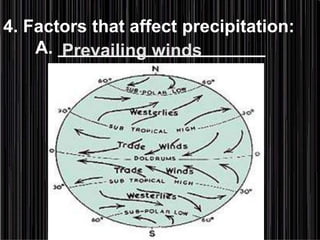
4. Factors that affect precipitation:	A. _____________________Prevailing winds
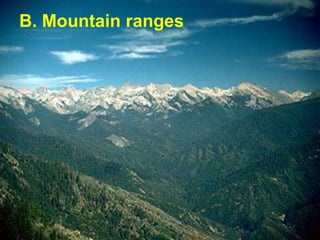
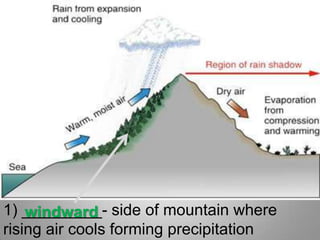
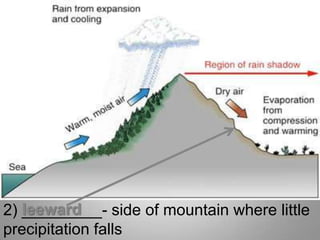
B. Mountain ranges
1) _________- side of mountain where rising air cools forming precipitationwindward
leeward2) _________- side of mountain where little precipitation falls
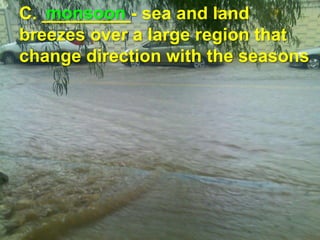
C. _________- sea and land breezes over a large region that change direction with the seasonsmonsoon
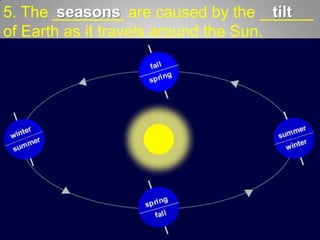
5. The ________ are caused by the______ of Earth as it travels around the Sun.seasonstilt
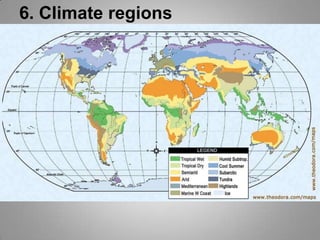
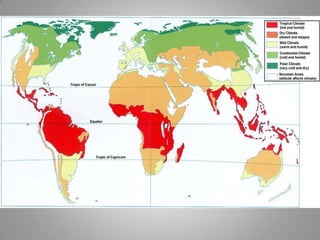
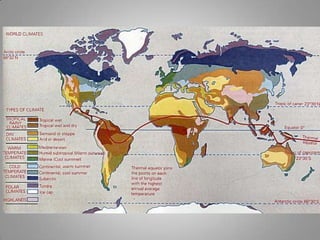
6. Climate regions
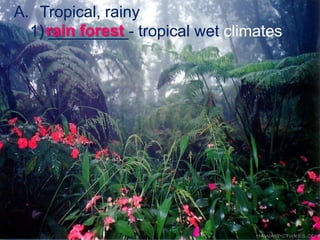
Tropical, rainy1) _________- tropical wet climatesrain forest
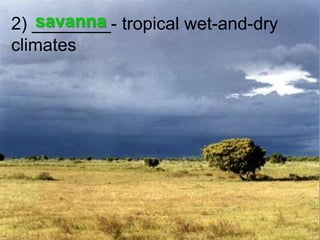
savanna2) ________- tropical wet-and-dry climates
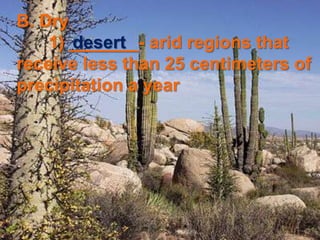
B. Dry1) _______- arid regions that receive less than 25 centimeters of precipitation a yeardesert
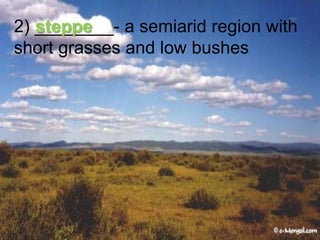
2) ________- a semiarid region with short grasses and low bushessteppe
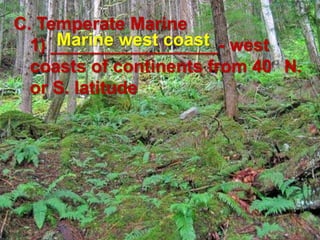
C. Temperate Marine1) _________________- west coasts of continents from 40° N. or S. latitudeMarine west coast
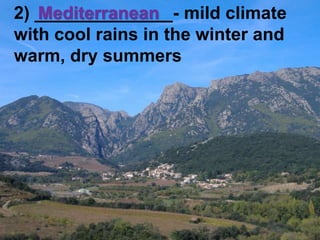
2) ______________- mild climate with cool rains in the winter and warm, dry summersMediterranean
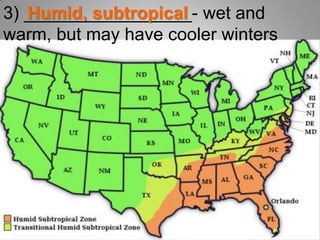
3) _________________- wet and warm, but may have cooler wintersHumid, subtropical
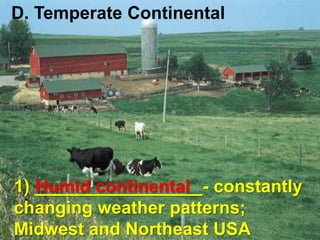
D. Temperate Continental1) _________________- constantly changing weather patterns; Midwest and Northeast USAHumid continental
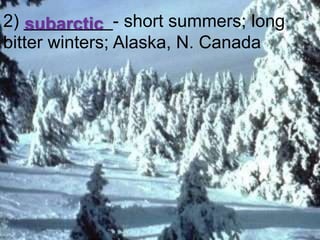
2) _________- short summers; long bitter winters; Alaska, N. Canadasubarctic
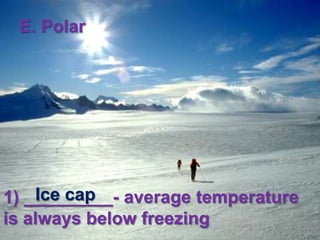
E. PolarIce cap1) _________- average temperature is always below freezing
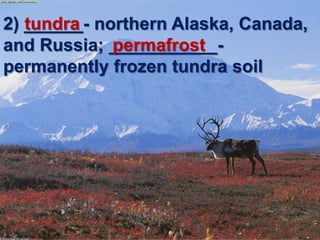
2) ______- northern Alaska, Canada, and Russia; ___________- permanently frozen tundra soiltundrapermafrost
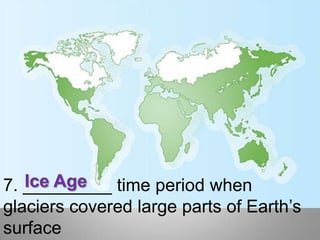
Ice Age7. _________ time period when glaciers covered large parts of Earth’s surface
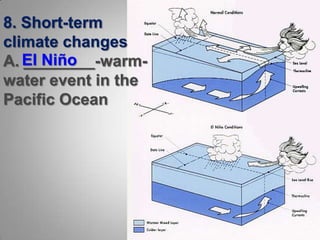
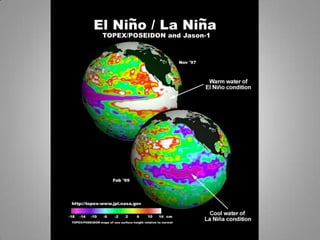
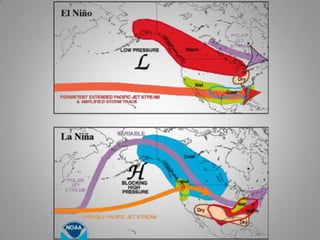
8. Short-term climate changesA. ________-warm- water event in the Pacific Ocean El Niño
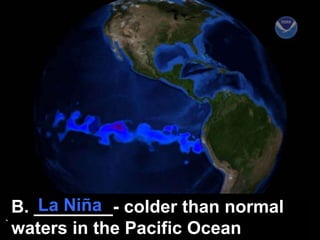
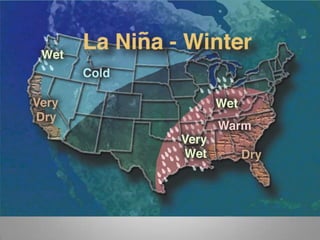
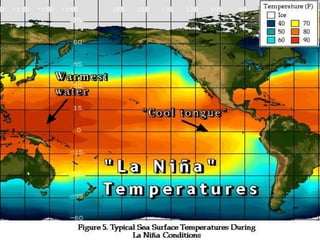
La NiñaB. ________- colder than normal waters in the Pacific Ocean
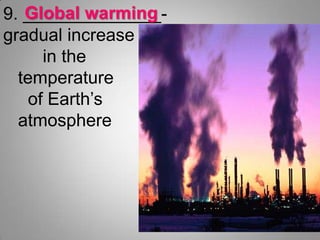
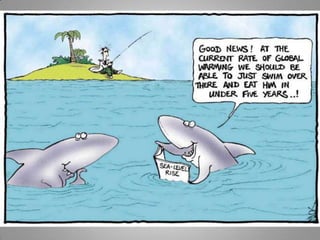
9. ______________-gradual increase        in the    temperature     of Earth’s   atmosphereGlobal warming
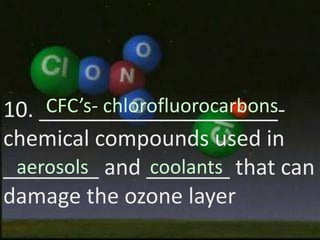
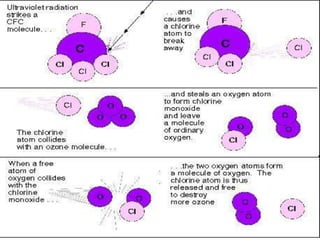
CFC’s- chlorofluorocarbons10. ____________________-chemical compounds used in ________ and _______ that can damage the ozone layeraerosolscoolants
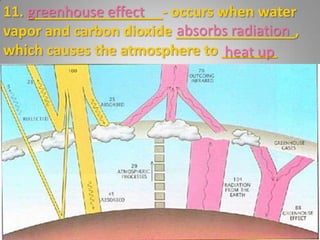
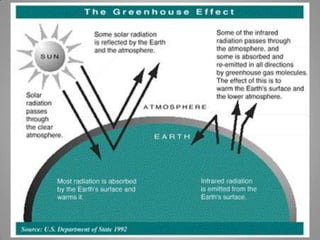
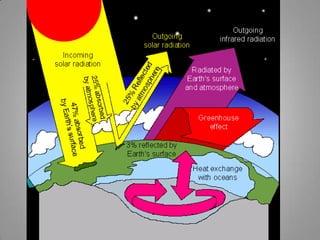
11. _________________- occurs when water vapor and carbon dioxide _______________,  which causes the atmosphere to _______greenhouse effectabsorbs radiationheat up
The End

climate