What is Client-ServerArchitecture?
• - A network model dividing tasks between
clients and servers
• - Clients request services; servers respond
• - Common in web, email, enterprise
applications
How It Works
•1. Client sends request to the server
• 2. Server processes the request
• 3. Server sends response back
• (Visual: Flow diagram – Client → Server →
Response to Client)
5.
Example – OnlineShopping
Website
• - Client: Web browser or shopping app
• - Server: Hosts product info, cart data,
payment system
• - User browses → Sends request → Server
responds
6.
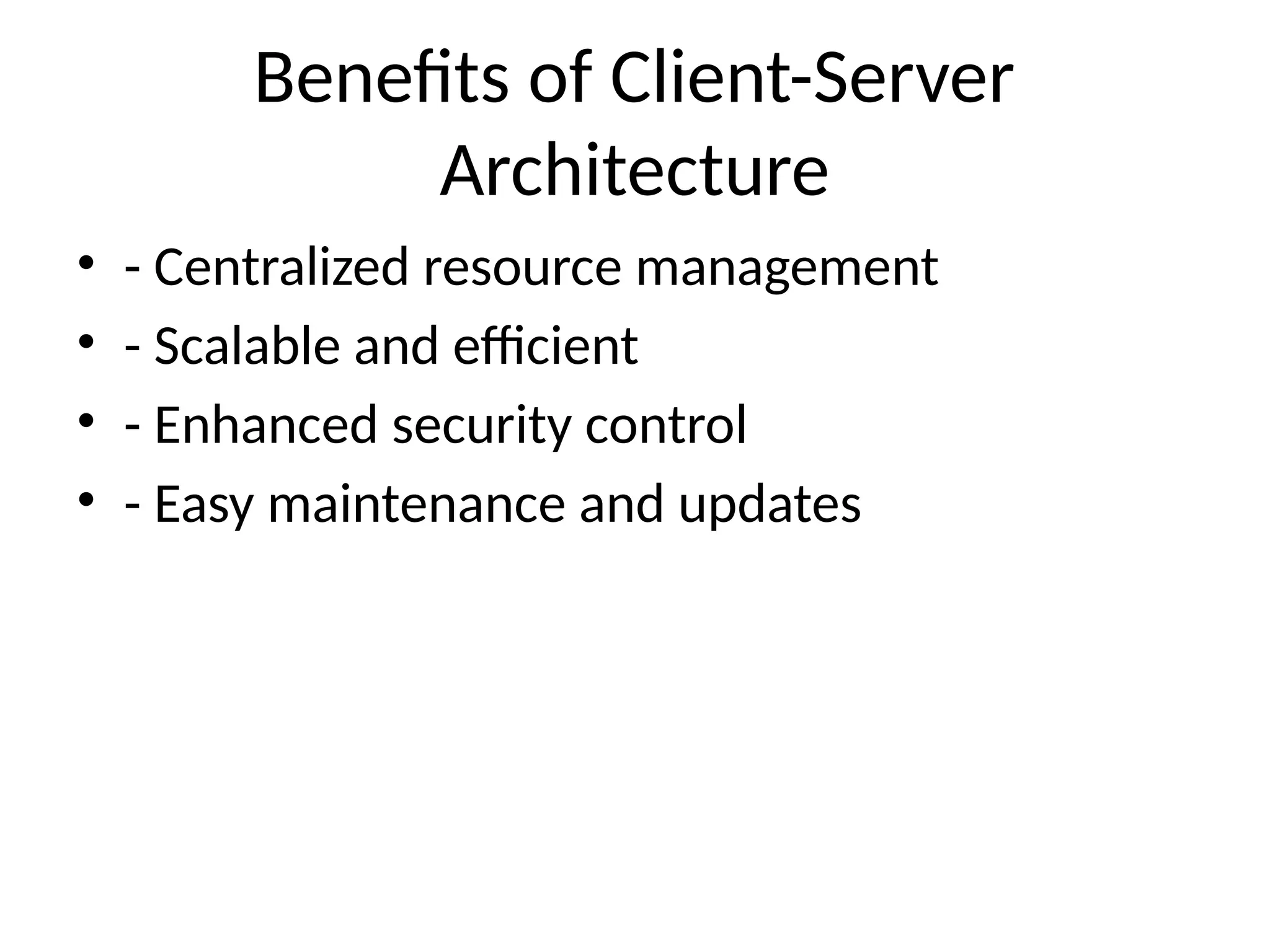
Benefits of Client-Server
Architecture
•- Centralized resource management
• - Scalable and efficient
• - Enhanced security control
• - Easy maintenance and updates
7.
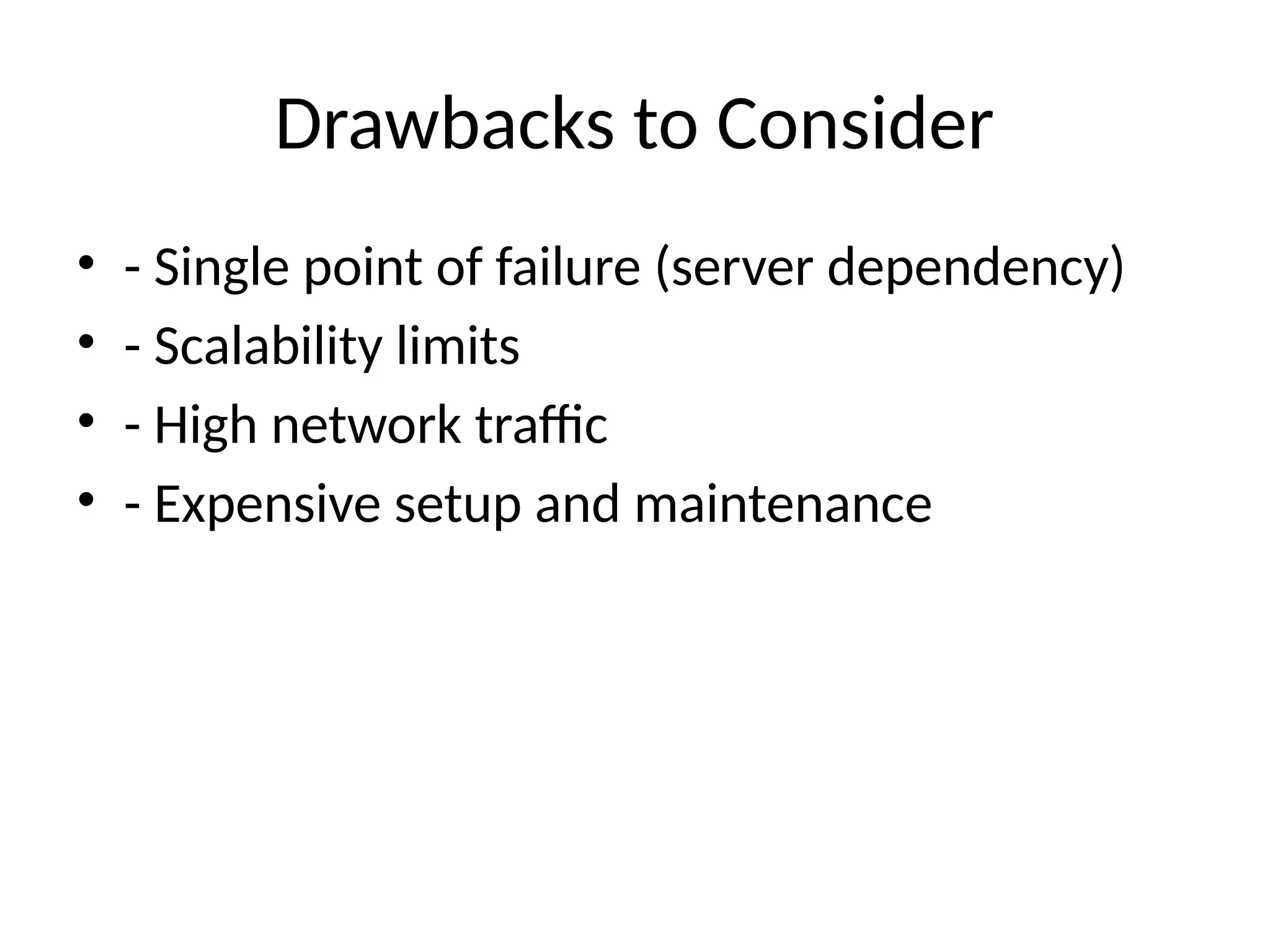
Drawbacks to Consider
•- Single point of failure (server dependency)
• - Scalability limits
• - High network traffic
• - Expensive setup and maintenance
8.
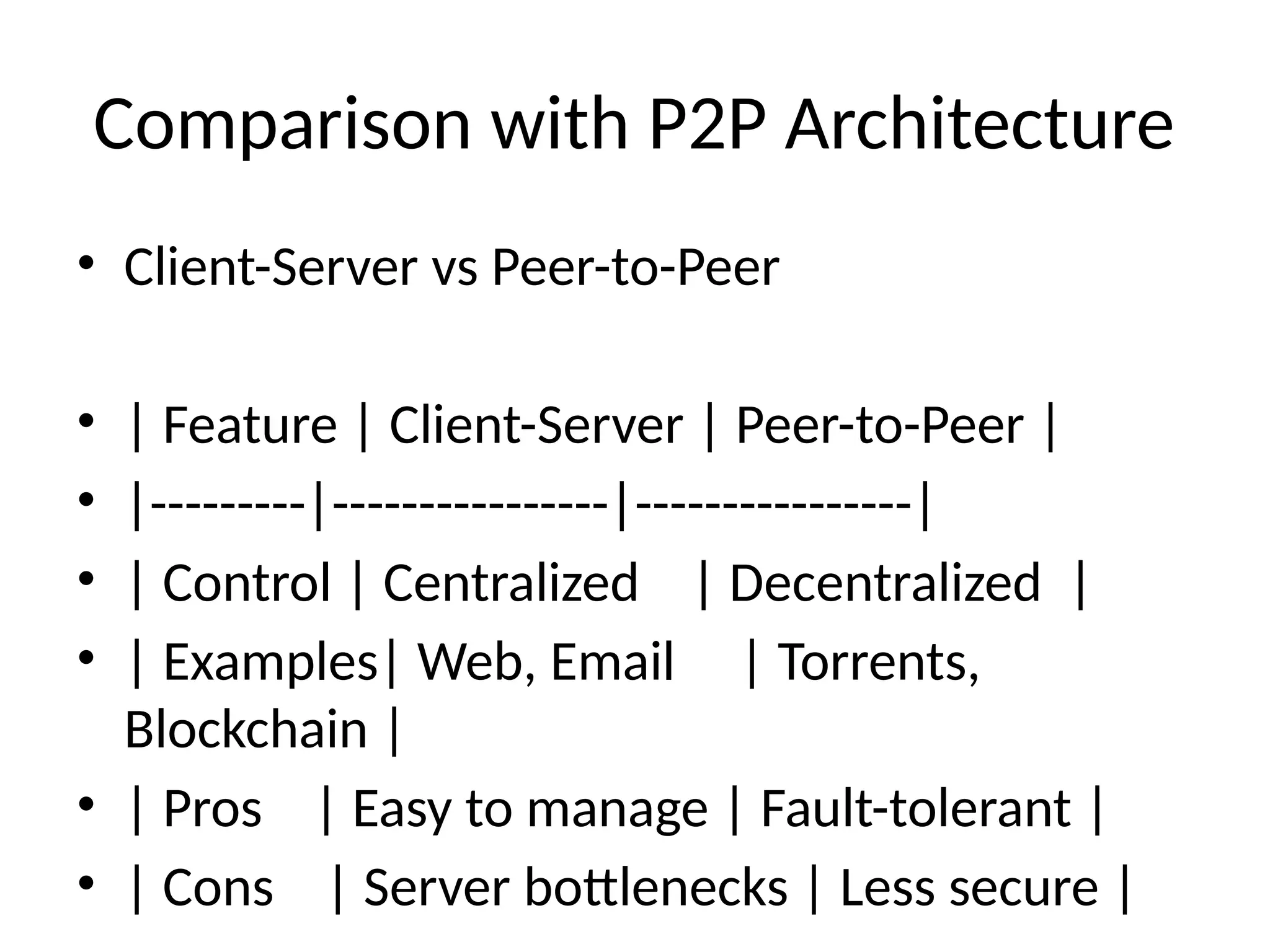
Comparison with P2PArchitecture
• Client-Server vs Peer-to-Peer
• | Feature | Client-Server | Peer-to-Peer |
• |---------|----------------|----------------|
• | Control | Centralized | Decentralized |
• | Examples| Web, Email | Torrents,
Blockchain |
• | Pros | Easy to manage | Fault-tolerant |
• | Cons | Server bottlenecks | Less secure |
9.
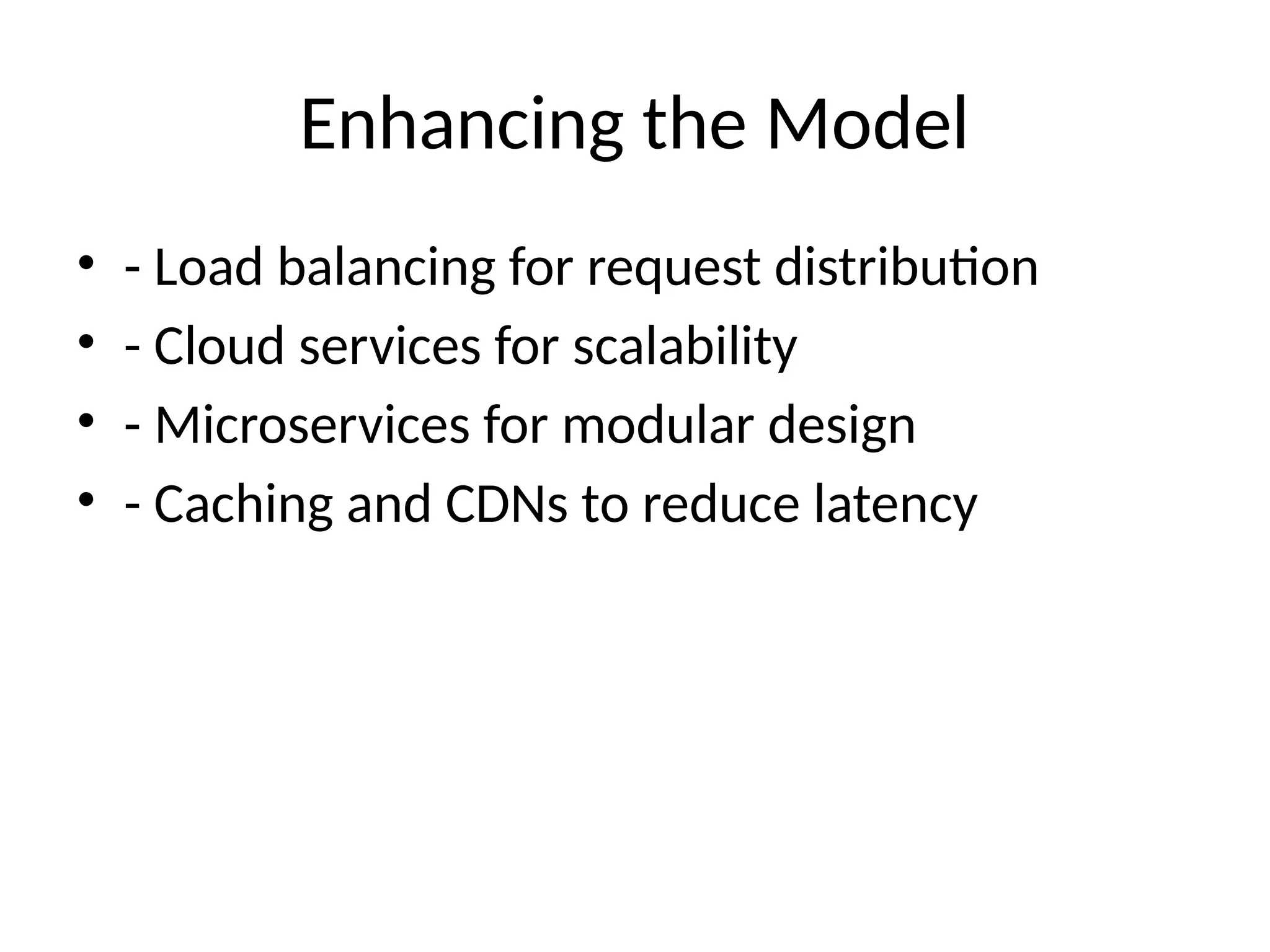
Enhancing the Model
•- Load balancing for request distribution
• - Cloud services for scalability
• - Microservices for modular design
• - Caching and CDNs to reduce latency
10.
Final Thoughts
• -Client-server model is foundational in
modern IT
• - Ensures structured communication
• - With evolving tech, it continues to scale and
adapt
![Client-Server Architecture
• A Comprehensive Overview
• Presented by: [Your Name]
• Date: [Presentation Date]](https://image.slidesharecdn.com/clientserverarchitecturepresentation-250327125021-9f1f5752/75/Client_Server_Architecture_Presentation-pptx-1-2048.jpg)


![Coded Agents – with UiPath SDK + LangGraph [Virtual Hands-on Workshop]](https://cdn.slidesharecdn.com/ss_thumbnails/codedagentsdeck-251215155422-5497c599-thumbnail.jpg?width=640&height=640&fit=bounds)


![Vibe Coding vs. Spec-Driven Development [Free Meetup]](https://cdn.slidesharecdn.com/ss_thumbnails/vibecodingvsspecdrivendevelopment-251209105622-43f455e7-thumbnail.jpg?width=640&height=640&fit=bounds)


