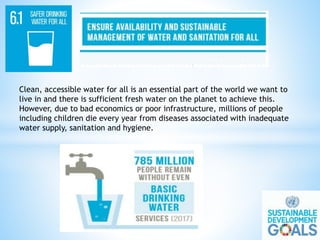
Clean, accessible water for all is an essential part of the world we want to
live in and there is sufficient fresh water on the planet to achieve this.
However, due to bad economics or poor infrastructure, millions of people
including children die every year from diseases associated with inadequate
water supply, sanitation and hygiene.
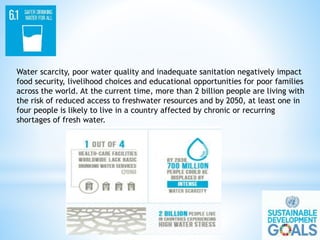
Water scarcity, poor water quality and inadequate sanitation negatively impact
food security, livelihood choices and educational opportunities for poor families
across the world. At the current time, more than 2 billion people are living with
the risk of reduced access to freshwater resources and by 2050, at least one in
four people is likely to live in a country affected by chronic or recurring
shortages of fresh water.
Targets
1. By 2030, achieve universal and equitable access to safe and affordable
drinking water for all
2. By 2030, achieve access to adequate and equitable sanitation and hygiene
for all and end open defecation, paying special attention to the needs of
women and girls and those in vulnerable situations
3. By 2030, improve water quality by reducing pollution, eliminating dumping
and minimizing release of hazardous chemicals and materials, halving the
proportion of untreated wastewater and substantially increasing recycling and
safe reuse globally
4. By 2030, substantially increase water-use efficiency across all sectors and
ensure sustainable withdrawals and supply of freshwater to address water
scarcity and substantially reduce the number of people suffering from water
scarcity
5. By 2030, implement integrated water resources management at all levels,
including through transboundary cooperation as appropriate
6. By 2020, protect and restore water-related ecosystems, including mountains,
forests, wetlands, rivers, aquifers and lakes
Progress report
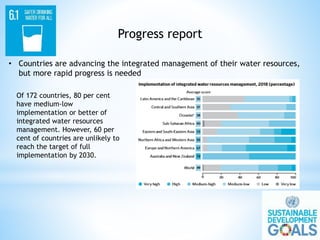
• Countries are advancing the integrated management of their water resources,
but more rapid progress is needed
Of 172 countries, 80 per cent
have medium-low
implementation or better of
integrated water resources
management. However, 60 per
cent of countries are unlikely to
reach the target of full
implementation by 2030.
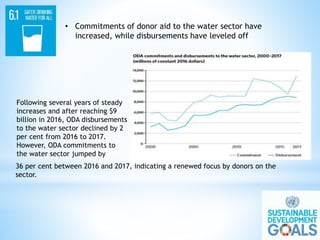
• Commitments of donor aid to the water sector have
increased, while disbursements have leveled off
Following several years of steady
increases and after reaching $9
billion in 2016, ODA disbursements
to the water sector declined by 2
per cent from 2016 to 2017.
However, ODA commitments to
the water sector jumped by
36 per cent between 2016 and 2017, indicating a renewed focus by donors on the
sector.
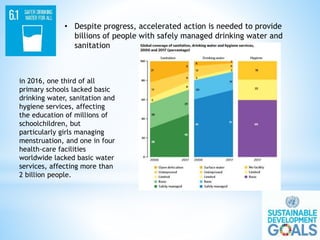
• Despite progress, accelerated action is needed to provide
billions of people with safely managed drinking water and
sanitation
in 2016, one third of all
primary schools lacked basic
drinking water, sanitation and
hygiene services, affecting
the education of millions of
schoolchildren, but
particularly girls managing
menstruation, and one in four
health-care facilities
worldwide lacked basic water
services, affecting more than
2 billion people.
• Approximately one third of countries have medium or high levels of water
stress. Almost all countries that have registered high water stress are
located in North Africa and West Asia or in Central and South Asia, and
these levels indicate serious water difficulties in the supply of freshwater,
at least during parts of the year.
• A significant effort is needed to ensure that cooperation is operational in all
transboundary basins. According to data from 67 of 153 countries that share
transboundary waters, the average percentage of national transboundary
basins covered by an operational arrangement was 59 per cent in the period
2017–2018, with only 17 countries reporting that all their transboundary
basins were covered by such arrangements.
THANK YOU

clean water and sanitation

  • 1.
    Clean, accessible waterfor all is an essential part of the world we want to live in and there is sufficient fresh water on the planet to achieve this. However, due to bad economics or poor infrastructure, millions of people including children die every year from diseases associated with inadequate water supply, sanitation and hygiene.
  • 2.
    Water scarcity, poorwater quality and inadequate sanitation negatively impact food security, livelihood choices and educational opportunities for poor families across the world. At the current time, more than 2 billion people are living with the risk of reduced access to freshwater resources and by 2050, at least one in four people is likely to live in a country affected by chronic or recurring shortages of fresh water.
  • 3.
    Targets 1. By 2030,achieve universal and equitable access to safe and affordable drinking water for all 2. By 2030, achieve access to adequate and equitable sanitation and hygiene for all and end open defecation, paying special attention to the needs of women and girls and those in vulnerable situations 3. By 2030, improve water quality by reducing pollution, eliminating dumping and minimizing release of hazardous chemicals and materials, halving the proportion of untreated wastewater and substantially increasing recycling and safe reuse globally
  • 4.
    4. By 2030,substantially increase water-use efficiency across all sectors and ensure sustainable withdrawals and supply of freshwater to address water scarcity and substantially reduce the number of people suffering from water scarcity 5. By 2030, implement integrated water resources management at all levels, including through transboundary cooperation as appropriate 6. By 2020, protect and restore water-related ecosystems, including mountains, forests, wetlands, rivers, aquifers and lakes
  • 5.
    Progress report • Countriesare advancing the integrated management of their water resources, but more rapid progress is needed Of 172 countries, 80 per cent have medium-low implementation or better of integrated water resources management. However, 60 per cent of countries are unlikely to reach the target of full implementation by 2030.
  • 6.
    • Commitments ofdonor aid to the water sector have increased, while disbursements have leveled off Following several years of steady increases and after reaching $9 billion in 2016, ODA disbursements to the water sector declined by 2 per cent from 2016 to 2017. However, ODA commitments to the water sector jumped by 36 per cent between 2016 and 2017, indicating a renewed focus by donors on the sector.
  • 7.
    • Despite progress,accelerated action is needed to provide billions of people with safely managed drinking water and sanitation in 2016, one third of all primary schools lacked basic drinking water, sanitation and hygiene services, affecting the education of millions of schoolchildren, but particularly girls managing menstruation, and one in four health-care facilities worldwide lacked basic water services, affecting more than 2 billion people.
  • 8.
    • Approximately onethird of countries have medium or high levels of water stress. Almost all countries that have registered high water stress are located in North Africa and West Asia or in Central and South Asia, and these levels indicate serious water difficulties in the supply of freshwater, at least during parts of the year. • A significant effort is needed to ensure that cooperation is operational in all transboundary basins. According to data from 67 of 153 countries that share transboundary waters, the average percentage of national transboundary basins covered by an operational arrangement was 59 per cent in the period 2017–2018, with only 17 countries reporting that all their transboundary basins were covered by such arrangements. THANK YOU

Editor's Notes