Classification of Bacteria
Prof.Dr.Mohemid Maddallah Al-Jebouri
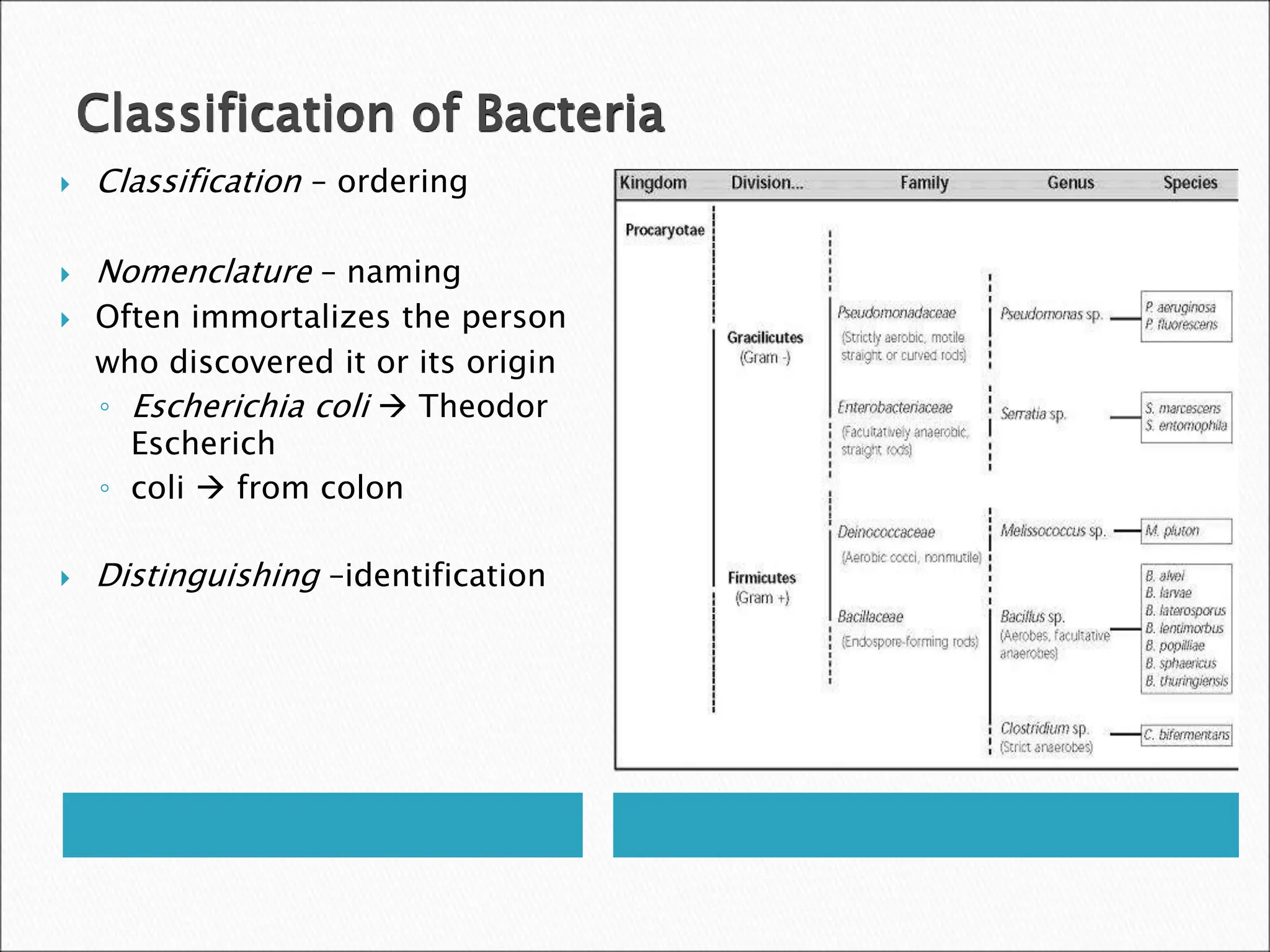
Classification of Bacteria
 Classification – ordering
 Nomenclature – naming
 Often immortalizes the person
who discovered it or its origin
◦ Escherichia coli  Theodor
Escherich
◦ coli  from colon
 Distinguishing –identification
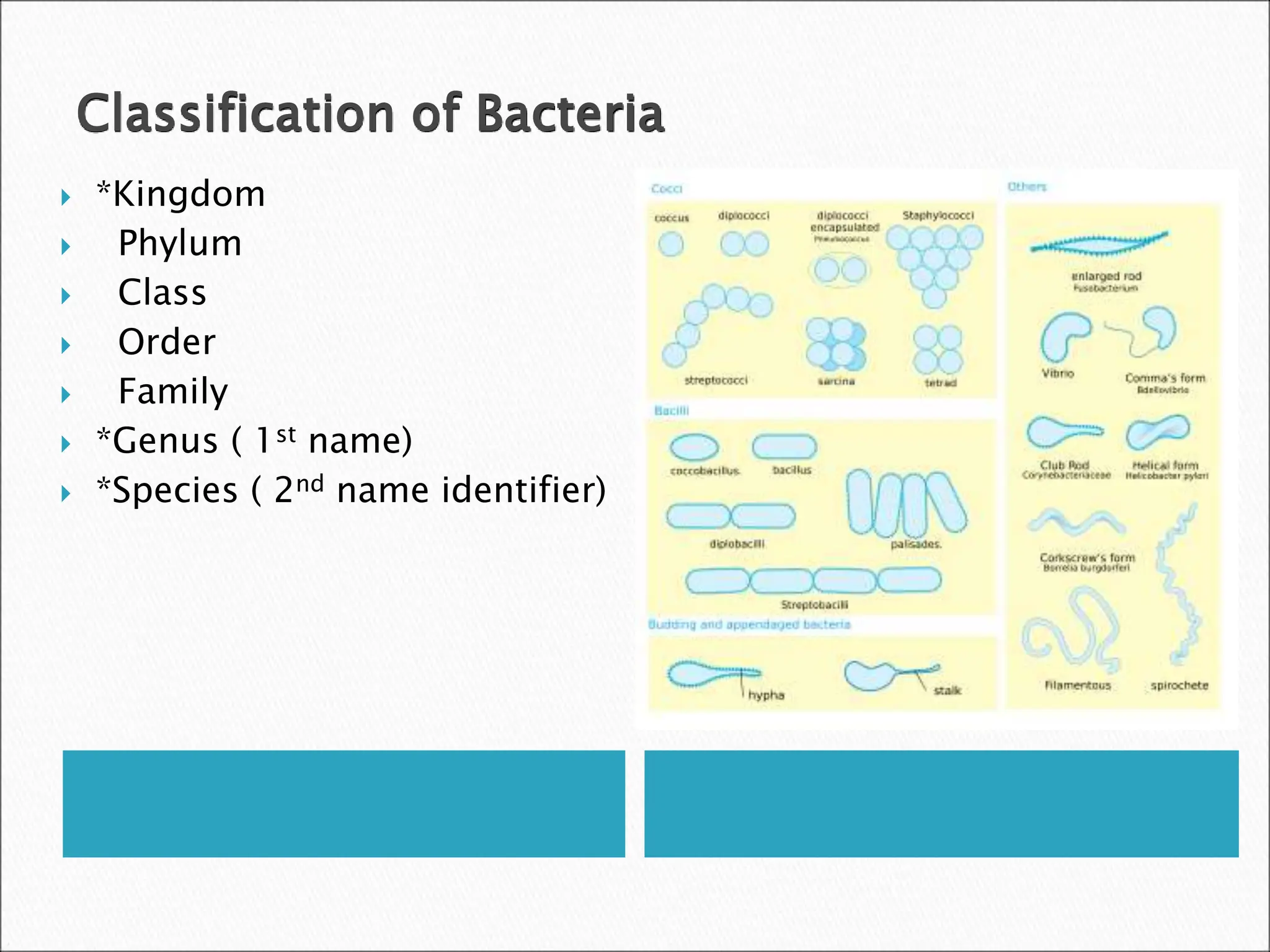
Classification of Bacteria
 *Kingdom
 Phylum
 Class
 Order
 Family
 *Genus ( 1st name)
 *Species ( 2nd name identifier)
1 Gram Negative Spiral Bacteria
 Slender and flexible, come in a
lot of different shapes
 More rigid than spirochetes
 Ex. – Campylobacter jejuni
◦ Symptom – tenesmus: the
sensation of desire to
defecate, which is common
and occurs frequently , with
out the production of
significant amounts of feces
(often small amounts of
mucous or blood are alone
passed).
3 Gram Negative Aerobic Rods
◦ Legionella pneumophila
 Lower respiratory tract
infection
 Needs oxygen
Gram Negative Aerobic Rods
Bordetella pertussis –
whooping cough
 Needs oxygen
Gram Negative Aerobic Rods
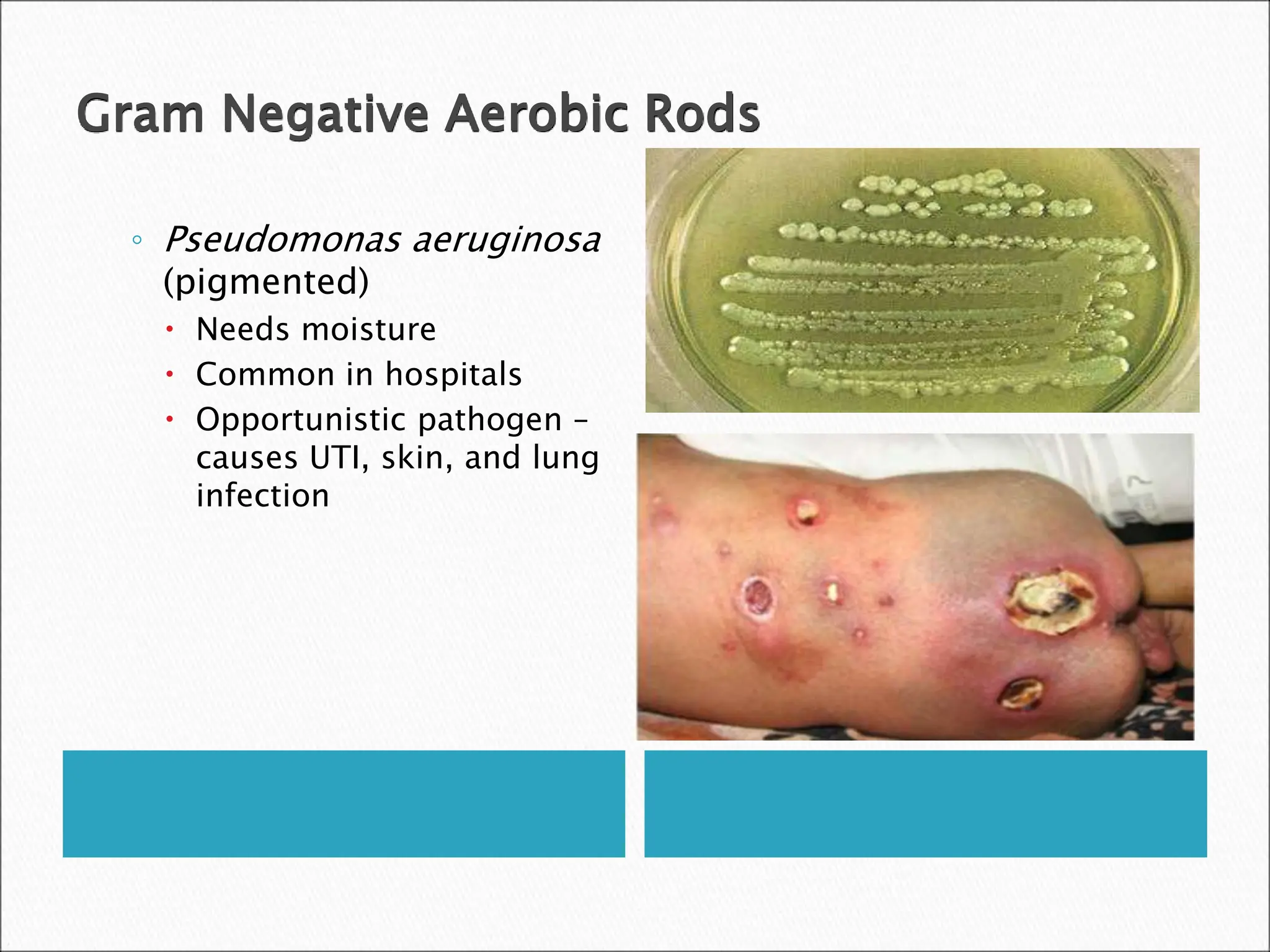
◦ Pseudomonas aeruginosa
(pigmented)
 Needs moisture
 Common in hospitals
 Opportunistic pathogen –
causes UTI, skin, and lung
infection
Vibrio
◦ V. cholerae
 Most well known of group
 Very severe dysentery. Can lose
10-15 liters of water/day. Leads
to hypovolemia – low water, hardly
any water in body
◦ V. vulnificus
 Very pathogenic
 Can cause flesh eating disease,
if it gets in a wound
◦ V. parahaemolyticus
 Found in shellfish – oysters
 Halophile – loves salt (will find in oceans, estuaries)
 Self limiting
4 Gram Negative Facultative Rods
Gram Negative Facultative Rods
 Enteric
◦ Salmonella
◦ Shigella
◦ E. coli (0157H7)
5 Gram Negative Anaerobic Rods
 Fusobacterium
◦ Live in between teeth and
gums
◦ Cause tooth abscesses
and periodontal disease
◦ Teeth have nothing to
anchor – bone is
destroyed

Gram Negative Cocci or Coccobaccilli (plump
rods)
 Neisseria meningitidis
very infectious and
communicable.
10 Gram Positive Cocci
Staphyloccocus aureus
MRSA
These bacteria can break
down all tissues of body.
Gram Positive Cocci
Streptococcus pyogenes –
no antibiotic resistance
right now
These bacteria can break
down all tissues of body.
11 Gram positive Endospore Forming Rods
 Difficult to get rid of
because of endospores
 Example
◦ Clostridium tetani
Gram positive Endospore Forming Rods
 Difficult to get rid of
because of endospores
 Example
 C. perfringens – gangrene
Gram positive Endospore Forming Rods
 Difficult to get rid of
because of endospores
 Common in hospitals
 Example
 C. difficile
antibiotic associated
pseudmembraneous
enterocolitis
Gram positive Endospore Forming Rods
Bacillus
 B. anthracis – anthrax
 zoonosis
12 Coryneforms
 Pleomorphic (many shapes)
 Example
Corynebacterium diphtheriae
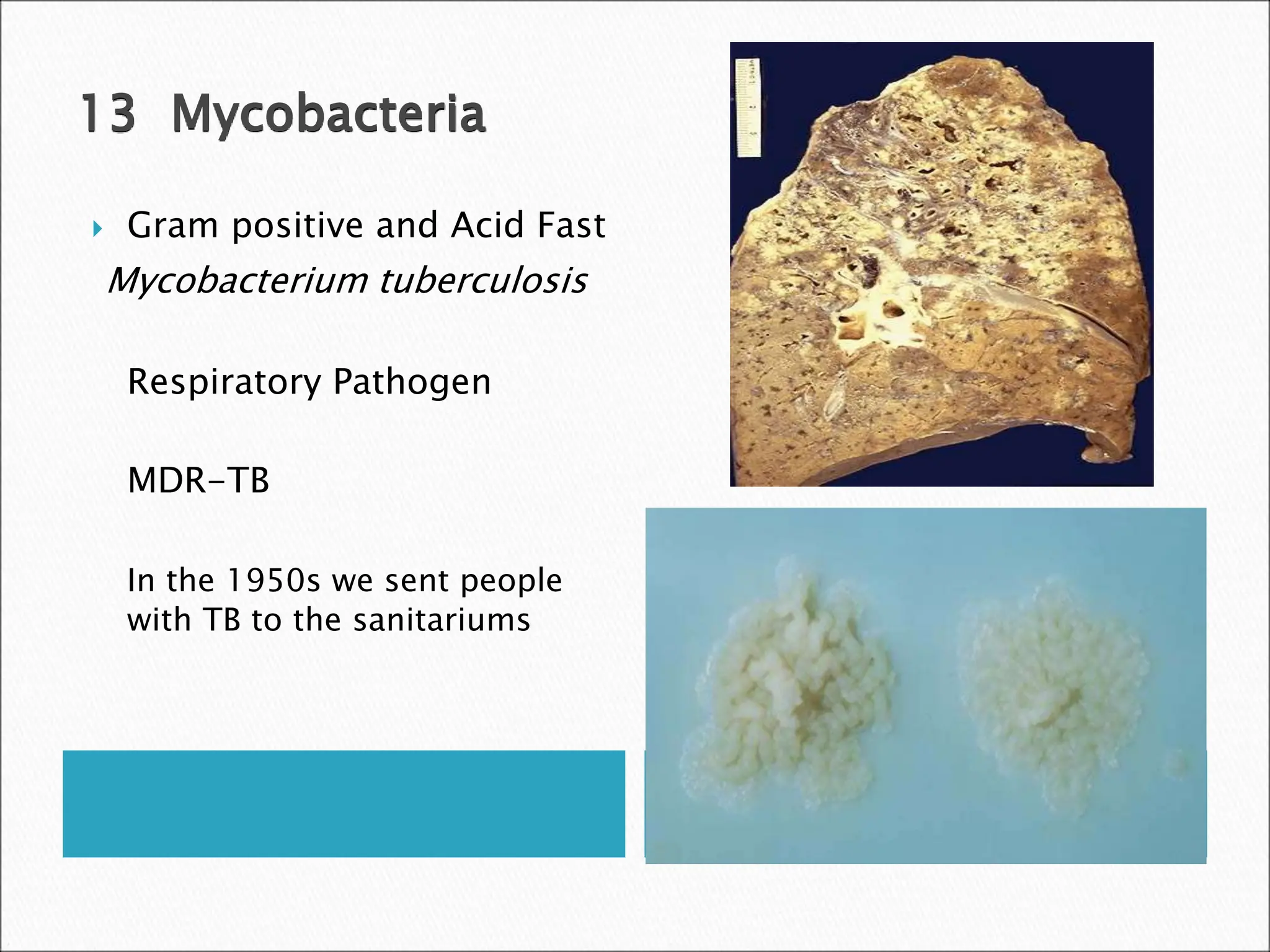
13 Mycobacteria
 Gram positive and Acid Fast
Mycobacterium tuberculosis
Respiratory Pathogen
MDR-TB
In the 1950s we sent people
with TB to the sanitariums

Classification_of_Bacteria_Clinically_Relevant_Bacteria_2nd_yr_MLT.pptx.ppt

  • 1.
  • 2.
    Classification of Bacteria Classification – ordering  Nomenclature – naming  Often immortalizes the person who discovered it or its origin ◦ Escherichia coli  Theodor Escherich ◦ coli  from colon  Distinguishing –identification
  • 3.
    Classification of Bacteria *Kingdom  Phylum  Class  Order  Family  *Genus ( 1st name)  *Species ( 2nd name identifier)
  • 4.
    1 Gram NegativeSpiral Bacteria  Slender and flexible, come in a lot of different shapes  More rigid than spirochetes  Ex. – Campylobacter jejuni ◦ Symptom – tenesmus: the sensation of desire to defecate, which is common and occurs frequently , with out the production of significant amounts of feces (often small amounts of mucous or blood are alone passed).
  • 5.
    3 Gram NegativeAerobic Rods ◦ Legionella pneumophila  Lower respiratory tract infection  Needs oxygen
  • 6.
    Gram Negative AerobicRods Bordetella pertussis – whooping cough  Needs oxygen
  • 7.
    Gram Negative AerobicRods ◦ Pseudomonas aeruginosa (pigmented)  Needs moisture  Common in hospitals  Opportunistic pathogen – causes UTI, skin, and lung infection
  • 8.
    Vibrio ◦ V. cholerae Most well known of group  Very severe dysentery. Can lose 10-15 liters of water/day. Leads to hypovolemia – low water, hardly any water in body ◦ V. vulnificus  Very pathogenic  Can cause flesh eating disease, if it gets in a wound ◦ V. parahaemolyticus  Found in shellfish – oysters  Halophile – loves salt (will find in oceans, estuaries)  Self limiting 4 Gram Negative Facultative Rods
  • 9.
    Gram Negative FacultativeRods  Enteric ◦ Salmonella ◦ Shigella ◦ E. coli (0157H7)
  • 10.
    5 Gram NegativeAnaerobic Rods  Fusobacterium ◦ Live in between teeth and gums ◦ Cause tooth abscesses and periodontal disease ◦ Teeth have nothing to anchor – bone is destroyed 
  • 11.
    Gram Negative Coccior Coccobaccilli (plump rods)  Neisseria meningitidis very infectious and communicable.
  • 12.
    10 Gram PositiveCocci Staphyloccocus aureus MRSA These bacteria can break down all tissues of body.
  • 13.
    Gram Positive Cocci Streptococcuspyogenes – no antibiotic resistance right now These bacteria can break down all tissues of body.
  • 14.
    11 Gram positiveEndospore Forming Rods  Difficult to get rid of because of endospores  Example ◦ Clostridium tetani
  • 15.
    Gram positive EndosporeForming Rods  Difficult to get rid of because of endospores  Example  C. perfringens – gangrene
  • 16.
    Gram positive EndosporeForming Rods  Difficult to get rid of because of endospores  Common in hospitals  Example  C. difficile antibiotic associated pseudmembraneous enterocolitis
  • 17.
    Gram positive EndosporeForming Rods Bacillus  B. anthracis – anthrax  zoonosis
  • 18.
    12 Coryneforms  Pleomorphic(many shapes)  Example Corynebacterium diphtheriae
  • 19.
    13 Mycobacteria  Grampositive and Acid Fast Mycobacterium tuberculosis Respiratory Pathogen MDR-TB In the 1950s we sent people with TB to the sanitariums