CLASSIFICATIONOF
RESOURCES
Resource
■ Everything in nature that can be used to
satisfy our need and it is technologically
as well as economically accessible and
culturally acceptable is known as
Resource.
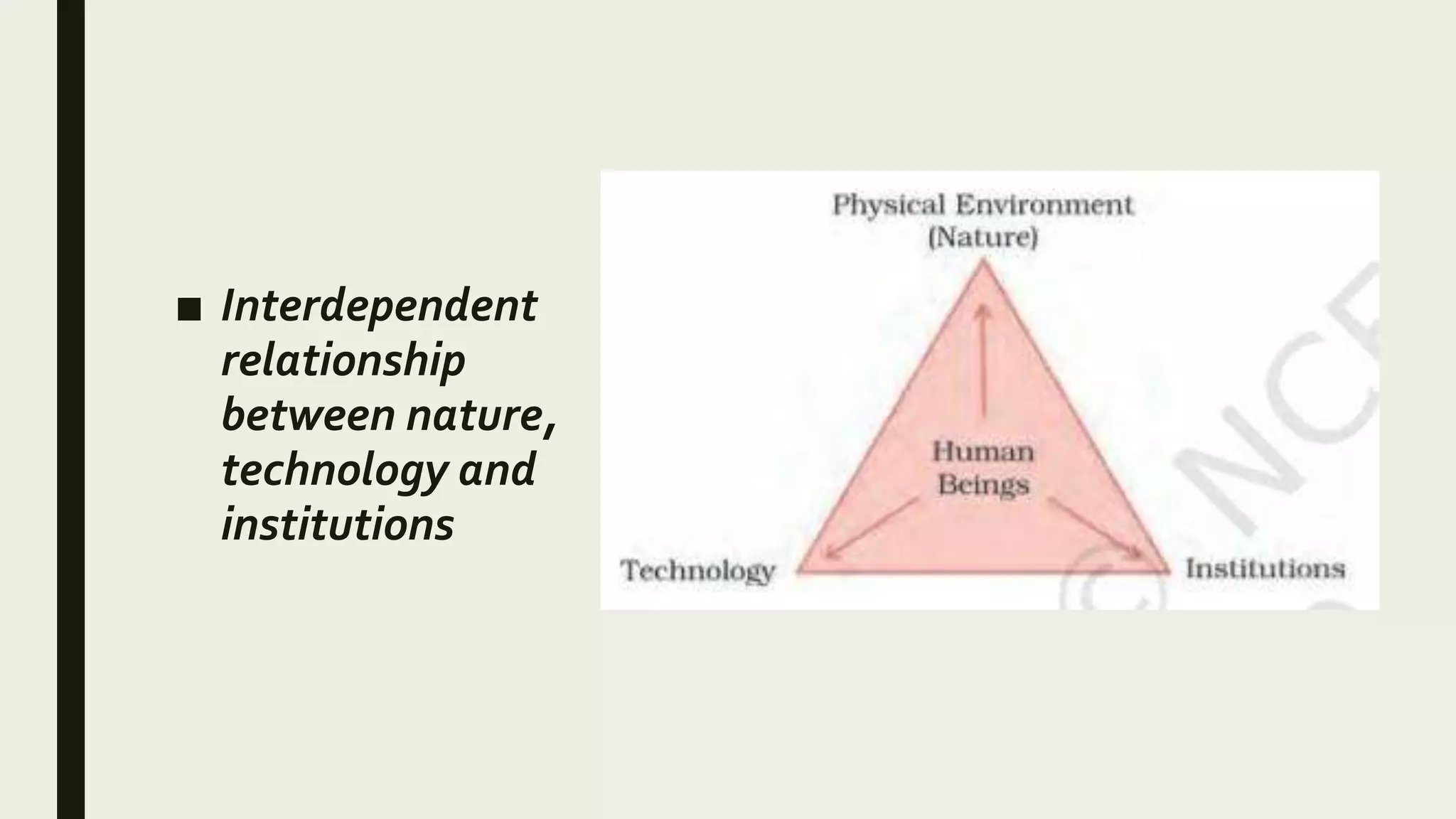
■ Interdependent
relationship
between nature,
technology and
institutions
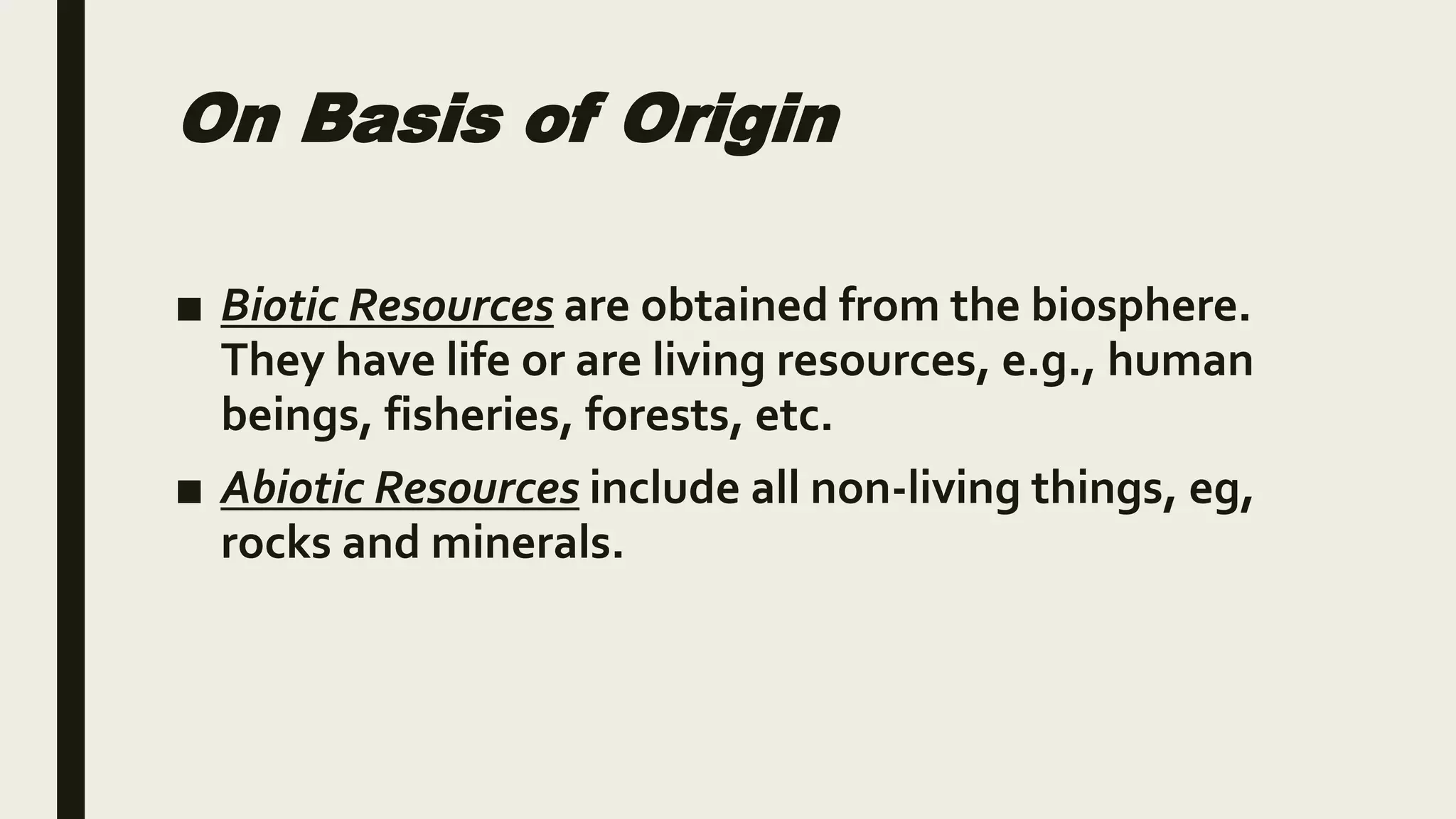
On Basis of Origin
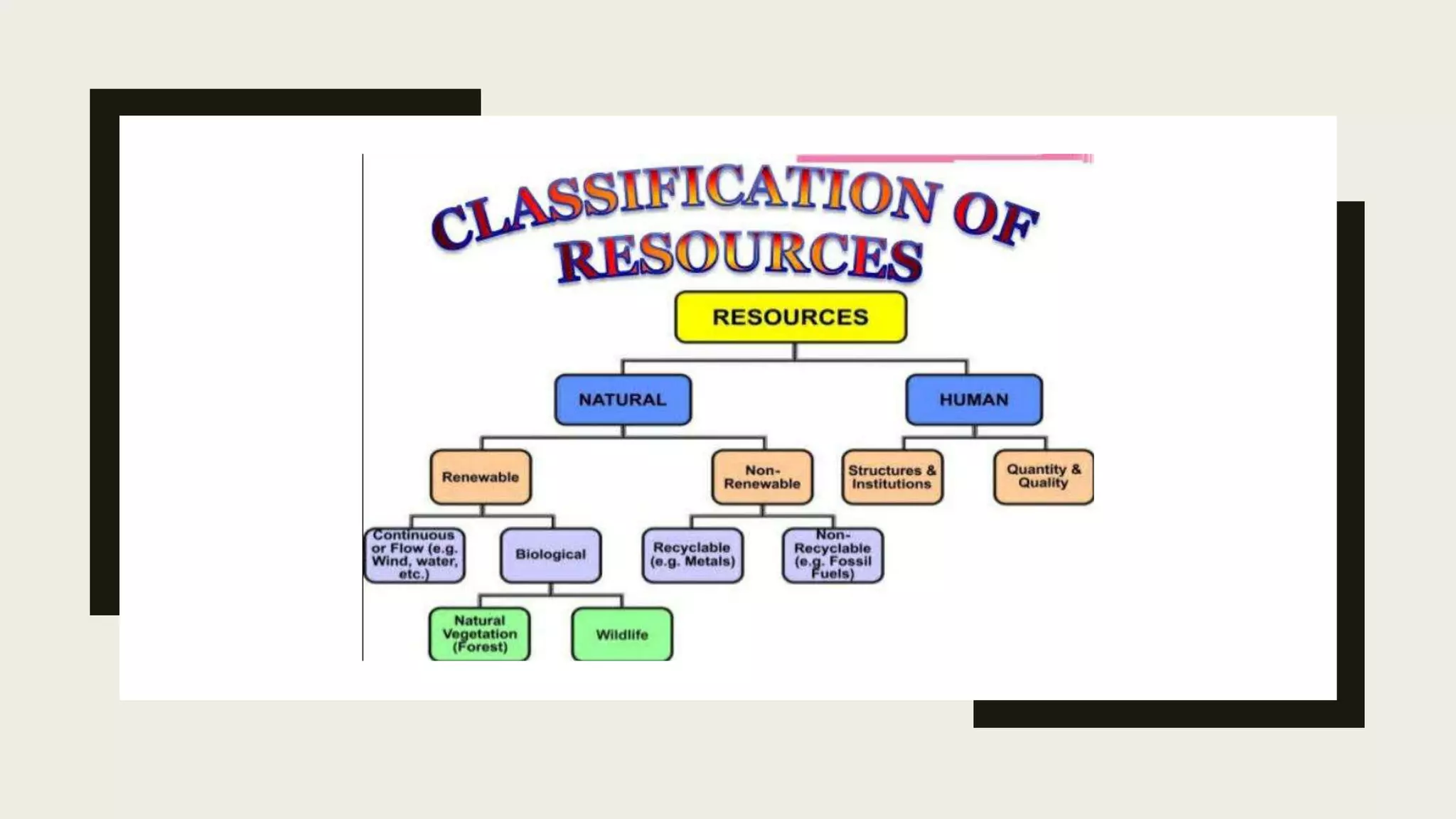
■ Biotic Resources are obtained from the biosphere.
They have life or are living resources, e.g., human
beings, fisheries, forests, etc.
■ Abiotic Resources include all non-living things, eg,
rocks and minerals.
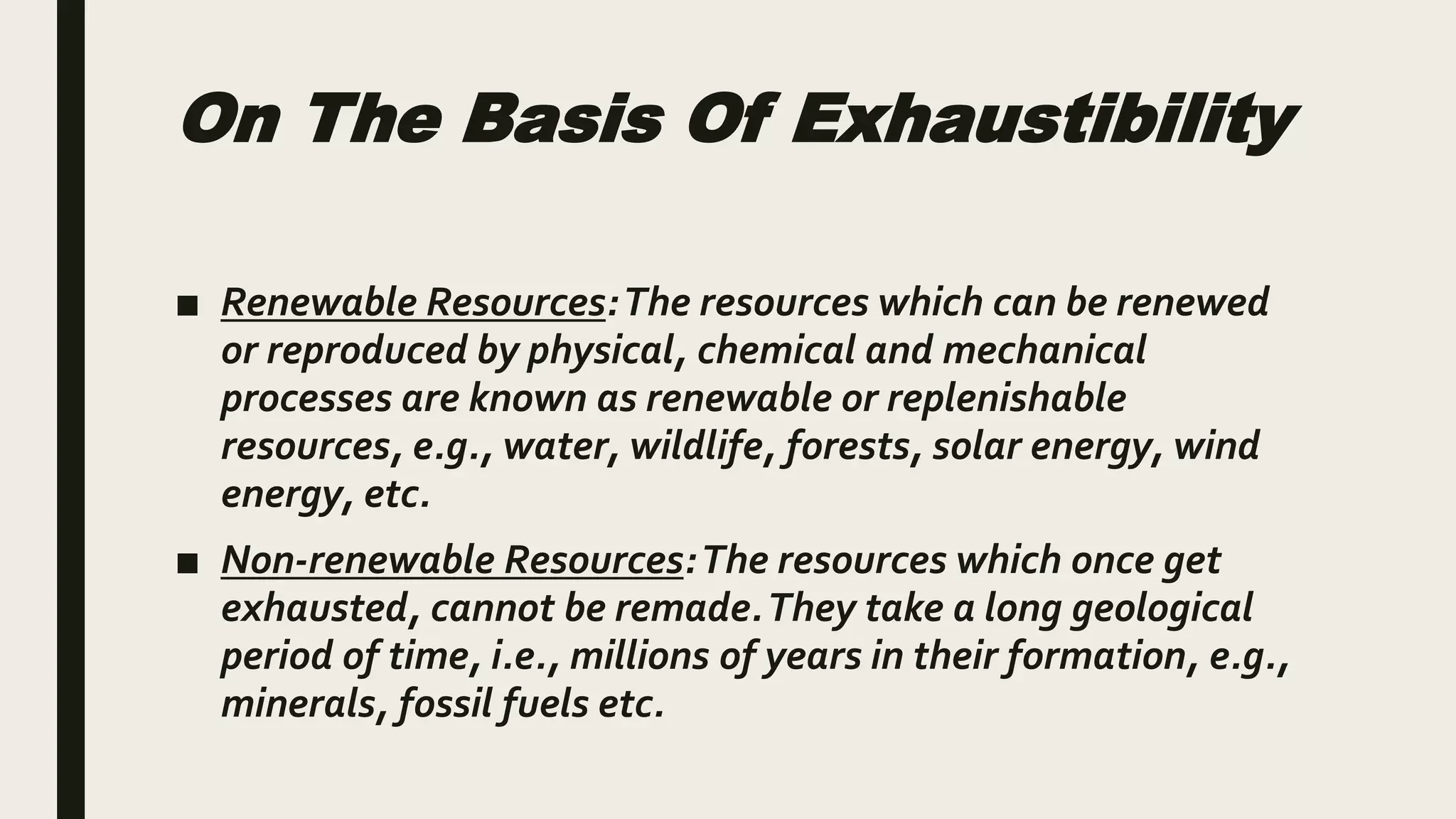
On The Basis Of Exhaustibility
■ Renewable Resources:The resources which can be renewed
or reproduced by physical, chemical and mechanical
processes are known as renewable or replenishable
resources, e.g., water, wildlife, forests, solar energy, wind
energy, etc.
■ Non-renewable Resources:The resources which once get
exhausted, cannot be remade.They take a long geological
period of time, i.e., millions of years in their formation, e.g.,
minerals, fossil fuels etc.
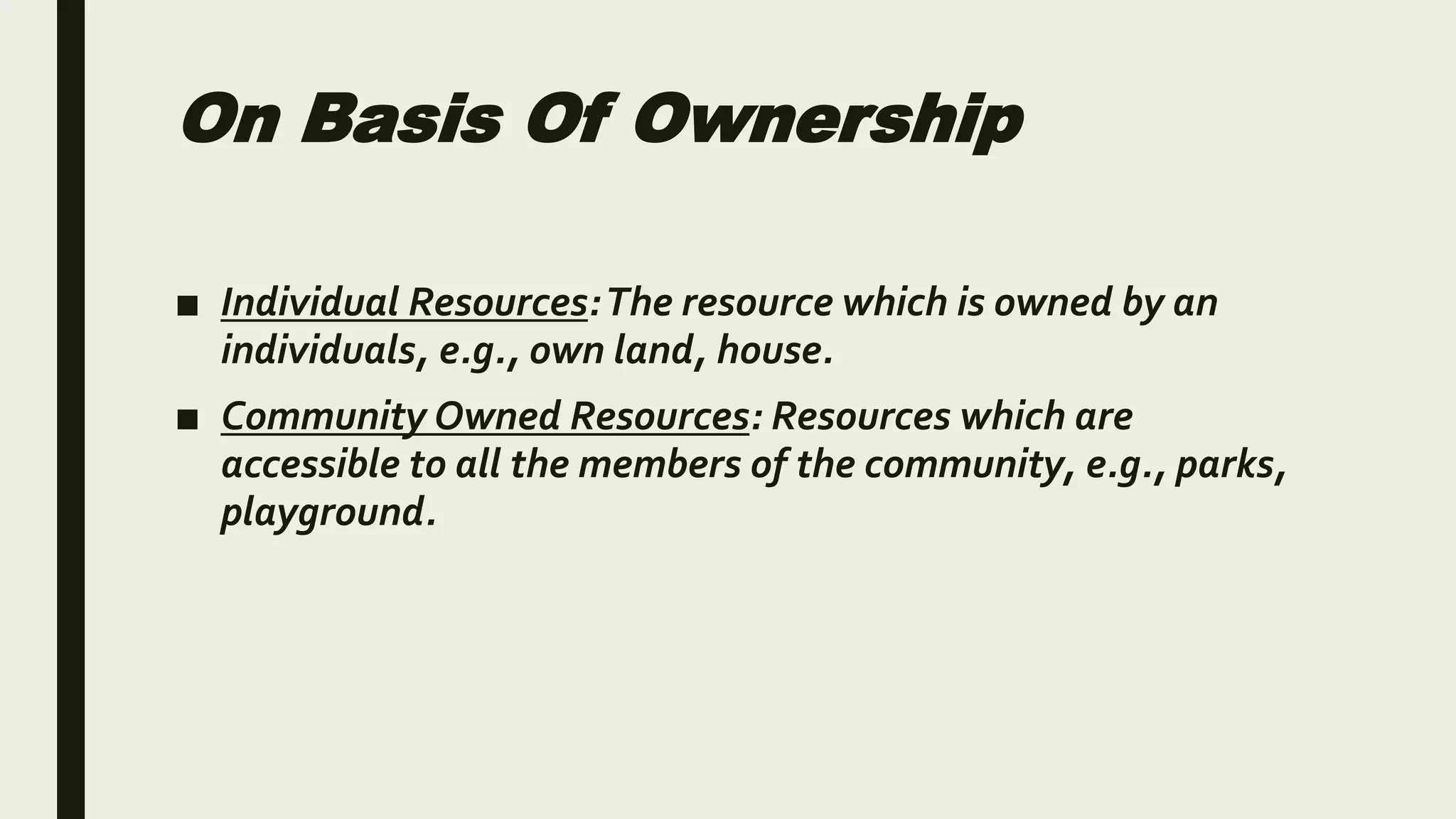
On Basis Of Ownership
■ Individual Resources:The resource which is owned by an
individuals, e.g., own land, house.
■ Community Owned Resources: Resources which are
accessible to all the members of the community, e.g., parks,
playground.
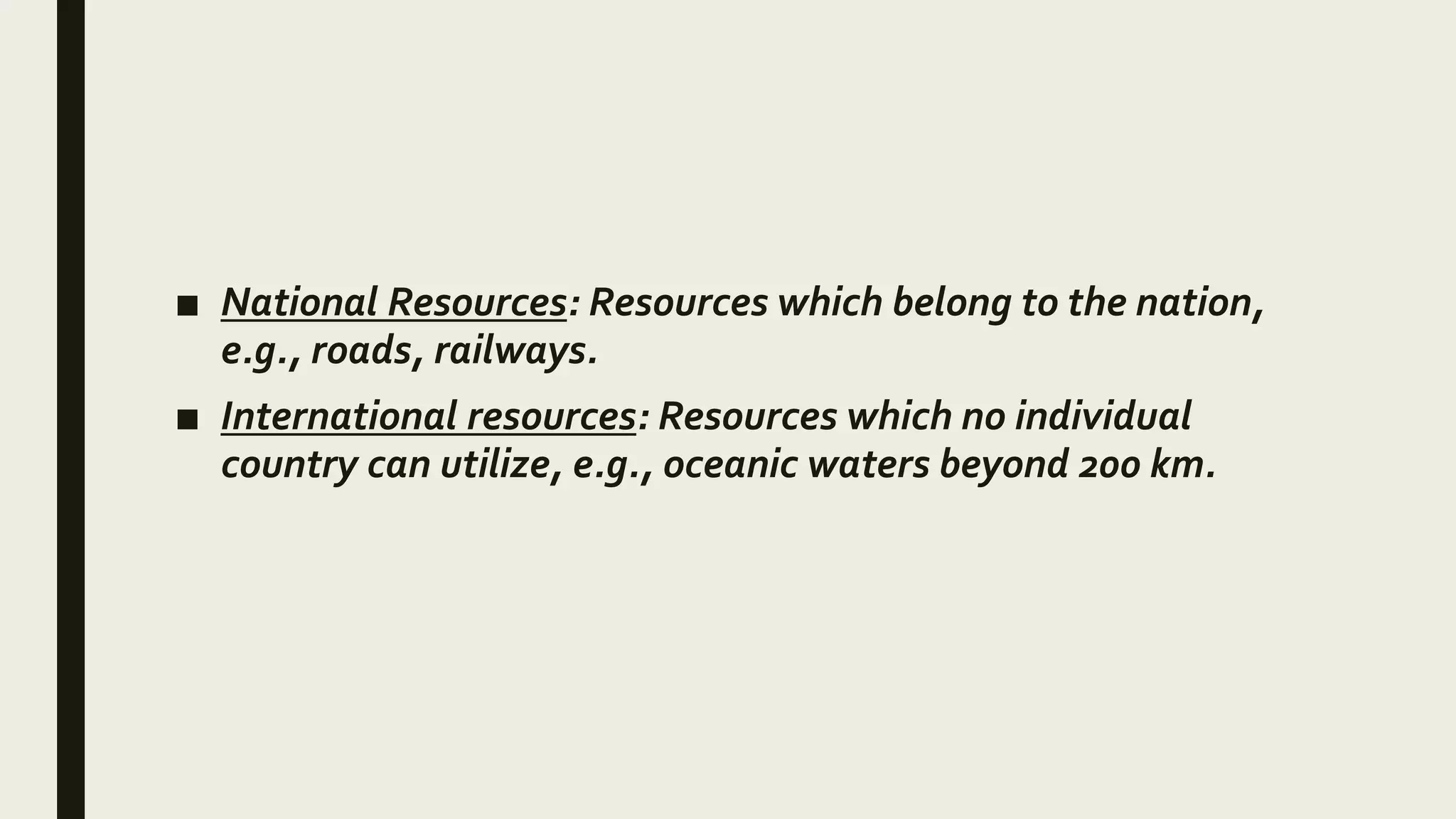
■ National Resources: Resources which belong to the nation,
e.g., roads, railways.
■ International resources: Resources which no individual
country can utilize, e.g., oceanic waters beyond 200 km.
On the basis of Status and
Development
1. Potential resources: Resources found in a region but not in
use, e.g., solar energy in Rajasthan,wind in Gujarat.
2. Stock: Resources available but do not have appropriate
technology to access, e.g., lack of technical know how to
use hydrogen and oxygen as source of energy; and
3. Reserve: Subset of stock. Can be used for future needs, e.g.,
water in the dams, forest resources.
THANK YOU

Classification of resources

  • 1.
  • 2.
    Resource ■ Everything innature that can be used to satisfy our need and it is technologically as well as economically accessible and culturally acceptable is known as Resource.
  • 3.
  • 5.
    On Basis ofOrigin ■ Biotic Resources are obtained from the biosphere. They have life or are living resources, e.g., human beings, fisheries, forests, etc. ■ Abiotic Resources include all non-living things, eg, rocks and minerals.
  • 6.
    On The BasisOf Exhaustibility ■ Renewable Resources:The resources which can be renewed or reproduced by physical, chemical and mechanical processes are known as renewable or replenishable resources, e.g., water, wildlife, forests, solar energy, wind energy, etc. ■ Non-renewable Resources:The resources which once get exhausted, cannot be remade.They take a long geological period of time, i.e., millions of years in their formation, e.g., minerals, fossil fuels etc.
  • 7.
    On Basis OfOwnership ■ Individual Resources:The resource which is owned by an individuals, e.g., own land, house. ■ Community Owned Resources: Resources which are accessible to all the members of the community, e.g., parks, playground.
  • 8.
    ■ National Resources:Resources which belong to the nation, e.g., roads, railways. ■ International resources: Resources which no individual country can utilize, e.g., oceanic waters beyond 200 km.
  • 9.
    On the basisof Status and Development 1. Potential resources: Resources found in a region but not in use, e.g., solar energy in Rajasthan,wind in Gujarat. 2. Stock: Resources available but do not have appropriate technology to access, e.g., lack of technical know how to use hydrogen and oxygen as source of energy; and 3. Reserve: Subset of stock. Can be used for future needs, e.g., water in the dams, forest resources.
  • 10.