Introduction to Joints
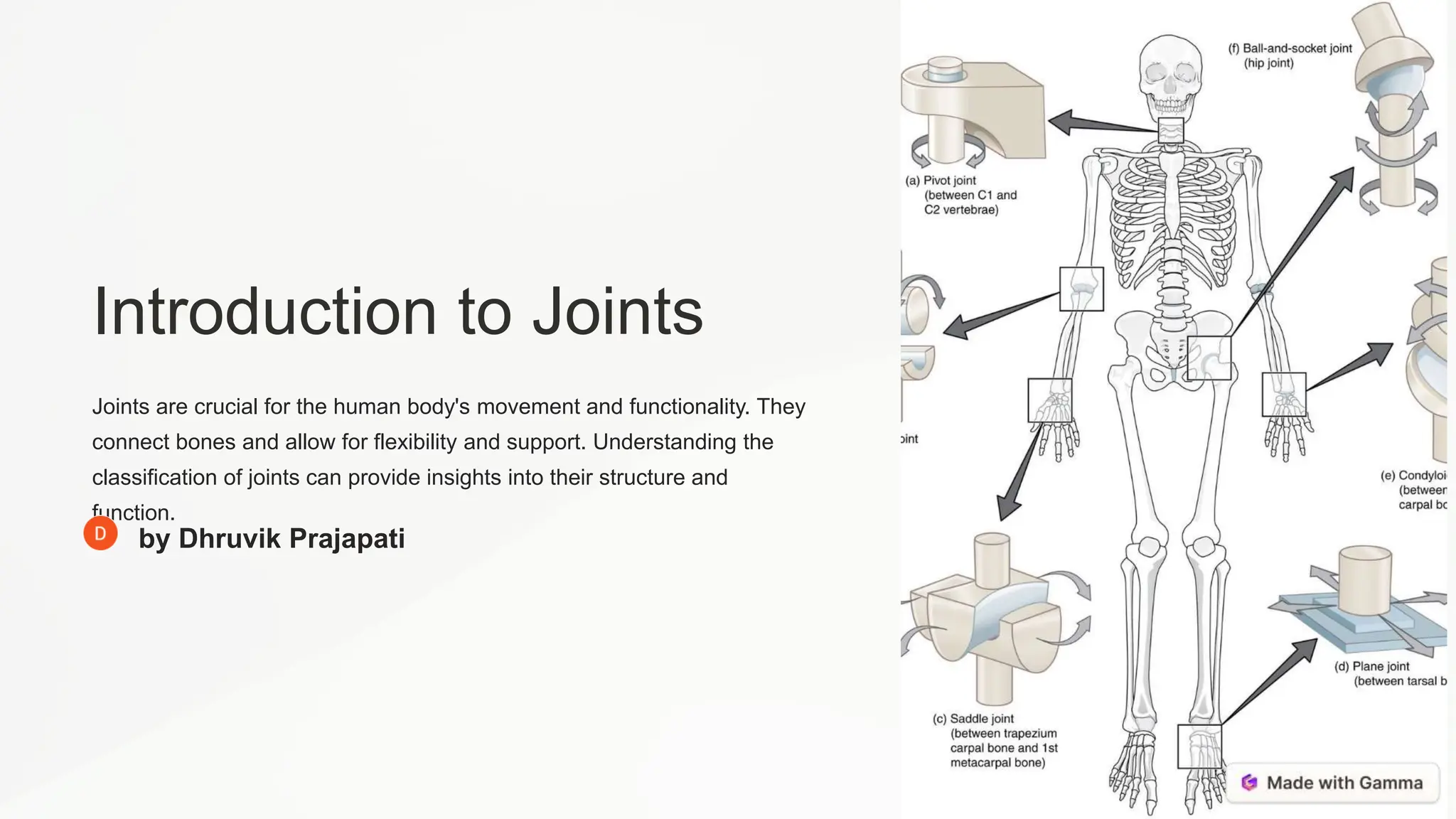
Joints are crucial for the human body's movement and functionality. They
connect bones and allow for flexibility and support. Understanding the
classification of joints can provide insights into their structure and
function.
by Dhruvik Prajapati
Definition of a Joint
Anatomical Structure
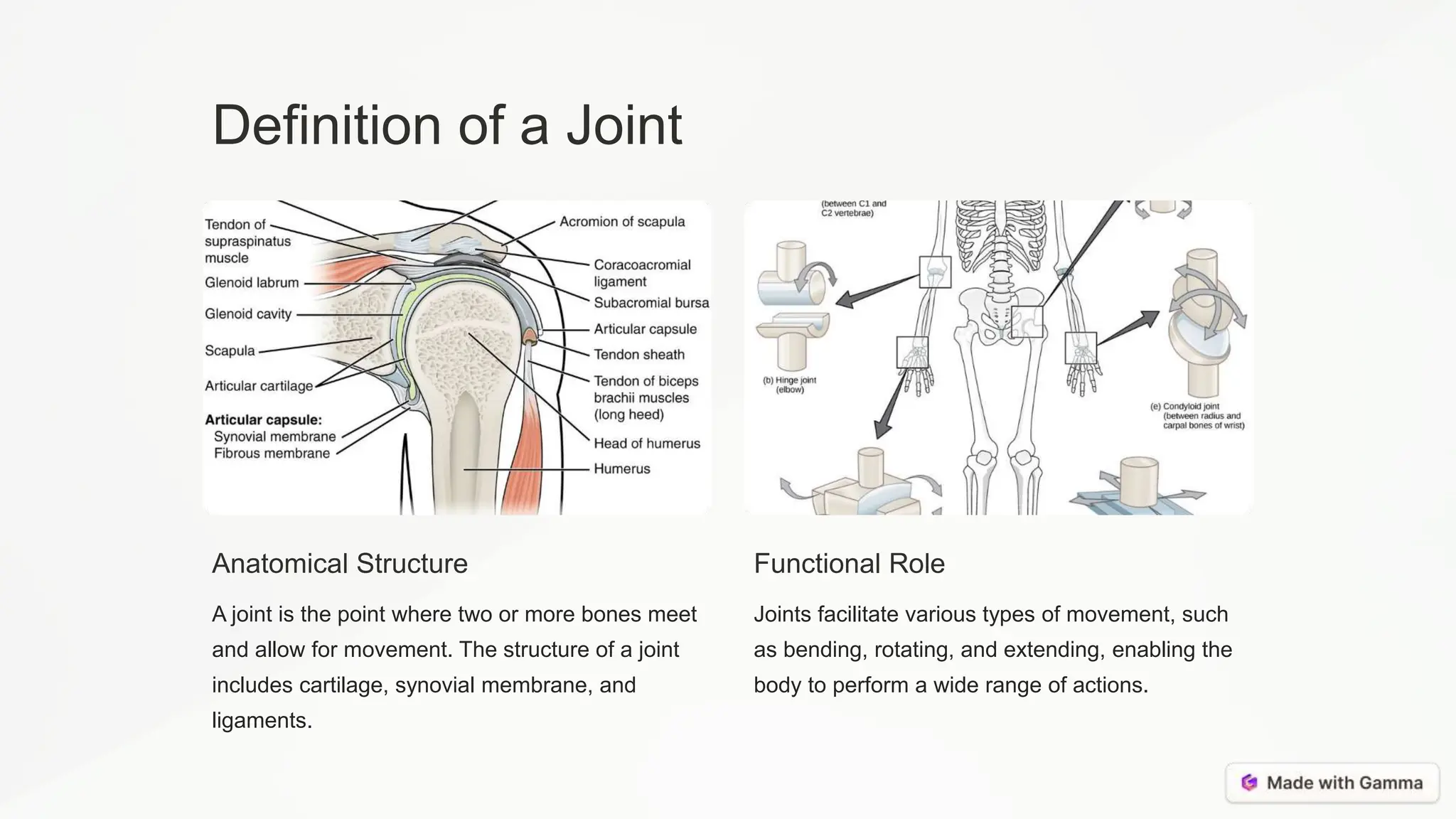
A joint is the point where two or more bones meet
and allow for movement. The structure of a joint
includes cartilage, synovial membrane, and
ligaments.
Functional Role
Joints facilitate various types of movement, such
as bending, rotating, and extending, enabling the
body to perform a wide range of actions.
Importance of Joints in the Human Body
1 Flexibility and
Mobility
Joints enable the human
body to bend, twist, and
move in diverse ways,
contributing to overall
agility and dexterity.
2 Shock Absorption
Some joints act as shock
absorbers, dissipating
impact forces and
protecting delicate
structures like the spinal
cord and brain.
3 Support and Stability
Joints provide support
for the body's weight
and maintain stability
during various
movements and
activities.
Classification of Joints Based on Structure
Fibrous Joints
Fibrous joints are connected
by dense connective tissue
and allow minimal movement.
Examples include sutures in
the skull.
Cartilaginous Joints
Cartilaginous joints are
connected by cartilage and
allow slight movement. An
example is the intervertebral
joints.
Synovial Joints
Synovial joints are freely
movable and are enclosed by
a joint capsule. Examples
include the knee and shoulder
joints.
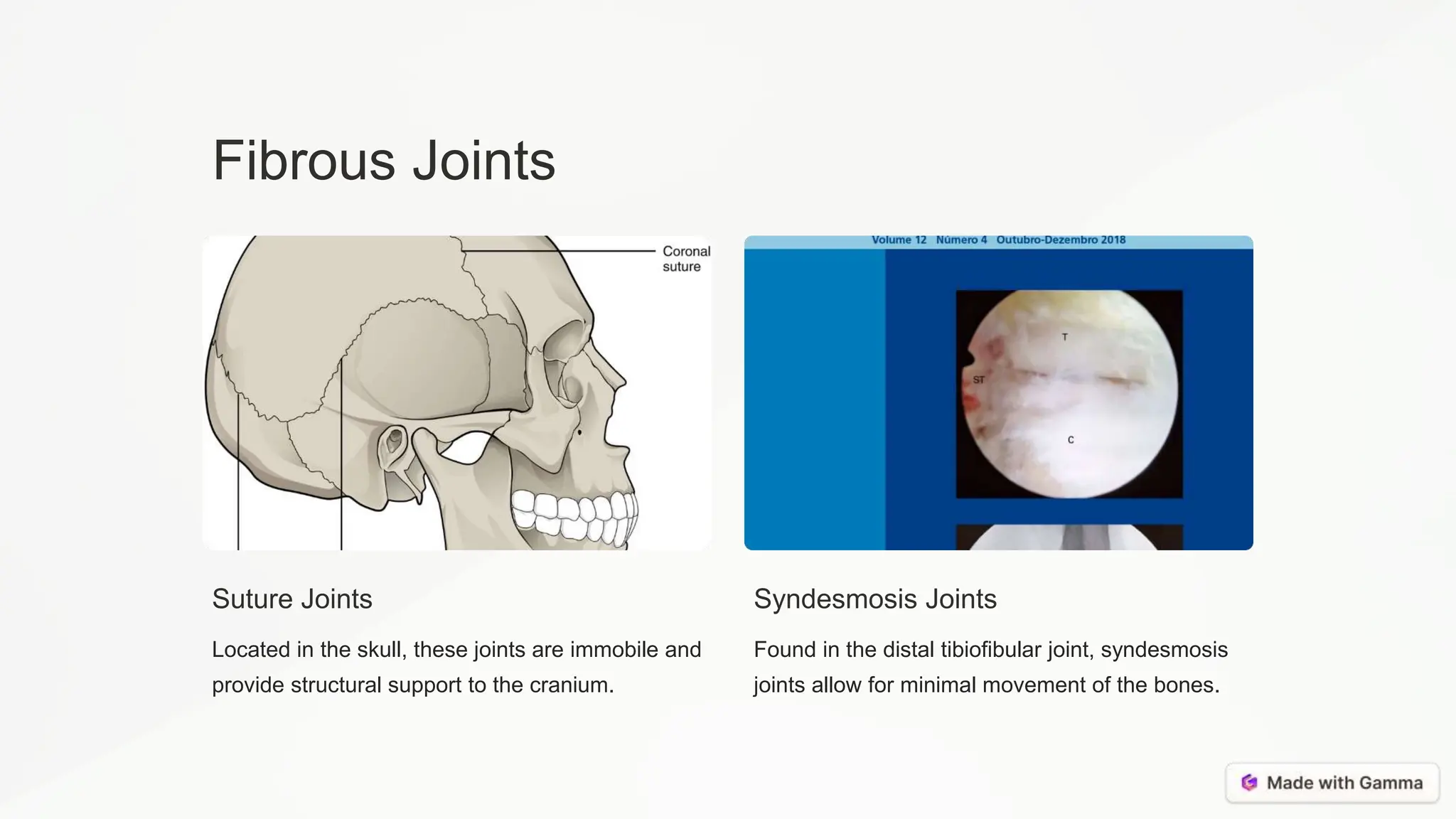
Fibrous Joints
Suture Joints
Located in the skull, these joints are immobile and
provide structural support to the cranium.
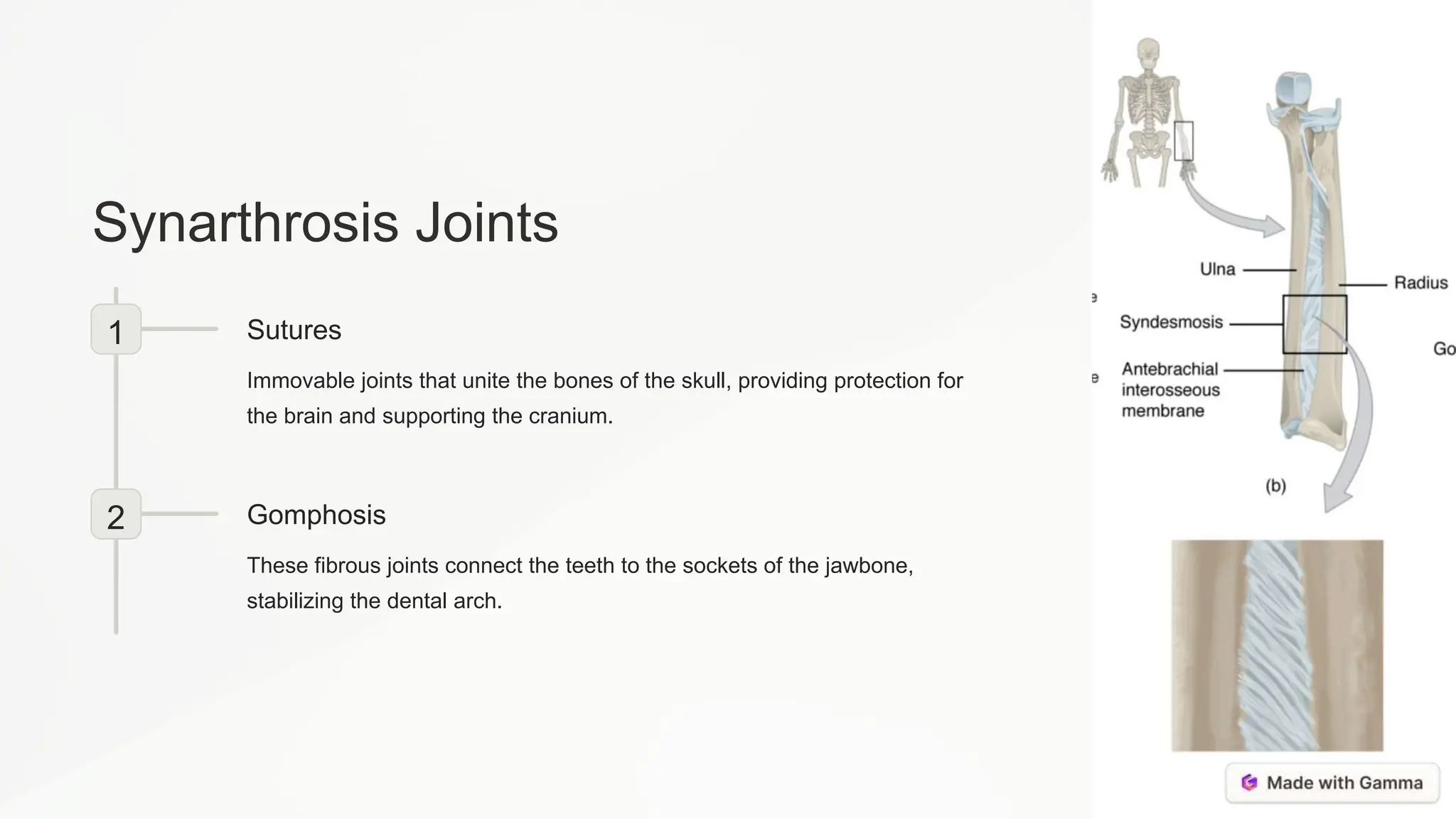
Syndesmosis Joints
Found in the distal tibiofibular joint, syndesmosis
joints allow for minimal movement of the bones.
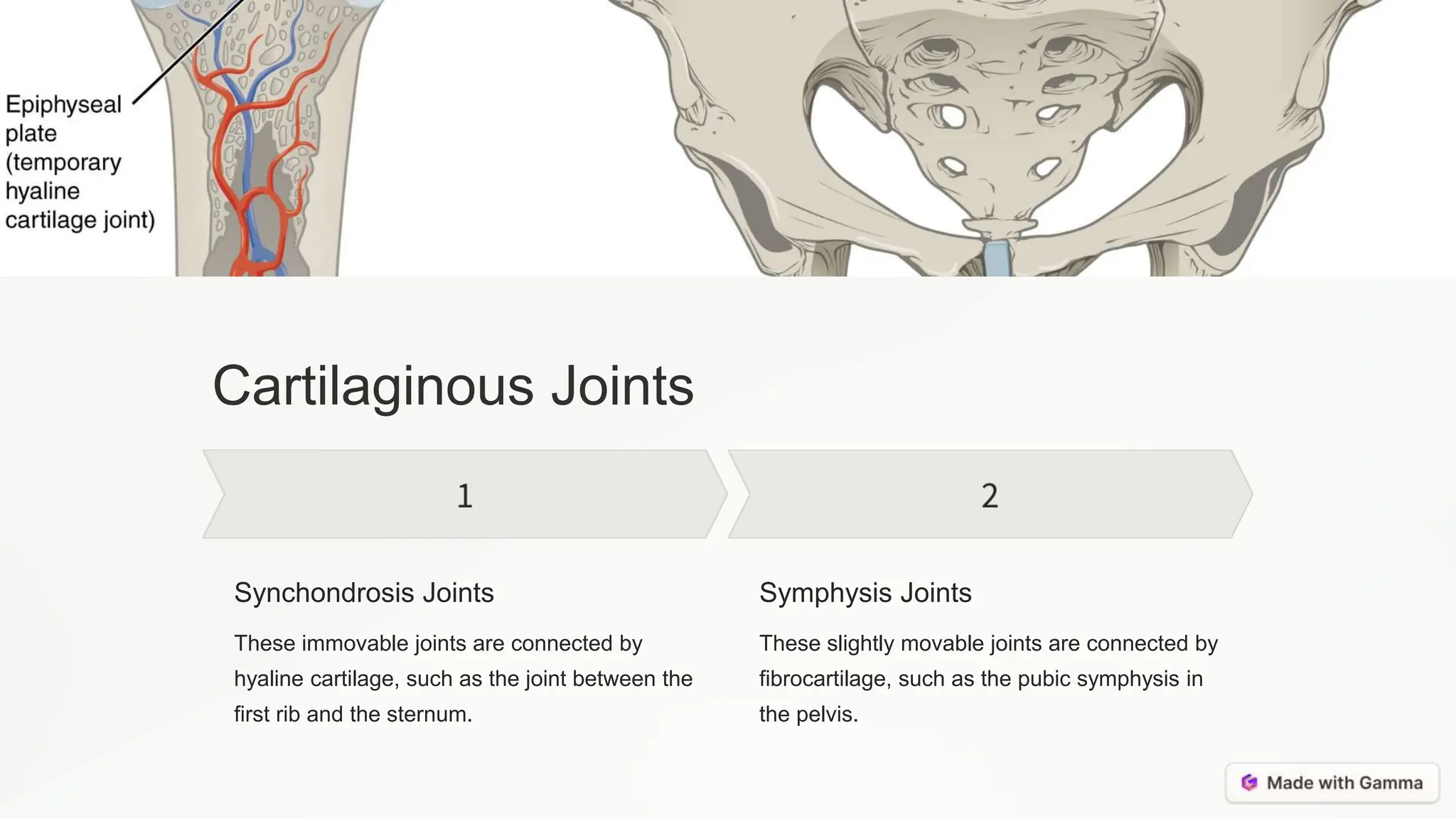
Cartilaginous Joints
Synchondrosis Joints
These immovable joints are connected by
hyaline cartilage, such as the joint between the
first rib and the sternum.
Symphysis Joints
These slightly movable joints are connected by
fibrocartilage, such as the pubic symphysis in
the pelvis.
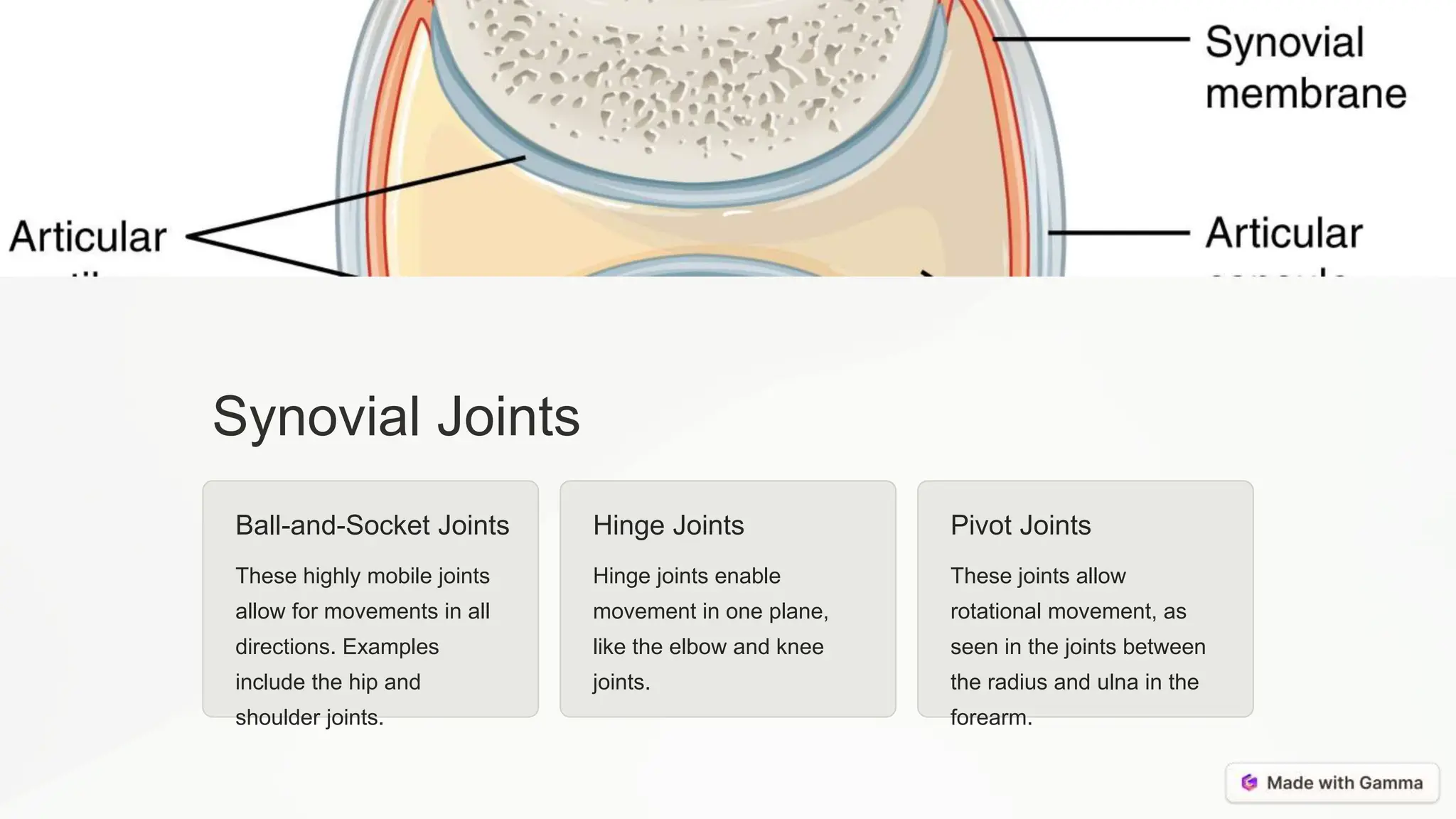
Synovial Joints
Ball-and-Socket Joints
These highly mobile joints
allow for movements in all
directions. Examples
include the hip and
shoulder joints.
Hinge Joints
Hinge joints enable
movement in one plane,
like the elbow and knee
joints.
Pivot Joints
These joints allow
rotational movement, as
seen in the joints between
the radius and ulna in the
forearm.
Classification of Joints Based on Function
1 Synarthrosis Joints
These immovable joints provide stability
and support, such as the sutures of the
skull.
2 Diarthrosis Joints
These freely movable joints allow for a
wide range of movements, like the knee
and hip joints.
Synarthrosis Joints
1 Sutures
Immovable joints that unite the bones of the skull, providing protection for
the brain and supporting the cranium.
2 Gomphosis
These fibrous joints connect the teeth to the sockets of the jawbone,
stabilizing the dental arch.
Diarthrosis Joints
Ball-and-Socket
Offering a wide range of
motion, these joints are found
in the shoulder and hip,
enabling activities like
throwing and dancing.
Condyloid
Allowing for movements in
two planes, condyloid joints
are located in the wrist,
permitting flexion, extension,
adduction, and abduction.
Pivot
Located in the neck, pivot
joints enable rotational
movements, like shaking the
head to indicate "no".

Classification Introduction-to-Joints.pptx

  • 1.
    Introduction to Joints Jointsare crucial for the human body's movement and functionality. They connect bones and allow for flexibility and support. Understanding the classification of joints can provide insights into their structure and function. by Dhruvik Prajapati
  • 2.
    Definition of aJoint Anatomical Structure A joint is the point where two or more bones meet and allow for movement. The structure of a joint includes cartilage, synovial membrane, and ligaments. Functional Role Joints facilitate various types of movement, such as bending, rotating, and extending, enabling the body to perform a wide range of actions.
  • 3.
    Importance of Jointsin the Human Body 1 Flexibility and Mobility Joints enable the human body to bend, twist, and move in diverse ways, contributing to overall agility and dexterity. 2 Shock Absorption Some joints act as shock absorbers, dissipating impact forces and protecting delicate structures like the spinal cord and brain. 3 Support and Stability Joints provide support for the body's weight and maintain stability during various movements and activities.
  • 4.
    Classification of JointsBased on Structure Fibrous Joints Fibrous joints are connected by dense connective tissue and allow minimal movement. Examples include sutures in the skull. Cartilaginous Joints Cartilaginous joints are connected by cartilage and allow slight movement. An example is the intervertebral joints. Synovial Joints Synovial joints are freely movable and are enclosed by a joint capsule. Examples include the knee and shoulder joints.
  • 5.
    Fibrous Joints Suture Joints Locatedin the skull, these joints are immobile and provide structural support to the cranium. Syndesmosis Joints Found in the distal tibiofibular joint, syndesmosis joints allow for minimal movement of the bones.
  • 6.
    Cartilaginous Joints Synchondrosis Joints Theseimmovable joints are connected by hyaline cartilage, such as the joint between the first rib and the sternum. Symphysis Joints These slightly movable joints are connected by fibrocartilage, such as the pubic symphysis in the pelvis.
  • 7.
    Synovial Joints Ball-and-Socket Joints Thesehighly mobile joints allow for movements in all directions. Examples include the hip and shoulder joints. Hinge Joints Hinge joints enable movement in one plane, like the elbow and knee joints. Pivot Joints These joints allow rotational movement, as seen in the joints between the radius and ulna in the forearm.
  • 8.
    Classification of JointsBased on Function 1 Synarthrosis Joints These immovable joints provide stability and support, such as the sutures of the skull. 2 Diarthrosis Joints These freely movable joints allow for a wide range of movements, like the knee and hip joints.
  • 9.
    Synarthrosis Joints 1 Sutures Immovablejoints that unite the bones of the skull, providing protection for the brain and supporting the cranium. 2 Gomphosis These fibrous joints connect the teeth to the sockets of the jawbone, stabilizing the dental arch.
  • 10.
    Diarthrosis Joints Ball-and-Socket Offering awide range of motion, these joints are found in the shoulder and hip, enabling activities like throwing and dancing. Condyloid Allowing for movements in two planes, condyloid joints are located in the wrist, permitting flexion, extension, adduction, and abduction. Pivot Located in the neck, pivot joints enable rotational movements, like shaking the head to indicate "no".