Indian classical dance is an umbrella term for
various codified art forms rooted in Natya
Sasthra and sacred Hindu musical theatre styles
Indian classical dances are those performed inside
the sanctum of temple and performed in royal courts
to the accompaniment of classical music
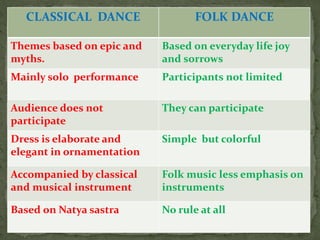
CLASSICAL DANCE FOLK DANCE
Themes based on epic and
myths.
Based on everyday life joy
and sorrows
Mainly solo performance Participants not limited
Audience does not
participate
They can participate
Dress is elaborate and
elegant in ornamentation
Simple but colorful
Accompanied by classical
and musical instrument
Folk music less emphasis on
instruments
Based on Natya sastra No rule at all
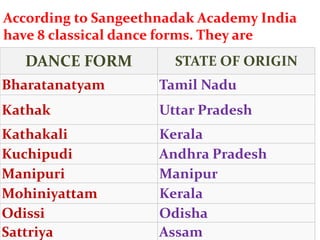
DANCE FORM STATE OF ORIGIN
Bharatanatyam Tamil Nadu
Kathak Uttar Pradesh
Kathakali Kerala
Kuchipudi Andhra Pradesh
Manipuri Manipur
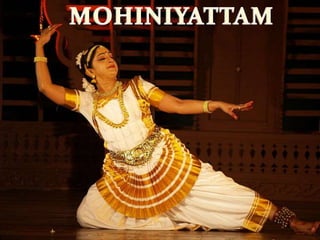
Mohiniyattam Kerala
Odissi Odisha
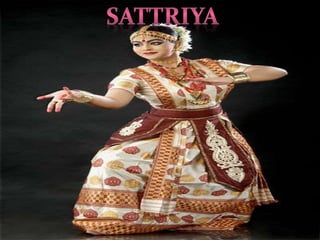
Sattriya Assam
According to Sangeethnadak Academy India
have 8 classical dance forms. They are
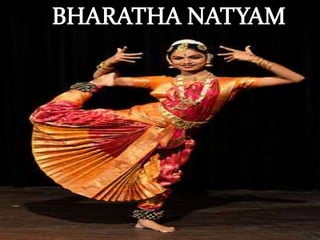
Bharata Natyam is known for its grace, purity,
tenderness, and sculpturesque poses.
In ancient times it was performed
as dasiattam by mandira Devadasis and Lord
Shiva is considered the God of this dance
form.
Many of the ancient sculptures in Hindu
temples are based on Bharata Natyam dance
postures
.
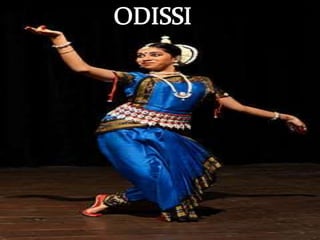
It places upon the Tribhangi (three parts
break), the independent movement of
head, chest and pelvis
This dance is characterised by
various Bhangas (Stance), which involves
stamping of the foot and striking various
postures as seen in Indian sculptures
A short (23 second) Odissi dance scene was
featured in Michael Jackson's music video
of Black or White.
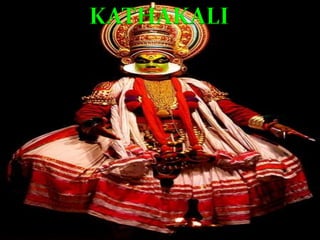
KATHAKALI
The dance drama on the life and activities of Lord
Krishna created by Sri Manavedan Raja and it noted
for the attractive make-up of characters, elaborate
costumes
It identified with detailed gestures and well-defined
body movements presented in tune with the anchor
playback music and complementary percussion.
The kathakali plays known as Attakathas
traditionally there are 101 classical Kathakali stories
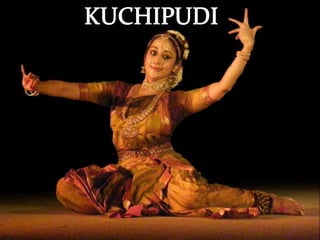
Kuchipudi dancers are quicksilver and scintillating,
rounded and fleet-footed, they perform with grace
and fluid movements.
Dance is accompanied by song which is
typically Carnatic music. The singer is
accompanied by mridangam , violin, flute and
tambura
Ornaments worn by the artists are generally made of
a lightweight wood called Boorugu and Siddhendra
Yogi redefined the dance form.
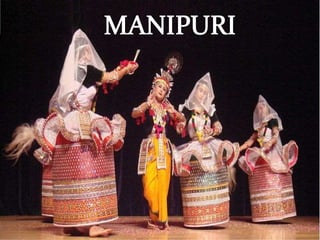
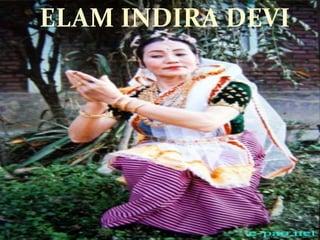
Manipuri dance is purely religious and its aim is a
spiritual experience and the cult
of Radha and Krishna, particularly the raslila is
central theme
From the religious point of view it is not only to be
one of the most chastest, modest, softest and mildest
but the most meaningful dances of the world.
Movements of the body and feet and facial expressions
in Manipuri dance are subtle and aim at devotion and
grace.
ELAM INDIRA DEVI
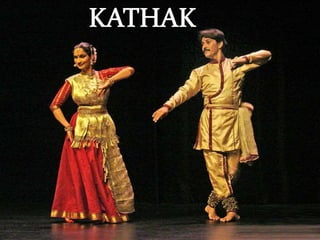
The structure of a conventional Kathak performance
tends to follow a progression in tempo from slow to
fast, ending with a dramatic climax.
There are three major schools or gharana of Kathak :
the gharanas of Jaipur,Lucknow and Varanasi
From the 16th century onwards it absorbed certain
features of Persian dance and central Asian dance
which were imported by the royal courts of
the Mughal era
In the year 2000, the Sattriya dances of Assam received
recognition as one of the eight classical dance forms of
India
The core of Sattriya Nritya was an artistic way of
presenting mythological teachings to the people in an
accessible, immediate, and enjoyable manner.
Srimanta Sankardev and Madhavdev created Sattriya
Nrityais dance form has remained a living tradition in
Assam's Vaishnava monasteries.
It is considered a very graceful form of dance meant to
be performed as solo recitals by women, Mohini
means a maiden who steal the heart of the spectator
The costume includes white sari embroidered with
bright golden brocade (kasavu) at the edges. The
dance follows the classical text of Hastha
Lakshanadeepika
There are two stories of the Lord Vishnu disguised as
a Mohini. In one, he appears as Mohini to lure
the asuras away from the amrita and to save
Lord Shiva from the demon Bhasmasura
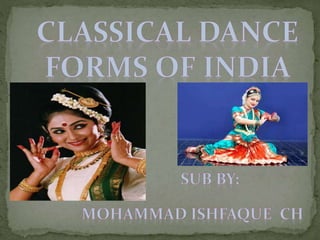
classical dance forms of India

classical dance forms of India

  • 2.
    Indian classical danceis an umbrella term for various codified art forms rooted in Natya Sasthra and sacred Hindu musical theatre styles Indian classical dances are those performed inside the sanctum of temple and performed in royal courts to the accompaniment of classical music
  • 3.
    CLASSICAL DANCE FOLKDANCE Themes based on epic and myths. Based on everyday life joy and sorrows Mainly solo performance Participants not limited Audience does not participate They can participate Dress is elaborate and elegant in ornamentation Simple but colorful Accompanied by classical and musical instrument Folk music less emphasis on instruments Based on Natya sastra No rule at all
  • 4.
    DANCE FORM STATEOF ORIGIN Bharatanatyam Tamil Nadu Kathak Uttar Pradesh Kathakali Kerala Kuchipudi Andhra Pradesh Manipuri Manipur Mohiniyattam Kerala Odissi Odisha Sattriya Assam According to Sangeethnadak Academy India have 8 classical dance forms. They are
  • 6.
    Bharata Natyam isknown for its grace, purity, tenderness, and sculpturesque poses. In ancient times it was performed as dasiattam by mandira Devadasis and Lord Shiva is considered the God of this dance form. Many of the ancient sculptures in Hindu temples are based on Bharata Natyam dance postures
  • 9.
    . It places uponthe Tribhangi (three parts break), the independent movement of head, chest and pelvis This dance is characterised by various Bhangas (Stance), which involves stamping of the foot and striking various postures as seen in Indian sculptures A short (23 second) Odissi dance scene was featured in Michael Jackson's music video of Black or White.
  • 10.
  • 11.
    The dance dramaon the life and activities of Lord Krishna created by Sri Manavedan Raja and it noted for the attractive make-up of characters, elaborate costumes It identified with detailed gestures and well-defined body movements presented in tune with the anchor playback music and complementary percussion. The kathakali plays known as Attakathas traditionally there are 101 classical Kathakali stories
  • 14.
    Kuchipudi dancers arequicksilver and scintillating, rounded and fleet-footed, they perform with grace and fluid movements. Dance is accompanied by song which is typically Carnatic music. The singer is accompanied by mridangam , violin, flute and tambura Ornaments worn by the artists are generally made of a lightweight wood called Boorugu and Siddhendra Yogi redefined the dance form.
  • 16.
    Manipuri dance ispurely religious and its aim is a spiritual experience and the cult of Radha and Krishna, particularly the raslila is central theme From the religious point of view it is not only to be one of the most chastest, modest, softest and mildest but the most meaningful dances of the world. Movements of the body and feet and facial expressions in Manipuri dance are subtle and aim at devotion and grace.
  • 17.
  • 19.
    The structure ofa conventional Kathak performance tends to follow a progression in tempo from slow to fast, ending with a dramatic climax. There are three major schools or gharana of Kathak : the gharanas of Jaipur,Lucknow and Varanasi From the 16th century onwards it absorbed certain features of Persian dance and central Asian dance which were imported by the royal courts of the Mughal era
  • 22.
    In the year2000, the Sattriya dances of Assam received recognition as one of the eight classical dance forms of India The core of Sattriya Nritya was an artistic way of presenting mythological teachings to the people in an accessible, immediate, and enjoyable manner. Srimanta Sankardev and Madhavdev created Sattriya Nrityais dance form has remained a living tradition in Assam's Vaishnava monasteries.
  • 24.
    It is considereda very graceful form of dance meant to be performed as solo recitals by women, Mohini means a maiden who steal the heart of the spectator The costume includes white sari embroidered with bright golden brocade (kasavu) at the edges. The dance follows the classical text of Hastha Lakshanadeepika There are two stories of the Lord Vishnu disguised as a Mohini. In one, he appears as Mohini to lure the asuras away from the amrita and to save Lord Shiva from the demon Bhasmasura