2
is now
3
www.tkmg.com
4
Clarity:
What it is
Why you need it
How to get it
www.clarityfirstbook.com
https://www.amazon.com/Clarity-
First-Organizations-Outstanding-
Performance/dp/1259837351
5
Have you taken
The Clarity Quiz?
www.clarityfirstquiz.com
Clarity First Summer Webinar Series
6
www.TKMG.com/webinars + YouTube, Vimeo, and Slideshare
1 2
3 5
7
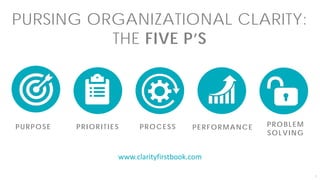
PURPOSE PRIORITIES PROCESS PERFORMANCE PROBLEM
SOLVING
PURSING ORGANIZATIONAL CLARITY:
THE FIVE P’S
www.clarityfirstbook.com
8
PURPOSE PRIORITIES PROCESS PERFORMANCE PROBLEM
SOLVING
THE FIVE P’S
© 2017 The Karen Martin Group, Inc.
© 2017 The Karen Martin Group, Inc. 9
© 2016 The Karen Martin Group, Inc. 10
© 2016 The Karen Martin Group, Inc. 11
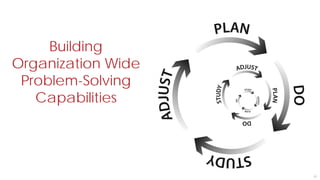
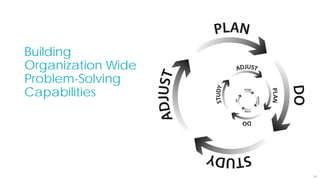
Building
Organization Wide
Problem-Solving
Capabilities
12
13
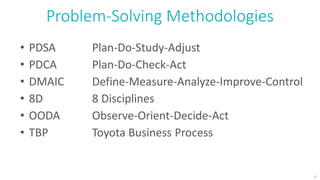
Problem-Solving Methodologies
• PDSA Plan-Do-Study-Adjust
• PDCA Plan-Do-Check-Act
• DMAIC Define-Measure-Analyze-Improve-Control
• 8D 8 Disciplines
• OODA Observe-Orient-Decide-Act
• TBP Toyota Business Process
14
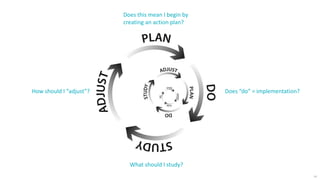
Does this mean I begin by
creating an action plan?
Does “do” = implementation?
What should I study?
How should I “adjust”?
15
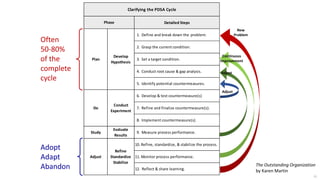
Detailed Steps
1. Define and break down the problem.
2. Grasp the current condition.
3. Set a target condition.
4. Conduct root cause & gap analysis.
5. Identify potential countermeasures.
6. Develop & test countermeasure(s)
7. Refine and finalize countermeasure(s).
8. Implement countermeasure(s).
Study
Evaluate
Results
9. Measure process performance.
10. Refine, standardize, & stabilize the process.
11. Monitor process performance.
12. Reflect & share learning.
Adjust
Do
Clarifying the PDSA Cycle
Plan
Develop
Hypothesis
Conduct
Experiment
Refine
Standardize
Stabilize
Phase
Continuous
Improvement
New
Problem
Often
50-80%
of the
complete
cycle
Adjust
Adjust
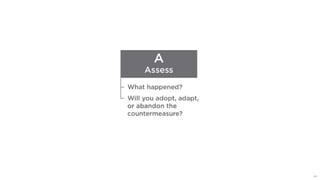
Adopt
Adapt
Abandon The Outstanding Organization
by Karen Martin
16© 2017 The Karen Martin Group, Inc.
17
www.clarityfirstbook.com
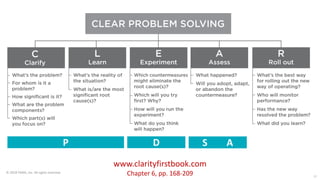
Chapter 6, pp. 168-209© 2018 TKMG, Inc. All rights reserved.
P D S A
18© 2018 TKMG, Inc.
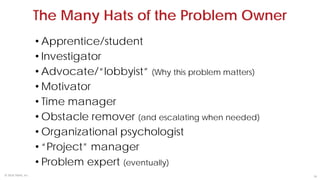
• Apprentice/student
• Investigator
• Advocate/“lobbyist” (Why this problem matters)
• Motivator
• Time manager
• Obstacle remover (and escalating when needed)
• Organizational psychologist
• “Project” manager
• Problem expert (eventually)
The Many Hats of the Problem Owner
19
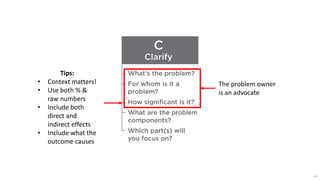
The problem owner
is an advocate
Tips:
• Context matters!
• Use both % &
raw numbers
• Include both
direct and
indirect effects
• Include what the
outcome causes
20
21© 2018 TKMG, Inc.
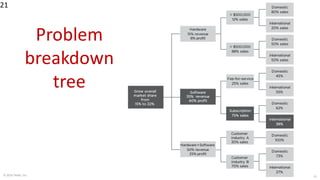
21
Problem
breakdown
tree
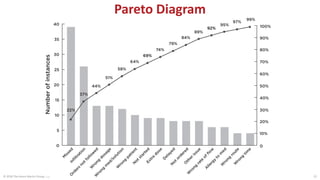
Pareto Diagram
© 2018 The Karen Martin Group, Inc. 22
23
24
Understanding Reality: Gemba Visits & Stakeholder Interviews
25
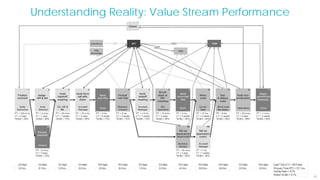
Understanding Reality: Value Stream Performance
26
Understanding Reality: Value Stream Performance
27
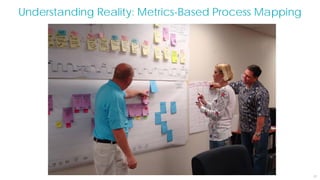
Understanding Reality: Metrics-Based Process Mapping
28
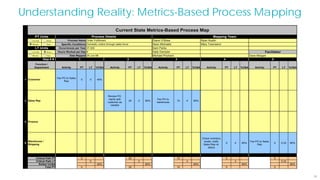
Understanding Reality: Metrics-Based Process Mapping
0
1
0
15
6
-1
0
Activity PT LT %C&A Activity PT LT %C&A Activity PT LT %C&A Activity PT LT %C&A Activity PT LT %C&A
1
Fax PO to Sales
Rep
0 0 45%
2
Review PO;
clarify with
customer as
needed
20 2 90%
Fax PO to
warehouse
10 4 90%
5
6
Check inventory
levels; notify
Sales Rep re:
status
5 4 95%
Fax PO to Sales
Rep
5 0.33 90%
0 20 10 5 5
0 2 4 4 0.33
45% 90% 90% 95% 90%
0 20 10 5 5
Rolled %C&A
Critical Path LT
Total PT
Critical Path PT
5431 2
Mary Townsend
Hours Worked per Day Sally Dampier
Occurrences per Year Sam Parks
Current State Metrics-Based Process Map
Dave Morgan25-Jun-08
8 Facilitator
Process Details
Michael Prichard
Order FulfillmentProcess Name
Specific Conditions Domestic orders through sales force
37,500
Date Mapped
Sean Michaels
Sales Rep
Ryan AustinDiane O'Shea
Mapping Team
LT Units
Function /
Department
PT Units
Step # ►
Customer
Finance
Warehouse /
Shipping
Seconds
Minutes
Hours
Days
Seconds
Minutes
Hours
Days
29
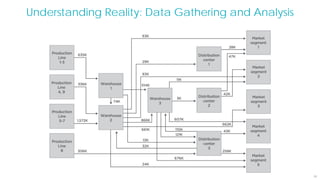
Understanding Reality: Data Gathering and Analysis
30
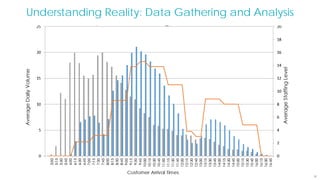
Understanding Reality: Data Gathering and Analysis
31
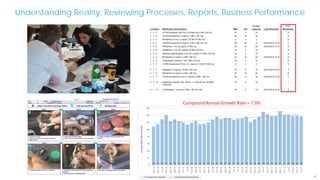
Understanding Reality: Reviewing Processes, Reports, Business Performance
Compound Annual Growth Rate = 7.3%
32
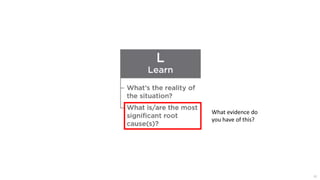
What evidence do
you have of this?
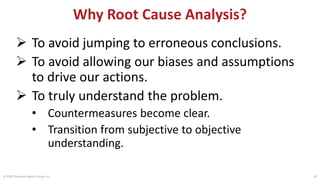
Why Root Cause Analysis?
© 2018 The Karen Martin Group, Inc. 33
 To avoid jumping to erroneous conclusions.
 To avoid allowing our biases and assumptions
to drive our actions.
 To truly understand the problem.
• Countermeasures become clear.
• Transition from subjective to objective
understanding.
34
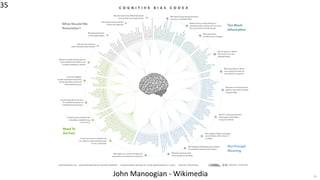
IUMRINC TO GQNGIUSIQNS
JUMPING TO CONCLUSIONS
35
35
John Manoogian - Wikimedia
36
© 2016 The Karen Martin Group, Inc. 37
5 Whys
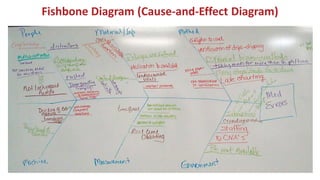
Fishbone Diagram (Cause-and-Effect Diagram)
39
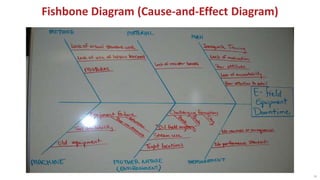
Fishbone Diagram (Cause-and-Effect Diagram)
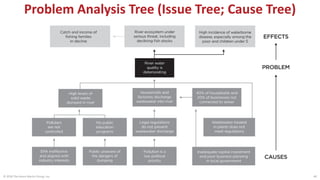
Problem Analysis Tree (Issue Tree; Cause Tree)
40© 2018 The Karen Martin Group, Inc.
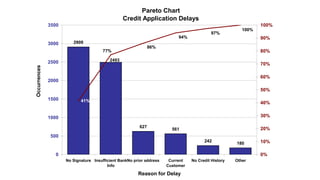
Pareto Chart
Credit Application Delays
2909
627
561
242
180
2493
41%
77%
86%
100%
97%
94%
0
500
1000
1500
2000
2500
3000
3500
No Signature Insufficient Bank
Info
No prior address Current
Customer
No Credit History Other
Reason for Delay
Occurrences
0%
10%
20%
30%
40%
50%
60%
70%
80%
90%
100%
42
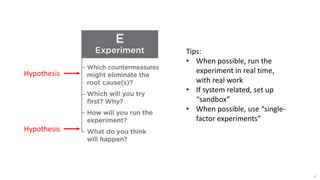
Tips:
• When possible, run the
experiment in real time,
with real work
• If system related, set up
“sandbox”
• When possible, use “single-
factor experiments”
Hypothesis
Hypothesis
43
44
45
46
47
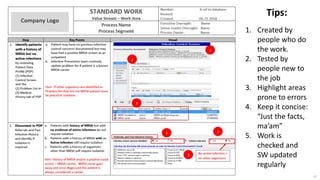
Tips:
1. Created by
people who do
the work.
2. Tested by
people new to
the job
3. Highlight areas
prone to errors
4. Keep it concise:
“Just the facts,
ma’am”
5. Work is
checked and
SW updated
regularly
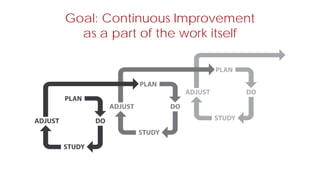
Goal: Continuous Improvement
as a part of the work itself
49
50
Building
Organization Wide
Problem-Solving
Capabilities
51
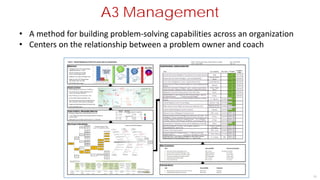
A3 Management
• A method for building problem-solving capabilities across an organization
• Centers on the relationship between a problem owner and coach
52
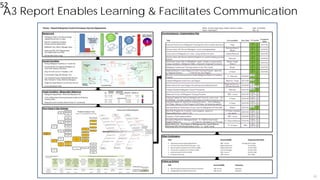
A3 Report Enables Learning & Facilitates Communication
52
53
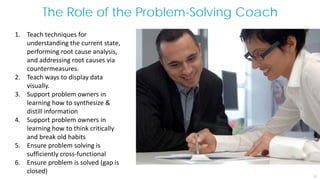
The Role of the Problem-Solving Coach
1. Teach techniques for
understanding the current state,
performing root cause analysis,
and addressing root causes via
countermeasures.
2. Teach ways to display data
visually.
3. Support problem owners in
learning how to synthesize &
distill information
4. Support problem owners in
learning how to think critically
and break old habits
5. Ensure problem solving is
sufficiently cross-functional
6. Ensure problem is solved (gap is
closed)
54
www.clarityfirstquiz.com
55
www.clarityfirstbook.com
What could you
accomplish with
greater clarity?

Clarity First - Problem Solving

  • 2.
  • 3.
  • 4.
    4 Clarity: What it is Whyyou need it How to get it www.clarityfirstbook.com https://www.amazon.com/Clarity- First-Organizations-Outstanding- Performance/dp/1259837351
  • 5.
    5 Have you taken TheClarity Quiz? www.clarityfirstquiz.com
  • 6.
    Clarity First SummerWebinar Series 6 www.TKMG.com/webinars + YouTube, Vimeo, and Slideshare 1 2 3 5
  • 7.
    7 PURPOSE PRIORITIES PROCESSPERFORMANCE PROBLEM SOLVING PURSING ORGANIZATIONAL CLARITY: THE FIVE P’S www.clarityfirstbook.com
  • 8.
    8 PURPOSE PRIORITIES PROCESSPERFORMANCE PROBLEM SOLVING THE FIVE P’S © 2017 The Karen Martin Group, Inc.
  • 9.
    © 2017 TheKaren Martin Group, Inc. 9
  • 10.
    © 2016 TheKaren Martin Group, Inc. 10
  • 11.
    © 2016 TheKaren Martin Group, Inc. 11
  • 12.
  • 13.
    13 Problem-Solving Methodologies • PDSAPlan-Do-Study-Adjust • PDCA Plan-Do-Check-Act • DMAIC Define-Measure-Analyze-Improve-Control • 8D 8 Disciplines • OODA Observe-Orient-Decide-Act • TBP Toyota Business Process
  • 14.
    14 Does this meanI begin by creating an action plan? Does “do” = implementation? What should I study? How should I “adjust”?
  • 15.
    15 Detailed Steps 1. Defineand break down the problem. 2. Grasp the current condition. 3. Set a target condition. 4. Conduct root cause & gap analysis. 5. Identify potential countermeasures. 6. Develop & test countermeasure(s) 7. Refine and finalize countermeasure(s). 8. Implement countermeasure(s). Study Evaluate Results 9. Measure process performance. 10. Refine, standardize, & stabilize the process. 11. Monitor process performance. 12. Reflect & share learning. Adjust Do Clarifying the PDSA Cycle Plan Develop Hypothesis Conduct Experiment Refine Standardize Stabilize Phase Continuous Improvement New Problem Often 50-80% of the complete cycle Adjust Adjust Adopt Adapt Abandon The Outstanding Organization by Karen Martin
  • 16.
    16© 2017 TheKaren Martin Group, Inc.
  • 17.
    17 www.clarityfirstbook.com Chapter 6, pp.168-209© 2018 TKMG, Inc. All rights reserved. P D S A
  • 18.
    18© 2018 TKMG,Inc. • Apprentice/student • Investigator • Advocate/“lobbyist” (Why this problem matters) • Motivator • Time manager • Obstacle remover (and escalating when needed) • Organizational psychologist • “Project” manager • Problem expert (eventually) The Many Hats of the Problem Owner
  • 19.
    19 The problem owner isan advocate Tips: • Context matters! • Use both % & raw numbers • Include both direct and indirect effects • Include what the outcome causes
  • 20.
  • 21.
    21© 2018 TKMG,Inc. 21 Problem breakdown tree
  • 22.
    Pareto Diagram © 2018The Karen Martin Group, Inc. 22
  • 23.
  • 24.
    24 Understanding Reality: GembaVisits & Stakeholder Interviews
  • 25.
  • 26.
  • 27.
  • 28.
    28 Understanding Reality: Metrics-BasedProcess Mapping 0 1 0 15 6 -1 0 Activity PT LT %C&A Activity PT LT %C&A Activity PT LT %C&A Activity PT LT %C&A Activity PT LT %C&A 1 Fax PO to Sales Rep 0 0 45% 2 Review PO; clarify with customer as needed 20 2 90% Fax PO to warehouse 10 4 90% 5 6 Check inventory levels; notify Sales Rep re: status 5 4 95% Fax PO to Sales Rep 5 0.33 90% 0 20 10 5 5 0 2 4 4 0.33 45% 90% 90% 95% 90% 0 20 10 5 5 Rolled %C&A Critical Path LT Total PT Critical Path PT 5431 2 Mary Townsend Hours Worked per Day Sally Dampier Occurrences per Year Sam Parks Current State Metrics-Based Process Map Dave Morgan25-Jun-08 8 Facilitator Process Details Michael Prichard Order FulfillmentProcess Name Specific Conditions Domestic orders through sales force 37,500 Date Mapped Sean Michaels Sales Rep Ryan AustinDiane O'Shea Mapping Team LT Units Function / Department PT Units Step # ► Customer Finance Warehouse / Shipping Seconds Minutes Hours Days Seconds Minutes Hours Days
  • 29.
    29 Understanding Reality: DataGathering and Analysis
  • 30.
    30 Understanding Reality: DataGathering and Analysis
  • 31.
    31 Understanding Reality: ReviewingProcesses, Reports, Business Performance Compound Annual Growth Rate = 7.3%
  • 32.
  • 33.
    Why Root CauseAnalysis? © 2018 The Karen Martin Group, Inc. 33  To avoid jumping to erroneous conclusions.  To avoid allowing our biases and assumptions to drive our actions.  To truly understand the problem. • Countermeasures become clear. • Transition from subjective to objective understanding.
  • 34.
  • 35.
  • 36.
  • 37.
    © 2016 TheKaren Martin Group, Inc. 37 5 Whys
  • 38.
  • 39.
  • 40.
    Problem Analysis Tree(Issue Tree; Cause Tree) 40© 2018 The Karen Martin Group, Inc.
  • 41.
    Pareto Chart Credit ApplicationDelays 2909 627 561 242 180 2493 41% 77% 86% 100% 97% 94% 0 500 1000 1500 2000 2500 3000 3500 No Signature Insufficient Bank Info No prior address Current Customer No Credit History Other Reason for Delay Occurrences 0% 10% 20% 30% 40% 50% 60% 70% 80% 90% 100%
  • 42.
    42 Tips: • When possible,run the experiment in real time, with real work • If system related, set up “sandbox” • When possible, use “single- factor experiments” Hypothesis Hypothesis
  • 43.
  • 44.
  • 45.
  • 46.
  • 47.
    47 Tips: 1. Created by peoplewho do the work. 2. Tested by people new to the job 3. Highlight areas prone to errors 4. Keep it concise: “Just the facts, ma’am” 5. Work is checked and SW updated regularly
  • 48.
    Goal: Continuous Improvement asa part of the work itself
  • 49.
  • 50.
  • 51.
    51 A3 Management • Amethod for building problem-solving capabilities across an organization • Centers on the relationship between a problem owner and coach
  • 52.
    52 A3 Report EnablesLearning & Facilitates Communication 52
  • 53.
    53 The Role ofthe Problem-Solving Coach 1. Teach techniques for understanding the current state, performing root cause analysis, and addressing root causes via countermeasures. 2. Teach ways to display data visually. 3. Support problem owners in learning how to synthesize & distill information 4. Support problem owners in learning how to think critically and break old habits 5. Ensure problem solving is sufficiently cross-functional 6. Ensure problem is solved (gap is closed)
  • 54.
  • 55.